Omaha Logistics Hiring in 2026: A Warehouse Boom the Workforce Cannot Keep Pace With
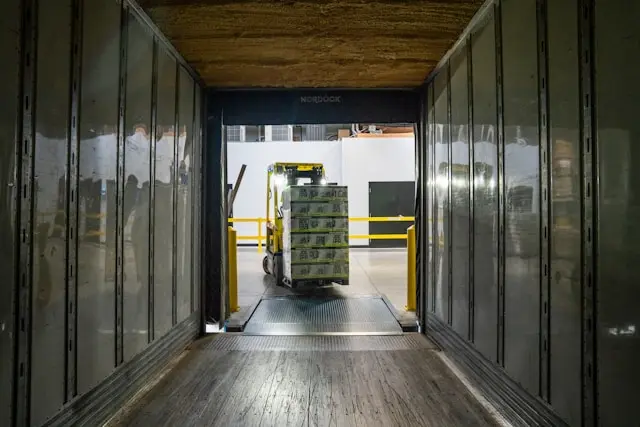
Omaha added 3.1 million square feet of new warehouse and distribution space across 2025 and into 2026. The buildings are finished. The tenants are signed. The workers to fill them are not there in sufficient numbers.
The Omaha-Council Bluffs metro has long operated as one of the most infrastructure-dense logistics corridors in the United States, anchored by Union Pacific Railroad's corporate headquarters, the intersection of Interstates 80 and 29, and a cold-chain distribution cluster that serves a national footprint. The sector employs over 42,000 workers locally, representing 8.9% of total metro employment, nearly double the national share. By most measures, this is a logistics market that works. The question confronting senior leaders in 2026 is whether it can continue to work at the scale the real estate pipeline demands.
What follows is a structured analysis of the forces reshaping Omaha's transportation and logistics sector: the demographic ceiling that constrains every hiring decision, the bifurcation between corporate headquarters functions and operational employment, the compensation dynamics that both attract and repel talent, and what organisations competing for leadership in this market need to understand before launching their next search.
The Infrastructure Advantage That Built This Market
Omaha's position in American logistics is not accidental. It is geographic. Interstate 80 runs east-west as a transcontinental freight corridor. Interstate 29 runs north-south from the Canadian border to the Gulf. Their intersection within the metro creates a modal interchange point matched by only four other U.S. markets, according to the Nebraska Department of Transportation's 2024 Freight Analysis Framework.
That crossroads is reinforced by rail. Union Pacific maintains its corporate nerve centre at 1400 Douglas Street in downtown Omaha, employing approximately 5,400 headquarters staff locally as of late 2024. Total Nebraska employment, including rail yards and maintenance operations, exceeds 8,000. Neff Yard, a 70-track classification facility, processes more than 300,000 rail cars annually. While the region's largest classification yard sits 280 miles west in North Platte, Omaha's rail density is corporate and intermodal rather than bulk classification. The decisions about where freight moves across America are made here, even when the physical sorting happens elsewhere.
Cold-chain infrastructure adds a second dimension. Lineage Logistics, Americold, and Omaha Steaks operate 4.2 million square feet of temperature-controlled distribution space concentrated in Sarpy County and Council Bluffs, Iowa. That represents 34% of the metro's total industrial inventory, according to CBRE's Nebraska Industrial MarketView. For hiring leaders in food distribution, pharmaceutical cold chain, or perishable e-commerce, Omaha is not a secondary market. It is a primary one.
Werner Enterprises and the Trucking Anchor
Werner Enterprises, headquartered at 14507 Frontier Road, operates a fleet of approximately 8,100 trucks with roughly 1,200 corporate staff in Omaha. Nationwide driver employment fluctuates between 9,000 and 10,000 depending on seasonal demand. The company's driver training academy and dedicated lane operations running from the Omaha terminal make it the metro's largest trucking employer and one of the most consequential competitors for CDL-A talent in the Midwest.
Amazon's presence adds further demand. Its 1.2 million-square-foot fulfilment centre (OMA1) in Council Bluffs employs approximately 1,500 workers, with a delivery station in Papillion adding another 300. These facilities compete directly with Werner, Lineage, and regional carriers for the same warehouse associates and drivers.
The infrastructure is real. The employers are real. The constraint is the people required to operate at the scale these employers and their incoming neighbours are planning for.
A Warehouse Construction Boom Colliding with Demographic Reality
This is the central tension of Omaha's logistics market in 2026, and it is one that the sector's own momentum has created.
Through the first three quarters of 2024, industrial absorption totalled 1.8 million square feet. Vacancy stood at 6.2%, well below the ten-year average of 8.4%. Speculative warehouse construction in Sarpy County and the I-80/I-29 corridor added 2.4 million square feet of new product, of which 78% was pre-leased before completion. The tenants were primarily e-commerce fulfilment and food distribution operators. The development pipeline for 2025 and 2026 called for an additional 3.1 million square feet, concentrated in the Nebraska Crossing/Future Park corridor.
That pipeline requires an estimated 2,800 additional warehouse workers. The metro's total labour force growth is tracking at 0.8% annually. That translates to roughly 4,200 new workers across all sectors combined.
The arithmetic does not resolve. Even if every single new entrant to Omaha's labour force went into warehousing, the sector would still need to attract workers from other industries or from outside the metro entirely. Neither pathway is simple. The metro's unemployment rate sat at 3.2% as of late 2024. For transportation and material moving occupations specifically, unemployment was 2.1%. That is not a tight market. That is a market at functional capacity.
Here is the analytical point that the aggregate data obscures: Omaha's warehouse construction boom was underwritten on real estate fundamentals, not labour market fundamentals. The land was available. The demand from tenants was verifiable. The pre-leasing rates were strong. But the capital that approved these developments moved faster than the human capital required to operate them could form. The result is a market where the buildings exist and the workers do not, at least not in the numbers the square footage requires. This is the dynamic that will define executive hiring across Omaha's industrial and logistics sector through the remainder of 2026.
The Bifurcation: Corporate Headquarters Functions vs. Operational Employment
Union Pacific's presence in Omaha tells two stories at once. The corporate headquarters remains the metro's most prestigious logistics employer. Network operations, finance, legal, marketing, and strategic planning functions are concentrated downtown. These are high-value roles. They pay well. They anchor civic identity.
But Union Pacific's total U.S. employment declined 18% between 2018 and 2024. The driver of that contraction is Precision Scheduled Railroading, an operational philosophy that maximises asset utilisation by running fewer, longer trains with fewer crew members. UP's management indicated on its Q3 2024 earnings call that railroad employment is projected to remain flat or decline a further 3 to 5% through 2026 as PSR optimisation continues.
What PSR Means for Omaha's Talent Pipeline
The implications for Omaha are specific. The blue-collar rail jobs that historically anchored the sector's workforce development pipeline are thinning. Train masters, crew dispatchers, and mechanical department roles are being consolidated. Meanwhile, the corporate headquarters functions are shifting toward technology, data analytics, and network optimisation. Union Pacific invested $200 million in Sunset Route and Midwest corridor improvements through its 2025 capital plan, but that capital deployment emphasised track infrastructure over local employment growth.
What Omaha gains from this shift is a concentration of strategic talent. What it loses is breadth. The sector's prestige remains, but its employment base narrows. For a hiring leader trying to fill a VP of Network Operations role, Union Pacific's headquarters presence is an asset. For a hiring leader trying to staff a warehouse or maintain a fleet, the shrinking rail workforce means fewer experienced mechanics and supervisors cycling through the local labour market.
The trucking and warehousing side of the equation moves in the opposite direction. Employment in these sub-sectors is forecast to grow 4 to 6% annually through 2026, driven by cold-chain expansion and last-mile distribution demand. Warehouse and storage employment reached 12,800 in late 2024, up 14% from pre-pandemic levels, though growth decelerated to 2.1% year-over-year.
The bifurcation is the story. One half of Omaha's logistics sector is optimising toward a smaller, more specialised headquarters workforce. The other half is scaling headcount aggressively. They are competing for different talent, but they share the same geography, the same housing market, and the same finite labour pool.
Where the Shortages Are Most Acute
Diesel Technicians: A Deficit That Cannot Be Trained Away Fast Enough
The Omaha metro requires approximately 340 new diesel technicians annually to cover growth and replacement demand. Local training programmes at Metropolitan Community College and Northeast Community College graduate roughly 110 per year. The gap of 230 technicians is not closing.
This is not a problem that compensation alone can solve. Journey-level diesel technician roles at Union Pacific's mechanical department and Werner Enterprises' maintenance division typically run 45 to 60 days to fill, compared with 22 days for administrative positions, based on aggregate vacancy duration data from the Nebraska Department of Labor's 2024 Job Vacancy Survey. Fleet Maintenance Manager roles command $95,000 to $125,000 in base salary, carrying a 20% premium above the national median. The premium reflects both local scarcity and the operational demands of maintaining fleets through Midwest winters.
MCC's Center for Advanced and Emerging Technology provides diesel technology and supply chain credentials, but the output simply cannot match the demand trajectory. The shortage is structural in the truest sense: the training infrastructure produces one-third of what the market consumes.
CDL-A Drivers: Sign-On Bonuses That Signal Deeper Problems
Werner Enterprises, Crete Carrier, and regional less-than-truckload carriers continue to report persistent deficits in specialised driver categories. While the national driver supply picture improved modestly through 2024, the improvement was concentrated in general freight. Dedicated route drivers and hazmat-certified operators remain acutely scarce in Omaha.
Carriers are advertising $15,000 to $20,000 sign-on bonuses for experienced drivers with clean CSA scores. Time-to-hire for dedicated account positions exceeds 90 days. These are not entry-level roles. They require specific endorsements, route knowledge, and compliance records that cannot be acquired quickly.
The American Trucking Associations' 2024 Driver Shortage Report confirms the national pattern, but Omaha's version carries a local wrinkle. The metro's small population base means it cannot simply absorb surplus drivers from neighbouring markets. Kansas City, 180 miles south, competes for identical profiles. Chicago, 180 miles east, pays materially more. Dallas, 600 miles south, offers no state income tax and a warmer climate. The candidates Omaha needs are being courted by every competing corridor simultaneously.
Supply Chain Technology Specialists: The Automation Skills That Do Not Yet Exist Locally
Warehouse Management System implementers, industrial IoT technicians, and automation engineers supporting robotic picking systems are in 18-month shortage cycles according to CBRE's Tech30 Industrial Labor Report. This category represents the intersection of the warehouse boom and the technology transformation occurring across the sector. The new facilities being delivered in Sarpy County are not simple box warehouses. They require automated storage and retrieval systems, cold-chain FDA compliance monitoring, and data integration platforms.
The professionals who can operate and maintain these systems are not being produced locally in meaningful numbers. UNO's Supply Chain Management programme graduates approximately 120 students annually, but these are analysts and planners, not automation engineers. The skills gap sits at the junction of technology fluency and logistics domain expertise, and it is widening as each new facility comes online with higher automation specifications than the last.
Compensation: Competitive Locally, Vulnerable Regionally
Omaha's logistics compensation structure is internally coherent but regionally exposed. The numbers tell a story of a market that pays well for its cost of living but struggles to compete when talent looks beyond state lines.
A VP of Logistics or Transportation at a Fortune 1000 or regional 3PL earns $185,000 to $245,000 in base salary, with total compensation reaching $260,000 to $340,000 including bonus and long-term incentives. That represents a 12 to 15% premium above general corporate VP roles locally, reflecting operational risk and regulatory complexity. A Senior Director of Distribution with cold-chain specialisation commands $145,000 to $185,000 in base, typically requiring 10 to 15 years of experience managing facilities above 500,000 square feet.
At the specialist level, Senior Supply Chain Analysts in demand planning or network optimisation earn $82,000 to $105,000, with required competencies in SQL, Python, SAP IBP or Blue Yonder, and advanced data modelling.
These figures are reasonable within Omaha. Housing costs are 68% lower than Chicago's. But Chicago's equivalent VP-level supply chain roles pay $250,000 to $320,000 in base salary, a 35 to 45% premium according to Chainalytics' Supply Chain Compensation Benchmark. Dallas-Fort Worth offers a 15 to 20% compensation premium with no state income tax. Kansas City, the most direct competitor for identical rail-truck-intermodal profiles, pays 8 to 12% less for operations roles but achieves effective wage parity through Missouri's lower property taxes.
The pattern is clear. Omaha retains senior executives who value cost of living, family stability, and the professional density that comes with Union Pacific and Werner's headquarters presence. It loses mid-career supply chain technology talent to Chicago's remote and hybrid offerings and early-career logistics graduates to Dallas's economic pull. LinkedIn workforce migration data from 2023 and 2024 confirms a net outflow of UNO and MCC graduates toward Texas.
For a hiring leader building a compensation package for a VP-level search, the implication is that salary alone will not win against Chicago or Dallas. The proposition must include the quality-of-life differential, the proximity to operational decision-making, and a career trajectory argument that makes staying in Omaha a strategic choice rather than a default.
The Passive Candidate Reality for Senior Logistics Roles
At the VP and Director level, Omaha's logistics talent market is overwhelmingly passive. Data from LinkedIn Talent Insights shows low "Open to Work" rates among senior corporate staff at Union Pacific and Werner. The estimated active-to-passive ratio for VP and Director-level supply chain strategy roles runs below 1:4.
Average tenure at this level is 6.8 years at current employer, which is high for the logistics industry. Unemployment for this bracket sits below 1.2% in the Omaha metro. An estimated 78% of placements at this level occur through executive search or direct headhunting rather than job board applications.
Railroad operations management is even more closed. Union Pacific and BNSF maintain internal promotion pipelines. External hires above supervisor level are rare. These candidates are over 90% passive. External moves are typically triggered by PSR-induced restructuring rather than active job seeking.
Cold-chain engineering and facility management presents a similar pattern. Specialised FDA-regulated expertise creates long tenures, averaging 5.2 years in role. These professionals respond to opportunities through ASHRAE or IIAR industry networks, not public job postings. A hiring leader who relies on conventional advertising to fill a cold-chain facility director role in Omaha is reaching, at best, the 20% of the market that happens to be looking. The other 80% must be found through direct identification and targeted approach.
This is where the hiring method becomes as consequential as the compensation offer. Logistics sector job postings in Omaha increased 12% year-over-year through late 2024, while actual hires increased only 4%. The widening gap between postings and placements is a direct measure of how many searches are failing to reach the candidates who could fill them.
Risks That Shape Every Hiring Decision
Regulatory Pressure on Both Rail and Road
The Surface Transportation Board continues to scrutinise Union Pacific's service metrics. Proposed reciprocal switching regulations could increase operational complexity for UP without proportional Omaha employment gains. On the trucking side, the Federal Motor Carrier Safety Administration's proposed changes to 30-minute break requirements and sleeper berth rules would affect Werner's network efficiency and its driver recruiting calculus.
Nebraska's property tax burden adds a separate constraint. The state ranks eighth highest nationally in industrial property tax rates, creating a measurable disincentive for speculative warehousing development compared to the Iowa side of the metro (Council Bluffs) or Kansas. The Tax Foundation's 2024 State Business Tax Climate Index confirms this differential. It means that future warehouse development may increasingly shift across the Missouri River, fragmenting the labour market further.
Weather and Connectivity as Talent Deterrents
Q1 2024 blizzard events reduced Werner's operating ratio by 150 basis points due to Midwest network disruptions. For global supply chain executives requiring frequent international travel, Omaha's Eppley Airfield lacks the capacity and route network of Chicago O'Hare or Dallas-Fort Worth. According to FAA Air Cargo Statistics, this connectivity gap is a material factor in senior candidate decision-making.
These are not abstract risks. They are the specific calculations that a passive VP candidate in Chicago or Dallas is making when a recruiter calls about an Omaha opportunity. The proposition must account for them explicitly, not hope the candidate does not notice.
Intermodal Softness and Its Headquarters Implications
Union Pacific's intermodal volumes declined 8% year-over-year through the first three quarters of 2024. Sustained trucking market softening could trigger corporate hiring freezes at the Omaha headquarters even while operational warehousing demand grows. This is the bifurcation playing out in real time: the corporate side of the sector may contract while the operational side expands, creating a market where the prestigious employer is pulling back and the growing employers are the ones that lack brand recognition in executive talent markets.
What This Market Requires from Hiring Leaders
Omaha's logistics sector is not broken. It is growing faster than its workforce can form. That is a different problem from a declining market, and it requires a different response.
The organisations that will hire successfully in this market over the next 12 months share three characteristics. First, they build compensation packages that address the regional competition directly, acknowledging that a candidate considering Chicago or Dallas needs a reason beyond cost of living to choose Omaha. Second, they invest in proactive talent pipeline development rather than waiting for vacancies to open. In a market where 78% of senior placements occur through direct search, reactive hiring is a strategy for losing.
Third, they engage search partners who understand the specific dynamics of this market: the passive candidate ratios, the competitor set, the compensation benchmarks, and the regulatory environment that shapes every role from fleet maintenance manager to VP of network operations.
KiTalent works with logistics and industrial organisations facing exactly this combination of growth pressure and talent scarcity. With interview-ready executive candidates delivered within 7 to 10 days and a pay-per-interview model that removes upfront retainer risk, the approach is designed for markets where speed and precision both matter. A 96% one-year retention rate across 1,450 completed executive placements reflects a process built to identify candidates who will stay, not just candidates who will accept.
For organisations hiring senior logistics leadership in Omaha, where the candidates who can run a cold-chain facility or optimise a rail network are not visible on any job board and the cost of an unfilled role is measured in delayed facility launches and lost operational capacity, start a conversation with our executive search team about how we approach this market.
Frequently Asked Questions
What is the current state of logistics hiring in Omaha in 2026?
Omaha's logistics sector employs over 42,000 workers, representing 8.9% of metro employment. The market is at functional capacity, with transportation occupation unemployment at 2.1%. Warehouse employment grew 14% from pre-pandemic levels, but growth is decelerating. The most acute shortages are in diesel technicians, specialised CDL-A drivers, and supply chain automation specialists. Job postings increased 12% year-over-year while hires rose only 4%, indicating a widening gap between demand and the market's ability to fill roles through conventional methods.
What do senior logistics executives earn in Omaha?
A VP of Logistics or Transportation at a Fortune 1000 or regional 3PL earns $185,000 to $245,000 in base salary, with total compensation of $260,000 to $340,000 including bonus and long-term incentives. Senior Directors of Distribution with cold-chain specialisation earn $145,000 to $185,000 base. Fleet Maintenance Managers command $95,000 to $125,000, carrying a 20% premium above national median. These figures are competitive locally but trail Chicago equivalents by 35 to 45% at VP level, making salary benchmarking for logistics roles essential when building an offer.
Why is it so hard to hire diesel technicians in Omaha?
The metro requires approximately 340 new diesel technicians annually. Local training programmes graduate roughly 110. The annual deficit of 230 technicians cannot be closed through compensation alone, as the bottleneck is training capacity rather than wage competitiveness. Journey-level roles already carry a 20% premium above national median and still take 45 to 60 days to fill. Until training output scales or automation reduces maintenance labour requirements, this shortage will persist.
How does Omaha compete with Chicago and Dallas for logistics talent?
Omaha offers housing costs 68% lower than Chicago and the professional density of Union Pacific and Werner headquarters. However, Chicago pays 35 to 45% more for VP-level supply chain roles, and Dallas offers a 15 to 20% premium with no state income tax. Mid-career technology talent tends to leave for Chicago's remote and hybrid flexibility, while early-career graduates flow toward Dallas. Senior executives are more likely to stay if the role offers strategic proximity to operational decision-making that larger markets cannot match.
What percentage of senior logistics candidates in Omaha are passive?
At the VP and Director level, the active-to-passive ratio is below 1:4. An estimated 78% of placements occur through executive search or direct headhunting. Average tenure at this level is 6.8 years. Railroad operations management is over 90% passive, with external moves typically triggered by restructuring rather than active job seeking. For organisations that need to reach these candidates, specialist headhunting that identifies and engages passive leaders is not optional. It is the only method that reaches most of the viable market.
Can KiTalent help with logistics executive searches in the Midwest?
KiTalent delivers interview-ready executive candidates within 7 to 10 days using AI-enhanced talent mapping that identifies the passive leaders conventional searches miss. The pay-per-interview model means organisations pay only when they meet qualified candidates, eliminating upfront retainer risk. With a 96% one-year retention rate and deep experience in industrial and logistics executive placement, the approach is built for markets like Omaha where the talent pool is small, senior, and overwhelmingly not looking.