Örebro Logistics in 2026: The Automation Investment That Created a Harder Hiring Problem
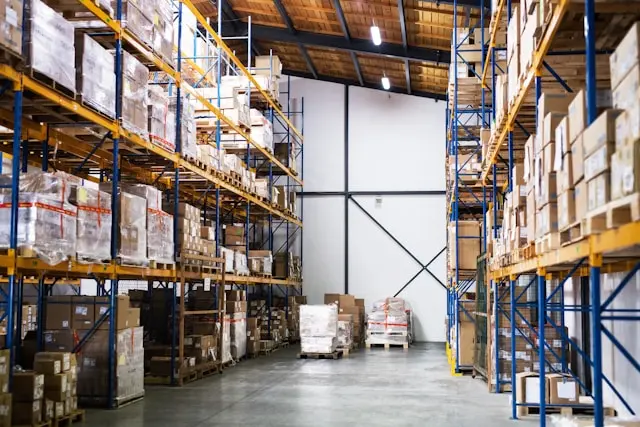
Örebro's logistics sector spent 2024 and 2025 deploying AutoStore systems and autonomous mobile robots to offset a structural driver shortage that has dogged Sweden's transport industry for the better part of a decade. The logic was straightforward: if you cannot hire enough CE-licensed drivers, reduce your dependence on them. Warehouse utilisation rates in the region hit 94%. Modern automated facilities commanded rent premiums of 12 to 15% above older stock. The capital moved fast.
The talent did not follow. Every AutoStore installation requires electromechanical technicians with IT fluency. Every AMR deployment needs maintenance engineers who can programme PLCs and administer warehouse management systems simultaneously. These profiles are scarcer in Örebro than the drivers the automation was supposed to replace. The result is a market entering 2026 with new equipment, rising throughput expectations, and a talent gap that no job board can close.
What follows is an analysis of the forces reshaping Örebro's logistics market, the specific roles where hiring has become most difficult, and what organisations operating in this corridor need to understand before they make their next leadership or technical appointment.
The Bi-Modal Hub: What Örebro's Position Actually Offers
Örebro sits at the convergence of European routes E18 and E20, placing it within a four-hour drive of 90% of Sweden's population. This is the geography that underpins every investment case for the region. The city anchors the Godsstråket genom Bergslagen freight corridor, connecting the Port of Gothenburg, Stockholm Norvik, and Oslo by rail. The intermodal terminal at Hallsberg, 25 kilometres south, handles approximately 300,000 TEU annually, with Örebro functioning as the secondary distribution layer.
The carrier footprint is real. PostNord operates a 28,000 square metre distribution terminal in the Bista industrial area. Dagab Inköp & Logistik, part of the Axfood group, runs a 60,000 square metre automated grocery distribution centre in the same zone. DB Schenker maintains a combined road-rail terminal. DHL Freight operates domestic line-haul connections through the E20 corridor.
The air cargo gap that changes the calculation
What the positioning narrative omits is the air freight constraint. Örebro Airport handled 172 tonnes of freight in 2023. Stockholm Arlanda handled 186,000 tonnes in the same period, according to the Swedish Transport Agency's air transport statistics. The ratio is not close. Örebro is not a multi-modal hub. It is a bi-modal hub: road and rail, with no scheduled cargo flights and no near-term prospect of acquiring them.
This matters for pharmaceutical and electronics shippers in particular. Temperature-sensitive or time-critical goods originating in central Sweden must be trucked 120 kilometres to Arlanda for air dispatch. The theoretical time advantage of Örebro's central position erodes for any supply chain that requires air connectivity. For cold-chain and ambient overland distribution, the centrality holds. For anything requiring air integration, the routing adds cost and complexity that the regional development narrative does not emphasise.
The distinction is important for hiring leaders because it shapes which types of logistics operations can genuinely scale in Örebro and which will always treat the city as a spoke rather than a hub. That in turn determines which executive profiles the market needs and which ones it will struggle to attract.
Where the Talent Shortages Are Most Acute
The sector generated approximately 1,200 unique job postings across Örebro County during 2024, according to Arbetsförmedlingen's regional labour market data. Sixty-five per cent were concentrated in transport operations: drivers, forklift operators, loading staff. The remaining 35% covered technical and managerial functions where the shortages are deepest.
Three categories stand out.
CE-licensed drivers with ADR certification
Sweden faces a national deficit of 6,000 to 8,000 professional drivers, according to the Transport Workers' Union's 2024 labour market report. Central regions including Örebro experience the pressure acutely. The CE-with-ADR combination, required for hazardous goods transport, is the hardest profile to fill. Major carriers in the region typically operate with 10 to 15% driver vacancies despite offering starting bonuses of SEK 20,000 to 30,000.
The pattern is consistent across the market. Carriers accept subcontractor solutions at 20 to 25% cost premiums rather than leaving capacity idle. Data from Arbetsförmedlingen's vacancy duration statistics for 2024 suggests that a typical CE-driver-with-ADR posting in the region remained open for close to eleven months before being filled through internal relocation from another depot.
Twenty-eight per cent of Swedish heavy vehicle drivers are over 55. Youth recruitment is not replacing retirements at anything close to the required rate. EU Mobility Package enforcement has further reduced flexible driver availability, tightening just-in-time distribution models that the region's carriers depend upon. The hidden costs of failing to fill these roles compound with every month a vacancy persists.
Automation technicians: the scarcest profile in the market
Demand for warehouse automation technicians rose 34% year on year in 2024. The roles combine PLC programming, warehouse management system administration, and mechanical maintenance. This is not a profile that exists in abundance anywhere in Sweden. In Örebro, it barely exists at all.
The local pipeline is thin. Örebro University produces approximately 80 graduates annually in supply chain management and intelligent logistics, but these programmes are geared toward management and analytics rather than hands-on electromechanical maintenance. The technicians the sector needs are more likely to be found at manufacturing exporters in neighbouring regions. Volvo CE in Eskilstuna and Sandvik in the same corridor employ the closest equivalent profiles. Moving them requires notice period buyouts or project-based contracting arrangements, and the passive candidate ratio in this category sits at approximately 70%.
Third-party logistics providers have responded by restructuring organisational charts. Rather than waiting for a scarce full-stack automation profile, several operators have split traditional IT and operations responsibilities into hybrid "Automation Coordinator" roles. At least one regional cold-chain operator created two dedicated AMR technician positions in 2024 with salaries 18% above standard maintenance grades, pulling talent from manufacturing rather than logistics.
Supply chain directors with sustainability credentials
The third shortage sits at the executive level. Senior leaders capable of managing Scope 3 emissions reporting and circular logistics strategies are in demand across every Swedish logistics cluster, not just Örebro. The difference is that Örebro's pool is shallower. Senior supply chain directors in this market average 6.8 years of tenure, according to LinkedIn Talent Insights data for the Swedish logistics sector. Between 80 and 90% are passive. They are not looking. Reaching the hidden majority of qualified executives who are not visible on any job board requires a fundamentally different method from posting and waiting.
The green logistics premium compounds the challenge. Executives with proven electrification project management experience command 12 to 18% premiums above standard benchmarks, according to Boston Consulting Group's 2024 Green Skills Premium Report. In a market where the base for a supply chain director with regional or Nordic scope already ranges from SEK 950,000 to SEK 1,400,000, the effective cost of a green-credentialed leader pushes well above what many Örebro-based operators have budgeted.
The Productivity Trap: Why Capital Cannot Replace Labour Here
This is the analytical core of the Örebro logistics story in 2026. The market invested in automation to solve one talent problem. That investment created a different talent problem that is harder to solve.
Aggregate data shows logistics employment in Örebro growing at 2.3% annually, according to SCB's business register. The sector is not shrinking. But the composition of demand has shifted. The roles the market needs most are not the roles the local workforce can fill. AutoStore installations and AMR deployments sit in warehouses where utilisation rates should be climbing. Without the technicians to maintain and optimise these systems, the equipment operates below designed capacity.
This creates what might be called a productivity trap. The capex has been deployed. The opex savings have been modelled. The efficiency gains that justified the investment depend on a workforce that does not yet exist in this region in sufficient numbers. The assumption that capital investment can linearly replace scarce labour breaks down when the replacement itself requires an even scarcer form of labour.
The firms that recognised this early restructured before deploying. They built hybrid roles, recruited from adjacent manufacturing sectors, and accepted that the traditional executive search playbook would not reach the candidates they needed. The firms that did not recognise it are entering 2026 with installed systems and open headcount, and the gap between the two groups is widening.
Compensation in Örebro's Logistics Sector: What the Benchmarks Show
Understanding what roles command in this market is essential for any hiring leader assembling an offer. The benchmarks below, drawn from collective agreement data and sector-specific salary surveys from 2024, reflect the rates at which the market was operating through last year. Green skills premiums and automation-specific pay adjustments are pushing 2026 figures higher in several categories.
At the senior specialist and manager level, a logistics operations manager with five to eight years of experience earns between SEK 620,000 and SEK 780,000 in base salary, with bonus potential of 10 to 15%. A transport manager overseeing a fleet of more than 50 vehicles commands SEK 680,000 to SEK 850,000 in base compensation.
At the executive level, a supply chain director with regional or Nordic scope earns SEK 950,000 to SEK 1,400,000 annually, with material variation based on stock options in listed companies. A head of logistics at a third-party or contract logistics provider falls in the SEK 900,000 to SEK 1,200,000 base range, with performance bonuses up to 25%.
The geographic premium tells its own story. Stockholm draws senior logistics talent with compensation premiums of 15 to 25% for equivalent director-level roles, according to SCB salary structure statistics. The offset is housing cost: Örebro remains materially cheaper than Stockholm, but the gap has narrowed as Örebro's housing market tightened through 2024 and 2025. For a passive candidate weighing a move from Stockholm, the salary negotiation calculation involves comparing net disposable income after housing, not headline figures alone.
Gothenburg competes on a different axis entirely. The presence of Maersk, MSC, and other global shipping lines offers career trajectories into maritime logistics and international freight forwarding that Örebro's overland-focused market cannot match. Mid-level managers seeking sector mobility are drawn to Jönköping's denser logistics cluster, where the cost of living is comparable but the networking density is higher.
The implication for executive hiring in industrial and logistics sectors is clear. Örebro offers competitive total cost of employment at the specialist and manager level. At the director level, organisations must compete with Stockholm premiums while offering a career proposition that compensates for the narrower scope of a regional distribution node.
Infrastructure Constraints and Regulatory Pressure
Two structural risks will shape the market through 2026 and beyond. Both have direct implications for the type of leaders this sector needs to hire.
The E20 vulnerability and Hallsberg bottleneck
The region's heavy reliance on E20 for north-south freight flow creates a single-point-of-failure vulnerability. Accidents at the E18/E20 interchange cause cascading delays of four to six hours, according to the Swedish Transport Administration's incident analysis data. The typical response is route diversion via national road 50, which adds transit time and cost.
The Hallsberg intermodal hub operates at 85% capacity. Planned upgrades face completion timelines of 2027 to 2028, according to Trafikverket's national rail plan. Until those upgrades are delivered, the rail capacity ceiling constrains the intermodal expansion that the sector is counting on to absorb volume growth of 3 to 4% annually.
Environmental zones and fleet transition costs
Örebro Municipality plans to implement Class 2 environmental zones by 2026, banning pre-2009 diesel trucks from the city centre. For large carriers with modern fleets, this is manageable. For SME operators, the fleet upgrade requirement is a material financial burden that may push smaller firms out of the urban distribution market entirely.
The broader electrification challenge is quantifiable. The Swedish Transport Agency's electrification roadmap estimates that transitioning a 100-vehicle heavy fleet requires charging infrastructure investment of SEK 50 to 80 million, excluding vehicle capital expenditure. Forty per cent of regional logistics operators were running active trials of electric or biogas heavy vehicles through 2024. Converting trials to full fleet deployment demands both capital and leadership with electrification programme management experience.
This is where the hiring challenge and the infrastructure challenge converge. The leaders who can manage a green fleet transition while maintaining service levels during the changeover period are the same leaders who command the 12 to 18% premium identified in the compensation data. The organisations that delay hiring these leaders do not simply lose time. They lose competitive position as environmental regulations tighten and customer procurement requirements increasingly mandate verified Scope 3 reporting. A proactive approach to building a leadership pipeline is not optional in this environment. It is the difference between leading the transition and being forced through it.
What Hiring Leaders in This Market Need to Do Differently
The Örebro logistics market in 2026 requires a hiring approach built for three specific conditions: a passive senior candidate pool where 80 to 90% of qualified leaders are not looking, a technical talent base that must be sourced from adjacent manufacturing sectors rather than from within logistics, and a competitive dynamic where Stockholm and Gothenburg can outbid on compensation alone.
Traditional job advertising reaches the active 10 to 20% of the market. In a region where the automation technician pool is small enough that most qualified individuals are known by name to a handful of employers, and where supply chain directors average nearly seven years in their current roles, posting a vacancy and waiting for applications is a method designed to miss the candidates who matter most.
The organisations succeeding in this market share three characteristics. First, they define the role around the candidate pool that actually exists rather than writing specifications for a profile that the region cannot produce. The firms that split automation coordinator roles into manageable hybrids filled faster than those that held out for a full-stack unicorn. Second, they invest in detailed talent mapping before launching a search, identifying where the relevant candidates work, what it would take to move them, and what notice period and contractual constraints apply. Third, they move fast. In a market where a CE-driver posting can remain open for eleven months and a supply chain director search against passive candidates can take longer, the firms that compress time to shortlist gain a decisive advantage.
KiTalent works with organisations facing exactly these conditions. Using AI-enhanced direct headhunting methodology, the firm identifies and engages passive candidates in specialist markets where conventional search fails. Interview-ready candidates are delivered within 7 to 10 days. The pay-per-interview model means clients invest only when they are meeting qualified candidates, not before. With a 96% one-year retention rate across 1,450 completed executive placements, the approach is built for markets where the cost of a wrong hire or a stalled search is measured in operational disruption rather than recruitment fees alone.
For organisations hiring supply chain directors, automation specialists, or operations leaders in Örebro's logistics sector, where the candidates who can run a green fleet transition and optimise an automated warehouse are not applying to job postings, speak with our executive search team about how we reach the talent this market requires.
Frequently Asked Questions
What makes Örebro a strategic location for logistics operations in Sweden?
Örebro sits at the intersection of European routes E18 and E20, placing it within a four-hour drive of 90% of Sweden's population. The nearby Hallsberg intermodal terminal handles approximately 300,000 TEU annually, providing rail connections to the Port of Gothenburg and Stockholm Norvik. However, the city functions as a bi-modal road-rail hub rather than a full multi-modal centre, as Örebro Airport handles minimal freight volume. For overland distribution across Scandinavia, the position is strong. For supply chains requiring air integration, goods must be routed through Stockholm Arlanda.
Why is it so difficult to hire logistics automation technicians in Örebro?
The roles require a combination of PLC programming, warehouse management system administration, and mechanical maintenance. This hybrid profile is scarce across Sweden, but Örebro lacks a dedicated local training pipeline for it. The closest qualified candidates typically work for manufacturing firms in neighbouring regions. With a passive candidate ratio of approximately 70%, these technicians must be identified and engaged through direct search and headhunting methods rather than conventional advertising.
What do senior logistics executives earn in Örebro compared to Stockholm?
A supply chain director with regional or Nordic scope earns SEK 950,000 to SEK 1,400,000 annually in Örebro, while Stockholm commands a 15 to 25% premium for equivalent roles. However, Örebro's lower housing costs partially offset the gap. Executives with proven green logistics credentials, such as fleet electrification programme management, command an additional 12 to 18% above standard benchmarks regardless of location.
How severe is the driver shortage affecting Örebro's logistics sector?
Sweden faces a national deficit of 6,000 to 8,000 professional drivers, and Örebro's central region experiences acute pressure. Carriers typically operate with 10 to 15% driver vacancies. The problem is compounding: 28% of Swedish heavy vehicle drivers are over 55, youth recruitment is insufficient to replace retirements, and EU Mobility Package enforcement has reduced schedule flexibility. Carriers routinely accept subcontractor arrangements at 20 to 25% cost premiums to maintain capacity.
What is the Örebro logistics productivity trap?
The productivity trap describes a pattern where companies invest in warehouse automation to offset driver shortages, but the technicians required to maintain and optimise these systems are even scarcer than the drivers the automation was meant to replace. Deployed equipment operates below designed capacity because the maintenance and programming talent does not exist locally in sufficient numbers. Organisations that recognised this early and restructured roles before deploying technology have fared better than those that assumed capital could linearly substitute for labour.
How can KiTalent help with logistics executive hiring in Örebro?
KiTalent uses AI-enhanced talent mapping to identify passive candidates in specialist markets where 80 to 90% of qualified leaders are not actively looking. For Örebro's logistics sector, this means reaching supply chain directors, automation specialists, and operations leaders embedded in competing organisations or adjacent manufacturing firms. Candidates are delivered interview-ready within 7 to 10 days, with a pay-per-interview model that eliminates upfront retainer risk.