Oristano's Coastal Tourism Is Booming in Summer and Bleeding Talent by October: The Hiring Cycle That Infrastructure Cannot Fix
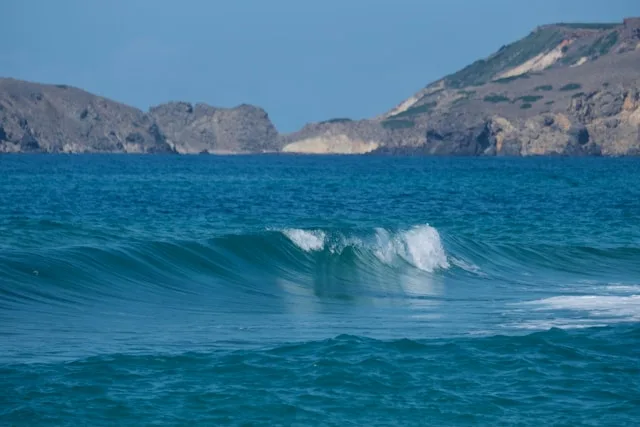
The province of Oristano recorded 1.2 million tourist arrivals in 2023, a 4.3% increase over the prior year. The Sinis Peninsula, with its quartz beaches at Is Arutas and the Tharros archaeological site, continues to anchor demand along one of Sardinia's most distinctive coastlines. Investment is flowing in. Regione Sardegna's strategic tourism plan has allocated €4.2 million to the Oristano Gulf for cycle tourism infrastructure and SME digitalisation. On the surface, the trajectory looks promising.
Beneath the headline numbers sits a structural problem that no amount of infrastructure spending has yet solved. Sixty-eight per cent of the province's annual hospitality revenue is compressed into July and August. The average hotel occupancy rate across the three-star segment is 42% for the year, surging to 94% in August and collapsing to 18% in February. This is not a demand problem. It is a rhythm problem. And its consequences for executive talent are severe: Oristano cannot hold the managers it needs because it cannot offer them twelve months of meaningful work.
What follows is an analysis of the forces pulling Oristano's hospitality sector in two directions at once. The region is investing to extend the season and diversify into agritourism. The labour market is responding with a seasonal cliff edge that pushes experienced managers toward Cagliari, the Costa Smeralda, or out of Sardinia entirely. The gap between ambition and workforce reality is where the real hiring challenge lives, and it is widening in ways that matter for any organisation trying to build or sustain a leadership team in this market.
The Seasonal Cliff Edge and Its Consequences for Leadership Talent
The Italian hospitality sector has always operated with seasonal cycles. What distinguishes Oristano from other coastal markets is the severity of the compression and the speed of the drop-off. INPS employment data shows that 62% of hospitality contracts in Oristano province terminate in September or October. Winter hospitality employment runs at just 28% of peak summer levels. This is not gradual seasonal tapering. It is a near-complete annual shutdown of the workforce.
For front-of-house staff and housekeeping teams, the seasonal model is understood and, to a degree, accepted. Workers migrate to ski resorts in the Dolomites or urban centres for winter employment. The churn rate in these roles runs between 40% and 60% annually, and the active candidate market absorbs the turnover.
For senior managers, the calculation is entirely different. A Hotel General Manager responsible for a 40 to 80 room property needs continuity. Revenue strategy, team development, supplier relationships, and capital planning do not pause when the last guest checks out in October. Yet Italian labour law restricts the renewal of seasonal contracts to a maximum of eight months in a twelve-month period for the same employer. This creates a legal cliff that mirrors the occupational one. The manager who runs the property through a 94% August must either accept a year-round contract at a compensation level that a 42% annual occupancy rate struggles to justify, or leave.
Most leave. And the ones who stay are not always the ones the market needs most.
Where the Talent Goes: Oristano as a Feeder Market
Oristano's position in Sardinia's hospitality hierarchy is clear. It sits below the Costa Smeralda, below Cagliari, and below Alghero. The compensation data confirms this ranking, and so does the career trajectory of the professionals who pass through it.
The Costa Smeralda premium
A Hotel General Manager in the luxury segment around Porto Cervo and Arzachena earns 30% to 40% more than an equivalent role in Oristano. At the executive level, that translates to a range of €90,000 to €120,000 or more, compared with €65,000 to €85,000 in the Sinis corridor. The Costa Smeralda also offers what Oristano cannot: international brand affiliation. Properties like the Hotel Cala di Volpe and Pitrizza connect their managers to global hospitality networks, creating a career trajectory that leads to regional or corporate roles with major chains. According to HVS's Sardegna Luxury Hospitality Report, employer-provided accommodation in the Costa Smeralda is more common than in Oristano, which partially offsets the higher cost of living and makes the net financial proposition even more favourable for candidates willing to move north.
Cagliari's year-round stability
Cagliari offers a different but equally compelling pull. The compensation premium over Oristano is 15% to 20%, which is less dramatic than the Costa Smeralda gap but comes attached to something Oristano fundamentally lacks: year-round employment stability. MICE tourism, business travel, and a resident population that supports restaurants and hotels through the winter months mean that a General Manager in Cagliari does not face the October cliff. The city also offers dual-career opportunities for partners, urban amenities, and better transport connectivity. For a mid-career hospitality professional weighing their next move, the rational choice is rarely to stay in Oristano.
Alghero, with its Ryanair hub and established diving and wedding tourism sectors, offers a season that stretches from April to November, meaningfully longer than Oristano's May to October window. Its compensation premium of 10% to 15% over Oristano is modest, but the additional operating weeks make a material difference to career satisfaction and income continuity.
The result is a pattern well documented by Unioncamere Sardegna's interprovincial labour mobility data: Oristano functions as a training ground. Mid-level managers gain experience on the Sinis coast, then migrate to more lucrative, more stable markets for their senior roles. This creates a perpetual experience gap at the top of the local labour pool, one that traditional job advertising consistently fails to close.
The Agritourism Expansion and Its Training System Mismatch
Regione Sardegna has identified agritourism as the primary growth vector for Oristano's tourism product diversification, targeting a 25% increase in agritourism bed-nights by 2026. The logic is sound. The Cabras and Riola Sardo hinterland contains vineyards, olive groves, and a food culture centred on bottarga di muggine, Vernaccia wine, and fregula pasta. These are distinctive, marketable assets. The number of active agritourism establishments in the province has grown from 138 in 2021 to 147 as of the most recent regional registry update.
The problem is not the product. The problem is the people required to run it.
An agritourism manager needs a hybrid skill profile that barely exists in the Italian higher education system. The role requires agricultural business management, covering vineyard or olive grove operations, supply chain logistics, and EU agricultural compliance. It simultaneously requires hospitality service standards, including guest experience design, revenue management, OTA channel optimisation, and team leadership. ISTAT education flow data reveals that zero higher education institutions in Oristano province offer a dual-degree programme combining agricultural science with hospitality management. The closest programmes are in Sassari, 90 kilometres away, or in Cagliari. Graduate retention in Oristano province is low.
This is the original synthesis that the data points toward but that the research does not state directly: Oristano's agritourism expansion is being planned as if it were a demand-side problem, solvable through infrastructure investment and marketing spend, when it is fundamentally a supply-side problem rooted in a training pipeline that does not produce the profile the sector needs. Capital has moved faster than human capital can follow. The region can build the cycle paths, digitalise the booking systems, and market the Sinis brand to international visitors. But without a mechanism to produce, attract, and retain managers who can operate at the intersection of agriculture and hospitality, the expansion will hit a ceiling defined not by tourist demand but by the absence of qualified leadership.
At the executive level, compensation for agritourism managers reflects both the scarcity and the ambiguity of the role. A senior specialist earns €32,000 to €42,000. A multi-site agritourism director or owner-representative earns €48,000 to €60,000, with top-quartile candidates commanding up to €65,000 plus accommodation benefits. These figures, documented by Confagricoltura Sardegna and CIA Sardegna, sit well below what the same individual could earn in a conventional hotel management role elsewhere in Sardinia. The premium required to attract someone with genuine dual competence into this market is real, and organisations that misjudge it risk losing searches they did not know they were competing in.
Compensation Realities Across the Oristano Hospitality Market
Understanding what roles actually pay in this market is essential for any organisation attempting to hire into it. Oristano operates at a 15% to 25% discount to Milan and Rome, and a roughly 10% discount to Cagliari. These are not abstract differentials. They shape every candidate conversation.
Hotel General Managers
At the department head or F&B manager level, stepping up into a GM role for the first time, total cash compensation runs from €42,000 to €55,000. At the full executive level, a property GM with profit-and-loss responsibility earns €65,000 to €85,000. Top performers in luxury beachfront properties may reach €95,000 with performance bonuses tied to Gross Operating Profit. These figures, drawn from Hays Italy and Michael Page Italy salary benchmarks adjusted for Sardinia, represent the full range available in the Sinis corridor.
The critical detail is what these numbers mean in context. A GM earning €75,000 in Oristano could earn €100,000 to €120,000 for a comparable role on the Costa Smeralda. The gap is not a negotiation problem. It is a market-structure problem. Oristano's properties are smaller, their seasons shorter, and their revenue bases narrower. The compensation they can sustain is a function of their economics, not their ambition.
Revenue Managers
At the senior specialist level, a revenue manager in Oristano earns €38,000 to €48,000. At the director level overseeing multiple properties, the range extends to €55,000 to €70,000. These professionals manage dynamic pricing across Booking.com, Expedia, and direct channels. They need to be fluent in English and Italian, technically competent with OTA platforms, and comfortable operating in a market where a pricing error in the eight-week peak window can define the entire year's financial outcome.
The passive candidate rate for revenue managers in this market is approximately 70%. Digital skills scarcity means that employed candidates receive multiple LinkedIn approaches monthly. They typically move only for material salary increases or equity and partnership opportunities in agritourism ventures. Reaching them requires direct identification and approach methods that go well beyond posting a role and waiting for applications.
The 80% Problem: Why Conventional Search Methods Fail Here
The passive candidate dynamics in Oristano's hospitality market are pronounced even by the standards of executive search. An estimated 80% to 85% of qualified Hotel General Managers in the Sinis and Oristano area are passive. They are currently employed, not monitoring job boards, and not responding to standard recruitment advertising. Average tenure in role is 4.2 years. Unemployment among this cohort is below 3%.
For executive chefs with Sardinian specialisation, the passive rate is approximately 75%. These are professionals with backgrounds in luxury hotels or Michelin-recognised kitchens. They are embedded in industry networks and do not engage with job boards. For revenue managers, the figure is 70%.
The implication is direct. In a market where the total pool of qualified candidates for a senior role might number in the low dozens across all of Sardinia, and where three-quarters or more of those candidates are not looking, the conventional recruitment model of advertising and inbound application is reaching a fraction of the viable market. The organisations that have adapted to this reality are the ones successfully hiring. The ones that have not adapted are cycling through the same small pool of active candidates, often settling for a less experienced hire or paying a poaching premium of 15% to 20% to pull a manager from a competitor, a practice documented across the Sinis luxury segment by Federalberghi Sardegna's workforce competency survey.
Several mid-sized hotels in the Torre Grande corridor have restructured their operations entirely in response to this constraint. Rather than attempting to recruit separate managers for each small property, they have created "Cluster Manager" roles. One senior manager oversees two or three properties totalling 30 to 50 rooms. The role carries enough scope and compensation to attract a qualified hospitality graduate, something that the individual properties could not offer on their own. This is not an efficiency play. It is a talent acquisition strategy disguised as an organisational redesign.
The restructuring tells you everything you need to know about the severity of the problem. When employers reshape their operating model to make a single role attractive enough to fill, the underlying market has moved beyond what standard hiring approaches can address.
Regulatory and Physical Constraints That Compound the Talent Challenge
The hiring difficulties in Oristano do not exist in isolation. They are compounded by regulatory and physical constraints that limit the market's ability to grow its way out of the problem.
Coastal construction limits and inventory stagnation
The Piano Paesaggistico Regionale and Ritmare coastal protection protocols severely limit new construction within 300 metres of the Is Arutas and Maimoni beaches. No major hotel inventory expansion is forecast for 2026. Pipeline activity focuses on boutique agritourism upgrades rather than new-build hotels. This means the market cannot attract talent by offering the excitement of a new opening or the career appeal of a larger, higher-profile property. The inventory is what it is, and the roles available within it are bounded by that physical reality.
Housing affordability for seasonal workers
Rising short-term rental demand from platforms like Airbnb in Torre Grande and Cabras has reduced long-term rental stock for hospitality staff. Average rents for one-bedroom units increased 12% year-on-year in 2024, according to Idealista's residential market report for Sardinia. Entry-level hospitality wages in Oristano run €1,200 to €1,400 per month gross. The arithmetic does not work. Seasonal workers cannot afford to live where they work, and the housing squeeze at the base of the pyramid creates knock-on effects at every level. When you cannot staff the kitchen or the front desk reliably, the burden on the General Manager intensifies.
Transport isolation
Oristano-Fenosu Airport operates limited seasonal routes, almost entirely domestic. Seventy-eight per cent of international visitors transit through Cagliari Elmas Airport, a 90-kilometre, 75-minute drive, or through Alghero at 130 kilometres. No direct airport shuttle rail link exists between Oristano and Cagliari. The SS131 highway connection suffers from summer congestion. For candidates evaluating a move to Oristano, the transport reality is part of the calculation. It is not just about salary and role. It is about daily life, family logistics, and connection to the rest of the island and the mainland. Every additional friction point narrows the pool of professionals willing to consider the move.
The combination of these constraints means that the compensation and benefits proposition required to attract senior talent into Oristano must account for far more than the role itself. It must account for the lifestyle trade-offs, the housing reality, and the career trajectory limitations that the market imposes.
What This Means for Organisations Hiring Leadership Talent on the Sinis Coast
The Oristano hospitality market is not broken. Its tourism product is distinctive, its growth trajectory into agritourism and shoulder-season cultural tourism is credible, and the regional investment flowing into the Gulf is real. But the executive talent market operates under a set of constraints that make conventional approaches to senior hiring consistently inadequate.
The core dynamic is this: the candidates capable of running a 4-star hotel through a compressed peak season, managing OTA revenue across volatile demand windows, or leading a hybrid agritourism operation that spans vineyard management and guest experience design are almost never on the open market. Eighty per cent or more are passive. They are employed in Cagliari, on the Costa Smeralda, in Alghero, or on the mainland. Moving them to Oristano requires a proposition that addresses compensation, seasonality, housing, career trajectory, and lifestyle in a single coherent package. Getting in front of them at all requires a search methodology built for passive candidate identification in markets where the visible talent pool represents a small fraction of the qualified population.
KiTalent works with organisations operating in exactly these conditions, where the candidate pool is small, predominantly passive, and geographically dispersed across competing markets. Through AI-enhanced talent mapping and direct headhunting across luxury, retail, and hospitality sectors, KiTalent delivers interview-ready candidates within 7 to 10 days. The pay-per-interview model means organisations only invest when they are meeting qualified professionals, not before. In a market like Oristano, where every week a senior role sits unfilled during the pre-season planning window translates directly into lost revenue during the peak, speed and precision are not luxuries. They are operational necessities.
For hospitality operators, agritourism groups, and destination management organisations on the Sinis coast who need to secure leadership talent ahead of the 2026 season, start a conversation with our executive search team about how we source and deliver candidates in markets where conventional recruitment consistently falls short. With a 96% one-year retention rate across 1,450 placements and an average client relationship lasting over eight years, KiTalent brings the search methodology and market access that fragmented, seasonal markets require.
Frequently Asked Questions
What is the average salary for a Hotel General Manager in Oristano, Sardinia?
A Hotel General Manager in Oristano's 4-star segment earns between €65,000 and €85,000 in total cash compensation at the executive level, with top performers in luxury beachfront properties reaching €95,000 including performance bonuses. At the stepping-up level, where a department head takes on GM responsibilities for the first time, the range is €42,000 to €55,000. These figures represent a 15% to 25% discount to Milan and Rome, and approximately 10% below equivalent roles in Cagliari. The Costa Smeralda pays 30% to 40% more for comparable positions, which drives ongoing talent migration from the Oristano market.
Why is it so difficult to hire hospitality managers in Oristano?
Three factors converge. First, 68% of annual revenue is concentrated in July and August, making year-round executive retention difficult to fund. Second, an estimated 80% to 85% of qualified General Managers are passive candidates who are not monitoring job boards. Third, Oristano competes directly with Cagliari, Alghero, and the Costa Smeralda, all of which offer higher compensation, longer seasons, or better career trajectories. The result is a market where traditional recruitment methods reach only a fraction of viable candidates, and where direct search is the only reliable path to senior hires.
What is an agritourism manager and why is this role scarce in Sardinia?
An agritourism manager combines agricultural business management with hospitality operations, overseeing both the productive side of a farm, vineyard, or olive grove and the guest experience. The role is scarce because no higher education institution in Oristano province offers a dual-degree programme combining agricultural science with hospitality management. The closest programmes are in Sassari or Cagliari, and graduate retention in Oristano is low. Executive-level compensation ranges from €48,000 to €65,000, but the true scarcity driver is the near-absence of candidates with genuine dual competence.
How does seasonal employment law affect hospitality hiring in Italy?
Italian labour law restricts seasonal contracts to a maximum of eight months in a twelve-month period for the same employer. In Oristano, where 62% of hospitality contracts terminate in September or October, this creates a legal cliff that forces experienced managers to seek winter employment elsewhere. The consequence is reduced return rates: managers who leave for the Dolomites ski season or urban centres in winter often do not return to the same Sardinian property the following spring. This annual cycle erodes institutional knowledge and forces operators into repeated senior hiring processes.
What compensation premium is needed to attract hospitality talent to Oristano?
In the luxury segment, employers on the Sinis coast routinely pay 15% to 20% above standard provincial rates to attract General Managers from Cagliari and Alghero. Even with this premium, the total package remains below what the Costa Smeralda offers. Non-cash elements matter considerably in this market. Accommodation benefits, longer guaranteed contract terms, and the quality-of-life appeal of the Sinis coast can partially offset the financial gap. Organisations that build comprehensive propositions rather than relying on salary alone are more successful at closing senior hires.
How can KiTalent help with hospitality executive search in Sardinia?
KiTalent uses AI-enhanced talent mapping to identify passive candidates across Sardinia's fragmented hospitality market, including professionals currently employed in Cagliari, the Costa Smeralda, Alghero, and mainland Italy who would not be visible through conventional job advertising. The pay-per-interview model means hospitality operators only pay when meeting qualified candidates. With interview-ready shortlists delivered within 7 to 10 days and a 96% one-year retention rate, KiTalent provides the speed and precision that seasonal markets demand, particularly during the critical pre-season planning window.