Oulu's Embedded Systems Sector Is Splitting in Two: What It Means for Every Hiring Decision in 2026
Oulu has spent four decades building one of the densest concentrations of RF and embedded systems expertise in Northern Europe. The city's 6G Flagship research programme has generated 16 spin-off companies since 2018. Venture capital deployment into deep tech hardware reached EUR 42 million across 2023 and 2024, a 23 per cent increase over the prior period. Defence electronics investment tied to Finland's NATO accession is projected to exceed EUR 200 million in the Oulu region by 2026. By almost every capital metric, this market is accelerating.
But the acceleration is uneven, and the unevenness is the story. Capital is flowing into design, prototyping, and R&D. Manufacturing employment has flatlined or contracted. Murata consolidated its Finnish MEMS volume production to Japan and Singapore between 2019 and 2020, cutting Oulu's facility to an R&D operation roughly half the size it was at peak. Scanfil, the region's largest contract manufacturer, is expanding Oulu capacity for defence and medical grade assembly while simultaneously routing standardised IoT sensor production to Southeast Asian facilities. The city is becoming a place where hardware is conceived and validated, but increasingly not where it is built at scale.
What follows is a structured analysis of the forces reshaping Oulu's technology sector, the employers driving that change, and what senior leaders need to understand before they make their next hiring or retention decision. The market that existed here in 2022 is not the market that exists in 2026. The talent requirements have shifted with it, and the organisations that have not adjusted their search strategies are the ones running six-month vacancies for roles that should fill in three.
The Two Markets Inside One City
The analytical claim that runs through every data point in this market is this: Oulu's embedded systems sector is not experiencing a single talent shortage. It is experiencing a bifurcation. Capital investment has created two distinct labour markets operating under the same regional heading, and the hiring strategies that work for one fail completely in the other.
The first market is design and R&D. It employs roughly 45 per cent of the sector's 3,200 to 3,800 direct positions. It is growing. It absorbs the venture capital, the defence contracts, and the 6G research funding. It demands senior RF IC designers, AUTOSAR architects, and hardware security specialists. These roles sit in a passive candidate environment where 80 to 90 per cent of qualified professionals are employed and not looking. Vacancy durations for senior RF positions run six to nine months. This is the market where the hiring crisis is real and immediate.
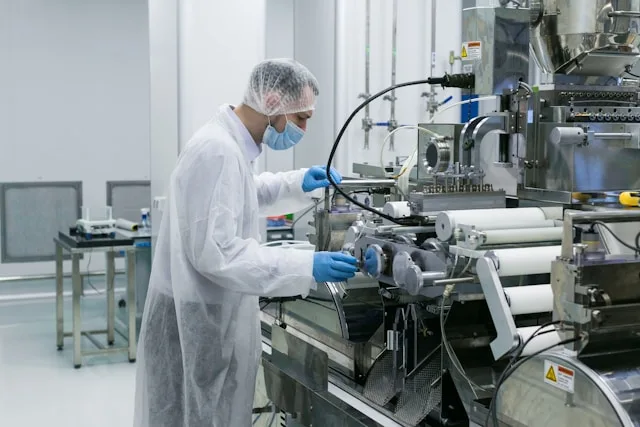
The second market is manufacturing and assembly. It employs roughly 30 per cent of the sector's headcount. It is not growing. Scanfil's Oulu facility, the largest contract manufacturing operation in the region, employs approximately 150 people. The facility is expanding for high-complexity defence and medical work but not for volume IoT production. Murata's headcount has dropped from over 400 in the 2010s to 180 to 200 today. This is the market where efficiency gains and offshoring are compressing demand.
The danger for hiring leaders is treating these as one market. An organisation looking to build an RF design team in Oulu faces fundamentally different constraints than one looking to staff an assembly line. The compensation dynamics are different. The candidate pools are different. The geographic competition is different. Every search decision starts with understanding which of these two markets the role sits in.
Where the Investment Is Going, and Where It Is Not
Defence Electronics: The NATO Catalyst
Finland's April 2023 NATO accession has reshaped the investment thesis for Oulu's electronics sector. Bittium Oyj, headquartered in Oulu with approximately 480 of its 652 employees based in the city, secured Finnish Defence Forces contracts worth EUR 25.8 million for tactical communication systems in 2024. The broader projection from BusinessOulu and the Oulu Chamber of Commerce anticipates EUR 200 million or more in defence electronics R&D investment in the region by 2026.
This investment is concentrated in secure RF communications and ruggedised sensor systems. It requires engineers with security clearances, which narrows the addressable talent pool further. Bittium's defence contracts require clearance from the Finnish Security Intelligence Service (SUPO), meaning that even if a qualified RF specialist is available, they may need months of vetting before they can begin work. The timeline compression from NATO membership collides with the timeline expansion from clearance requirements. Defence hiring leaders in this market are operating with an effective candidate pool that is a fraction of the already small visible market.
The 5G-to-6G Technology Transition
The sector is executing a platform shift from 4G/LTE-M IoT modules to 5G RedCap and satellite IoT hardware. Bittium and Haltian Oy are actively recruiting for 3GPP Release 17/18 implementation. The University of Oulu's 6G Flagship programme, with its EUR 10 million annual budget and 250 researchers, is producing pre-standardisation research that will define the next generation of wireless hardware.
This transition creates a specific hiring problem. The engineers who built 4G modules are not automatically qualified to design 5G RedCap or NTN systems. The protocol stacks are different. The RF frontend requirements for millimetre-wave frequencies demand specialisms that fewer than a dozen engineers in the Oulu region possess at the required depth. The 6G Flagship programme produces PhDs in these areas, but the conversion from researcher to commercially deployable engineer takes two to three years of industry experience. The pipeline exists. It is just narrower and slower than the investment timeline demands.
Venture Capital and the Design-Manufacturing Disconnect
The EUR 42 million in deep tech venture capital deployed across 2023 and 2024 has funded IoT security and energy harvesting sensor startups. These are design-intensive, R&D-heavy companies. They need embedded C/C++ architects, RF designers, and hardware security specialists. They do not need production line operators.
This is where the data creates its most revealing tension. Manufacturing employment in the region has flatlined or declined slightly despite a 23 per cent increase in venture funding. Capital is entering the ecosystem and creating demand for senior technical talent without creating equivalent demand for production roles. The result is a market where the hardest roles to fill are becoming harder, and the roles that historically anchored middle-income employment are migrating offshore. For a hiring leader building an Oulu team, this means that the local talent market is increasingly specialised and that generalist hardware engineers are less available than they appear, because many have already retrained into the higher-demand design roles or relocated to Helsinki.
The Employer Map: Who Competes for the Same Talent
Understanding Oulu's embedded systems hiring requires understanding which employers are drawing from the same finite pool. The city's major technology employers are not competing against external markets alone. They are competing against each other, daily, for a population of senior specialists that numbers in the low hundreds.
Continental Elektrobit Oulu employs approximately 320 engineers focused on AUTOSAR and automotive IoT platforms. Bittium employs roughly 480 people in Oulu across secure communications and medical IoT. Murata retains 180 to 200 employees in MEMS sensor R&D. Below these anchors, Haltian (120+), CoreHW (80+), and Wirepas (100+) compete for overlapping skill profiles in IoT product design, RF IC design, and mesh networking.
The combined demand from these employers, plus 37 active PCB design firms and hardware prototyping services listed in BusinessOulu's ecosystem directory, creates a concentration effect. When Bittium opens a senior RF designer position, CoreHW loses a potential candidate from an already depleted pool. When Continental needs an AUTOSAR architect, it is fishing in the same water as every automotive embedded systems consultancy in the Nordics. The 85-company IoT & Sensor Valley cluster reported EUR 340 million in combined turnover in 2023. That revenue depends on talent that is being fought over by too many employers for the available supply.
Referral bonuses tell the story concisely. Continental and Bittium offer EUR 3,000 to EUR 5,000 for successful senior hires through employee networks. These are not generous gestures. They are an admission that traditional job advertising cannot reach the candidates these firms need.
The Compensation Equation: Competitive Locally, Exposed Regionally
Compensation in Oulu's embedded systems sector presents a paradox that hiring leaders must resolve before structuring any offer.
A senior hardware architect or lead RF engineer with 8 to 12 years of experience commands EUR 75,000 to EUR 95,000 in base salary, with bonus potential of 10 to 20 per cent. At the executive level, a VP of Engineering or CTO at a mid-size hardware design house earns EUR 120,000 to EUR 180,000 in base, with total compensation reaching EUR 150,000 to EUR 220,000 for listed companies. Director-level embedded software roles at international corporates like Continental pay EUR 110,000 to EUR 150,000, with a material gap between international corporate and domestic SME packages.
These figures are competitive within Oulu. The cost of living is substantially lower than Helsinki, Stockholm, or Munich. According to the TEK Union of Professional Engineers salary survey for 2024, an engineer's purchasing power in Oulu often matches or exceeds that of a higher-paid counterpart in the capital region.
But the problem is not purchasing power. The problem is perception and optionality. Helsinki offers a 10 to 15 per cent salary premium for equivalent roles, plus spouse employment opportunities, international schools, and a startup ecosystem with more exit potential. Stockholm offers 30 to 40 per cent premiums for senior hardware architects with deeper venture capital access. Even Tallinn exerts downward wage pressure on junior and mid-level positions through remote contracting at rates competitive with local employment.
Employers in Oulu report offering 15 to 25 per cent salary premiums above 2022 baselines for engineers with five or more years in embedded Linux and RF stack development. This escalation is driven directly by Helsinki-based companies offering remote-work flexibility to Oulu-based talent. The counteroffer dynamic is acute. A passive candidate approached by a Helsinki firm does not need to relocate. They need only accept a remote contract and a pay rise while remaining in Oulu. The local employer, unable to match the Helsinki salary without breaking its internal pay structure, loses the hire without ever knowing a search was underway.
For organisations trying to benchmark compensation accurately in this market, the regional comparison matters more than the local one. Finnish embedded hardware compensation runs 20 to 30 per cent below equivalent positions in Munich and 15 to 20 per cent below Stockholm. The differential is widest precisely at the senior specialist and architect level where the most critical vacancies sit.
The Pipeline Is Not Replacing What the Market Is Losing
University of Oulu electrical engineering enrolment has declined 12 per cent since 2020. This is partly demographic, reflecting the 18-to-25 cohort contraction across Finland. But it is also competitive. Software and AI programmes are attracting students who might previously have entered hardware engineering. The students who do graduate in electrical engineering increasingly move toward Helsinki or Stockholm for higher compensation and broader career options.
The 6G Flagship programme produces world-class researchers, but the output is narrow. The programme employs 250 researchers and has generated 16 spin-offs. These researchers are highly specialised, often in pre-commercial technologies. The gap between a doctoral researcher working on terahertz sensing and an engineer who can design a production-ready 5G RedCap module is two to three years of commercial experience. The pipeline feeds the future but does not fill the present.
The compounding effect is what makes this market genuinely difficult. Retiring hardware engineers are not being replaced at rate. The TE-Palvelut Occupational Barometer for 2024 shows 1,340 open ICT positions in the North Ostrobothnia region, with embedded systems engineers representing 28 per cent of unfilled vacancies. That is approximately 375 embedded systems roles open at any given time against a total sector workforce of 3,200 to 3,800. The vacancy rate alone should concern any hiring leader. The declining pipeline behind it should alarm them.
The structural adaptation is already visible. Haltian and Wirepas have both established Helsinki satellite offices explicitly to access talent unwilling to relocate to Oulu. This is not a temporary measure. It is a permanent concession to the geographic mismatch between where the work is designed and where the workers increasingly prefer to live. For an employer committed to Oulu as a primary site, every hire now involves an implicit negotiation about location flexibility.
The Passive Candidate Reality
The passive candidate ratios in Oulu's embedded systems sector are among the highest in any Nordic technology market.
Senior RF IC designers working on millimetre-wave and beamforming technology are estimated at 85 to 90 per cent passive. Average tenure at current employers exceeds five years. LinkedIn "Open to Work" indicator usage is negligible. These professionals are not browsing job boards. They are solving problems at Bittium or CoreHW or the University of Oulu that do not exist elsewhere. The proposition required to move them is not a salary increase. It is a project they cannot find at their current employer.
AUTOSAR architects with functional safety ISO 26262 certification sit at 80 to 85 per cent passive. Continental's internal referral programme exists because external advertising does not reach these candidates. Hardware security specialists, particularly those with the SUPO clearances required for defence work, are 75 to 80 per cent passive and further constrained by the clearance transfer process.
Only at the junior end of the market, embedded software engineers with fewer than three years of experience and PCB layout designers, does the active candidate ratio approach 40 to 50 per cent. Even there, senior specialists remain overwhelmingly passive.
The implication for search methodology is unambiguous. A conventional job posting strategy in this market reaches, at best, 10 to 15 per cent of the viable candidate population. The other 85 per cent must be identified through direct approach, mapped through professional networks, and engaged through a proposition that addresses their specific career calculus. A firm that posts a role and waits will receive applications from the least competitive segment of the candidate market. A firm that maps the entire addressable population and approaches candidates individually will reach the professionals who actually fill the role successfully.
Regulatory Headwinds and Structural Risks
Export Controls and the Cost of NATO Alignment
Finland's NATO membership has brought stricter EU dual-use export control enforcement under Regulation 2021/821. For Oulu-based defence electronics suppliers, compliance costs run EUR 500,000 to EUR 1.2 million annually for export licensing and end-user verification. This cost is manageable for Bittium, which has the scale and the contract revenue to absorb it. It is potentially prohibitive for smaller firms attempting to internationalise dual-use sensor technology.
The compliance burden also creates a hiring requirement. Export control specialists, professionals who understand both the technical specifications of the products and the regulatory framework governing their sale, are a new category of hire for Oulu's hardware firms. These roles did not exist in most companies three years ago. The talent pool for them is essentially zero in Oulu and thin across Finland. Firms are either training internally or hiring from Helsinki's larger regulatory affairs community.
The Cyber Resilience Act and IoT Compliance Costs
The EU Cyber Resilience Act and Radio Equipment Directive amendments impose new conformity assessment requirements on IoT devices. Oulu SMEs report compliance costs of EUR 50,000 to EUR 150,000 per new product launch. For a startup with annual revenue under EUR 2 million, this represents a barrier to market entry that either delays product launches or forces partnerships with larger firms that can absorb the cost.
The compliance cost is not purely financial. It demands engineering time. Every new conformity assessment requires embedded security expertise, test protocol design, and documentation that pulls engineers away from product development. In a market where senior embedded security engineers are already 75 to 80 per cent passive and vacancies run for months, the regulatory burden compounds the talent shortage rather than simply adding cost.
Energy and Supply Chain Pressure
Industrial electricity prices in the Oulu region averaged EUR 85 per MWh in 2024, nearly double the EUR 45 per MWh in 2020. Contract manufacturers report energy now representing 8 to 12 per cent of cost of goods sold, up from 4 to 5 per cent. For high-volume, low-margin IoT sensor assembly, this arithmetic pushes production offshore faster than any strategic decision would. The manufacturing bifurcation described earlier is not purely a design choice. It is partly an energy cost reality.
Advanced RF front-end modules and specialised MEMS sensors still carry 20 to 24 week lead times from Taiwanese foundries. The dependency on TSMC and UMC for RF chip production means that every prototype iteration in Oulu involves a five-to-six-month supply chain loop. For startups racing to validate hardware before the next funding round, this timeline is existential.
What This Market Demands from a Hiring Strategy
The organisations in Oulu that fill senior embedded systems roles successfully share a set of characteristics that distinguish them from those running perpetual vacancies.
First, they have accepted that the addressable candidate pool for any given senior role is small. An RF IC designer search in this market is not a volume exercise. It is a precision exercise. The total population of qualified candidates in the Oulu region for a senior mmWave design role might number 30 to 40 people. Most are employed. Most are not looking. The search strategy must begin with mapping that entire population before approaching anyone.
Second, they lead with the project rather than the package. In a market where 85 per cent of the best candidates are passive, the initial engagement must answer the question: what will I work on here that I cannot work on where I am? The 6G pre-standardisation research, the NATO defence contracts, the medical device certification challenges: these are the propositions that move senior engineers. Compensation follows, but it does not lead.
Third, they move fast. A six-to-nine-month vacancy duration for a senior RF role is not inevitable. It is the consequence of a search process that begins with advertising, waits for inbound applications, and only resorts to direct headhunting after the first approach has failed. The firms that fill these roles in three months are the ones that begin with direct approach from day one.
KiTalent works with organisations operating in precisely these conditions. In markets where the candidate pool is small, passive, and security-constrained, the difference between a successful hire and a twelve-month vacancy is the method used to find and engage candidates. KiTalent's AI-enhanced talent mapping identifies the full addressable population for a role before the first approach is made. Interview-ready candidates are delivered within 7 to 10 days, with a 96 per cent one-year retention rate that reflects the quality of match rather than the speed of process.
For organisations hiring senior engineering and technology leadership in Oulu's embedded systems sector, where the candidates who matter are not visible on any job board and the cost of an unfilled role is measured in missed product cycles and lost defence contract opportunities, start a conversation with our executive search team about how we approach this market.
Frequently Asked Questions
What is the average salary for a senior embedded systems engineer in Oulu, Finland?
A senior hardware architect or lead RF engineer with 8 to 12 years of experience in Oulu earns EUR 75,000 to EUR 95,000 in base salary, with bonus potential of 10 to 20 per cent. Executive-level roles such as VP of Engineering or CTO at mid-size design houses command EUR 120,000 to EUR 180,000 in base, with total compensation reaching EUR 220,000 for listed companies. These figures run 20 to 30 per cent below equivalent roles in Munich and 15 to 20 per cent below Stockholm, though Oulu's lower cost of living partially offsets the gap. For current benchmarks, salary data for technology leadership roles provides additional context.
Why are RF IC design engineers so hard to hire in Oulu?
Senior RF IC designers in Oulu are estimated at 85 to 90 per cent passive, meaning they are employed and not actively seeking new roles. Average tenure exceeds five years. The total qualified population for specialisms like millimetre-wave and beamforming design is extremely small regionally, likely numbering in the low dozens. Defence contracts from Bittium add security clearance requirements that further narrow the eligible pool. Conventional job advertising reaches at most 10 to 15 per cent of viable candidates for these roles.
How has Finland's NATO membership affected hiring in Oulu's defence electronics sector?
NATO accession in April 2023 is projected to drive over EUR 200 million in defence electronics R&D investment in the Oulu region by 2026. Bittium secured EUR 25.8 million in Finnish Defence Forces contracts in 2024 alone. This investment creates demand for secure RF communications and ruggedised sensor specialists, but security clearance requirements from SUPO add months to the hiring timeline. Export control compliance under EU Regulation 2021/821 also generates new hiring needs for regulatory specialists that previously did not exist in most Oulu firms.
What is the outlook for Oulu's embedded systems sector in 2026?
BusinessOulu and the Oulu Chamber of Commerce project 4 to 6 per cent headcount growth in the embedded hardware sector through 2026. Growth depends on commercialising 6G pre-standardisation research and securing defence contracts. The sector is bifurcating: design and R&D employment is expanding while volume manufacturing continues migrating to Southeast Asian partners. Hiring competition for senior specialists is expected to intensify as venture capital, defence spending, and the 5G-to-6G platform transition all generate demand simultaneously.
How can companies find passive embedded systems candidates in Finland?
In Oulu's embedded systems market, the majority of qualified senior candidates are not actively job seeking. Reaching them requires direct identification and approach rather than job advertising. KiTalent's methodology uses AI-powered talent mapping to identify the full addressable population for a role before any outreach begins, delivering interview-ready candidates within 7 to 10 days. This approach is particularly effective in markets like Oulu where the candidate pool is small, deeply passive, and often constrained by security clearance requirements.
Is Oulu losing embedded systems talent to Helsinki and Stockholm?
Yes. Statistics Finland data shows a net outflow of mid-career professionals with 5 to 10 years of experience toward the Helsinki metropolitan area, driven by higher absolute compensation, spouse employment opportunities, and international school access. Stockholm attracts top-tier talent with 30 to 40 per cent salary premiums. Several Oulu-based firms including Haltian and Wirepas have established Helsinki offices specifically to retain senior architects who relocated. Helsinki-based companies also recruit Oulu talent into remote roles, adding competitive pressure that local employers must address through proactive talent pipeline strategies.