Pittsburgh Natural Gas Hiring: New Infrastructure Has Not Solved the Talent Crisis That Matters
Pittsburgh's energy sector completed the Mountain Valley Pipeline in mid-2024. It closed the largest upstream-midstream merger in Appalachian history the same quarter. It brought the region's first world-scale ethane cracker to 80% capacity. By every measure of physical infrastructure and corporate consolidation, the conditions for growth are now in place. Yet the specialist roles that make these assets productive remain among the hardest to fill in the American energy sector.
The paradox is specific and measurable. Job postings for petroleum engineers and chemical engineers in the Pittsburgh metropolitan area rose 14% year-over-year through late 2024, despite flat commodity prices. Average time-to-fill for critical technical positions reached 94 days, compared to 58 days for general manufacturing roles in the same geography. At the senior specialist level, where unconventional reservoir experience and process safety credentials intersect, individual searches have stretched past seven months. The infrastructure bottleneck has been relieved. The talent bottleneck has not.
What follows is a ground-level analysis of where Pittsburgh's natural gas and petrochemical hiring gaps are most acute, what is driving them, and why the standard playbook for filling these roles consistently fails in this market. For any senior leader responsible for staffing upstream, midstream, or petrochemical operations in western Pennsylvania, the dynamics described here are not abstract. They determine whether the capital already deployed in this region generates the returns it was built to deliver.
The Marcellus Basin in 2026: Scale Without Surplus
The Appalachian Basin produced 34.2 billion cubic feet per day of natural gas in the first quarter of 2025, representing roughly 39% of total U.S. dry gas production, according to the U.S. Energy Information Administration's Drilling Productivity Report. Pittsburgh-based operators dominate this output. EQT Corporation alone accounts for 6.0 Bcf/d of net production. CNX Resources contributes 1.4 Bcf/d. Range Resources adds 1.2 Bcf/d from its Appalachian division headquartered in Canonsburg.
These are not small operators in a marginal basin. This is the largest natural gas producing region in the United States, and its corporate and operational centre sits within the Pittsburgh metropolitan area. The completion of the Mountain Valley Pipeline in June 2024 was supposed to unlock the next phase of growth by alleviating the takeaway capacity constraints that had suppressed regional gas prices for half a decade. Regional spot pricing at Dominion South Point averaged $2.12/MMBtu through 2024, a 23% discount to Henry Hub, and the infrastructure relief was expected to close that gap.
It has not played out as projected. Capital expenditure guidance from regional operators for 2026 remains essentially flat against 2025 levels. EQT has guided $1.4 to $1.6 billion, focused on combo-development drilling in Greene and Washington Counties. But production growth is expected to plateau near 35 Bcf/d unless demand-side projects materialise. No new major interstate pipeline projects are scheduled for 2026. The constraint has shifted from steel in the ground to people in the field.
Why Flat CapEx Masks Rising Hiring Pressure
The stable capital budgets create a misleading impression. Flat spending does not mean flat hiring demand. EQT's "Unconventional 2.0" initiative is driving a fundamental shift in how wells are drilled and optimised, requiring Python and MATLAB programming for reservoir simulation, machine learning for drilling parameter optimisation, and integrated subsurface-digital competencies that barely existed five years ago. The workforce needed to execute a $1.5 billion programme in 2026 looks materially different from the workforce that executed a $1.5 billion programme in 2020.
Approximately 22% of the region's technical workforce, including engineers, geoscientists, and senior operators, becomes eligible for retirement by 2027. This is the deferred "Great Crew Change" that the pandemic postponed but did not prevent. The replacement hires are not arriving at the same rate. They cannot, because the skills required have changed faster than the talent pipeline can produce them.
The Shell Monaca Question: Operational Reality vs. the Employment Promise
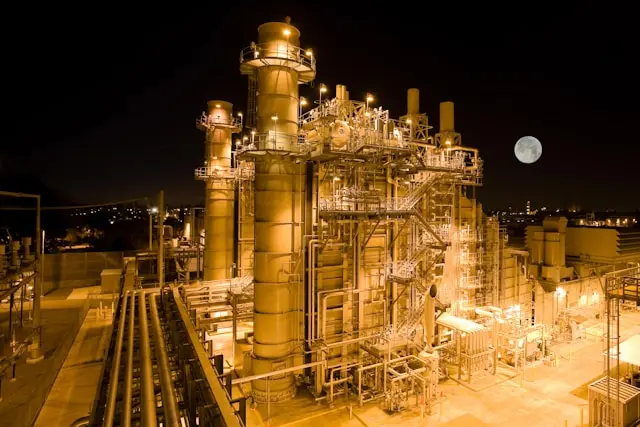
Shell's $6 billion ethane cracker in Potter Township, Beaver County, commenced production in November 2022. It was the largest single private investment in Pennsylvania's history and was projected to anchor a new petrochemical corridor in the upper Ohio Valley. The facility produces polyethylene at a nameplate capacity of 1.5 million metric tonnes per year. As of early 2025, it was operating at approximately 80% of that capacity.
The gap between promise and performance is instructive. Mechanical optimisation challenges and Pennsylvania Department of Environmental Protection enforcement actions regarding flaring events in late 2024 slowed the ramp. The workforce stands at 620 permanent staff, roughly meeting the initial projection of 600 permanent jobs, supplemented by 180 contract technical positions. But the composition of that workforce has been far harder to assemble than the headcount suggests.
According to the Pittsburgh Post-Gazette, Shell extended recruitment timelines for Senior Process Safety Engineers to seven to nine months during 2023 and 2024. The regional average for standard chemical engineer roles was 60 days. The company ultimately recruited three senior engineers from Gulf Coast facilities in Baytown, Texas, and Norco, Louisiana, offering relocation packages exceeding $50,000 and temporary housing allowances. These were not candidates who wanted to move to western Pennsylvania. They were candidates whose total compensation packages needed to exceed $250,000 before relocation became a serious conversation.
Shell is now evaluating a potential $1.2 billion expansion at Monaca to produce linear alpha olefins. A final investment decision is expected in the second quarter of 2026, contingent on operational performance and ethane cost spreads. If approved, the expansion will require another wave of specialised process engineers, instrumentation specialists, and safety professionals in a market that could not fill the first wave without a national search.
The Consolidation Paradox: Fewer Companies, Harder Searches
The most counter-intuitive dynamic in Pittsburgh's energy talent market is this: corporate consolidation has made specialist hiring harder, not easier.
EQT's acquisition of Equitrans Midstream, which closed in March 2024, created a vertically integrated entity employing approximately 1,900 people locally. The merger generated 150 synergy-related corporate headcount reductions, which the public narrative framed as sector contraction. That framing is wrong. The layoffs targeted duplicated corporate functions: accounting, legal support, administrative roles. The simultaneous shortage in subsurface digitisation, pipeline integrity, and reservoir engineering deepened. Consolidation concentrated demand at fewer employers while eliminating the generalist roles that padded the aggregate employment statistics.
This is the original analytical claim that the data supports but no single data point states directly: the restructuring headlines created a false impression that qualified talent was available. The opposite occurred. By merging the region's largest upstream operator with its primary pipeline and gathering system owner, EQT created a single employer with a broader appetite for specialist skills and a smaller peer group from which to recruit them.
The Retention Arms Race After Consolidation
The evidence is specific. According to Hart Energy, EQT recruited a Senior Director of Geoscience with more than ten years of Marcellus experience from Range Resources in the second quarter of 2024, offering a $75,000 base salary premium and accelerated equity vesting valued at approximately $400,000. This was not a routine hire. It was an acquisition of scarce expertise at a cost that reflects genuine scarcity.
CNX Resources has maintained an open requisition for a Principal Data Scientist specialising in oil and gas operations for 11 months as of early 2025. The company restructured the role twice, first to allow remote work and then to add equity participation, after failing to secure candidates willing to relocate to Pittsburgh against competing offers from Houston-based independents. When a mid-cap operator restructures a role twice in under a year, the market is telling you something about the gap between what employers offer and what candidates require.
The practical consequence for hiring leaders is that the peer group for lateral recruitment in this market has narrowed to three or four operators. Each poaching event raises the compensation floor for the next search. The cycle is self-reinforcing.
Compensation: What Pittsburgh Energy Roles Actually Pay in 2026
Pittsburgh's energy compensation structure is distinctive. It sits below Houston on base salary but offers a cost-of-living advantage that partially closes the gap. It sits above most Northeastern industrial markets on total compensation but loses ground to Denver and Calgary on lifestyle and portfolio diversification. Understanding exactly where these numbers land is essential for any organisation running a search in this market.
Executive and VP-Level Compensation
At the top of the upstream sector, a Vice President of Subsurface or Reservoir Development at EQT, CNX, or Range Resources commands $385,000 to $525,000 in base salary. Annual bonus targets run 85% to 110% of base. Long-term equity grants add $1.2 to $2.0 million annually. These figures, drawn from EQT's 2024 proxy statement and the Equilar Executive Compensation Database's Appalachian E&P peer group, place Pittsburgh executive pay within striking distance of Houston equivalents.
In midstream, a VP of Asset Integrity or Operations at EQT Midstream or Williams earns $320,000 to $410,000 base with a 60% to 80% bonus. At Shell Monaca, a Site Manager or VP of Manufacturing draws $275,000 to $340,000 base with a 25% to 35% bonus, plus standard relocation packages. For any organisation conducting a C-level or VP-level search in Pittsburgh energy, these are the benchmarks candidates will reference.
Senior Specialist Compensation
The mid-career tier tells a more revealing story. A Senior Reservoir Engineer with 12 or more years of unconventional experience earns $165,000 to $195,000 base with a 30% to 40% bonus. A Director of Pipeline Integrity earns $175,000 to $210,000 base. A Senior Chemical Process Engineer in cracker operations at Shell draws $135,000 to $165,000 base, according to Bureau of Labor Statistics data for the Pittsburgh MSA.
These numbers look competitive until you compare them to what the same professional earns elsewhere. Houston offers a 20% to 25% base salary premium for equivalent upstream engineering roles. When you factor in Texas's absence of state income tax against Pennsylvania's 3.07% flat rate, the total cash compensation differential widens to approximately 35%. Denver offers a 12% to 18% premium for shale geoscientists. Calgary offers CAD$180,000 to CAD$220,000 for petrochemical process engineers with heavy oil upgrading experience transferable to ethane cracking, plus expedited work visas.
The compensation gap between Pittsburgh and its primary competitor market is not closing. It is widening fastest at the senior specialist level, exactly where the most critical roles sit.
The Geography of Competition: Houston's Virtual Poaching Problem
Houston is Pittsburgh's most direct talent competitor, and it has developed a strategy that does not require candidates to move.
According to LinkedIn Talent Insights migration data from 2024, Houston-based operators increasingly offer remote-first arrangements for subsurface roles. This allows Pittsburgh-based engineers to work for Gulf Coast operators without relocating. The effect is what one might call "virtual poaching." The candidate stays in Pittsburgh, keeps their cost of living, and receives a Houston salary adjusted only slightly downward for remote work. From the candidate's perspective, this is a 25% to 30% raise with no disruption to their household.
From the Pittsburgh employer's perspective, it is an invisible drain. The candidate does not appear in relocation statistics. They do not show up in LinkedIn's geographic migration data until they update their profile. The first signal is often an exit interview.
Denver compounds the problem from a different angle. Colorado's diversified energy portfolio, spanning renewables and oil and gas, attracts younger technical talent concerned about carbon transition risk. A reservoir engineer in Pittsburgh works exclusively in natural gas. A reservoir engineer in Denver can build a career that spans fossil and renewable energy, hedging their own professional risk. For professionals under 40, this is a material consideration in career decisions.
Calgary provides a third axis of competition, specifically for Shell Monaca. Senior petrochemical process engineers with heavy oil upgrading experience find their skills transferable to ethane cracking. Canadian operators offer competitive compensation with expedited visa pathways that make the move logistically straightforward for the internationally mobile specialist.
The Passive Candidate Reality: Why Job Boards Cannot Reach This Market
The Pittsburgh natural gas and petrochemical labour market is bifurcated in a way that renders conventional recruitment methods structurally inadequate for senior roles.
At the entry level, the market functions normally. Field operators experience 22% annual turnover, creating an active applicant pool that Shell and midstream operators can fill through standard channels. Environmental compliance technicians emerge from Penn State and Pitt in sufficient numbers to meet regulatory demand. These are roles where a job posting generates qualified applicants.
At the senior specialist and executive level, the market is almost entirely passive. Among senior petroleum and reservoir engineers with ten or more years of unconventional experience, the unemployment rate is estimated at 1.2%. Average tenure runs 8.4 years. According to LinkedIn Talent Insights data for the Pittsburgh MSA, 85% of qualified candidates in this category are employed and not actively applying to postings. For chemical process engineers with ethane cracker experience, the pool is even more constrained: the relevant expertise is concentrated at Gulf Coast facilities, and candidates require executive search outreach with relocation-inclusive packages before they will engage.
This means the hidden 80% of passive talent is not a metaphor in this market. It is a measured ratio. An employer posting a Senior Reservoir Engineer role on a job board is reaching, at best, the 15% of the market that is actively looking. In a sector where the total qualified pool in the Pittsburgh MSA numbers in the low hundreds, 15% is not a viable candidate base for a critical hire.
What a 94-Day Search Actually Costs
The 94-day average time-to-fill for critical technical roles carries a direct cost that most hiring organisations underestimate. A Senior Process Safety Engineer vacancy at a petrochemical facility does not simply mean slower projects. It means deferred OSHA 1910.119 compliance work. It means increased reliance on contract staff who lack site-specific knowledge. It means the compounding cost of an unfilled senior role measured in regulatory exposure, operational risk, and the productivity gap left by a position designed to prevent catastrophic failure.
For a subsurface digitisation role, a 94-day vacancy means 94 days of drilling programmes running on legacy models while the machine learning capability that was supposed to optimise well placement sits unbuilt. The capital is deployed. The return on that capital depends on a hire that has not yet been made.
Regulatory Tailwinds and Headwinds: The New Compliance Demand
Pennsylvania's regulatory environment is creating hiring demand and operational cost pressure simultaneously.
The state Department of Environmental Protection enacted Chapter 127a regulations in December 2024, requiring quarterly Leak Detection and Repair monitoring at all new well sites. The estimated cost increase runs $12,000 to $18,000 per well annually. This is not merely a cost line. It is a staffing requirement. Every operator drilling new wells in the region needs LDAR-qualified technicians and compliance managers who understand the intersection of methane emission science and regulatory reporting.
On the infrastructure side, the permitting environment remains the sector's most durable constraint. Despite the MVP's completion, remaining Appalachian expansion projects face what the Interstate Natural Gas Association of America describes as fragmented federal and state permitting delays. The proposed Appalachia-to-Southeast pipeline, which would provide the next major outlet for regional gas, has no scheduled completion date. Without it, production growth is capped, and the demand-side projects, hydrogen hubs, LNG export modules, that would justify expanded drilling programmes remain contingent on infrastructure that does not yet exist.
The practical implication for hiring leaders is that Pittsburgh's natural gas sector in 2026 needs a different kind of professional than it needed in 2016. The drilling engineer who could optimise pad design is now also expected to understand AI-driven reservoir characterisation, methane emission compliance, and the digital systems that integrate operational data with regulatory reporting. Carnegie Mellon's Wilton E. Scott Institute for Energy Innovation is producing research on AI and machine learning applications for shale reservoir characterisation, but research output and workforce-ready graduates are separated by years.
What This Market Requires: A Different Approach to Search
The dynamics described above create a hiring environment where speed and method both matter more than they do in most industrial markets. The candidate pool for critical roles is small, passive, and geographically distributed. The compensation required to move a qualified specialist to Pittsburgh exceeds what most standard recruitment processes are designed to negotiate. The reasons executive searches fail in markets like this are predictable: overreliance on active candidate channels, underestimation of relocation resistance, and search timelines that allow the best candidates to accept competing offers before a shortlist is finalised.
KiTalent's approach to executive hiring across the energy and industrial sectors is designed for exactly this kind of market. By combining AI-powered talent mapping with direct headhunting methodology, KiTalent identifies and engages the passive specialists who never appear on a job board. Interview-ready candidates are delivered within 7 to 10 days, a timeline that compresses the 94-day regional average into a process that reaches qualified professionals before competing offers close the window.
The pay-per-interview model means organisations pay only when they meet qualified candidates. There is no upfront retainer. For a Pittsburgh energy company competing against Houston remote offers and Denver lifestyle premiums for a Senior Reservoir Engineer earning $185,000, the cost of a slow search is not the recruiter's fee. It is the six months of unrealised drilling optimisation, the risk of a critical departure during a prolonged vacancy, and the escalating compensation required to secure a candidate who has been courted by multiple competitors while the search dragged.
For organisations hiring into Pittsburgh's natural gas and petrochemical sector, where the qualified candidate pool is measured in dozens rather than hundreds and every critical vacancy carries operational and regulatory consequences, start a conversation with our energy sector search team about how KiTalent approaches this market differently.
Frequently Asked Questions
What is the average time-to-fill for senior energy roles in Pittsburgh?
Critical technical roles in Pittsburgh's natural gas and petrochemical sector averaged 94 days to fill through 2024, compared to 58 days for general manufacturing roles in the same region. For highly specialised positions such as Senior Process Safety Engineers at petrochemical facilities, individual searches have extended to seven to nine months. This extended timeline reflects a market where 85% of qualified senior candidates are passive and not responding to job postings. Firms using direct headhunting rather than job advertising consistently compress these timelines by reaching candidates who are employed and not actively searching.
How does Pittsburgh energy compensation compare to Houston?
Houston offers a 20% to 25% base salary premium for equivalent upstream engineering roles. When factoring in Texas's lack of state income tax versus Pennsylvania's 3.07% flat rate, the total cash compensation differential reaches approximately 35%. At the VP level, Pittsburgh narrows the gap: a Vice President of Subsurface Development earns $385,000 to $525,000 base, with annual equity grants of $1.2 to $2.0 million. The cost-of-living advantage partially offsets the headline salary gap, but candidates increasingly weigh Houston's remote-work options, which offer Gulf Coast pay without relocation.
What specialist roles are hardest to fill in Pittsburgh's energy sector?
Three categories face the most acute shortages: subsurface digitisation specialists combining reservoir engineering with Python, MATLAB, and machine learning skills; process safety engineers with OSHA 1910.119 compliance experience specific to ethane cracking; and pipeline integrity engineers qualified in in-line inspection analysis for aging gathering systems. These roles require combinations of domain expertise and technical skills that exist in very small numbers nationally. Active candidate ratios fall below 15% for all three categories, making conventional recruitment channels insufficient.
Why are Pittsburgh energy companies struggling to hire despite consolidation layoffs?
The layoffs following EQT's acquisition of Equitrans Midstream in 2024 targeted duplicated corporate functions such as accounting, legal support, and administration. The specialist technical roles in subsurface engineering, digitisation, and pipeline integrity were not affected by these reductions and in fact became harder to fill as consolidation concentrated demand at fewer employers. Aggregate employment statistics showing a decline mask a compositional shift from generalist to specialist roles. Choosing an executive search partner that understands this distinction is critical for any organisation hiring in this market.
What is the outlook for Shell Monaca's expansion and its hiring impact?
Shell is evaluating a potential $1.2 billion expansion at the Monaca facility to produce linear alpha olefins, with a final investment decision expected in the second quarter of 2026. If approved, the expansion will require a new wave of specialised process engineers, instrumentation specialists, and safety professionals. Given that the initial facility staffing required national recruitment campaigns with relocation packages exceeding $50,000, the expansion is expected to further tighten an already constrained petrochemical talent market in western Pennsylvania.
How can Pittsburgh energy companies compete with Houston and Denver for talent?
Competing effectively requires three elements: compensation packages that account for the full 35% total cash differential with Houston, not just the base salary gap; flexible work arrangements for roles where remote delivery is technically feasible; and a search methodology that reaches passive candidates in competing geographies before they are locked into other offers. KiTalent's AI-powered talent mapping identifies qualified specialists across all competing markets and delivers interview-ready candidates within 7 to 10 days, giving Pittsburgh employers the speed advantage needed to secure talent before Gulf Coast or Rocky Mountain competitors close first.