Portland Outdoor Industry Hiring in 2026: The Split Market That Headcount Cuts Cannot Fix
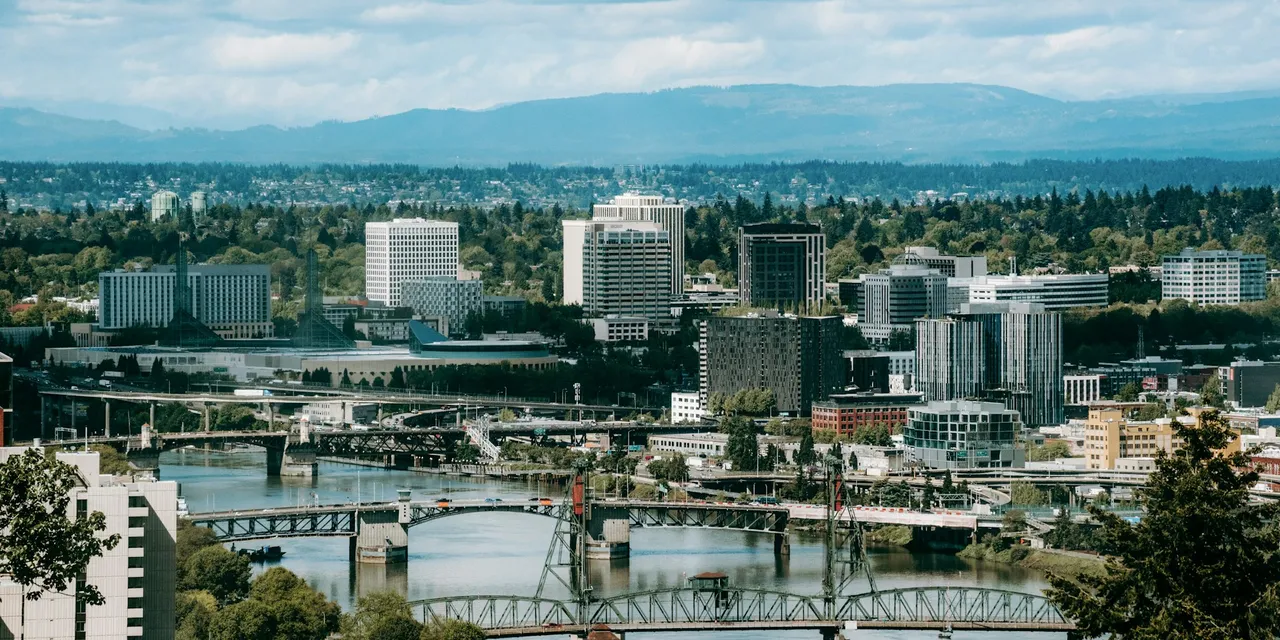
Portland's athletic and outdoor products sector employs between 42,000 and 48,000 people directly, with indirect employment pushing the total economic footprint to roughly 78,000 jobs across the metro area. That makes the Portland-Vancouver-Hillsboro MSA the densest concentration of outdoor industry employment per capita among major US metros, ahead of Denver and Salt Lake City. The numbers suggest a deep, mature talent market. The hiring reality tells a different story.
The sector is splitting in two. Nike and Columbia Sportswear have signalled efficiency initiatives projected to reduce corporate headcount by 5 to 7 percent through 2025, a programme that continued into early 2026. These cuts targeted general administrative and corporate support roles. At the same time, specialised positions in sustainable materials science, nearshoring logistics, and circular design have remained open for an average of 127 days in the Portland MSA. That is nearly double the 68-day national average for equivalent roles. The market is simultaneously shedding talent it no longer needs and failing to find the talent it cannot operate without.
What follows is a structured analysis of the forces reshaping Portland's outdoor and athletic sector, the specific roles where hiring has stalled, what compensation looks like across seniority levels, and what organisations competing for leadership talent in this market need to understand before they launch their next search.
The Sector's Centre of Gravity Has Shifted
Portland's outdoor industry identity was built on footwear design, soft-goods craftsmanship, and retail brand management. That identity is not wrong, but it is no longer complete. The centre of gravity has moved toward three newer disciplines: sustainable materials innovation, digital product creation, and nearshoring supply chain oversight. These three areas now drive the most urgent hiring demand in the metro, and they require skills that the traditional Portland talent pipeline was never designed to produce.
The shift is measurable. Oregon's Extended Producer Responsibility law for packaging, combined with emerging textile waste regulations, has forced operational restructuring across the sector. According to the Outdoor Industry Association's 2024 Sustainability Compliance Survey, approximately 68 percent of Portland-area outdoor brands report increased compliance hiring to manage circular economy mandates. Director-level sustainability roles now carry responsibility for Scope 3 emissions reporting and circular business model implementation. These are not incremental additions to existing job descriptions. They are new functions that did not exist at most firms five years ago.
Digital Product Creation and the Prototyping Transition
The second shift is in how products are designed before they reach a factory. Proficiency in 3D design tools like CLO 3D and Browzwear has moved from a niche technical skill to a baseline requirement for senior product developers. Virtual sampling reduces physical prototyping costs and compresses development timelines. Portland's design studios are under additional pressure from climate-driven changes to product development cycles. Extended wildfire seasons and unpredictable winter precipitation in the Pacific Northwest are shortening the windows available for outdoor product testing, which means design teams need to deliver faster with fewer physical iterations.
Nearshoring and the New Supply Chain
The third shift is geographic. Columbia Sportswear and Nike have expanded Portland-based supply chain oversight roles to manage nearshoring transitions to Mexico and Central America. This is not a reduction in Portland's role. It is a change in what Portland's supply chain professionals do. The projection through 2026 is a 15 to 20 percent increase in local supply chain and logistics hiring, even as retail employment remains flat. The skills required are specific: Spanish-language fluency, direct experience managing Mexican and Central American manufacturing networks, and compliance expertise spanning the Uyghur Forced Labor Prevention Act and chemical transparency requirements.
The firms that recognised this shift early have been building these capabilities for two years. The firms that treated nearshoring as a future consideration are now competing for the same small pool of qualified candidates, and they are arriving late.
Why the Layoff Headlines Created a False Talent Signal
This is the analytical tension that defines Portland's outdoor hiring market in 2026. The efficiency programmes at the sector's largest employers generated headlines that suggested talent was becoming more available. The opposite is true in the functions that matter most.
The layoffs targeted corporate overhead: administrative support, mid-level programme management, and general marketing coordination. These are roles where internal restructuring and technology-driven automation reduced the need for headcount. The roles that remained open, and continued to extend past 90 days unfilled, are technical specialists and senior leaders in sustainability, materials science, and supply chain compliance.
The result is a market where general administrative talent faces surplus while technical specialists command salary premiums of 30 percent or more above their pre-2024 compensation. Hiring leaders who assumed that sector contraction would uniformly loosen the talent market discovered that the candidates they actually need were never part of the layoff pool. Those candidates remain employed, in demand, and overwhelmingly passive. For roles requiring ten or more years of footwear-specific development experience or creative leadership with outdoor brand portfolios, the market operates on 90 percent or greater passive candidate dynamics. That means fewer than one in ten of the people qualified for these roles is actively looking for a new position.
This is not a temporary condition created by the layoff cycle. It is a deep-rooted mismatch between where talent exists and where demand is growing. Capital investment has moved toward sustainability, digital product creation, and nearshoring. Human capital has not caught up.
Compensation: What the Numbers Actually Show
Portland's outdoor sector compensation sits in a specific position relative to its competitors, and the dynamics are more complex than a single benchmark can capture.
Senior Specialists and Mid-Level Management
At the senior specialist and manager level, product development and sustainability roles pay between $135,000 and $175,000 in base salary with 15 to 20 percent bonus potential. Senior creative managers and associate creative directors at Portland agencies earn $145,000 to $185,000 base. Senior supply chain managers sit between $155,000 and $195,000 base. These figures reflect the Portland MSA specifically and include adjustments for the cost profile of the metro area.
VP and Director Level
The jump to VP and director level is where compensation diverges most sharply by function. VP and director-level product development and sustainability leaders earn $265,000 to $425,000 in base salary, with total cash compensation including equity reaching 40 to 60 percent above base at publicly traded firms. Executive creative directors and VP-level creative leaders command $285,000 to $450,000 base, with meaningful equity components at firms like Nike and Columbia Sportswear. VP-level supply chain leaders earn $245,000 to $380,000 base, with performance bonuses tied to inventory turns and margin preservation.
The Geographic Premium and Its Limits
Portland-based roles command a 12 to 15 percent compensation premium compared to Denver and Salt Lake City for equivalent positions. They remain 8 to 10 percent below Seattle and 18 to 22 percent below the San Francisco Bay Area. This premium should, in theory, help Portland retain talent against its Mountain West competitors.
It does not.
Net migration data from the US Census Bureau's American Community Survey shows mid-career talent aged 30 to 45 leaving the Portland MSA for lower-cost markets at accelerating rates. Oregon's 9.9 percent top marginal income tax rate, compared to Colorado's 4.4 percent flat rate and Washington's zero percent, erodes the nominal premium. When a Portland-based VP earning $350,000 compares after-tax income with a Denver equivalent earning $325,000, the advantage disappears. Housing cost trajectories compound the problem. The compensation gap between Portland and its nearest competitors is not closing at the seniority levels where the most critical hires sit. It is widening in real terms, after tax and housing costs are applied.
This creates a specific challenge for executive search. A passive candidate in Denver or Salt Lake City will not move to Portland for a 12 percent raise if the move costs them 15 percent in effective income after tax treatment. The offer must include something beyond compensation to work.
The Three Roles That Define the Hiring Crisis
The sector's talent shortage is not evenly distributed. It concentrates in three role categories where demand has surged, supply remains constrained, and the passive candidate ratio makes conventional sourcing ineffective.
Senior Sustainable Materials Scientists
Senior materials scientist positions requiring bio-based textile development experience averaged 127 days open in the Portland MSA during 2024. The national average for comparable roles was 68 days. Candidates at this level typically hold PhDs and are drawn from programmes at Oregon State University and the University of Oregon's Sports Product Management programme. They receive three to four competing offers simultaneously. The unemployment rate among environmental scientists and specialists supporting product development in the Portland MSA was 0.8 percent as of late 2024. That is effectively full employment. There is no reserve of available talent to draw from. Every hire at this level requires moving someone out of a role they are already performing well in.
Creative Directors with Outdoor Brand Experience
Senior creative directors in the Portland market show an 85 percent employment rate with average tenure of 4.2 years at their current employers. This combination of high employment and moderate-to-long tenure means very few are actively considering a move. According to Adweek's 2024 agency report, Wieden+Kennedy recruited a creative director from R/GA's Portland office to lead its Nike account, offering a compensation package 35 to 40 percent above prior salary. This pattern repeats across the market. Portland agencies lose 15 to 18 percent of senior creative talent annually to in-house positions at Nike and Columbia, according to the American Association of Advertising Agencies' 2024 Talent Report. The flow is one-directional. Agency talent moves to brand-side roles. Replacing them requires reaching outside Portland entirely.
Supply Chain Leaders with Nearshoring Expertise
The nearshoring transition has created a role category that barely existed three years ago: senior supply chain leaders who combine traditional sourcing expertise with Mexican and Central American manufacturing network knowledge, UFLPA compliance capability, and the ability to manage distributed teams across time zones. The talent pool is small nationally. In Portland, it is smaller still. A pattern consistent with prolonged search difficulty emerged clearly in 2024, with Columbia Sportswear creating an unusual hybrid remote arrangement for a Vice President of Global Sourcing, allowing the executive to remain based in Salt Lake City while overseeing Portland-based teams, after an extended search that did not yield a candidate willing to relocate to Portland within six months.
This willingness to restructure role locations rather than extend a search reflects a broader truth about the market. The traditional approach of defining a role, posting it, and waiting for applications reaches at most 10 percent of viable candidates for these positions.
The Pipeline Gap That Will Take Years to Close
Portland's talent pipeline carries a specific structural deficit that no amount of short-term recruitment spending can resolve. The Oregon College of Art and Craft closed in 2019, eliminating a primary training pathway for soft-goods craftspeople and technical designers. Pacific Northwest College of Art and Oregon State University have expanded programmes to absorb some of the demand, but a three-to-four-year gap in mid-level craft talent is projected through 2026.
The gap is compounding. Portland State University and the University of Oregon continue to supply entry-level design talent, with roughly 60 percent of graduates actively seeking positions. But the shortage is not at entry level. It is at the ten-year experience mark, where professionals should have moved from junior design into senior product development, sustainable materials leadership, or creative direction. The OCAC closure removed a feeder that would have produced those mid-career professionals by now. The gap is not visible in entry-level hiring data. It becomes visible only when firms try to fill senior roles and find that the cohort that should have matured into those positions is smaller than expected.
This matters for executive search strategy because it means the supply constraint is not cyclical. It will not resolve when economic conditions improve. It is a demographic deficit in the talent pipeline that will persist until the replacement programmes produce enough graduates and those graduates accumulate enough experience to fill the roles the market needs.
Portland Apparel Lab and the Ford Building in Southeast Portland house more than 40 soft-goods startups and contract manufacturers, and the Central Eastside Industrial District retains approximately 85 to 95 contract manufacturers focused on technical prototyping and small-batch production. This ecosystem provides practical training that partially compensates for the institutional gap. But building a talent pipeline through apprenticeship and on-the-job experience is slower than building one through formal education. The math does not work fast enough for firms hiring now.
The Competitive Geography: Denver, Salt Lake City, and Seattle
Portland does not compete for outdoor industry talent in isolation. Three markets pull from the same candidate pool, each with distinct advantages that Portland must account for in every senior search.
Denver and Boulder offer lower state income tax, the Outdoor Industry Association's headquarters presence since 2022, and proximity to Rocky Mountain testing environments. Base salaries run 5 to 8 percent lower than Portland, but equity participation at outdoor startups is stronger. For a mid-career sustainability officer weighing a move, Denver offers comparable outdoor lifestyle access at lower personal tax cost.
Salt Lake City competes for winter sports technical designers, supply chain professionals, and direct-to-consumer e-commerce talent. Black Diamond, Cotopaxi, and Oboz are headquartered there. The Outdoor Retailer trade show infrastructure provides networking density. Housing costs are comparable to Portland's, but the absence of state income tax on certain categories creates effective savings. The net outflow of mid-level supply chain talent from Portland to Salt Lake City in 2023 and 2024 was driven by exactly this cost-of-living calculation.
Seattle presents the most complex competitive dynamic. Amazon's headquarters creates e-commerce talent density. REI is headquartered there. Washington has no state income tax. VP-level roles in Seattle command a 20 to 25 percent premium over equivalent Portland positions. However, Seattle's median home price of $820,000 compared to Portland's $520,000 creates friction for creative talent considering a cross-border move, despite higher nominal wages.
For Portland employers, the implication is that every senior hire involves a geographic value proposition that extends well beyond base salary. Understanding the specific calculation a passive candidate in Denver, Salt Lake City, or Seattle will make requires the kind of detailed market benchmarking that most internal talent teams lack the bandwidth to produce.
What This Means for Hiring Leaders in 2026
The forces described above are not independent problems. They interact. The layoff headlines suppress perceived urgency while the actual shortage deepens in specialised functions. The tax differential erodes the compensation premium that should retain talent. The pipeline gap ensures that the shortage is not temporary. The nearshoring transition creates new role categories faster than the candidate pool can grow to fill them.
The original synthesis from this data is direct: Portland's outdoor sector investment in nearshoring, sustainability, and digital product creation has not reduced its workforce needs. It has replaced one category of worker with another that does not yet exist in sufficient numbers. Capital moved faster than human capital could follow, and the efficiency programmes that cut general headcount masked the widening deficit in the roles that drive the sector's future.
For organisations competing for sustainability, supply chain, and creative leadership in this market, conventional job advertising and inbound applications will not reach the candidates they need. The passive candidate ratio at senior levels exceeds 90 percent. The candidates who can fill these roles are employed, solving problems their current employers value, and will not respond to a job posting. They must be identified through systematic talent mapping, approached with a proposition that addresses their specific geographic and financial calculations, and moved through an interview process fast enough that competing offers do not overtake the search.
KiTalent delivers interview-ready executive candidates within 7 to 10 days through AI-enhanced direct headhunting. With a 96 percent one-year retention rate and a pay-per-interview model that eliminates upfront retainer risk, the approach is built for markets like Portland's outdoor sector where the best candidates are invisible to traditional sourcing. For senior hiring leaders facing a sustainability, supply chain, or creative leadership search in this market, start a conversation with our executive search team about how to reach the candidates that job boards and inbound applications will never surface.
Frequently Asked Questions
What is the average time to fill a senior sustainability role in Portland's outdoor industry?
Senior materials scientist and sustainability leadership positions requiring bio-based textile development experience averaged 127 days to fill in the Portland MSA during 2024. The national average for comparable roles was 68 days. The disparity reflects the extremely low unemployment rate among environmental scientists supporting product development in Portland, which sat at 0.8 percent. At this level, nearly every qualified candidate is already employed. KiTalent's direct headhunting methodology is designed to reach these passive professionals within days rather than months.
How does Portland outdoor industry compensation compare to Denver and Salt Lake City?
Portland-based outdoor industry roles command a 12 to 15 percent base salary premium over Denver and Salt Lake City for equivalent positions. However, Oregon's 9.9 percent top marginal income tax rate compared to Colorado's 4.4 percent flat rate and Utah's lower effective rates erodes much of the nominal advantage. VP-level roles in Portland pay $245,000 to $450,000 depending on function. After accounting for tax treatment and housing costs, the effective compensation gap between Portland and Mountain West markets narrows or reverses at senior levels.
What executive roles are hardest to fill in Portland's athletic and outdoor sector?
Three categories face the most acute shortages: senior sustainable materials scientists with bio-based textile expertise, creative directors with outdoor-specific brand experience, and supply chain leaders with nearshoring and compliance knowledge spanning UFLPA enforcement and chemical transparency requirements. These roles share a common characteristic. More than 90 percent of qualified candidates are passive, meaning they are not actively searching and can only be reached through retained executive search or direct sourcing.
Why are Portland outdoor companies struggling to hire despite recent layoffs?
The layoffs at major Portland outdoor employers targeted general administrative and corporate support roles. The positions that remain unfilled are technical specialists and senior leaders in sustainability, nearshoring logistics, and digital product creation. These functions were never part of the reduction programmes. The layoff headlines created a false signal that the talent market had loosened, when the shortage in the highest-value roles actually deepened through the same period.
What impact has the Oregon College of Art and Craft closure had on Portland's talent pipeline?
OCAC's closure in 2019 eliminated a primary pipeline for soft-goods craftspeople and technical designers. Replacement programmes at Pacific Northwest College of Art and Oregon State University have expanded, but a three-to-four-year gap in mid-level craft talent persists through 2026. This deficit is most visible at the ten-year experience level, where professionals trained through OCAC would now be entering senior product development and creative leadership roles. The gap is not cyclical. It reflects a permanent reduction in the training infrastructure that fed Portland's outdoor sector workforce.
How can companies access passive outdoor industry talent in Portland?
With 75 to 80 percent of VP-level placements in the consumer products sector occurring through executive search or direct sourcing rather than application pools, organisations must invest in proactive talent identification rather than reactive job advertising. This means mapping the specific professionals in competitor organisations who hold the skills and experience required, understanding their geographic and compensation calculations, and approaching them with a proposition tailored to what would actually move them. KiTalent's AI-enhanced talent mapping reaches candidates that conventional sourcing never surfaces.