Porto Maritime Logistics Hiring in 2026: Why €130 Million in Port Investment Is Deepening the Talent Crisis It Was Meant to Solve
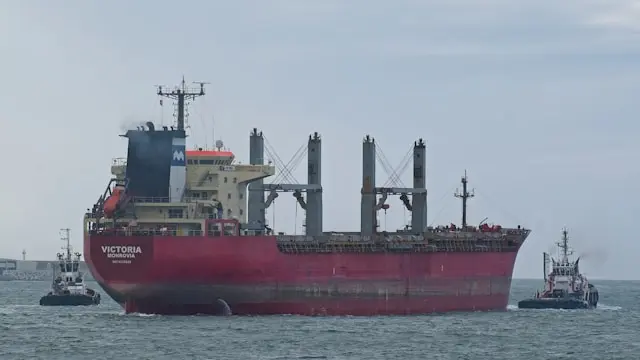
The Port of Leixões processed an estimated 680,000 TEU in 2024 and is on track for its most consequential infrastructure year since the terminal concession changed hands. YILPORT's Phase II deepening project is nearing completion, semi-automated gantry cranes are operational, and a new terminal operating system went live in late 2024. By every capital investment metric, the port is modernising faster than at any point in its modern history.
Yet the role that would oversee the integration of those automated cranes with that new operating system has been vacant for over a year. Three candidates accepted, then withdrew, choosing the Port of Sines or Spanish terminals offering 20% or more above what Leixões could pay. This is not an isolated anecdote. It is the defining pattern of Porto's maritime logistics market in 2026: capital has moved faster than human capital can follow, and the automation programme designed to reduce the port's dependence on labour has instead created a new category of specialist that the local market cannot supply.
What follows is a ground-level analysis of Porto's maritime logistics talent market: where the shortages sit, why they resist conventional recruitment, what the compensation differentials actually look like, and what organisations operating in this corridor need to understand before they launch their next senior search.
The Port of Leixões in 2026: Infrastructure Accelerating, Talent Stalling
Porto's primary maritime gateway handles approximately 15.6 million tonnes of cargo annually. APDL, the public port authority, administers the port alongside Viana do Castelo and Douro, while YILPORT Holding operates the container terminal under a 30-year concession secured in 2023. The port generates roughly 4,200 direct jobs and supports an estimated 12,000 indirect roles across the metropolitan area.
Through 2025, YILPORT committed €130 million to terminal modernisation. The centrepiece is the Phase II deepening project, which will increase the port's draft to 16 metres, allowing it to accommodate vessels of up to 8,000 TEU. Semi-automated rubber-tyred gantry cranes are now deployed. A new terminal operating system replaced the legacy platform in Q4 2024.
These are capital investments with direct human capital consequences. Every automated crane requires technicians who understand both the mechanical systems and the software layer controlling them. Every new operating system requires engineers certified in platforms like Navis N4 who also hold Portuguese maritime safety credentials. The demand for senior talent in AI and technology-adjacent logistics roles has surged precisely because the port's physical infrastructure has leapt ahead of the workforce qualified to run it.
The Porto Logistics Cluster, a business association now aggregating 340 active firms with €2.1 billion in combined annual turnover, frames the sector as a growth engine. And it is. But the growth is creating two types of jobs in very different proportions: a shrinking pool of traditional cargo handling roles and an expanding pool of specialist positions the local labour market cannot fill.
Where the Shortages Are Most Acute
Terminal Operations Automation
The most visible shortage is in terminal automation engineering. According to reporting in Jornal de Negócios, YILPORT Leixões maintained a vacancy for a Terminal Automation Engineer for 11 months as of January 2025. The role requires fluency in terminal operating systems, RTG automation, and Portuguese maritime safety certification. Three candidates who received offers declined, each accepting positions at Sines with compensation packages approximately 20% higher.
This is not a training problem. It is a population problem. The number of professionals in Portugal who combine TOS expertise with maritime safety certification is small enough that every employer in the country is competing for the same individuals. YILPORT's automation programme is projected to reduce manual container handling roles by 15% by 2027 while simultaneously creating demand for 60 to 80 higher-skilled technician roles. The local market cannot currently produce those technicians at anything close to the required volume.
Supply Chain Leadership
At the executive level, supply chain directors and VP-level leaders in the Porto market are 85% passive. Their average tenure at current employers is 4.5 years. They do not apply to job postings. According to Michael Page Portugal's 2024 talent trends data, application rates to job boards for these roles are negligible.
The Kuehne+Nagel case from Q3 2024 illustrates what it takes to move this talent. To recruit a Supply Chain Director for its new pharmaceutical cold chain division, Kuehne+Nagel offered a €25,000 signing bonus and equity-equivalent profit-sharing, representing a 35% premium over market median. The candidate came from Geodis's Porto office. This is the kind of compensation premium that reshapes a local market when it becomes known.
Digital and Data Roles in Logistics
Elog Logística, the major Portuguese 3PL headquartered in Maia, spent six months searching for candidates who could combine SQL and Python skills with warehousing operations experience. The search failed. According to Diário Económico, the company restructured its Porto headquarters to create a hybrid data analytics and logistics optimisation department, then relocated three senior analysts from Lisbon with full relocation packages and guaranteed three-day-per-week remote work. For a sector that has traditionally required on-site presence, this represents a material concession driven entirely by the scarcity of professionals who bridge technical and operational domains.
The Compensation Gap That Keeps Widening at the Top
Porto's logistics compensation sits at a persistent discount to every competing market in the Iberian Peninsula and Northern Europe. This discount is not closing. It is widening fastest at the seniority levels where the most critical roles sit.
A Supply Chain Director in Porto earns a base salary of €85,000 to €110,000, with total cash compensation reaching €120,000 to €145,000. Long-term incentives or equity participation are rare outside multinational headquarters. That same role in Lisbon commands a 15% premium. In Barcelona, the premium reaches 40%.
For Senior Terminal Operations Managers, base salaries sit between €52,000 and €68,000, with shift premiums and hazard allowances adding 12 to 15%. Total compensation rarely exceeds €75,000. Logistics IT and Systems Architects earn €48,000 to €65,000 at baseline, with top performers at multinational 3PLs reaching €75,000.
The figures for Rotterdam and Antwerp sit in a different category entirely. Senior maritime executives in those ports earn 2.5 to 3 times their Porto equivalents. According to Drewry Maritime Research's 2024 manpower report, this creates what amounts to a glass ceiling in Porto: senior talent either accepts local compensation caps or emigrates. The career progression pathway for a port manager or shipping line country manager in Porto is shorter than in any comparable Northern European port.
This is not just a recruitment problem for individual employers. It is a systemic drain. Every year, the professionals with the deepest expertise and the broadest international networks face the same calculation, and a meaningful percentage of them reach the same conclusion. Porto trains them, develops them, and then watches them leave for markets that can afford them.
The Paradox of Automation: Fewer Jobs, Harder Searches
Here is the original analytical claim this article rests on. YILPORT's €130 million investment in automation was designed, in part, to reduce the port's dependence on manual labour. It is succeeding on that metric. Manual container handling roles will decline by 15% by 2027. But the investment has not reduced the port's dependence on people. It has replaced one category of worker with another that barely exists in the Portuguese market.
The new category is defined by a combination that almost no training programme currently produces: deep familiarity with automated container handling equipment, fluency in terminal operating systems software, IoT sensor integration for smart port applications, and Portuguese maritime safety certification. Each of these skills exists in isolation. The combination is vanishingly rare.
Porto's municipal economic development strategy, Porto 2030, identifies port logistics as a "stable employment anchor" meant to offset manufacturing job losses. Meanwhile, YILPORT's concession business plan explicitly targets a 30% productivity gain per container move by 2027, which means fewer people doing more per shift. These two institutional objectives are in direct tension, and no public resolution mechanism is evident in current planning documents.
For hiring leaders at terminal operators, 3PLs, and the port authority itself, this tension has a practical consequence. The headline number of logistics jobs in the metropolitan area will remain stable or grow slightly, but the composition of those jobs is changing underneath. The roles being created are harder to fill, take longer to search for, and cost more to recruit than the roles being eliminated.
Infrastructure Bottlenecks Shape the Talent Market Too
Porto's logistics talent challenges do not exist in isolation from the port's physical constraints. Infrastructure limitations shape which companies invest, which roles get created, and ultimately which professionals the market needs.
The Rail Gap
The absence of a direct Iberian-gauge rail link from Leixões to Spain forces 78% of containerised cargo onto the A28 motorway. According to the European Court of Auditors' special report on the Atlantic Corridor, this adds 24 hours and €400 per TEU compared to a direct rail connection. Full Iberian gauge interoperability with Spain remains delayed until 2028 at the earliest, though the Ferrovia 2020 programme is advancing the connection of the Linha de Leixões to the national freight network.
This constraint has a direct talent implication. Multimodal optimisation specialists, particularly those experienced in rail-road-sea intermodal planning for 750-metre freight train configurations, are needed now to prepare for the infrastructure that is coming. But the immediate reality is a road-dominated system, which means the employers hiring today need different skills than the ones they will need in two years. Planning for both simultaneously is expensive and difficult.
Road Congestion and Catchment Limits
The A28 motorway, the primary port access route, operates at 110% capacity during morning peak hours, with average truck delays of 45 minutes. The widening project, originally scheduled for 2024 completion, has been pushed to 2027 due to environmental licensing delays. The port's effective catchment area remains limited to a 200-kilometre radius.
This matters for talent because it limits the scale of the operations based at Leixões. A port that cannot efficiently serve cargo beyond 200 kilometres cannot attract the regional distribution centres and pan-Iberian logistics operations that would bring senior leadership roles with them. Barcelona and Madrid absorb those operations instead, and the talent follows the roles.
The Air Freight Divergence and What It Means for "Quality" of Logistics Employment
The research data contains an important bifurcation that is easy to miss. While maritime container growth at Leixões has settled into a 2 to 3% annual trajectory, air freight at Francisco Sá Carneiro Airport grew 18% year-on-year in 2023, reaching 83,000 tonnes. The Porto region's textile and footwear clusters, which represent a major share of Northern Portugal's export economy, increasingly route high-value, time-sensitive shipments by air for just-in-time delivery to Northern Europe.
This divergence matters for the talent market. The highest-value supply chain management roles tend to concentrate around the highest-value cargo. If Porto's most dynamic export sectors are migrating toward air freight, the maritime logistics sector risks becoming more commodity-oriented over time, focused on bulk solids and standard containerised goods rather than the complex, high-margin supply chains that attract and retain senior talent.
The textile, footwear, and furniture clusters still account for 62% of Northern Portugal's non-metallic manufacturing exports. According to AICEP's 2024 export diversification report, a downturn in European consumer demand or an acceleration of nearshoring to North Africa could erode this base. The cargo volumes that sustain Leixões' container operations are not guaranteed, and the talent market's composition will shift with them.
For hiring executives in this sector, the implication is concrete. The most ambitious supply chain leaders in Porto are already watching the air freight growth curve. Retaining them in maritime-centric roles requires demonstrating a clear trajectory toward higher-value operations, and the risk of losing them to competitors who can offer exactly that trajectory is real and growing.
What a Search Strategy for This Market Actually Requires
Porto's maritime logistics talent market operates under conditions that defeat conventional recruitment methods. The most critical roles, those combining technical specialisation with maritime domain knowledge, exist in a candidate pool where 85% of qualified individuals are passive. Customs brokers with Authorised Economic Operator certification have an effective unemployment rate of zero. Maritime pilots and port captains number approximately 45 licensed professionals for Leixões and Viana do Castelo combined, with near-zero turnover.
The aggregate numbers confirm the pattern. Northern Portugal's logistics and transport sector recorded 4,800 job vacancies in Q4 2024, a 23% increase year-on-year. Average time to fill for specialist roles reached 94 days, compared to 42 days for general warehousing positions. That 94-day average includes the roles that were eventually filled. It does not account for the ones, like YILPORT's automation engineer, that remained open for nearly a year.
Traditional search methods, job postings, database mining, and inbound applications, reach the active 15% of the market. They miss the 85% who hold the experience that matters. In a market this tight, with compensation differentials pulling the best candidates toward Lisbon, Barcelona, and Northern Europe, a search methodology built on direct identification and approach of passive candidates is not a premium service. It is a baseline requirement.
The workforce demographics compound the urgency. Thirty-eight per cent of APDL's direct workforce and 45% of contracted stevedores are over 55. The retirement wave that has already reshaped other European port labour markets is arriving in Porto within the next five to seven years. Every unfilled specialist role today is also an unfilled succession plan for tomorrow.
Regulatory complexity adds a further layer. The EU Emissions Trading System extension to maritime transport, implemented in 2024, is increasing operational costs by an estimated €8 to €12 million annually at Leixões. The EU Carbon Border Adjustment Mechanism requires customs and trade compliance specialists with AEO certification and CBAM reporting expertise. Pending Portuguese port labour reform legislation under Port Package III creates additional uncertainty for terminal operators. Each of these developments generates demand for professionals who barely existed as a distinct category five years ago.
For organisations competing for senior logistics and supply chain leadership in Northern Portugal, where the candidates you need are employed, not searching, and increasingly tempted by markets that pay 30 to 40% more, the cost of a slow or poorly targeted search is not just a delayed hire. It is a missed automation milestone, a regulatory gap, or a succession crisis that compounds every quarter it remains open. KiTalent delivers interview-ready executive candidates within 7 to 10 days through AI-powered talent mapping that reaches the passive professionals no job board can surface. With a 96% one-year retention rate across 1,450 completed placements, the methodology is built for exactly this kind of constrained, specialist market. To discuss how a targeted search in Porto's maritime logistics sector would work for your organisation, start a conversation with our executive search team.
Frequently Asked Questions
What is the average salary for a Supply Chain Director in Porto's logistics sector?
A Supply Chain Director in Porto earns a base salary of €85,000 to €110,000 annually, with total cash compensation including bonuses reaching €120,000 to €145,000. Long-term incentive plans or equity participation are rare outside multinational headquarters. This represents a 15% discount to Lisbon and a 40% discount to equivalent roles in Barcelona. The gap is widest at VP level, where Porto's compensation ceiling pushes senior talent toward Spanish and Northern European markets. Employers competing for this talent must benchmark against Iberian rates, not just local ones.
Why is it so difficult to hire maritime logistics specialists in Porto?
Porto's maritime logistics talent market is overwhelmingly passive. An estimated 85% of qualified Supply Chain Directors and VPs are employed and not applying to posted vacancies. Customs brokers with AEO certification have near-zero unemployment. Specialist roles such as terminal automation engineers require a combination of TOS software expertise and Portuguese maritime safety certification that very few professionals hold simultaneously. Average time to fill for specialist logistics roles in Northern Portugal reached 94 days in Q4 2024. Reaching these candidates requires direct identification and executive search approaches rather than conventional job advertising.
How does Port of Leixões compare to other Iberian ports for logistics employment?
Leixões is Northern Portugal's primary maritime gateway, handling approximately 15.6 million tonnes of cargo and an estimated 680,000 TEU in 2024. However, the Port of Sines to the south offers 15 to 20% salary premiums for comparable roles. Barcelona offers 30 to 35% higher compensation for Supply Chain Directors. Rotterdam and Antwerp pay 2.5 to 3 times Porto rates for senior maritime executives. Leixões' competitive advantage is lower cost of living and proximity to Northern Portugal's manufacturing clusters, but the compensation differential limits its ability to retain top-tier talent.
What impact will YILPORT's automation have on logistics jobs at Leixões?
YILPORT's €130 million modernisation programme will reduce manual container handling roles by an estimated 15% by 2027. Simultaneously, it creates demand for 60 to 80 higher-skilled technician roles in automated crane maintenance, terminal operating system management, and IoT sensor integration. The net effect is a shift in the composition of employment rather than a reduction in total headcount. The challenge is that the new roles require skill combinations the local training pipeline cannot currently produce in sufficient volume.
How can companies attract passive logistics executives in Porto?
With 85% of senior logistics professionals in Porto not actively seeking new roles, companies must move beyond job postings. Successful approaches include competitive signing bonuses (recent examples reached €25,000), equity-equivalent profit-sharing, and hybrid work arrangements. KiTalent's AI-enhanced direct search methodology identifies and engages these passive candidates directly, delivering interview-ready shortlists within 7 to 10 days. The pay-per-interview model means organisations only invest when they meet qualified candidates who match their specific requirements.
What regulatory changes are affecting maritime logistics hiring in Portugal?
Three regulatory shifts are driving new talent demand. The EU Emissions Trading System extension to maritime transport adds an estimated €8 to €12 million in annual compliance costs at Leixões. The EU Carbon Border Adjustment Mechanism requires specialists in CBAM reporting and customs compliance. Pending Portuguese port labour reform under Port Package III creates workforce flexibility uncertainty for terminal operators. Each regulation generates demand for compliance professionals with combined trade, environmental, and maritime expertise.