Porto Torres Industrial Zone: €500 Million in New Investment, and Not Enough Specialists to Deliver It
Porto Torres sits at the edge of one of Europe's most complex industrial transitions. A single zone, roughly 1,500 hectares on the northwest coast of Sardinia, is simultaneously running a legacy refinery, converting units to produce biofuels, and remediating decades of soil and groundwater contamination under legal pressure from the European Commission. Capital expenditure across the zone is projected to rise 40% in 2026. The workforce required to execute that capital programme does not exist in sufficient numbers on the island.
The tension at the centre of this market is not simply a shortage. It is a collision between three distinct hiring demands arriving at the same time, in a location that penalises every conventional recruitment method. The 2026 statutory maintenance turnaround at the Saras FCC unit will require up to 1,500 temporary contractors. The HVO biofuel conversion needs process chemists with a skill combination that fewer than 200 professionals in Italy possess. And accelerated environmental remediation mandated by the Ministry of Environment demands engineers whose experience is specific to Italy's Siti di Interesse Nazionale classification. These are three separate labour markets. They happen to need the same postcode.
What follows is an analysis of the forces reshaping Porto Torres as an industrial employer, the specific roles and skill sets where demand has outpaced supply, and what organisations operating in or hiring for this zone need to understand before their next search begins.
A Refinery in Transition: What Porto Torres Looks Like in 2026
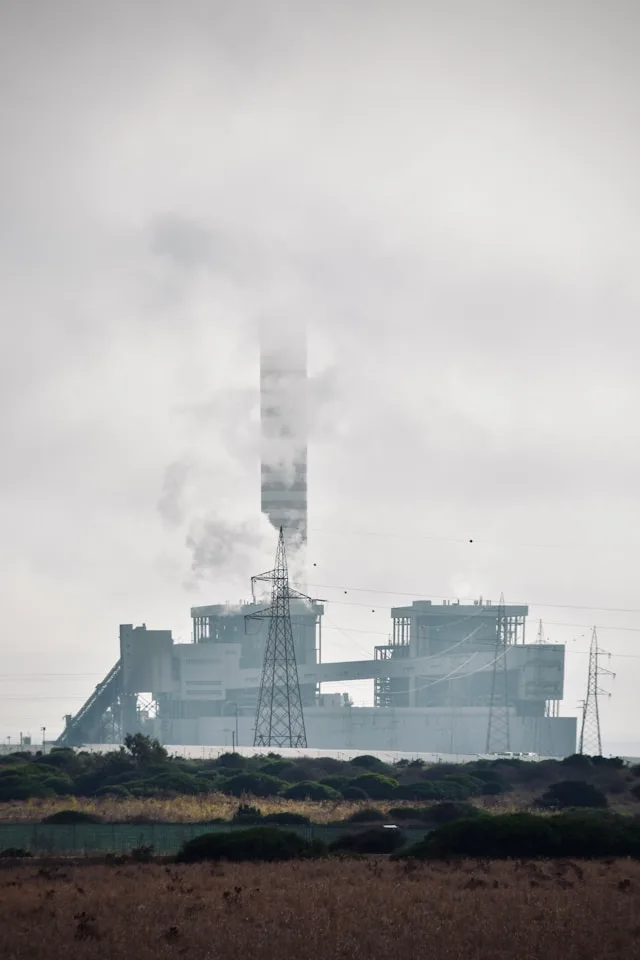
The Porto Torres Industrial Zone is anchored by the Saras S.p.A. refinery, one of Europe's largest refining complexes with a nameplate capacity of 300,000 barrels per day. It is the sole remaining major refinery in Sardinia. Alongside it, Versalis S.p.A., Eni's chemicals division, operates polyethylene and elastomer production facilities integrated with the refinery stream. Saipem S.p.A. maintains a fabrication and maintenance yard that can scale from 180 permanent staff to 600 during project peaks.
Through 2024, the refinery operated at 75 to 80% capacity utilisation. Margin pressures and scheduled maintenance kept output below pre-2020 levels. Versalis maintained steady-state elastomer operations while rationalising polyethylene output in line with broader European demand contraction. None of this suggests a market in crisis. What makes Porto Torres exceptional is not what is shrinking. It is what is being built on top of what already exists.
The Biofuel Conversion
Saras is executing a €350 million conversion of refining units to produce Hydrotreated Vegetable Oil and Sustainable Aviation Fuel. Mechanical completion was targeted for late 2025. The 2026 spend alone is projected at €120 million for HVO unit startup and associated hydrogen supply infrastructure. This conversion does not replace the existing refinery. It layers a fundamentally different chemical process onto the same physical site, requiring a workforce that understands both traditional hydroprocessing and biogenic feedstock handling.
Environmental Remediation Under Legal Pressure
The entire industrial zone carries the designation of a Sito di Interesse Nazionale, encompassing approximately 1,200 hectares of contaminated soil and groundwater. The estimated remaining remediation cost exceeds €450 million, with completion timelines stretching to 2035. Soil washing and groundwater pump-and-treat systems are operational, processing roughly 60,000 tons of contaminated soil annually, according to ISPRA monitoring reports. The European Commission has initiated infringement procedures regarding delays in groundwater remediation. In 2026, €85 million in collective remediation spending is mandated to address those deadlines.
For hiring leaders working across industrial and manufacturing sectors, the implication is immediate. Porto Torres is not a market where investment has stalled and talent has drifted away. It is a market where investment is accelerating and talent cannot keep pace.
The Paradox: 14% Unemployment and Unfilled Technical Roles
Sardinia's unemployment rate stood at 14.2% in Q3 2024, more than double the Italian national average of 6.9%. The Porto Torres industrial zone, meanwhile, reported a 22% year-over-year increase in permanent technical job postings in 2024, with 340 roles advertised against 278 the previous year. Engineering vacancies averaged 127 days to fill. Specialised technician roles averaged 94 days. Administrative positions filled in 68.
These numbers describe a market where large-scale unemployment and acute specialist shortages coexist, separated by a gap in certifications, safety culture, and experience that no amount of local availability can bridge. The local labour pool lacks the specific API, ASME, and SIN-specific qualifications that petrochemical and remediation employers require. And the geographic isolation of Sardinia prevents sufficient in-migration of qualified professionals from the Italian mainland.
This is the analytical claim that underpins everything in this article: Porto Torres does not have a hiring problem. It has a skills translation problem. The investment is here. The people are here. But the investment requires capabilities the people do not have, and the location makes it exceptionally difficult to import those capabilities from elsewhere. Every other challenge discussed below is a consequence of this foundational mismatch.
The University of Cagliari, the primary local talent pipeline, produces approximately 45 chemical engineering graduates per year. Fewer than 10 remain in Sardinia long-term. The industrial zone needs 25 to 30 new technical graduates annually just to maintain baseline operations. The arithmetic is unsustainable before accounting for the hundreds of additional specialist roles the biofuel conversion and remediation acceleration are creating.
Three Talent Markets Colliding in One Location
The aggregate employment figures for Porto Torres, roughly 3,200 permanent positions across the zone, mask a structural divergence that is more revealing than the total. Net direct employment is expected to remain stable at 3,150 to 3,250 through 2026. But within that stable headline, 200 to 300 roles are shifting from traditional refining operations to biofuel processing and environmental remediation functions. The same number hides a fundamentally different workforce.
Traditional Maintenance: The 2026 Turnaround
A 45-day statutory maintenance turnaround at the Saras FCC unit is scheduled for Q2 2026. This single event will require an influx of 1,200 to 1,500 temporary contractors. The professionals needed for this work are rotating equipment maintenance technicians with API 510, 570, and 653 certifications, experienced in sour service environments and turbomachinery. According to Federchimica survey data, 70% of technicians with ten or more years of experience on centrifugal compressors and steam turbines are not actively searching for new roles.
The competition for these contractors is fierce across the Mediterranean. According to industry reporting, a maintenance contractor at the Priolo petrochemical hub in Sicily paid a €12,000 signing bonus to secure a senior turbomachinery technician from a Ravenna competitor in 2024. This kind of poaching has become typical for Sardinian turnaround preparation, where the logistics of getting contractors to the island amplify the premium required. Transportation costs for oversized maintenance equipment and personnel are 30 to 40% higher than mainland equivalents due to ferry dependencies.
Biofuel Process Chemistry: A Workforce That Barely Exists
The HVO conversion requires process chemists who combine traditional hydroprocessing knowledge with biogenic feedstock handling. Fewer than 200 professionals across Italy possess this combination. The constraint is not salary. It is existence. This is a role category that was invented by the energy transition and has not yet produced a mature talent pool.
Industry patterns suggest the severity. According to Eni's regulatory filings, the Gela biorefinery in Sicily retained key HVO personnel through 2024 only through golden handcuff provisions, specifically clawback clauses on training investments designed to prevent departure. When employers need contractual penalties to retain their own trained staff, the market has moved past scarcity into a qualitatively different condition.
Environmental Remediation Engineering: SIN-Specific Expertise
The SIN designation creates demand for engineers with a highly specific qualification profile. Groundwater modelling, contaminated site risk assessment, and environmental forensics within the Italian regulatory framework are not transferable skills from general environmental engineering. Approximately 85% of qualified environmental remediation engineers in Italian heavy industry are employed and not actively looking, according to Hays Italy hiring data. The pattern across Italian SIN sites is consistent: senior process safety engineers with SIN contamination experience require six to nine months to source.
A comparable situation at the Taranto ILVA complex, as reported by FIM-CISL Metalworkers Union labour market data, saw a Lead Environmental Remediation Engineer role remain vacant for 11 months during 2023 and 2024. The position was ultimately filled through direct headhunting of a competitor's specialist at a 35% salary premium.
The three shortages are not independent. They are competing with each other for the same limited pool of relocation-willing professionals.
Compensation: What It Costs to Bring Talent to the Edge of Europe
Porto Torres operates at a persistent compensation disadvantage to every competing location on the Italian mainland. Milan draws senior engineering and executive talent with premiums of 25 to 30% above Sardinian offers. Ravenna, Italy's other major petrochemical hub, offers a similar cost of living but superior infrastructure and a denser contractor ecosystem, and typically pays 15 to 18% more for maintenance technicians and operations supervisors.
At the executive level, the figures reflect the difficulty of attracting senior leaders to an isolated industrial site.
A Refinery Manager or Plant Director at senior specialist level commands a base salary of €75,000 to €95,000, with total compensation reaching €90,000 to €115,000 including bonus and a Sardinia hardship premium. At the General Manager level for the Porto Torres complex, base salary ranges from €180,000 to €220,000 and total compensation from €250,000 to €320,000 including long-term incentives, housing allowances, and rotation schedules.
An HSE Director with environmental remediation focus starts at €65,000 to €82,000 base for senior specialist roles. At the VP level, total compensation reaches €210,000 to €280,000. This figure carries high variability depending on SIN remediation project delivery incentives, which function as performance insurance for the employer as much as compensation for the individual.
The newest and scarcest profile, a Decarbonization Project Director, commands the steepest premium. At senior specialist level, HVO Project Engineers earn €70,000 to €90,000 base. At director level, total compensation reaches €200,000 to €260,000. These figures represent premiums of 20 to 25% above equivalent traditional refining operations roles. The premium exists because the supply does not. Organisations that benchmark their offers against last year's data are already behind the market.
The compensation gap is not closing. Sicily, which competes for identical decarbonisation skill sets through Eni's Gela investments, offers similar peripheral location challenges but marginally higher expatriation premiums for mainland Italian talent. The contest between Sardinia and Sicily for the same small pool of transition specialists is a zero-sum game. Every candidate Porto Torres gains, Gela loses. And vice versa.
Regulatory Pressure Is Compressing Every Timeline
Two regulatory forces are accelerating hiring urgency simultaneously. Neither is optional.
The European Commission's infringement procedures on groundwater remediation have imposed quarterly reporting obligations on facility operators. The 2024 court ruling expanding retrospective liability for historical contamination at SIN sites, established as precedent by Italian Council of State Ruling No. 4521/2024 on SIN Taranto, could increase provisions for Saras and Versalis by €50 to €80 million. Environmental remediation is no longer a background obligation. It is a legal risk with an escalating cost of delay.
The second force is carbon pricing. Under the EU Emissions Trading System's Fit for 55 provisions, the phase-down of free allowances for refining operations exposes the Porto Torres refinery to €120 to €150 million in annual carbon costs by 2026 at current prices of €70 to €80 per tonne of CO2, according to European Commission ETS data. This cost pressure threatens marginal refining economics and may accelerate consolidation among smaller logistics operators in the zone.
For hiring leaders, the regulatory environment creates a paradox. The same forces that make investment urgent also make employers hesitant to commit to permanent hires for transitional roles. If EU demand for liquid fuels declines faster than biofuel capacity can offset, the €350 million HVO investment faces utilisation risk. This "investment hesitation" manifests as a preference for contract-to-permanent structures rather than direct permanent hiring. The result is longer time-to-fill, higher per-hire cost, and an even larger premium required to move passive candidates into roles with uncertain long-term trajectories.
The organisations that understand why traditional executive searches fail in markets like this are the ones adapting fastest.
Why Conventional Search Methods Cannot Reach This Market
The structural barriers to hiring in Porto Torres are not merely difficult. They are fundamentally incompatible with passive recruitment methods.
Start with geography. Sardinia is an island. Every mainland candidate must weigh ferry or flight logistics against competing offers in Ravenna, Milan, or Sicily that require no such calculation. The University of Cagliari retains only 35% of its graduates within five years of graduation, and even that pipeline is 25 kilometres from the industrial zone with limited transport connections. Posting a role on a job board in this market is equivalent to advertising to the roughly 15 to 30% of qualified professionals who are both actively looking and willing to relocate to an island. The other 70 to 85% must be found through direct identification and approach.
Then consider the passive candidate dynamic. In the environmental remediation market, 85% of qualified engineers are employed and not applying to postings. Among maintenance technicians with a decade of turbomachinery experience, 70% are passive. In HVO process chemistry, the total addressable population is so small that passive and active distinctions become almost irrelevant. There are simply not enough people with the right combination of skills.
A senior remediation engineer currently employed at a mainland SIN site, earning competitive compensation, living in a connected city, faces a specific proposition when approached about Porto Torres. The role must offer a problem more interesting than the one they are currently solving. The compensation must absorb the relocation penalty. The career trajectory must justify the move to a location that limits future options. And the employer must make this case before a competitor in Sicily or Ravenna makes theirs.
This is why the counteroffer dynamic hits Porto Torres harder than most markets. When a candidate's current employer learns they are being recruited to Sardinia, the counteroffer does not need to be dramatic. A modest raise and a reminder of logistical convenience can outweigh a meaningful compensation premium from an island refinery. Every search in this market must anticipate and pre-empt the counteroffer before it arrives.
What This Means for Organisations Hiring in Porto Torres
The market intelligence points to a single conclusion. Porto Torres in 2026 is a location where the volume of investment, the specificity of the skills required, and the severity of the geographic constraint have together created conditions where speed and method determine outcomes more than budget alone.
The organisations succeeding in this market share common characteristics. They are identifying candidates before roles are formally posted. They are mapping competitor workforces at Gela, Priolo, Ravenna, and mainland SIN sites to build shortlists of passive specialists. They are structuring packages that address the Sardinia relocation calculation explicitly, with housing allowances, rotation schedules, and career path guarantees that reduce the perceived risk of an island move.
For hiring leaders managing searches across the Porto Torres zone, KiTalent's approach to building talent pipelines before positions open addresses the core problem directly. In a market where 70 to 85% of qualified candidates are invisible to job advertising, AI-enhanced talent mapping identifies and reaches professionals who would never appear in an inbound application process. KiTalent delivers interview-ready candidates within 7 to 10 days, with a 96% one-year retention rate that reflects the rigour of matching candidates to roles where they will stay.
The pay-per-interview model means organisations only invest when they meet qualified candidates. In a market where search duration for engineering roles averages 127 days, this structure eliminates the risk of paying upfront for a process that may not deliver.
For organisations competing for environmental remediation engineers, biofuel process specialists, or senior plant leadership in one of Europe's most complex industrial transitions, start a conversation with our executive search team about how we approach this market.
Frequently Asked Questions
What are the main industries in the Porto Torres Industrial Zone?
The Porto Torres Industrial Zone is dominated by petroleum refining, chemical production, and environmental remediation services. Saras S.p.A. operates one of Europe's largest refining complexes with 300,000 barrels per day nameplate capacity. Versalis S.p.A., an Eni subsidiary, produces elastomers and polyethylene. Saipem maintains a fabrication and maintenance yard. In 2026, biofuel production through HVO and Sustainable Aviation Fuel conversion is becoming a major additional activity. Environmental remediation under the SIN national interest site designation represents a growing segment of both employment and capital spending across the zone.
Why is it hard to hire engineers in Porto Torres?
Three factors converge. First, Sardinia's island geography imposes logistical and cost penalties that mainland locations do not face, with transport costs 30 to 40% higher than equivalent mainland sites. Second, the specific qualifications required, including API certifications, SIN remediation experience, and HVO process chemistry, exist in very small populations nationally. Third, competing locations including Milan, Ravenna, and Sicily offer comparable or better compensation with superior infrastructure. Approximately 85% of qualified environmental remediation engineers in Italian heavy industry are passive candidates, requiring direct candidate identification and outreach rather than job advertising.
What salaries do senior engineers and executives earn in Porto Torres?
Senior specialist engineers in process safety or environmental remediation earn €65,000 to €95,000 base salary. Executive-level roles such as General Manager of the refinery complex command €180,000 to €220,000 base with total compensation reaching €250,000 to €320,000 including long-term incentives and housing allowances. Decarbonization Project Directors, the scarcest profile, earn total compensation of €200,000 to €260,000, representing a 20 to 25% premium over equivalent traditional refining roles. A Sardinia hardship premium of approximately 15% is applied to most senior positions to offset location disadvantages.
What is the SIN remediation obligation at Porto Torres?
The Porto Torres Industrial Zone is classified as a Sito di Interesse Nazionale under Italian environmental law, covering approximately 1,200 hectares of contaminated soil and groundwater. Remaining remediation costs exceed €450 million with completion timelines extending to 2035. A consortium of Saras, Versalis, and the Ministry of Environment shares liabilities. The European Commission has initiated infringement procedures over remediation delays, and 2024 court rulings expanded retrospective liability. In 2026, €85 million in collective remediation spending is mandated to address regulatory deadlines, driving acute demand for specialist environmental engineers.
How does the biofuel transition affect hiring in Porto Torres?
Saras is investing €350 million to convert refining units to produce Hydrotreated Vegetable Oil and Sustainable Aviation Fuel. This creates demand for process chemists who combine traditional hydroprocessing experience with biogenic feedstock handling. Fewer than 200 professionals in Italy possess this combination. The transition is not replacing existing roles so much as layering new skill requirements on top of them. KiTalent's talent mapping capabilities are designed to identify these rare profiles across competing facilities in Sicily, Ravenna, and mainland hubs where the same professionals are being courted by multiple employers simultaneously.
What is the outlook for employment in Porto Torres in 2026?
Net direct employment is expected to hold steady at 3,150 to 3,250 positions. However, this stability masks a meaningful internal shift: 200 to 300 roles are migrating from traditional refining operations to biofuel processing and environmental remediation functions. Capital expenditure across the zone is projected to increase 40% year-over-year in 2026. A major 45-day maintenance turnaround will temporarily require 1,200 to 1,500 additional contractors. The demand profile is changing faster than the available workforce, creating sustained pressure on specialist recruitment timelines for at least the next 18 to 24 months.