Qatar's $46 Billion LNG Expansion and the Engineers It Cannot Find
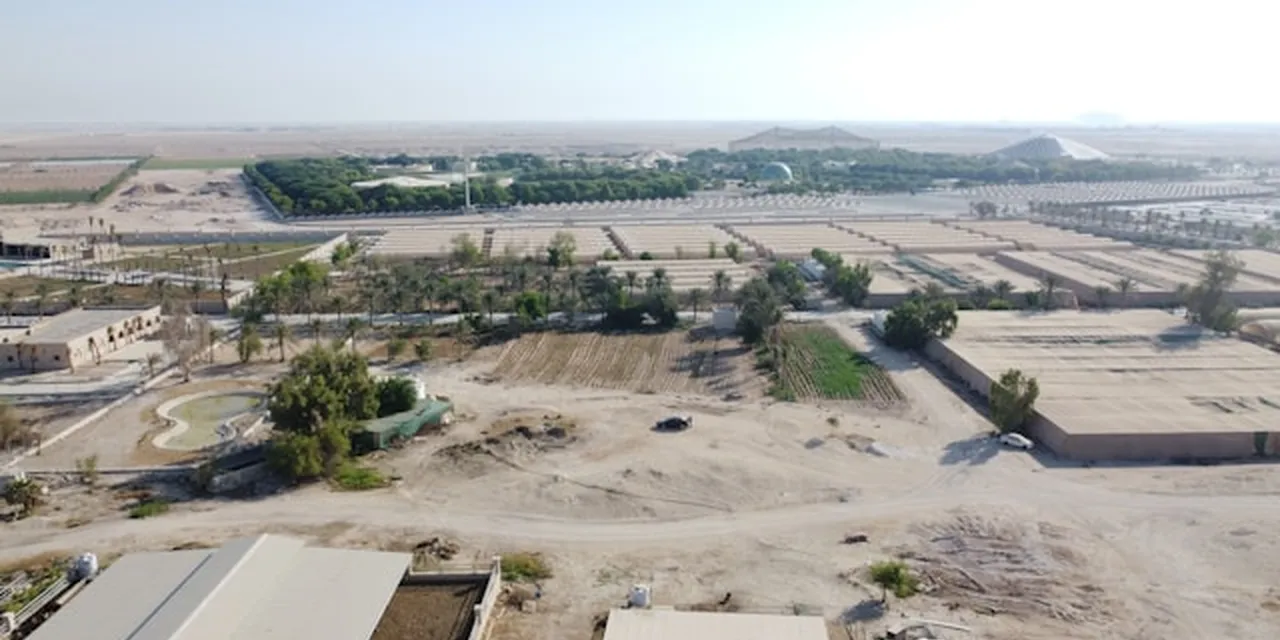
Qatar is building the largest LNG capacity addition in history. The North Field East and North Field West expansions, worth a combined $45.75 billion, will raise the country's liquefaction output from 77 million tonnes per annum to more than 126 mtpa. Four mega-trains are now under construction at Ras Laffan Industrial City. Two more are expected to follow. Approximately 30,000 workers are on site at peak activity. The capital is committed. The concrete is poured. The engineering schedules are locked.
And yet, as of 2026, the talent required to commission, operate, and maintain these facilities has not materialised in anything close to the numbers the programme demands. Senior LNG commissioning engineers with 15 or more years of experience show vacancy durations exceeding 180 days. According to Gulf Talent's Qatar Energy Sector Hiring Barometer, 43% of commissioning roles for the North Field East project remained unfilled after six months of active search. Marine technical superintendents with LNG cargo containment expertise exist in a near-zero-unemployment market. Fabrication yard managers with Arctic LNG modular construction experience are subject to 70% counter-offer rates from current employers when approached by recruiters.
What follows is an analysis of the forces driving this gap: the specific roles that cannot be filled, the structural constraints that make Al Khor and Ras Laffan harder to recruit into than the compensation data would suggest, and why organisations working across Qatar's energy supply chain need a fundamentally different approach to finding the leaders who will determine whether these projects deliver on schedule.
The North Field Programme and Why Standard Talent Markets Cannot Support It
The scale of Qatar's LNG expansion programme is not merely large. It is unprecedented in the modern energy industry in terms of simultaneous capacity under construction at a single site. The North Field East project alone, sanctioned at $28.75 billion, adds four liquefaction trains (Trains 8 through 11) to the 14 already operating at Ras Laffan. The North Field West expansion, with final investment decision expected in 2025 or early 2026 and a budget of approximately $17 billion, adds two more. Both programmes are managed by QatarEnergy LNG and executed by a cluster of international EPC contractors including Tecnicas Reunidas, McDermott Middle East, Consolidated Contractors Company, and Petrofac.
A workforce pipeline that meets less than 10% of demand
The mismatch between this programme's requirements and the available talent pipeline is not a temporary cyclical shortage. It is systemic. Qatar University and the Community College of Qatar produce approximately 120 engineering graduates annually in disciplines relevant to LNG operations. That number meets less than 10% of the sector's demand. The remaining 90% must come from international recruitment, and the international pool of candidates with direct LNG commissioning and process safety experience is both small and overwhelmingly passive.
The concurrency problem no single search can solve
The concurrency of these projects compounds the problem in ways that aggregate workforce data does not capture. EPC contractors at Ras Laffan report what IPA Global describes as "resource-loaded schedule conflicts," where the same commissioning specialists are booked across multiple projects simultaneously. The shortage is not merely about headcount. It is about the finite number of individuals worldwide who have completed commissioning on a C3MR or Optimized Cascade liquefaction train and hold process safety credentials at the HAZOP/LOPA level. These people cannot be trained quickly. They are formed over 15 to 20 years of project cycles. And every major LNG-producing nation is competing for them at the same time.
This creates the central paradox that defines executive hiring in Qatar's energy sector: capital has moved faster than human capital can follow. The infrastructure is being built to a schedule that assumed these specialists could be found. The market has proved otherwise.
Where the Talent Gaps Are Most Acute
The shortages at Ras Laffan and across the Al Khor support cluster follow what recruitment agencies operating in the Gulf describe as a tri-modal pattern. Three distinct categories of specialist are in acute deficit simultaneously, and the dynamics driving each shortage are different.
LNG commissioning and process engineers
The first and most critical gap sits at the commissioning and start-up phase. Senior LNG process engineers with 15 to 20 years of experience, certified in process safety and specialising in APCI C3MR or Optimized Cascade technologies, represent the bottleneck that determines whether trains come online on schedule. Approximately 85% of qualified candidates in this category are passively employed and not active on any job portal, according to Airswift's Global Energy Employment Report. They must be identified through direct headhunting approaches rather than through advertising or inbound recruitment.
The compensation for these roles is substantial. Total cash compensation for a senior LNG process engineer runs QAR 35,000 to 55,000 per month (approximately $9,600 to $15,100), with family housing or an additional QAR 8,000 to 12,000 monthly housing allowance, all tax-free. At the VP Operations level, packages reach QAR 80,000 to 140,000 per month ($22,000 to $38,500) with performance bonuses of up to 50% of base salary and full expatriate benefits. North Field projects currently carry an additional 15 to 20% premium above standard Qatar energy sector baselines, driven by project criticality and housing cost inflation in Al Khor.
These are competitive numbers. And yet, 43% of commissioning roles remain unfilled after six months. The issue is not compensation alone.
Marine fleet technical managers
The second shortage category involves Nakilat's fleet expansion. Qatar Gas Transport Company, which operates the world's largest LNG fleet at 74 owned or operated vessels, must take delivery of 104 new LNG carriers by 2027. Each vessel requires marine technical superintendents with dual-fuel engine experience (ME-GI or X-DF propulsion systems) and expertise in GTT membrane cargo containment systems.
This specialisation exists in a near-zero-unemployment market. Average tenure at Nakilat is 7.2 years, indicating low voluntary turnover and minimal active candidacy. Over 90% of qualified marine fleet captains and chief engineers are passive. According to Spinnaker Consulting's Maritime Employment Review, marine technical superintendents with LNG cargo containment experience are routinely subject to poaching between Nakilat and international fleet operators such as Teekay and MOL, with premium packages running 25 to 35% above standard Qatar market rates.
Total compensation for a marine technical superintendent sits at QAR 40,000 to 60,000 per month ($11,000 to $16,500) with rotation benefits. VP Marine/Fleet roles command QAR 90,000 to 150,000 per month ($24,750 to $41,250). A search for a mega-project director at NFE or NFW scale can reach QAR 100,000 to 180,000 per month ($27,500 to $49,500).
Fabrication supervision and mega-project controls
The third gap is in specialised fabrication supervision and project controls. Qcon's fabrication yard in Al Khor employs more than 4,000 workers for offshore structure fabrication, and the competition for yard managers with modular construction experience from Arctic LNG projects (specifically Yamal or Arctic LNG 2) is intense. Search firms report that 70% of approaches to candidates in this category result in counter-offers from current employers rather than acceptance.
Project controls managers, responsible for earned value management on programmes exceeding $10 billion and expert in Primavera P6 scheduling, command QAR 45,000 to 65,000 per month. These roles require a combination of technical scheduling competence and commercial acumen that is forged only through direct experience on comparable mega-projects. The global pool of individuals who meet this threshold is small, and it is not growing.
The pattern across all three shortage categories points to a single conclusion. The cost of a prolonged vacancy at senior level in this market is not measured in recruitment fees. It is measured in commissioning delays that cascade through the project schedule.
The Al Khor Constraint: Why Location Itself Is a Hiring Barrier
Compensation data suggests that Qatar's LNG sector pays competitively. In many categories, it pays generously. So why do roles go unfilled for six months or longer? The answer lies partly in a factor that salary surveys do not capture: the structural liveability deficit at Al Khor, which functions as the residential hub for Ras Laffan's operational workforce.
Al Khor municipality sits approximately 50 kilometres south of Ras Laffan Industrial City and 80 kilometres north of Doha. It is neither a city with the amenities that senior professionals and their families expect, nor a temporary camp that employees accept as a short-term trade-off. It occupies an awkward middle ground. And the North Field expansion has pushed it past its capacity.
The municipality's population has grown to approximately 202,000 as of late 2024, a 12% increase since 2022 driven by RLIC expansion. Residential occupancy rates in Al Khor's western districts (Al Dhakhira, Al Khor City) exceed 94%. Average rental inflation for Western-standard compounds has reached 18% year-over-year. The municipality has approved only 8,400 new residential units for the 2024 to 2026 period against a projected demand of 23,000 units. This housing deficit is projected to widen to 15,000 units by mid-2026 without accelerated development.
Transport and daily liveability
The single highway connecting Al Khor to Ras Laffan (Al Shamal Road/Al Khor-Ras Laffan Road) now carries average commute times of 65 minutes during peak shifts, up from 45 minutes in 2020. For a senior engineer or project director weighing a move from Abu Dhabi or Dubai, this is not a minor consideration. It is a daily quality-of-life factor that accumulates over a multi-year assignment.
Al Khor offers only three Western-curriculum international schools, compared to more than 40 in Doha and a comparable density in Dubai. For mid-career professionals with school-age children, this is often the deciding factor. InterNations' Expat City Ranking places Doha at 35th globally for expat satisfaction. Dubai sits at 5th. Al Khor does not appear on the ranking at all.
The trailing spouse problem
The retention challenge for trailing spouses is particularly acute. Al Khor offers limited spousal employment opportunities outside the energy sector itself. The UAE, and Abu Dhabi's Ruwais industrial zone specifically, competes directly for the same talent pool but offers superior international schooling and spousal employment access through proximity to Dubai and Abu Dhabi city. ADNOC's ongoing expansion provides comparable tax-free packages in a more liveable environment.
The implication for hiring leaders is uncomfortable. Raising the salary offer by 10% does not solve the Al Khor problem. The problem is not the pay. It is everything that surrounds the pay. A candidate who turns down a QAR 140,000 monthly package is not rejecting the money. They are rejecting the 65-minute commute, the three-school choice, and the 18% rental inflation in a market with 94% occupancy. Addressing this requires a different kind of search: one that identifies candidates for whom the Al Khor trade-off is acceptable, or even attractive, and then builds a relocation narrative that speaks to their specific personal circumstances rather than to a generic expatriate value proposition.
The False Signal: Global Energy Layoffs and the Illusion of Available Talent
One of the most dangerous assumptions a hiring leader in Qatar's LNG sector can make in 2026 is that the global energy sector layoffs of 2024 and 2025 have created a surplus of available talent. According to Challenger, Gray & Christmas, major international oil companies including ExxonMobil, Shell, and BP announced more than 15,000 global energy sector layoffs through 2024.
On the surface, this should have eased the recruitment challenge. It has not.
The layoffs overwhelmingly targeted corporate functions, administrative roles, and upstream exploration positions in mature basins. They did not produce a wave of available LNG commissioning engineers, marine fleet specialists, or mega-project directors. The bifurcation between the generic energy labour market and the LNG-specific execution talent market is the defining feature of this hiring environment.
This is where the original synthesis of this article sits. The global energy sector contraction has not relieved the shortage at Ras Laffan. It has deepened it. The layoff headlines created a perception among some hiring committees that candidates should now be easier to find and cheaper to attract. That perception has led to unrealistic timeline expectations and, in some cases, to compensation offers calibrated to a buyer's market that does not exist for these specialisations. The result is searches that stall at the shortlist stage because the market signal and the market reality are pointing in opposite directions.
A senior commissioning engineer laid off from an IOC's North Sea operation does not automatically become a viable candidate for Ras Laffan. They may lack LNG-specific process safety credentials. They may be unwilling to relocate to Al Khor. They may have already accepted a role at Cheniere's Sabine Pass facility on the US Gulf Coast, where gross salaries carry a 40 to 60% premium (though taxable) and equity participation is available in ways that Qatar's employment structures do not permit.
The talent pool for Qatar's expansion programme remains extremely narrow. The perception that it has widened is a false signal.
Regional Competition and the Geography of Executive Compensation
Al Khor and Ras Laffan do not recruit in isolation. They compete for a finite pool of LNG and petrochemical specialists against three primary regional and international competitors, each of which offers a distinct proposition.
Saudi Arabia: scale, compensation, and lifestyle access
Saudi Arabia's industrial cities, particularly Jubail, Ras Tanura, and the NEOM mega-project, offer 20 to 30% compensation premiums above equivalent Qatar energy sector roles, according to Gulf Business. Saudi Arabia also offers larger-scale housing stock and proximity to Jeddah and Riyadh for leisure and family amenities. However, Saudization (Nitaqat) requirements are stricter than Qatar's Qatarization programme, which can complicate mid-level expatriate hiring. Senior technical roles remain accessible to expatriates in both markets due to skill scarcity.
The UAE: the family-friendly alternative
ADNOC's Ruwais expansion offers comparable tax-free packages to Qatar but with materially better liveability for professionals with families. Dubai and Abu Dhabi's international schooling, spousal employment, and entertainment infrastructure make the UAE the primary competitor for mid-career professionals. This is not a compensation competition. It is a lifestyle competition. And for candidates weighing a five-year assignment with school-age children, the UAE frequently wins.
The US Gulf Coast: equity and career capital
Cheniere, Venture Global, and NextDecade projects on the US Gulf Coast offer the highest gross salaries in the global LNG market, running 40 to 60% above Qatar equivalents before tax. They also offer equity participation structures that are unavailable in Qatar's employment framework, making them the primary draw for senior executives interested in long-term wealth creation rather than tax-free income.
The competitive picture creates a specific challenge for international executive searches targeting this market. The candidates who are best qualified for Ras Laffan are simultaneously being recruited for Sabine Pass, Ruwais, and Jubail. The hiring organisation that moves fastest and presents the most complete relocation proposition, not just the highest base salary, is the one that secures the candidate. Speed of process matters more in this market than in almost any other because the competitive window is measured in weeks, not months.
Qatarization and the Hidden Dependency on Expatriate Expertise
Qatar's nationalisation programme, Qatarization, is one of the most successful workforce localisation initiatives in the Gulf. Official statistics indicate that QatarEnergy has reached 86% Qatari nationals in supervisory roles. This is a genuine achievement that reflects sustained investment in national talent development.
However, the aggregate Qatarization numbers and the project-level staffing reality tell two different stories. Contractor data reveals that 70% of critical-path technical roles on the North Field East project, including commissioning leads and process safety engineers, remain filled by expatriates with 15 or more years of international experience. The distinction matters because it determines where the hiring pressure actually falls.
QatarEnergy's mandate requires 80% Qatari nationals in supervisory roles and 50% in technical grades, enforced by the Qatar Energy Sector Qatarization Committee. For mid-level engineering and administrative positions, this means that many roles are restricted to Qatari nationals. The active candidate market for these positions shows higher candidate-to-role ratios (40 to 50% active candidacy among junior engineers and logistics coordinators), though supply remains constrained by the small annual graduate pipeline.
For senior technical and executive roles, the picture inverts entirely. Process safety management, major hazard facility regulatory compliance, and LNG-specific commissioning expertise require decades of accumulated project experience that Qatar's national talent pool has not yet had the opportunity to develop at scale. These roles are exempt from strict Qatarization quotas precisely because the expertise does not yet exist domestically in sufficient quantity. The hiring challenge for these positions remains firmly in the international expatriate market, where passive candidate identification through talent mapping is the only viable method.
The tension is instructive. Numerical Qatarization success at the aggregate level can coexist with deep expatriate dependency for the specific roles that determine whether a $28 billion project comes online on schedule. Hiring leaders who read the headline Qatarization figures and assume that the talent supply challenge is being solved domestically are misunderstanding which parts of the problem Qatarization addresses and which parts it cannot yet reach.
What a Search Strategy for This Market Actually Requires
The conventional executive search model was not designed for a market where 85 to 95% of qualified candidates are passive, where 70% of approached candidates receive counter-offers, and where the liveability of the location itself is a material barrier to acceptance. The approach that works in London, New York, or even Dubai breaks down when applied to Al Khor and Ras Laffan.
A search for a VP Operations or a senior commissioning lead in this market requires three things that most hiring processes do not provide.
First, it requires genuine access to passive candidates through direct approaches rather than advertising. The candidates who will fill these roles are currently employed at Nakilat, ADNOC, Cheniere, or one of a handful of international fleet operators and LNG licensees. They are not browsing job boards. They will not respond to a LinkedIn InMail from an unknown recruiter. They respond to credible, relationship-based headhunting where the approach demonstrates an understanding of their specific career situation and the proposition is tailored before the first conversation.
Second, it requires speed. In a market where every qualified candidate is simultaneously being approached for roles in Saudi Arabia, the UAE, and the US Gulf Coast, a search process that takes three months to produce a shortlist is a search process that fails. The competitive window for a senior LNG commissioning engineer is measured in the weeks between first contact and signed offer. Firms that can deliver interview-ready candidates within days rather than months hold a material advantage.
Third, it requires a compensation and relocation proposition that addresses the Al Khor liveability challenge directly. This means going beyond standard package benchmarking to build a bespoke relocation narrative: school placements secured before the candidate visits, housing options pre-identified, spousal career support articulated, and commute realities presented honestly. The organisations that negotiate with these factors in mind close offers. The organisations that lead with base salary and assume the rest will follow lose candidates to counter-offers.
KiTalent's approach to executive search in the energy sector reflects these realities. Through AI-enhanced talent mapping, we identify the passive candidates who are not visible through conventional channels, delivering interview-ready leadership candidates within 7 to 10 days. Our pay-per-interview model means clients invest only when they meet qualified candidates, and our 96% one-year retention rate reflects searches built on candidate-role fit rather than speed alone.
For organisations hiring senior energy and LNG leadership for Ras Laffan and Al Khor in a market where 95% of project directors and 85% of commissioning engineers are not actively looking, where the competitive window is weeks, and where a six-month vacancy on a critical-path role delays a $28 billion programme, start a conversation with our energy sector search team about how we approach this market differently.
Frequently Asked Questions
What is the average time to fill a senior LNG commissioning engineer role in Qatar?
Senior LNG commissioning engineer roles at Ras Laffan Industrial City consistently show vacancy durations exceeding 180 days. According to Gulf Talent's 2024 Qatar Energy Sector Hiring Barometer, 43% of commissioning roles for the North Field East project remained unfilled after six months of active search. The primary cause is not compensation. It is the extremely narrow global pool of candidates with 15 or more years of LNG-specific process safety experience and the fact that approximately 85% of them are passively employed. Firms using direct headhunting methods for energy sector leadership consistently outperform those relying on job advertising for these specialisations.
What do senior LNG executives earn in Qatar in 2026?
Qatar's LNG sector offers tax-free total cash compensation. A VP Operations (LNG Production) earns QAR 80,000 to 140,000 per month ($22,000 to $38,500) plus performance bonuses of up to 50% and full expatriate benefits. A VP Marine/Fleet commands QAR 90,000 to 150,000 per month ($24,750 to $41,250). Project directors on mega-project EPC programmes such as North Field East or North Field West earn QAR 100,000 to 180,000 per month ($27,500 to $49,500). North Field projects carry an additional 15 to 20% premium above standard Qatar baselines.
Why is Al Khor difficult to recruit into despite high salaries?
Al Khor functions as the residential hub for Ras Laffan Industrial City but lacks the infrastructure that senior expatriate professionals expect. The municipality offers only three Western-curriculum international schools compared to more than 40 in Doha. Residential occupancy exceeds 94% with 18% annual rental inflation. Average commute times to Ras Laffan have risen to 65 minutes during peak shifts. Limited spousal employment opportunities compound the challenge. Competing locations such as Abu Dhabi and Dubai offer comparable tax-free compensation with materially superior family amenities.
How does Qatar's Qatarization programme affect senior executive hiring?
QatarEnergy mandates 80% Qatari nationals in supervisory roles and 50% in technical grades. Aggregate Qatarization rates have reached 86% in supervisory positions. However, 70% of critical-path technical roles on the North Field East project remain filled by expatriates with extensive international experience. Senior technical and executive roles, particularly in commissioning, process safety, and marine fleet management, are effectively exempt from strict quotas because the required expertise does not yet exist domestically at sufficient scale.
Which markets compete with Qatar for LNG talent?
Qatar competes for specialised LNG professionals against three primary markets. Saudi Arabia (Jubail, Ras Tanura, NEOM) offers 20 to 30% compensation premiums with larger housing stock. The UAE (Abu Dhabi/Ruwais) offers comparable packages with superior family liveability and proximity to Dubai. The US Gulf Coast (Cheniere, Venture Global, NextDecade) offers 40 to 60% gross salary premiums with equity participation unavailable in Qatar. Each competitor draws different candidate profiles, making the search for Qatar-willing senior specialists a specialised exercise requiring structured talent pipeline development.
What percentage of qualified LNG specialists are passive candidates?
Passive candidate rates in Qatar's LNG sector are among the highest of any industry globally. Approximately 85% of senior LNG process engineers with over 10 years of experience are not active in job portals. Among marine fleet captains and chief engineers at Nakilat, more than 90% are passive, with average tenures of 7.2 years. At the mega-project director level, 95% or more are passive, with typical searches requiring six to nine months through conventional methods. KiTalent's AI-enhanced talent mapping reaches these candidates directly, delivering interview-ready shortlists within 7 to 10 days.