Raleigh-Durham Biotech Manufacturing: $4.6 Billion in Investment, Not Enough People to Run It
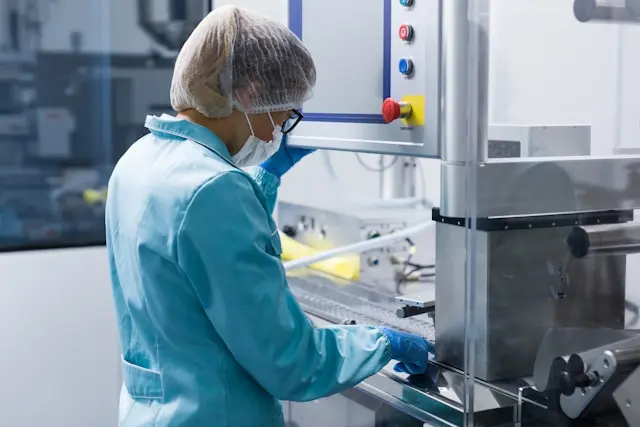
Research Triangle Park now commands 12% of American cell and gene therapy manufacturing capacity. Forty-seven CDMOs operate in the metro. Lab vacancy sits at 3.2%. Fujifilm Diosynth, Biogen, and Catalent have collectively added hundreds of thousands of square feet of GMP production space in the past eighteen months. By every infrastructure measure, the Raleigh-Durham corridor has won.
And yet the region cannot staff what it has built. The vacancy rate for GMP quality and advanced bioprocessing roles reached 8.4% through 2024, with senior process engineering positions running even higher at 11.2%. These are not entry-level gaps. They are shortages at the exact seniority level required to take a therapy from clinical-stage promise to commercial-scale reality. Every unfilled Senior Manager of Cell Culture Manufacturing or VP of Quality Assurance represents not just lost productivity but delayed patient access to treatments that have already cleared regulatory hurdles.
What follows is an analysis of how the Triangle's manufacturing ambitions have outpaced its talent supply, where the deepest gaps sit, who is competing for the same candidates, and what hiring leaders in this market need to understand before they launch their next search. The core problem is not that Raleigh-Durham lacks talent. It is that the talent this market needs did not exist in sufficient numbers five years ago, and capital investment has moved faster than workforce development in healthcare and life sciences could possibly follow.
The Bifurcated Market: Why National Layoffs Have Not Helped
The headline numbers in biotech suggest a market awash in available professionals. FierceBiotech tracked more than 12,000 job cuts nationally in 2024. Venture funding tightened. Discovery-stage companies shed research scientists. A casual observer might conclude that the Triangle's hiring challenges have eased.
They have not. The layoffs targeted a completely different segment of the workforce. Discovery biologists, preclinical research scientists, and early-stage programme managers entered the job market in large numbers. Commercial-scale manufacturing specialists did not. The 8.4% vacancy rate in GMP quality roles and the 11.2% gap in senior process engineering positions persisted through the same period that produced those national layoff headlines.
This is the analytical point that matters most for hiring leaders in this market: the biotech contraction created a false impression of available talent. The professionals who lost their jobs are not the professionals this region needs. A discovery biologist with ten years of academic research experience cannot step into a viral vector release testing role. A preclinical programme manager cannot run a commercial-scale perfusion cell culture operation. The skills are not transferable at the speed the market requires. Capital moved faster than human capital could follow, and the result is a market where finding qualified passive candidates requires a fundamentally different approach from posting a job and waiting.
Where the Cuts Fell and Where the Gaps Persist
The national layoffs concentrated in three areas: discovery research, early clinical development, and corporate functions at venture-backed startups that ran out of runway. These are the segments where entry-level and mid-career talent was most abundant before the contraction, and they remain abundant now.
The Triangle's shortage sits in a different population entirely. GMP auditors with viral vector release testing experience. Senior bioprocess engineers who have operated single-use bioreactor systems at commercial scale. Quality assurance leaders who have shepherded a Biologics License Application through FDA CBER review. These professionals were never abundant. The contraction did not create them. And the expansion now underway requires them in numbers the region has never needed before.
The Infrastructure Surge and Its Talent Implications
Raleigh-Durham's physical expansion tells the story of a region that has bet heavily on advanced manufacturing. The Frontier RTP and Hub RTP developments delivered 2.1 million square feet of lab and manufacturing space by end of 2025. GMP manufacturing space now commands $42 per square foot, a 28% increase since 2022. Build-out costs for new GMP facilities run $150 to $200 per square foot, exceeding averages in Boston and San Diego.
Fujifilm Diosynth expanded viral vector production capacity by 40% year-over-year at its Morrisville facility, with a $130 million expansion adding 200 roles focused on cell therapy manufacturing and process development completed in early 2025. Catalent added 75,000 square feet of cell therapy suites. Biogen maintains approximately 2,100 employees in RTP, with its Kit Creek Center gene therapy facility representing one of the largest viral vector production sites on the East Coast.
The CHIPS Act Spillover Nobody Planned For
The $4.6 billion in projected CHIPS and Science Act funding flowing into North Carolina was designed primarily for semiconductor manufacturing. But the Act's $11 billion Department of Commerce R&D authorisation includes advanced manufacturing automation applicable to biotech. The North Carolina Department of Commerce projects 2,400 new bioprocess engineering positions by 2026 through CHIPS-related supplier networks and automation upgrades, according to the NCBC 2024 Economic Impact Forecast.
Here is the problem those projections do not address. Local university pipelines at UNC Chapel Hill, NC State, and Duke collectively graduate only 280 to 310 MS and PhD candidates annually in relevant biological engineering disciplines. Even assuming perfect conversion from graduation to industry employment, and even assuming every graduate stays in the Triangle, the pipeline produces roughly 13% of the positions that federal funding alone is projected to create by 2026. The remaining 87% must come from somewhere else: relocation, retraining, or poaching from competitors in the same constrained market.
This arithmetic makes federal funding a double-edged instrument. It accelerates infrastructure. It creates demand signals. It funds automation that eventually reduces headcount per facility. But in the near term, it intensifies competition for the same insufficient pool of qualified manufacturing professionals, inflating compensation beyond what mid-size CDMOs can sustain.
What the Compensation Data Reveals
The Triangle's compensation structure tells a story of a market under pressure at every level of seniority. The premiums are steepest where the shortages are deepest, and the gap between what RTP employers must pay and what they budgeted to pay is widening.
At the senior specialist and manager level, bioprocess engineers command $145,000 to $168,000 in base salary with 15 to 20% target bonuses. VP Manufacturing Operations roles run $285,000 to $340,000 base with 40 to 60% target bonuses and long-term incentive equity grants valued at 80 to 120% of base. GMP quality managers at the individual contributor and team lead level earn $135,000 to $155,000 base. VP Quality Assurance compensation ranges from $275,000 to $325,000 base with 35 to 50% target bonuses.
These numbers have moved materially. According to the NCBC 2024 Workforce Report, senior GMP quality roles in RTP experienced 28% year-over-year compensation inflation, compared to a 12% national average for the same positions. This is not a gradual market adjustment. It is a repricing event driven by acute scarcity.
The Coastal Premium That Is Not a Premium
Boston and San Francisco continue to draw 34% of senior bioprocess engineers who exit the Triangle market, offering average compensation premiums of 18 to 22% above RTP norms. On paper, this looks like a straightforward cost-of-living arbitrage favouring the coasts.
The reality is more nuanced. Housing costs run 2.3 times higher in San Francisco and 1.8 times higher in Boston, effectively neutralising the net gain for most candidates. The coastal premium is a recruitment tool, not a financial advantage. It works because it signals prestige and because the density of PhD-level bioprocess engineers in Boston and San Francisco is 40% higher, offering career optionality that the Triangle cannot yet match.
The more dangerous competitive threat comes from Philadelphia and Maryland's I-270 corridor. These markets offer equivalent compensation at 98 to 102% of RTP rates with housing costs 15 to 20% lower. For a GMP quality specialist with five or more years of experience, this combination creates a 15% attrition risk that many employers underestimate until a counteroffer arrives. The I-270 corridor does not need to outpay RTP. It only needs to match it while costing less to live in.
Understanding these dynamics requires detailed market benchmarking before structuring an offer, not after losing the candidate.
The 85% Problem: Why Traditional Recruitment Cannot Reach This Market
Senior GMP Quality Specialists and Advanced Therapy Process Engineers function as 85 to 90% passive candidate markets. Average tenure is 4.2 years. Unsolicited application rates fall below 8%. Recruitment response rates to LinkedIn InMails sit at 12 to 15%.
These numbers define the fundamental constraint facing every employer in the Triangle's advanced manufacturing sector. Job postings reach, at most, 10 to 15% of the viable candidate population. The remaining 85% are employed, generally satisfied, not monitoring job boards, and unlikely to respond to a generic outreach message. They will move for the right opportunity. But the right opportunity must find them first, and it must arrive through a channel they trust.
Senior Regulatory Affairs specialists with FDA BLA submission experience for gene therapies represent an even more extreme case: a 95% passive market where executive search engagement is effectively the only viable path to placement, according to Deloitte's 2024 Biotech Hiring Trends analysis.
What a Failed Search Costs in This Market
The consequences of a slow or failed search in advanced therapy manufacturing are not abstract. According to BioPharma Dive coverage of regional CDMO talent constraints, a pattern consistent with extended vacancy emerged at one major RTP CDMO: a Senior Manager of Cell Culture Manufacturing position remained open for eleven months across three external search cycles before being filled through internal promotion. The role required specific expertise in adherent cell culture for viral vector production, a combination that fewer than 200 professionals in the United States possess at the required seniority.
Eleven months of vacancy in a commercial-scale manufacturing role does not simply delay one hire. It constrains production capacity, delays therapy commercialisation, and forces redistribution of work across a team already operating at or beyond capacity. The hidden cost of a failed executive hire extends well beyond the recruitment fees. In regulated manufacturing, it can delay the filing itself.
According to regional recruitment industry reports, one major manufacturer paid 35 to 40% compensation premiums above standard bands to secure two Senior GMP Quality Specialists, including relocation packages exceeding $75,000 per candidate. These are not typical retention adjustments. They reflect a market where the cost of not having the right person in the role exceeds even the most aggressive premium.
The Emerging Gene Therapy Corridor and Its Talent Demands
The cluster forming between RTP core, Durham's Golden Belt District, and Chapel Hill's Carver Street corridor is creating a distinct sub-market within the Triangle. Asher Biotherapeutics, Locus Biosciences, and Novartis Gene Therapies all maintain operations in this zone, joining the established anchors in a concentration that the NCBC describes as the "Gene Therapy Triangle."
This clustering accelerates innovation. It also intensifies local competition for the same candidates. When three gene therapy manufacturers, two CDMOs, and a global clinical research organisation all operate within a thirty-minute commute radius, every hiring decision reverberates. A single high-profile poach can trigger a cascade of counteroffers, retention packages, and defensive salary adjustments across the corridor.
The skills demanded by this cluster are highly specific. Viral vector production platforms for AAV and Lentivirus. Process analytical technology and Quality by Design implementation. Combo-product experience integrating biologics with drug delivery devices. Ultra-orphan manufacturing scale-up for rare disease indications. Technology transfer from clinical to commercial manufacturing is perhaps the most critical competency, and the one in shortest supply.
For emerging companies in this corridor, the challenge is compounded by the difficulty of competing against established employers like Biogen and Fujifilm Diosynth on total compensation. Equity participation helps close the gap for candidates willing to accept risk, but negotiating these packages requires precision that many early-stage organisations lack.
The Economic Risks Hiring Leaders Must Factor In
Not every signal in the Triangle points to uninterrupted growth. Several risk factors could reshape hiring demand, compensation expectations, or both within the next twelve to eighteen months.
Biogen faces material revenue pressure from Tecfidera generic erosion and competitive entry against Spinraza. According to Biogen's 2024 10-K SEC filing and Evaluate Pharma's patent cliff analysis, this fiscal pressure may constrain RTP headcount growth to 2 to 3% annually compared to historical 8% expansion rates, potentially freezing senior manufacturing hiring despite ongoing facility capacity expansion. The infrastructure continues to grow. The budget to staff it may not keep pace.
FDA Review Timelines and Their Downstream Effects
Average FDA review times for novel gene therapy BLAs increased to 14.2 months in 2024, up from 11.3 months in 2022. Chemistry, Manufacturing, and Controls holds now average 8.4 months for cell and gene therapies. These delays do not simply push back launch dates. They create revenue recognition delays that constrain CDMO hiring forecasts. A CDMO that built capacity for a commercial ramp beginning in Q2 2026 may find that ramp delayed to Q4 2026 or beyond, leaving manufacturing suites and the teams required to run them in an uncertain holding pattern.
Water and sewer infrastructure constraints in Durham County may further delay 450,000 square feet of planned manufacturing expansion by 12 to 18 months, according to the Durham County Planning Department's 2024 Infrastructure Assessment. Physical infrastructure and talent infrastructure are both bottlenecks. Neither waits for the other to resolve.
For hiring executives weighing these risks, the implication is clear. The Triangle's growth trajectory is real, but it is not smooth. Organisations that build a talent pipeline proactively rather than reactively will manage these discontinuities far better than those that wait for a signed contract before beginning a search.
What This Means for Executive Hiring in the Triangle
The Raleigh-Durham advanced manufacturing market in 2026 presents a specific paradox. The infrastructure investment is enormous. The clinical pipeline is deep. The federal funding is flowing. And yet the professionals required to convert all of this into commercial-scale therapy production are not available in sufficient numbers, are not looking for new roles, and will not be reached by conventional recruitment methods.
The market requires a different approach. The 85 to 90% passive candidate ratio in GMP quality and bioprocessing means that direct headhunting methodology is not a premium option. It is the baseline requirement. A search strategy built on job postings, LinkedIn advertising, and inbound applications will reach, at best, one in seven viable candidates. The other six must be identified through AI-enhanced talent mapping and direct engagement.
KiTalent delivers interview-ready executive candidates within 7 to 10 days, drawing on a methodology built specifically for markets where the talent you need is not visible on any job board. With a 96% one-year retention rate and a pay-per-interview model that eliminates upfront retainer risk, the approach is designed for hiring leaders who cannot afford an eleven-month vacancy in a role that determines whether a therapy reaches patients or stays in a filing cabinet.
For organisations hiring senior manufacturing, quality, and regulatory leadership in the Raleigh-Durham biotech corridor, where a single unfilled VP of Quality Assurance can delay a BLA submission by months, speak with our executive search team about how we approach this market.
Frequently Asked Questions
What is the current vacancy rate for biotech manufacturing roles in Raleigh-Durham?
As of late 2024, the vacancy rate for GMP quality and advanced bioprocessing roles in the Raleigh-Durham metro stood at 8.4%, with senior process engineering positions running higher at 11.2%. These figures persisted despite national biotech layoffs affecting more than 12,000 workers, because the layoffs targeted discovery and research roles rather than commercial-scale manufacturing specialists. The shortage is concentrated in viral vector production, cell therapy manufacturing, and regulatory affairs professionals with FDA BLA submission experience. These vacancies have a direct impact on therapy commercialisation timelines across the Research Triangle corridor.
What do senior bioprocess engineers earn in Research Triangle Park?
Senior bioprocess engineers at the specialist and manager level in the Triangle command $145,000 to $168,000 in base salary with 15 to 20% target bonuses. VP Manufacturing Operations roles command $285,000 to $340,000 base with 40 to 60% target bonuses and long-term incentive equity grants valued at 80 to 120% of base. Senior GMP quality roles experienced 28% year-over-year compensation inflation through 2024, well above the 12% national average, reflecting acute local scarcity in advanced therapy manufacturing expertise.
Why is it so hard to hire GMP quality specialists in Raleigh-Durham?
GMP quality specialists with viral vector and cell therapy experience represent an 85 to 90% passive candidate market. Average tenure is 4.2 years, and fewer than 8% apply for roles unsolicited. The talent pool is constrained by two factors: the advanced therapy manufacturing sector is relatively young, meaning the total number of professionals with commercial-scale experience is small nationally, and federal investment through the CHIPS and Science Act is creating 2,400 new positions against a university pipeline producing only 280 to 310 graduates annually. This gap cannot close through conventional recruitment methods.
How does Raleigh-Durham biotech compensation compare to Boston and San Francisco?
Boston and San Francisco offer 18 to 22% compensation premiums above RTP norms for senior bioprocess roles. However, housing costs are 1.8 to 2.3 times higher in those markets, effectively neutralising the net financial advantage for most candidates. The more consequential competitive threat comes from Philadelphia and the I-270 corridor in Maryland, which offer 98 to 102% of RTP compensation with housing costs 15 to 20% lower. This combination creates a 15% attrition risk for experienced quality specialists considering a move.
How does KiTalent approach executive search in biotech manufacturing?
KiTalent uses AI-enhanced direct headhunting to identify and engage the passive candidates that job boards and inbound applications cannot reach. In a market where 85 to 90% of qualified professionals are not actively looking, this methodology is essential rather than optional. KiTalent delivers interview-ready candidates within 7 to 10 days under a pay-per-interview model, with no upfront retainer. The firm's 96% one-year retention rate reflects a process designed to match not just skills but long-term fit, which matters enormously in a regulated manufacturing environment where onboarding a replacement takes six months or more.
What impact will the CHIPS and Science Act have on biotech hiring in North Carolina?
North Carolina's projected $4.6 billion share of CHIPS funding is expected to create 2,400 new bioprocess engineering positions by 2026 through supplier networks and automation upgrades. While the Act primarily targets semiconductor manufacturing, its advanced manufacturing automation provisions apply directly to biotech. The near-term effect is likely to intensify competition for existing talent rather than resolve the shortage, because local universities produce only 280 to 310 relevant graduates per year. Mid-size CDMOs face particular pressure as compensation premiums inflate beyond their budgets.