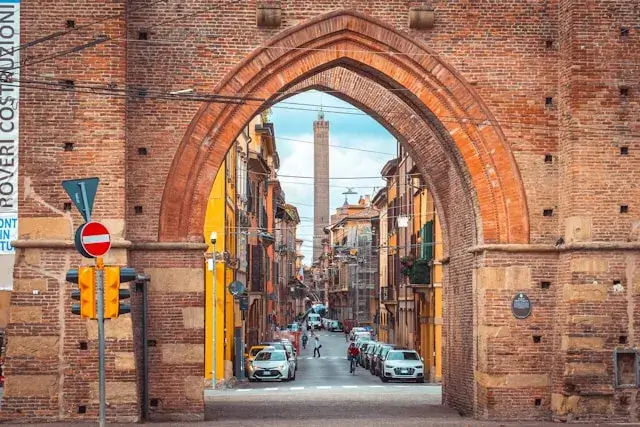
Bologna’s Evolving Talent Landscape: Far More Than a University City
Bologna has long been defined by its three historic nicknames: La Dotta (The Learned), La Grassa (The Fat), and La Rossa (The Red). But professionals across Italy and beyond are starting to recognise a fourth identity that matters just as much for anyone navigating the city’s labour market: Bologna as a powerhouse of advanced manufacturing, data science, and innovation-led growth.
For a head hunter in Bologna, the implications are profound. The metropolitan area is home to over 91,000 active companies, generating roughly 21% of all business activity in Emilia-Romagna. The local economy grew by an estimated 1.0% in 2025, outpacing national GDP growth, and the province of Bologna recorded one of the lowest unemployment rates in Italy at 3.8%, well below both the Emilia-Romagna average of 5.0% and the national figure of around 6.5%.
These numbers tell a story that any recruiter in Bologna understands from daily experience: this is not a market with a surplus of available talent. It is a market where skilled professionals hold significant leverage, and where companies that rely on traditional job postings alone are falling behind in the race for leadership-level and specialist candidates.
This article examines the forces reshaping recruitment in Bologna across 2025 and 2026, from both the candidate and the employer perspective. Whether you are a company seeking to understand how to attract top talent, or a professional evaluating your next career move, the trends outlined here will help you navigate one of Italy’s most dynamic and competitive talent markets.
The Economic Engine Behind Bologna’s Talent Demand
To understand why recruitment in Bologna has become so competitive, you need to understand the economic ecosystem that drives demand.
Packaging Valley and Industrial Automation
Bologna sits at the heart of what the industry calls Packaging Valley, a globally recognised cluster of companies that design and manufacture the automated machinery used by pharmaceutical, food, cosmetic, and consumer goods producers worldwide. Names like IMA, Coesia, and Marchesini have their roots here, employing thousands of engineers, automation specialists, and R&D professionals. According to the regional Confindustria, Emilia-Romagna faces a projected staffing shortage of over 300,000 workers by 2028, and much of that pressure is concentrated in the Bologna, Modena, and Ferrara corridor. The demand for skilled professionals in automation engineering, software development, and data analytics has created a fiercely competitive recruitment environment.
For companies in these sectors, the challenge is not simply filling vacancies but finding leaders capable of navigating Industry 4.0 transformation while managing increasingly complex supply chains. This is precisely where executive search delivers value that traditional recruitment channels cannot match, by accessing the passive candidates who are succeeding in their current roles and rarely respond to job advertisements.
Data Valley and the Technology Frontier
Perhaps the most transformational shift in Bologna’s economic identity is the emergence of Data Valley. The Tecnopolo DAMA (Data Manifattura) in Bologna now hosts Leonardo, one of the world’s most powerful supercomputers, alongside the European Centre for Medium-Range Weather Forecasts (ECMWF) and the national AI Factory IT4LIA, a €430 million initiative co-financed by the EU, the Italian government, and the Emilia-Romagna region. This infrastructure has attracted major technology players, including NTT DATA, which established its Bologna office specifically because of the Data Valley ecosystem, planning to grow to 400 employees with roles spanning data science, business consulting, and process management.
For any recruiter in Bologna working across the technology sector, this means demand for AI specialists, cybersecurity analysts, cloud architects, and data engineers is growing faster than the local talent pipeline can supply. The result is a market where companies must compete on employer brand, compensation packages, and career development opportunities, or risk losing candidates to Milano, London, or the remote-first positions now available from international employers.
Motor Valley and the Automotive Transition
The broader Emilia-Romagna region, and the Bologna metropolitan area in particular, is also home to Motor Valley, where brands such as Ducati, Lamborghini, and Maserati have their headquarters or principal operations. As the automotive sector accelerates its transition toward electrification, autonomous driving, and connected vehicle technologies, the profiles these organisations need are shifting from traditional mechanical engineering toward software engineering, battery technology, and embedded systems.
A head hunter in Bologna working with automotive and industrial clients must now map talent landscapes that cross industry boundaries, identifying candidates from aerospace, energy, and deep tech who bring transferable skills to the mobility revolution.
Insurance, Finance, and Professional Services
Bologna is also a significant hub for insurance and financial services, anchored by the Unipol Group, which reported over €11.5 billion in revenue and remains the city’s largest employer by turnover. UniSalute, the pioneering health insurance firm within the Unipol ecosystem, has been expanding rapidly in the welfare and health technology space. The presence of these major institutions, alongside a growing number of fintech startups and professional services firms, creates sustained demand for actuaries, risk managers, compliance specialists, and digital transformation leaders.
KiTalent’s experience in insurance and banking executive search across European markets provides a direct lens into how these industries are evolving: the leaders they need today must combine deep technical expertise with the ability to manage regulatory complexity and drive innovation simultaneously.
What Highly Skilled Candidates Should Know About the Bologna Market
If you are a mid-career or senior professional considering opportunities in Bologna, several trends should inform your strategy.
Your Leverage Is Real, but Strategic Positioning Matters
With unemployment in the province sitting at 3.8% and specific sectors reporting severe talent shortages, skilled professionals in Bologna are in a strong position. However, leverage alone does not guarantee the right career move. The most successful transitions happen when candidates understand their market value in context, not just in terms of salary but in terms of role scope, reporting line, equity participation, and long-term career trajectory.
This is where working with an experienced executive career coach or a trusted headhunter can make a significant difference. A knowledgeable recruitment consultant in Bologna will provide you with market benchmarking data that goes beyond generic salary surveys, offering insight into what specific companies are willing to offer for your profile and how your compensation compares to peers in comparable roles across Northern Italy.
The Rise of Skills-Based Hiring
Across Italy and Europe, there is a clear shift toward skills-based hiring, particularly in technology, data science, and advanced manufacturing. According to the World Economic Forum’s 2025 Future of Jobs report, 63% of employers cite skills gaps as the single greatest barrier to business transformation. In Bologna’s packaging machinery and automation sectors, this trend is particularly pronounced: companies are increasingly open to candidates who bring the right capabilities even without a traditional industry background, provided they can demonstrate practical competence and adaptability.
For candidates, this means your professional development strategy matters. Investing in certifications around Industry 4.0 technologies, AI and machine learning, or digital supply chain management can significantly expand your range of opportunities. It also means that a well-crafted CV that emphasises accomplishments and capabilities over titles and tenure is more important than ever. Our guide on crafting an effective CV from a headhunter’s perspective offers practical advice on making your profile stand out.
The Passive Candidate Advantage
Roughly 80% of high-performing professionals at any given time are not actively looking for a new role. In a city like Bologna, where the professional community is relatively interconnected and industry knowledge travels fast, this creates a particular dynamic. The best opportunities, especially at the leadership and specialist level, are often filled through direct search and confidential engagement, long before a role is ever posted publicly.
This is why building a relationship with a reputable head hunter in Bologna can be one of the highest-return investments in your career. It is not about being “on the market” but about being visible to the people who manage the searches that matter. If you are considering your next move, sharing your profile with an executive search firm ensures you are part of the conversation when relevant opportunities arise.
Compensation Trends: Northern Italy’s Evolving Landscape
Salaries in Italy have been recovering from a period of significant real-wage decline, with OECD data indicating that Italian real wages were still 7.5% lower in early 2025 than in early 2021. However, Bologna and Northern Italy more broadly are seeing above-average compensation growth in high-demand sectors. Technology and consulting roles, particularly those aligned with AI, cybersecurity, and financial modelling, are commanding premium salaries driven by acute talent scarcity.
For professionals evaluating offers, understanding compensation and salary expectations in full context, including Italy’s 13th-month pay structure, meal vouchers, supplementary healthcare, and pension contributions, is essential. The total package, rather than the headline figure, often determines the true value of a move. And if negotiation is on the table, our resource on how to negotiate a salary package provides a strategic framework for maximising your outcome.
What Companies and Hiring Leaders Should Know
For CHROs, CEOs, and hiring managers in Bologna, the recruitment landscape demands a more strategic approach than ever before.
The Cost of Getting Executive Hiring Wrong
In a tight labour market, a failed executive hire does not just waste the recruitment fee. Research from the U.S. Department of Labor and SHRM suggests that a bad senior-level hire can cost an organisation between 50% and 200% of the individual’s annual compensation once you account for severance, lost productivity, disrupted team performance, and the opportunity cost of delayed strategic initiatives. In Bologna’s closely networked business community, a mishandled hiring process can also damage your employer brand in ways that affect future recruitment for years.
The solution is not to hire more slowly but to hire more intelligently. A retained executive search approach, where the search firm invests significant research capacity upfront and is contractually committed to delivering results, consistently outperforms contingency hiring at the leadership level. It ensures you are not competing for the same 20% of active candidates but accessing the full talent landscape through direct headhunting and confidential engagement.
Talent Mapping as Competitive Intelligence
Forward-thinking companies in Bologna are no longer waiting until a position opens to begin understanding their talent landscape. Talent mapping and talent pipeline development allow organisations to identify, track, and build relationships with potential candidates long before a hiring need becomes urgent. This is particularly valuable in sectors like packaging machinery, automotive, and data science, where the pool of relevant candidates is finite and fiercely competed over.
In a market projected to face shortages exceeding 300,000 workers by 2028 across Emilia-Romagna, the companies that invest in continuous talent intelligence today will be the ones with a decisive advantage when a critical leadership role opens tomorrow.
The Demographic Challenge: Italy’s Structural Workforce Shift
Any recruiter or head hunter in Bologna must also contend with a structural reality that goes beyond cyclical market conditions. Italy’s working-age population is projected to decline by 34% between 2023 and 2060, according to the OECD. This is not a distant forecast but a trend that is already visible: the ratio of old-age dependants per working-age individual will roughly double over this period, from one dependant per 2.4 workers to one per 1.3 workers.
For companies in Bologna, this means that executive retention strategies are as important as executive recruitment strategies. The methodology behind a successful placement must include rigorous cultural fit assessment and long-term career alignment, not just technical capability matching. An organisation that loses a senior leader after 18 months faces not only the direct replacement cost but also the compounding difficulty of recruiting a successor in an increasingly constrained market.
International Talent as a Strategic Lever
The Italian government’s plan to issue 500,000 work visas between 2026 and 2028 signals a recognition that domestic talent alone cannot meet economic growth demands. For Bologna-based companies, this represents both an opportunity and a complexity. International talent brings fresh perspectives, specialised skills, and global network connections, but successful cross-border recruitment requires sophisticated sourcing, regulatory navigation, and cultural integration support.
KiTalent’s international executive search capabilities, operating across four continental hubs in Turin, New York, Nicosia, and Almaty, are designed precisely for this kind of challenge: identifying leadership talent across borders while managing the practical complexities of relocation, compliance, and integration.
The Role of AI and Technology in Bologna’s Recruitment Ecosystem
Artificial intelligence is reshaping how recruitment operates in Bologna, just as it is across global talent markets. From AI-powered candidate sourcing and screening to predictive analytics that identify flight risks within existing teams, technology is augmenting the recruiter’s toolkit significantly.
However, the executive search firms delivering the strongest outcomes in Bologna’s market are those that use technology to enhance, not replace, human judgment. Automated tools can process thousands of candidate profiles and identify potential matches at speed. What they cannot do is assess the subtle dynamics of cultural fit, evaluate a candidate’s genuine motivations for considering a move, or manage the delicate negotiations that characterise C-suite and senior-level recruitment.
KiTalent’s approach exemplifies this balance. Our parallel mapping methodology leverages AI-powered market intelligence to identify and analyse candidate pools rapidly, typically presenting qualified shortlists within 7–10 days. But every candidate interaction is personally managed by a consultant who understands both the client’s organisational culture and the candidate’s career aspirations. This high-tech, high-touch philosophy is what distinguishes genuine executive search from volume-driven recruitment.
Bologna’s Quality of Life: An Underused Employer Brand Asset
One dimension that companies in Bologna consistently underestimate in their recruitment messaging is quality of life. For candidates evaluating a move from Milano, Roma, or international locations, Bologna offers a compelling proposition that extends well beyond the job specification.
The city provides the cultural infrastructure of a major European metropolitan area: UNESCO World Heritage porticoes spanning over 38 kilometres, a designation as a UNESCO City of Music, more than 70 annual cultural festivals, and a gastronomic heritage that genuinely has no equal. High-speed rail connects Bologna to Milano in one hour, Firenze in 35 minutes, Roma in two hours, and Venezia in 90 minutes, making it one of Italy’s best-connected cities.
At the same time, Bologna offers a cost-of-living profile significantly more favourable than Milano. While rental prices in central Bologna have been increasing, with one-bedroom apartments in the city centre ranging between €800 and €1,200 per month, this remains considerably lower than comparable Milano neighbourhoods. Public transport costs approximately €35 per month, and the city’s walkable scale means many professionals can reduce their commuting burden dramatically.
For companies, weaving these lifestyle factors into your employer value proposition is not a nicety but a recruitment necessity. When a talented automation engineer or data scientist is weighing an offer from Bologna against a higher-salary position in Milano, it is often the total life equation, including housing affordability, commute time, family-friendliness, and cultural richness, that tips the balance.
Frequently Asked Questions
What does a head hunter in Bologna actually do?
A head hunter in Bologna specialises in identifying and engaging senior-level and specialist professionals who are not actively searching for new roles. Unlike recruitment agencies that rely primarily on job boards and applications, a headhunter conducts direct, confidential outreach to pre-identified candidates, assessing their fit for a specific leadership or specialist position before presenting them to the client.
How is a recruiter in Bologna different from an executive search firm?
A recruiter in Bologna may work across a range of seniority levels and typically operates on a contingency basis, earning a fee only when a placement is made. An executive search firm, by contrast, is typically retained on an exclusive basis and invests substantial research resources into mapping the full talent landscape before approaching candidates. For C-suite and critical leadership roles, the retained approach delivers measurably higher success and retention rates.
What industries are hiring most actively in Bologna in 2025–2026?
The most active hiring sectors in the Bologna metropolitan area include packaging machinery and industrial automation, data science and AI (driven by the Data Valley ecosystem), automotive and e-mobility, insurance and financial services, food and beverage manufacturing, and healthcare and biomedical technology. Technology-adjacent roles, including cybersecurity, cloud engineering, and digital transformation leadership, are in particularly high demand across all sectors.
What salary can a senior professional expect in Bologna?
Compensation varies significantly by sector, function, and seniority. Northern Italian cities like Bologna and Milano offer the highest salary levels in the country, particularly in technology, consulting, finance, and industrial leadership. Total compensation packages for senior professionals typically include base salary, a 13th-month payment, performance bonuses, supplementary healthcare, meal vouchers, and pension contributions. Working with an executive search firm that provides market benchmarking data specific to your sector and function is the most reliable way to understand your market value.
How can a company in Bologna improve its executive recruitment outcomes?
The most impactful steps are investing in proactive talent mapping rather than reactive hiring, partnering with an executive search firm that specialises in your sector, building a compelling employer value proposition that leverages Bologna’s quality of life, and ensuring your hiring process is structured to make decisions quickly once high-quality candidates are identified. In a talent-short market, speed and decisiveness are critical differentiators.
Ready to Navigate Bologna’s Talent Market with Confidence?
Whether you are a company seeking to secure transformative leadership talent in one of Italy’s most competitive markets, or a senior professional evaluating your next career move in Bologna’s dynamic economy, KiTalent is your Go-To Partner.
Our methodology combines AI-powered market intelligence with the deep human expertise that high-stakes recruitment demands: qualified shortlists delivered within 7–10 days, access to the 80% of exceptional leaders not actively job searching, and a track record across 20+ industry sectors and multiple geographies.
For companies: stop competing for the same 20% of active candidates. Let us connect you with the leaders who will drive your next phase of growth.
For candidates: ensure your profile is visible when the opportunities that matter most arise.
Schedule a Confidential Consultation →
Discover our services | Explore our methodology | View our industry sectors
About KiTalent
KiTalent is a global executive search and talent acquisition firm headquartered in Turin, with hubs in New York, Nicosia, and Almaty. We combine advanced technology with deep human expertise to connect organisations with transformative leaders across industries. Our passion is Enhancing Careers. Published on: February 26, 2026
Explore More Articles
Recruitment Trends in Milano 2025–2026: What Every Head Hunter and Recruiter Must Know
Discover the top recruitment trends shaping Milano’s talent market in 2025–2026. From executive search to skills-based hiring, learn what every recruiter and head hunter in Milano needs to know.
How to Find the Right Head Hunter in Milano: A Decision-Maker’s Guide to Executive Search
Looking for a head hunter in Milano? Learn how to evaluate executive search firms, avoid costly hiring mistakes, and find a recruitment partner that delivers qualified leadership candidates in days, not months.
The True Cost of a Bad Executive Hire
A bad executive hire can cost over 200% of the role’s annual salary. Learn the financial, cultural, and strategic costs, and how to protect your organization from costly leadership mistakes.

Published 2026-02-22, updated 2026-04-12. Based on primary market sources and KiTalent's market-intelligence process.
Explore More Articles
Recruiter Milano | Head Hunter Milano | Recruitment Trends 2025–2026 - KiTalent Articles
Recruiter Milano | Head Hunter Milano | Recruitment Trends 2025–2026 - KiTalent Articles
Umm Al Quwain's Coastal Tourism Surge Is Real. The Workforce to Sustain It Is Not.
Umm Al Quwain's Coastal Tourism Surge Is Real. The Workforce to Sustain It Is Not.
Innsbruck's Outdoor Sector Is Breaking Tourism Records and Losing the Workforce That Makes Them Possible
Innsbruck's Outdoor Sector Is Breaking Tourism Records and Losing the Workforce That Makes Them Possible