Riverside County's Logistics Boom Added 18,000 Jobs While Automation Surged 340%: Why the Talent Crisis Is Getting Worse, Not Better
Riverside County added 18,000 net logistics jobs between 2022 and 2025. In the same period, automation deployment across the Inland Empire's warehouse and fulfillment sector increased by 340%. Both figures are true. Both figures describe the same market. And together, they expose a dynamic that most hiring leaders in this corridor have not yet fully reckoned with.
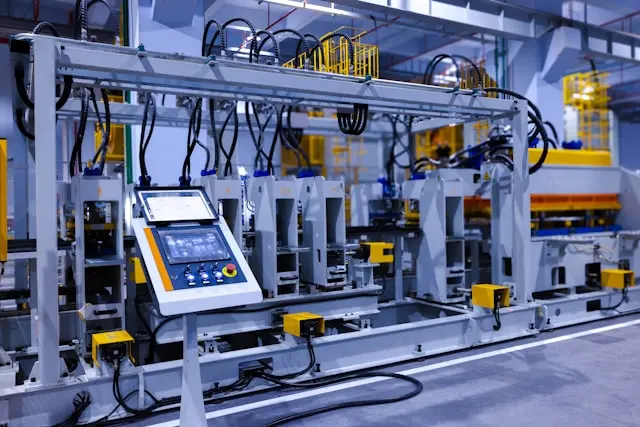
The conventional expectation was that robots would replace workers. That has not happened. What has happened is that automation has expanded throughput capacity rather than substituting for labour, creating a market that simultaneously needs more people and different people. The general labourer is still in demand. But the mechatronics technician who keeps the autonomous mobile robots running, the bilingual safety manager who can communicate with a workforce that is 78% Hispanic or Latino, and the operations director who can manage a facility where humans and machines share the same floor: these are the roles where the gap is widening fastest.
What follows is an analysis of the forces reshaping the Inland Empire's logistics and e-commerce fulfillment sector, the specific roles that are proving hardest to fill, the compensation dynamics driving the competition, and what senior hiring leaders need to understand before they commit to a search strategy in this market.
The Largest Industrial Market in America Is Running Out of the People It Needs Most
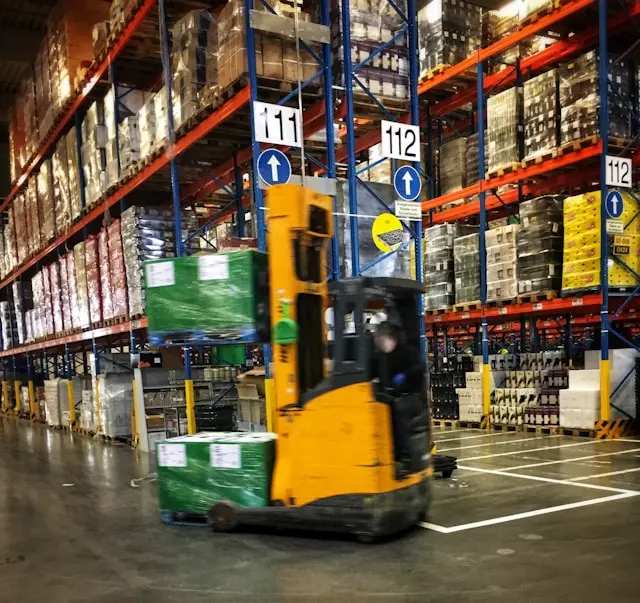
Riverside County's logistics sector now employs approximately 182,000 workers. That figure represents 28% of total county employment, up from 22% before the pandemic, according to California EDD Labour Market Information data from late 2024. No other sector in the county comes close.
The scale of this market is often underappreciated by executives outside Southern California. The Inland Empire is the largest industrial market in the United States by square footage. Riverside County alone contains 34 million square feet of logistics buildings exceeding 500,000 square feet, concentrated in the Jurupa Valley-Eastvale-Mira Loma corridor and the area surrounding March Air Reserve Base. The World Logistics Center in Moreno Valley, a 40-million-square-foot development under construction through 2030, is projected to create 14,000 direct jobs upon completion.
The paradox is that the sector's growth is generating the very shortages that threaten to constrain it. The Inland Empire logistics sector reports a 6.2% unemployment rate for operational roles. In a sector characterised by high turnover at the entry level (annualised warehouse associate turnover in Riverside County runs at 94%), that figure represents functionally full employment. Entry-level warehouse associates now command $20.50 to $22.00 per hour, up from $18.00 in 2023. But the more telling figure is the wage compression above them: the spread between lead associates and supervisors has narrowed to just $3.50 per hour.
That compression is not a statistical curiosity. It is the mechanism behind the retention crisis at the mid-tier level. When a supervisor earns only marginally more than the team they manage, the incentive to stay in the role evaporates. The people who leave supervisory positions do not leave the sector. They move laterally to a competitor offering a signing bonus, or they step back into an associate role with less responsibility for nearly the same pay. Either way, the hiring organisation loses.
Automation Is Creating Jobs, Not Eliminating Them. The Problem Is Which Jobs.
Here is the claim that the data supports but that few industry reports have stated directly: Riverside County's automation investment has not reduced the workforce. It has replaced one category of demand with another that the local training infrastructure cannot produce at anything close to the required rate.
Between 2022 and 2025, automation deployment in the Inland Empire surged by 340%, according to MHI's Annual Industry Report. Facilities over 750,000 square feet are projected to reach 40% automated storage and retrieval system penetration by the end of 2026, up from 15% as recently as early 2025. And yet the county added 18,000 net logistics jobs in the same period. The machines did not replace the workers. They changed which workers the sector needs.
The Mechatronics Gap
Industrial maintenance technician postings in the Inland Empire increased 34% year over year through 2024. Completions of relevant certification programmes at Riverside Community College District increased by 7%. That gap, a fivefold difference between demand growth and supply growth, is the single most important hiring constraint in this market.
The technicians who can maintain FANUC and KUKA robotic systems, troubleshoot autonomous mobile robots, and manage goods-to-person infrastructure are operating in a market where 94% of certified professionals are already employed. The ratio of active to passive candidates for automation roles is approximately 1:7, according to Burning Glass Institute data for the Inland Empire MSA. Employers are not competing with each other through job boards. They are identifying and approaching candidates who are not looking, most of whom work in adjacent sectors like aerospace and automotive manufacturing rather than in logistics.
The Poaching Premium
The competitive dynamics are visible in specific incidents. According to Aerotek's Inland Empire Regional Summary for 2024, a pattern has emerged in which employers pay 15% to 25% above median wages to secure technicians with robotics certification. The premium reflects the depth of the shortage. When the certified talent pool is this shallow, every hire is effectively a poach, and the cost of that poach is rising faster than the overall wage market.
UC Riverside's School of Business produces approximately 200 supply chain management graduates annually through its certificate programmes. That is insufficient even for the current demand profile, let alone for the trajectory the automation data implies. The training pipeline is not broken. It is simply orders of magnitude too small.
The Three Roles That Define the Talent Crisis
The shortages are not evenly distributed. Three role categories account for the majority of protracted search failures in Riverside County's logistics market, and each presents a distinct challenge for hiring leaders.
Distribution Centre and Operations Management
Among third-party logistics providers in the Mira Loma and Jurupa Valley cluster, Distribution Centre Manager roles routinely remain unfilled for 90 to 120 days. Regional staffing firms report that retention bonuses of $25,000 to $35,000 are now standard for external hires at this level, reflecting the difficulty of pulling an employed manager out of a stable role and into a new one.
At the Director and VP level, the market is overwhelmingly passive. According to a DHL Supply Chain executive search white paper from 2024, 85% to 90% of operations leadership placements occur through executive search or direct headhunting rather than job board applications. Average tenure in current role at this level exceeds 4.5 years. These are professionals who are not browsing job listings. They are not even thinking about moving. Reaching them requires a fundamentally different method than posting a vacancy and waiting.
CDL Class A Drivers
The shortage here is well documented but still acute. Riverside County carried 4,200 unfilled CDL Class A driver vacancies through 2024, with an average time to fill of 68 days, according to the American Trucking Associations Driver Shortage Report. The regulatory environment compounds the difficulty. Continued enforcement of California's AB 5 classification rules has forced conversion of independent contractors to employees for last-mile delivery, increasing per-delivery costs by 35% to 40% for gig-economy-dependent operators. The firms that relied on flexible contractor arrangements now face a structural cost increase with no corresponding increase in the available labour pool.
Bilingual EHS Managers
The third shortage is the least visible and perhaps the most revealing. Seventy-eight percent of the warehouse workforce in Riverside County identifies as Hispanic or Latino, according to U.S. Census Bureau American Community Survey estimates. Bilingual Spanish and English proficiency is not a nice-to-have for safety management roles. It is an operational requirement. And the supply of professionals who combine EHS certification, California OSHA 30-hour qualification, DOT hazardous materials handling expertise, and functional bilingual communication is acutely limited.
The Inland Empire Economic Partnership documented a case in which a regional distributor failed to fill a bilingual EHS Manager position after eight months of searching. The organisation ultimately restructured the role into two separate positions, Safety Coordinator and Compliance Specialist, at 140% of the original budget. That outcome, paying 40% more for two people to do the work one person could not be found to do, is now a common pattern in this market.
Compensation Is Rising, But the Geography Is Pulling It in Two Directions
Riverside County's logistics compensation sits in an uncomfortable middle position. It is higher than most of the country. It is lower than competing markets that offer better purchasing power.
A Senior Operations Manager with seven to ten years of experience earns $98,000 to $125,000 in base salary, with total cash compensation reaching $115,000 to $150,000 once bonus potential is included. A VP of Operations with multi-site responsibility and 200-plus headcount commands $185,000 to $245,000 in base, with long-term incentive plans pushing total compensation to $260,000 to $340,000. That VP figure carries a 12% to 18% premium over the national median, driven by California cost of living and the regulatory complexity of operating in this state.
On the technical side, an Automation Maintenance Manager earns $92,000 to $118,000 base with shift differentials adding 8% to 12%. A Director of Supply Chain at a 3PL or major retail distribution centre sits at $165,000 to $210,000 in base compensation.
These numbers tell only half the story. The other half is what those dollars buy.
Phoenix, Arizona, has become the primary competitive threat for both corporate relocation and individual executive retention. According to the Greater Phoenix Economic Council, when companies choose Phoenix over Riverside, they typically offer relocated executives 5% to 8% lower nominal salaries but 18% to 22% higher purchasing power due to housing costs. Arizona carries no equivalent of California's AB 224 warehouse quota regulations and offers industrial power rates that are 25% lower. For a senior operations leader weighing two offers, the salary negotiation is not really about the number on the page. It is about what that number means for their household.
Within Southern California, San Bernardino County offers equivalent wages but median home prices that sit 15% below Riverside County, according to the Zillow Home Value Index. Supervisory talent is drifting eastward. Ontario International Airport's cargo expansion, Project Ontario, is drawing air freight specialists from March Air Reserve Base operations with 10% to 15% salary premiums. The talent is not leaving the region. It is redistributing within it, and Riverside County is not always on the winning side of that redistribution.
The Regulatory Cost That Reshapes Every Hire
California's regulatory environment is not a background condition in this market. It is a direct driver of hiring demand, hiring cost, and hiring difficulty.
AB 224, effective since January 2025, restricts productivity quotas in facilities over 100,000 square feet and requires detailed disclosure of algorithmic management systems. Compliance costs run approximately $400,000 annually per facility for large operators, according to the California Legislative Analyst's Office. This regulation does not just add cost. It creates demand for compliance specialists who understand both the letter of the law and the operational reality of running a high-throughput warehouse.
Riverside County's own Warehouse Indirect Source Review rules require air quality mitigation fees of $0.75 to $1.20 per square foot on new construction. A typical facility faces $600,000 to $1,000,000 in additional costs. CARB restrictions on drayage truck staging in residential zones, anticipated to tighten further through 2026, add another layer. The Inland Empire Economic Partnership estimates that operational compliance costs will increase by 8% to 12% across the sector.
The regulatory compression creates a paradox that hiring leaders must understand. Despite a 22% increase in project costs since 2020, Riverside County approved 14.2 million square feet of new industrial construction in 2024. That figure exceeds 2019 levels. Developers and tenants are absorbing regulatory costs through higher rents rather than diverting investment to lower-regulation states, as was widely predicted. The construction is happening. The buildings are going up. But every new facility requires compliance infrastructure, environmental reporting, and safety management that the existing talent pool cannot fully staff.
The implication for senior hiring leaders is that regulatory expertise has become a standalone hiring criterion, not an add-on to operational competence. The operations director who could run a facility in 2019 without understanding California's air quality framework, water use mandates, and algorithmic transparency requirements cannot run one in 2026.
The Port Diversification Shift and Its Hidden Talent Implications
Container volumes through the Ports of Los Angeles and Long Beach have normalised to approximately 17.5 million TEU, down from the 2021 peak of 20.3 million TEU, according to the Pacific Merchant Shipping Association Annual Report. Riverside County facilities are increasingly handling transloaded inventory from Oakland and Mexican ports via Union Pacific's Sunset Route, reducing the corridor's pure dependency on LA and Long Beach.
This sounds like a logistics story. It is also a talent story. The shift in routing patterns changes the skill profile of the people managing these facilities. A distribution centre that receives 90% of its volume from a single port complex operates on a predictable rhythm. A distribution centre that manages multi-origin inventory from Oakland, Lázaro Cárdenas, and the LA/Long Beach complex simultaneously needs supply chain directors who can manage routing complexity, customs variability, and carrier relationships across multiple lanes.
The national competitive picture compounds the challenge. The expansion of Gulf and East Coast port capacity, particularly Savannah and Houston, threatens to reduce the Inland Empire's captive market share for Asian imports. According to JLL's Ports and Global Supply Chain Report, a 10% shift in container volume away from LA and Long Beach would eliminate an estimated 8,000 to 12,000 indirect logistics jobs in Riverside County. That risk creates a planning problem for hiring executives: do you staff for the growth trajectory that the construction pipeline implies, or do you hedge against the volume shift that the port data suggests?
The answer, for most organisations, is that you need leaders who can think through both scenarios. That is not a skill you find on a CV. It is a judgment you identify through structured assessment and deep market knowledge.
What Hiring Leaders in This Market Need to Do Differently
The conventional approach to filling logistics leadership roles in the Inland Empire has relied on three channels: regional job boards, staffing agency relationships, and internal promotion. All three are failing for different reasons.
Job boards reach the active candidate pool. For entry-level warehouse associates, that pool is large but turns over at 94% annually. For Director and VP level operations roles, the active pool represents 10% to 15% of viable candidates. Eighty-five to ninety percent of placements at this level happen through direct recruitment, not applications. An organisation that posts a VP of Operations role and waits for applications is fishing in a pond that contains a fraction of the market.
Staffing agencies serve a purpose for volume hiring and mid-tier operational roles. But the hidden cost of a misaligned executive hire in a market where the wrong VP costs not just salary but regulatory exposure, operational disruption, and the six months it takes to restart a search makes the staffing model inadequate for leadership appointments.
Internal promotion works when the pipeline exists. The wage compression between lead associates and supervisors has hollowed out the internal bench. Organisations that have not invested in developing their mid-tier talent over the past three years are now discovering that there is no one ready to step up.
The approach that works in this market is direct, targeted identification of passive candidates. That means mapping the 85% to 90% who are not looking. It means understanding that the best automation maintenance managers are currently employed in aerospace or automotive, not in logistics. It means recognising that a bilingual EHS director in this market will not respond to a job posting because they are already fielding three approaches from headhunters every quarter.
KiTalent delivers interview-ready executive candidates within 7 to 10 days through AI-powered talent mapping that reaches the candidates this market's conventional channels miss. With a 96% one-year retention rate across 1,450-plus executive placements, the model is built for exactly the kind of market Riverside County's logistics sector represents: one where the talent you need is employed, not looking, and invisible to any job board.
For organisations hiring operations directors, supply chain VPs, automation leaders, or compliance specialists in the Inland Empire's logistics corridor, where the best candidates are employed and unreachable through conventional methods and the cost of a prolonged vacancy compounds monthly, start a conversation with our executive search team about how we approach this market.
Frequently Asked Questions
What is the average salary for a VP of Operations in Riverside County logistics?
A VP of Operations with multi-site responsibility and headcount exceeding 200 typically earns $185,000 to $245,000 in base salary in the Riverside-San Bernardino-Ontario MSA. Long-term incentive plans push total compensation to $260,000 to $340,000. This carries a 12% to 18% premium over the national median, reflecting California's cost of living and the regulatory complexity of operating warehouse and fulfillment facilities under state-specific requirements including AB 224 and CARB restrictions.
Why is it so hard to hire automation technicians in the Inland Empire?
The certified mechatronics and automation technician pool in the Inland Empire operates at 94% employment. The ratio of active to passive candidates is approximately 1:7. Employers competing for technicians with FANUC or KUKA robotics certification routinely pay 15% to 25% above median wages. Meanwhile, local training programme completions grew only 7% year over year against 34% growth in job postings. The supply pipeline is far too small for the demand the automation surge has created.
How does Riverside County logistics compensation compare to Phoenix?
Phoenix typically offers relocated logistics executives 5% to 8% lower nominal salaries than Riverside County. However, purchasing power is 18% to 22% higher due to substantially lower housing costs. Arizona also lacks warehouse-specific regulations equivalent to California's AB 224 and offers industrial power rates 25% below California levels. For hiring leaders trying to retain senior talent, the real competition is not the salary line. It is the total cost of living calculation, which is where firms benefit from detailed market benchmarking before structuring offers.
What impact does California's AB 224 have on logistics hiring?
AB 224, effective January 2025, restricts productivity quotas in warehouse facilities over 100,000 square feet and requires disclosure of algorithmic management systems. Compliance costs run approximately $400,000 annually per large facility. The regulation directly increases demand for compliance specialists, HR professionals versed in labour law, and operations managers who can maintain throughput while meeting disclosure requirements. It has made regulatory expertise a standalone hiring criterion for senior logistics roles in California.
How can executive search firms help fill logistics leadership roles in the Inland Empire?
In the Inland Empire logistics market, 85% to 90% of Director and VP level operations placements occur through direct recruitment rather than job board applications. KiTalent uses AI-enhanced talent pipeline development to identify and approach passive candidates, including professionals in adjacent sectors like aerospace and automotive who hold transferable automation and operations skills. This method reaches the candidates that conventional channels miss, delivering interview-ready shortlists within 7 to 10 days.
What are the biggest economic risks to Riverside County's logistics sector?
Three risks dominate the outlook. First, port diversification: a 10% shift in container volume away from LA and Long Beach could eliminate 8,000 to 12,000 indirect logistics jobs in Riverside County. Second, automation displacement is projected to reduce net demand for general labourers by 12% to 15% by 2028 in large facilities, disproportionately affecting workers without post-secondary credentials. Third, infrastructure congestion on the I-15 and SR-60 corridors adds $0.18 per mile to drayage costs during peak hours, eroding the county's competitiveness for time-sensitive inventory.