Riyadh Construction Hiring in 2026: $200 Billion in Capital, and the Executive Talent It Cannot Buy
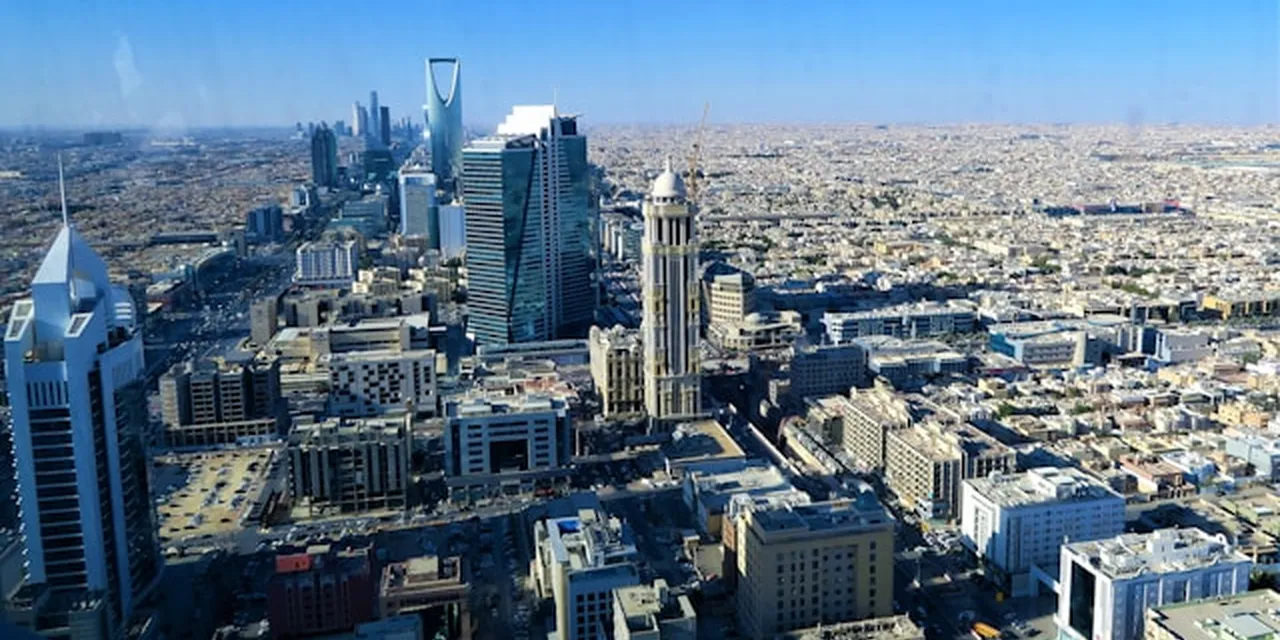
Riyadh deployed more than $200 billion in construction capital through PIF-backed delivery vehicles between 2023 and 2025. That capital built metro lines, poured the foundations of the Mukaab supertall, and drove residential villa prices up 28% in a single year. What it did not build was the executive talent pipeline required to deliver the next phase. The capital moved faster than the people could follow.
The result is a market that looks, from the outside, like the most active construction economy on earth. From the inside, it looks like a bottleneck. LinkedIn hiring data showed a 47% increase in project director and construction manager postings through 2024, while average time-to-fill extended from 45 days to 82 days. The roles that matter most for on-time delivery of projects like Diriyah Phase 2, New Murabba, and the remaining metro lines are the roles that take longest to fill. Senior project directors with $1 billion-plus experience sit in a market that is 85-90% passive. They are not reading job boards. They are fielding three to five recruiter approaches every month and staying put.
What follows is a ground-level analysis of where the hiring gaps are most acute across Riyadh's construction and real estate sector, what is driving them, and what organisations in this market need to do differently to secure the leadership talent that will determine whether these projects deliver on schedule or slip.
The Market Has Changed Shape Since 2022
The hypothesis that Riyadh's construction market runs through Saudi Binladin Group, El Seif Engineering, and a handful of private developers was accurate three years ago. It is no longer accurate.
The PIF's vertical integration has fundamentally rewritten how projects are commissioned, delivered, and staffed. Diriyah Company, Qiddiya Investment Company, New Murabba Development Company, and ROSHN now function simultaneously as clients and master developers. They bypass the traditional contractor hierarchy entirely, generating talent demand directly rather than through intermediaries. This matters for hiring because it means the talent pressure sits inside the PIF entities themselves, not only within contracting firms.
The New Employer Hierarchy
Diriyah Company employs 1,800 people directly and supports 14,000 indirect construction jobs. Qiddiya Investment Company runs 1,200 direct staff and operates a primary contractor pool that includes Samsung E&C and China Harbour Engineering alongside Saudi Binladin Group. New Murabba Development Company, established only in 2023, is already scaling toward 500 technical staff for in-house project management. ROSHN, the PIF's residential developer, holds a 160,000-unit pipeline with 60% concentrated in Riyadh.
These are not traditional government clients issuing tenders and waiting. They are operating companies hiring project directors, BIM managers, sustainability leads, and contracts directors as permanent employees. When New Murabba needs a senior project director, it competes for the same candidate as Diriyah Company, which competes with Qiddiya, which competes with ROSHN. The PIF is, in effect, competing with itself for a fixed talent pool.
The Traditional Contractors Under Pressure
Saudi Binladin Group retains 42,000 employees, down from a peak of 57,000 in 2016, according to Bloomberg's monitoring of the group's restructuring. It remains active on Qiddiya, Diriyah, and religious mega-projects. El Seif Engineering holds approximately $2.8 billion in active Riyadh contracts and employs an estimated 8,500 people in the city. These firms still win packages. But the margin compression they face tells its own story. Net margins for traditional contractors have fallen to 5-7%, down from 12-15% before 2015, according to Deloitte's Middle East Construction Industry Survey. Fewer firms can bond giga-project work. The market is bifurcating between sovereign-backed entities with unlimited liquidity and legacy contractors fighting for working capital.
That bifurcation is not just a financial story. It is a talent story. The best project leaders follow the capital, and the capital now sits inside PIF entities.
The Compensation Paradox That Headline Data Conceals
One of the most misleading signals in Riyadh's construction market is the aggregate salary data. Mercer's 2024 Total Remuneration Survey reported construction sector salary increases moderating to 4.2%, down from 6.8% in 2022. Read in isolation, this suggests a market cooling down.
It is not cooling down. It is splitting in two.
At the general workforce level, where 2.1 million construction workers in Riyadh Province represent 34% of the national total, wages are indeed stabilising. The volume roles, the site engineers and general foremen with high churn and 80% active candidate ratios, are not experiencing scarcity-driven inflation.
At the executive level, the picture inverts completely. VP-level project directors with giga-project experience command SAR 75,000 to 110,000 per month in base compensation, with housing allowances of 20-30% on top and performance bonuses reaching 50% of base for on-time delivery. Search firm data and PIF entity disclosures indicate 15-20% premiums being paid above market rates for these candidates, with sign-on bonuses reaching 30% of first-year salary.
What Each Role Actually Pays
Senior project managers with 10-15 years of giga-project experience earn SAR 35,000 to 50,000 per month. Senior BIM managers command SAR 28,000 to 42,000. Heads of sustainability with Estidama Pearl accreditation earn SAR 40,000 to 60,000, commanding a 25-35% premium over equivalent roles in the UAE because of the scarcity of professionals with Saudi regulatory knowledge. Contracts directors with FIDIC Silver Book expertise sit at SAR 60,000 to 85,000, typically locked in with retention structures that penalise early departure.
The gap between what headline data says and what the market actually pays at the top is the single largest source of failed searches in Riyadh. Organisations benchmarking against aggregate construction salary data are calibrating offers for a market that does not exist at the seniority level they need to hire.
Where the Bottleneck Is Tightest
Three role categories define Riyadh's executive-level hiring challenge. Each operates as a predominantly passive market where conventional recruitment methods fail.
Giga-Project Directors
The market for directors with more than $1 billion in total contract value experience is estimated at 85-90% passive. These candidates average six to eight years of tenure with their current employers. They receive three to five recruiter approaches every month. Active job board applications represent fewer than 5% of the viable candidate pool. When Diriyah Company and New Murabba Development Company engage international search firms for these roles, mandates reportedly run for six or more months. The hidden 80% of the senior talent market is, in this case, closer to 90%.
New Murabba alone is expected to absorb 15-20% of Riyadh's existing senior project director capacity when construction ramps up through 2026. That is a single project consuming a fifth of the available senior leadership in the city.
BIM and Digital Construction Managers
BIM managers with Saudi experience sit in a 75% passive market with average tenure of 4.2 years and unemployment below 2%. The poaching pattern between mid-tier Saudi contractors and PIF entities is well documented. According to Construction Week Saudi Arabia, candidates routinely hold three to four concurrent offers simultaneously. Saudi Binladin Group and El Seif have reportedly implemented 18-month retention bonuses equivalent to 40% of base salary to prevent migration of BIM talent toward Diriyah Company's in-house technical teams.
The demand driver here is not just project volume. It is the shift toward BIM 7D integration, which connects construction sequencing to long-term facility management. Professionals who understand both the construction and operational lifecycle of a building are scarcer than those who understand construction alone.
Saudi National HSE Directors
The Saudization requirement creates a uniquely constrained market. Approximately 1,200 Saudi nationals hold a NEBOSH Diploma across the entire Kingdom, according to the Saudi Council of Engineers Professional Registry. The 2026 tier 2 Saudization mandate will require 20% Saudi employment in supervisory roles, up from 15%. Employers already report 60-70% offer rejection rates for qualified Saudi HSE directors, driven by aggressive counter-offers from current employers. This is not a shortage that recruitment advertising can solve. It is a shortage of qualified humans.
The Saudi higher education system produces approximately 4,200 civil engineering graduates annually, meeting only 60% of projected demand. The pipeline problem compounds every year the market grows faster than the universities can supply.
The Regulatory Forces Tightening the Market
Riyadh's construction sector operates under a regulatory framework that is simultaneously accelerating demand and constraining supply. Understanding the interaction between these regulations is essential for any organisation planning a senior hire in this market.
Saudization Targets and the Engineering Supply Gap
The Ministry of Human Resources and Social Development requires construction firms to achieve Medium Green Nitaqat status by 2026. At the technical and engineering level, this translates to a 20% Saudi national requirement in supervisory roles. Current Saudization in construction stands at 12.4%, up from 9.8% in 2022. Progress is real but insufficient.
The mismatch between regulatory ambition and talent supply is not a failure of policy. It is a function of timeline. The mandate assumes a supply of Saudi engineers and HSE professionals that does not yet exist in the numbers required. Every organisation competing for the same pool of Saudi national supervisors is bidding against every other organisation subject to the same regulation. The result is predictable: aggressive counter-offers, inflated packages for compliant candidates, and a market where the premium for a Saudi passport in a senior technical role exceeds the premium for the technical skill itself.
Wage Protection and Mobilisation Delays
The 2024 expansion of the Wage Protection System now requires biometric verification of construction workers. Some contractors report 15-20 day delays in workforce ramp-up as a result. At the executive level, this manifests as planning friction. Project directors must now factor regulatory mobilisation timelines into their workforce scheduling, and the professionals who understand how to manage this operationally are more valuable than those who do not.
Working Capital Stress in the Supply Chain
The average days-sales-outstanding for Riyadh contractors increased to 127 days in 2024, up from 98 in 2022, according to MEED's Saudi Construction Finance Report. This cash cycle pressure is squeezing SME subcontractors and creating fragility in the supply chain. For senior commercial leaders, particularly contracts directors and quantity surveyors, this environment demands a specific skill set: FIDIC Silver Book expertise combined with an understanding of sovereign client payment cycles. The professionals who thrive in a 127-day DSO environment are not the same professionals who succeeded in a 98-day cycle.
The regulatory environment is not a background condition. It is an active force reshaping which candidates succeed in Riyadh and which do not.
Why Dubai Still Wins Candidates That Riyadh Needs
Riyadh pays more. Dubai still attracts more.
For senior project directors and BIM managers, Dubai offers 10-15% lower base salaries than Riyadh. Housing costs run 20-30% below Riyadh's expatriate compounds. International schooling infrastructure is established and trusted. But the decisive factor is not compensation or lifestyle. It is career trajectory.
Dubai offers exposure to international project portfolios and public-private partnership models that Riyadh's sovereign-driven delivery model restricts. A project director in Dubai works across multiple clients, sectors, and procurement structures. A project director in Riyadh works within a PIF-directed ecosystem that, while enormously well-funded, limits the variety of experience the professional accumulates. For candidates thinking about their next role after this one, Dubai remains preferable for multinational mobility.
Doha competes on a narrower front, drawing health and safety managers and sustainability consultants with tax-free packages comparable to Riyadh but lower Qatarisation pressure in construction roles. Cairo, the primary source market for mid-level engineers with 5-10 years of experience, is retaining 30% more civil engineers domestically than in 2019, thanks to Egypt's own New Administrative Capital project. The supply funnel from Egypt is tightening at exactly the moment Riyadh needs it most.
The implication for hiring organisations is specific. Riyadh cannot rely on compensation alone to pull talent from competing markets. The value proposition must address the career trajectory concern directly. That means articulating what a candidate gains from working on a $50 billion sovereign project that they cannot gain anywhere else, and backing that articulation with a search process sophisticated enough to reach the candidates who are weighing these trade-offs.
The Hidden Capacity Gap No One Is Measuring
This is the analytical tension at the centre of Riyadh's construction market, and it deserves to be stated directly.
Saudi Binladin Group's restructuring between 2018 and 2024 removed 15,000 workers from the market. GASTAT data shows construction sector productivity improved by only 2.1% annually during that period. Diriyah Company and Qiddiya report accelerating construction timelines with no corresponding extension of completion dates. If the workforce shrank by 26% at the market's largest employer, and productivity barely moved, and project timelines did not extend, the arithmetic does not balance.
One explanation is unreported capacity absorption by Korean and Chinese EPC contractors not captured in traditional Saudi contractor databases. CSCEC now employs approximately 3,000 workers in the Kingdom with Riyadh as its primary hub. Samsung E&C operates within Qiddiya's contractor pool. These firms brought their own workforces. They filled part of the gap.
But the gap at the executive level is different. Korean and Chinese contractors bring their own site workers and mid-level engineers. They do not bring project directors with Saudi regulatory expertise, BIM managers who understand the Kingdom's building codes, or HSE directors who hold Saudi Council of Engineers registration. The international contractor influx solved the volume problem while deepening the leadership problem.
This is the dynamic that makes Riyadh's construction hiring challenge distinct from any other market. The capital is sovereign and effectively unlimited. The workforce volume can be imported. The executive talent that ties capital to delivery, the project directors who phase a $50 billion programme, the contracts directors who manage 127-day payment cycles, the Saudi national supervisors who satisfy Nitaqat requirements, cannot be imported at the speed the capital demands. The investment moved. The leaders did not follow fast enough.
For organisations hiring at this level in Riyadh, where the cost of a failed senior appointment is measured in project delays and regulatory non-compliance rather than merely in recruitment fees, the method of search determines whether the role is filled in 45 days or 120. In a market where 85-90% of the candidates you need are passive, where labour camp capacity sits at 94% and limits your ability to compensate with volume, and where Saudization targets create a regulatory deadline that no search extension can push back, the organisations that reach candidates first are the organisations that deliver.
What a Search Process Must Do Differently in This Market
Traditional search methods reach at most 10-15% of viable candidates for senior construction leadership roles in Riyadh. The remaining 85% are employed, retained through golden handcuffs, and invisible to job boards or inbound applications. Reaching them requires a different method entirely.
KiTalent's approach to executive search in construction and real estate addresses this directly. AI-powered talent mapping identifies passive candidates across competing PIF entities, legacy contractors, and international markets. Interview-ready candidates are delivered within 7-10 days. The pay-per-interview model means clients only pay when they meet qualified candidates. There is no upfront retainer, no six-month mandate extension, and no ambiguity about pipeline quality.
In a market where the same 1,200 Saudi HSE directors are courted by every major employer, where BIM managers hold four offers simultaneously, and where project directors average six to eight years of tenure and will not move for a marginal improvement, the quality of the initial approach determines the outcome. KiTalent's 96% one-year retention rate reflects a methodology built for exactly this kind of market: one where candidates are scarce, the stakes of a wrong hire are acute, and the difference between a search that succeeds and one that stalls is the depth of the candidate intelligence behind the first conversation.
For organisations competing for giga-project leadership in Riyadh, where the candidates you need are passive, the regulatory clock is ticking toward 2026 Saudization compliance, and the cost of a slow search is measured in programme delays, speak with our executive search team about how we approach this market.
Frequently Asked Questions
What is the average salary for a senior project director in Riyadh's construction sector in 2026?
VP-level project directors with giga-project experience in Riyadh earn SAR 75,000 to 110,000 per month in base compensation. Housing allowances of 20-30% and performance bonuses of up to 50% of base salary for on-time delivery are standard. Sign-on bonuses of 25-30% of first-year salary are increasingly common for candidates with $5 billion-plus project experience, reflecting the acute scarcity at this seniority level. These figures significantly exceed the 4.2% aggregate salary increase reported for the broader construction sector, confirming the compensation bifurcation between volume and leadership roles.
Why is it so hard to hire construction executives in Riyadh?
Three factors converge. First, PIF-backed entities compete against each other for a fixed talent pool, with Diriyah, Qiddiya, New Murabba, and ROSHN all hiring the same profiles simultaneously. Second, 85-90% of giga-project directors are passive candidates who are not visible on job boards and receive multiple recruiter approaches monthly. Third, Saudization regulations require Saudi nationals in supervisory roles, but the Kingdom produces only 60% of the civil engineers the market needs annually. These conditions make conventional recruitment ineffective at senior levels.
How does Saudization affect construction hiring in Riyadh?
The Nitaqat programme requires construction firms to achieve Medium Green status by 2026, mandating 20% Saudi employment in technical and supervisory roles. Current Saudization in construction stands at 12.4%. The gap between the mandate and the available supply of qualified Saudi engineers and HSE professionals creates intense competition for a small candidate pool. Employers report 60-70% offer rejection rates for Saudi HSE directors, driven by aggressive counter-offers. Organisations that rely on active applications to fill these roles will not meet compliance deadlines.
How does Riyadh's construction market compare to Dubai for executive talent?
Riyadh offers 10-15% higher base salaries than Dubai for equivalent roles. However, Dubai provides lower housing costs, established international schooling, and exposure to diverse project portfolios and PPP models. Dubai remains preferable for professionals seeking multinational career mobility. Riyadh's advantage lies in project scale and sovereign backing. Successful executive search in this market must address the career trajectory concern directly, positioning Riyadh's giga-project experience as uniquely valuable for candidates weighing both markets.
What construction roles are hardest to fill in Riyadh in 2026?
Three categories present the greatest difficulty. Giga-project directors with more than $1 billion in total contract value experience operate in an 85-90% passive market with average time-to-fill exceeding 90 days. BIM managers with Saudi experience hold multiple concurrent offers and rarely appear on active job markets. Saudi national HSE directors with NEBOSH Diploma qualifications number approximately 1,200 across the entire Kingdom, making this the most supply-constrained category ahead of the 2026 Saudization deadline.
How quickly can KiTalent deliver candidates for Riyadh construction leadership roles?
KiTalent delivers interview-ready executive candidates within 7-10 days through AI-enhanced direct headhunting. In a market where typical senior project director searches run 90-120 days through conventional methods, this speed is driven by proactive talent mapping of passive candidates across PIF entities, legacy contractors, and competing Gulf markets. The pay-per-interview model ensures clients meet qualified candidates before committing financially, and a 96% one-year retention rate confirms the quality of matches in demanding, high-stakes project environments.