Salerno's Luxury Hospitality Investment Is Outpacing the Talent Required to Deliver It
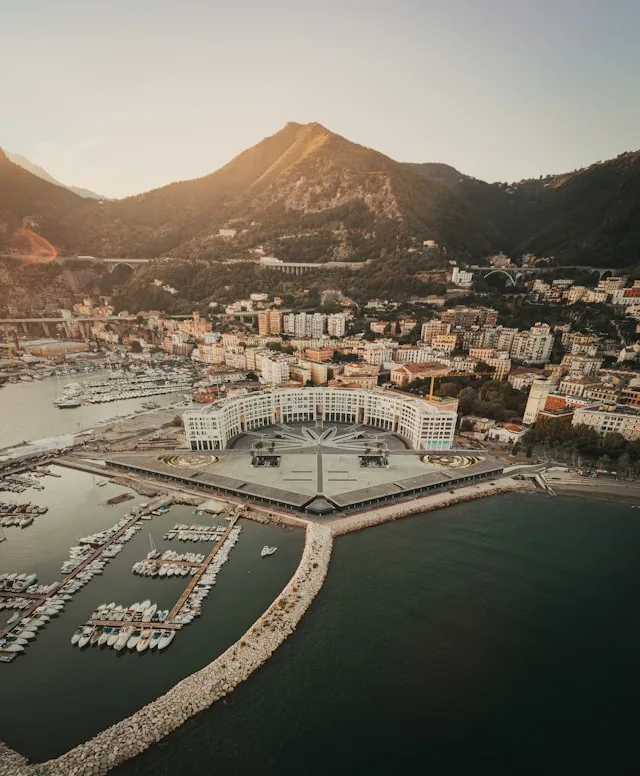
Salerno province recorded 1.8 million tourist arrivals in 2024, a 12% year-on-year increase that cemented the city's position as the primary gateway to the Amalfi Coast. Three boutique luxury properties totalling 180 keys are under development in the historic centre. The Molo Manfredi cruise terminal expansion, due for completion in mid-2026, will increase passenger throughput by 35%. By every capital metric, Salerno is upgrading.
The labour market tells a different story. Hospitality employment in the province stands at 12,400 full-time equivalents, 62% of which are seasonal fixed-term contracts. The vacancy rate for skilled positions entering the 2025 high season reached 14.2%. Executive chefs with fine-dining credentials operate in a market where unemployment sits at 4%, which is full employment by any practical definition. Revenue management professionals are 85% passive. The capital is arriving. The people to run it are not.
What follows is an analysis of the forces reshaping Salerno's hospitality sector, the employers driving that change, and what senior leaders need to understand before making their next hiring or retention decision in this market.
A Gateway That Captures Volume but Loses Value
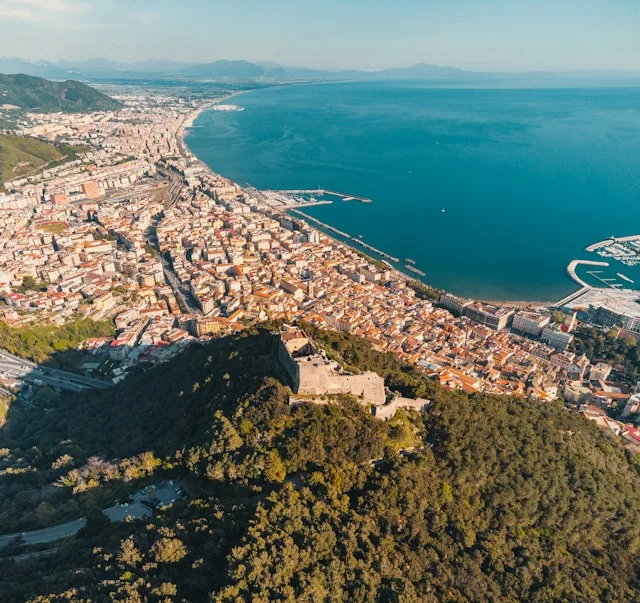
Salerno's tourism economy is built on a paradox. The city handles 450,000 cruise passengers annually and operates the principal ferry terminal for Amalfi, Positano, and Capri. It is, without question, the logistical centre of gravity for Amalfi Coast tourism. Yet average per-passenger spend in Salerno city remains €38, compared to €120 or more in the destination towns those passengers are heading toward.
This gap between logistical function and economic capture defines the market. Salerno processes the flow. It does not retain the value. The 285 cruise calls scheduled for 2025, projecting 465,000 passengers, create what operators describe as a pulse economy. Food and beverage revenue spikes 300% on disembarkation days, then collapses during mid-week lulls. The pattern makes workforce planning extraordinarily difficult. It also makes it nearly impossible to justify the permanent, senior-level talent that would be required to shift the city's hospitality offer upmarket.
The consequence is a market trapped between its ambition and its operating model. Salerno wants to be an experiential luxury destination. Its revenue profile remains that of a transit hub. This tension is not abstract. It shapes every hiring decision, every compensation structure, and every retention challenge in the city.
The Infrastructure Bet: What 2026 Is Bringing
Cruise Terminal Expansion and Capacity Growth
The Molo Manfredi expansion represents the single largest infrastructure commitment shaping Salerno's hospitality future. When completed in mid-2026, the terminal will accommodate post-panamax vessels carrying 5,000 or more passengers. The projected 35% increase in throughput capacity is not speculative. The berths are under construction.
This expansion arrives alongside a regulatory headwind. From 2026, cruise ships berthing at Salerno face carbon emission allowances under the EU Emissions Trading System, projected to add €18 to €32 per passenger in operational costs. The tension between expanded capacity and increased per-call costs could reshape cruise line routing decisions. Some operators may absorb the cost. Others may reduce call frequency or shift to ports with lower regulatory exposure. For Salerno's waterfront hospitality businesses, the net effect on passenger volume is uncertain even as physical capacity grows.
MICE and Off-Season Diversification
The "Salerno Città Congressuale" initiative will add 1,200 new congress seats at the Salerno Conference Centre, targeting meetings, incentives, conferences, and exhibitions business to reduce the city's extreme seasonality. The need is acute. Sixty-two percent of annual tourism revenue concentrates in June through September. First-quarter occupancy rates in 2025 sat at 38%.
Congress tourism requires a fundamentally different service model than cruise tourism. It demands year-round operations teams, event management specialists, and corporate sales professionals who can compete for bookings against established MICE destinations like Rome, Milan, and Barcelona. Salerno has the infrastructure under construction. Whether it has the talent pipeline to staff a year-round congress operation is a separate question entirely, and one the market has not yet answered.
The Employer Map: Who Hires and Who Competes
Salerno's hospitality employer base is concentrated and hierarchical. Understanding its structure is essential for anyone planning a senior hire in this market.
The port and logistics cluster anchors the economy. The Autorità di Sistema Portuale del Mar Tirreno Centro-Settentrionale employs 340 people directly and manages a €48 million annual operational budget. Intercruises Shoreside & Port Services handles embarkation and disembarkation logistics with 220 seasonal workers. MSC Cruises maintains a permanent staff of 45 for home-porting operations.
On the hospitality side, FH Hotels Group's Grand Hotel Salerno is the largest single-site hotel employer in the province, with 185 employees across 220 rooms. It anchors the Lungomare hospitality cluster. Marina d'Arechi Resort, with 80 employees, combines yacht marina hospitality with residential tourism. In the historic centre, Hotel Plaza represents the traditional model with 65 employees.
The experiential and food-and-beverage segment is led by Gruppo Batteur, operating Ristorante President and Pasticceria Pantaleone since 1972 with 45 employees. Carrani Tours, part of the Trenitalia Group, maintains its regional headquarters in Salerno with 90 employees organising Amalfi Coast experiential packages.
What this employer map reveals is a market with few large employers and many small ones. There is no major international hotel brand with a permanent, scaled operation in Salerno city. The three boutique luxury properties under development will change this to some degree, but the current market lacks the institutional anchors that typically generate executive-level career paths in hospitality. A general manager at the Grand Hotel Salerno has limited options for upward mobility without relocating to Milan, Rome, or abroad.
Where the Talent Gaps Are Most Acute
Revenue Management: A Passive Market with No Local Pipeline
Revenue management professionals in the Campania region are 85% passive. They are employed, they are not searching, and their average tenure in role exceeds 4.2 years. Posting a vacancy for a Revenue Manager or Commercial Director in Salerno will reach, at best, 15% of the qualified market. The other 85% must be found through direct identification and headhunting approaches.
The problem is compounded by geographic competition. Properties in the Ravello and Amalfi luxury tier recruit Salerno-based revenue management talent with premiums of 20% to 25% above local market rates, effectively draining the candidate pool. Milan-based hotel chains compound this by offering remote-work arrangements at higher base salaries, allowing revenue professionals to leave Salerno without physically relocating. The result is a market where the few qualified professionals who exist are simultaneously being pulled upcoast by luxury premiums and northward by remote-work flexibility.
A Revenue Manager in Salerno earns €42,000 to €56,000. A Director of Revenue or Commercial Director earns €68,000 to €88,000, with top performers at independent luxury properties reaching €95,000 or more. These figures are competitive within the local market. They are not competitive against Milan, where year-round operational stability and higher base compensation make relocation or remote arrangements more attractive.
The 2026 demand projection from Unioncamere Campania calls for 1,800 additional hospitality workers in the province, with 40% requiring digital competencies in revenue management, CRM, and digital concierge systems. The existing labour pool does not contain these skills in sufficient quantity.
Culinary Leadership: Full Employment and 118-Day Searches
The culinary leadership shortage is not a recruitment problem. It is a supply problem. Unemployment among qualified chefs with Michelin-starred restaurant experience stands at 4%. Federalberghi Salerno reports that 65% of four-star and five-star properties in the province faced chef vacancies lasting longer than 90 days during the 2024 high season. The average time to fill for Capo Partita and Chef Esecutivo roles extended to 118 days.
One hundred and eighteen days is not an inconvenience. It is a full third of the high season lost to vacancy. Properties reportedly deferred menu launches and reduced à la carte service due to unfilled stations. The revenue impact is direct and measurable, particularly for establishments positioning themselves in the experiential luxury segment where culinary quality is the core differentiator.
An Executive Sous Chef or F&B Manager in this market earns €45,000 to €62,000. An Executive Chef commands €70,000 to €98,000, with profit-sharing arrangements common at luxury hotels. These compensation levels must compete not only with other Italian markets but with the Gulf states. Dubai, the Maldives, and Saudi Arabia's Red Sea Project actively recruit Italian hospitality executives with tax-free compensation packages that deliver an effective net increase of 40% to 60%, plus housing allowances.
The mathematics are straightforward. A Salerno-based Executive Chef earning €85,000 gross might take home €52,000 net after Italian taxation. The same role in Dubai at a comparable gross figure produces take-home pay closer to €80,000 with housing provided. That gap is not one that Salerno's employers can close through salary alone.
Multilingual Guest Experience: The Missing Competency
The third acute shortage category is multilingual Guest Experience Managers with fluency in English, German, and Chinese. The emerging luxury segment and growing cruise passenger diversity both require this capability. The local labour market, shaped by decades of domestic-focused seasonal tourism, has not produced it at scale. This role type represents the hidden segment of executive talent that requires systematic market mapping rather than conventional advertising.
The Structural Mismatch: Capital Moves Faster Than Human Capital
This is the central tension in Salerno's hospitality market, and it is one that the headline investment figures obscure.
Capital is flowing into luxury hotel stock. The Grand Hotel Salerno renovation, the Palazzo Dogana conversion, the three boutique properties opening by 2026 with nightly rates of €450 to €800. The physical infrastructure is upgrading toward experiential luxury. The labour market is moving in the opposite direction. Wages grew 2.1% in 2024 against 2.8% inflation, meaning real hospitality wages fell. The proliferation of short-term rentals reduced long-term housing stock in Salerno's centre by 22% since 2019, driving average rents up 18%. Seasonal workers considering relocation to Salerno for a seven-month contract face a housing market that has priced them out and a wage structure that has not compensated.
The investment in physical assets has not been matched by investment in the human infrastructure required to operate those assets at the service level their price points demand. A guest paying €650 per night at a boutique property in Salerno's historic centre expects the same service calibre as the Belmond Hotel Caruso in Ravello or the San Pietro in Positano. Delivering that calibre requires an Executive Chef with Michelin-track experience, a Revenue Director optimising yield across cruise-day peaks and mid-week troughs, and multilingual front-of-house leadership. The research data shows all three roles in acute shortage.
This is not a cyclical hiring challenge that will resolve when the season ends. It is a foundational mismatch between what the capital stock promises and what the talent market can deliver. The employers who recognise this earliest and invest accordingly in talent acquisition will define whether Salerno's luxury pivot succeeds or stalls.
The Competitive Pressure From Every Direction
Salerno's talent challenges cannot be understood in isolation. The city competes for hospitality executives across three distinct geographies, each pulling talent away through different mechanisms.
Milan and Rome are the primary domestic competitors for general management and corporate hospitality roles. A General Manager in Milan's luxury segment earns €120,000 to €175,000 base, which represents a 25% to 35% premium over equivalent Salerno roles. More importantly, Milan offers year-round operational stability. A General Manager in Salerno must manage the psychological and operational complexity of a property that runs at 38% occupancy in winter and near-capacity in summer. A Milan counterpart operates at consistent volume throughout the year. The stability premium is as powerful as the salary premium when candidates with families and long-term career plans evaluate opportunities.
For senior international talent, the Gulf states represent an entirely different competitive challenge. The effective net compensation gap of 40% to 60% created by tax-free packages is well understood. What is less appreciated is the career acceleration these markets offer. A talented Italian Executive Chef who spends three years in Dubai or at the Red Sea Project returns with international brand experience, English-language fluency, and a compensation expectation that the Italian market cannot easily meet. The talent does not simply leave temporarily. It returns transformed, and often priced out of its home market.
For seasonal service staff, Florence, Venice, and Cortina d'Ampezzo compete for the same Southern Italian worker base from Campania, Puglia, and Basilicata. These northern and central destinations offer estimated tip income 30% higher per shift and better transportation infrastructure for weekend commutes. Salerno's accessible seasonal labour pool shrinks as these competitors recruit more aggressively from the same regions.
The hiring leader in Salerno is not competing against one market. They are competing against three simultaneously, each with a different advantage, and their total compensation toolkit is the weakest of the four.
What This Means for Senior Hiring in Salerno
The Salerno hospitality market in 2026 presents a specific strategic problem. The investment thesis is sound. Tourism arrivals are growing. Infrastructure is expanding. The luxury segment is materialising. The execution risk is entirely concentrated in talent.
An 85% passive candidate rate in revenue management means that conventional job advertising reaches a fraction of the qualified market. A 118-day average time to fill for culinary leadership means that a search initiated in April may not produce a hire before August, which in a market where 62% of revenue concentrates in four summer months is functionally equivalent to missing the entire commercial opportunity. The cost of a failed or delayed executive hire in this context is not measured in recruitment fees. It is measured in lost seasons.
The organisations that will succeed in this market are those that treat talent acquisition as a strategic function rather than an operational one. That means engaging passive candidates through direct search before the season begins. It means benchmarking compensation against Milan and the Gulf states, not against local competitors. It means understanding that the housing crisis in Salerno's centre is not a social policy issue but a hiring constraint that must be addressed through relocation packages and accommodation support.
KiTalent's work in executive recruitment across hospitality and luxury sectors is built around precisely this challenge: identifying and engaging senior professionals who are not visible on any job board, in markets where speed determines whether a search succeeds or fails. With a talent mapping methodology that identifies the 85% of qualified candidates who are passive, and a model that delivers interview-ready candidates within 7 to 10 days, the approach is designed for markets like Salerno where timing is the constraint that matters most.
For organisations investing in Salerno's hospitality future and facing the reality that the talent market has not kept pace with the capital market, start a conversation with our executive search team about how to build the leadership teams these properties require.
Frequently Asked Questions
What is the average salary for a hotel General Manager in Salerno?
A Hotel Manager or Operations Manager in Salerno's luxury and upper-upscale segment earns €58,000 to €78,000 base annually, with bonus potential of 15% to 20%. At the General Manager or Country Manager level for international branded properties, base compensation reaches €95,000 to €135,000, with total cash compensation including bonuses and long-term incentives reaching €160,000. These figures sit 25% to 35% below equivalent roles in Milan, where General Managers in the luxury segment command €120,000 to €175,000 base. The gap reflects both Salerno's seasonality and its smaller luxury property base.
Why is it so hard to hire an Executive Chef in Southern Italy?
Unemployment among chefs with Michelin-starred experience in the Campania region stands at 4%, which represents full employment. The qualified talent pool is finite, and every candidate is already working. Federalberghi reports that 65% of four-star and five-star properties in Salerno province faced chef vacancies lasting over 90 days in the 2024 high season. Competing markets including Dubai and Saudi Arabia offer tax-free packages with 40% to 60% effective net pay increases. Reaching these candidates requires proactive headhunting and talent mapping rather than job board advertising.
How does Salerno's cruise tourism affect hospitality hiring?
Salerno handles 450,000 cruise passengers annually across 285 scheduled calls, creating a pulse economy where food, beverage, and retail revenue spikes 300% on disembarkation days. This pattern makes permanent staffing difficult to justify commercially, which is why 62% of hospitality employment in the province consists of seasonal fixed-term contracts. The Molo Manfredi expansion completing in 2026 will increase capacity by 35%, intensifying both the revenue opportunity and the staffing challenge during peak months.
What digital skills are most in demand in Salerno's hospitality sector?
Unioncamere Campania projects that 40% of the 1,800 additional hospitality workers needed in Salerno province by late 2026 will require digital competencies. The three highest-demand areas are revenue management systems (IDeaS, Duetto), CRM and digital concierge platforms, and e-commerce channel management including Booking.com Genius programme optimisation. Directors of Revenue who combine data analytics capability with strategic pricing for cruise passenger yield management are among the hardest roles to fill in the region.
How does seasonality in Salerno affect executive recruitment?
Sixty-two percent of Salerno's annual tourism revenue concentrates in June through September, creating a four-month window where nearly all commercial value is generated. First-quarter occupancy rates in 2025 remained at 38%. This extreme seasonality discourages investment in permanent senior talent, as employers struggle to justify year-round executive compensation for a business that operates at full capacity for only a third of the year. The MICE initiative adding 1,200 congress seats aims to reduce this dependency, but the challenge of building a permanent leadership team in a seasonal market remains Salerno's core hiring constraint.
What role does housing availability play in Salerno's hospitality talent shortage?
Short-term rental proliferation has reduced long-term housing stock in Salerno's centre by 22% since 2019, driving average rents up 18%. Hospitality wages grew only 2.1% in 2024 against 2.8% inflation, meaning real wages fell. For seasonal workers considering relocation to Salerno for a contract period, the combination of rising housing costs and stagnant pay makes the move economically unviable. Employers competing for talent must now factor accommodation support or relocation packages into their total compensation offer, particularly for senior candidates relocating from other Italian cities or international markets.