Santa Barbara's Maritime Economy Is Splitting in Two: What It Means for Every Hiring Decision in This Market
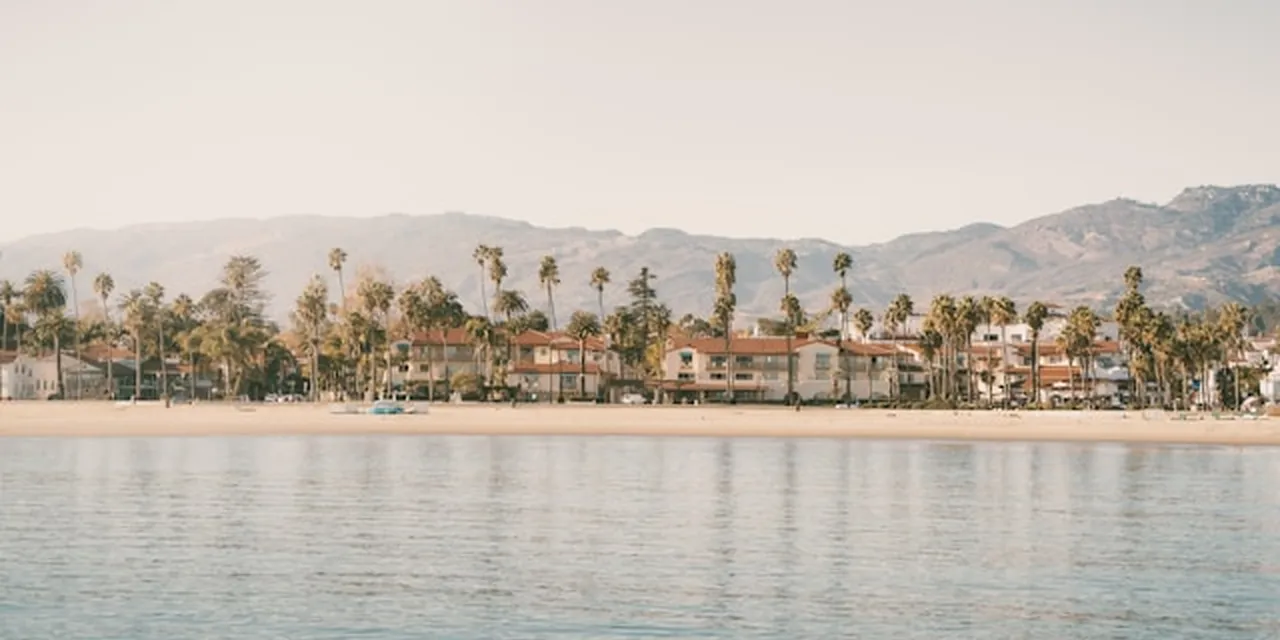
Santa Barbara's maritime sector generated an estimated $480 million in regional economic impact in 2025, supported roughly 3,400 direct jobs across commercial fishing, vessel repair, marine supply, and oceanographic research, and attracted $340 million in ocean-tech venture funding between 2021 and 2024. By almost any aggregate measure, this is a healthy blue economy cluster.
But the aggregate measure conceals a fracture. The $340 million in venture capital flowed almost entirely to ocean robotics and marine sensor firms in the Goleta tech corridor. It created approximately 280 high-skill positions. Meanwhile, the commercial fishing fleet contracted 18% since 2018, the average age of licensed fishermen reached 54, and fewer than 12 new entry-level permits were issued annually to Santa Barbara County residents. Two economies share the same harbour and the same labour pool, but they operate under completely different economic logics. One is venture-backed, growing, and pulling talent from Silicon Valley pipelines. The other is capital-constrained, ageing, and losing workers faster than it can replace them.
What follows is a structured analysis of how this bifurcation affects every senior hiring decision in Santa Barbara's maritime and ocean technology market. It maps the forces driving the split, the specific roles where shortages are most acute, the compensation dynamics shaping candidate behaviour, and what organisations on both sides of the divide need to understand before they make their next leadership hire.
The Bifurcation That Defines This Market
The most important dynamic in Santa Barbara's maritime economy is not a shortage. It is a structural split between two sectors that look like one on paper but behave entirely differently in practice.
On one side: ocean technology firms clustered in Goleta's Camino Real Commerce Center and along the university corridor. These are autonomous underwater vehicle developers, satellite telemetry companies, marine sensor manufacturers, and environmental consultancies. They are funded by venture capital, connected to UCSB's Marine Science Institute, and competing for ocean robotics engineers and data scientists against the same firms that recruit software developers for San Francisco startups. Growth projections for 2026 sit at 12 to 15%.
On the other side: the commercial fishing fleet, the yacht maintenance yards, marine chandleries, and harbour support services that operate out of Santa Barbara Harbor. These businesses run on thin margins, face tightening regulatory costs, and are watching their workforce age out of the industry. Employment projections for 2026 show a further 3 to 5% contraction.
The analytical claim that anchors this article is this: the $340 million in venture investment has not strengthened the broader maritime workforce. It has accelerated its division. Capital has flowed to firms that hire ocean engineers with Python fluency and machine learning experience. It has not flowed to the boatyards, processing facilities, and fishing cooperatives that still form the physical foundation of the harbour economy. The result is a market where two talent pools exist side by side, share almost no transferable workers, and compete for the same limited housing stock and infrastructure access. Hiring leaders in either sector must understand which side of this divide their roles sit on, because the sourcing strategy, compensation requirements, and candidate psychology differ completely.
The Harbour's Physical Ceiling
Santa Barbara Harbor's 1,133 slips operate at 95 to 98% berth occupancy, with commercial fishing waitlists extending three to five years. The harbour's breakwater requires $18 million in repairs funded through 2026. These are not soft constraints. They represent a hard cap on fleet expansion regardless of what happens to fish stocks or market prices.
Modernisation That Displaces Before It Helps
The $23 million Harbor Maintenance and Operations Facility modernisation, which reached completion in late 2025, temporarily displaced 15 to 20% of commercial fishing dock space during construction. This accelerated fleet consolidation. Vessels that lost berths during the construction period, in many cases, did not return. The modernisation added shore power infrastructure and waste reception facilities required for California Air Resources Board compliance. These upgrades may attract high-value research vessels currently bunkering in San Diego. But they serve the ocean-tech and research side of the market, not the traditional fishing fleet.
Shoreside Capacity Goes Unused
Here is the paradox that most observers miss. Despite acute dock space shortages, the harbour's commercial fish processing and ice production facilities operate at only 60 to 65% capacity. Fleet reductions have left shoreside infrastructure underutilised even as waterside berthing is at saturation. The constraint is not total maritime infrastructure. It is the wrong type of infrastructure. Vessel berthing is scarce while processing space sits partially empty. Regulatory and physical barriers prevent converting that underutilised space into the maintenance yards or innovation labs the market badly needs.
This matters for hiring because it means there is no physical room for the traditional maritime sector to grow its way out of its workforce challenges. Even if a boatyard could recruit ten additional marine electronics technicians, there is nowhere to put the additional vessel throughput those technicians would enable.
Three Shortages That Cannot Be Solved by the Same Method
The sector's talent shortages fall into three categories. Each requires a fundamentally different sourcing approach, and conflating them is the most common strategic error hiring leaders in this market make.
Marine Electronics Technicians: An 11-Month Search and Counting
Santa Barbara Boatyard maintained an open posting for a Senior Marine Electronics Technician specialising in integrated bridge systems and navigation electronics for 11 months as of late 2024. The role requires ABYC certification and NMEA standards expertise. According to SBCC's Marine Technology Program, the typical time-to-fill for senior electronics roles has extended from 45 days in 2019 to over 180 days by 2024. Employers in the region have been poaching from competitors at 20 to 25% salary premiums.
This is not a compensation problem alone. The pipeline that produces these technicians is fundamentally undersized. SBCC's Marine Technology Programme graduates 18 to 22 students annually. That number is insufficient to replace retirements across the region's maritime trades, let alone supply growth. The programme lacks funding for a dedicated ocean robotics training track. The result is a candidate pool that shrinks every year while demand stays flat or increases.
For organisations trying to fill these roles, the method matters as much as the money. Seventy percent of marine electronics technician placements nationally occur through industry referral networks rather than formal application processes, according to the ABYC Service Business Industry Survey. Job boards reach the remaining 30% at best. A direct search approach that identifies passive candidates through trade networks and alumni connections will consistently outperform a posting-and-waiting strategy in this segment.
Ocean Robotics Engineers: Passive, Employed, and Not Looking
The second shortage sits entirely on the ocean-tech side of the divide. An estimated 80 to 85% of qualified ocean robotics engineers in the Santa Barbara-Goleta corridor are already employed and not actively seeking roles. Average tenure at major employers runs 4.2 years. Unemployment among software developers in scientific research and development services stood at just 1.8% locally in 2024.
The poaching dynamic is well documented. According to UC Santa Barbara's Technology Management Program Industry Advisory Board minutes from May 2024, a Goleta-based autonomous underwater vehicle manufacturer recruited a Lead Ocean Systems Engineer from a competitor by offering a $35,000 signing bonus and equity participation. This reflects a pattern where local ocean-tech firms raid each other's engineering talent rather than developing entry-level pipelines.
The counter-intuitive implication: every successful hire in this segment creates a vacancy somewhere else in the same corridor. The total supply of qualified ocean robotics engineers in Santa Barbara County does not increase when one firm poaches from another. It simply redistributes existing talent. The only paths to genuine supply growth are recruiting from outside the region or building from within. Both take years.
Commercial Fishing Deckhands: A Pipeline That Has Collapsed
The third shortage is the most existential. The California Department of Fish and Wildlife reports that the average age of Santa Barbara commercial fishermen is now 54. Fewer than 12 new entry-level permits are issued to county residents each year. Local operations have begun offering $300 to $400 daily guaranteed wages, replacing traditional share-system arrangements, to attract deckhands. Positions still remain unfilled for over 60 days during peak lobster season.
Entry-level deckhand turnover runs at 35 to 40% annually. Unlike the other two shortages, this is an active candidate market with high churn. The problem is not that candidates are passive and unavailable. It is that the economics of commercial fishing in Santa Barbara no longer compete with alternatives available to the same demographic. The question for hiring leaders in this sector is whether the guaranteed-wage model can reverse a structural decline or merely slow it.
Compensation in a Divided Market
Compensation in Santa Barbara's maritime sector reveals the bifurcation in precise dollar terms.
On the traditional maritime side, a Fleet Manager or Seafood Operations Director earns $95,000 to $130,000 base. A Senior Marine Superintendent with a USCG 500-Ton Master licence and OSHA 30-Hour certification commands $125,000 to $165,000 plus hazard pay for sea days. These figures reflect the smaller organisational scale and tighter margins of harbour-based operations.
On the ocean-tech side, a Senior Ocean Engineer or Project Manager earns $140,000 to $175,000 base, rising to $195,000 to $260,000 plus equity for a Director of Ocean Technology or VP of Product Development. A VP of Marine Operations at a venture-backed firm reaches $210,000 to $285,000 base with 25 to 35% bonus potential and equity participation.
The gap between sides is not subtle. A senior technical leader on the ocean-tech side earns roughly double what a comparable leader in commercial fishing management earns. Yet both compete for housing in a market where industrial maritime zoned land near the harbour commands $18 to $24 per square foot triple net, compared to $8 to $12 in Ventura County.
What the Premium Buys and What It Does Not
San Diego offers 15 to 20% higher base compensation for ocean engineers and marine scientists, according to UC system internal mobility data, but with 12 to 18% higher housing costs. Monterey and Santa Cruz compete aggressively for ROV pilots and marine technicians, offering comparable salaries of $75,000 to $95,000 for technicians but with established apprenticeship pipelines through the Monterey Bay Aquarium Research Institute that Santa Barbara lacks. Los Angeles and Long Beach draw licensed marine engineers and captains with union-scale wages running 25 to 30% above Santa Barbara's non-union rates.
Santa Barbara's retention advantage is not monetary. Approximately 60% of SBCC Marine Technology graduates remain local for three or more years post-graduation, driven by what the market calls the California lifestyle factor. This retention lever works for early-career candidates. It is far less effective at senior levels, where candidates calculate total compensation more precisely and where the cost of a failed senior hire falls disproportionately on the employer.
For any organisation building a compensation package for a senior maritime or ocean technology role in Santa Barbara, the relevant benchmark is not the local market average. It is the competing offer from San Diego or Seattle that the candidate is also considering.
Regulatory Pressure Is Rewriting the Workforce Equation
Two regulatory forces are reshaping workforce requirements across both sides of Santa Barbara's maritime divide, and neither has finished working its way through the system.
CARB Compliance and the Fleet It Will Retire
The California Air Resources Board's Commercial Harbor Craft Regulation requires vessels to transition to Tier 3 or Tier 4 engines or install diesel particulate filters by 2030. Compliance costs range from $150,000 to $400,000 per commercial fishing vessel. Industry estimates from the Pacific Coast Federation of Fishermen's Associations suggest this will retire 30 to 40% of the existing Santa Barbara fleet.
The workforce implication is direct. Fewer vessels mean fewer crew positions, accelerating the pipeline collapse already underway. But the vessels that survive will require technicians capable of maintaining advanced emissions control systems and shore power connections. These are not the same skills that maintained the previous generation of diesel engines. The regulation is simultaneously shrinking the workforce and changing the skill requirements for those who remain.
Marine Protected Area Restrictions
Sixteen percent of Santa Barbara Channel waters are now designated as Marine Protected Areas, restricting access to historically productive lobster and urchin grounds. Combined with marine heatwaves and harmful algal blooms that have reduced lobster catch predictability by 40% since 2015, the economic case for entering commercial fishing has weakened materially. Income instability deters new workforce entrants more effectively than any single regulatory barrier.
The organisations that will need to hire in this environment over the next 12 to 24 months face a specific challenge. Candidates with regulatory compliance expertise in maritime operations are rare nationally. Candidates who also understand California's particular overlay of CARB regulations, MPA restrictions, and Magnuson-Stevens Act fisheries management are rarer still. This is not a role that can be filled by broadening the job description. It requires a targeted search for candidates with a very specific regulatory background.
Why the Workforce Pipeline Cannot Keep Pace
SBCC's Marine Technology Programme is the only community college programme in California offering Marine Diving Technology and Marine Instrumentation Technology degrees. It graduates 18 to 22 students annually. This is the region's primary source of trained marine technicians, and it is not enough.
The gap between what the programme produces and what the market requires operates on two levels. First, the volume is insufficient. Retirements across the region's maritime trades exceed new programme graduates every year, and have for several years running. Second, the programme lacks a dedicated ocean robotics training track. This means local ocean-tech firms depend on UCSB engineering graduates for their technical workforce. But UCSB engineering graduates predominantly exit to Silicon Valley software roles, where starting compensation dwarfs what even well-funded ocean-tech startups can offer.
UCSB's Marine Science Institute employs over 220 faculty and research staff and operates the R/V Savannah. It maintains the Santa Barbara Coastal Long-Term Ecological Research programme. The institution produces world-class ocean science graduates. But producing graduates and retaining them locally are different problems. The pipeline from UCSB into Santa Barbara's maritime employers has a significant leak at the point where graduates compare a $175,000 ocean engineering role in Goleta with a $220,000 software engineering role in San Jose.
For senior hiring leaders evaluating this market, the pipeline gap means one thing clearly. Do not plan a hiring strategy around candidates who will become available through natural market turnover. The turnover is not producing enough qualified replacements. A proactive, direct approach to identifying and engaging passive candidates is not a premium option in this market. It is the baseline requirement.
What This Means for Senior Hiring in Santa Barbara's Maritime Sector
The bifurcation running through Santa Barbara's maritime economy creates two distinct hiring challenges that require two distinct strategies.
On the ocean-tech side, the challenge is a closed loop. The same 280 or so high-skill workers circulate among a handful of firms. Poaching redistributes talent without increasing supply. Breaking this cycle requires either recruiting from outside the Santa Barbara-Goleta corridor, bringing in candidates from San Diego, Monterey, Seattle, or internationally, or building internal development programmes that convert adjacent-skill engineers into ocean robotics specialists. Both approaches take time, and both require a search methodology capable of reaching candidates who are employed, satisfied, and not visible on any job board.
On the traditional maritime side, the challenge is existential. An ageing workforce, regulatory cost escalation, physical infrastructure at capacity, and a training pipeline producing fewer than two dozen graduates per year combine to create a sector that cannot replace itself organically. Senior leadership hires in this segment, fleet managers, marine superintendents, operations directors, need to be people who can manage contraction intelligently while positioning their organisations for the modernised, CARB-compliant, technology-integrated harbour that Santa Barbara is becoming.
Both sides share one common factor. The candidates who matter most are not looking. Marine electronics technicians are sourced through referral networks 70% of the time. Ocean robotics engineers are 80 to 85% passive. Licensed USCG masters rely on maritime academy alumni networks rather than job postings. In a market where the most critical talent is invisible to conventional recruitment methods, the search methodology determines the outcome.
KiTalent works with organisations facing exactly this kind of constrained, specialist talent market. Using AI-enhanced talent pipeline development and direct headhunting methodology, KiTalent delivers interview-ready executive candidates within 7 to 10 days. The pay-per-interview model means organisations invest only when they meet qualified candidates, not before. With a 96% one-year retention rate across 1,450 completed executive placements, the approach is built for markets where the cost of a wrong hire or a prolonged vacancy is measured in operational disruption, not just recruitment fees.
For organisations hiring maritime operations leaders, ocean technology executives, or senior technical specialists in the Santa Barbara market, where the candidate pool is small, predominantly passive, and competing offers arrive from San Diego and Seattle before your shortlist is complete, start a conversation with KiTalent's executive search team about how to reach the candidates this market will not show you on its own.
Frequently Asked Questions
What is the average salary for a VP of Marine Operations in Santa Barbara?
A VP of Marine Operations in the Santa Barbara MSA earns $210,000 to $285,000 base salary, with 25 to 35% bonus potential and equity participation at venture-backed ocean technology firms. This reflects the cost-of-living premium for Santa Barbara County and the scarcity of candidates with 15 or more years of maritime operations experience combined with P&L responsibility. Compensation at this level varies depending on whether the role sits in the traditional harbour services sector or the ocean technology cluster in Goleta, where equity components can add material value beyond base pay.
Why is it so hard to hire marine electronics technicians in Santa Barbara?
Santa Barbara's only training pipeline for marine electronics technicians, the SBCC Marine Technology Programme, graduates 18 to 22 students annually. This is insufficient to replace retirements. Seventy percent of senior technician placements occur through referral networks rather than job postings. Time-to-fill for senior electronics roles extended from 45 days in 2019 to over 180 days by 2024. The combination of a shrinking pipeline, passive candidate behaviour, and competitor poaching at 20 to 25% salary premiums makes this one of the most difficult technical roles to fill on the California coast.
How does Santa Barbara's maritime job market compare to San Diego's?
San Diego offers 15 to 20% higher base compensation for ocean engineers and marine scientists, supported by institutions like Scripps Institution of Oceanography and General Atomics' maritime division. Housing costs run 12 to 18% higher than Santa Barbara. Monterey competes for ROV pilots and marine technicians with established apprenticeship pipelines through MBARI that Santa Barbara lacks. Santa Barbara's retention advantage is lifestyle-driven, retaining roughly 60% of SBCC graduates locally for three or more years, but this advantage weakens at senior levels where total compensation calculations dominate.
What is the outlook for commercial fishing jobs in Santa Barbara in 2026?
Commercial fishing employment in Santa Barbara is projected to contract a further 3 to 5% in 2026. The average fisherman age is 54, fewer than 12 new permits are issued annually to county residents, and CARB emissions regulations will require $150,000 to $400,000 per vessel in compliance upgrades by 2030. Industry estimates suggest 30 to 40% of the existing fleet may be retired rather than retrofitted. The sector is shifting from volume-based employment to a smaller, more technically skilled workforce operating modernised, compliant vessels.
How can companies find ocean robotics engineers in Santa Barbara?
An estimated 80 to 85% of qualified ocean robotics engineers in the Santa Barbara-Goleta corridor are already employed and not actively job seeking. Local firms frequently poach from each other, which redistributes talent without increasing total supply. Effective recruitment in this segment requires direct sourcing through academic networks, UCSB connections, and maritime industry referral channels. KiTalent's direct headhunting methodology is designed to identify and engage precisely this type of passive, specialist candidate, delivering interview-ready shortlists within 7 to 10 days.
What training programmes exist for maritime careers in Santa Barbara?
SBCC's Marine Technology Programme is the only community college programme in California offering Marine Diving Technology and Marine Instrumentation Technology degrees. UCSB's Marine Science Institute employs over 220 faculty and research staff and produces ocean science graduates at the postgraduate level. However, the SBCC programme currently lacks a dedicated ocean robotics training track, and UCSB graduates frequently leave for higher-paying software roles in Silicon Valley. The gap between training output and market demand is the single largest structural constraint on workforce growth in this sector.