Savannah Hospitality Hiring in 2026: Why the City's Most Profitable Hotels Are the Hardest Places to Staff
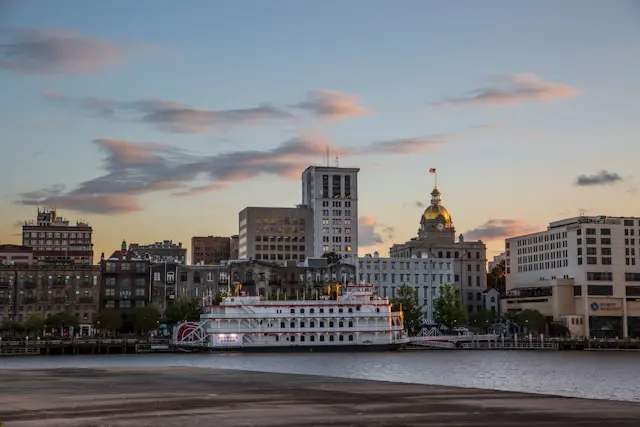
Savannah's National Historic Landmark District commands a 15 to 20 per cent rate premium over the city's modern suburban hotels. A night at a restored antebellum property on one of the famous squares costs materially more than an equivalent room near the airport in Pooler. The heritage positioning works. Guests pay for it. RevPAR reflects it. Yet the properties generating the highest revenue per available room are now, paradoxically, the properties struggling most acutely to attract and retain the executive talent required to run them.
This is not a generic hospitality labour story. It is a structural contradiction specific to Savannah in 2026. The city is adding 1,100 hotel rooms while facing a projected 1,800-worker shortfall. A $270 million convention centre expansion is nearing completion, promising 35,000 to 40,000 additional room nights per year. At the same time, executive chef searches in the district routinely run six to nine months, hotel general manager vacancies have increased 34 per cent in days-to-fill since 2019, and revenue managers receive competing offers within two weeks of entering the market. The investment thesis is sound. The talent thesis is not keeping pace.
What follows is a structured analysis of where this market's hiring pressure is most acute, why heritage properties face a distinct disadvantage despite their commercial strength, and what organisations expanding in Savannah's hospitality sector need to understand before their next senior search.
A Market Expanding Into a Workforce That Cannot Support It
Savannah's hospitality sector employs approximately 28,400 workers across Chatham County, representing 18.7 per cent of total non-farm employment. That figure encompasses 12,800 in accommodation and food services, 4,200 in arts, entertainment, and recreation, and 11,400 in supporting retail and transportation functions. Unemployment in leisure and hospitality sits at 4.2 per cent, below the Georgia state average, but this headline figure obscures what is happening in specialised roles.
The Savannah Economic Development Authority (SEDA) forecasts that the market needs 3,200 additional hospitality workers by the end of 2026 to service new supply. Local labour force growth in the relevant cohort, adults aged 20 to 54 with at least a high school education, is projected at only 1,400. The arithmetic is plain. An 1,800-worker gap is opening, and it will not close through organic population growth.
1,100 New Rooms and the Convention Centre Catalyst
The supply pipeline is aggressive. In 2024, the market added 412 new keys with the opening of the Thompson Savannah at 193 rooms and The Douglas Autograph Collection conversion at 173 rooms. Another 1,100 rooms are in the active pipeline for 2025 and 2026 delivery, including a $140 million Starland District mixed-use project and the River Street East redevelopment.
The $270 million Convention Center expansion, Phase II, is slated for completion in the third quarter of 2026. It will add 100,000 square feet of exhibit space and a 40,000-square-foot ballroom. The intended effect is to lift shoulder-season occupancy by six to eight percentage points, reducing the painful 26-point spread between the January trough at 58 per cent and the March peak at 84 per cent. The expanded centre alone will require 150 to 200 additional event staff.
Where Supply Growth Outpaces Infrastructure
The bullish supply story meets a constraint at Savannah's airport. The Garden City terminal expansion and Highway 80 corridor improvements remain delayed. Passenger capacity growth is capped at an estimated 3.2 per cent annually, according to the Savannah Airport Commission's Master Plan Update. Supporting the new hotel supply would require growth closer to 5.1 per cent. This gap suggests that even if rooms fill, they may fill more slowly than pro-formas assume, extending the breakeven period for operators and compressing the wage budgets available to attract talent.
Every new room that opens requires people to run it. The rooms are coming. The people are not. And the properties that should have the easiest time recruiting, those generating the most revenue, face a set of obstacles that their newer, suburban competitors do not.
The Heritage Premium Paradox: High Revenue, Hard Retention
This is the original analytical tension at the centre of Savannah's hiring market, and it runs counter to normal hospitality economics. In most markets, properties commanding the highest rates can translate that revenue into the most competitive compensation, the most attractive working environments, and the strongest retention numbers. In Savannah, the opposite dynamic is at work.
Heritage tourism positioning delivers the rate premium. Properties within the 2.5-square-mile NHLD charge more because guests value the setting, the architecture, and the experience of staying in a building with 150 years of history. But the regulatory and physical constraints that come with operating inside the district, the same constraints that protect the authenticity guests pay for, make these properties materially less attractive as workplaces compared to modern suburban hotels in Pooler or the Southside corridor.
The Savannah Historic Review Board requires approval for exterior modifications, signage changes, and operational adjustments including something as routine as expanding outdoor seating. This process adds 60 to 90 days to renovation timelines and $15,000 to $40,000 in compliance costs per project. Kitchen modifications face similar scrutiny. Historic buildings often lack modern service elevators, have narrow staffing corridors, and present infrastructure constraints that limit what an executive chef or food and beverage director can accomplish regardless of budget.
The result is a bifurcated employer market. A general manager at a 200-key NHLD property manages a higher-RevPAR asset with worse physical working conditions than a counterpart running a modern full-service hotel near the airport. The rate premium flows to the guest experience, not to the staff experience. Over time, this drives the most capable operators toward properties where they can execute without fighting the building itself.
For hiring leaders filling roles across this market, understanding how direct search outperforms job advertising becomes essential when the candidates you need are embedded in roles they find physically easier to do elsewhere.
Three Roles That Define the Shortage
Savannah's hospitality talent gap is not evenly distributed. It concentrates in three categories where the combination of specialised skills and local market conditions creates search timelines that would alarm any operator planning to open or expand.
Executive Culinary Leadership
High-profile independent restaurants in the NHLD typically experience six to nine month vacancies for executive chef positions. In 2019, the same searches took 45 to 60 days. The Georgia Restaurant Association's Savannah chapter reports that expansion concepts at prominent restaurant groups have stalled specifically because the right culinary talent cannot be found.
The core difficulty is the intersection of fine-dining technique and heritage-Southern cuisine expertise. Savannah's culinary identity requires both. An executive chef arriving from a Michelin-starred kitchen in New York or Chicago does not automatically command the repertoire. A deeply experienced Southern chef may lack the operational scale for a multi-concept group. The Venn diagram of candidates who possess both capabilities is small, and the compensation on offer, $72,000 to $98,000 base for a fine-dining heritage property, sits meaningfully below the national average of $85,000 to $115,000 for comparable cuisine tiers.
Executive sous chef turnover compounds the problem. At 41 per cent annual turnover with replacement costs running at 156 per cent of annual salary, the talent pipeline beneath the executive chef level is unreliable. The bench is thin.
Revenue Management Technology Specialists
Revenue managers in the Savannah MSA operate in a market with 0.8 per cent unemployment in the speciality. Ninety-four per cent of qualified candidates receive multiple offers within 14 days, according to the HSMAI Revenue Management Talent Survey. The required skill set, advanced proficiency in IDeaS, Duetto, or Atomize platforms combined with group displacement analysis capabilities, narrows the pool further.
Atlanta draws these professionals with an 18 to 25 per cent compensation premium and clearer vertical progression toward corporate headquarters roles at companies like Coca-Cola, Delta, and Cox Enterprises' hospitality divisions. The typical revenue management director in Savannah earns $95,000 to $125,000 in base salary. The same role in Atlanta pays $115,000 to $150,000 with a lower relative cost of living in the suburban metro.
Approximately 78 per cent of qualified revenue managers in the Savannah MSA are employed and not actively seeking new roles. This is a passive candidate market in every meaningful sense. Reaching these professionals requires proactive talent mapping rather than job board reliance.
Bilingual Heritage Interpretation Guides
This shortage is unique to Savannah's specific tourism profile. Tour operators report vacancy periods exceeding 120 days for certified bilingual Spanish and English heritage guides with historical accreditation. Old Town Trolley Tours and Ghost City Tours maintain waitlists for group bookings because they cannot staff them, representing an estimated $2.1 million in deferred revenue across the sector annually.
The required certification, National Association for Interpretation accreditation combined with conflict de-escalation training for historic district congestion management, creates a qualification profile that few candidates possess ready-made. The pipeline depends heavily on SCAD and local historical societies. It is not producing graduates at the rate the market needs them.
These three shortages are not independent problems. They interact. A hotel that cannot hire a revenue manager optimises pricing poorly and generates less margin. Less margin means less room to offer a competitive package to an executive chef. An unfilled culinary leadership role reduces the dining experience that supports heritage tourism premiums. The shortages compound.
Compensation: Where Savannah Pays, Where It Falls Short
Understanding the compensation structure in Savannah requires accepting that the market occupies an unusual position. It is neither a primary metro with deep corporate infrastructure nor a purely seasonal resort destination. It sits between the two, and its pay bands reflect this ambiguity.
Hotel Operations
A general manager running a 200-plus key full-service property earns $145,000 to $185,000 in base salary with 25 to 40 per cent bonus potential, bringing total cash compensation to $175,000 to $245,000. Directors of sales and marketing in full-service properties earn $95,000 to $125,000 base with total cash reaching $115,000 to $160,000. At the multi-property VP of operations level, managing three or more assets, base salary runs $180,000 to $240,000 with 35 to 50 per cent bonus and equity participation typical for branded management companies.
These figures are competitive within the HVS secondary market tier, but they sit below Atlanta, Nashville, and the Florida resort markets that draw from the same candidate pool. The GM compensation gap with Atlanta ranges from $30,000 to $35,000 at the top of the band. For a candidate weighing Savannah against an Atlanta role, the cost-of-living adjustment does not fully close that gap, particularly given Chatham County's median home price of $385,000 as of mid-2025.
Culinary and Food and Beverage
The executive chef compensation gap is where the market's hiring problem becomes most visible. At $72,000 to $98,000, Savannah's fine-dining executive chef base sits $13,000 to $17,000 below the national average for equivalent cuisine tiers. Directors of food and beverage at luxury properties earn $88,000 to $115,000. These figures may be liveable in Savannah's cost environment, but they are not competitive enough to attract candidates from Charleston, where a 5 to 8 per cent premium and a stronger perceived path to James Beard recognition create a pull that salary alone cannot counter.
Heritage Tourism Management
Directors of heritage programming at museums and historic sites earn $58,000 to $78,000. Tour operations general managers running multi-site destination management companies earn $75,000 to $95,000. These are roles with genuine operational complexity, including seasonal workforce management, regulatory compliance, and revenue optimisation across variable demand curves, yet they are compensated at levels that make lateral moves from better-paying sectors attractive.
The compensation data tells a consistent story. Savannah's pay bands are not dramatically below market in any single role. But they are consistently 10 to 25 per cent below the primary competitors for every role where a shortage exists. The cumulative effect is that every executive search in this market begins from a position where the offer must overcome a material deficit through non-monetary proposition.
The Competitor Markets Pulling Talent Out
Savannah does not lose talent to a single dominant competitor. It loses different categories of talent to different cities, each for distinct reasons.
Atlanta takes revenue managers, digital marketing directors, and multi-unit operations executives. The compensation premium of 18 to 25 per cent is the initial draw. But the deeper pull is career architecture. Atlanta hosts corporate headquarters that offer vertical progression impossible in Savannah's market of independent operators and branded management companies. A revenue management director who has optimised pricing across four Savannah properties hits a ceiling. The equivalent role in Atlanta sits below a VP tier that leads to a regional or national position.
Charleston competes most intensely for heritage tourism executives and culinary talent. The compensation differential is smaller, just 5 to 8 per cent, but Charleston offers two advantages Savannah cannot easily replicate. The first is a stronger venture capital presence in hospitality technology, creating alternative career trajectories for operators interested in the intersection of heritage and innovation. The second is perception. Executive chefs seeking James Beard recognition opportunities perceive Charleston as offering more abundant pathways, a perception that recruitment conversations must directly address.
Nashville targets convention services managers and entertainment venue operators with 15 to 20 per cent wage premiums and a volume of live events work that Savannah's Enmarket Arena cannot match despite its 180 annual event days.
The passive candidate dynamics in this market are stark. Revenue management directors and executive chefs with NHLD experience average 4.2 years of tenure and typically transition through network referral rather than job board applications. Traditional recruitment methods reach, at best, 22 per cent of the qualified market. The remaining 78 per cent must be found through direct engagement, and the proposition must address not just compensation but the specific lifestyle and career-stage reasons a candidate would choose Savannah over an objectively better-paying alternative.
Structural Risks That Shape Every Hiring Decision
Beyond the immediate supply-demand imbalance, several embedded constraints influence how leaders should think about talent strategy in this market through 2026 and beyond.
Housing Affordability and the Commute Tax
The median home price in Chatham County reached $385,000 by mid-2025. The median annual wage for accommodation and food service workers is $32,400. This ratio is not sustainable. It forces hospitality workers into Effingham and Bryan counties, creating commutes that degrade retention and limit the effective labour pool to those willing to drive 30 to 45 minutes each way.
For executive roles, the housing picture is less dire but still relevant. A general manager earning $170,000 can afford to live in Chatham County. A sous chef earning $55,000 increasingly cannot. The gap between executive compensation and front-line wages creates management challenges. Executives who live near their properties manage teams whose members live a county away.
Climate Risk and Insurance Pressure
Savannah faces a 14 per cent annual probability of hurricane-force winds. Insurance premiums for riverfront hospitality properties have increased 34 per cent since 2022. This is not a hiring data point on its surface, but it functions as one indirectly. Rising insurance costs compress operating margins. Compressed margins limit wage growth potential. When hiring leaders wonder why Savannah's executive chef pay sits below national averages, insurance costs of this magnitude are part of the answer.
Seasonality: The Hidden Retention Conflict
The conventional narrative presents the Convention Center expansion as a cure for seasonality. By filling shoulder-season gaps, it stabilises staffing and creates year-round employment. But aggregate wage data introduces a counterpoint worth considering.
The 26-percentage-point occupancy spread between peak and trough creates cash flow volatility for operators. It also creates overtime opportunity for workers. A server or banquet captain in Savannah's peak season, encompassing St. Patrick's Day at $66.4 million in direct visitor spending, the Savannah Music Festival, and spring leisure travel, can earn materially more through overtime and tips than the same worker earns during a steady moderate-demand month.
If the sector successfully compresses its demand curve, it may inadvertently reduce annual earnings potential for the existing workforce. This creates a retention conflict that leaders planning for a post-expansion market should anticipate. Understanding what truly drives retention at senior levels requires looking beyond base salary to total earnings architecture.
What This Means for Hiring Leaders Operating in Savannah
The data assembled here points toward several practical conclusions for any organisation filling executive hospitality roles in this market.
First, the heritage premium paradox means that the most prestigious properties in the district cannot compete for talent on working conditions alone. They must compete on proposition. That proposition must be specific: the career credibility of running a heritage asset, the quality-of-life advantages of Savannah over larger metros, the creative autonomy that comes with a smaller, less bureaucratic operation. These are real advantages. But they must be articulated in the search process itself, not assumed to be self-evident.
Second, the compensation gaps with Atlanta, Charleston, and Nashville are persistent and in some cases widening. A search strategy that relies on a candidate discovering Savannah and self-selecting into a lower-paying market will consistently miss the strongest candidates. These searches require direct identification of passive candidates who are not actively looking but whose career stage, preferences, or personal circumstances make the Savannah proposition genuinely attractive.
Third, the 1,800-worker gap projected by SEDA is not a future problem. It is arriving now. Every month of unfilled executive roles in this market represents compounding damage: revenue left on the table through suboptimal pricing, expansion timelines that slip, and service quality that erodes the rate premium the heritage positioning depends on. The cost of a delayed or failed executive hire in a market this tight extends well beyond the role itself.
Fourth, the infrastructure constraints, airport capacity limits, insurance cost escalation, and housing affordability pressure, are structural headwinds that will not resolve in the next 12 months. Hiring leaders should plan for a market where every search takes longer and costs more than it did three years ago, and where the proposition to candidates must address concerns that go beyond the role description.
KiTalent works with hospitality and luxury organisations filling senior leadership positions in markets where conventional approaches consistently fall short. Our AI-enhanced direct search methodology identifies and engages the 78 per cent of qualified candidates who are not visible on any job board, delivering interview-ready shortlists within 7 to 10 days. With a 96 per cent one-year retention rate across 1,450 executive placements, our approach is built for markets where the margin for error in a senior hire is zero.
For organisations competing for general managers, executive chefs, and revenue management leadership in Savannah's hospitality market, where the strongest candidates are passive, the compensation benchmarks are below primary competitors, and the pipeline is not growing fast enough to meet demand, start a conversation with our executive search team about how we approach this market differently.
Frequently Asked Questions
Why is it so hard to hire hotel general managers in Savannah?
Days-to-fill for hotel general manager roles in Savannah have increased 34 per cent since 2019, averaging 89 days. The 23 per cent vacancy rate for properties with 150 or more keys reflects a combination of factors: compensation that sits below Atlanta by $30,000 to $35,000 at the top of the band, career progression limited by a market of independent and branded management operators rather than corporate headquarters, and housing costs that create commute burdens for supporting staff. These conditions require targeted executive search methodology rather than reliance on inbound applications, which reach only the 22 per cent of qualified candidates actively looking.
What do executive chefs earn in Savannah compared to the national average?
Executive chefs at fine-dining and heritage properties in Savannah earn $72,000 to $98,000 in base salary, with a typical bonus of 10 to 15 per cent. The national average for comparable cuisine tiers is $85,000 to $115,000, placing Savannah $13,000 to $17,000 below market. Charleston offers a further 5 to 8 per cent premium over Savannah. This gap makes culinary leadership searches among the most protracted in the market, with typical vacancies lasting six to nine months for roles requiring both fine-dining technique and heritage-Southern cuisine expertise.
How will the Savannah Convention Center expansion affect hospitality hiring?
The $270 million Phase II expansion, expected in Q3 2026, adds 100,000 square feet of exhibit space and will generate an estimated 35,000 to 40,000 additional room nights annually. It should lift shoulder-season occupancy by six to eight percentage points. However, it also creates demand for 150 to 200 additional event staff in an already constrained market, intensifying competition for convention services managers, AV production specialists, and banquet operations leadership.
What are the biggest competitor cities for Savannah hospitality talent?
Atlanta draws revenue managers and multi-unit operations executives with an 18 to 25 per cent compensation premium and clearer corporate career progression. Charleston competes for heritage tourism executives and culinary talent with a 5 to 8 per cent pay premium and stronger perceived pathways to culinary recognition. Nashville targets convention services managers and entertainment venue operators with 15 to 20 per cent wage premiums. Each competitor draws a different segment of the talent pool.
How does Savannah's historic district affect hospitality operations and staffing?
Properties within the 2.5-square-mile National Historic Landmark District face Savannah Historic Review Board approval for exterior modifications, signage, and operational changes. This adds 60 to 90 days to renovation timelines and $15,000 to $40,000 in compliance costs. Physical constraints including limited elevator service, restricted kitchen modifications, and narrow staffing corridors make heritage properties harder to operate despite their rate premiums. This is a primary reason the highest-revenue properties face the most acute talent retention challenges.
What percentage of qualified hospitality candidates in Savannah are passive?
Approximately 78 per cent of qualified revenue managers in the Savannah MSA are employed and not actively seeking roles. Executive chefs with heritage property experience average 4.2 years of tenure and typically move through network referral rather than job boards. This passive candidate concentration means that conventional job postings reach fewer than a quarter of the viable market, making direct headhunting and talent pipeline development essential for any serious executive search.