Shah Alam's Logistics Sector Has Invested Heavily in Automation. The Hiring Problem Has Got Worse, Not Better.
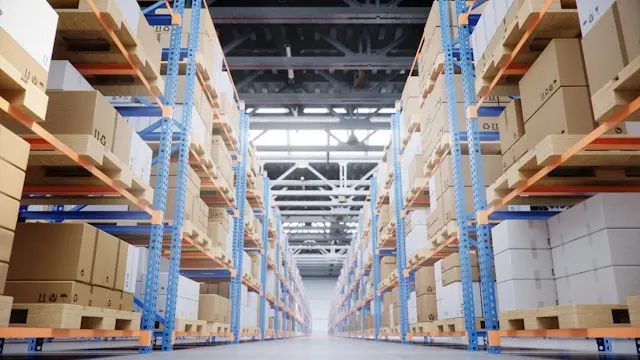
Between 2022 and 2024, capital expenditure on warehouse automation across Shah Alam's logistics sector rose by 40%. Automated storage and retrieval systems went into Bukit Jelutong distribution centres. Conveyor upgrades and autonomous guided vehicles arrived in Glenmarie's e-commerce fulfilment hubs. The investment case was clear: automate the repetitive work, reduce headcount dependency, and improve throughput density in a market where industrial land costs have nearly doubled since 2019.
The result has been the opposite of what the investment thesis predicted. Hiring demand for manual pick-and-pack operatives and forklift drivers rose 18% year-on-year through 2024, even as the machines arrived. Simultaneously, the engineers capable of installing, programming, and maintaining that automation remain so scarce that one major fulfilment operator reportedly paid a 35% salary premium over market rate to secure a single automation project engineer from Singapore. Shah Alam's logistics sector did not automate its way out of a labour shortage. It automated its way into two labour shortages running in parallel.
What follows is an analysis of how this bifurcation is reshaping every hiring decision in Shah Alam's logistics market, from the warehouse floor to the boardroom. The article examines the forces driving demand, the specific roles where conventional recruitment methods fail, and what organisations operating in this corridor need to understand before their next critical search.
The Corridor That Connects Everything and Cannot Fill Its Own Roles
Shah Alam sits 35 to 40 kilometres from Port Klang's Northport and Westport terminals. Four expressways converge here: the Federal Highway, the New Klang Valley Expressway, the Shah Alam Expressway, and the Guthrie Corridor Expressway. During off-peak hours, a truck can reach the port gates in 45 to 60 minutes. That turnaround time is half what operators face from northern Klang Valley industrial zones, where 90 to 120 minutes is the norm, according to the Ministry of Transport Malaysia's Logistics Industry Performance Report.
This accessibility has made Shah Alam the highest-density logistics hinterland for Port Klang's container throughput. The cluster handles an estimated 30 to 35% of Selangor's non-port-centric warehousing stock. Four distinct nodes serve different verticals. Bukit Jelutong houses premium regional distribution centres for FMCG and pharmaceuticals. Glenmarie runs light-industrial and cross-docking operations for automotive parts and e-commerce last-mile delivery. The HICOM Industrial Estate serves heavy logistics tied to manufacturing supply chains including Proton and Panasonic. Older sections in Seksyen 15, 16, 23, and 26 hold lower-clearance warehousing that is gradually becoming obsolete.
What makes this cluster unusual is not its scale. It is the simultaneous pressure from four different demand drivers, each requiring different talent, competing for the same limited pool of senior professionals. The organisations that have adapted their talent acquisition strategy to this reality are filling roles. Those still relying on job board postings and inbound applications are watching their vacancies age.
Demand Is Coming from Four Directions at Once
E-Commerce Fulfilment and the Volume Problem
TikTok Shop, Shopee, and Lazada have been expanding bonded warehousing requirements to support cross-border trade through the Port Klang Free Zone. Shopee Express operates sorting hubs in the Glenmarie industrial zone. Lazada maintains a fulfilment centre on the Shah Alam and Subang Jaya border employing over 500 warehouse operatives. The throughput demands of these platforms are relentless. Volume growth has outpaced the efficiency gains from automation, which explains the paradox at the heart of this market: more machines and more manual workers needed at the same time.
Halal Logistics and the Certification Bottleneck
Malaysia's ambition to become the Global Halal Logistics Hub has concentrated demand for MS2400:2019 Halal Supply Chain Management System-certified facilities. Shah Alam hosts 40% of Selangor's certified halal 3PL warehouse capacity, according to the Department of Standards Malaysia's Halal Logistics Directory. The certification itself is not the bottleneck. The bottleneck is the professionals who understand both the operational requirements and the compliance framework. MS2400:2019 certification requires segregation protocols that reduce effective warehouse utilisation by 8 to 12%, increasing unit costs. Managing that trade-off requires a specific kind of leader.
A multinational FMCG distributor restructuring its Shah Alam regional distribution centre into a regional halal hub was, according to Michael Page Malaysia's recruitment insights, unable to secure a Supply Chain Director with JAKIM Halal Executive certification through executive search channels for five months. The organisation eventually restructured the role into a dual-reporting matrix, splitting halal compliance and operations management into separate positions. That is not a solution. It is an admission that the single candidate who could do both did not exist in the accessible market.
Semiconductor Nearshoring and Buffer Stock
The reshoring and nearshoring of electronics supply chains is increasing buffer stock requirements across the Klang Valley. Light-industrial warehouses in Glenmarie are absorbing this demand, particularly for semiconductor components that require controlled storage environments. This creates direct competition with Penang's Bayan Lepas Free Industrial Zone for bonded warehouse managers with electronics logistics experience.
Cold Chain Expansion and Pharmaceutical Compliance
Cold chain logistics in Shah Alam is growing but constrained by energy economics. Refrigeration accounts for 40 to 45% of operating costs in cold storage facilities, according to the Cold Chain Network Malaysia's industry survey. Rising electricity tariffs, effective from July 2025, have compressed net operating incomes further. The professionals who can manage both the engineering complexity and the regulatory compliance of GDPMD-certified pharmaceutical distribution are among the scarcest in the market.
The convergence of these four demand streams is what distinguishes Shah Alam from a market with a single dominant shortage. Each vertical pulls from a different talent pool, but at the senior level, the pools overlap. A Supply Chain Director who understands halal compliance, cold chain regulation, and e-commerce fulfilment at scale is not a common professional profile. It is an exceptionally rare one.
The Land Squeeze Is Rewriting the Talent Requirement
Modern logistics warehouse rents in Shah Alam, for Grade A facilities exceeding 100,000 square feet with eaves height above 12 metres, sat between RM 1.85 and RM 2.30 per square foot per month as of early 2025. That represents a 12 to 15% premium over the 2020 baseline, though growth has plateaued compared to the 2022 to 2023 spike. Vacancy rates for purpose-built logistics facilities remain tight at 8 to 10%, below Selangor's 12% state average.
Industrial land values tell a sharper story. Prime Shah Alam zones have escalated to RM 28 to 38 per square foot, up from RM 18 to 22 in 2019. The driver is not logistics demand alone. Data centre developers and solar photovoltaic manufacturing facilities are bidding 20 to 30% land price premiums over logistics operators. Industrial land is being rezoned for residential or data centre use under the Selangor State Structure Plan 2035.
The response has been vertical. Approximately 800,000 square feet of new logistics space scheduled for 2026 will come from the redevelopment of legacy estates in Seksyen 26 into multi-storey warehousing. Another 2.1 million square feet is entering the market through i-City Distribution Park and the operationally contiguous Bandar Bukit Raja Industrial Park.
This shift from horizontal to vertical warehousing changes the talent requirement. A multi-storey automated facility does not run like a single-floor warehouse with forklifts. It requires professionals who understand vertical goods-flow design, automated conveyor integration across levels, and the structural engineering constraints of stacking heavy logistics operations. These skills barely existed in the Malaysian market five years ago. The demand for senior talent in industrial and manufacturing environments has moved faster than training pipelines can supply.
Why Both Ends of the Labour Market Are Short
The analytical tension embedded in Shah Alam's logistics data is this: the 40% increase in automation capital expenditure between 2022 and 2024 was supposed to reduce dependence on manual labour. Instead, e-commerce volume growth has outpaced automation efficiency gains. Automation in this market is being deployed for density, not for labour substitution. Operators are stacking more throughput into the same footprint, which requires both the machines and the people to feed them.
The result is a bifurcated shortage. At the top, warehouse automation engineers, robotics specialists, and cold chain compliance managers are 75 to 85% passive. They are not on job boards. They are retained through project completion bonuses and non-compete clauses. At the bottom, manual pick-and-pack operatives and forklift drivers are in acute shortage partly because the sector relies on 75 to 80% foreign migrant labour and the Malaysian government froze new foreign worker intake approvals between July 2024 and January 2025, creating a 12 to 15% labour shortfall during peak season warehousing operations.
The middle tier, warehouse supervisors and shift managers, faces a different pressure. These roles are the most exposed to displacement by automation. Conveyor systems and WMS-driven task allocation are absorbing the coordination work that supervisors traditionally performed. The career ladder that once led from the warehouse floor to a supervisory role to an operations manager position is fracturing. A forklift driver cannot become an automation engineer through internal promotion alone.
This is the original synthesis this market demands: Shah Alam's logistics sector has not experienced a single talent shortage. It has experienced a labour market that is hollowing out in the middle while expanding at both extremes. Capital investment has accelerated the hollowing. The firms that understand this shape are restructuring their workforce plans accordingly. The firms that do not are still posting supervisor vacancies for roles that their own automation investments have made obsolete.
Compensation Has Diverged Along the Same Fault Line
Executive and Senior Specialist Tiers
At the executive level, Supply Chain Director and Head of Logistics roles command RM 360,000 to RM 600,000 per annum, with multinationals paying premiums of 20 to 25% above local 3PLs. Total compensation including bonuses can reach RM 720,000 for heads of regional distribution networks. At the senior specialist and department head level, the range sits between RM 144,000 and RM 216,000, with large 3PLs paying up to RM 240,000, according to the Hays Malaysia Salary Guide 2025.
Warehouse Automation Engineers at the senior specialist level earn RM 96,000 to RM 156,000. At the Head of Automation or Engineering Director level, the range widens to RM 240,000 to RM 420,000, with scarcity premiums for robotics integration skills pushing the upper end higher. Halal Logistics Specialists at manager level earn RM 84,000 to RM 144,000, reflecting the premium for JAKIM certification and Islamic finance compliance knowledge.
The Singapore Multiplier
The compensation conversation in Shah Alam cannot be separated from Singapore. Equivalent senior logistics roles in Singapore pay 2.5 to 3.0 times the Shah Alam rate. A Supply Chain Director earning RM 500,000 in Shah Alam could earn SGD 180,000 to 250,000 in Singapore. Career trajectories into regional headquarters roles and superior digital infrastructure compound the pull.
This creates a specific problem for Shah Alam employers. The professionals who are most qualified for senior roles, particularly those with regional supply chain experience and cross-border logistics expertise, are precisely the professionals most attractive to Singapore-based employers. The cost-of-living differential partially offsets the salary gap, but it does not eliminate it. And for professionals in their mid-30s to mid-40s building a career trajectory, the Singapore RHQ role offers something Shah Alam cannot easily match: visibility to global leadership.
The Johor Pinch from Below
Johor Bahru offers 15 to 20% lower salary costs than Shah Alam but is gaining traction through land cost arbitrage and the Johor-Singapore Special Economic Zone incentives. According to The Star Business, Johor is actively attracting Shah Alam-based mid-level warehouse managers with relocation packages and housing benefits. This pressure from below, combined with Singapore's pull from above, compresses the range of professionals willing to build long-term careers in Shah Alam at Shah Alam compensation levels.
The implication for salary benchmarking in logistics roles is that Shah Alam employers must compete on a regional axis, not a local one. A compensation package calibrated to the Klang Valley market is competing against Johor's cost advantages and Singapore's salary multiples simultaneously.
The Roles Where Conventional Search Fails Completely
Three role categories in Shah Alam's logistics sector are characterised by predominantly passive candidate markets. Understanding the passivity ratios is essential for any organisation planning a critical hire.
Supply Chain Directors and Heads of Logistics are 85 to 90% passive. Average tenure in role is 4.5 years. Notice periods run to three months. The total cycle from initial approach to start date for a successful placement at this level is typically five to seven months. Job postings reach at most 10 to 15% of the viable candidate pool.
Warehouse Automation Engineers and Robotics Specialists are 80% passive. These professionals are retained through project completion bonuses and restrictive covenants. The counteroffer risk is substantial: current employers, having invested heavily in automation projects, will match or exceed competing offers to retain engineers mid-project.
Cold Chain and GDPMD Compliance Managers are 75% passive, constrained by the niche regulatory expertise required and limited training pipelines. A pharmaceutical 3PL operating a GDPMD-certified facility in Bukit Jelutong maintained a Cold Chain Compliance Manager vacancy for seven months, according to the Pharmaceutical Association of Malaysia's Talent Pipeline Report, before eventually filling the role through internal promotion. Only 12 qualified candidates were identified in the entire Klang Valley recruitment pool. This is not a volume problem that more advertising can solve. It is a scarcity problem that requires direct identification of specific individuals and a proposition compelling enough to move them.
The common thread across all three categories is that conventional recruitment, posting a role and waiting for applications, reaches a fraction of the available talent. The candidates who do apply actively in these specialist areas often signal underlying performance issues or contractual disputes, according to Hays Malaysia's life sciences and healthcare recruitment analysis. The strongest candidates are already employed, already performing, and not looking.
Structural Risks That Compound the Hiring Challenge
Congestion, Flooding, and Operational Fragility
Shah Alam's logistics operations absorb a 15 to 20% fuel efficiency penalty and a 10 to 12% driver hour productivity loss during peak congestion periods on the Federal Highway and at the Shah Alam interchange. These are not minor irritants. They are embedded operating costs that compress margins and limit the compensation headroom available for talent attraction.
Flooding adds physical risk. Industrial areas in Seksyen 15, 20, and 24 experienced flash flooding in March 2024, disrupting logistics operations for 72 hours and elevating insurance premiums by 15 to 20% for ground-floor warehousing in flood-prone zones. The shift toward multi-storey warehousing partly addresses this risk by moving inventory above flood levels. But it also means the engineering talent required for these new facilities must understand flood resilience design alongside automation integration.
Energy Cost Inflation for Cold Storage
The electricity tariff adjustment effective from July 2025, combined with the Ringgit's continued depreciation averaging RM 4.75 to 4.85 to USD 1 in early 2025, has compressed margins for cold storage and energy-intensive automated warehouses. Cold storage operators face a specific constraint: their most expensive operating cost (refrigeration at 40 to 45% of total) is denominated in a depreciating currency against the imported equipment required to run it. The professionals who can optimise these operations through energy management systems and predictive maintenance are in direct competition with the broader manufacturing sector for the same engineering skills.
Regulatory Complexity as a Talent Filter
The regulatory environment acts as a de facto talent filter. Strict enforcement of the Customs Act 1967 and the Free Zones Act 1990 requires specialised customs declarants whose shortage delays clearance times. Halal certification complexity under MS2400:2019 requires segregation expertise that few logistics professionals possess. GDPMD compliance for pharmaceutical distribution adds another layer. Each regulatory requirement narrows the candidate pool for senior roles. A Supply Chain Director who must navigate customs bonding, halal certification, and pharmaceutical compliance simultaneously is not merely a logistics professional. They are a regulatory specialist who happens to work in logistics.
The cost of hiring the wrong person at this level is not merely a financial loss measured in salary and recruitment fees. It is a compliance exposure that can result in facility decertification, which in halal-certified logistics means losing the right to operate in the fastest-growing segment of the market.
What This Market Requires from a Search Partner
Shah Alam's logistics talent market punishes slow, passive recruitment methods. When 80 to 90% of senior candidates are not visible on any job board, and when the viable pool for specialist roles can number as few as 12 professionals across the entire Klang Valley, the search methodology matters more than the job description.
KiTalent's approach to executive search in logistics and industrial sectors addresses the specific dynamics this market presents. AI-powered talent mapping identifies the passive candidates that conventional channels miss, reaching the 80% of senior professionals who are employed, performing, and not actively looking. The pay-per-interview model means organisations only invest when they are meeting qualified, pre-assessed candidates. Interview-ready shortlists are delivered within 7 to 10 days, a timeline that matters in a market where the best candidates are typically gone within weeks of becoming available.
The 96% one-year retention rate for placed candidates is particularly relevant in Shah Alam's logistics sector, where the counteroffer environment is aggressive and three-month notice periods create extended vulnerability windows. A placement that does not last is worse than no placement at all, because it resets the clock and damages the employer's reputation in a small, interconnected talent community.
For organisations hiring Supply Chain Directors, Warehouse Automation Engineers, Cold Chain Compliance Managers, or Halal Logistics Specialists in Shah Alam's logistics corridor, where the candidate pool is measured in dozens rather than hundreds and the cost of a failed search compounds with every month of vacancy, start a conversation with our executive search team about how KiTalent approaches this market.
Frequently Asked Questions
What are the biggest logistics hiring challenges in Shah Alam in 2026?
Shah Alam faces a bifurcated hiring shortage. At the senior level, Supply Chain Directors, Warehouse Automation Engineers, and Cold Chain Compliance Managers are 75 to 90% passive, meaning they are not on job boards. At the operative level, the sector's reliance on foreign migrant labour (75 to 80% of warehouse staff) makes it vulnerable to government intake freezes that created 12 to 15% shortfalls in peak season. Both ends of the market are short. Mid-tier supervisory roles face displacement pressure from automation. Conventional job advertising reaches a fraction of viable candidates for specialist and senior leadership positions in logistics.
What does a Supply Chain Director earn in Shah Alam?
A Supply Chain Director or Head of Logistics at a major 3PL or multinational in Shah Alam earns RM 360,000 to RM 600,000 per annum in 2026. Total compensation including bonuses can reach RM 720,000 for heads of regional distribution networks. Multinationals pay 20 to 25% premiums above local 3PL operators. These figures must be viewed against Singapore's 2.5 to 3.0x salary multiplier for equivalent roles, which pulls the most experienced candidates toward regional headquarters positions across the border.
Why is halal logistics talent so difficult to recruit in Malaysia?
Halal logistics roles require a combination of operational supply chain expertise and JAKIM Halal Executive certification under the MS2400:2019 standard. The certification mandates segregation protocols that reduce effective warehouse utilisation by 8 to 12%, requiring managers who understand both compliance costs and operational efficiency. The dual competency is rare. A five-month search failure for a Halal Supply Chain Director at one multinational FMCG distributor, reported by Michael Page Malaysia, illustrates the depth of the shortage. Training pipelines for this combination of skills remain limited.
How does KiTalent find logistics executives who are not on job boards?
KiTalent uses AI-powered talent mapping to identify passive candidates, the 80 to 90% of senior logistics professionals who are employed and not actively searching. The methodology combines market intelligence with direct headhunting to build shortlists of interview-ready candidates within 7 to 10 days. The pay-per-interview model means clients only pay when meeting qualified candidates, reducing the risk of prolonged, expensive searches in markets where the talent pool for specialist roles may number fewer than 20 professionals.
What risks do Shah Alam logistics employers face beyond talent shortages?
Shah Alam logistics operators face compounding risks: industrial land competition from data centre developers paying 20 to 30% premiums, flash flooding that disrupted operations for 72 hours in 2024 and elevated insurance costs by 15 to 20%, rising electricity tariffs that compress cold storage margins (refrigeration is 40 to 45% of operating costs), and Federal Highway congestion imposing a 15 to 20% fuel efficiency penalty during peak hours. Each risk increases operating costs and reduces the compensation headroom available for talent attraction.
Is Shah Alam losing logistics talent to Johor Bahru and Singapore?
Yes, on two fronts. Singapore draws senior Supply Chain Directors and regional logistics leaders with salaries 2.5 to 3.0 times the Shah Alam equivalent and stronger career trajectories into regional headquarters roles. Johor Bahru competes from below, offering 15 to 20% lower salary costs, land cost arbitrage at RM 12 to 18 per square foot versus Shah Alam's RM 28 to 38, and Johor-Singapore Special Economic Zone incentives. According to The Star Business, Johor is actively recruiting Shah Alam-based mid-level warehouse managers with relocation packages.