Sharjah's Publishing and Creative Sector Has Gone Digital on Paper. The Talent to Make It Real Does Not Exist Yet
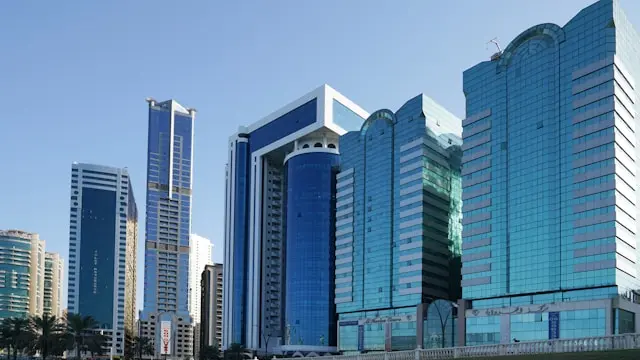
Sharjah's creative economy now contributes AED 3.2 billion annually to the emirate's GDP. That figure represents 4.8% of non-oil output, anchored by a publishing and media cluster that no other city in the Arab world replicates. Sharjah Publishing City Free Zone hosts over 1,400 registered companies. Sharjah Media City encompasses more than 4,200 entities. The Sharjah International Book Fair drew 2.27 million visitors in 2024 and facilitated AED 180 million in publishing rights deals. By any measure of institutional investment, Sharjah has built the infrastructure for a world-class creative hub.
The numbers tell one story. The hiring data tells a different one. Specialised roles in this market take 94 days to fill, compared to 58 days for general professional services. Senior digital publishing director searches run 120 to 150 days. AI content ethics roles stall after 90 days and are never filled as originally scoped. Job postings across Sharjah's creative sector rose 23% in 2024, but the people those postings describe, professionals who combine Arabic literary expertise with digital platform fluency, exist in numbers far below what the market requires.
The gap between Sharjah's institutional ambition and its available talent pool is the defining constraint of this market in 2026. What follows is a structured analysis of where the shortages are most acute, why they resist conventional recruitment, what they cost organisations that move too slowly, and how the firms succeeding in this market are approaching the problem differently.
A Cluster Built for Scale, Staffed for Survival
Sharjah's creative sector rests on three institutional pillars. Sharjah Publishing City Free Zone (SPCFZ) functions as the Arabic-language publishing export engine for the MENA region. Its registered publishers export 65% of physical titles to Egypt, Saudi Arabia, Morocco, and diaspora communities across Europe and North America. Sharjah Media City (Shams) has become the emirate's digital media and gaming hub, with 60% of its 4,200 registered entities classified in digital media, gaming, or content production. The Sharjah Book Authority (SBA) operates the emirate's cultural programming infrastructure, managing the international book fair, the public library network, and 12 specialised publishing support centres.
Together, these three institutions employ approximately 14,500 direct workers. That workforce spans publishing, broadcasting, digital content creation, and creative services. The number sounds adequate until it is measured against the sector's stated direction of travel.
SPCFZ reported 18% year-on-year growth in new licences in 2024, concentrated in digital publishing and educational technology. Shams saw gaming and esports company registrations surge 34% between 2023 and 2024. The emirate hosts 14 major annual cultural events generating AED 450 million in direct sector revenue. Every growth indicator points upward. Yet the talent pipeline feeding this growth has not kept pace. The sector is adding companies faster than it is adding the people those companies need to operate.
This is not a problem that will resolve itself through organic market forces. The skills in shortest supply are not skills that adjacent industries produce in surplus. They are hybrid competencies that sit at the intersection of Arabic literary tradition and digital platform architecture. That intersection is narrow, and the professionals who occupy it know exactly what they are worth.
The Three Shortages Reshaping Sharjah's Creative Economy
Arabic Digital Publishing: A Skills Category That Barely Exists
The most acute shortage in Sharjah's creative sector is also the hardest to describe in a job title. The market needs professionals who combine deep Arabic editorial expertise with technical knowledge of XML workflows, metadata management, ONIX standards, and multi-platform digital distribution. According to the Arab Publishers Association's 2024 Skills Gap Report, only 12% of regional publishing professionals possess this dual analog-digital competency.
The scarcity is not theoretical. Senior Digital Publishing Director roles at SPCFZ-based houses typically remain open for 120 to 150 days. Equivalent English-only roles in Dubai Media City fill in 60 to 75 days. When the unified candidate proves unavailable, employers restructure searches to separate content leadership from platform leadership. This splits one role into two, increasing headcount costs by 35 to 40%.
The problem is generational. The Arabic publishing tradition produced brilliant editors and rights managers. The digital revolution produced brilliant platform architects. Almost nobody was trained in both. The shortage is not a hiring problem. It is a knowledge problem. The competency itself has not existed long enough for a sufficient number of people to have acquired it.
Gaming and Esports: Competing for a Pool That Does Not Want to Come
Shams' gaming cluster has grown rapidly, and its strategic plan targets 800 new gaming companies by the end of 2026, supported by the Sharjah Games programme and an AED 100 million innovation fund. The ambition is clear. The constraint is that the UAE's entire qualified gaming talent pool is estimated at 3,000 professionals nationally, and 80% are already employed by established studios or international publishers.
The shortage is especially acute for Arabic-speaking game designers, narrative designers producing MENA cultural content, and esports tournament directors. The UAE Gaming Federation's 2024 analysis identified 1,400 unfilled technical roles nationally, with Sharjah competing for roughly 30% of that demand.
Studios in Shams typically offer 25 to 35% salary premiums above Beirut and Cairo to attract Arabic narrative designers and UX specialists. Yet offer rejection rates run at 40%. Candidates prefer Dubai's established ecosystem or Riyadh's Vision 2030 opportunities. The documented response is telling. Some employers have established satellite offices in Amman or Tunis to access talent unwilling to relocate. This solves the talent problem at the cost of operational complexity and management overhead.
AI Content Ethics: A Role No University Has Taught
The emergence of Arabic-language generative AI tools has created demand for a role that did not exist three years ago. The "AI Content Ethics Officer" combines sharia compliance knowledge, Arabic linguistics, and machine learning understanding. These searches typically stall after 90 days.
The resolution pattern is consistent. Employers hire European AI ethicists and pair them with local religious advisors, increasing monthly compensation packages by AED 15,000 to 20,000. The composite cost of two people doing the work one person should do reflects the true price of a talent gap that training programmes have not yet closed.
This is the category where demand for specialists in AI and technology roles collides most directly with market reality. The professionals who understand Arabic NLP optimisation, prompt engineering, and editorial governance are being recruited from Cairo, Beirut, and European technology hubs. They are not applying to job postings in Sharjah. They must be found individually and persuaded to move.
The Digital Transition Gap: Why 78% Adoption Means Almost Nothing
A 2024 SPCFZ survey found that 78% of registered publishers have "implemented digital strategies." Read in isolation, that figure suggests a sector well into its digital transition. Read alongside the hiring data, it collapses.
The same survey found that 60% of those publishers describe their digital implementations as superficial: basic PDF e-books rather than platform-optimised products with rich metadata, adaptive layouts, and integration into global distribution systems. Sixty percent of sector SMEs report insufficient technical infrastructure for genuine digital transformation. And the roles required to close that gap, the Digital Transformation Directors and XML Workflow Specialists, carry vacancy periods exceeding 120 days.
This is the core analytical tension in Sharjah's creative economy. The sector has adopted the language of digital transformation without acquiring the talent to execute it. Capital moved faster than human capital could follow. Publishers invested in digital strategies because the market demanded it, but the professionals who could turn those strategies into functional digital products remain scarce enough to command four-month searches and 35% cost premiums when roles are ultimately restructured.
The underlying infrastructure compounds the problem. According to the Sharjah Chamber of Commerce, 60% of publishing and printing SMEs operate on ERP systems more than 15 years old, incompatible with global distribution platforms like Amazon KDP, Apple Books, or Kobo. Modernisation costs range from AED 200,000 to AED 500,000 per SME. Without financing mechanisms designed for this sector's scale, the digital readiness that market benchmarking would reveal remains aspirational for the majority of the cluster's small and mid-size players.
Digital Arabic content exports reflect this reality. They represent only 12% of total sector revenue. That figure is growing at 28% compound annual growth, which sounds impressive until it is measured against the scale of the opportunity being left on the table.
Compensation: What Sharjah Pays, and Why It Is Not Always Enough
Sharjah's creative sector offers compensation that is competitive within the region but faces structural pressure from two directions simultaneously. Dubai pulls senior talent with 20 to 25% salary increases and the perception of stronger long-term career trajectories. Riyadh, fuelled by Vision 2030 investment, now attracts senior Arabic content executives with 40 to 50% premiums and comprehensive housing packages.
Publishing Compensation Bands
Senior Publishing Managers with 8 to 12 years of experience earn AED 25,000 to 38,000 monthly base, plus housing allowances of 15 to 20%. These roles carry P&L responsibility for a vertical: children's, educational, or academic publishing.
At VP and Editorial Director level, compensation ranges from AED 55,000 to 85,000 monthly base, with performance bonuses of 20 to 30% and, in rare but emerging cases, equity participation in free zone entities. The VP-level band places Sharjah broadly competitive with Dubai for publishing-specific roles, though Dubai Media City's larger market and the presence of global headquarters (MBC Group, Netflix MENA) create a gravitational pull that compensation alone cannot counter.
Gaming and Digital Media Compensation
Creative Directors in gaming and animation earn AED 30,000 to 45,000 at senior level and AED 60,000 to 95,000 at executive or studio head level. Heads of Content Strategy for streaming and OTT platforms command AED 45,000 to 70,000 at VP level. Arabic-content executives earn a 15 to 20% premium over English-content-only peers. This premium is a direct function of scarcity.
The Government Compensation Differential
Government-affiliated roles through SBA and Shurooq typically offer lower base salaries (AED 35,000 to 50,000 for Director-level cultural programming) but comprehensive benefits packages. Housing, education allowances, and pension contributions exceed equivalent private sector packages by 25 to 30%. For candidates evaluating total compensation rather than base salary alone, government roles represent genuine value. The challenge is that many candidates do not evaluate this way. The base salary figure is what they compare to a Dubai or Riyadh offer, and that comparison favours the competitor.
Understanding what competitors actually pay, and what drives the premium differential in each role category, requires the kind of detailed salary negotiation intelligence that most hiring managers in this sector do not have. The result is mispriced offers and lost candidates.
Sharjah's Competitive Position: Advantages That Are Real but Insufficient Alone
Cost and Cultural Infrastructure
Sharjah's retention argument rests on two genuine advantages. Office space in Shams costs 40 to 50% less than Dubai Media City. Residential costs run 30% below Dubai Marina and Downtown. For a publishing house or gaming studio managing thin margins on Arabic-language content, the cost differential is material.
The cultural ecosystem is the other differentiator. The Sharjah Institute for Heritage, the Arabic Language Academy, and the broader literary infrastructure create an environment no other Gulf city replicates. For professionals whose work depends on deep engagement with Arabic literary heritage, Sharjah offers an authenticity of context that Dubai's commercial orientation and Riyadh's nascent cultural investment cannot match.
Long-term cultural visas of 10 years for distinguished authors and artists provide visa stability, though uptake remains below Dubai's Golden Visa programme.
Where Sharjah Loses
The losses are specific and predictable. Senior talent commutes or relocates to Dubai for salary increases of 20 to 25%, particularly in broadcasting and commercial production. The LinkedIn Workforce Migration Report for the UAE confirmed this pattern through 2024. Riyadh's pull has intensified: according to reporting based on Saudi labour mobility data, senior Arabic content executives are increasingly relocating for premiums of 40 to 50%.
The loss mechanism is not simply about money. Dubai offers larger market exposure. Riyadh offers a domestic addressable market of 35 million, dwarfing Sharjah's 1.8 million. Candidates calculate career trajectory alongside compensation. A counteroffer from the current employer may delay the departure, but if the pull factor is market size rather than salary, the departure is deferred rather than prevented.
Sharjah must compete by making its cluster advantages tangible at the point of offer. This means communicating total compensation including benefits and cost of living adjustment, positioning the cultural ecosystem as a career differentiator, and moving faster than competitors who may offer more but take longer to decide.
Structural Risks Every Hiring Leader Must Understand
Event Concentration and Employment Fragility
Forty percent of sector revenue derives from Q4 event season, anchored by SIBF and the Sharjah Film Platform. Thirty-five percent of the creative workforce operates on project-based or seasonal contracts tied to these events. The SIBF and Sharjah Children's Reading Festival create temporary employment spikes of 3,000 to 5,000 roles quarterly.
This creates a structural tension. The headline attendance figures suggest a thriving, permanent sector. The employment data reveals that a substantial proportion of the workforce cycles in and out with the event calendar. Economic disruption to the event season, whether from pandemic recurrence, regional conflict, or competing events elsewhere in the Gulf, creates cash flow risk for SMEs and retention challenges for organisations trying to maintain year-round institutional capacity.
The Piracy Constraint on Digital Investment
Digital piracy rates for Arabic e-books remain at 65%, compared to 25% for English-language content globally. This single statistic explains much of the caution around digital investment. When nearly two-thirds of a digital product's potential market will access it without paying, the ROI calculation for digital transformation changes fundamentally.
The International Publishers Association's regional reporting has documented the global Arabic book market at roughly $1.2 billion, less than 1% of the $120 billion global total. Piracy reduces even this figure by an estimated 35 to 40%. SPCFZ publishers face a constrained addressable market regardless of the quality of their digital transition. This constraint is not a reason to avoid digital investment. It is a reason to understand that digital transformation in Arabic publishing serves market positioning and long-term capability as much as immediate revenue.
AI Disintermediation
Global AI models with Arabic capabilities now threaten the translation and localisation service providers that comprise 30% of SPCFZ economic activity. The SPCFZ Strategic Risk Report identified this as a first-order threat. If machine translation and cultural localisation improve to production quality for Arabic, the human workforce performing these functions faces displacement. The organisations that survive this shift will be those that have hired for human judgement and cultural intelligence rather than linguistic processing. This makes the executive search for roles requiring genuine editorial judgement more urgent, not less.
How to Actually Hire in This Market
The passive candidate ratios in Sharjah's creative sector make this one of the most headhunt-dependent markets in the Gulf. For Arabic literary editors and rights managers, the ratio of active to passive candidates is approximately 1:9. For every editorial director applying to roles, nine must be identified and approached directly. Average tenure at current employers exceeds 5.2 years. Unemployment among senior Arabic publishing professionals with 10 or more years of experience is effectively zero.
Gaming technical directors carry a passive ratio of roughly 1:7. Digital transformation leads with publishing-specific expertise are embedded in Saudi Vision 2030 projects or Dubai-based streaming platforms and require three to six-month lead times for recruitment.
A conventional job posting in this market reaches, at best, 10 to 15% of viable candidates. The remaining 85 to 90% must be found through direct headhunting methodology that identifies where these professionals currently work, what would move them, and what the realistic timeline and cost of that move looks like.
The organisations that consistently fill these roles share three characteristics. First, they have mapped the talent market before the vacancy opens. They know who the 30 plausible candidates for a given role are, where they work, and what their likely motivation profile looks like. Second, they move quickly once a target candidate engages. In a market where 40% of gaming offers are rejected, speed between first conversation and formal offer is the single largest controllable variable. Third, they price the role correctly from the outset, using real compensation data from the specific sub-sector rather than broad UAE averages that mask the premiums Arabic-language specialists command.
KiTalent's approach to this market reflects these principles. Using AI-powered talent mapping to identify the passive candidate pool, and delivering interview-ready candidates within 7 to 10 days, compresses a search process that typically runs 94 to 150 days in this sector. The pay-per-interview model ensures that organisations only invest when they are meeting qualified professionals, not when a search firm is still assembling its long list. Across 1,450 executive placements globally, this methodology has produced a 96% one-year retention rate, because candidates who are found, assessed, and matched through direct search are more likely to stay than those recruited through transactional channels.
For organisations hiring senior leadership in publishing, media, and creative industries in Sharjah, where the candidates with the right combination of Arabic literary depth and digital platform fluency are not looking at job boards and the cost of a slow search compounds monthly, start a conversation with our executive search team about how we identify and secure the talent this market demands.
Frequently Asked Questions
What is the average time to fill a senior publishing role in Sharjah?
Senior Digital Publishing Director roles in Sharjah Publishing City Free Zone typically take 120 to 150 days to fill when the role requires Arabic-English bilingual capability and 10 or more years of regional experience. General professional services roles in the emirate average 58 days. The gap reflects the extreme scarcity of professionals combining Arabic editorial expertise with digital platform knowledge. When the unified candidate proves unavailable, employers split the role into content and platform leadership, increasing costs by 35 to 40%.
Why is hiring gaming talent in Sharjah so difficult?
The UAE's total qualified gaming professional pool is estimated at 3,000 nationally, with 80% already employed. Sharjah competes for approximately 30% of 1,400 unfilled national gaming roles. Studios in Shams offer 25 to 35% salary premiums over Beirut and Cairo but face 40% offer rejection rates. Candidates frequently prefer Dubai's established ecosystem or Riyadh's Vision 2030 investment. Successful recruitment typically requires direct identification of passive candidates already working in established studios, combined with a compelling narrative about Sharjah's growing cluster.
What does a VP of Publishing earn in Sharjah?
VP Publishing and Editorial Director roles in Sharjah command AED 55,000 to 85,000 monthly base salary, with performance bonuses of 20 to 30% of base. Equity participation in free zone entities is rare but emerging. Government-affiliated roles through Sharjah Book Authority offer lower base salaries of AED 35,000 to 50,000 but total compensation packages exceeding private sector equivalents by 25 to 30% when housing, education allowances, and pension contributions are included.
How does Sharjah compete with Dubai and Riyadh for creative talent?
Sharjah competes primarily on cost and cultural authenticity. Office space in Shams costs 40 to 50% less than Dubai Media City. Residential costs are 30% lower than central Dubai. The emirate's Arabic literary heritage institutions, including the Sharjah Institute for Heritage and Arabic Language Academy, provide a cultural context no other Gulf city matches. Long-term cultural visas of up to 10 years add stability. However, executive search in this market must account for the fact that Dubai offers 20 to 25% higher salaries and Riyadh attracts with 40 to 50% premiums.
What role does AI play in Sharjah's publishing talent challenges?
AI creates both demand and disruption. Arabic-language generative AI tools have created demand for AI Content Ethics Officers combining sharia compliance, Arabic linguistics, and machine learning knowledge. These roles stall after 90 days and are typically filled by pairing European AI ethicists with local advisors at premium cost. Simultaneously, AI threatens the 30% of SPCFZ economic activity comprising translation and localisation services. Organisations investing in AI governance and editorial judgement roles are positioning for resilience, while those dependent on linguistic processing functions face displacement risk.
What percentage of senior creative candidates in Sharjah are passive?
The passive candidate ratio varies by specialisation but is uniformly high. Arabic literary editors and rights managers show a 1:9 active-to-passive ratio, meaning nine out of ten must be headhunted. Gaming technical directors show approximately 1:7. Senior producers with Arabic cultural event experience are 85% passive. Even the most balanced category, creative and event production talent, runs at a 3:7 active-to-passive ratio. Traditional job advertising reaches a fraction of the market. Effective hiring requires proactive identification and direct approach.