St. Petersburg Marine Services: The Blue Economy Investment That Has Not Solved the Trades Hiring Crisis
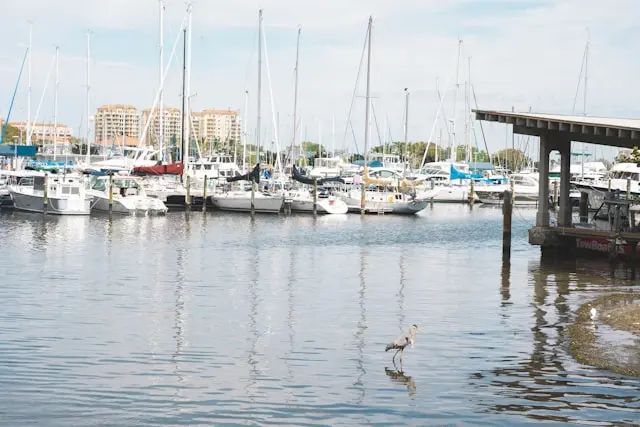
St. Petersburg's marine district generated $287 million in direct revenue in 2024. Service backlogs stretch 8 to 14 weeks. Municipal Marina renovations worth $18.7 million are adding superyacht capacity through mid-2026. By every investment metric, the city's working waterfront is growing. Yet the roles that produce the majority of that revenue remain among the hardest to fill in Florida's marine sector.
The core tension is not a general labour shortage. It is a specific mismatch between where public investment is flowing and where the hiring pain is most acute. Workforce development funding and university research expansion emphasise the "Blue Economy" of autonomous vehicles, ocean monitoring, and marine biotechnology. Those segments are growing at 12 to 15% annually and producing $94,000 average salaries. But 73% of marine sector employment in St. Petersburg still sits in traditional yacht service and repair: diesel engine overhauls, electrical system refits, and composite fabrication. The workers who perform that work are disappearing into competitor markets faster than they can be replaced.
What follows is a ground-level analysis of the forces reshaping this market, the employers driving change, and what senior leaders need to understand before making their next hiring or retention decision in St. Petersburg's marine services sector.
A Working Waterfront That Operates Nothing Like a Port
St. Petersburg's marine economy is often misread by leaders unfamiliar with Florida's coastal geography. The city's waterfront is not a cargo port. It is a concentrated yacht service, brokerage, and marine research cluster, functionally separate from Port Tampa Bay's 36.7 million tons of bulk and container throughput 25 miles to the northeast.
The Marine District, formally designated in the city's 2023 Economic Development Strategy, encompasses roughly 1,200 linear feet of commercial dockage between the Harborage Marina, Municipal Marina, and Bayboro Harbor. The vessels it serves range from 30-foot cruisers to 150-foot superyachts. The revenue it produces breaks into three streams: 68% from yacht maintenance, repair, and overhaul; 19% from marine technology and research commercialisation; and 13% from boat manufacturing and custom fabrication.
This composition matters for anyone assessing the talent market. The dominant revenue stream requires certified technicians with hands-on mechanical and electrical expertise. The fastest-growing stream requires engineers with advanced degrees in robotics, marine science, or autonomous systems. These are two entirely different talent pipelines. They compete for different candidates in different geographies at different price points. Treating the marine sector as a single hiring challenge produces the wrong strategy for both.
The roughly 6,800 marine workers employed within St. Petersburg proper sit inside a broader Pinellas County cluster of 14,200. That cluster entered 2025 with capacity constraints rather than demand weakness, and the trajectory has continued into 2026 as the aging registered fleet (average vessel age: 18.4 years) and increased storm preparation requirements sustain service demand at levels the current workforce cannot absorb.
The Mismatch Between Workforce Investment and Workforce Need
Here is the analytical claim this article is built around, and it runs counter to what the regional economic development narrative suggests: St. Petersburg's blue economy investment strategy is producing the wrong talent for the market's most urgent needs. The city is well-supplied with marine science graduates and increasingly well-funded in autonomous vehicle research. It is critically short of the diesel mechanics and ABYC-certified electricians who generate nearly three-quarters of the sector's revenue.
The Blue Economy Pipeline
The University of South Florida St. Petersburg and the Florida Institute of Oceanography anchor the Bayboro Harbor research corridor. In the 2024-2025 cycle, that cluster spun out four marine technology startups focused on autonomous underwater vehicles and water quality monitoring systems, creating 89 direct technology jobs. USFSP produces approximately 85 marine science graduates annually. The Innovation District secured $4.2 million in federal NOAA grants for ocean acidification monitoring infrastructure, and marine technology employment is expanding at 12 to 15% into 2026.
This is genuine progress. But it serves a segment that accounts for fewer than one in five marine jobs in the district.
The Trades Pipeline Gap
Meanwhile, marine service technician postings in the Tampa-St. Petersburg-Clearwater MSA remained open an average of 47 days in 2024, compared to 32 days for all skilled trades. Master Marine Technician positions requiring seven or more years of diesel engine experience and ABYC certification routinely sat unfilled for 90 to 120 days. Several firms maintained permanent "always hiring" status for these roles despite offering above-market compensation.
The workforce development system is not producing certified marine technicians at anything close to the rate the industry absorbs them. This is not because the trades programmes do not exist. It is because the funding emphasis and institutional prestige flow toward STEM degrees and advanced research, while the yard-level roles that keep the district's revenue engine running attract neither the investment nor the candidates they need.
For hiring leaders in yacht service operations, the implication is direct: the local pipeline will not solve this problem in 2026 or 2027. The candidates you need are already employed, and the only way to reach them is to go and find them.
Where the Talent Scarcity Is Most Acute
Three categories of specialist define St. Petersburg's hiring crisis, and each operates under different market dynamics.
Certified Marine Technicians
ABYC-certified technicians with diesel and gasoline engine specialisations represent the single largest gap. Unemployment in this certification category sits below 2.5%, against a regional average of 3.8%. Average tenure at current employers runs 5.2 years. According to industry workforce surveys, 70 to 75% of qualified technicians are not actively applying to posted vacancies. They respond to direct recruitment or referral approaches, not job advertisements.
The compensation for a Master Marine Technician ranges from $78,000 to $95,000 in base salary, with overtime typically adding $12,000 to $18,000 annually for total cash compensation of $90,000 to $113,000. That carries a 12 to 15% premium above regional automotive technician wages. The premium exists because the work is harder to learn, the certification pathway is longer, and the candidate pool is smaller. It has not been enough to close the gap.
One prominent yacht service firm, described in industry association surveys as a major St. Petersburg marina operator, reported a diesel engine specialist role remaining vacant for 11 months in 2024. That vacancy forced the firm to subcontract $340,000 in work to external vendors, according to the Marine Industries Association of Florida's 2024 workforce survey.
Marine Electricians
ABYC Advanced Electrical Certification holders face even more aggressive competition. According to the trade publication WorkBoat, a lead marine electrician with advanced certification was recruited from a Bayboro Harbor service firm to a Fort Lauderdale superyacht refit yard in 2024 with a $22,000 signing bonus and a 20% base salary increase.
This pattern is not isolated. Fort Lauderdale's marine cluster employs over 28,000 workers, compared to St. Petersburg's 6,800. It offers 12 to 18% salary premiums for identical roles and superior vertical career mobility into superyacht servicing above 150 feet. The cost of living in Broward County runs roughly 22% higher than St. Petersburg, partially offsetting those premiums. But for a technician earning $85,000 in St. Petersburg, a $102,000 offer plus a signing bonus in Fort Lauderdale is a difficult proposition to counter, particularly when the larger market also offers a perception of greater job security.
Composite and Fiberglass Fabricators
Yacht-grade finishing is a skill learned through years of hands-on work rather than classroom instruction. The Sarasota and Venice corridor competes directly for these workers, offering slightly lower housing costs (median home price $395,000 versus St. Petersburg's $425,000) and established manufacturing campuses for brands like Boston Whaler and Yellowfin Yachts. St. Petersburg loses an estimated 15 to 20% of entry-level marine graduates to Sarasota manufacturers offering production bonuses, according to CareerSource Florida graduate placement data.
The geographic constraint amplifies every one of these shortages. Unlike technology roles, marine service work requires physical presence at waterfront facilities. There is no remote option. Every hire must live within commuting distance of the yard, and every competitor market is drawing from the same residential pool.
The Compensation Picture That Aggregate Data Hides
A senior hiring leader reviewing Tampa Bay's marine sector wage data might conclude the labour market is cooling. Aggregate wage growth across the MSA's marine sector moderated to 3.2% in 2024, down from 5.8% in 2023. That headline figure creates a false impression.
Within the specific specialisms most relevant to yacht service operations, compensation is accelerating. ABYC-certified Master Technicians and marine electricians with superyacht experience saw 8 to 11% year-over-year increases through 2024, with signing bonuses doubling from 2023 levels. The aggregate moderation reflects cooling at the entry level, where retention is poor (18-month average tenure for 0-2 year technicians) and wage competition is less intense. At the certified specialist level, the market is tightening, not loosening.
At the management tier, Marine Service Managers overseeing 8 to 15 technicians command $85,000 to $110,000 in base salary, with performance bonuses tied to gross margin and customer satisfaction bringing total compensation to $95,000 to $130,000. These roles sit at a critical juncture: the candidates qualified to fill them are the same certified technicians the industry cannot afford to pull off the shop floor.
Executive compensation in the district reflects both the opportunity and the competitive disadvantage. A Vice President of Service Operations with P&L responsibility for multi-site yacht service, overseeing 100-plus employees and $15 million or more in revenue, earns $165,000 to $210,000 in base salary with 25 to 40% annual bonus potential. Total compensation ranges from $220,000 to $310,000. But St. Petersburg-specific roles at this level typically pay 8 to 10% below Fort Lauderdale equivalents, according to executive compensation benchmarking data for the Southeast marine sector.
For Director of Marine Technology and Engineering roles in the blue-tech segment, base compensation runs $145,000 to $185,000, with equity participation common in venture-backed firms and total packages reaching $175,000 to $240,000.
The compensation gap between St. Petersburg and Fort Lauderdale is not closing at the seniority levels where the most critical roles sit. It is widening at exactly the point where a VP of Service Operations or a Lead Marine Electrician must decide whether to stay or accept an offer from a larger market with deeper career progression.
Structural Pressures Compounding the Talent Problem
The hiring challenge does not exist in isolation. Four structural forces are compounding it simultaneously, and any workforce strategy that ignores them will underperform.
Insurance Costs Are Squeezing Margins
Commercial marine insurance rates for waterfront operations increased 18 to 24% in 2024, with deductibles rising for named windstorm coverage following Hurricane Ian in 2022 and Idalia in 2023. According to the Florida Office of Insurance Regulation's 2024 commercial line report, several smaller yacht service firms now operate without full wind coverage. For employers, tighter margins mean less room to match the compensation premiums that Fort Lauderdale and West Palm Beach competitors offer. For the district as a whole, it creates systemic fragility: a single major storm event could remove employers from the market entirely.
Environmental Compliance Creates Barriers to Entry
The Tampa Bay Estuary Program's Total Maximum Daily Load regulations for nitrogen and phosphorus discharge impose strict stormwater management requirements on waterfront repair facilities. Compliance costs for bottom-painting containment systems and wastewater filtration average $45,000 to $80,000 per service yard. These costs prevent smaller operators from entering the market, concentrating employment at established firms and reducing the number of employers competing to train and retain junior technicians.
Housing Affordability Erodes Retention
Marine service technicians earning $65,000 face median home prices of $425,000 in St. Petersburg. The resulting commuting burden, averaging 34 minutes for marine workers against a 28-minute regional average, contributes directly to the retention problem. When a Fort Lauderdale employer offers a 20% raise and a relocation package, the calculation is not purely about compensation. It is about a technician who has been priced out of living near the yard where they work.
Working Waterfront Zoning Is Under Threat
Downtown residential property values in St. Petersburg increased 14.2% year-over-year in 2024. The city's Maritime Future Land Use Classification currently protects approximately 85 acres of waterfront for marine industrial use. But recent proposals for mixed-use development at the Harborage Marina periphery signal potential encroachment. If the Marine District loses acreage to residential conversion, it loses not just dock space but the physical infrastructure that makes marine careers viable in this location. The talent problem becomes irreversible if the yards themselves disappear.
Each of these forces is individually manageable. Together, they narrow the operating margin, raise the cost of doing business, and reduce the employer's ability to compete for scarce talent. The firms that thrive in this environment will be those that treat workforce strategy as a core business function rather than an HR afterthought.
The Anchor Employers Shaping This Market
Understanding who employs the talent in St. Petersburg's marine district is essential for anyone planning a search in this market.
MarineMax St. Petersburg operates the largest yacht service centre in the municipal harbour, employing approximately 230 people including 85 certified technicians. The facility generated $47 million in revenue in fiscal 2024, representing 6% of MarineMax's total service revenue. As a publicly traded company (NYSE: HZO), MarineMax offers long-term incentive structures at the executive level that smaller operators cannot match, giving it a structural advantage in retaining senior service leadership.
Freedom Boat Club, a Brunswick Corporation subsidiary, maintains its West Florida headquarters and primary service facility in the city with 145 employees in fleet maintenance, member services, and regional management. Its corporate backing provides benefits stability that independent operators struggle to replicate.
Suntex Marinas operates the Harborage Marina, the district's largest full-service facility with 350 slips, employing 40 dockside staff and contracting with 12 independent marine service providers. This hub model means a material portion of the district's technical workforce operates through small independent firms rather than large employers, creating fragmented hiring authority and inconsistent compensation benchmarking.
The Florida Institute of Oceanography employs 120 researchers and vessel crew at its Bayboro Harbor headquarters. USFSP anchors the Innovation District with 340 faculty and staff in marine science, environmental management, and maritime business programmes.
Mastry Engine Center, a regional distributor and repower specialist for Yamaha and Suzuki outboards, employs 65 technicians and engineers and serves as the primary engine service provider for the municipal marina cluster.
The dominance of a few large employers alongside a fragmented base of small independent operators creates a specific dynamic for executive search in this sector. The large employers set compensation benchmarks but hire infrequently at senior levels. The small operators hire constantly but lack the resources to conduct systematic searches. The result is a market where the best candidates circulate through personal networks and referral chains, invisible to anyone relying on job postings or inbound applications.
What This Market Demands From a Hiring Strategy
The passive candidate ratios in St. Petersburg's marine sector are stark. Among certified marine technicians, 70 to 75% are not actively looking. Among marine engineers with PE licensing or naval architecture degrees, 85% or more are employed and require direct outreach. Average job search duration for active marine engineering candidates is just 14 days, indicating they are absorbed almost immediately. Passive candidates require 45 to 60 days of cultivation before they will consider a move.
Yacht brokers with established books are passive by nature. Movement occurs only when packages exceed $250,000 or when firms provide equity transitions. Active job seekers in yacht brokerage often signal distressed book performance rather than genuine market mobility, making inbound applications an unreliable quality indicator.
These ratios mean that a standard job posting reaches, at best, 25 to 30% of the viable candidate pool for technical roles. For engineering and senior leadership roles, job postings reach fewer than 15%. The traditional approach of advertising, waiting, and interviewing whoever applies consistently misses the strongest candidates in this market.
The marine technology segment adds a further complication. One autonomous vessel navigation startup in the USFSP Innovation District reportedly stalled a search for a Senior Marine Robotics Engineer for six months in 2024, according to the Tampa Bay Wave Accelerator portfolio report. The firm ultimately restructured the role into a remote-hybrid position and hired from MIT's autonomous systems programme rather than the local market, despite needing physical access to vessels for testing. The search failure illustrates a pattern: when the local market cannot supply the candidate, firms either pay a premium for relocation or restructure the role itself.
For organisations competing in this environment, the cost of a slow or failed search is measured in subcontracted work at vendor rates, lost revenue from extended backlogs, and the compounding effect of making the wrong senior hire under time pressure. The firms winning this market are the ones that approach certified technicians, service managers, and marine engineers directly rather than waiting for them to apply.
How KiTalent Approaches This Market
St. Petersburg's marine services sector presents a hiring challenge that conventional recruitment cannot solve. The candidates who matter most are not looking. The geographic constraint eliminates remote sourcing. The competitor markets in Fort Lauderdale, West Palm Beach, and Sarasota are actively pulling talent south and east with premiums that passive job postings cannot counter.
KiTalent's AI-enhanced direct headhunting methodology is built for exactly this kind of market. By mapping the full candidate universe through proactive talent intelligence rather than waiting for applications, the process reaches the 70 to 85% of qualified professionals who never appear on a job board. Interview-ready candidates are delivered within 7 to 10 days, with a pay-per-interview model that eliminates upfront retainer risk.
Across 1,450-plus executive placements globally, KiTalent maintains a 96% one-year retention rate, reflecting the depth of candidate assessment that occurs before a single introduction is made.
For organisations hiring Vice Presidents of Service Operations, Directors of Marine Technology, or C-level leaders in this concentrated and competitive market, where every qualified candidate is already employed and the cost of a six-month vacancy is measured in hundreds of thousands of dollars in subcontracted work, start a conversation with our marine and industrial executive search team about how we identify and deliver the leaders this sector needs.
Frequently Asked Questions
What is the average salary for a marine technician in St. Petersburg in 2026?
A Master Marine Technician with ABYC certification and seven or more years of experience earns $78,000 to $95,000 in base salary in the St. Petersburg market. With overtime averaging $12,000 to $18,000 annually, total cash compensation ranges from $90,000 to $113,000. This represents a 12 to 15% premium above comparable automotive technician wages in the Tampa Bay MSA. Compensation at this level has been growing 8 to 11% year-over-year, outpacing the aggregate marine sector wage growth of 3.2%.
Why is it so hard to hire marine electricians in Florida?
Marine electricians with ABYC Advanced Electrical Certification operate in a market with unemployment below 2.5%. Roughly 70 to 75% are not actively job-seeking. Fort Lauderdale's larger marine cluster actively recruits from St. Petersburg with 15 to 25% salary premiums and signing bonuses, creating persistent attrition. The physical presence requirement eliminates remote hiring options, and the certification pathway is lengthy enough that new supply cannot keep pace with current demand. Firms relying on job postings reach fewer than 30% of viable candidates in this category.
How does St. Petersburg's marine sector compare to Fort Lauderdale for hiring?
Fort Lauderdale's marine cluster is roughly four times larger, employing over 28,000 workers compared to St. Petersburg's 6,800. It offers 12 to 18% salary premiums for identical technician roles and greater vertical career mobility into superyacht servicing. However, Broward County's cost of living runs approximately 22% higher. St. Petersburg offers quality-of-life advantages and a growing marine technology segment, but employers must compete more aggressively on total compensation and career development to retain certified specialists.
What marine executive roles are hardest to fill in St. Petersburg?
The roles with the longest vacancy durations are Master Marine Technicians at the specialist level (90 to 120 days average), Senior Marine Robotics Engineers in the blue-tech segment, and Vice Presidents of Service Operations who combine P&L leadership with deep technical knowledge of yacht systems. The VP-level search is particularly challenging because the candidate must possess both certified technical credibility and multi-site operational management experience, a combination that narrows the field to a small group of passive professionals.
How can companies improve marine technician retention in Tampa Bay?
Retention in this market requires addressing the housing affordability gap, providing manufacturer certification sponsorship (Volvo Penta, Caterpillar Marine, MAN), and creating clear career progression from technician to service manager. Firms that invest in structured talent pipeline development and proactive succession planning retain technicians at meaningfully higher rates than those relying on reactive salary adjustments when a resignation arrives.
What is the blue economy in St. Petersburg and how does it affect hiring?
The blue economy refers to the marine technology and research commercialisation segment anchored by USFSP and the Florida Institute of Oceanography at Bayboro Harbor. This segment is growing at 12 to 15% annually and creating roles averaging $94,000 in salary, nearly double the traditional marine trades median. However, it currently accounts for fewer than 20% of marine sector jobs. The practical hiring implication is that the blue economy attracts STEM graduates and research talent while leaving the dominant yacht service segment competing for a shrinking pool of certified tradespeople.