Syracuse Utah Construction Hiring: The Builders Have the Land, the Permits, and the Capital. They Do Not Have the Crews.
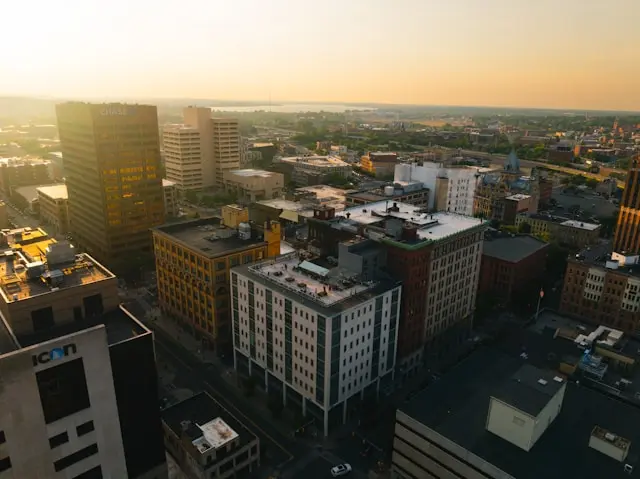
Syracuse sits at the edge of an unusual contradiction. The city's population has grown roughly 50% since 2010, reaching approximately 36,500 residents by the end of 2024. National production builders including Ivory Homes, Lennar, and D.R. Horton hold entitled land sufficient for an estimated 850 to 950 new single-family starts in 2026. Capital is available. Demand is sustained. And yet the rate at which houses are actually delivered has decoupled from the rate at which they could be delivered, because the construction workforce has not scaled with the land pipeline.
This is not a story about a housing shortage caused by demand exceeding supply. It is a story about production capacity constrained at the subcontractor tier. The builders who control Syracuse's master-planned communities possess the balance sheets to accelerate. The framing crews, licensed electricians, plumbers, and production superintendents required to convert land into finished homes do not exist in sufficient numbers. Each additional community phase launched without a corresponding expansion in skilled labour simply distributes the same fixed workforce more thinly across more job sites.
What follows is an analysis of how Syracuse's residential construction market arrived at this bottleneck, where the most acute talent gaps sit, what they cost in real terms, and what organisations operating in this market need to understand before they commit to their next phase of growth.
Syracuse's Growth Trajectory and the Infrastructure That Enables It
Syracuse's residential expansion did not happen by accident. It was enabled by a sequence of infrastructure investments that opened land previously inaccessible to development. The Legacy Parkway corridor provided the initial north-south transportation spine. The completion of the West Davis Corridor extension in late 2024 unlocked western Syracuse for higher-density residential development that transportation constraints had previously blocked.
The result is a city where 60% of active construction activity now concentrates west of 2000 West and State Route 108. This western district has become the primary theatre for national and regional builders competing for market share in Davis County's fastest-growing residential corridor.
Hill Air Force Base as the Demand Engine
The demand side of Syracuse's housing equation rests on a single anchor institution. Hill Air Force Base, located eight miles north in Clearfield, employs over 12,000 civilian and military personnel. Syracuse has established itself as the preferred bedroom community for higher-ranking officers and civilian engineers at the base. This is not speculative demand driven by population migration alone. It is institutional demand sustained by a federal employer with BRAC stability and ongoing F-35 programme expansion.
This demand profile matters for the talent conversation. It means Syracuse's housing market is less sensitive to the tech-sector employment volatility that affects Utah County markets like Lehi and Saratoga Springs. The buyers are steady. The pipeline is predictable. The constraint is not whether houses will sell. It is whether they can be built fast enough with the workforce available.
The School District Effect
Davis School District, the second-largest employer in Davis County with over 6,000 staff, acts as a secondary demand driver through facility siting decisions. The completion of the Sunset Junior High expansion in 2024 and ongoing elementary school construction create amenity anchors. Residential developers cluster around these anchor points because proximity to new schools is among the strongest predictors of lot absorption velocity in suburban Utah markets.
The compounding dynamic is clear. New infrastructure opens land. New schools create amenity value. Amenity value accelerates absorption. Absorption requires more construction workers. And the construction workers are not there. The system's inputs are scaling. Its human capacity is not.
The Subcontractor Bottleneck: Why Land Control Does Not Equal Delivery Capacity
The central analytical tension in Syracuse's construction market is this: the national builders who control the entitled land pipeline cannot accelerate production timelines because local subcontractor capacity has not expanded proportionally since 2019.
This is the observation that does not appear directly in any single data point but becomes visible when two facts are placed side by side. Ivory Homes, Lennar, and D.R. Horton collectively hold thousands of lots across active Syracuse communities. Their 10-K filings show Utah inventory growth. But their delivery growth has not kept pace, because delivery depends on a tier-2 workforce that these companies do not directly employ.
The framing crews, electrical contractors, HVAC installers, and finishing trades that convert a foundation into a certificate of occupancy are overwhelmingly organised as small firms and independent contractors. No single framing employer in the Syracuse area exceeds 50 employees. Electrical work is concentrated among a handful of Davis County-based firms including Whipple Service Champions and Sierra Electric. HVAC capacity runs through operators like SameDay Heating & Air, headquartered in Ogden with Syracuse operations.
An estimated 1,200 to 1,500 workers operate across Syracuse job sites at any given time. This number has remained largely static even as the land pipeline has grown. The result is a production ceiling that no amount of builder capital can raise without a corresponding expansion in human capacity.
For organisations considering executive hiring in the residential construction and real estate sector, this dynamic reframes the competitive question. The builders who win in Syracuse over the next two years will not be those with the most land. They will be those who can attract and retain the superintendent, project management, and trades talent necessary to convert land into revenue.
Where the Talent Gaps Are Most Acute
Construction employment in the Ogden-Clearfield MSA reached 28,400 in November 2024, representing a 4.1% year-over-year increase. Job postings for Construction Project Manager and Superintendent roles in Davis County rose 34% between the third quarter of 2023 and the third quarter of 2024, according to Lightcast job postings analytics. The demand signal is unambiguous.
But the aggregate figures mask role-specific shortages that are far more severe than the headline growth rate suggests.
Production Superintendents and Project Managers
The most acute shortage sits at the 5-to-10-year experience level for residential production project managers. A 2024 survey by the Associated General Contractors of Utah found that 68% of Northern Utah homebuilders reported critical project management vacancies exceeding 90 days. The historical fill time for these roles was 30 to 45 days.
A production superintendent in the Syracuse market oversees 15 to 25 simultaneous home builds across a master-planned community. This is not a role that can be filled by promoting a junior site manager. It requires years of experience managing concurrent production timelines, subcontractor scheduling, and municipal inspection sequences specific to Utah's regulatory environment. The knowledge is experiential. It cannot be trained in a classroom.
Utah's construction unemployment rate stood at 2.1% as of November 2024. At this level, the market is at full employment for experienced trades and management. Approximately 80 to 85% of qualified Senior Project Manager candidates in the Syracuse and Davis County market are not actively seeking new roles, according to LinkedIn Talent Solutions data from the fourth quarter of 2024. Only 15 to 20% are applying to posted vacancies.
This passive-to-active ratio is the number that should concern every hiring leader in this market. A conventional job posting will reach fewer than one in five qualified candidates. The other four must be found through direct recruitment.
Licensed Trades: Electricians, Plumbers, Estimators
Utah reports 2.8 job openings per unemployed construction trades worker, according to the Utah Department of Workforce Services. For licensed electricians and plumbers specifically, the ratio is even more compressed because licensing requirements create a multi-year qualification barrier that prevents rapid supply response.
Construction estimator postings in Davis County increased 47% year-over-year. The estimator role has become more critical as material cost volatility and tariff uncertainty on lumber and gypsum demand purchasing managers who can forecast and hedge effectively. A senior estimator in the Salt Lake Metro market commands $92,000 to $120,000 in base compensation, with Syracuse employers typically offering 92 to 95% of Salt Lake benchmarks, offset by lower cost of living.
The pipeline to replenish these roles is structurally inadequate. Utah's secondary career and technical education programmes produce approximately 1,200 construction trades graduates annually against 3,400 annual industry openings. The deficit has been accumulating for years, and the 2026 projected increase in housing starts will widen it further.
Compensation: What Roles Pay and Why the Gaps Matter
Syracuse-specific compensation data is not publicly disaggregated from the broader Salt Lake City Metropolitan Statistical Area. Syracuse employers generally offer 92 to 95% of Salt Lake base compensation, a discount that reflects lower living costs rather than lower role complexity. This discount, however, creates a vulnerability when competing against Salt Lake County and Utah County employers for the same candidates.
Senior Specialist and Manager Tiers
A Senior Project Manager in residential production commands $98,000 to $128,000 in base salary, plus 10 to 15% bonus potential. A Senior Construction Superintendent earns $85,000 to $115,000 base, supplemented by vehicle allowances of $600 to $800 monthly and performance bonuses. Senior Estimators fall in the $92,000 to $120,000 range.
These figures are competitive within Davis County. They are not competitive against Salt Lake County offers. Project managers willing to commute 45 to 60 minutes to Draper, Herriman, or South Jordan can capture 8 to 12% higher base compensation for identical roles. Salt Lake projects also tend toward higher-density urban infill, which offers stronger career trajectory for managers seeking mixed-use experience on their CV. The result is a gravitational pull that draws experienced talent southward out of the Davis County labour pool.
Executive and VP Compensation
At the VP of Construction or Operations level for a regional division, base compensation ranges from $165,000 to $215,000, plus 25 to 40% annual bonus and equity participation for publicly traded builders like Lennar and D.R. Horton. Directors of Land Development command $145,000 to $185,000 base with project completion bonuses layered on top.
The equity participation component is worth noting for search strategy. Public builder equity packages create a retention mechanism that makes passive VP-level candidates particularly difficult to dislodge. The counteroffer dynamics at this level are especially pronounced. A candidate holding unvested equity in a national builder requires a proposition that addresses total compensation over a multi-year horizon, not just an uplift in base salary.
The Boise Factor
An emerging competitive dynamic complicates Syracuse's talent position further. Boise, Idaho has begun attracting superintendent-level talent from the Wasatch Front by offering comparable wages with roughly 15% lower housing costs. According to reporting by the Idaho Statesman, Treasure Valley employers have been actively recruiting Utah construction professionals who can achieve meaningful affordability gains by relocating. This is not a hypothetical threat. It is a documented talent flow that adds a fourth geographic competitor to Syracuse's already crowded field.
For hiring leaders seeking to fill leadership roles in this environment, the competitive context spans four distinct markets: Salt Lake County offering higher pay, Utah County offering tech-corridor amenities and greater job mobility, Boise offering affordability arbitrage, and Davis County needing to articulate a compelling counter-narrative. This is a market where talent mapping across competing geographies is not optional. It is foundational to any credible search strategy.
The Water Constraint That Could Override Everything Else
Every talent and market dynamic described above operates within a physical constraint that most out-of-state observers underestimate. The Great Salt Lake's declining elevation has triggered legislative and municipal responses that directly limit Syracuse's development capacity.
Senate Bill 199, passed in the 2024 Utah General Session, mandates municipal water conservation targets. Syracuse City Council subsequently adopted Ordinance 2024-11, requiring a 20% reduction in per-capita culinary water use by 2030. The practical consequence for developers is immediate: impact fees for water rights and secondary irrigation infrastructure have escalated to $8,500 to $12,000 per lot, effective July 2025.
This fee escalation compresses margins most severely for production builders targeting entry-level price points between $400,000 and $500,000. At these price points, $12,000 in additional per-lot infrastructure cost represents a material erosion of profitability. Builders face a choice between absorbing the cost, raising prices into a rate-sensitive buyer market, or reducing scope and quality. None of these options are painless.
Rate Sensitivity in the Buyer Pool
Syracuse's buyer demographic amplifies the margin pressure. Seventy percent of transactions involve mortgages, compared to 55% in luxury markets like Park City. According to the Federal Reserve Bank of Kansas City, each 1% increase in mortgage rates reduces purchasing power by approximately $45,000 at Syracuse's median price point. A market where buyers are highly leveraged and highly rate-sensitive is a market where builders have limited ability to pass through cost increases.
The implication for talent strategy is direct. When margins compress, the temptation is to cut overhead by holding positions open longer, hiring less experienced candidates, or reducing management layers. This is precisely the wrong response in a market where subcontractor coordination is the binding constraint on delivery. A production superintendent vacancy does not save money. It stalls 15 to 25 home builds and delays the revenue they represent.
The Transportation Ceiling
A second physical constraint reinforces the first. The 2024 Traffic Volume Study indicates that 2000 West and State Route 108 will reach Level of Service F, effectively congestion failure, by 2027 at current buildout rates. Road widening is unfunded. If congestion triggers a moratorium on new development approvals in the western districts where 60% of activity is concentrated, the 2026 growth projections become aspirational rather than achievable.
This is the risk that transforms every talent discussion in this market. A moratorium would not eliminate the need for construction talent in Syracuse. But it would freeze hiring plans for an indeterminate period while approvals are suspended, creating exactly the kind of uncertainty that drives experienced professionals toward more stable markets. The builders who retain their senior teams through a potential pause will resume faster when approvals restart. The builders who lose talent will find the rehiring market even more competitive than the one they left.
What This Market Demands from a Hiring Strategy
The conventional approach to filling construction management roles in a suburban Utah market runs through job boards, local referral networks, and the occasional recruiter engagement when a role stays open past 90 days. In Syracuse's current conditions, this approach reaches a shrinking fraction of the relevant talent pool.
The mathematics are straightforward. With construction unemployment at 2.1% and 80 to 85% of qualified candidates in passive status, a posted vacancy reaches at best one in five potential hires. The other four are working, performing, and not looking. They will not see a job board listing. They will not respond to a LinkedIn InMail from an unknown recruiter. They are reachable only through direct, targeted approaches that demonstrate specific knowledge of their career situation, compensation expectations, and professional motivations.
The tenure data reinforces this. Average tenure for superintendents at national builders in the region is 4.2 years. This is low by general professional standards but relatively stable for construction management, where project-based work creates natural transition points. The implication is that the window to approach a superintendent is narrow and specific. Timing the approach to coincide with a project completion cycle requires market intelligence that generic search processes do not possess.
The Search Speed Premium
The 90-to-120-day fill times reported by Northern Utah builders for project management roles represent a direct production cost. A community with 20 active builds and no superintendent does not simply pause neatly. Subcontractor schedules slip. Inspection sequences break. Warranty callbacks accumulate. The cost of a prolonged vacancy at this level is measured not in recruiter fees but in delayed closings and degraded build quality.
Speed of search matters in a way it does not in most white-collar hiring markets. A builder who can fill a superintendent role in three weeks instead of three months gains a material production advantage over competitors drawing from the same subcontractor pool. The first builder to deploy a fully staffed management team on a new phase captures the best subcontractor availability. The last builder in gets the residual capacity and the longest timelines.
For organisations competing for construction leadership talent in the Wasatch Front market, where the candidate pool is small, predominantly passive, and subject to geographic competition from Salt Lake County, Utah County, and Boise, KiTalent's approach to identifying and engaging candidates who are not visible through conventional channels is designed for precisely this kind of search. Interview-ready candidates delivered within 7 to 10 days, sourced through AI-powered talent mapping that reaches the 80% of qualified professionals who will never respond to a job posting, with a pay-per-interview model that eliminates the upfront retainer risk that makes search engagements difficult to justify for regional operations budgets.
The Market That 2026 Will Test
Syracuse's residential construction market entering 2026 is defined by a paradox. The growth conditions are favourable. Rate cuts are anticipated. Entitled land is available. Institutional demand from Hill Air Force Base remains stable. The Kem C. Gardner Policy Institute projects Davis County single-family permits to increase 8 to 12% over 2025 baseline levels.
But the capacity to execute on these conditions is constrained at every tier. Water impact fees compress margins. Transportation infrastructure approaches failure. The CTE pipeline produces one-third the graduates the industry needs. And the senior professionals who coordinate the entire production system are in full employment, largely passive, and being courted simultaneously by four competing geographic markets.
The builders who will outperform in this environment are not those with the most land or the most capital. They are those who solved their talent problem before the next phase launched. The Syracuse Town Center mixed-use redevelopment along 2000 West, introducing vertical residential-over-retail product not previously present in this market, will demand management talent with skills that pure suburban single-family production has not required. The "surban" density model creates new role specifications that further narrow the available candidate pool.
For hiring executives responsible for staffing Syracuse's next phase of growth, the question is not whether talent is available. It is whether your organisation can reach it before your competitors do, through a search methodology built for markets where conventional hiring fails. To discuss how KiTalent approaches executive and senior specialist search in residential construction markets with these characteristics, start a conversation with our team about your specific requirements.
Frequently Asked Questions
What is the average salary for a residential construction project manager in Syracuse, Utah?
Senior Project Managers in residential production in the Syracuse and Davis County market earn $98,000 to $128,000 in base salary, plus 10 to 15% bonus potential. Syracuse employers typically pay 92 to 95% of Salt Lake City metro benchmarks, reflecting lower local living costs. At the VP of Construction or Operations level, total compensation reaches $165,000 to $215,000 base plus 25 to 40% annual bonus, with equity participation available at publicly traded builders. These figures are competitive within Davis County but trail Salt Lake County roles by 8 to 12%, creating a persistent talent pull southward.
Why is it so hard to hire construction superintendents in the Syracuse area?
Three factors converge. Utah's construction unemployment rate is 2.1%, indicating full employment among experienced professionals. Approximately 80 to 85% of qualified superintendent candidates are passive and not responding to posted vacancies. And Syracuse competes for the same talent pool against Salt Lake County, Utah County, and increasingly Boise, Idaho, all of which offer competing advantages in compensation, career trajectory, or cost of living. A firm relying on job postings alone is reaching fewer than one in five viable candidates. Direct headhunting methods are essential to access the remaining 80%.
How does the water crisis affect Syracuse construction development?
The Great Salt Lake's declining elevation has triggered Senate Bill 199, mandating municipal water conservation. Syracuse adopted Ordinance 2024-11, requiring 20% reduction in per-capita culinary water use by 2030. Developers now face impact fees of $8,500 to $12,000 per lot for water rights and irrigation infrastructure, compressing margins most severely on entry-level homes priced between $400,000 and $500,000. This does not halt development. But it raises the cost threshold and intensifies the need for experienced purchasing and estimating managers who can protect margins under tighter conditions.
What construction roles are most in demand in Davis County, Utah?
The most acute shortages centre on three role categories. Production superintendents and project managers at the 5-to-10-year experience level, where 68% of Northern Utah builders report vacancies exceeding 90 days. Licensed electricians and plumbers, where Utah reports 2.8 job openings per unemployed trades worker. And construction estimators, where job postings in Davis County increased 47% year-over-year. The CTE pipeline produces approximately 1,200 graduates annually against 3,400 industry openings, ensuring these shortages persist into 2027 and beyond.
How does Syracuse compete with Salt Lake City and Boise for construction talent?
Syracuse's value proposition for construction professionals centres on shorter commutes, lower housing costs relative to Salt Lake County, and proximity to Hill Air Force Base's stable employment anchor. The challenge is that Salt Lake County roles pay 8 to 12% more and offer more complex project types. Utah County offers Silicon Slopes amenity access and 40% higher construction activity. Boise offers comparable wages with 15% lower housing costs. Syracuse employers must compete on total proposition, not just base salary, which makes understanding how to position a role against geographic competitors essential to successful hiring at the senior level.
What is driving housing demand in Syracuse, Utah in 2026?
Three primary demand drivers sustain Syracuse's market. Hill Air Force Base, with over 12,000 employees and ongoing F-35 programme expansion, provides the institutional demand base. The West Davis Corridor completion in late 2024 has improved western Syracuse accessibility, unlocking new development capacity. And Davis School District school construction creates amenity anchors that accelerate lot absorption. The Kem C. Gardner Policy Institute projects 850 to 950 new single-family starts in Syracuse for 2026, assuming mortgage rates stabilise below 6.5%.