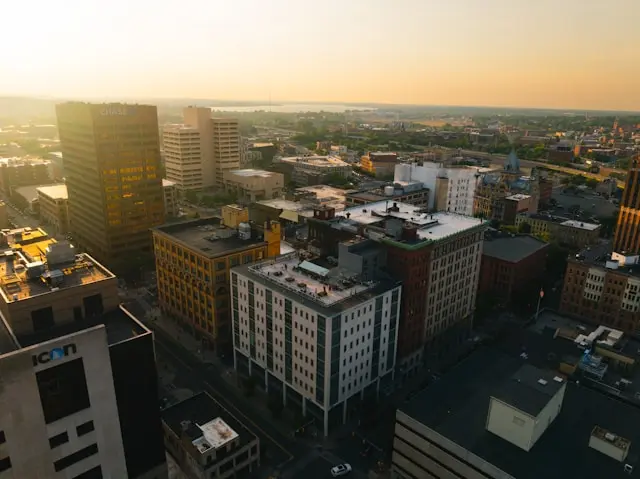
Syracuse Has the Cheapest Industrial Land on the Wasatch Front. It Cannot Find the People to Work on It
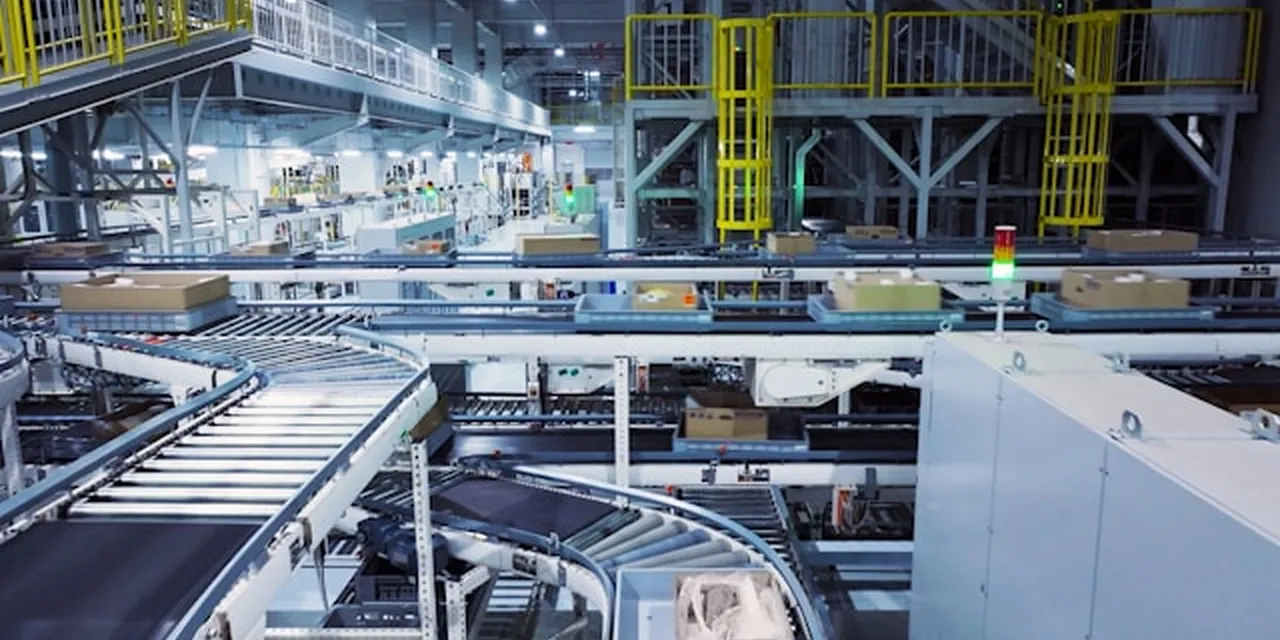
Syracuse, Utah, delivered 285,000 square feet of new industrial space in 2024. Regional 3PL providers and contractors leased 68% of that space within six months. Two more speculative buildings totalling 400,000 square feet are under construction for mid-2026 delivery. By every measure of physical capacity, this small city on the northern edge of Davis County is becoming a logistics node that developers and site selectors take seriously.
The workforce has not kept pace. Logistics unemployment in the immediate area sat at 2.1% through the second half of 2024. That figure is not low. It is functionally zero. At that rate, every qualified warehouse manager, maintenance technician, and CDL driver in the Syracuse labour pool is already employed. The speculative buildings going up along 2000 West will need staff. The talent to fill them does not currently exist in sufficient numbers within commuting distance.
This is the core tension shaping Syracuse's industrial future. The city has land, highway access, and developer momentum. It does not have the labour supply those assets require. What follows is a ground-level analysis of the forces driving that gap, the specific roles most affected, and what organisations expanding into or operating within this market need to understand before they commit to their next hire or their next lease.
Syracuse's Industrial Transition: From Bedroom Community to Freight Corridor
For most of its modern history, Syracuse functioned as a residential suburb. Families moved to Davis County for affordable housing and commuted south to Salt Lake City or north to Ogden for work. The city's general plan through the 2010s reflected that identity: residential zoning dominated, industrial parcels were limited, and the economic base depended on retail, schools, and local services.
Two changes rewrote that trajectory. The first was the completion of the West Davis Corridor (State Route 177) in November 2023. This $750 million UDOT investment created a second north-south freight corridor parallel to I-15, running directly through Syracuse. The second was the availability of developable industrial land along the 2000 West and 2700 West corridors at prices between $4.50 and $6.00 per square foot for entitled parcels. According to CBRE's 2024 Land Availability Study, these are among the lowest industrial land costs anywhere on the Wasatch Front north of Salt Lake City.
The combination attracted exactly the kind of speculative development now reshaping the city's employment base. The Syracuse Business Park near the Antelope Drive/I-15 interchange has drawn regional contractors and third-party logistics operators. The 2700 West corridor, further west toward Lake View, is designated for future logistics and light industrial use, though it remains largely undeveloped pending water and sewer infrastructure extensions.
What Syracuse Is and What It Is Not
A critical distinction separates Syracuse from the established industrial clusters nearby. The Freeport Center in neighbouring Clearfield spans 680 acres and hosts more than 70 companies, including Lifetime Products with its 1,500-person workforce. West Haven and Salt Lake County house major national distribution centres for Amazon, FedEx Ground, and Home Depot. Syracuse has neither the scale nor the anchor tenancy of those locations.
Syracuse's industrial base consists of mid-scale regional operators. Its speculative stock serves last-mile distribution and regional supply chain functions rather than national fulfilment. This matters for talent strategy because the roles these facilities create are not entry-level warehouse positions. They are skilled technical, supervisory, and management roles that require experience with warehouse management systems, cold chain protocols, and automated equipment. The distinction between building square footage and building a workforce capable of running it is where the real challenge begins.
The Labour Equation: 2.1% Unemployment and What It Means for Every Open Role
A logistics unemployment rate of 2.1% does not simply mean hiring is competitive. It means the conventional hiring playbook fails before it starts. At that level, every posting for a warehouse operations manager or industrial maintenance technician is competing not against other postings but against the current employer of the person you need. The candidate is not looking. The candidate is not browsing job boards. The candidate is solving a problem for someone else right now and would need a compelling reason to stop.
The Ogden-Clearfield MSA posted 1,847 active job openings in Transportation and Warehousing in December 2024. The average time-to-fill for skilled technical roles was 47 days, compared to 32 days nationally. That 15-day gap is not an inconvenience. For a distribution facility operating on just-in-time delivery schedules, it represents weeks of reduced throughput, overtime costs for existing staff, and missed service-level agreements with clients.
The Utah Department of Workforce Services projects 12.4% growth in Transportation, Warehousing, and Utilities employment for the MSA between 2024 and 2026, adding approximately 2,800 jobs. Syracuse is expected to capture 15 to 20% of that growth given its available land pipeline. That means 420 to 560 new positions in a market where the existing talent pool is already exhausted.
This is the arithmetic that should concern every hiring leader with a facility or a planned facility in Davis County. Physical capacity is expanding. The workforce is not expanding at the same rate. The gap will widen through 2026 unless employers change how they find and attract talent.
The Roles That Stall: Where Syracuse Searches Break Down
Not every role is equally difficult. Entry-level warehouse positions fill through wage competition and local advertising. The roles that stall are the ones requiring certification, experience, or both.
CDL Class A Drivers
Lifetime Products, operating at the Clearfield/Syracuse border, maintained continuous recruitment for CDL drivers throughout 2024. Based on archived job posting data reviewed by Indeed Hiring Lab, positions remained open for more than 120 days. The company offered $5,000 retention bonuses and relocation assistance for out-of-state drivers. These are not the actions of an employer in a balanced market. They are the actions of an employer that has exhausted the local candidate pool and is now paying a premium to import talent from other states.
The CDL shortage is not unique to Syracuse. It is a national condition. But in a market where 75% of qualified candidates for senior logistics roles are passive and not responding to postings, the compounding effect is severe. The driver you need is driving for someone else 15 miles away in Ogden. They are not reading your job ad.
Industrial Maintenance Technicians
A regional cold storage operator near the Syracuse/Clearfield border, identified in the Davis County Economic Development Strategic Plan but not named in public filings, experienced a six-month search failure for a Lead Maintenance Technician in 2024. The outcome is instructive. The company restructured the role into two separate positions, splitting electrical and mechanical responsibilities, and paid a 22% salary premium above initial budget to fill them.
That 22% premium is the market correcting in real time. It tells every other employer in the corridor that their budgeted compensation for maintenance roles is already below what the market will require. Senior maintenance technicians in this area carry average tenure of 7.2 years at their current employers. They are not job seekers. Among those who are actively looking, many lack the PLC (Programmable Logic Controller) certifications that modern automated facilities require. The active candidate pool is not just small. It is qualitatively weaker than the passive pool.
The Quality Gap in Active vs Passive Candidates
This dynamic deserves its own emphasis because it shapes every search in this market. The most qualified maintenance technicians, warehouse operations managers, and supply chain directors are employed, tenured, and not visible on any job board. The candidates who are visible, who are actively applying, often lack critical certifications or have shorter tenure histories that signal instability.
The cost of hiring the wrong person at the management level is measured not in recruitment fees but in operational disruption, team turnover, and lost client confidence. In a market this tight, the temptation to hire the best available active candidate rather than the best candidate, period, is enormous. It is also the most expensive decision a hiring leader can make.
Compensation: Where Syracuse Wins, Where It Loses, and Where the Gap Is Moving
Syracuse and Davis County occupy an unusual position in the Wasatch Front compensation hierarchy. They pay less than Salt Lake City for equivalent roles. They compensate for this with lower housing costs. The question is whether that trade-off still works as housing prices rise faster than wages.
A Warehouse Operations Manager in the Ogden-Clearfield MSA earns $72,000 to $88,000. The equivalent role in Salt Lake City commands $78,000 to over $90,000, a 12 to 18% premium. For Supply Chain Managers, Davis County salaries range from $85,000 to $105,000 against Salt Lake City's higher ceiling. At the executive level, a VP of Operations at a regional 3PL commands $165,000 to $210,000 plus equity participation, while a COO at a mid-market logistics firm can reach $195,000 to $250,000 according to market benchmarking data from regional search practices.
The compensating factor has been housing. Syracuse's median home price of $425,000 versus Salt Lake County's $535,000 creates a cost-of-living advantage that matters to mid-career professionals with families. A Warehouse Operations Manager earning $75,000 in Syracuse achieves roughly the same purchasing power as one earning $85,000 in Salt Lake City once mortgage costs are factored in.
But that advantage is eroding. Syracuse home prices increased at 6.5% annually through 2024 while logistics wages grew at 3.2%. The gap between housing cost growth and wage growth is 3.3 percentage points per year. Compounded over three to five years, this eliminates the affordability arbitrage that currently attracts talent from the Salt Lake City metro. The negotiation dynamics for senior candidates in this market are shifting as a result. Employers who could once recruit on lifestyle and affordability now need to compete on total compensation as well.
Employers in Syracuse already pay an 8 to 12% premium above the Utah state median for logistics roles. This premium exists specifically to compensate for the absence of public transportation infrastructure. Every employee must drive to work. That adds fuel, vehicle maintenance, and time costs that candidates in Salt Lake City or Ogden can partially avoid through transit access.
The Infrastructure Paradox: A $750 Million Highway That Does Not Solve the Last Mile
Here is the analytical claim that sits at the centre of Syracuse's industrial challenge and is not stated in any single data source: the West Davis Corridor investment has accelerated real estate development faster than the supporting infrastructure, the workforce, or the regulatory environment can absorb it. Capital moved faster than everything else. The highway is built. The speculative buildings are rising. The water connections, the interchange capacity, the housing for workers, and the workers themselves are all lagging behind.
The West Davis Corridor is projected to handle 25,000 to 30,000 vehicles per day through the Syracuse section by 2026, including heavy truck traffic. This positions Syracuse as a genuine alternative to the congested I-15/I-84 interchange in Riverdale for north-south freight movement. The investment case for industrial development is real.
But the primary connection between the West Davis Corridor and Syracuse's industrial zones runs through the Antelope Drive/I-15 interchange. UDOT has rated this interchange at Level of Service D, meaning it is approaching operational failure during peak hours. No major reconstruction is funded until 2028. A logistics operator running just-in-time delivery from a facility on 2000 West faces the absurdity of a modern freight corridor that funnels into a bottleneck at the exact point where time-sensitive goods need to reach I-15.
This is not a trivial planning detail. It is a constraint that affects recruitment. A distribution centre manager evaluating two offers, one in Syracuse and one in West Haven where I-15 access is less constrained, will factor delivery reliability into their assessment of which facility will succeed. The best operations leaders evaluate the infrastructure around the role, not just the role itself.
Water: The Constraint Nobody Outside Utah Thinks About
Syracuse implemented a temporary moratorium on new industrial water connections for users exceeding 50,000 gallons per day in August 2024. The Weber Basin Water Conservancy District has indicated that new industrial entitlements may face 18 to 24 month delays for water connection approvals through 2026.
This eliminates an entire category of industrial tenant from the Syracuse market. Food processing, heavy manufacturing, and any operation requiring high-volume water use cannot commit to a Syracuse facility without a two-year infrastructure timeline baked into their planning. It also means the industrial growth that Syracuse will capture through 2026 will be concentrated in lower-water-use categories: e-commerce distribution, light assembly, and dry goods logistics. The talent requirements for these categories are specific: WMS proficiency, automation maintenance, and cold chain handling for temperature-controlled goods that do not require water-intensive processing.
What This Means for Hiring Leaders in 2026
The organisations expanding into Syracuse face a specific and unusual recruitment challenge. They are entering a market where the physical infrastructure is new, the talent pool is pre-existing but fully employed, and the traditional tools for finding candidates do not reach the people they need.
Posting a role on Indeed or LinkedIn in this market reaches, at best, the 25% of qualified candidates who are actively looking. According to data from the Supply Chain Management Association's Utah Chapter and Robert Half's 2025 Salary Guide, approximately 75% of qualified candidates for director-level supply chain roles on the Wasatch Front are employed and not engaging with job postings. For senior maintenance technicians, the ratio is similar, compounded by a quality gap where active seekers frequently lack the technical certifications modern automated facilities require.
A conventional search in this market encounters three compounding barriers. First, the candidate is employed and not visible. Second, the candidate's current employer is aware of the scarcity and has structured retention packages, as Lifetime Products has done with $5,000 bonuses, to prevent movement. Third, the candidate evaluating Syracuse must weigh a market where housing affordability is declining and public transit does not exist against alternatives in Salt Lake City or Ogden that offer higher base compensation and better urban amenities.
Each of these barriers requires a different response. The first requires proactive identification and direct approach of passive candidates rather than job advertising. The second requires understanding what triggers movement in tenured professionals and structuring offers that address career trajectory, not just salary. The third requires honest market intelligence about what Syracuse offers and what it does not, so the candidate's expectations match reality before the first interview rather than collapsing at the offer stage.
How KiTalent Approaches Markets Like Syracuse
Syracuse is not a market where volume recruitment or contingent search models deliver results. The talent pool is too small, too passive, and too embedded in existing employers for reactive methods to work. This is a market where executive search methodology built around direct candidate identification produces outcomes that job advertising cannot.
KiTalent's approach begins with talent mapping across the full Wasatch Front corridor, identifying qualified professionals at Lifetime Products, at the Freeport Center's 70-plus tenant companies, at Salt Lake City logistics operations, and at regional 3PL providers in Ogden and West Haven. The AI-enhanced identification process reaches the 75% of qualified candidates who will never see a job posting, then builds a pipeline of professionals whose skills, certifications, and career motivations align with what the hiring organisation actually needs.
KiTalent delivers interview-ready executive candidates within 7 to 10 days. Clients pay per interview, not through upfront retainers, which eliminates financial risk on searches where the market may take longer to yield the right candidate. The firm's 96% one-year retention rate reflects a matching methodology designed to keep candidates in their roles, which matters acutely in a market where replacement searches carry 47-day average timelines and 22% salary premiums.
For organisations building or staffing industrial operations in Davis County, where the candidates you need are employed 15 miles away and not considering a move until someone gives them a reason to, start a conversation with our executive search team about how we identify and attract talent in constrained logistics markets.
Frequently Asked Questions
What is the industrial vacancy rate in Syracuse, Utah?
The North Davis County submarket, which includes Syracuse, recorded an industrial vacancy rate of 4.1% in Q3 2024, well below the historical regional average of 6.2%. New speculative construction delivered 285,000 square feet in 2024, with 68% of Class B industrial space leased within six months. An additional 400,000 to 500,000 square feet is under construction for 2026 delivery. Syracuse's position along the West Davis Corridor and proximity to the I-15 Antelope Drive interchange continues to attract regional logistics operators and third-party logistics providers.
How much do logistics managers earn in Davis County, Utah?
Warehouse Operations Managers in the Ogden-Clearfield MSA earn $72,000 to $88,000. Supply Chain Managers earn $85,000 to $105,000. At the executive level, a VP of Operations at a regional 3PL commands $165,000 to $210,000 plus equity, while a COO at a mid-market logistics firm can reach $195,000 to $250,000. Davis County employers pay an 8 to 12% premium above the Utah state median for logistics roles to offset the absence of public transportation. Compensation benchmarking for logistics leadership roles is essential before entering this market.
Why is it hard to hire CDL drivers in northern Utah?
CDL Class A driver recruitment in northern Utah faces a supply crisis. Logistics unemployment in the Syracuse area is 2.1%, which represents functional full employment. Major employers like Lifetime Products have maintained continuous driver recruitment with positions open for over 120 days and have offered $5,000 retention bonuses and relocation assistance. The local candidate pool is exhausted. Employers are now recruiting from out of state to fill roles that would have attracted local applicants three years ago.
What infrastructure challenges affect Syracuse industrial development?
Syracuse faces three infrastructure constraints. First, the Antelope Drive/I-15 interchange operates at Level of Service D during peak hours, with no reconstruction funded until 2028. Second, the city imposed a temporary moratorium on new industrial water connections for users exceeding 50,000 gallons per day in 2024. Third, Davis County's non-attainment status for particulate matter adds 6 to 9 months to industrial development permitting timelines through the Utah Department of Environmental Quality.
How can companies find warehouse and logistics talent in Syracuse, Utah?
With 75% of qualified senior logistics candidates on the Wasatch Front employed and not engaging with job postings, conventional recruitment methods reach only a fraction of the available talent. Direct headhunting approaches that identify and engage passive candidates produce materially better outcomes. KiTalent's AI-enhanced talent mapping identifies qualified professionals across the full Wasatch Front corridor, from Salt Lake City to Ogden, and delivers interview-ready candidates within 7 to 10 days with a pay-per-interview model that eliminates upfront retainer risk.
What is the West Davis Corridor and how does it affect Syracuse?
The West Davis Corridor (State Route 177) is a $750 million UDOT highway project completed in November 2023. It runs parallel to I-15 through Syracuse, creating a second north-south freight corridor. By 2026, it is projected to carry 25,000 to 30,000 vehicles per day including heavy truck traffic. The corridor has repositioned Syracuse as a viable alternative to congested interchanges further north and has been the primary catalyst for the city's recent speculative industrial development along the 2000 West corridor.