Tucson's Copper Corridor Has the Metal, the Investment, and the Technology. It Does Not Have the People.
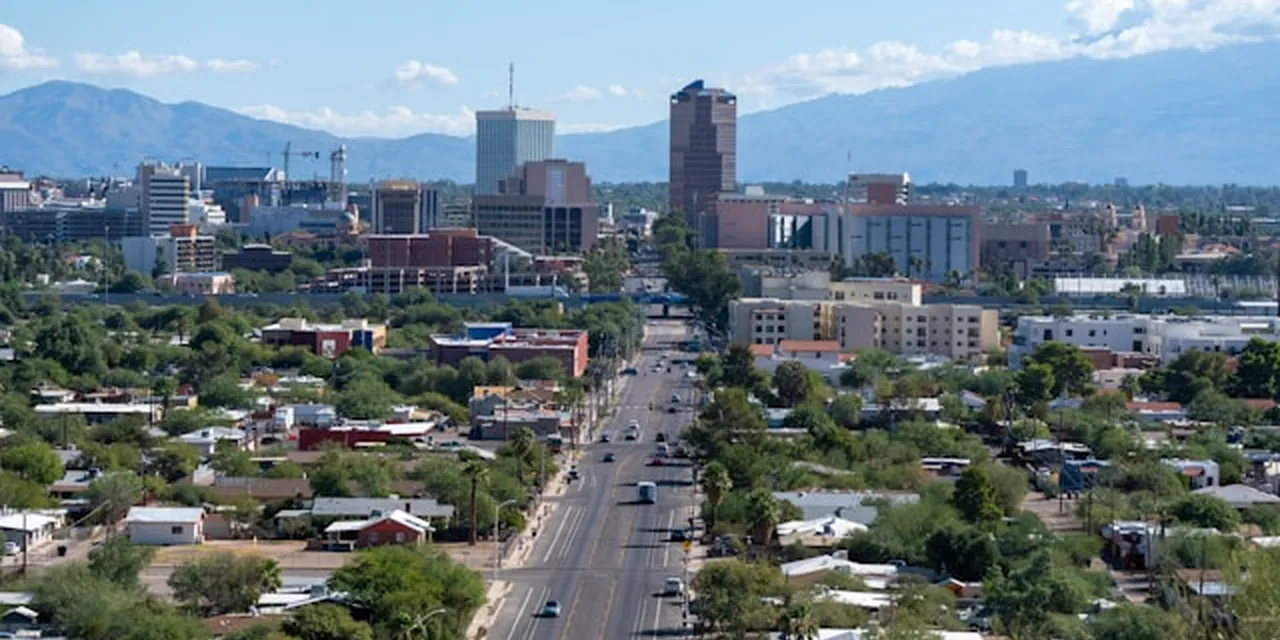
Arizona produces roughly 74% of America's domestic copper. The southern half of the state, anchored by Tucson's engineering services cluster and the operational footprint stretching from Sierrita through the historic Copper Triangle, is where that production concentrates. A projected 4.5 million metric ton global copper deficit by 2030, driven by data centre electrification and EV grid build-out, should position this corridor as one of the most strategically valuable talent markets in the country. The capital is present. The commodity thesis is strong. The ore is in the ground.
The talent is not. Tucson's mining sector in 2026 faces a convergence of forces that no amount of capital can resolve quickly: a workforce with a median age of 48.5, a university pipeline producing fewer than 50 mining engineers per year, senior specialist roles sitting vacant for four to five months, and a competitive geography that loses engineers to Denver, Phoenix, and Austin at rates that Tucson's three or four major employers struggle to counter. The gap between what the copper transition demands and what this labour market can supply is widening at precisely the seniority levels where it matters most.
What follows is a ground-level analysis of the forces reshaping Tucson's mining and natural resources talent market, where the hiring pressure is most acute, what compensation now looks like across the engineering and executive tracks, and what organisations operating in this corridor must do differently to secure the leadership talent that the next decade of copper production requires.
The Market Structure Behind Tucson's Mining Talent Pressure
Tucson is not a mining company headquarters city. Freeport-McMoRan, the largest copper producer in North America, maintains its global headquarters in Phoenix. Caterpillar's Global Mining division sits in Oak Creek, Wisconsin. What Tucson provides is the operational and engineering layer: the site-level expertise, the validation infrastructure, and the consulting density that keeps Southern Arizona's porphyry copper deposits productive.
This distinction matters for anyone trying to hire here. The executive talent pool in Tucson is deep in technical specialisation but thin in breadth. The metro hosts approximately 3,200 to 3,800 direct mining industry employees, concentrated across a small number of anchor employers. Freeport-McMoRan's Sierrita complex employs roughly 1,200. Caterpillar's Tucson Proving Ground and adjacent technical centre account for around 950. Hudbay Minerals, ramping Copper World toward full operation, is approaching 600. Asarco's regional administrative functions bring the total higher, but the core insight remains: four employers account for the overwhelming majority of the technical talent base in this market.
That concentration creates fragility. When one employer opens a critical search, the viable candidate pool is a known, finite group. The consulting cluster, including SRK Consulting, WSP USA, and several independent geotechnical firms, adds depth in exploration and feasibility services but cannot absorb demand spikes for operational leadership. A VP Operations search at one major site is, in effect, a search across a pool where every qualified candidate is already known to every other employer. This is not a market where volume recruitment strategies produce results. It is a market where direct identification of passive candidates is not a preference but a necessity.
Three Roles That Define the Hiring Crisis
Not all roles in Tucson's mining sector are equally difficult to fill. General civil engineering positions fill in 45 to 60 days. The crisis sits in three specific technical tracks where demand has outpaced supply, and where the supply pipeline cannot catch up within any normal planning horizon.
Senior Geotechnical Engineers: 120 to 150 Days to Fill
Senior geotechnical engineers with pit slope stability expertise represent the most persistently difficult search in Tucson's mining market. Roles requiring ten or more years of experience with slope stability modelling, proficiency in software platforms like FLAC and SLIDE, and direct knowledge of weak rock masses characteristic of Arizona's porphyry deposits now sit vacant for 120 to 150 days on average. That is roughly triple the duration of a standard engineering hire in the same metro.
The problem is not that these professionals do not exist. It is that approximately 85 to 90% of them are passively employed, according to the Mining Industry Human Resources Council's labour market data. They are working. They are not looking. And they are being actively recruited by Denver and Vancouver firms offering 12 to 18% base salary premiums alongside remote work flexibility that site-based Tucson roles cannot match. A job board posting will not reach them. A retained search with direct sourcing capability will.
Mining Automation and AI Systems Engineers: Six to Nine Months
The second critical gap sits at the intersection of mechanical systems engineering and machine learning implementation. These are the engineers who build, validate, and deploy autonomous haul truck systems, autonomous drilling rigs, and the sensor arrays that make them function in open-pit environments. Caterpillar's Tucson Proving Ground is one of the primary validation sites for CAT Command autonomous haulage. Komatsu's Modular Mining Systems also operates from Tucson. Both require engineers with a hybrid profile that fewer than 2% of candidates in the active job market possess.
Search cycles for this profile run six to nine months. Recruitment occurs almost exclusively through direct sourcing of employed personnel at the two Tucson OEMs, at autonomous vehicle technology firms in Phoenix and Silicon Valley, or at academic robotics labs. Austin, Texas competes aggressively for the same profile, offering equity participation in technology startups that established mining OEMs rarely match. The compensation gap is not always about base salary. It is about the shape of the total package and the career trajectory a candidate perceives.
Senior Metallurgists with SX-EW Expertise: Vacancy Durations Up 40%
Solvent extraction-electrowinning is the dominant hydrometallurgical process for copper recovery in Arizona's oxide ore bodies. Senior metallurgists who can optimise SX-EW circuits are essential for both Sierrita's ongoing operations and Copper World's ramp-up. Yet vacancy durations for these roles have increased 40% year over year since 2023, according to the Society for Mining, Metallurgy & Exploration's salary survey data.
Reno, Nevada is the primary competitor. Nevada's combination of no state income tax and a comparable cost-of-living profile creates a $15,000 to $20,000 effective compensation gap favouring Nevada roles. For a senior metallurgist earning $125,000 to $150,000 in base salary, that gap is material. It does not require a dramatic lifestyle change to capture it. It requires a willingness to move two states west, to a market with more employers and more upward mobility.
The Demographic Time Bomb Under Every Hire
The three role-specific shortages described above are severe. But they are symptoms of a deeper structural problem that makes every hire in this market harder than it should be.
Arizona's mining workforce has a median age of 48.5 years. Nearly a quarter of the workforce, 23%, is eligible for retirement within five years. The University of Arizona's Department of Mining and Geological Engineering, one of only three ABET-accredited mining programmes west of the Mississippi, graduates approximately 35 to 45 bachelor's students and 15 to 20 master's and doctoral students annually. That is 50 to 65 new graduates per year entering a state that will lose hundreds of experienced professionals to retirement over the same period.
The arithmetic is unforgiving. Senior roles in geotechnical engineering, metallurgy, and mine management require 10 to 15 years of experience. A graduate entering the field in 2026 will not be ready for a senior specialist position until the mid-2030s. The professionals retiring between now and 2031 cannot be replaced by new graduates. They can only be replaced by mid-career professionals recruited from other employers, other states, or other countries.
This is the dynamic that makes Tucson's talent pipeline challenge qualitatively different from a standard hiring shortage. It is not a temporary mismatch between supply and demand that market wages will correct. It is a generational gap. The knowledge leaving this workforce over the next five years took decades to accumulate. No compensation premium, however generous, can compress that timeline.
The Original Synthesis: Why Tucson Is Stockpiling Engineers for Projects That May Never Break Ground
The most consequential dynamic in Tucson's mining talent market is not captured in any single data point. It emerges when two apparently contradictory facts are placed side by side.
Fact one: Tucson's mining engineering firms report full utilisation and 7% year-over-year wage inflation. Fact two: Southern Arizona has zero permitted greenfield copper projects moving to construction in 2026. Hudbay's Copper World Phase II remains subject to water rights litigation and tailings storage approvals. The Resolution Copper project in Superior, one of the world's largest undeveloped copper deposits, remains stalled following the withdrawal of Oak Flat from mining access. The Rosemont site's water supply remains contested in federal court.
The capital is committed. The feasibility studies are complete. The engineering firms are billing. But no new mine is being built. What is actually happening is that Tucson's mining sector is consuming engineering talent at expanding rates to advance projects through regulatory processes that may never conclude favourably. The workforce is growing not because production is expanding but because the permitting environment demands more environmental assessments, more hydrological modelling, more NEPA documentation, and more legal support than at any previous point in Arizona's mining history.
This creates a talent market that behaves like a boom without delivering the economic output of one. Engineers are scarce and expensive. Consulting firms are at capacity. But the scarcity is driven by process, not production. For hiring leaders, this means the competitive intensity for senior specialists will persist regardless of whether copper prices rise or fall in the near term. The demand is regulatory, not cyclical.
Compensation Realities Across the Engineering and Executive Tracks
Understanding what roles pay in this market is essential for any organisation trying to compete for talent here. The data below reflects 2024 survey benchmarks with adjustments for the wage inflation observed through 2025.
Along the mining engineering track, a senior specialist or principal engineer at the individual contributor level with 10 to 15 years of experience commands $135,000 to $165,000 in base salary and $155,000 to $195,000 in total compensation including bonuses. At the VP Operations or Mine General Manager level, with P&L responsibility for a site of 500 or more employees, base salary ranges from $280,000 to $380,000, with total compensation reaching $400,000 to $650,000 when long-term incentives are included.
On the metallurgical and processing track, senior metallurgists and process managers earn $125,000 to $150,000 in base salary and $145,000 to $175,000 in total compensation. VP Processing or Chief Metallurgist roles command $220,000 to $290,000 in base salary and $300,000 to $450,000 in total compensation.
The automation and technology track reflects the scarcity premium most clearly. Senior automation engineers earn $140,000 to $170,000 in base salary, competitive with technology sector benchmarks rather than traditional mining pay scales. Directors of Autonomous Systems command $250,000 to $320,000 in base salary, often with equity or equity-equivalent considerations that mining companies have historically been reluctant to offer. For organisations competing for senior technology and AI talent who could just as easily work in autonomous vehicles, defence robotics, or industrial automation outside mining, the total package must be structured to compete with those alternatives.
The critical insight for hiring leaders considering this market is that compensation benchmarking against other mining employers misses the real competition. The automation engineer you need is not comparing your offer to Rio Tinto. They are comparing it to Waymo, to Joby Aviation, to a Series B autonomy startup in Austin offering 0.3% equity. The metallurgist comparing Tucson to Reno is not comparing mining companies. They are comparing after-tax income in Arizona versus Nevada. The competitive set is broader than the sector.
Structural Risks That Shape Every Search
Three external forces constrain this market in ways that no individual employer can resolve alone, but every hiring leader must account for.
Water Rights and Permitting Uncertainty
Tucson operates within the Tucson Active Management Area under Arizona's Groundwater Management Act. Mining operations must demonstrate assured water supply through renewable sources or Central Arizona Project allocations. The Copper World project's water rights remain in federal litigation. Resolution Copper remains blocked. This permitting environment does not merely slow project timelines. It freezes the economic impact projections that justify workforce expansion. According to estimates cited in federal environmental impact statements, the Rosemont and Copper World projects together represent $1.2 billion in projected regional economic impact that remains unrealised.
For talent acquisition, the implication is that Tucson's mining workforce lives with chronic uncertainty about which projects will proceed and which will not. Senior professionals making career decisions weigh this uncertainty against the relative stability of established operations in Nevada, Utah, or British Columbia. Recruiting into uncertainty requires a different conversation than recruiting into a guaranteed ramp-up.
The Geography-Compensation Disconnect
Tucson's cost-of-living index sits at 97.3, slightly below the national average. On paper, this should be a recruitment advantage. In practice, mining employers report higher turnover to Denver and Phoenix than to higher-cost cities like Seattle or Toronto. The reason is structural. Tucson hosts three or four major mining employers. Denver hosts dozens. A mining engineer in Denver who becomes dissatisfied with their current employer can change jobs without changing cities, without uprooting a family, and without interrupting a spouse's career. A mining engineer in Tucson who wants to leave Freeport-McMoRan's Sierrita operation has, at most, two or three local alternatives.
Career trajectory density, the number of plausible next moves within commuting distance, matters more to mid-career professionals than cost-of-living savings. Tucson's thin employer base creates a ceiling on career optionality that no salary adjustment can fully offset. This is the structural reason that counteroffers in this market have limited long-term effectiveness. If the underlying constraint is optionality rather than compensation, a 10% raise postpones the departure without addressing its cause.
The Retirement Wave Meets a Shallow Pipeline
The 23% retirement eligibility figure cited earlier translates into concrete numbers. If Tucson's mining sector employs 3,500 professionals directly, roughly 800 are within five years of retirement. The university pipeline delivers 50 to 65 new graduates annually. Even if every graduate stayed in Arizona, which they do not, the replacement rate covers perhaps 40% of departures. The remaining 60% must come from lateral hires, relocations, or international recruitment.
For organisations filling C-level and VP-level mining positions, the pipeline reality is starker still. A VP Operations candidate needs 20 or more years of progressive experience. There is no academic shortcut. The candidate either exists in the market or does not. In Tucson's case, most of them do exist. But they are employed, they are passive, and they know their market value precisely because every recruiter in the Southwest corridor has already called them.
What This Market Demands from a Search Strategy
The conventional search model, post a role, collect applications, shortlist, interview, fails in Tucson's mining market for three compounding reasons. First, the passive candidate ratio for senior technical roles runs between 85 and 90%. The candidates are not looking. Second, the employer base is small enough that confidentiality matters enormously. A senior engineer at Sierrita exploring a move to Copper World cannot afford to have that interest become known through a public job listing. Third, the search timeline for critical roles already runs four to nine months. A method that adds latency rather than reducing it is a method that guarantees losing the strongest candidates before the first interview.
What works in this market is direct identification and confidential approach. Talent mapping that identifies every qualified professional in the Southwest corridor, including those in adjacent sectors like autonomous vehicle development and defence robotics, before a search formally begins. A methodology that reaches the 85% who will never see a job posting, presents a confidential opportunity, and moves from first approach to interview-ready shortlist within days rather than months.
KiTalent's approach to executive search in industrial and manufacturing sectors is built for exactly this kind of constrained, high-stakes talent market. AI-enhanced candidate identification maps the full addressable talent pool, including professionals in adjacent technical domains whose skills transfer to mining automation or metallurgical leadership. The pay-per-interview model means organisations commit resources only when they are meeting qualified candidates. Weekly pipeline reporting provides full transparency into a search's progress, and the 96% one-year retention rate for placed candidates reflects the rigour of candidate assessment before introduction.
For organisations operating in Tucson's copper corridor, where every senior hire is drawn from a known pool of fewer than a hundred qualified professionals and the cost of a failed search is measured in months of lost operational capacity, start a conversation with our executive search team about how we approach this market differently.
Frequently Asked Questions
Why is it so difficult to hire senior mining engineers in Tucson, Arizona?
Tucson's mining talent market concentrates around three or four major employers, creating a small and highly visible candidate pool. Approximately 85 to 90% of qualified senior mining engineers in the Southwest corridor are passively employed. The university pipeline produces fewer than 65 graduates annually against a workforce where 23% will retire within five years. These factors combine to create vacancy durations of 120 to 150 days for senior geotechnical roles and six to nine months for mining automation specialists. Organisations relying on job advertising alone reach fewer than 15% of viable candidates. Direct headhunting is the primary effective method.
What do senior mining engineers earn in Tucson in 2026?
Senior specialist and principal mining engineers with 10 to 15 years of experience earn $135,000 to $165,000 in base salary, with total compensation reaching $155,000 to $195,000. VP Operations and Mine General Manager roles command $280,000 to $380,000 in base salary and $400,000 to $650,000 in total compensation including long-term incentives. Automation engineering roles carry a premium, with Directors of Autonomous Systems earning $250,000 to $320,000 in base salary, reflecting competition from the broader technology sector.
How does Tucson's mining talent market compare to Denver or Reno?
Denver offers greater career trajectory density, with dozens of mining employers within commuting distance versus Tucson's three or four. This optionality drives higher retention in Denver despite higher living costs. Reno competes on after-tax income, as Nevada's lack of state income tax creates a $15,000 to $20,000 effective compensation gap for metallurgists and process engineers. Tucson's advantage lies in proximity to active copper operations and the University of Arizona's research infrastructure, but these factors alone do not offset the career optionality gap for mid-career professionals.
What is driving demand for mining automation engineers in Tucson?
Caterpillar's Tucson Proving Ground is a primary validation site for autonomous haulage and drilling systems. Komatsu's Modular Mining Systems also operates from Tucson. Both companies are expanding autonomous technology deployment, with projected 15 to 20% headcount growth in automation engineering and AI integration roles through 2026. The required profile combines mechanical systems expertise with machine learning implementation, a hybrid skillset with less than 2% active candidate availability. KiTalent's AI-enhanced talent identification approach reaches candidates across adjacent technology sectors who possess transferable skills.
How does water regulation affect mining hiring in Tucson?
Arizona's Groundwater Management Act requires mining operations within the Tucson Active Management Area to demonstrate assured water supply. Ongoing litigation over the Copper World project's water rights and the regulatory stall of the Resolution Copper project create persistent uncertainty about which projects will proceed to construction. This uncertainty affects hiring directly: senior professionals weigh Tucson's permitting risk against the relative project certainty available in Nevada, Utah, or British Columbia, making recruitment into Tucson roles more complex than commodity prices alone would suggest.
What is the retirement risk for Tucson's mining workforce?
The Arizona mining workforce has a median age of 48.5 years, with 23% eligible for retirement within five years. For Tucson's estimated 3,500 direct mining employees, this translates to approximately 800 potential departures against a university pipeline of 50 to 65 new graduates annually. The gap is most acute at senior levels, where 10 to 15 years of experience cannot be compressed. Organisations that do not begin building succession pipelines and engaging passive mid-career candidates now will face compounding vacancy pressure through 2030.