Wuhan's Automotive Sector Produces Millions of Cars but Cannot Find the Engineers to Build the Next Generation
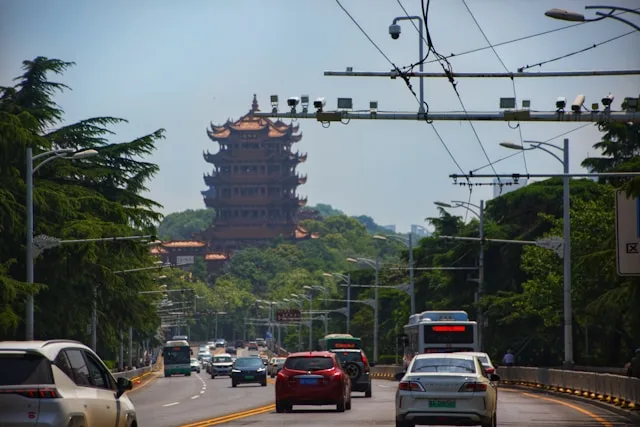
Hubei Province produced approximately 1.89 million vehicles in 2024. The assembly lines ran. The output numbers looked stable. Yet Dongfeng Motor Corporation, the state-owned anchor tenant responsible for roughly 70 to 75 per cent of that volume, reported that net profit attributable to parent company shareholders fell 85.5 per cent year-on-year in the first half of 2024. The vehicles rolling off Wuhan's lines are increasingly the wrong vehicles, built on the wrong platforms, by a workforce trained for an era that is ending.
This is the central tension facing every hiring leader in Wuhan's automotive sector in 2026. The city's factories are not idle. Its engineering talent pool is not small. Huazhong University of Science and Technology and Wuhan University of Technology produce approximately 8,000 automotive engineering graduates each year. But the roles going unfilled are not the roles those graduates are trained to fill. Autonomous driving algorithm engineers, battery management system architects, power electronics specialists working with silicon carbide: these positions sit open for four to six months while traditional mechanical engineers flood the market at a three-to-one surplus ratio.
What follows is an analysis of how Wuhan's automotive sector arrived at this split, what it means for the organisations competing in it, and what senior leaders responsible for building the teams that will run the next generation of Chinese vehicle manufacturing need to understand before they hire.
The Two Economies Inside Wuhan's Auto Sector
Wuhan's automotive output tells two stories simultaneously. The first is a story of scale. Nearly 1.9 million vehicles produced in a single province. Over 500 component manufacturers clustered in and around the Wuhan Economic & Technological Development Zone. Forty thousand people employed directly by Dongfeng in R&D, management, and manufacturing roles. By volume, Wuhan remains one of China's top automotive production bases.
The second story is one of value erosion. The joint ventures that historically generated Dongfeng's profits are contracting at speed. According to China Passenger Car Association data from mid-2024, Dongfeng Nissan's retail sales declined 29.5 per cent year-on-year in the first half of that year. Dongfeng Honda fell 21.5 per cent in the same period. Utilisation rates on ICE lines dropped below 60 per cent. These are not marginal declines. They represent a profit engine stalling while the replacement engine has barely started.
Voyah, Dongfeng's premium EV brand, delivered 85,697 units in 2024, a 70 per cent year-on-year increase. That growth rate is real. But the absolute volume is a fraction of what the JVs once delivered. The math does not close. Wuhan is producing at scale in a segment where margins are compressing, while its growth segment has not yet reached the volume required to sustain the ecosystem built around ICE production.
This is the dynamic that every supplier, every Tier-1 plant manager, and every VP of engineering in the WEDZ is managing right now. The sector is not shrinking. It is splitting into two economies running on different logic, different technology, and fundamentally different talent.
Why 8,000 Graduates a Year Has Not Solved the Hiring Problem
The surplus of traditional automotive engineers in Wuhan is not a sign of a healthy talent market. It is a symptom of the same misalignment visible in the production data.
The Pipeline That Feeds [Shanghai](/shanghai-china-executive-search) and [Shenzhen](/shenzhen-china-executive-search)
Local universities produce an impressive volume of engineering graduates. HUST alone is one of China's most respected technical institutions. But approximately 35 per cent of HUST automotive engineering masters leave Wuhan for Shanghai within two years of graduation, according to the university's own graduate employment quality report. The pull is straightforward. Shanghai hosts Tesla's Gigafactory, NIO's global headquarters, and SAIC. Base salaries for equivalent roles run 30 to 50 per cent higher. The career trajectory is steeper. The international exposure is greater.
Shenzhen exerts a similar pull, particularly for software-oriented talent. BYD's headquarters and Huawei's Intelligent Automotive Solution division offer equity upside and a consumer electronics culture that appeals to engineers who think of themselves as software developers first and automotive specialists second. ADAS roles in Shenzhen command compensation roughly 40 per cent above Wuhan equivalents at the senior level.
The result is that Wuhan functions as a talent production hub for its competitors. It trains engineers, then watches the best of them leave for markets that pay more and offer faster progression. The graduates who remain tend to be those whose skills align with the traditional ICE economy: mechanical design, machining, quality control. These are precisely the roles now in surplus.
The Roles That Cannot Be Filled Locally
The positions going unfilled are not junior roles. They are the roles that determine whether Wuhan's EV transition succeeds or stalls.
Autonomous driving algorithm engineers, specifically those working on perception and planning, saw demand increase 120 per cent year-on-year in Wuhan's recruitment market through 2024, with a candidate-to-position ratio of one to eight according to BOSS Zhipin Research Institute data. Battery management system engineers with ISO 26262 functional safety certification and experience in 800-volt architectures are nearly impossible to recruit locally. Power electronics engineers working with silicon carbide and gallium nitride inverter technology are scarce nationally, but the absence of a local semiconductor ecosystem makes the shortage in Wuhan acute.
The local vocational and university system does not yet produce sufficient graduates with these competencies. Retraining mid-career ICE engineers costs an estimated RMB 50,000 to 80,000 per person, a burden that SME suppliers simply cannot absorb. The hidden 80 per cent of qualified passive candidates in these specialisms are already employed at firms in Shanghai, Shenzhen, or Guangzhou. They are not looking. Moving them requires a fundamentally different approach than posting a job advertisement.
The Compensation Architecture That Closes the Gap Halfway
Wuhan's employers have recognised the salary differential and are responding. But money alone is not solving the problem, and the structure of what they are offering reveals as much about the market's constraints as its ambitions.
Base compensation in Wuhan's automotive sector remains 15 to 25 per cent below Shanghai and Shenzhen for equivalent roles. At the senior specialist and manager level, an ADAS or autonomous driving algorithm role commands RMB 450,000 to 750,000 in total annual compensation. A BMS hardware engineer sits in the RMB 350,000 to 600,000 range. Power electronics specialists working with SiC technology command RMB 500,000 to 800,000. At the VP and executive level, these figures rise considerably: a VP of electrical and electronic architecture can reach RMB 1.8 million to 3 million, while a Chief Battery Engineer sits in the RMB 1.2 million to 2.2 million range.
Traditional mechanical engineering roles, by contrast, have stagnated at RMB 180,000 to 300,000 for senior specialists, with declining demand at the executive level. The pay gap between old and new automotive skills within the same city is now wider than the gap between Wuhan and Shanghai for the same new-economy role.
To compete with first-tier cities, Wuhan employers, notably Voyah and Bosch's Wuhan operations, are deploying long-term incentive plans and housing subsidies worth RMB 300,000 to 500,000 over three to five years, effectively closing 30 to 40 per cent of the nominal cash gap with Shanghai. This is smart structuring. Wuhan's housing costs run approximately 40 per cent below Shanghai per square metre, making the total value proposition closer than the base salary numbers suggest.
But the arithmetic only works for candidates whose primary calculus is financial. For senior autonomous driving talent, the decision is rarely just about money. It is about whether the platform they join will ship at scale, whether the data they need to train models is available, and whether their next career move is enhanced or limited by working in Wuhan rather than Shanghai. Negotiating compensation at this level requires understanding that the package is only part of the proposition. The role itself must be competitive.
The Original Synthesis: Capital Investment Has Outrun Human Capital by Two Full Cycles
Here is the observation that the data points toward but does not state directly.
Wuhan has invested in the physical infrastructure of its EV transition. Voyah's smart factory in Jiangxia District exists. The National New Energy and Intelligent Connected Vehicle Base, with 106 kilometres of open test roads designated by the Ministry of Industry and Information Technology, exists. Bosch and Valeo are expanding their Wuhan plants for EV components. The Wuhan municipal government's Auto Valley plan targets one million NEV units by 2026.
What does not exist in sufficient quantity is the workforce to operate, design for, and lead these investments. The capital moved first. The facilities were built. The production targets were set. But the training pipelines, the retention mechanisms, and the career ecosystems required to populate those facilities with the right talent lag behind by at least two hiring cycles.
This is not a temporary mismatch that resolves with time. The lag is compounding. Each year that Wuhan's best HUST graduates leave for Shanghai, the base of mid-career talent available for promotion into senior roles shrinks further. Each year that SME suppliers cannot afford to retrain ICE engineers, the pool of candidates qualified for EV thermal management and lightweighting grows thinner. The infrastructure investment created demand for talent that the talent system was not redesigned to supply. And the competitors absorbing that talent, Shanghai, Shenzhen, and increasingly Hefei, are not standing still.
Hefei deserves specific attention here. Located roughly 400 kilometres from Wuhan, it competes for the same Central China engineering graduate pool. But Hefei offers aggressive government talent subsidies, including housing allowances up to RMB 600,000 for PhDs, and hosts NIO's largest manufacturing base and Volkswagen Anhui. Its facilities are newer. Its local government backing for startups is stronger. Wuhan is not only losing talent to first-tier coastal cities. It is losing talent to a regional rival that is investing in human capital retention at a pace Wuhan has not matched.
Structural Risks That Compound the Talent Challenge
The talent gap does not exist in isolation. Several forces specific to Wuhan's market make it harder to close.
The Supplier Culling Ahead
Local government estimates from the Hubei Automotive Manufacturers Association project that 20 to 30 per cent of Wuhan's Tier-2 and Tier-3 suppliers, primarily machining and casting firms dependent on ICE programmes, will face insolvency or acquisition by 2026 if they cannot pivot to EV thermal management or lightweighting components. This is not a prediction about a distant future. It is a description of a process already underway.
For hiring leaders, this matters in two ways. First, the displacement of experienced manufacturing managers and skilled technicians from closing suppliers will increase the surplus of traditional skills while doing nothing to address the shortage in EV-specific competencies. Second, the survivors among Wuhan's supplier base will need exactly the kind of leadership talent that is already scarce: executives who can manage a transformation while maintaining production, VPs of supply chain capable of replacing imported chips with domestic alternatives, and heads of engineering who understand both the old platform and the new one.
Export Market Headwinds
The European Commission's anti-subsidy tariffs on Chinese battery electric vehicles, imposed in October 2024 and upheld through 2025, directly affect Wuhan-made Voyah models. Tariffs of up to 45.3 per cent on Dongfeng-branded EVs complicate the strategy of offsetting domestic price war losses with European export volume. This creates a knock-on effect on talent strategy. The Head of Overseas Market role, already in high demand, becomes simultaneously more important and harder to justify in terms of return on investment. Organisations that had planned to build export-focused teams may slow those hires. Those that press ahead need leaders with specific experience in CKD and SKD plant establishment, a skill set that barely exists in Wuhan's current talent pool.
The Demographic Friction
Dongfeng's core manufacturing workforce in Wuhan has a median age approaching 42, according to the company's 2023 social responsibility report. Compare this to a median age of 32 at Tesla Shanghai or 29 at Xiaomi Auto in Beijing. This age differential is not just a human resources statistic. It represents a cultural gap between an ICE-era workforce and the digital-first operating model that EV and autonomous driving development requires. Integrating younger, software-oriented hires into teams led by experienced but traditionally trained managers creates friction that shows up in retention data, project velocity, and ultimately in the ability to ship product on schedule.
What This Means for Hiring Leaders Operating in Wuhan
The market intelligence points to a set of concrete implications for any organisation hiring senior talent in Wuhan's automotive sector in 2026.
The first implication is that local sourcing alone will not fill the roles that matter most. Approximately 85 to 90 per cent of qualified autonomous driving algorithm engineers in Wuhan are passive candidates. Senior BMS architects show a passive candidate ratio of roughly 80 per cent, with average tenure of 3.2 years indicating low voluntary turnover but high vulnerability to targeted approaches. Functional safety managers are almost exclusively passive. These candidates will not respond to job postings. They must be identified, mapped, and approached individually. Any search strategy that relies on inbound applications is structurally limited to the active minority, which in these specialisms means the least embedded, least experienced fraction of the available pool.
The second implication is that competing on compensation requires structural creativity, not simply higher numbers. The LTIP and housing subsidy model adopted by Voyah and Bosch Wuhan shows the direction. But the proposition must extend beyond financial terms. A candidate being asked to leave Huawei's IAS division in Shenzhen for a role in Wuhan is making a calculation about platform scale, data access, career trajectory, and personal life. The typical package to induce such a move includes a 30 to 35 per cent base salary premium plus a signing bonus equivalent to six to twelve months of salary to compensate for forfeited equity. Firms that treat this as a simple bidding war will lose. Firms that understand the human factors in executive negotiation will fare better.
The third implication is that speed matters more here than in less constrained markets. Vacancy periods of four to six months for senior BMS roles are not just an inconvenience. In a sector moving as fast as China's EV market, a six-month vacancy in a critical engineering leadership position means missed development milestones, delayed platform launches, and competitive ground that cannot be recovered. The cost of a failed or delayed executive hire in this market is measured not just in recruitment fees but in programme timelines.
Building the Search Strategy This Market Requires
Wuhan's automotive talent market punishes conventional search methods. The candidates who would make the most difference, the algorithm leads, the SiC architects, the functional safety experts, are not visible on any recruitment platform. They are employed, performing well, and not considering a move unless the right proposition reaches them directly.
This is the market condition where executive search methodology built around direct, AI-enhanced candidate identification delivers measurably different results. The difference is not marginal. It is the difference between reaching 10 per cent of the viable candidate pool and reaching all of it. In a market where the candidate-to-position ratio for autonomous driving roles is one to eight, missing 90 per cent of the pool by relying on active channels is not a strategy. It is a guaranteed path to a six-month vacancy.
KiTalent's approach to talent mapping in high-scarcity technical markets is designed for exactly this dynamic. By combining AI-powered candidate identification with direct headhunting methodology, the process surfaces interview-ready candidates within 7 to 10 days, including passive executives who would never appear on a job board. The model operates on a pay-per-interview basis with no upfront retainer, which means organisations only invest when they are meeting qualified candidates. With a 96 per cent one-year retention rate across 1,450 placements, the approach is built for markets where the wrong hire costs more than the right search.
For organisations competing for senior automotive and manufacturing leadership in China's most constrained EV talent markets, where the candidates you need are passive, the timeline is critical, and the compensation proposition must be structurally precise, start a conversation with our executive search team about how we approach searches in this sector.
Frequently Asked Questions
What are the hardest automotive roles to fill in Wuhan in 2026?
Autonomous driving algorithm engineers focused on perception and planning are the most difficult to recruit, with demand up 120 per cent year-on-year and a candidate-to-position ratio of one to eight. Battery management system engineers with ISO 26262 ASIL-D functional safety certification and 800-volt architecture experience are nearly as scarce, with typical vacancy periods of four to six months. Power electronics engineers specialising in silicon carbide and gallium nitride technologies face national shortages that are amplified in Wuhan by the absence of a local semiconductor ecosystem.
Why does Wuhan struggle to retain top automotive engineering talent?
Shanghai and Shenzhen offer 30 to 50 per cent higher base salaries, stronger equity upside, and faster career progression in EV and autonomous driving roles. Approximately 35 per cent of HUST automotive engineering masters leave for Shanghai within two years of graduation. Hefei, a closer regional competitor, attracts talent with aggressive government subsidies and newer facilities. Wuhan's primary retention advantage is lower housing costs, but this is insufficient for senior AI and technology specialists who prioritise platform quality and career trajectory over cost of living.
What compensation do senior automotive engineers earn in Wuhan?
At the senior specialist and manager level, ADAS and autonomous driving roles command RMB 450,000 to 750,000 in total annual compensation. BMS hardware engineers earn RMB 350,000 to 600,000. Power electronics specialists reach RMB 500,000 to 800,000. At the VP level, compensation rises to RMB 1.5 million to 3 million depending on the role. Leading employers supplement base pay with long-term incentive plans and housing subsidies worth RMB 300,000 to 500,000 over three to five years to narrow the gap with first-tier cities.
How is Dongfeng Motor Corporation's restructuring affecting Wuhan's talent market?
Dongfeng's declining JV operations with Nissan and Honda are reducing demand for ICE-focused roles while the company's investment in Voyah and EV platform conversion is creating intense demand for software, battery, and electronics talent. This creates a bifurcated market: surplus traditional mechanical engineers competing for shrinking roles alongside acute shortages in the specialisms required for electric and intelligent vehicles. The structural mismatch means aggregate hiring data masks the real difficulty of filling critical positions.
What is the best approach to hiring senior EV talent in Wuhan?
With 85 to 90 per cent of qualified autonomous driving engineers and approximately 80 per cent of senior BMS architects classified as passive candidates, job advertising and inbound recruitment reach only a small fraction of the viable talent pool. Direct headhunting through structured talent mapping is the method that consistently reaches candidates in this market. The typical successful approach combines AI-powered identification of passive candidates with a compensation proposition structured around LTIPs, signing bonuses, and role quality rather than base salary alone.
How does Wuhan compare to other Chinese automotive hubs for executive talent availability?
Wuhan's talent availability is weaker than Shanghai, Shenzhen, and increasingly Hefei for EV-specific roles, despite producing more automotive engineering graduates than most competing cities. The issue is retention rather than production. Shanghai and Shenzhen draw senior talent with higher compensation and stronger career platforms. Hefei competes with newer facilities and superior government subsidies. Wuhan retains advantages in traditional manufacturing skills and cost of living, but building a proactive talent pipeline is essential for organisations that cannot afford to wait for candidates to appear on the open market.