Yanbu Petrochemicals Hiring in 2026: Why a $20 Billion Expansion Plan Cannot Find the Engineers It Needs
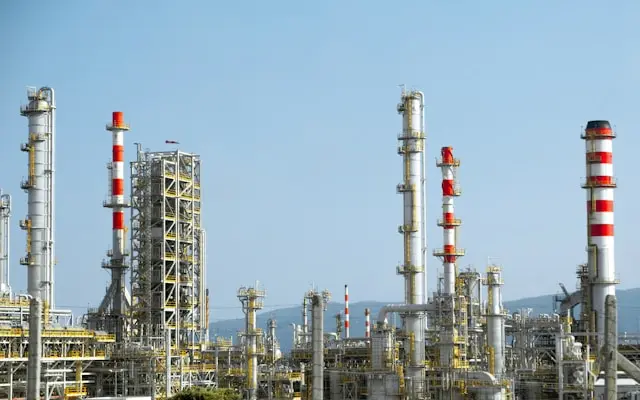
Yanbu Industrial City processes over 400,000 barrels of heavy crude per day through one of the most technically complex refining configurations in the Middle East. The YASREF full-conversion refinery, YANSAB's 4 million tonne per annum petrochemical complex, and a downstream plastics cluster employing 6,000 workers make this one of the most concentrated hydrocarbon processing hubs on the Red Sea coast. By most measures, the cluster is thriving: utilisation rates sit at 92 to 95 per cent, export volumes through Yanbu South Port exceed 12 million tonnes annually, and Saudi Aramco has earmarked the city as a potential site for a $20 billion crude-to-chemicals mega-project.
Yet beneath these expansion headlines sits a talent market that is tightening faster than the capital investment pipeline can absorb. Senior process engineers with heavy crude experience take an average of 87 days to hire in Yanbu, nearly double the 45-day benchmark in Jubail. Eighty-five per cent of qualified candidates for the most critical roles are passive, employed, and not looking. Yanbu Industrial College produces 400 chemical technicians each year against industry demand for 600-plus, and the gap is filled by expatriate workers whose continued availability depends on a Saudization framework that is deliberately designed to phase them out.
What follows is a ground-level analysis of the forces pulling Yanbu's petrochemical talent market in opposing directions: sovereign investment ambitions that demand rapid workforce expansion, regulatory mandates that constrain who can fill those roles, and a skills pipeline that was built for a smaller, simpler era. For hiring leaders responsible for filling technical and executive positions in this market, the challenge is not abstract. It is operational, it is measurable, and it is already affecting project timelines.
The Cluster That Makes Yanbu Different
Yanbu's petrochemical sector is not a collection of independent plants sharing a postcode. It is an integrated system whose components depend on each other and on a shared infrastructure backbone managed by the Royal Commission for Yanbu. Understanding the cluster's architecture matters for hiring leaders because it determines which skills are locally available, which must be imported, and where the competitive pressure for talent is most intense.
YASREF, the joint venture between Saudi Aramco (62.5 per cent) and Sinopec (37.5 per cent), anchors the refining end. Its 400,000 bpd capacity is configured entirely for Arabian Heavy crude, maximising residue conversion through hydrocracking and fluid catalytic cracking. This is not a standard refinery. The process complexity requires engineers with specific experience in residue upgrading technologies: RFCC, ebullated-bed hydrocracking, and solvent deasphalting tailored to Arabian Heavy characteristics. According to the Saudi Council of Engineers' registered database, fewer than 200 qualified Saudi chemical engineers possess this combination of skills nationally.
YANSAB and the Downstream Pull
YANSAB, wholly owned by SABIC, operates the ethane cracker and polymer production units. With 1.3 million tonnes per annum of ethylene capacity and downstream polyethylene and polypropylene lines, YANSAB is the feedstock engine for the Yanbu Plastics Valley. This downstream cluster, established in 2018, now hosts 22 conversion industries consuming 300,000 tonnes per annum of polymers. Every hiring decision at YANSAB ripples outward through those 22 businesses.
The Shared Infrastructure Layer
Both anchor facilities connect to Yanbu South Port, which handles the region's export volumes and operates at 85 per cent capacity utilisation. The Royal Commission manages utilities, industrial zoning, and the port infrastructure that keeps the cluster functioning. Any expansion of crude-to-chemicals capacity would require an estimated $2 billion in port upgrades that have not yet been funded, according to Mawani's Strategic Plan 2030. This infrastructure ceiling is not just an engineering constraint. It is a talent constraint, because the professionals who design, build, and commission port expansions of this scale are drawn from the same limited pool of process and project engineers already stretched thin across Yanbu's existing operations.
The cluster's physical integration is moderate: YASREF supplies naphtha and reformate to adjacent aromatics units, but pipeline connections between YASREF and YANSAB are limited. Economic integration, however, is high. Shared logistics, shared utilities, and shared export infrastructure mean that when one facility enters a maintenance cycle, the entire cluster feels the labour market effect.
The 87-Day Problem: Why Searches Stall in This Market
A senior technical hire in Jubail takes 45 days to close. In Yanbu, the same profile takes 87 days. That 42-day gap is not explained by a single factor. It is the product of three compounding dynamics that hiring leaders in this market must account for before they begin a search.
The first is geographic isolation. Yanbu sits on the Red Sea coast, roughly 350 kilometres from Jeddah and over 1,000 kilometres from the Eastern Province where most of Saudi Arabia's petrochemical workforce is concentrated. Jubail Industrial City, Yanbu's closest competitor for the same talent, offers larger social infrastructure, more international schooling options, and proximity to Dammam and Bahrain. Research from the Hays Saudi Arabia Salary Guide confirms that 60 per cent of Yanbu's outbound talent movement goes to Jubail, drawn not by compensation but by quality of life.
The second is passive candidate concentration. Eighty-five per cent of qualified senior process engineers with crude-to-chemicals or heavy oil processing experience are passive candidates. They are employed, they are not on job boards, and the proposition required to move them involves more than a salary adjustment. For a search firm relying on advertised positions and inbound applications, the accessible candidate pool is roughly 15 per cent of the total. In a market where the total qualified population is already measured in the low hundreds, that 15 per cent is not enough to build a credible shortlist.
The third dynamic is competition from Dubai, which offers 15 to 20 per cent salary premiums for comparable refinery roles according to the Mercer Middle East Compensation Survey 2024. Dubai's higher cost of living offsets some of that premium, but the perception of a more cosmopolitan lifestyle makes it a persistent pull factor for experienced professionals weighing their options.
A search that fails to account for all three dynamics will stall. And in a market where a 45-day turnaround requiring 3,000 temporary contractors is scheduled for YANSAB in the second quarter of 2026, a stalled search is not an inconvenience. It is a production risk.
Saudization at 68 Per Cent: The Mandate That Reshapes Every Search
Saudization rates in technical roles across Yanbu have reached 68 per cent, up from 52 per cent in 2020. Platinum-tier status under the Nitaqat programme requires 75 per cent Saudi nationalisation in technical roles and 50 per cent in administrative functions. Non-compliance carries consequences that go beyond fines: visa restrictions and exclusion from government contracts effectively make it impossible to operate at scale.
This creates what is arguably the defining tension of Yanbu's talent pipeline in 2026. The mandate is clear: hire Saudis for technical roles. The operational reality is equally clear: the specific profiles required for YASREF's complex heavy crude processing, senior Saudi process engineers with 15-plus years of experience, exist in numbers far below what the market needs. The Saudi Council of Engineers' database confirms fewer than 200 qualified candidates nationally.
How Compliance Is Actually Being Achieved
The gap between the mandate and the available talent pool suggests that compliance is currently achieved through a combination of mechanisms that hiring leaders should understand. Accelerated promotion of less experienced Saudi engineers into roles that would traditionally require a longer development arc is one pattern. Administrative reclassification of roles to meet nationalisation thresholds without changing the underlying skill requirement is another. Neither approach is sustainable. Both create downstream risk in facilities processing heavy crude at the temperatures and pressures involved in residue upgrading.
For organisations operating in Yanbu, the talent strategy cannot be separated from the Saudization strategy. The 68 per cent figure is a snapshot of progress. The 75 per cent target is a deadline. The distance between them must be closed with candidates who can actually perform the technical work, not through reclassification.
This is where the Localization Director role, one of the most distinctive executive positions in Yanbu's market, becomes critical. This role requires managing partnerships with Taif University and Yanbu Industrial College to build a pipeline of Saudi technical talent that can eventually replace expatriate engineers. It also requires Arabic fluency and the ability to run Taqa, Tamheer, and graduate development schemes at a pace that meets regulatory timelines. The role is both a compliance function and an operational necessity. Finding someone who can do both is exceptionally difficult.
The Skills That Did Not Exist Five Years Ago
Yanbu's talent challenge is not simply a shortage of the same engineers the market has always needed. It is a shortage of engineers with combinations of skills that were not required when these facilities were commissioned.
The most acute version of this is the digitalization gap. Only 12 per cent of Saudi chemical engineers possess dual competencies in process engineering and data science, according to McKinsey's 2024 analysis of Saudi Arabia's chemicals talent gap. Digital Twin implementation projects across Yanbu's EPC contractors have stalled because the Process Data Engineer role, someone who combines petrochemical domain knowledge with Python and machine learning fluency, barely exists in this market. Roles advertised at SAR 35,000 to 45,000 per month have sat open for six months or longer, attracting fewer than five qualified applications.
This is not a gap that compensation alone can close. The problem is not that qualified candidates exist elsewhere and are demanding higher pay. The problem is that the intersection of operational technology and data science expertise required for advanced process control, predictive maintenance, and AI-driven optimisation has not yet produced enough practitioners to meet demand. Capital investment in Industry 4.0 has outpaced the human capital pipeline by several years.
The same pattern applies to carbon capture integration. Saudi Green Initiative targets call for a 50 per cent emissions reduction by 2030. Post-combustion capture design and blue hydrogen production are now core competencies for any senior engineering hire in Yanbu. Five years ago, they were specialisms confined to a handful of pilot projects. The talent market has not had time to catch up.
Here is the synthesis that connects these dynamics: the investment in automation and decarbonisation has not reduced the workforce Yanbu needs. It has replaced one kind of worker with another that does not yet exist in sufficient numbers. Capital moved faster than human capital could follow, and the result is a market where the most critical hires are for roles whose job descriptions were written after the facilities that need them were already operational.
What These Roles Pay, and Why It May Not Be Enough
Executive compensation in Yanbu's petrochemical sector reflects the scarcity patterns described above, but with a complication: even at the top of the range, the packages may not be sufficient to move the candidates who matter most.
A senior process engineering manager earns SAR 350,000 to SAR 480,000 in annual base salary, roughly $93,000 to $128,000. At VP level, that range expands to SAR 800,000 to SAR 1,200,000, or $213,000 to $320,000. Digital transformation specialists at the executive tier command SAR 700,000 to SAR 950,000. HSE and sustainability executives, newly mandated by the 2024 Saudi Environmental Law for all facilities exceeding 100,000 tonnes per annum capacity, earn SAR 750,000 to SAR 1,100,000.
These figures exclude the standard Saudi benefits package: housing allowance at 25 per cent of base, transport at 10 per cent, education allowances for expatriates, and end-of-service benefits. The total package is competitive within Saudi Arabia. It is not competitive with Dubai on a headline basis, and the lifestyle differential between Yanbu and Dubai is not something a housing allowance can fully offset.
The consequence for search strategy is direct. A traditional search process that identifies candidates and presents them with a compensation package will lose candidates to counteroffers and competing geographies at a rate that makes it unreliable for the most senior roles. The proposition must extend beyond compensation to include career trajectory, project significance, and the specific value of being part of a $20 billion expansion programme that may not exist elsewhere. Effective salary negotiation at this level requires market intelligence that goes beyond published salary bands.
Red Sea Risk and the Constraint Nobody Planned For
Yanbu's position on the Red Sea coast, historically its greatest logistical advantage, became a risk factor through 2023 and 2024. Attacks on commercial shipping in the Bab al-Mandab strait increased marine insurance costs by 300 per cent for Yanbu exports and forced route diversions around the Cape of Good Hope, adding 14 to 18 days to European delivery times according to Lloyd's Market Association Joint War Committee circulars.
This geopolitical risk does not appear in most talent market analyses, but it affects hiring in two ways. First, it introduces volatility into the export economics that underpin every employer's ability to invest in talent. YASREF exports approximately 60 per cent of production to European and Asian markets. YANSAB exports 70 to 80 per cent of polymer production, with China representing 40 per cent of offtake volume. Any sustained disruption to Red Sea shipping compresses the margins that fund expansion programmes and the compensation packages attached to them.
Second, it affects candidate perception. An experienced process engineer evaluating a move to Yanbu is making a calculation that now includes geopolitical proximity to an active conflict zone. This is not the dominant factor in most candidate decisions, but for professionals with families, it enters the equation alongside the lifestyle and schooling considerations that already favour Jubail.
The broader structural picture in Yanbu includes water scarcity, with industrial water tariffs rising 40 per cent in 2024, and port capacity constraints at 85 per cent utilisation. These are not talent market issues in isolation. They are investment ceiling issues that determine whether the expansion pipeline, and the talent demand it would create, materialises on the announced timeline.
The pattern across these constraints is consistent. Yanbu's market is being squeezed simultaneously from the demand side (expansion, Saudization, new regulation) and the supply side (geographic isolation, skills pipeline lag, geopolitical risk). For organisations hiring at the executive level in industrial and manufacturing sectors, this combination requires a search methodology calibrated to the specific realities of this market, not a generic Middle East approach.
What Hiring Leaders in This Market Must Do Differently
The conventional approach to filling technical and executive roles in Saudi Arabia's petrochemical sector, post on major job boards, screen inbound applications, work through a retained search firm with a broad Middle East mandate, is structurally inadequate for Yanbu in 2026. The numbers explain why: with 85 per cent of qualified candidates passive, the visible talent pool accessible through job advertising represents a fraction of the actual market.
A search strategy that works in this environment must begin with precise talent mapping of the specific skill intersections required. A generic search for "process engineer, Saudi Arabia" will return hundreds of profiles, very few of whom possess the residue upgrading, heavy crude, and Saudization programme management experience that YASREF-grade operations demand. The mapping must be granular enough to distinguish between an engineer who has operated a standard FCC unit and one who has managed an RFCC unit processing Arabian Heavy. That distinction is the difference between a candidate who can perform on day one and one who requires years of development the timeline does not allow.
Speed matters disproportionately in this market. At 87 days average time-to-fill, every week of delay increases the risk that the strongest candidates receive competing offers or accept internal promotions. KiTalent's model of delivering interview-ready executive candidates within 7 to 10 days is specifically designed for markets like this, where the cost of a slow search is measured in turnaround delays, compliance risk, and lost production.
The pay-per-interview model removes the retainer barrier that often delays search initiation. Organisations pay only when they meet qualified candidates, which aligns incentives and eliminates the sunk cost problem that causes some firms to persist with underperforming searches rather than starting fresh. With a 96 per cent one-year retention rate across 1,450-plus executive placements, the method produces hires that stay.
For organisations competing for process engineering, digitalization, and HSE leadership talent in Yanbu's constrained market, where regulatory deadlines are fixed and the candidate pool is measured in dozens rather than hundreds, start a conversation with our executive search team about how we approach searches in this specific environment.
Frequently Asked Questions
What is the average time to hire a senior process engineer in Yanbu?
Senior technical roles in Yanbu's petrochemical sector take an average of 87 days to fill, according to the Hays Saudi Arabia Salary Guide 2024. This is nearly double the 45-day average for comparable roles in Jubail. The gap is driven by geographic isolation, a small qualified candidate pool, and competition from Jubail and Dubai for the same professionals. KiTalent's direct headhunting methodology is designed to compress this timeline by reaching passive candidates who are not visible through conventional advertising channels.
How does Saudization affect petrochemical hiring in Yanbu?
Saudization rates in Yanbu's technical roles have reached 68 per cent, with a Platinum-tier Nitaqat target of 75 per cent. Non-compliance results in visa restrictions and exclusion from government contracts. Fewer than 200 Saudi chemical engineers nationally possess the heavy crude processing experience required for YASREF-grade operations, creating a gap between the mandate and the available talent supply that organisations must close through targeted search and accelerated development programmes.
What do senior petrochemical executives earn in Yanbu?
VP-level process engineering roles in Yanbu command SAR 800,000 to SAR 1,200,000 in annual base salary, approximately $213,000 to $320,000. Digital transformation executives earn SAR 700,000 to SAR 950,000. HSE and sustainability executives command SAR 750,000 to SAR 1,100,000. These figures exclude housing allowance (25 per cent of base), transport (10 per cent), education allowances, and end-of-service benefits that form a material part of the total package.
Why is it so difficult to hire digitalization specialists in Yanbu?
Only 12 per cent of Saudi chemical engineers hold dual competencies in process engineering and data science. Digital Twin and predictive maintenance projects require professionals who combine petrochemical domain knowledge with Python, machine learning, and operational technology expertise. This combination barely existed five years ago. Roles advertised at SAR 35,000 to 45,000 per month have remained open for six months or longer, attracting fewer than five qualified applications. Understanding this market through talent mapping is essential before initiating a search.
What geopolitical risks affect Yanbu's petrochemical talent market?
Attacks on Red Sea shipping through 2023 and 2024 increased marine insurance costs by 300 per cent for Yanbu exports and added 14 to 18 days to European delivery times. This affects both employer economics and candidate perception. Yanbu exports approximately 60 per cent of YASREF production and 70 to 80 per cent of YANSAB polymer output, making sustained shipping disruption a direct threat to the investment programmes that drive talent demand.
How can executive search help fill petrochemical roles in Yanbu?
With 85 per cent of qualified senior candidates passive and not actively seeking roles, traditional job advertising reaches only a fraction of the available talent. Specialist executive search for industrial and manufacturing sectors uses AI-enhanced talent mapping to identify and approach candidates with the precise skill intersections required, such as residue upgrading experience combined with Saudization programme management. KiTalent delivers interview-ready candidates within 7 to 10 days, with a 96 per cent one-year retention rate.