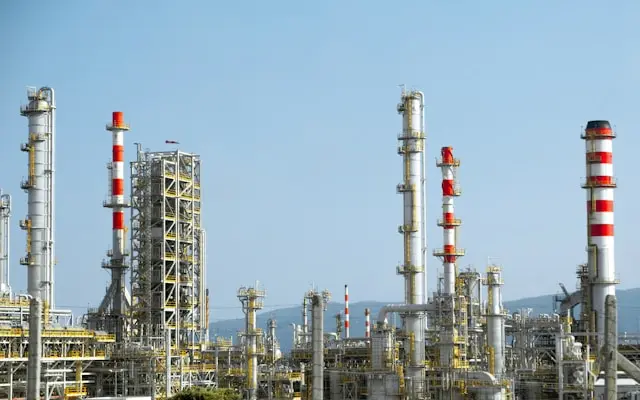
Yanbu's EPC Sector Has 12.8% Engineering Unemployment and Cannot Fill Its Most Critical Roles

Yanbu Industrial City employs between 45,000 and 52,000 personnel across EPC contracting, steel fabrication, and oilfield services. Approximately $4.2 billion in new contracts are scheduled for award through 2026. Fabrication yards are running at 82% capacity. And 68% of industrial employers in the region report they cannot fill the technical roles they need most.
This is not a market suffering from a lack of engineers. The General Authority for Statistics reported 12.8% unemployment among Saudi engineering graduates aged 25 to 34 in Madinah Province as of Q3 2024. On paper, there is surplus. In practice, the surplus and the shortage exist simultaneously because they describe entirely different populations. The universities are producing civil and architectural engineers. The refineries, turnaround crews, and fabrication yards need mechanical engineers, instrumentation specialists, and Aramco-approved welding inspectors with certifications that take years to earn. The aggregate number conceals a skills mismatch so severe that it functions as two separate labour markets wearing the same label.
What follows is an analysis of where the hiring gaps in Yanbu's industrial sector are most acute, what is driving them, and why the conventional approaches to filling these roles consistently fail. The data covers compensation benchmarks, Saudization compliance pressures, passive candidate dynamics, and the competitive forces pulling talent away from Yanbu toward Jubail, Abu Dhabi, and Doha.
The Skills Mismatch Beneath Yanbu's Unemployment Figure
The starting point for understanding Yanbu's talent market is a number that misleads nearly everyone who encounters it. A 12.8% unemployment rate among young Saudi engineering graduates sounds like an employer's market. It is not.
The GASTAT Q3 2024 Labor Market Report recorded a technical and vocational vacancy rate of 14.2% in Madinah Province, against a national average of 8.9%. These two figures seem contradictory. One says engineers are unemployed. The other says technical roles sit empty. Both are accurate because they describe different segments of the same workforce.
Saudi universities graduate large numbers of civil and architectural engineers. Yanbu's industrial anchor tenants, including YASREF's 400,000 barrel-per-day refinery and Saudi Aramco's Yanbu Refinery, need mechanical engineers with ASME IX welding certification, CSWIP-qualified inspectors, and DCS instrumentation specialists trained on Honeywell and Yokogawa systems. These are not interchangeable qualifications. A civil engineering graduate cannot step into a rotating equipment role requiring vibration analysis certification to ISO Category III or IV standards. The retraining pathway takes three to five years of supervised field experience.
This mismatch is the foundational constraint on everything that follows. Capital is available. Projects are funded. Fabrication capacity exists. The binding limit on Yanbu's industrial growth is the number of people qualified to do the work that matters most. And that number is growing far more slowly than the demand for it.
What the $4.2 Billion Pipeline Means for Hiring in 2026
The contract pipeline tells only half the story. MEED Projects estimated $4.2 billion in EPC and maintenance contracts scheduled for award in the Yanbu region through 2025 and 2026. The Yanbu Refinery turnaround and inspection is scheduled for Q2 2026. YASREF is running debottlenecking studies. McDermott's yard continues fabricating offshore platform modules for the Marjan and Berri increments. And renewable energy integration projects, including solar steam generation for enhanced oil recovery, are adding an entirely new category of technical demand.
Where the Growth Concentrates
The critical detail is that 70% of projected employment growth sits in maintenance, inspection, and turnaround work rather than greenfield construction. This matters because turnaround roles are among the hardest to staff. They require Aramco-specific systems knowledge, familiarity with Saudi Aramco Engineering Standards and Materials System Specifications, and the ability to operate under compressed schedules where a single missed milestone costs millions per day.
Net employment is projected to grow by 8 to 12%, translating to 3,600 to 6,200 additional roles. The Saudi Human Resources Development Fund projects that local supply of qualified Saudi technical graduates will meet only 45% of this demand. The remaining 55% must come from expatriate recruitment, from internal transfers within multinational contractors, or from poaching competitors.
The Turnaround Staffing Crunch
A refinery turnaround is the highest-pressure hiring event in downstream oil and gas. YASREF alone contracts 3,000 to 5,000 additional personnel during turnaround periods. These workers must hold current certifications, pass Aramco security clearances, and be mobilised within weeks. For certain nationalities, particularly South Asian welding inspectors, security clearance extends mobilisation timelines to 60 to 90 days despite the Saudi visa system reducing average processing to 21 days. A turnaround scheduled for Q2 2026 requires recruitment activity to begin in late 2025. Firms that wait until Q1 2026 will find the qualified candidates already committed elsewhere.
The pipeline is not a future problem. It is generating hiring pressure now, and the pressure will intensify through the first half of 2026.
The Three Roles Yanbu Cannot Fill Fast Enough
Job postings for EPC and oilfield services roles in Yanbu increased 34% year-on-year in Q4 2024, with 2,400 active vacancies tracked by GulfTalent. Time-to-fill for technical roles averages 94 days. For administrative positions, it is 42 days. The gap between those two numbers is the clearest single indicator of where the market breaks down.
Aramco-Approved Welding Inspectors
This is the most acute shortage. Senior Welding Inspector positions requiring Saudi Aramco approval and CSWIP 3.2 certification consistently remain unfilled for five to seven months. A 2024 survey of 12 major contractors by the Middle East Association of Oil & Gas Contractors found that 68% of such roles exceeded 150 days open-to-fill, with some positions stretching beyond nine months during peak turnaround seasons. Market supply meets only 35% of demand.
These inspectors hold what the industry calls "gold card" status with Aramco. They receive three to five direct approaches from recruiters monthly. Only 12% actively apply to posted vacancies. The rest move through network referrals or direct headhunting. A standard job advertisement for this role reaches less than a seventh of the qualified population.
Rotating Equipment Engineers
Turbomachinery specialists with downstream experience are characterised by employment rates above 95% and average tenure exceeding seven years. According to industry data, when a rotating equipment specialist with ten or more years of downstream experience becomes available, they are committed to a new role within 48 hours. This is a purely passive market.
The compensation consequences are material. Salary premiums of 35 to 45% above 2022 baselines have become standard when these specialists transition between employers in the Yanbu-Jubail corridor. Signing bonuses of SAR 50,000 to 75,000 ($13,300 to $20,000) are now routine for candidates who can start immediately. The counteroffer dynamics in this segment are particularly aggressive, with current employers matching or exceeding external offers in the majority of cases.
Project Directors with Downstream Mega-Project Experience
The most senior gap is at the Project Director level. Professionals with $500 million or more in project execution experience, Aramco stakeholder management capability, and multi-cultural team leadership are 85 to 90% passive. Their average tenure in current roles is 4.2 years.
EPC contractors have responded by restructuring delivery models. According to Arab News reporting on talent wars in Saudi EPC, contractors are now establishing hybrid leadership structures where a single senior Project Director oversees multiple smaller projects remotely while relying on deputy managers on site. Others are relocating Project Directors from Jubail or Dammam on four-week rotation schedules with enhanced hardship allowances of SAR 15,000 to 20,000 per month. These are not optimal arrangements. They are adaptations to a market where the people you need most are the people you cannot find.
Saudization: The Glass Floor in the Talent Pyramid
The Ministry of Human Resources and Social Development classified EPC and oilfield services under "High Saudization" categories as of Q1 2025. The mandated rates are 50% Saudi national employment in engineering roles and 25% in technical supervisory roles. Non-compliance results in visa suspension and exclusion from Aramco bidding lists. The commercial consequences of failing this threshold are existential for any contractor dependent on Aramco work.
Here is the tension that defines the talent acquisition challenge in this market. Contractors achieved 85 to 90% Saudization in administrative, procurement, and HSE documentation roles by Q4 2024, exceeding targets. In technical supervision, including field engineers and construction superintendents, the same contractors reached only 18 to 22%.
Why Desk Jobs Localise and Field Jobs Do Not
The pattern is consistent and well-documented. Saudi nationals are entering engineering professions in growing numbers but concentrating in office-based roles. Field-based technical supervision in an industrial city three hours from the nearest major metropolitan area carries a fundamentally different lifestyle proposition. The 18% annual attrition rate for Saudi field engineers, compared to 8% for expatriates, reflects this reality. Young Saudi engineers take the field role for two to three years, gain the experience their CV requires, and move to Riyadh or Jeddah for a corporate planning or business development position.
This creates what might be described as a glass floor in the talent pyramid. Saudization succeeds above the glass floor, in the administrative and commercial layers. Below it, in the technical supervision and field engineering layers that sit on the critical path of every project, expatriates remain entrenched because nationals cycle through rather than building careers.
The compensation response has been predictable. Saudi nationals in equivalent engineering roles now command premiums of 15 to 25% above expatriate market rates. VP-level Saudi engineers can reach total packages of SAR 80,000 to 120,000 per month when training allowances and career development premiums are included. The premium reflects scarcity, not seniority. A Saudi rotating equipment engineer with ten years of field experience in Yanbu is one of the rarest profiles in the entire GCC industrial talent market.
Compensation Benchmarks: What Yanbu's Critical Roles Actually Pay
The compensation architecture in Yanbu's EPC sector operates on two distinct levels, and the gap between them determines who can and who cannot attract the talent required for major project delivery.
At the senior specialist and manager level, a Project Director earns SAR 35,000 to 55,000 per month in base salary, with total packages including housing and transport reaching SAR 600,000 to 900,000 annually. A Welding Engineering Manager sits at SAR 22,000 to 38,000 monthly. A Rotating Equipment Engineering Manager earns SAR 25,000 to 42,000.
At the executive and VP level, compensation steps up materially. A VP of Project Delivery commands SAR 65,000 to 95,000 per month in base salary, with total executive packages reaching SAR 1.1 million to 1.8 million annually. A Director of Maintenance earns SAR 50,000 to 75,000 monthly. These figures are drawn from the Hays Saudi Arabia Salary Guide 2025 and Michael Page Middle East Energy Salary Benchmark 2024.
The Jubail Premium and the Abu Dhabi Pull
Yanbu does not set compensation in isolation. Jubail, as the larger and more established industrial hub with better social infrastructure, international schools, and flight connections, typically offers 10 to 15% salary premiums over Yanbu for equivalent roles. Abu Dhabi offers comparable tax-free compensation plus permanent residency pathways through the Golden Visa, a more liberal social environment, and established expatriate community infrastructure.
Senior EPC executives with families increasingly prefer Abu Dhabi over Yanbu despite similar base salaries. Yanbu employers must offer 20 to 25% premiums or rotation schedules such as 28/28 or 42/21 to compete. Qatar's North Field expansion compounds the problem by offering higher day-rates for contract specialists, pulling welding inspectors and process engineers away from Saudi projects entirely.
The Yanbu-specific challenge is that lower housing costs, which run 20 to 30% below Jubail rental rates, do not compensate for limited availability. Western-standard housing compounds in Yanbu operate at 95% occupancy. An expatriate executive who accepts a Yanbu role may find no suitable housing available, forcing either company-provided accommodation or commutes that erode quality of life. The salary negotiation for a Yanbu placement therefore involves far more than base pay. It involves housing guarantees, rotation terms, schooling allowances, and hardship premiums that collectively shape the total proposition.
Why Conventional Recruitment Fails in This Market
The data on passive candidate ratios in Yanbu's EPC sector makes the case for direct executive search in concrete terms. For every 100 applications received for a Senior Project Manager posting, approximately three to five meet Aramco experience requirements. 85% of suitable candidates are identified through direct search rather than applications.
This is not a market where posting a role and waiting for applications produces results. The candidates who matter most are already employed, already receiving multiple recruiter approaches monthly, and already evaluating whether Yanbu's proposition is strong enough to justify relocating to an industrial city on the Red Sea coast.
The 48-Hour Window
For rotating equipment specialists, the market moves faster than any traditional recruitment process can follow. When a qualified candidate becomes available, they are committed to a new role within 48 hours. A search process that takes two weeks to assemble a shortlist will never reach these candidates. They are gone before the shortlist meeting happens.
This velocity problem is compounded by visa and mobilisation timelines. Even after a candidate accepts an offer, security clearance delays can extend mobilisation to 60 to 90 days. A contractor planning a Q2 2026 turnaround needs to have identified, engaged, and secured key technical personnel by late Q4 2025 at the latest. The firms that treat recruitment as a sequential activity, first defining the role, then posting it, then screening applicants, then interviewing, will find themselves understaffed on day one.
The Original Synthesis
The paradox at the centre of Yanbu's EPC talent market is this: Saudization policy and candidate scarcity are not two separate problems pulling in the same direction. They are pulling in opposite directions, and the gap between them is widening. Saudization requires contractors to replace expatriates with Saudi nationals in technical supervision roles. Candidate scarcity means the Saudi nationals qualified for those roles are among the rarest and most expensive profiles in the GCC. Every expatriate removed from a critical path role must be replaced by a Saudi professional who costs 15 to 25% more and is statistically likely to leave within three years. The policy accelerates demand for a profile that the education and training system cannot produce at anywhere near the required rate. The result is not a labour market moving toward equilibrium. It is a market where compliance cost and talent cost compound each other, and the firms that solve both simultaneously gain a durable advantage over those that treat each constraint separately.
What Hiring Leaders in Yanbu's Industrial Sector Must Do Differently
The market conditions described above are not temporary. The $4.2 billion pipeline, the Saudization trajectory, and the structural undersupply of certified technical specialists all point to a hiring environment that will remain constrained through 2026 and beyond. The IKTVA programme requires 70% in-kingdom value add for major contractors, further concentrating demand on Yanbu's limited fabrication and technical workforce.
Organisations competing for talent in this market need three things. First, they need access to the passive candidate pool that constitutes 85 to 90% of the qualified talent for senior roles. Talent mapping that identifies Aramco-approved inspectors, rotating equipment specialists, and experienced Project Directors before a role opens is not a luxury. It is a prerequisite for timely staffing.
Second, they need compensation intelligence that accounts for the Jubail premium, the Abu Dhabi pull, and the Saudization premium simultaneously. A package benchmarked against last year's market rate will lose candidates to employers who have already adjusted. Market benchmarking in this environment means tracking not just what roles pay today but what they will pay in six months when turnaround season begins.
Third, they need a search methodology built for speed. In a market where the best rotating equipment engineers are off the table within 48 hours, and where mobilisation timelines extend to 90 days, the gap between identifying a candidate and presenting them for interview must be measured in days, not weeks.
KiTalent's approach to executive hiring across oil, energy, and industrial markets is built for exactly this kind of constrained environment. AI-enhanced talent mapping identifies qualified passive candidates who are not visible on any job board. The pay-per-interview model means clients invest only when they are meeting candidates who meet Aramco-grade specifications. A 96% one-year retention rate reflects the rigour applied to candidate assessment before a single interview takes place.
For organisations staffing Yanbu's 2026 turnaround season, building leadership pipelines for downstream EPC delivery, or competing for the Saudi nationals who meet both technical and Saudization requirements, start a conversation with our industrial sector search team about how we approach this market.
Frequently Asked Questions
What is the average time to fill a senior technical role in Yanbu's EPC sector?
Time-to-fill for technical roles in Yanbu averages 94 days, compared to 42 days for administrative positions. For highly specialised roles such as Aramco-approved welding inspectors with CSWIP 3.2 certification, the figure rises to 150 days or more. During peak turnaround periods, some senior inspection roles have remained open for nine months. The extended timelines reflect both the scarcity of qualified candidates and the visa and security clearance processes that add 60 to 90 days to mobilisation after offer acceptance.
What Saudization rates apply to EPC contractors in Yanbu?
As of Q1 2025, the Ministry of Human Resources and Social Development mandates 50% Saudi national employment in engineering roles and 25% in technical supervisory roles for EPC and oilfield services companies. Non-compliance leads to visa suspension and exclusion from Saudi Aramco bidding lists. While contractors have achieved 85 to 90% Saudization in administrative roles, technical supervision remains at 18 to 22%, creating a persistent compliance gap in the roles most critical to project delivery.
How does Yanbu compensation compare to Jubail and Abu Dhabi?
Jubail typically offers 10 to 15% salary premiums over Yanbu for equivalent EPC roles, reflecting superior social infrastructure and flight connectivity. Abu Dhabi offers comparable base salaries plus advantages including permanent residency pathways, a more liberal social environment, and established international schools. Yanbu employers must offer 20 to 25% premiums or attractive rotation schedules to compete with Abu Dhabi for senior EPC executives with families.
Why is executive search more effective than job advertising for Yanbu's industrial roles?
For every 100 applications received for a Senior Project Manager posting in Yanbu, only three to five meet Aramco experience requirements. At the Project Director and VP level, 85 to 90% of qualified candidates are passive and will not respond to advertised roles. KiTalent's AI-enhanced direct search methodology identifies these professionals through systematic talent mapping, delivering interview-ready candidates within 7 to 10 days rather than relying on inbound applications that rarely reach the right people.
What are the highest-demand technical certifications in Yanbu?
The certifications in greatest demand are CSWIP and BGAS Grade 2/3 for welding inspection, ASME IX for welders, NACE for coating inspection, CCPS for process safety engineers, and ISO Category III/IV for vibration analysis. Familiarity with Saudi Aramco Engineering Standards, Saudi Aramco Materials System Specifications, and SAP Plant Maintenance modules is required for virtually all senior technical roles serving Aramco facilities.
What is the compensation range for a VP of Project Delivery in Yanbu?
A VP of Project Delivery in Yanbu earns SAR 65,000 to 95,000 per month in base salary, with total executive packages reaching SAR 1.1 million to 1.8 million annually including housing, transport, bonuses, and benefits. Saudi nationals at this level command additional premiums of 15 to 25% above expatriate rates due to scarcity and Nitaqat compliance value, with total packages for Saudi VP-level engineers reaching SAR 80,000 to 120,000 monthly.