Yonkers Rail Manufacturing in 2026: A $1.4 Billion Production Line That Cannot Hire the People It Needs
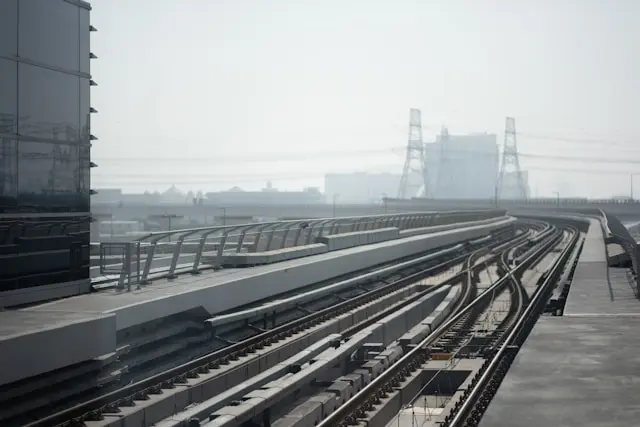
The Yonkers rail car manufacturing facility sits at the centre of one of the largest transit investment programmes in American history. With a confirmed backlog of more than 1,500 rail vehicles extending through 2027, production capacity is not the constraint. Demand is not the constraint. The constraint is people.
This is a market where a Level III CNC Machinist position stays open for 112 days. Where fewer than 400 welders in the entire tri-state region hold the certification required to join a structural carbody shell. Where senior programme managers command signing bonuses worth 25 to 35 percent of their first-year salary because there is no other way to move them. The investment is real. The orders are real. The workforce to execute them is not growing fast enough to keep pace.
What follows is an analysis of the forces reshaping Yonkers' advanced manufacturing sector and its talent market: the regulatory escalation that is compressing supply chains, the demographic cliff approaching the production floor, the compensation dynamics that general manufacturing data completely obscures, and what hiring leaders in this sector must understand before they attempt to fill their next critical role.
The Production Floor Is Full. The Talent Pipeline Is Not.
Kawasaki Rail Car, Inc. operates the sole heavy rail vehicle manufacturing plant in the Northeastern United States from its facility at 29 Dock Street in Yonkers. The plant employs approximately 1,200 to 1,350 people in precision assembly, welding, systems integration, and programme management. It represents roughly 40 percent of Kawasaki's total North American rail vehicle production capacity.
The current production schedule centres on two major contracts. The R211 subway car series for New York City Transit, valued at approximately $1.4 billion for 1,175 cars, is now moving through its second phase. The M9/M9A rail car series for the Long Island Rail Road and Metro-North Railroad runs in parallel. Both programmes will keep the facility at capacity through at least 2027.
Yet net employment growth at the facility reached only 4 percent year-over-year through 2024, according to Westchester County Industrial Development Agency verification data. The MTA's record capital programme has not translated into proportional workforce expansion. The reason is straightforward: the facility cannot find enough of the people it needs. Job postings for rail vehicle engineers and rolling stock manufacturing supervisors in the Westchester-Rockland-Putnam MSA increased 34 percent year-over-year as of Q4 2024. Qualified applicant pools decreased 18 percent over the same period.
This is not a demand problem. It is a supply problem operating inside a market that most hiring leaders outside the rail sector have never examined closely.
The Three Roles No One Can Fill
The talent scarcity in Yonkers concentrates in three categories. Each operates under different constraints, and each requires a different approach to solve.
Certified Rail Vehicle Welders
The structural joining of carbody shells requires AWS D15.1 Rail welding certification. Achieving this certification demands three to five years of specialised experience. According to the American Welding Society's certification database, fewer than 400 certified rail welders are available across the New York, New Jersey, and Connecticut tri-state region.
This is not a training gap that resolves in a single hiring cycle. Westchester Community College operates a Rail Car Manufacturing Pre-Apprenticeship Programme in partnership with Kawasaki, offering AWS D15.1 certification and mechatronics training. Empire State Development administers a $5 million Rail Manufacturing Workforce Initiative grant supporting training infrastructure. These programmes matter. They are also producing graduates measured in dozens, not hundreds.
Meanwhile, approximately 28 percent of the Yonkers production workforce is over age 55, with concentrated retirement risk in tool-and-die maker and master welder classifications. The pipeline is producing fewer certified welders than the retirement curve is removing. The workforce is not shrinking because people are leaving for competitors. It is shrinking because people are leaving for retirement, and no one is behind them.
Electrical Systems Integration Engineers
The second shortage sits at a higher technical level. Engineers with expertise in communications-based train control integration, Alstom and Kawasaki CBTC protocols, and FTA/FRA compliance documentation are functionally impossible to recruit through conventional channels. The IEEE's 2024 Rail Signaling Workforce Study found unemployment in this specialisation below 2 percent nationally. Eighty-five percent of hires originate from direct outreach or confidential executive search processes rather than applicant tracking systems.
These are not candidates who respond to job advertisements. They are professionals embedded in long-term programmes, often holding institutional knowledge about specific train control architectures that cannot be replicated by a generalist electrical engineer. The market for them is almost entirely passive.
Senior Programme Managers
At the leadership level, programme managers overseeing FTA-regulated transit contracts are the scarcest resource. Average tenure in these roles exceeds eight years at current employers. Candidates typically enter the market only through confidential search processes or when a contract reaches its natural expiration. The required expertise is narrow: FRA Part 238 compliance, transit agency interface management, and capital delivery schedules exceeding $500 million.
The compensation required to move these professionals reflects their scarcity. Signing bonuses equivalent to 25 to 35 percent of first-year base salary are typical across the Northeast rail manufacturing sector for senior programme management talent. This pattern is consistent across the MTA supplier base. When the total addressable talent pool for a role numbers in the low hundreds nationally, the cost of acquisition rises accordingly.
Buy America Escalation: The Regulatory Cliff Arriving in October 2026
The Infrastructure Investment and Jobs Act mandates that by October 2026, 100 percent of rolling stock components must be domestically sourced. The current threshold stands at 70 percent. This is not an incremental adjustment. It is a structural reconfiguration of how every rail vehicle in the United States gets built.
The Yonkers facility currently sources 60 to 70 percent of component value domestically. The remaining share includes critical electronic subsystems: propulsion controls, HVAC logic controllers, and CBTC components sourced from Japan and European subcontractors. These components carry lead times of 26 to 40 weeks due to semiconductor fabrication bottlenecks and limited domestic sourcing for rail-grade power electronics.
According to the American Public Transportation Association's Domestic Capacity Gap Analysis, current domestic capacity for rail-grade steel forgings and high-reliability electronic control units is insufficient to meet demand from all US transit original equipment manufacturers simultaneously. The mandate applies not just to Kawasaki. It applies to every manufacturer building rolling stock for federally funded transit agencies. The competition for domestic suppliers will intensify precisely as the deadline approaches.
What This Means for Talent
The Buy America escalation does not only affect procurement teams. It creates demand for an entirely new category of professional: compliance documentation specialists capable of certifying domestic content under 49 CFR Part 661 across thousands of individual components. It requires quality assurance managers who understand both the technical specifications and the federal reporting requirements. It demands supply chain engineers who can identify, qualify, and onboard domestic suppliers for components that have never been manufactured in the United States at the required volume.
None of these roles existed at their current scale five years ago. The investment in regulatory compliance has outpaced the formation of professionals qualified to manage it. Capital moved faster than human capital could follow.
This is the original analytical tension at the heart of the Yonkers rail manufacturing market. The Buy America mandate is not simply a procurement challenge. It is a talent market event that requires professionals who combine manufacturing engineering knowledge with federal regulatory expertise, a combination that the existing workforce development system was not designed to produce.
Compensation: What the Aggregate Data Hides
General manufacturing wage growth in the New York MSA moderated to 3.2 percent annually in 2024, down from 5.1 percent in 2022, according to Bureau of Labor Statistics Current Employment Statistics. A hiring leader reading that figure might conclude that wage pressure in manufacturing is easing.
That conclusion would be wrong for the rail sector. Executive search data and retention bonus trends indicate that senior rail manufacturing leadership compensation in the Yonkers market is accelerating at 8 to 12 percent annually. The divergence between aggregate manufacturing data and the rail manufacturing submarket is one of the most important features of this talent market. Anyone benchmarking offers against the BLS average for manufacturing will lose every competitive hire.
Specialist and Manager Compensation
Senior Manufacturing Engineers in rail systems command base compensation between $138,000 and $168,000 annually, with overtime eligibility for production support. Quality Assurance Managers with FTA compliance expertise earn between $145,000 and $185,000, with performance bonuses tied to zero-defect delivery milestones that are standard in rail contracts.
These figures reflect base compensation in Westchester County, where the median home price reached $720,000 as of Q3 2024. For a mid-level engineer relocating from a lower-cost manufacturing region, the housing arithmetic often negates the salary premium entirely. This is not a theoretical barrier. It is a practical one that shapes every compensation negotiation in this market.
Executive Compensation
At the VP and Director level, total cash compensation for rail vehicle manufacturing operations leadership ranges from $245,000 to $325,000, with long-term incentive plans tied to contract delivery performance and safety metrics. Programme Directors overseeing major transit agency contracts earn $220,000 to $295,000 in base salary, frequently supplemented by relocation packages required to attract talent from competing hubs.
These numbers are accelerating because the supply of qualified leaders is not. The pool of executives who combine FRA Part 238 compliance knowledge, transit agency relationship management, and production floor leadership experience is small enough that the hidden cost of a wrong hire extends far beyond the individual salary. A failed programme director appointment on a billion-dollar transit contract carries consequences measured in delivery delays, liquidated damages, and agency relationship erosion.
The Geographic Pull: Where Yonkers Loses Talent
Yonkers does not compete for rail manufacturing talent in isolation. Three geographic competitors pull from the same limited talent pool, each offering a different value proposition.
Philadelphia presents the most direct threat. Siemens Mobility operates a manufacturing facility there, and Alstom maintains its signaling headquarters in the region. Philadelphia offers comparable compensation for rail systems engineers with a 12 to 15 percent lower cost of living than Westchester County. More critically, Siemens has reportedly offered remote-hybrid arrangements for design engineering roles. Kawasaki's production-intensive Yonkers facility cannot match this flexibility for the majority of its positions. The hybrid gap is a structural disadvantage that compensation alone cannot close.
Hornell, New York, home to Alstom's major rail manufacturing plant, competes for welding and assembly talent with a dramatically different cost profile. The median home price in Hornell is approximately $145,000, less than one-fifth of Westchester County's median. Alstom has successfully recruited Yonkers-based senior welders by offering relocation bonuses averaging $25,000 combined with comparable wages. When a welder can own a home outright in Hornell for the cost of a down payment in Westchester, the financial logic is compelling.
Kawasaki's own Lincoln, Nebraska facility creates an internal retention challenge. Lincoln offers 15 to 20 percent lower nominal wages but 30 to 35 percent lower housing costs and no state income tax. For Yonkers-based engineers seeking homeownership, an internal transfer to Lincoln represents one of the few paths to property ownership without a dramatic career change. LinkedIn talent movement data suggests this pattern is active and ongoing.
The common thread across all three competitors is housing affordability. Yonkers' talent retention problem is partially a compensation and reward structure question, but it is fundamentally a cost-of-living question that cannot be solved by raising base salaries alone.
What This Market Requires from Hiring Leaders
The Yonkers rail manufacturing talent market has three characteristics that make conventional hiring methods inadequate.
First, the candidate pool is overwhelmingly passive. In the three most critical role categories, the vast majority of qualified professionals are employed, not searching, and will not respond to job postings. Master welders with AWS D15.1 certification report active job-seeking rates below 20 percent. Rail systems integration engineers are hired through direct outreach 85 percent of the time. Senior programme managers enter the market only through confidential processes. An organisation that relies on inbound applications in this market is reaching at most a fraction of viable candidates.
Second, the search timeline for critical roles is structurally extended. A Level III CNC Machinist position in this sector takes an average of 112 days to fill, compared to 47 days for a general manufacturing machinist. This is not a sourcing efficiency problem. It is a reflection of how few qualified candidates exist. Speed of identification matters, but it cannot create candidates who do not exist.
Third, the competitive dynamic is not limited to compensation. Philadelphia offers flexibility that Yonkers cannot. Hornell and Lincoln offer affordability that Westchester cannot. The proposition required to move a qualified passive candidate to Yonkers must address the role, the career trajectory, the programme significance, and the long-term value in ways that a salary figure alone cannot communicate. Understanding why executive recruiting processes fail in specialised manufacturing markets is the first step toward building one that succeeds.
The $18 to $22 million in facility automation upgrades planned for 2026 will offset some labour scarcity at the sub-assembly level. Automation of underfloor equipment installation reduces dependence on manual assembly labour. But it simultaneously increases demand for mechatronics technicians, automation and robotics engineers, and systems programmers. The investment does not eliminate the talent problem. It transforms it.
How KiTalent Approaches This Market
The Yonkers rail manufacturing sector is a textbook case of a talent market where the conventional search model breaks down. The candidates are passive. The required certifications are rare. The geographic competition is asymmetric. The regulatory environment is creating new role categories faster than the workforce development system can fill them.
KiTalent's approach to executive hiring in industrial and manufacturing sectors is built for precisely this situation. AI-powered talent mapping identifies qualified professionals across the entire North American rail manufacturing ecosystem, including the Philadelphia, Hornell, and Lincoln markets where Yonkers' competitors operate. Direct headhunting reaches the 80 percent of qualified candidates who will never appear in an applicant tracking system.
The pay-per-interview model means organisations only invest when they are meeting qualified, interview-ready candidates. In a market where the average time-to-fill for a specialist machinist exceeds 100 days, reducing the front end of the search process to 7 to 10 days for interview-ready candidates changes the competitive calculus entirely.
For organisations competing for rail manufacturing leadership talent in the Yonkers and Westchester County market, where Buy America compliance is compressing timelines and the retirement curve is removing institutional knowledge faster than it can be replaced, speak with our executive search team about how we identify and engage the candidates this market requires.
Frequently Asked Questions
What is the average time to fill a specialist manufacturing role in Yonkers' rail sector?
Level III CNC Machinists with five or more years of experience and rail-specific tolerance requirements take an average of 112 days to fill in the New York MSA, compared to 47 days for general manufacturing machinists. Senior programme management and systems integration engineering roles often take longer due to the confidential nature of the search process and the extremely small pool of qualified candidates. The passive candidate ratio in these specialisations exceeds 80 percent, meaning most hires result from direct outreach rather than job postings.
What certifications are most in demand for Yonkers rail manufacturing jobs?
AWS D15.1 Rail welding certification is the most acute shortage, with fewer than 400 certified welders in the tri-state region. IPC-A-610 electrical assembly certification is required for production roles. For engineering positions, expertise in communications-based train control integration and FTA/FRA compliance documentation is critical. Buy America compliance documentation skills under 49 CFR Part 661 represent a growing requirement as domestic content mandates increase to 100 percent in October 2026.
How does Yonkers rail manufacturing compensation compare to competing markets?
Senior Manufacturing Engineers earn $138,000 to $168,000 in base compensation in Yonkers. Philadelphia offers comparable pay with 12 to 15 percent lower cost of living. Lincoln, Nebraska offers 15 to 20 percent lower nominal wages but 30 to 35 percent lower housing costs and no state income tax. The result is that Yonkers must offer total compensation packages that account for Westchester County's $720,000 median home price to remain competitive for relocation candidates.
What does the Buy America 2026 mandate mean for rail manufacturing hiring?
The Infrastructure Investment and Jobs Act requires 100 percent domestic sourcing for all rolling stock components by October 2026, up from the current 70 percent threshold. This creates demand for supply chain engineers, compliance documentation specialists, and quality assurance professionals who can certify domestic content across thousands of components. These roles did not exist at current scale five years ago. KiTalent's direct headhunting methodology identifies professionals with this rare regulatory and technical combination across the full North American manufacturing market.
Why is executive search necessary for rail manufacturing leadership roles?
Senior programme managers overseeing FTA-regulated transit contracts have average tenures exceeding eight years. They do not respond to job advertisements. Fewer than 20 percent of master welders are actively seeking new positions at any time. Rail systems integration engineers are hired through direct outreach 85 percent of the time. In a sector where the majority of qualified professionals are not visible through standard recruitment channels, confidential executive search is the only reliable method for building a qualified shortlist.
What is driving the compensation premium for rail manufacturing executives in Yonkers?
While general manufacturing wages in the New York MSA grew at 3.2 percent annually in 2024, senior rail manufacturing leadership compensation accelerated at 8 to 12 percent. This divergence reflects the extreme scarcity of professionals who combine production management experience, federal regulatory compliance knowledge, and transit agency relationship skills. Signing bonuses of 25 to 35 percent of first-year base salary are typical for senior programme managers recruited from competitors. The premium exists because the talent pool is measured in hundreds nationally, not thousands.