Ahmedabad's Textile Cluster Has Idle Factories and Unfilled Leadership Roles: Inside the Hollow Middle
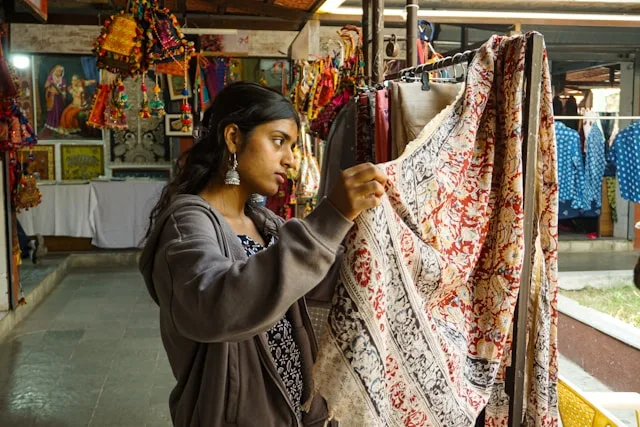
Ahmedabad's textile mills are running at roughly two-thirds capacity. Water rationing, tightening environmental mandates, and softening export orders have left legacy spinning and weaving units constrained. From the outside, this looks like a market with talent to spare.
It is not. While traditional mills shed workers and slow production, a parallel market in technical textiles, sustainability compliance, and digital manufacturing is growing at nearly three times the rate of the legacy sector. The professionals required to run that parallel market barely exist in sufficient numbers. A Head of Technical Textile Development search in the Sanand-Changodar belt now averages seven to nine months to fill. A VP-level nonwovens role attracts interest from fewer than fifty qualified candidates nationally, and 70% of those decline to relocate to Ahmedabad. The cluster is splitting in two, and the side that represents the future cannot hire fast enough.
What follows is a structured analysis of the forces reshaping Ahmedabad's textile sector, the employers driving that change, and what senior leaders need to understand before they make their next hiring or retention decision in this market.
The Two Markets Inside One Cluster
Ahmedabad district hosts between 1,200 and 1,400 registered textile units in the organised sector, employing roughly 180,000 to 200,000 workers directly in manufacturing. When ancillary roles in logistics, design, and trading are included, total sectoral employment reaches approximately 350,000. These figures, drawn from Gujarat's Industrial Extension Bureau and Directorate of Employment and Training data through 2024, describe a market of considerable scale.
But scale alone obscures the defining dynamic. Technical textiles still comprise only 12 to 15% of Ahmedabad's total textile output. Traditional fabrics account for more than 60%. Yet between 2021 and 2024, the technical textiles segment grew at a compound annual rate of 18.4%. Traditional textiles grew at 6.2%.
The employment implications of this split are already visible. Net employment in traditional spinning and weaving is projected to contract by 5 to 7% through 2026 as automatic cone winding and rapier looms replace manual processes. Technical textile and technical services employment is projected to grow 25 to 30%. The net result is positive. The structural result is a workforce being reshaped in ways the local talent pipeline cannot support.
This is the hollow middle. The cluster has physical infrastructure it cannot fully use and human capital requirements it cannot fully meet. The professionals being displaced by automation in commodity textiles do not possess the polymer science, composite materials, or digital manufacturing skills that technical textile manufacturers in Ahmedabad's industrial belt now require. Capital and labour are moving in opposite directions.
Where the Physical Cluster Is Relocating
The Vatva GIDC and Odhav industrial estates remain the historical anchor of Ahmedabad's textile processing. The Vatva Industries Association represents approximately 1,800 units across textile and ancillary operations. The cluster specialises in processing grey fabric through bleaching, dyeing, and printing, alongside denim washing, finishing, and an emerging segment in technical textile coating and lamination.
The Vatva Constraint
But Vatva is increasingly constrained. Land costs run between ₹8,000 and ₹15,000 per square metre. The Gujarat Pollution Control Board's Zero Liquid Discharge mandate, enforced since 2021, requires every processing unit to recycle 100% of its effluent. Compliance demands capital expenditure of ₹15 to 25 crore per medium-scale unit for reverse osmosis and multi-effect evaporator systems. As of 2024, approximately 30% of Vatva-based units operate at only 60 to 70% capacity because of these compliance costs and water input restrictions.
For any hiring leader managing a search in Ahmedabad's manufacturing sector, this physical reality matters directly. A candidate evaluating a role at a Vatva-based processor is evaluating a facility that may be unable to expand, operating under water rationing that limits production during March through June, and facing energy tariffs that have risen 20% in two years.
The Dholera Alternative
The growth is moving southwest. The Textile Park at the Dholera Special Investment Region, 80 kilometres from Ahmedabad, offers land at ₹800 to 1,200 per square metre and integrated common effluent treatment facilities built to ZLD standards from inception. As of early 2025, 14 textile units had signed memoranda of understanding for relocation or expansion, with projected creation of 12,000 direct jobs by 2027.
By 2026, approximately 30% of new technical textile capacity is expected to locate in Dholera rather than in the legacy Vatva cluster. This spatial shift has direct talent implications. Dholera is an 80-kilometre commute from central Ahmedabad. Candidates being recruited for Dholera-based roles are being asked to work in an industrial zone that is still developing residential and social infrastructure. The relocation proposition is fundamentally different from a role in the established Naroda-Vatva triangle.
The Investment Pipeline and What It Demands
The Production Linked Incentive Scheme 2.0 for Textiles has approved 64 applicants nationally, with Gujarat-based firms capturing approximately ₹1,800 crore of the ₹4,600 crore approved investment under the man-made fibre and technical textiles category. Arvind Limited and Welspun India are expected to commission expanded technical textile facilities by Q3 2026.
This investment is real. It is also accelerating hiring pressure in exactly the disciplines where supply is thinnest.
What PLI-Backed Facilities Need
The professionals required to commission and run these facilities are not traditional textile engineers. They are polymer scientists, composite materials specialists, nonwoven process engineers, and sustainability compliance leaders who understand both the technical manufacturing requirements of modern production lines and the regulatory environment specific to Gujarat's water and energy constraints. A commissioning-phase technical textile plant needs a Head of R&D, a ZLD Compliance Head, and digital printing technologists before it produces a single metre of geotextile.
The Ahmedabad Textile Industry's Research Association (ATIRA), operating the Centre of Excellence for Technical Textiles under the National Technical Textiles Mission, trains approximately 800 to 1,000 textile professionals annually. Gujarat Technological University graduates roughly 400 textile-specific engineers each year. NIFT Gandhinagar feeds design and merchandising talent into the system, with an estimated 35% of graduates joining Ahmedabad-based firms.
These numbers are meaningful but insufficient. The technical textile segment's growth rate demands specialists that India's academic institutions have not yet produced at scale. The pipeline feeds the legacy sector adequately. It starves the emerging one.
The Talent Scarcity That Aggregate Data Conceals
Hiring demand across Ahmedabad's textile sector increased 14% year-on-year in 2024. That headline figure is almost meaningless without decomposition.
Demand for traditional weavers and spinners declined 8%. Demand for technical textile engineers, sustainability managers, and digital textile designers increased 45 to 60%. A market that looks like it is hiring moderately is actually contracting in one segment and overheating in another.
Where Searches Stall
The pattern is well documented through ATIRA's industry consultation surveys and the Confederation of Indian Textile Industry's Gujarat skill gap analysis. Head of Technical Textile Development roles requiring 12 or more years of experience in nonwovens or composite materials remain unfilled for an average of seven to nine months. Equivalent positions in commodity textiles fill in 45 to 60 days.
One mid-sized technical textile exporter with ₹200 crore in revenue disclosed publicly at a Gujarat Chamber of Commerce and Industry forum in August 2024 that it had been seeking a Technical Manager in Geosynthetics for 11 months. The firm ultimately hired from a competitor in Pune, paying a 35% salary premium and a relocation package to close the search.
VP-level nonwovens roles present an even starker picture. Executive search firms operating in the region report that the national candidate pool for this position is limited to approximately 40 to 50 qualified professionals. Most are employed in Bangalore, Mumbai, or overseas. Seventy percent of approached candidates decline relocation to Ahmedabad. The reasons are specific: limited alternative employers if the role does not work out, and constrained spousal employment opportunities in a city that lacks Bangalore's IT sector or Mumbai's financial services market.
The Digital Printing Bottleneck
Digital textile printing technologists present a different kind of scarcity. These are operators and maintenance engineers for industrial digital printers manufactured by EFI Reggiani or MS LaRio. According to the Textile Association of India's Gujarat unit newsletter and industry estimates reported in Business Standard in June 2023, when Arvind Limited opened its expanded digital print facility in Naroda in 2023, it recruited three senior technicians from Raymond's Vapi unit and Mafatlal Industries' Nadiad facility, offering compensation packages 40 to 45% above previous salaries plus housing allowances.
This is not a market where posting a job advertisement reaches the right candidates. The qualified professionals are already employed, solving specific technical problems at competitor facilities. Reaching them requires direct identification and approach rather than any method that depends on candidates being active in the market.
The Compensation Paradox
Aggregate compensation data for Ahmedabad's textile sector shows only 4 to 5% annual growth at the median level, according to Aon India's 2024 salary increase survey. This makes the market appear soft.
It is not soft. It is bifurcated.
At the executive level, retention bonuses have increased 150% since 2022. Average tenure for VP-level technical textile executives has dropped to 2.8 years, according to Korn Ferry's Executive Mobility Report. The professionals the sector most needs are the ones it retains least effectively.
Role-by-Role Reality
For Technical Textile Product Managers and R&D Managers at the senior specialist level with 8 to 12 years of experience, compensation in Ahmedabad ranges from ₹18 to 28 lakhs per annum. The ratio of active to passive candidates is estimated at 1:8. For every professional applying to a posted role, eight more qualified professionals are employed and not looking.
At the CTO or Head of Technical Textiles level with 15 or more years of experience, compensation ranges from ₹65 to 110 lakhs per annum. This represents a 25 to 30% discount to equivalent Mumbai market rates, partially offset by Ahmedabad's lower cost of living. Forty percent of packages at this level now include performance-linked components worth 20 to 30% of total cost to company.
For Sustainability Managers and ZLD Compliance Heads, compensation runs ₹20 to 35 lakhs, a 40% premium over equivalent environmental roles in other manufacturing sectors. This premium reflects the regulatory intensity of Gujarat's textile processing environment. Chief Sustainability Officers command ₹55 to 90 lakhs and are almost exclusively filled through retained executive search because the candidates hold equivalent roles in Tiruppur, Surat, or Bangladesh and are not visible on any job board.
Meanwhile, traditional Plant Managers in spinning, weaving, or dyeing earn ₹12 to 22 lakhs in an active candidate market. Automation-driven layoffs in traditional mills have elevated unemployment among textile engineers aged 45 and above to 12 to 15%. The irony is acute: a surplus of experienced traditional textile managers exists alongside an acute deficit of the technical textile specialists the industry now needs.
Why Ahmedabad Loses Candidates to Competing Cities
The geographic competition for textile talent is not generic. It follows precise patterns that any organisation benchmarking its hiring approach in this market must understand.
The Mumbai Premium
Mumbai offers 25 to 35% compensation premiums for VP-level and C-suite textile executives compared to Ahmedabad. Mumbai's cost of living is 60 to 80% higher, particularly for housing, which partially neutralises the compensation advantage. But the real pull is not money. Mumbai hosts the headquarters of Aditya Birla Fashion, Reliance Textiles, and the buying offices of international brands including Zara and H&M. A career path through Mumbai offers clearer routes to pan-India or global roles. For a senior leader evaluating two equivalent offers, the career trajectory calculation often favours Mumbai regardless of the net compensation comparison.
The Bangalore Problem
For technical textile R&D roles specifically, Bangalore competes aggressively. The city offers 20 to 25% compensation premiums for polymer engineers and technical textile scientists, particularly in medical textiles and aerospace composites. But compensation is not the decisive factor. Bangalore's IT sector provides employment options for the spouses of relocated professionals. KPMG's Textile Sector Talent Survey and Indeed's Hiring Lab India Report both identify this spousal employment deficit as the primary reason candidates decline Ahmedabad-based technical textile offers.
This is not a problem that compensation alone can solve. A 35% salary premium does not address the fact that a candidate's spouse, who may hold a senior technology role, faces materially fewer opportunities in Ahmedabad than in Bangalore or Mumbai. The total proposition required to move a passive candidate in this market extends well beyond the offer letter.
Surat and Tiruppur
Surat, 260 kilometres away, competes for synthetic textile and polyester value-chain talent with slightly lower salaries but higher volumes of bonus and variable pay linked to trading cycles. Tiruppur in Tamil Nadu competes for knitwear and garment manufacturing talent at similar compensation levels but with denser ecosystem support in wet processing. Pune and Coimbatore are emerging competitors for automation and technical textile talent, offering comparable costs of living to Ahmedabad but with stronger academic pipelines through IIT Madras and COEP Pune.
The Risks That Shape Every Search
Three economic risks bear directly on how senior leaders should think about talent strategy in this market.
Water and the Narmada Dependency
Ahmedabad's textile cluster depends on the Narmada River via the Sardar Sarovar Dam. The Gujarat government's water allocation priority ranks industrial use below drinking water and agriculture. In 2023-24, textile processors faced 40% cuts in allocated water during summer months. When municipal water is rationed, the alternative is tanker supply at ₹1,200 to 1,800 per kilolitre compared to municipal rates of ₹85 to 120.
Climate projections from the Indian Institute of Technology Gandhinagar indicate a 15 to 20% reduction in Narmada flow by 2030. For any executive considering a senior role in Ahmedabad's textile sector, this is a material strategic risk. The cluster's long-term viability depends on massive investment in seawater desalination or effluent recycling. A Head of Operations or Chief Sustainability Officer joining this market is inheriting a water crisis.
The EU Carbon Border Adjustment Mechanism
The EU's CBAM, phasing in from 2026, will impose carbon costs on Indian textiles estimated at 12 to 18% above current levels. This disproportionately affects Ahmedabad's coal-dependent processing units. The Directorate General of Foreign Trade's export risk analysis through 2024 identified this mechanism as a material threat to commodity denim and fabric exporters. Organisations that lack sustainability leadership capable of managing carbon accounting, alternative energy procurement, and compliance reporting will face immediate margin compression.
The Tariff Threat
The US market accounts for 32% of Gujarat's textile exports. Proposed US import tariff changes targeting Indian textiles, under review through 2025, pose existential risk to Ahmedabad's commodity exporters. Gujarat's textile and apparel exports already declined 8.3% year-on-year in FY2023-24 to approximately ₹78,000 crore, with Ahmedabad-based units citing reduced orders from EU and US markets.
The counterpoint: technical textile exports from the region, particularly geotextiles for infrastructure projects in Africa and the Middle East, grew 22% in the same period. The export story is as bifurcated as the talent story.
What This Means for Hiring Leaders in This Market
The original synthesis from this data is not that there is a shortage. Shortages are common. The synthesis is this: the aggregate compensation data and the aggregate capacity utilisation data both point toward a soft market. Both are misleading. The specific talent required for the sector's strategic pivot is experiencing acute inflation and mobility that contradicts every aggregate indicator. A hiring leader relying on market-wide salary surveys and capacity reports will systematically underestimate how difficult it is to hire the specific professionals this sector needs, because the averages are dragged down by a legacy workforce that is shrinking and available while the technical workforce is scarce and mobile.
This is why traditional search approaches fail in Ahmedabad's textile sector. Job advertisements reach the active 12.5% of the market. For a ZLD Compliance Head, a Technical Textile CTO, or a VP of Nonwovens, the qualified professionals are not active. They are employed, performing well, and not looking. The passive-to-active ratio for these roles runs 8:1. Reaching them requires systematic talent mapping followed by direct, confidential approach.
KiTalent's methodology is built for exactly this kind of market. AI-powered talent mapping identifies the professionals who match the technical and leadership profile before any outreach begins. Interview-ready candidates are delivered within 7 to 10 days. The pay-per-interview model means organisations pay only when they meet qualified professionals, not before. With a 96% one-year retention rate across 1,450 completed executive placements, the approach is designed for markets where the cost of a failed hire or a stalled search is measured in months of lost production capacity and competitive ground.
For organisations competing for technical textile leadership, sustainability executives, or digital manufacturing specialists in Ahmedabad's bifurcated market, where the professionals you need are not visible and the aggregate data makes the challenge look easier than it is, speak with our executive search team about how we approach this specific market.
Frequently Asked Questions
What is the average time to fill a senior technical textile role in Ahmedabad?
Head of Technical Textile Development roles requiring 12 or more years of experience in nonwovens or composite materials take an average of seven to nine months to fill in the Ahmedabad market, compared to 45 to 60 days for equivalent positions in commodity textiles. VP-level nonwovens positions can take even longer because the national candidate pool is limited to approximately 40 to 50 qualified professionals, most based in Bangalore, Mumbai, or overseas. Direct headhunting methods consistently outperform job advertising for these roles.
How does Ahmedabad textile executive compensation compare to Mumbai?
Mumbai offers 25 to 35% compensation premiums for VP-level and C-suite textile executives compared to Ahmedabad. However, Mumbai's cost of living is 60 to 80% higher, particularly for housing. At the CTO or Head of Technical Textiles level, Ahmedabad packages range from ₹65 to 110 lakhs per annum. Forty percent of executive packages in Ahmedabad now include performance-linked components worth 20 to 30% of total cost to company, and retention bonuses have increased 150% since 2022.
What is the Zero Liquid Discharge mandate and how does it affect textile hiring in Ahmedabad?
The Gujarat Pollution Control Board requires all textile processing units to recycle 100% of effluent. Compliance requires capital expenditure of ₹15 to 25 crore per medium-scale unit for reverse osmosis and multi-effect evaporator systems. This mandate has created acute demand for ZLD Compliance Heads and Sustainability Managers, who command a 40% premium over equivalent environmental roles in other manufacturing sectors. These roles are almost exclusively filled through retained search because qualified candidates are employed and not actively looking.
Why do technical textile candidates decline relocation to Ahmedabad?
According to executive search data, 70% of approached candidates for VP-level technical textile roles decline relocation to Ahmedabad. The two primary reasons are limited alternative employers if the role does not succeed, creating career risk, and constrained spousal employment opportunities. Bangalore and Mumbai offer dual-career households substantially more options, particularly where a spouse works in technology or financial services. Compensation premiums alone do not resolve these concerns. Effective search requires addressing the full relocation proposition.
What are the fastest-growing technical textile roles in Ahmedabad's market?
The three fastest-growing categories are technical textile R&D engineers and product managers, sustainability and ZLD compliance specialists, and digital textile printing technologists. Hiring demand for these categories increased 45 to 60% year-on-year in 2024 while demand for traditional weavers and spinners declined 8%. KiTalent's talent pipeline methodology identifies and engages passive candidates in these high-demand categories before roles are formally posted.
Is Ahmedabad's textile cluster growing or declining?
Both. Traditional spinning, weaving, and commodity processing are contracting, with net employment projected to decline 5 to 7% through 2026 due to automation. Technical textiles are growing at a compound annual rate of 18.4%, with PLI-backed investment of ₹1,800 crore flowing into Gujarat-based firms. The net result is a structurally altered market where the skills being displaced are fundamentally different from the skills being demanded.