Ajman's Factories Are Full. Its Senior Technical Roles Are Not. The Hiring Challenge Inside the UAE's Most Saturated Industrial Zone
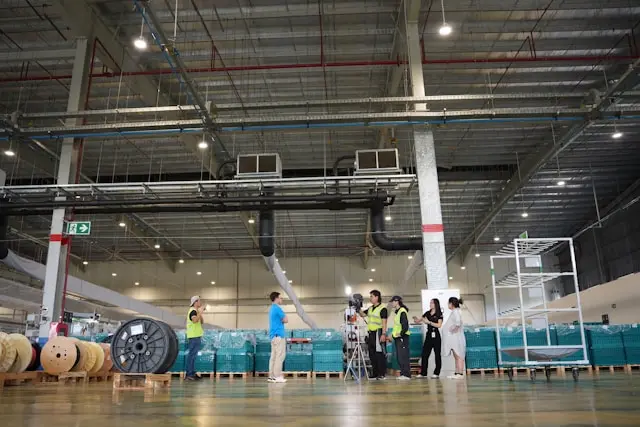
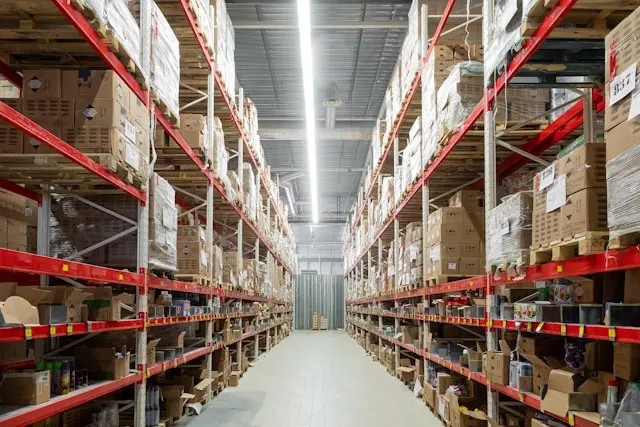
Ajman Industrial Area operates at 96% occupancy. Nearly 2,850 active industrial licences fill fabrication yards, pre-cast plants, and furniture workshops stretched across AIA Zones 1 and 2, Al Hamidiya, and the Al Jurf overflow corridor. By every physical measure, this is a manufacturing cluster running at capacity. The production lines are busy. The order books are stable. And the senior technical and managerial positions required to run these operations remain stubbornly, persistently empty.
The vacancy rate for professional roles in Ajman manufacturing sits between 18% and 22%. For operational labour, it is 6% to 8%. That gap is not a rounding error. It is a systemic condition where the people who run the machines, manage the plants, and hold the certifications that regulators demand are far scarcer than the people who operate them. A senior production engineer search in Ajman's cement or pre-cast subsector now averages 90 to 120 days to fill. The equivalent search in Dubai takes half that time. The emirate has built the infrastructure and attracted the licences. It has not built the leadership bench to match.
What follows is a ground-level analysis of Ajman's light manufacturing and building materials market in 2026: where the hiring pressure is most concentrated, why compensation alone has not solved it, and what organisations competing for senior industrial talent in the northern emirates need to understand before they commit to a search.
Inside Ajman's Industrial Cluster: What the Numbers Reveal
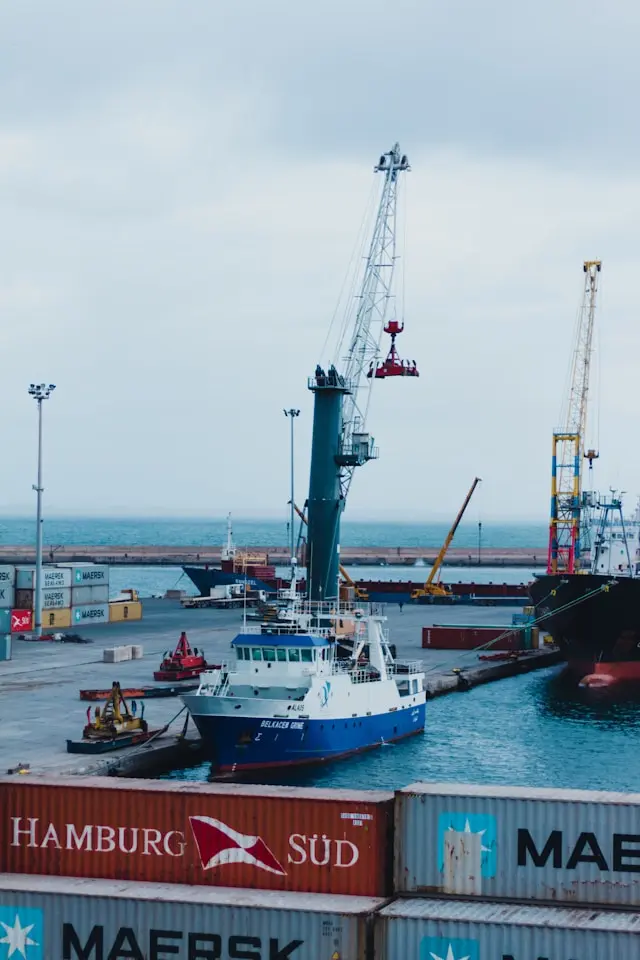
Ajman's industrial base accounts for roughly 18% to 22% of the emirate's non-oil GDP. Building materials, specifically cement, pre-cast concrete, and steel fabrication, form the largest subsector by revenue. Gulf Cement Company alone operates at 2.5 million tonnes of annual capacity with approximately 450 to 500 staff. Emirates National Factory, Al Ameera Steel, and Ajman Steel Factory anchor a steel fabrication cluster dominated by cut-and-bend operations and structural workshops feeding Dubai's high-rise pipeline. Three mid-scale pre-cast concrete facilities produce 500 to 1,500 units per day for villa and low-rise commercial projects across the northern emirates.
Beyond construction materials, the picture is broader than many hiring leaders realise. Ajman Free Zone hosts over 400 light manufacturing units under industrial licences, concentrated in furniture and textiles. More than 200 licensed woodwork and upholstery workshops operate in Al Jurf and AIA Zone 2, with export orientation to GCC markets increasing 15% since 2023. This is not a single-sector industrial area. It is a multi-layered SME ecosystem where approximately 85% of licence holders employ fewer than 100 people.
The total workforce across manufacturing and logistics is estimated at 45,000 to 52,000, according to UAE Ministry of Human Resources and Emiratisation data from 2024. The vast majority of that headcount sits at operational and semi-skilled levels. The layer that is thin, and thinning further, is the one at the top.
Capacity Utilisation and the Densification Puzzle
Steel fabrication facilities run at 85% to 90% capacity utilisation. Pre-cast demand softened 8% to 12% year-over-year following the post-Expo 2020 construction moderation but has since stabilised, particularly for infrastructure pre-casting. The overall picture is one of a mature industrial zone working hard but not expanding outward.
It cannot expand outward. Ajman Industrial Area is bounded by the Persian Gulf to the west and residential zones to the east. No meaningful greenfield industrial land remains. The AIADC's "Ajman Industrial City" masterplan sits at 98% build-out. Waiting lists for standard warehousing and fabrication facilities extend 8 to 12 months. And yet new industrial licence issuance rose 8% year-over-year in 2024. That tension between full physical occupancy and continued licence growth suggests something important: existing facilities are densifying. Multi-story industrial development and subdivision of larger plots are absorbing new entrants that traditional occupancy metrics do not fully capture.
For hiring leaders, this matters. More licences within the same physical footprint means more employers competing for the same thin pool of senior technical and managerial talent. The competition is intensifying without the talent base growing to match.
The Senior Technical Deficit: Where Ajman's Hiring Gap Is Most Acute
The headline statistic bears repeating because it is so often misread. The vacancy rate for professional roles in Ajman manufacturing is 18% to 22%. For operational labour, it is 6% to 8%. This is not a general labour shortage. The factories are not struggling to fill production lines. They are struggling to fill the roles that direct them.
Three categories carry the most acute pressure.
Production Engineering at Senior Specialist Level
Certified production engineers with seven or more years of GCC experience in steel or pre-cast environments are functionally unavailable through conventional hiring channels. Job postings for "Production Engineer, Building Materials" in Ajman increased 45% between Q3 2023 and Q3 2024 according to LinkedIn Talent Insights data. The average permanent placement takes 90 to 120 days. In Dubai, the same search resolves in 45 to 60 days, according to the Hays GCC Salary Guide 2025.
The reason for the gap is not simply compensation. It is that 60% of senior production engineering hires in Ajman's cement and pre-cast subsectors require international recruitment from Egypt, India, or Jordan because the local GCC-experienced talent pool is insufficient. The search is slow because it is intercontinental, requiring visa processing, relocation logistics, and the kind of offer structuring that a standard job advertisement cannot deliver.
Plant Operations Management
Bilingual (Arabic/English) operations managers capable of managing 100-plus person workforces across multiple nationalities represent the single most persistent vacancy category. Retention is the core problem. Plant managers in Ajman manufacturing average 2.3 years in role, compared to 4.1 years in Dubai. That turnover rate creates a continuous replacement cycle where each departure triggers a 90-plus day search, during which interim coverage strains adjacent roles. According to Mercer's UAE Turnover Analysis from 2024, 35% of plant manager-level executives in Ajman leave within 18 months, predominantly for roles in Dubai's industrial zones. The drivers they cite are infrastructure quality and international schooling access, not dissatisfaction with the work itself.
Certified Welders and CNC Operators
AWS/ASME-certified welders and Mastercam-certified CNC programmers occupy a different segment but face comparable scarcity. Unemployment among certified welders with seven-plus years of GCC experience sits below 2%. These professionals do not apply for posted vacancies. They move between employers for 15% to 20% salary premiums while remaining employed throughout. Wage inflation for certified welders has run at 12% to 15% annually since 2022, a rate that has compressed margins for smaller fabrication shops that cannot absorb the cost. As 30% to 40% of metal fabrication firms plan to deploy semi-automated CNC machinery by mid-2026, the demand for programmers who can operate five-axis machining centres for aluminium façade fabrication is accelerating into a market with almost no surplus supply.
The cost of leaving these roles unfilled is not abstract. It is measured in plant throughput, compliance exposure, and the cascading effect of a single missing technical leader on an entire facility's productivity.
The Compensation Paradox: Why Headline Wage Data Misleads
Here is the analytical claim that the aggregate data obscures: the UAE manufacturing labour market split in two sometime around 2023, and the two halves are moving in opposite directions. Aggregate manufacturing wage growth across the UAE moderated to 3% to 4% annually in 2024, down from 6% to 8% in 2022 and 2023. That deceleration led some market observers to conclude that post-Expo construction cooling had softened hiring pressure across the board. It had not.
Compensation for Plant Manager and Senior Production Engineer roles in Ajman's building materials subsector accelerated to 10% to 12% annual growth through the same period. The headline number and the critical-role number are not just different. They are directionally opposed. General labour markets show slack. Strategic technical leadership faces severe shortage. The headline masks the stratification.
For a General Manager or Plant Director with ten-plus years of experience, the Ajman market now pays AED 45,000 to 70,000 per month, with top-quartile cement and pre-cast facilities reaching AED 85,000 including performance bonuses, according to Mercer's UAE Total Remuneration Survey from 2024. Technical Director and COO-level manufacturing roles command AED 55,000 to 90,000 monthly. Equity participation remains rare but is emerging among family-owned conglomerates transitioning to professional management structures.
At the senior specialist level, Operations Managers earn AED 22,000 to 32,000 monthly (base plus housing), Senior Production Engineers earn AED 18,000 to 28,000, and Supply Chain Managers with construction materials specialisation earn AED 20,000 to 30,000. These figures are competitive within the northern emirates context. They are not competitive with Dubai.
Dubai-based manufacturing roles pay 25% to 35% higher base salaries than equivalent Ajman positions. An Operations Manager earning AED 28,000 in Ajman can expect AED 28,000 to 40,000 for the same role in Jebel Ali or Dubai Industrial City. The premium is not the full story. Dubai offers superior metro connectivity, proximity to multinational industrial corporations like Siemens and Emirates Global Aluminium, clearer career trajectories toward regional roles, and international schooling options that matter deeply to expatriate managers with families.
When 40% of qualified mid-level engineers recruited to Ajman relocate to Dubai within 24 months, the problem is not that Ajman's offers are wrong. It is that Ajman's total value proposition competes on compensation alone in a market where lifestyle, career trajectory, and family infrastructure carry equal weight.
The Infrastructure Tax: Logistics Costs as a Hiring Barrier
The E311 Emirates Road corridor serves as the sole major arterial connecting Ajman to Dubai and Sharjah. Truck traffic volume exceeds design capacity by 40% during peak hours. Average truck transit time from Ajman Industrial Area to Dubai's Al Qusais has increased 35% since 2022, now running 65 to 90 minutes during peak periods according to Dubai Roads and Transport Authority data. Transport costs now consume 12% to 15% of operational budgets for Ajman-based manufacturers, compared to 7% to 9% for Sharjah-based competitors.
This is not only a logistics problem. It is a talent problem. Senior managers and engineers commuting from Dubai or Sharjah factor the transit penalty into their career decisions. A candidate currently in a 25-minute commute to a Sharjah facility faces a specific calculation when offered a role in Ajman that adds 30 to 45 minutes each way. That commute differential interacts with the compensation gap rather than existing independently of it. The Ajman offer must overcome both.
Sharjah compounds this pressure from a different angle. Sharjah's industrial areas offer comparable compensation to Ajman (within 5%) but provide superior dual-corridor road connectivity to Dubai via both the E311 and E611, lower residential rental costs (15% to 20% below Ajman for equivalent quality), and a more established industrial ecosystem with higher concentrations of ancillary services in tooling, maintenance, and logistics. For a senior production engineer weighing two Northern Emirates offers, Sharjah's practical advantages are material.
Ras Al Khaimah operates differently still. RAK's industrial zones offer 10% to 15% lower salaries than Ajman but provide subsidised land and utilities through RAKEZ incentives and newer industrial park infrastructure at Al Ghail and Al Hamra. RAK attracts talent seeking lower cost of living, though career advancement opportunities remain limited. The competitive dynamics across these three emirates mean that Ajman's hiring challenges cannot be solved in isolation. They must be understood within a regional talent circulation system where candidates move freely between emirates based on a composite assessment of compensation, commute, career trajectory, and family quality of life.
Regulatory Pressure and the Compliance Talent Gap
Two regulatory forces are compressing Ajman manufacturers from different directions.
The first is environmental. The UAE's Net Zero 2050 initiative will require carbon footprint auditing for cement and steel fabrication facilities. Estimated compliance cost runs AED 2 to 5 million per facility for monitoring equipment and process upgrades, according to the Ministry of Climate Change and Environment's technical guidance. The updated Federal Decree-Law No. 32/2021 on Commercial Companies requires environmental compliance upgrades costing AED 500,000 to 1.2 million for cement and pre-cast facilities by Q4 2026. These are not optional investments. They are regulatory requirements. And they require people who understand both the technical standards and the enforcement environment.
Environmental compliance expertise, specifically knowledge of UAE Ministry of Climate Change and Environment regulations for industrial emissions and waste management, has moved from a desirable skill to a mandatory one for any senior hire in building materials. The professionals who hold this expertise are scarce across the UAE. In Ajman, they are effectively absent from the active candidate market.
The second pressure is Emiratisation. The Nafis programme applies hiring targets for UAE nationals. But manufacturing roles attract minimal Emirati participation: less than 2% of Ajman's manufacturing workforce holds Emirati nationality according to UAE Ministry of Human Resources and Emiratisation data from 2024. This creates regulatory tension without solving the underlying talent deficit. Firms must invest compliance effort and resources in a programme that, in the manufacturing context, cannot materially change the composition of the workforce. The administrative burden is real. The talent supply impact is negligible.
Adding to the regulatory friction, Ajman-based manufacturers report ESMA (Emirates Authority for Standardization and Metrology) compliance audit cycles averaging 14 to 16 weeks, compared to 8 to 10 weeks in Dubai. That delay costs time, management attention, and in some cases the ability to bid on time-sensitive contracts. Quality assurance professionals with ISO 9001:2015 lead auditor certifications and ACI concrete pre-casting credentials are in high demand precisely because the regulatory pathway is slow enough to make compliance a competitive bottleneck.
Why Conventional Hiring Methods Fail in This Market
The senior technical talent market in Ajman is overwhelmingly passive. Over 70% of qualified Plant Managers, General Managers, specialised production engineers, and certified welders are currently employed and not actively applying for positions, according to Korn Ferry's UAE Industrial Sector Briefing from 2024. Plant Managers average 3.5 years of tenure in their current roles. Specialised CNC and pre-cast production engineers with seven-plus years of GCC experience show unemployment rates below 2%.
This means that posting a vacancy on a job board reaches, at best, the 30% of the market that is actively looking. That 30% skews toward junior engineers (zero to three years of experience) and administrative coordinators where supply is adequate relative to demand. The senior specialists and operations leaders that Ajman manufacturers actually need are not on job boards. They are running plants in Sharjah, Dubai, or Abu Dhabi. They will not see your advertisement. They must be found and approached directly.
The distinction between candidates who apply and candidates who must be identified is not a marketing claim. It is a structural feature of this labour market. A certified welder with ASME credentials and eight years of GCC experience does not need to look for work. They receive approaches. They evaluate opportunities based on the specificity of the proposition and the credibility of the intermediary. A generic job listing posted on a careers portal does not register.
The international dimension deepens the challenge. With 60% of senior production engineering hires requiring recruitment from outside the UAE, the search process must encompass candidate identification across borders, visa and relocation logistics, and package structuring that accounts for housing allowances, schooling subsidies, and flight benefits. This is not a local recruitment exercise. It is a multi-stage executive search that requires talent mapping across Egypt, India, Jordan, and the wider GCC before a single interview can be arranged.
The risk of a failed senior hire in this environment is compounded by the timeline. If a Plant Manager departs after 18 months and the replacement search takes four months, the facility operates for a third of a year without permanent senior leadership. Multiply that pattern across the 35% of plant managers who leave within 18 months, and the sector's productivity constraint becomes clear: it is not the machines. It is the revolving door at the top.
What Hiring Leaders Need to Do Differently
The organisations succeeding in this market share three characteristics that distinguish them from firms trapped in the revolving-door cycle.
First, they front-load the total proposition. They do not lead with base salary and wait for the candidate to ask about schooling, housing, and commute arrangements. They present a composite package from the first conversation that addresses the specific reasons candidates leave Ajman within 24 months. That means quantifying the schooling subsidy, naming the residential communities where comparable hires live, and being transparent about the commute reality rather than hoping the candidate does not ask.
Second, they invest in direct identification of passive candidates rather than waiting for applications. The firms filling Plant Manager roles in 60 days rather than 120 days are commissioning proactive searches that map the competitor talent base in Sharjah and Dubai, identify the individuals with the right certification profile and tenure stage, and approach them with a proposition designed for their specific circumstances. This approach reaches the 70% of the qualified market that no job board touches.
Third, they solve for retention at the point of hire, not after the first departure. Firms that offer structured career development toward multi-site or regional responsibility, create genuine technical leadership pathways within the Ajman facility, and invest in the infrastructure surrounding the role (family support, professional development, management autonomy) report materially better retention outcomes. The 2.3-year average tenure is not inevitable. It reflects what happens when the hire is treated as a transaction rather than a relationship.
For organisations competing for senior industrial leadership across the northern emirates, where the candidates capable of running a 150-person plant at 90% capacity utilisation are employed, passive, and evaluating propositions from three emirates simultaneously, KiTalent delivers interview-ready executive candidates within 7 to 10 days through AI-enhanced direct search that identifies the specific professionals conventional methods miss. With a 96% one-year retention rate and a pay-per-interview model that eliminates upfront retainer risk, the approach is built for exactly this kind of constrained, specialist market. To discuss how this works for your next senior manufacturing search, start a conversation with our executive search team.
Frequently Asked Questions
What is the average salary for a Plant Manager in Ajman's manufacturing sector?
A Plant Manager or Operations Manager with five to eight years of experience in Ajman's light manufacturing and building materials sector earns AED 22,000 to 32,000 per month including housing allowance. At the General Manager or Plant Director level with ten-plus years of experience, compensation reaches AED 45,000 to 70,000 monthly, with top-quartile packages at cement and pre-cast facilities reaching AED 85,000 including performance bonuses. These figures trail Dubai equivalents by 25% to 35%, a gap that contributes to Ajman's retention challenge for senior industrial leaders.
Why is it so hard to hire senior production engineers in Ajman?
Three factors converge. First, certified production engineers with seven-plus years of GCC experience in steel or pre-cast environments are scarce across the entire UAE, with unemployment below 2% in this cohort. Second, 60% of successful hires require international recruitment from Egypt, India, or Jordan because the domestic talent pool is insufficient. Third, Ajman competes with Dubai's superior compensation and lifestyle proposition. The result is an average days-to-fill of 90 to 120 days for permanent placements, double the Dubai equivalent.
How does Ajman compare to Sharjah and Dubai for manufacturing investment?
Ajman offers lower industrial lease rates (AED 35 to 40 per sqm annually versus Sharjah's AED 42 to 48) and high SME density with nearly 2,850 active industrial licences. However, Dubai provides 25% to 35% higher salaries and superior infrastructure, while Sharjah offers comparable pay with better road connectivity and lower residential costs. Ajman's 96% industrial occupancy and 8- to 12-month waiting lists for new facilities signal strong demand but also constrain growth for new entrants.
What roles are hardest to fill in UAE light manufacturing?
The most persistent shortages in Ajman's building materials sector are in senior production engineering (CNC, pre-cast, steel), bilingual plant operations management, and certified welding (AWS/ASME). Professional role vacancy rates run at 18% to 22%, compared to 6% to 8% for operational labour. Over 70% of qualified candidates in these categories are passive and must be reached through direct executive search rather than job advertisements.
How long does it take to fill a senior manufacturing role in Ajman?
Senior production engineering and plant management roles in Ajman's building materials subsector typically take 90 to 120 days for permanent placement. This compares to 45 to 60 days for equivalent roles in Dubai. The extended timeline reflects the need for international recruitment in 60% of cases, competition from higher-paying Dubai employers, and a passive candidate market where conventional job advertising reaches less than 30% of qualified professionals.
What environmental regulations affect Ajman manufacturers in 2026?
Ajman-based cement and steel fabrication facilities face two regulatory pressures. The UAE's Net Zero 2050 initiative requires carbon footprint auditing, with compliance costs estimated at AED 2 to 5 million per facility for monitoring and process upgrades. Separately, the updated Federal Decree-Law No. 32/2021 mandates environmental compliance upgrades costing AED 500,000 to 1.2 million for cement and pre-cast operations by Q4 2026. These requirements are creating demand for environmental compliance specialists that the local market cannot currently supply.