Pančevo Port Logistics: Why €300 Million in Capital Investment Is Outpacing the Workforce That Runs It
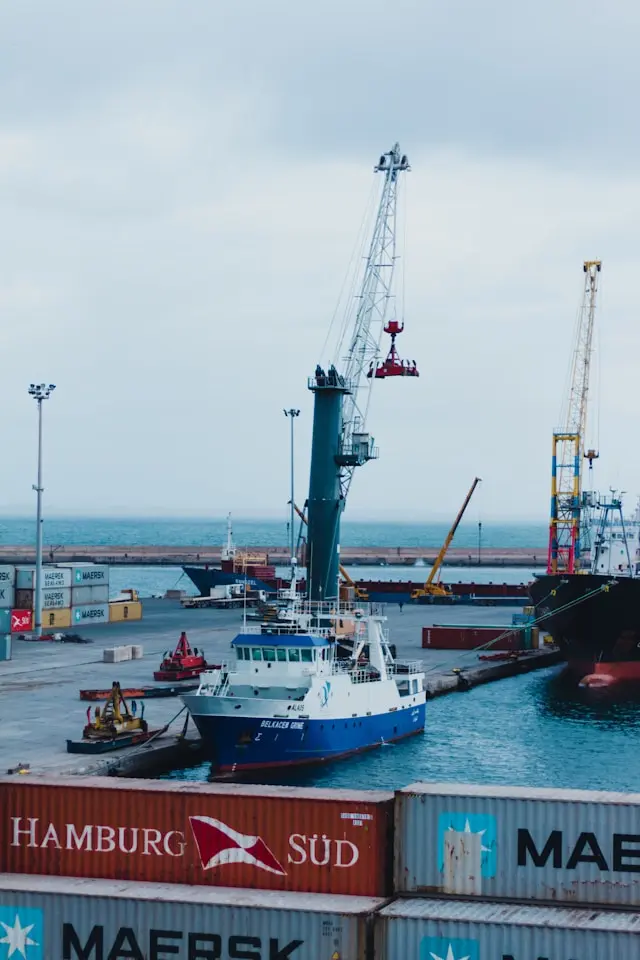
Pančevo's industrial corridor processed approximately 3.2 million tonnes of cargo through its Danube river port in 2023, running at 85% liquid bulk capacity. The NIS refinery complex, the HIP Petrohemija chemical works, and the port itself collectively employ more than 3,400 people in a tightly clustered chemical logistics ecosystem. By any measure, this is a working industrial hub with serious throughput, serious capital behind it, and serious problems finding the people it needs.
The tension at the centre of this market is not simply that demand for specialists exceeds supply. It is that capital is moving into Pančevo faster than human capital can follow. NIS announced a €300 million refinery modernisation programme in 2023. The Serbian government allocated €18 million for port upgrades between 2025 and 2027. EU accession requirements are forcing SEVESO III and ISPS Code compliance by late 2026, demanding millions more in terminal retrofitting. Every one of these investments increases the need for qualified chemical safety engineers, terminal operations managers, and intermodal logistics directors. And every one arrives in a region where 890 technical specialists emigrated in a single year, where 34% of transport workers are over 50, and where the professionals who remain are 85% to 90% passive.
What follows is an analysis of the forces reshaping Pančevo's industrial and logistics market, the specific talent gaps those forces are creating, and what organisations operating in this corridor need to understand before they attempt to fill leadership roles in one of Southeast Europe's most specialised and constrained hiring environments.
The Chemical Logistics Cluster: What Makes Pančevo Distinct
Pančevo is not a general cargo port competing on volume. Its throughput is dominated by liquid bulk, primarily crude oil and petrochemical feedstocks. Roughly 60% of cargo passing through Luka Pančevo is liquid bulk, with dry bulk and general cargo splitting the remainder. The port functions as an import gateway for the NIS refinery and HIP Petrohemija, not as an export terminal. Refined products and petrochemicals leave the region via pipeline, road, and rail.
This distinction matters for talent. The professionals who run chemical terminals are not the same professionals who manage container ports or general freight operations. They need ADN certification for dangerous goods handling on inland waterways. They need SEVESO-level safety qualifications. They need experience managing liquid bulk storage infrastructure that was, in many cases, built before 1980. Fewer than 120 professionals in Serbia hold valid ADN certification combined with supervisory experience. The talent pool is not small. It is microscopic.
A Hub Built Around Three Anchor Employers
The industrial cluster operates around three institutions. NIS, a Gazprom Neft subsidiary, runs the Pančevo refinery at a nameplate capacity of 4.8 million tonnes per year with approximately 1,850 employees in the complex. HIP Petrohemija, the state-supported petrochemical producer, employs roughly 1,200 in production and logistics. Luka Pančevo itself, municipally owned, staffs 380 to 420 people depending on seasonal demand.
International logistics firms including Milšped, Planum Group, and Gebrüder Weiss maintain operational offices in Pančevo. However, strategic decision-making and senior talent remain concentrated in Belgrade, 60 kilometres northwest. This creates an unusual dynamic where operational expertise lives in Pančevo but career progression pathways lead elsewhere. The implication for hiring is direct: any search for a senior logistics or operations leader in this market must contend with a candidate pool that views Pančevo as a waypoint, not a destination.
Infrastructure That Investment Has Not Yet Fixed
A 2024 technical audit classified 40% of Pančevo's quay walls as aging, with construction dating to before 1980. The Serbian Chamber of Commerce described the port infrastructure as "functionally obsolete" in specific berthing areas. Maximum draught limitations of 3.5 to 4.0 metres restrict vessel access and necessitate lightering operations during low water periods.
The intermodal picture is equally constrained. Rail connections to Corridor X exist, but the absence of a dedicated intermodal terminal forces cargo modal shifts through truck transport to Belgrade's container terminal. That adds 12 to 18 hours to transit times. A planned rail-barge intermodal terminal targets completion in late 2026, which would reduce road haulage by an estimated 30%. But that facility does not yet exist. The people needed to design, commission, and run it will need to be found in a market that already cannot fill its current vacancies.
The Investment Surge and Its Workforce Consequences
The scale of capital flowing into Pančevo's corridor is material. NIS committed €300 million to refinery modernisation. The government's River Transport Revival programme allocated €18 million for port upgrades targeting quay rehabilitation and electric crane installation. EU accession requirements under Chapter 14 demand ISPS Code amendments and SEVESO III compliance by Q4 2026, carrying estimated capital expenditure of €5 to 7 million per major terminal operator.
Each investment carries a workforce implication that the capital allocation itself does not address.
Electric cranes replacing diesel equipment require electrical engineers and control systems specialists. SEVESO III compliance demands qualified chemical safety professionals who can design, implement, and audit hazardous materials management systems. The intermodal terminal will need logistics directors with proven Danube-Corridor X rail-barge integration experience. Michael Page Serbia's industrial search practice estimated the total pool of such executives in Serbia at fewer than 50 individuals.
This is the core analytical problem in this market: capital has moved faster than the workforce can follow. The €300 million NIS modernisation assumes a supply of chemical engineers and terminal specialists that the region is actively losing to emigration. The port upgrades assume a maintenance workforce that is aging out of the labour force. The regulatory retrofitting assumes safety professionals whose qualifications are so scarce that a typical search runs 90 to 120 days for a mid-level terminal manager, compared to 45 days for a general logistics coordinator.
The question is not whether these investments will proceed. They will. The question is who will operate the assets they create.
The Emigration Equation: A Talent Pipeline Running in Reverse
Net emigration of technical specialists from the South Banat District reached 890 persons in 2023, according to the Statistical Office of the Republic of Serbia. Heavy transport drivers and certified chemical engineers were overrepresented in this cohort. The destinations are predictable: Germany, Austria, and Croatia, where logistics firms offer 3.5 to 4.5 times the net salary available in Pančevo.
The arithmetic is stark. A terminal operations manager in Pančevo earning €2,400 gross per month at the senior specialist level is looking at German employers offering €8,400 to €10,800 for equivalent qualifications. Non-financial incentives such as company housing and shift differentials partially offset Pančevo's 10 to 15% discount to Belgrade, but they cannot bridge a four-fold salary gap with the EU market.
This creates a structural outflow that no single employer in Pančevo can reverse unilaterally. Raising salaries by 25 to 35% to match Belgrade competition is feasible for an anchor employer like NIS. Matching German rates is not. The result is a market where the most qualified professionals leave, the remaining pool becomes more passive, and the organisations left competing for that shrinking pool are forced into longer searches with fewer viable candidates.
The Demographic Overhang
The South Banat District exhibits Serbia's most acute industrial workforce aging. According to the 2024 Labour Force Survey, 34% of transport and storage employees in the district are aged 50 or over, compared to a 28% national average. This is not a problem arriving in the future. It is a replacement crisis already underway.
When a senior terminal manager with 25 years of ADN-certified chemical handling experience retires, the replacement pipeline is thin. The Serbian Logistics Association's HR benchmarking data shows average tenure among certified terminal managers exceeding seven years at their current employer, with unemployment below 5% in this cohort. These are professionals who do not appear on job boards. They do not respond to postings. Reaching them requires direct identification and approach, and the proposition must justify disrupting a stable career in a small professional community where reputation matters.
Compensation Realities: What Roles Pay and Why It Is Not Enough
Pančevo's compensation structure reflects the tension between industrial necessity and regional economics. At the senior specialist and manager level, liquid bulk terminal managers earn €1,800 to €2,400 gross per month. HSE managers in chemical storage command €2,000 to €2,800. Supply chain managers in multimodal logistics earn €1,600 to €2,200. Mechanical engineers specialising in bulk conveyor systems sit at €1,400 to €1,900.
At the executive and director level, the bands widen considerably. An Operations Director at a port or logistics firm earns €4,500 to €6,500. A Chief Compliance Officer or Director of EHS in chemical operations commands €5,000 to €7,200. Regional logistics directors earn €4,000 to €6,000. Technical directors for industrial terminals range from €4,200 to €6,500.
These figures, sourced from Hays Serbia, Michael Page, PwC Serbia, and Deloitte Serbia, establish the market rate. But the market rate and the closing rate are different things.
PKS surveys indicate that 68% of industrial logistics firms in the South Banat region report considerable difficulty recruiting mechanical engineers with bulk conveyor and dust suppression expertise. The pattern is consistent: candidates receive multiple offers simultaneously, and securing acceptance requires salary premiums of 25 to 35% over the initial offer to compete with Belgrade-based distributors. A role advertised at €1,900 per month for a bulk systems engineer may need to close at €2,400 to €2,550 to beat competing offers. That premium is material when multiplied across a department.
The compensation gap between Pančevo and its primary competitor market, Belgrade, runs 20 to 30% for equivalent roles. For candidates weighing relocation or a longer commute, Belgrade offers not only higher pay but broader career progression, hybrid arrangements in corporate logistics roles, and proximity to multinational headquarters. Pančevo offers hands-on industrial work in a specialised environment. Both are legitimate propositions. But only one requires the candidate to accept a discount.
The Three Zones of Talent Competition
Pančevo does not compete in a single market. It competes across three concentric zones, each with a different competitive dynamic and a different cost of losing.
Belgrade: The 60-Kilometre Drain
Belgrade hosts the headquarters of DHL Supply Chain, DB Schenker, and the strategic offices of every major freight forwarder operating in Serbia. A senior logistics professional in Pančevo with ambitions beyond terminal management looks northwest. Belgrade offers 20 to 30% salary premiums, corporate environments, and the full spectrum of career pathways unavailable in a localised industrial economy. The commute is feasible. Relocation is easy. The result is a steady outflow of mid-career professionals at exactly the point where they become most valuable to Pančevo's employers.
[Novi Sad](/novi-sad-serbia-executive-search): The IT-Industrial Crossover
Ninety kilometres northwest, Novi Sad has developed a crossover economy where IT and industrial automation intersect. The city offers comparable salaries to Belgrade with lower living costs, and its tech-adjacent employers provide hybrid work arrangements that are structurally impossible in a port that requires physical presence at the terminal. For a chemical or mechanical engineer open to pivoting toward automation, monitoring systems, or industrial IoT, Novi Sad represents a lateral move that pays the same and offers more flexibility. This competition is harder for Pančevo employers to counter because the rival proposition is not just money. It is working conditions.
EU Markets: The Four-Fold Multiplier
The German Federal Employment Agency's foreign labour recruitment data confirms active recruitment of Serbian logistics and engineering professionals. The salary differential, 3.5 to 4.5 times net pay for ADN-certified operators and senior terminal managers, is not something local employers can match. They can only mitigate it through stability, housing support, and the calculation that emigration carries its own costs in language, family disruption, and credential recognition timelines.
The practical effect of this three-zone competition is that every search for a specialist or leadership role in Pančevo is competing not against a local peer set but against Belgrade's corporate logistics market, Novi Sad's tech-adjacent employers, and the entire Western European industrial sector. A search strategy that treats this as a local market will fail.
The Regulatory Deadline: SEVESO III, ISPS, and the Compliance Talent Cliff
The European Commission's 2024 Serbia Report is clear: Pančevo's chemical terminals must implement SEVESO III directive compliance and ISPS Code amendments by Q4 2026. The estimated cost is €5 to 7 million per major terminal operator. But the financial cost is the secondary problem.
The primary problem is who will do the work. SEVESO III compliance requires professionals who understand major-accident hazard assessment, safety management systems for chemical storage, and the specific technical standards for inland waterway terminals handling dangerous goods. These professionals are a subset of a subset. They must hold relevant chemical safety qualifications, they must understand the regulatory framework Serbia is transposing from EU law, and they must be able to implement systems in facilities that were designed to different standards decades ago.
The EU Industrial Emissions Directive and ATEX safety standards for chemical terminals add a further €12 to 15 million in retrofitting costs across Pančevo bulk facilities by 2027. Non-compliance risks operational licensing restrictions. The regulatory clock is running, and the professionals required to meet it are, by every available measure, among the most passive and scarce in the Serbian labour market.
Chemical safety engineers with SEVESO qualifications are estimated at 80% passive. They transition between roles through direct approach rather than job board applications. A conventional search process, posting and waiting, will not reach them. Only targeted identification and headhunting methodology can access this pool.
What This Market Actually Requires
The original synthesis that emerges from this data is not about shortage alone. It is about a temporal mismatch that is specific to Pančevo and markets like it.
The investment timeline and the workforce replacement timeline are moving in opposite directions. Capital is arriving on a 2025 to 2027 schedule: refinery modernisation, port upgrades, regulatory compliance, intermodal terminal construction. The workforce that will operate these upgraded assets is depleting on the same schedule: retirement removing 34% of transport workers within a decade, emigration drawing 890 technical specialists per year to higher-paying markets, passive candidate ratios above 80% for every critical role category. The two curves will cross. In some role categories, they already have.
No amount of salary adjustment within Pančevo's economic constraints will reverse the emigration trend or accelerate the training pipeline. The professionals needed to commission an electric crane system, audit a SEVESO III safety management programme, or integrate a new rail-barge intermodal terminal into existing Corridor X logistics are not being produced at the rate they are needed. This is not a hiring problem that conventional talent acquisition can solve. It is a market condition that requires a fundamentally different search methodology.
Firms operating in this corridor need three things simultaneously. First, access to the passive candidate pool that constitutes 80 to 90% of the viable talent for senior terminal and compliance roles. Second, speed: regulatory deadlines and capital deployment schedules do not wait for a 120-day search to conclude. Third, accurate compensation benchmarking that reflects the three-zone competitive reality, not just local salary surveys, so that offers are calibrated to win against Belgrade and Novi Sad competition on the first attempt.
KiTalent's approach to markets like Pančevo combines AI-enhanced talent mapping with direct headhunting methodology specifically designed for passive candidate environments where fewer than 50 qualified individuals exist nationally for a given role. The pay-per-interview model means organisations are not committed to retainer costs before seeing qualified candidates. The typical timeline, interview-ready shortlists within 7 to 10 days, compresses what would otherwise be a four-month search into a timeframe that matches the urgency of capital deployment and regulatory compliance schedules.
For organisations operating in Pančevo's chemical logistics corridor, where every critical role sits in a passive candidate market and the regulatory clock is running toward Q4 2026, start a conversation with our industrial search practice about how to reach the candidates this market requires.
Frequently Asked Questions
What types of logistics roles are hardest to fill in Pančevo?
Terminal operations managers with ADN dangerous goods certification and chemical safety engineers with SEVESO qualifications are consistently the most difficult roles. Typical vacancy durations for mid-level terminal managers at Danube chemical facilities extend to 90 to 120 days, compared to 45 days for general logistics coordinators. Fewer than 120 professionals in Serbia hold valid ADN certification combined with supervisory experience, and an estimated 80 to 90% of qualified senior candidates are passive, meaning they are employed and not actively seeking new roles.
How do salaries in Pančevo compare to Belgrade for logistics professionals?
Pančevo compensation typically trades at a 10 to 15% discount to Belgrade benchmarks for equivalent roles, with non-financial benefits such as company housing and shift differentials partially compensating. At the executive level, operations directors in Pančevo earn €4,500 to €6,500 gross per month compared to 20 to 30% higher in Belgrade. The gap widens further against EU markets, where German employers offer 3.5 to 4.5 times the net salary for ADN-certified operators.
Why is executive search necessary for Pančevo port logistics hiring?
The candidate pool for senior roles in Pančevo's chemical logistics cluster is overwhelmingly passive. An estimated 85 to 90% of senior terminal operations managers and 80% of SEVESO-qualified chemical safety engineers are not actively looking for new positions. Job postings and inbound applications reach only a fraction of the available talent. KiTalent's direct headhunting approach identifies and engages these professionals individually, delivering interview-ready candidates within 7 to 10 days.
What regulatory changes affect Pančevo's port terminals in 2026?
Pančevo terminals must implement ISPS Code amendments and SEVESO III directive compliance for chemical storage by Q4 2026, as part of Serbia's EU accession process under Chapter 14. Additional requirements under the EU Industrial Emissions Directive and ATEX safety standards carry estimated retrofitting costs of €12 to 15 million across bulk facilities by 2027. These deadlines are creating urgent demand for qualified compliance and safety professionals in a market where such talent is already scarce.
How does KiTalent approach hiring in specialised industrial markets like Pančevo?
KiTalent uses AI-enhanced talent mapping and pipeline development to identify the full universe of qualified candidates for niche industrial roles, including those not visible on any job board or professional network. In markets like Pančevo where national candidate pools may number fewer than 50 individuals for a given role, this methodology is essential. The pay-per-interview model means clients only pay when they meet qualified candidates, and the 96% one-year retention rate reflects the precision of the matching process.
What is the workforce outlook for Pančevo's industrial logistics sector?
The South Banat District has Serbia's most acute industrial workforce aging, with 34% of transport and storage employees aged 50 or above. Combined with net emigration of 890 technical specialists per year and capital investments requiring new specialist capabilities, the outlook is one of intensifying competition for a shrinking pool. PKS forecasts modest cargo volume growth of 2 to 3% annually, but the human capital challenge will determine whether Pančevo can operate the upgraded infrastructure that investment is creating.