Pančevo's Manufacturing Cluster Has the Demand, the Feedstock, and the Clients. It Does Not Have the People.
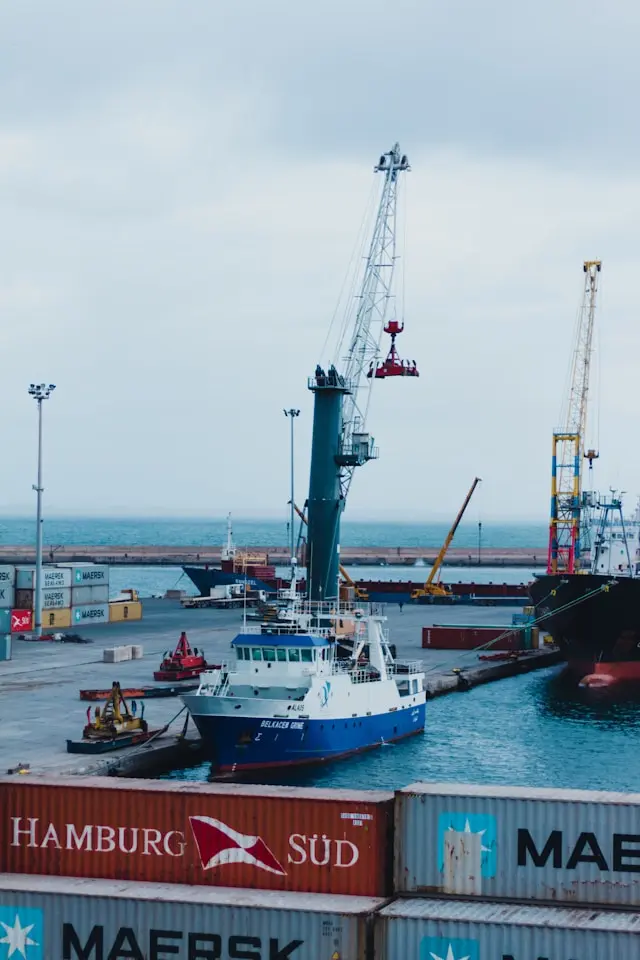
Pančevo sits 18 kilometres from Belgrade, anchored by a petrochemical complex producing over 400,000 tonnes of PVC, polyethylene, and polypropylene each year, surrounded by 340 metalworking SMEs and 85 plastics processors packed into a 15-kilometre radius. The industrial zone has been operating since 1964. The feedstock supply is local. The maintenance contracts from NIS and HIP-Petrohemija are recurring. The EU automotive clients are placing orders. On paper, this is a manufacturing cluster that should be scaling.
It is not scaling. It is running at roughly 80% capacity because the people required to run the machines, programme the cells, and certify the welds do not exist in sufficient numbers. The vacancy rate for industrial automation engineers in the South Banat District reached 26.4% through 2024. For API-certified pipeline welders, it was 22.7%. The average time to fill a certified welder position exceeds 110 days. These are not figures that describe a tight labour market. They describe a market where the pipeline has structurally broken.
What follows is an analysis of the forces that have broken it, what they mean for the employers operating inside Pančevo's industrial zone, and what hiring leaders in this sector need to understand before they commit to filling their next critical role. The data draws from the Serbian Chamber of Commerce, the EBRD, Hays Serbia, and NALED workforce analysis through early 2025, with projections extending into the conditions now shaping the 2026 market.
The Pessimistic Equilibrium: Why Pančevo's Manufacturers Cannot Automate Their Way Out
The core tension in Pančevo's manufacturing sector is not a labour shortage alone. It is a reinforcing loop between labour scarcity and capital scarcity that prevents either problem from being solved.
According to the Serbian Chamber of Commerce's Business Climate Survey in 2024, 78% of Pančevo metalworking SMEs identified automation and digitalisation as strategic priorities. Yet actual capital expenditure on robotic automation sat at just 3.8% of revenue. The minimum threshold for maintaining competitiveness against EU peer economies is 6 to 8%, according to NALED's 2024 "Grey Book" analysis. Only 12% of metalworking SMEs in the South Banat District had implemented any form of robotic process automation by 2023, compared to 35% in equivalent EU economies, according to the EBRD's Transition Report.
The firms know they need automation. They cannot afford it. Interest rates on investment loans for SMEs sit at 14.2%. Only 8% of ZIP metalworkers have successfully accessed EU IPA grants for green transition investment, largely because the administrative complexity of the application process exceeds the capacity of firms with 85 to 160 employees and no dedicated grant-writing function.
This is what creates the pessimistic equilibrium. Firms cannot automate because they lack capital. They lack capital because compressed margins from energy costs and labour inefficiency leave no headroom for investment. They cannot resolve the labour inefficiency because they cannot automate. The loop closes. Each quarter that passes without resolution deepens the dependency on manual labour that is itself becoming scarcer.
The trajectory from 2025 into 2026 suggests marginal improvement at best. EBRD projections indicate automation adoption may rise to 15 to 18% of SMEs this year, up from 12%. That still leaves more than 80% of the metalworking cluster operating without robotic welding cells or semi-automated CNC capacity. For any executive leading an industrial manufacturing operation in this region, the implication is direct: human capital strategy is not a secondary concern. It is the binding constraint on every other strategic objective.
Where the Gaps Are Deepest: Four Shortage Categories Defining the Market
Automation Engineers: The Most Acute and Least Solvable Gap
The highest vacancy rate in Pančevo's industrial zone belongs to automation engineers with PLC programming and robotic integration experience. At 26.4% through 2024, this category exceeds every other technical role in the district, according to the Hays Serbia Skills Index. The time to fill exceeds 120 days, per ManpowerGroup Serbia data.
According to reporting from Poslovni Dnevnik in February 2025, HIP-Petrohemija maintained an open vacancy for a Senior Process Automation Engineer specialising in DCS systems with petrochemical background for eight consecutive months. The role required Siemens PCS7 certification and seven or more years of experience in chlorine chemistry processing. Despite national advertising and relocation packages, it remained unfilled, with the company reportedly relying on German contract engineers at €450 per day.
Ninety percent of senior automation engineers in Serbia's manufacturing sector are passive candidates, according to Hays Serbia's Candidate Behaviour Study. They hold multiple concurrent offers and respond to direct headhunter approaches rather than job postings. Job advertisements yield fewer than 5% qualified applicants for this category.
Certified Welders: A Demographic Cliff Approaching Fast
The average age of a certified welder in Pančevo's industrial zone is 47 years, per the Serbian Chamber of Commerce's Workforce Demographics Survey. Vocational education enrolment in the Mechanical Technician and Plastics Processor tracks has declined 35% since 2018, according to the Statistical Office of the Republic of Serbia.
This is not a market correction. It is a demographic cliff. The experienced welders holding API 1104 certifications for petrochemical pipeline work are aging out. The vocational pipeline that once replaced them has contracted by more than a third. The welders currently in post are 80% passive, embedded in long-term maintenance contracts with NIS and HIP-Petrohemija, moving only when directly poached.
NIS Rafinerija Pančevo restructured its entire maintenance contractor model in January 2025, converting 12 previously outsourced welding positions to permanent in-house roles with €1,500 signing bonuses and accelerated certification training. According to NIS procurement notices and industry sources, this came after four months of failing to secure API-certified pipeline welders through staffing agencies.
CNC Programmers: Where a Single Poaching Event Reshapes the Market
CNC programmers operating five-axis milling and turning centres carry an 18.3% vacancy rate in South Banat manufacturing. Average time to fill is 94 days. What makes this category distinctive is not the vacancy rate itself but the cascade effect that a single hire can trigger.
NALED's 2024 report on wage pressure in Vojvodina manufacturing documented a pattern typical of the Pančevo-ZIP cluster. A tier-2 automotive metal fabricator in the industrial zone successfully recruited a Senior CNC Programmer from a Belgrade competitor in late 2024, offering a 35% salary premium: €3,200 gross monthly versus a market rate of €2,400. Within six months, this single hire triggered counter-offers across three competing firms, inflating CNC programmer wages by 12% across the local cluster.
Eighty-five to ninety percent of CNC programmers with SolidCAM or Mastercam expertise are passive, with average tenure of 4.2 years and unwillingness to move without a 25% or greater compensation increase. The hidden majority of qualified candidates in this market will never see a job posting. They must be found, mapped, and approached individually.
Plastics Process Engineers: The Quiet Bottleneck
Plastics process engineers specialising in PVC extrusion and injection moulding carry a 14.1% vacancy rate, lower than the other three categories but still materially above functional thresholds. This shortage matters because it sits at the intersection of the feedstock supply chain and the end product. Without process engineers who understand PVC compounding and twin-screw extrusion control, the local petrochemical output cannot be efficiently converted into the piping, packaging, and automotive components that represent the cluster's commercial output.
The regulatory dimension deepens this gap. By late 2026, local plastics processors must comply with revised REACH alignment standards for chemical handling, requiring €50,000 to €200,000 in facility upgrades per site. The engineers who can manage both the process optimisation and the compliance transition are even scarcer than the general category suggests.
The Compensation Arithmetic That Is Pulling Talent Out of Pančevo
Pančevo's compensation gap is not closing. It is widening fastest at exactly the seniority level where the most critical roles sit.
Senior specialist and manager-level roles in production and operations pay €2,800 to €4,200 gross monthly in Pančevo, according to the Hays Serbia Salary Guide for 2025. In Belgrade, equivalent roles command a 15 to 20% premium. At executive and plant director level, the gap stretches to 30 to 40%, with Belgrade-based roles reaching €10,000 or more while Pančevo equivalents peak at €6,500 to €10,000 in the best cases.
The international gap is more severe still. German manufacturing wages for skilled technicians average €3,800 to €4,500 gross monthly, according to Germany's Federal Statistical Office. That is 3.5 times Pančevo levels. Bilateral agreements between Serbian and German chambers of commerce actively facilitate personnel leasing schemes that recruit experienced welders and toolmakers directly from Vojvodina SMEs.
The result is a net outflow of engineers with five to ten years of experience. Sixty percent leave for Belgrade. Forty percent leave for the EU. Pančevo attracts entry-level technicians from southern Serbia, from cities like Niš and Leskovac, but these arrivals lack the certifications and experience that the cluster needs most.
Automation engineers command 20 to 25% premiums over standard mechanical engineers. Petrochemical-certified welders earn €2,000 to €2,800 monthly, 40% above standard construction welders. Where local executive talent is unavailable entirely, foreign-owned SMEs in the industrial zone resort to expatriate technical managers from Germany and Austria at €8,000 to €15,000 per month. This is not a compensation strategy. It is a cost of failure, borne by firms that could not find the talent domestically and have no other option.
For any hiring leader trying to benchmark compensation accurately in this market, the critical insight is that the published averages obscure a bifurcation. Uncertified general fabrication workers are in surplus. The certified, experienced, and specialised profiles that drive output are in acute deficit, and the premium required to secure them is rising at 8 to 10% annually.
The Regulatory Ratchet: EU Alignment Is Raising the Bar Faster Than the Workforce Can Follow
Serbia's EU candidate status is not an abstract political development. For Pančevo's manufacturers, it is a regulatory ratchet that is imposing new costs and new skill requirements simultaneously.
Environmental Compliance: IPPC and REACH
New Integrated Pollution Prevention and Control permits will be required by 2026 for all metal finishing and plastics extrusion facilities. Compliance costs are estimated at €80,000 to €150,000 per SME for wastewater and emission treatment upgrades, according to the Ministry of Environmental Protection's implementation plan. The revised REACH alignment standards for chemical handling impose additional facility-level costs of €50,000 to €200,000.
These are not optional investments. They are market-access requirements. A Pančevo plastics converter that cannot demonstrate REACH compliance will lose access to the EU clients that make its business viable. The engineers who understand both the production process and the compliance requirements are a subset of an already scarce pool.
Carbon Border Adjustment Mechanism
The EU's CBAM Phase 2 implementation in 2026 will impose carbon costs on Serbian steel and aluminium imports into the EU. Pančevo metal fabricators serving EU automotive clients face a direct impact. According to the EBRD's CBAM Readiness Assessment for Serbia, only 12% of local firms have carbon accounting systems in place. The Life Cycle Assessment capabilities required to provide embedded carbon data simply do not exist at most SMEs.
This means hiring leaders are not just looking for welders and CNC programmers. They need quality and compliance professionals who understand ISO 9001, IATF 16949 for automotive suppliers, and EU environmental regulation simultaneously. The cost of getting the wrong hire in a compliance-critical role is not just an operational setback. It is a market-access risk.
The regulatory acceleration is creating a new category of scarcity. It is not enough to find a production manager who can run a shift. You need a production manager who can run a shift while preparing for an IPPC audit and generating carbon data for EU reporting. That profile barely exists in this market yet.
The Original Tension: Capital Moved Faster Than Human Capital Could Follow
The investment in Pančevo's manufacturing cluster has not been negligible. Eighteen and a half million euros in FDI flowed into ZIP manufacturing expansion in 2024, primarily from German and Austrian automotive tier-2 suppliers establishing CNC machining operations. The demand signal is real. EU firms are placing capital in this zone because the feedstock is local, the geography is convenient, and the labour cost differential against Germany is substantial.
But here is the analytical tension that the aggregate data obscures: the investment in production capacity has outpaced the development of the human capital required to operate it. Every new CNC machining operation that opens in the industrial zone draws from the same finite pool of five-axis programmers. Every new EU compliance requirement adds a skill layer that the existing vocational pipeline was never designed to produce. The FDI is not solving the talent problem. It is intensifying it.
The foreign-owned facilities can afford to pay €3,200 for a CNC programmer or import a German expatriate manager at €12,000 per month. The domestic SME with 85 employees and 3.8% automation CAPEX cannot. The FDI inflow is creating a two-tier labour market inside the same industrial zone: well-capitalised foreign subsidiaries that can attract and retain, and domestic SMEs that are losing their best people to the firm across the road.
This bifurcation is the defining structural feature of Pančevo's manufacturing talent market in 2026. It is not a shortage in the conventional sense. It is a redistribution of scarce talent toward the employers with the deepest pockets, while the broader cluster that depends on those employers' supply chains loses the capacity to serve them.
What This Means for Hiring Leaders Operating in This Market
A senior hiring executive looking at Pančevo's manufacturing cluster faces a specific set of conditions that conventional recruitment methods are not designed to address.
First, the critical roles are overwhelmingly passive markets. Ninety percent of automation engineers, 85 to 90% of CNC programmers, and 80% of certified API welders are already employed and not responding to job postings. The ManpowerGroup data is unambiguous: job advertisements yield fewer than 5% qualified applicants for the three most critical shortage categories. A traditional executive search approach built on advertising and inbound applications will not reach the candidates this market needs.
Second, the time-to-fill metrics are punishing. At 94 days for CNC machinists, 110 days for certified welders, and 120 days for automation engineers, every week of search delay is a week of production running below capacity. For employers serving EU automotive clients with fixed delivery schedules, a four-month vacancy is not an inconvenience. It is a contract risk.
Third, the compensation dynamics reward speed and precision. The documented cascade effect from a single poaching event shows that the market reprices rapidly. A firm that takes four months to make an offer will find that the compensation benchmark has shifted before the offer letter is signed.
The firms that are filling these roles are not posting and waiting. They are mapping the specific individuals who hold the required certifications, understanding their tenure patterns and motivation triggers, and approaching them with a proposition that addresses their specific calculation. This is talent mapping and direct search at its most operationally necessary.
For organisations competing for automation engineers, CNC programmers, and certified welders in Pančevo's industrial zone, where 80% or more of viable candidates are invisible to job boards and the cost of a slow search is measured in lost production and lost contracts, KiTalent delivers interview-ready candidates within 7 to 10 days through AI-enhanced direct identification. With a 96% one-year retention rate across 1,450 executive placements and a pay-per-interview model that eliminates upfront retainer risk, the approach is built for markets where precision and speed are not optional. Start a conversation with our industrial sector team about how we source the specific technical and leadership profiles this market demands.
Frequently Asked Questions
What are the most in-demand manufacturing roles in Pančevo, Serbia?
The four most critical shortage categories are industrial automation engineers (26.4% vacancy rate), API-certified pipeline welders (22.7%), CNC programmers for five-axis machining (18.3%), and plastics process engineers specialising in PVC extrusion (14.1%). These figures come from the Serbian Chamber of Commerce, NALED, and Hays Serbia data through 2024 and into early 2025. Time-to-fill for automation engineers exceeds 120 days. The shortages are driven by vocational pipeline decline, emigration to EU markets, and competition from Belgrade employers offering 15 to 20% wage premiums.
Why is it so difficult to hire CNC programmers in Pančevo?
Between 85% and 90% of qualified CNC programmers in Serbia are passive candidates, already employed and not applying to job postings. Average tenure is 4.2 years, and most will not consider a move without a 25% or greater compensation increase. Job advertisements yield fewer than 5% qualified applicants for this category. The effective search method is direct identification of passive candidates through structured talent mapping and individual outreach, not conventional advertising.
What do manufacturing managers and engineers earn in Pančevo compared to Belgrade?
Senior specialist roles in production and operations pay €2,800 to €4,200 gross monthly in Pančevo, trailing Belgrade equivalents by 15 to 20%. At executive and plant director level, the gap widens to 30 to 40%. Automation engineers command an additional 20 to 25% premium over standard mechanical engineers. Accurate compensation benchmarking for specific roles and seniority levels is essential before entering a search in this market, as published averages mask sharp variation between certified specialist and generalist profiles.
How does EU regulatory alignment affect hiring in Pančevo's manufacturing sector?
Serbia's EU candidate status is introducing IPPC environmental permits, REACH chemical handling compliance, and CBAM carbon reporting requirements, all reaching implementation deadlines through 2026. Compliance costs range from €50,000 to €200,000 per facility. This creates demand for a new hybrid profile: technical managers who understand both production processes and EU regulatory frameworks. Only 12% of local firms currently have carbon accounting systems, making leadership roles in quality and compliance especially difficult to fill.
How can companies compete for scarce technical talent in the Pančevo industrial zone?
Companies that fill critical roles in this market use direct search rather than job postings, move within days rather than months, and build compensation packages that account for the 8 to 10% annual wage inflation in technical categories. KiTalent's approach delivers interview-ready candidates within 7 to 10 days by mapping passive candidate pools through AI-enhanced talent identification, reaching the 80 to 90% of qualified professionals who are employed and not visible on any job board. The pay-per-interview model means clients invest only when they meet qualified candidates.
What risks do Pančevo manufacturers face if they cannot fill technical vacancies?
Unfilled roles translate directly into lost production capacity. Pančevo's manufacturing sector is operating at roughly 80% utilisation, constrained primarily by workforce gaps. For firms serving EU automotive clients, a four-month vacancy in a CNC programmer or certified welder role creates contract delivery risk. The regulatory dimension compounds the operational cost: firms that cannot hire compliance-capable engineers risk losing EU market access entirely as CBAM and REACH requirements take effect through 2026.