Al Wakrah's Logistics Boom Has a Bottleneck That Money Cannot Fix: The Talent Gap Behind Hamad Port
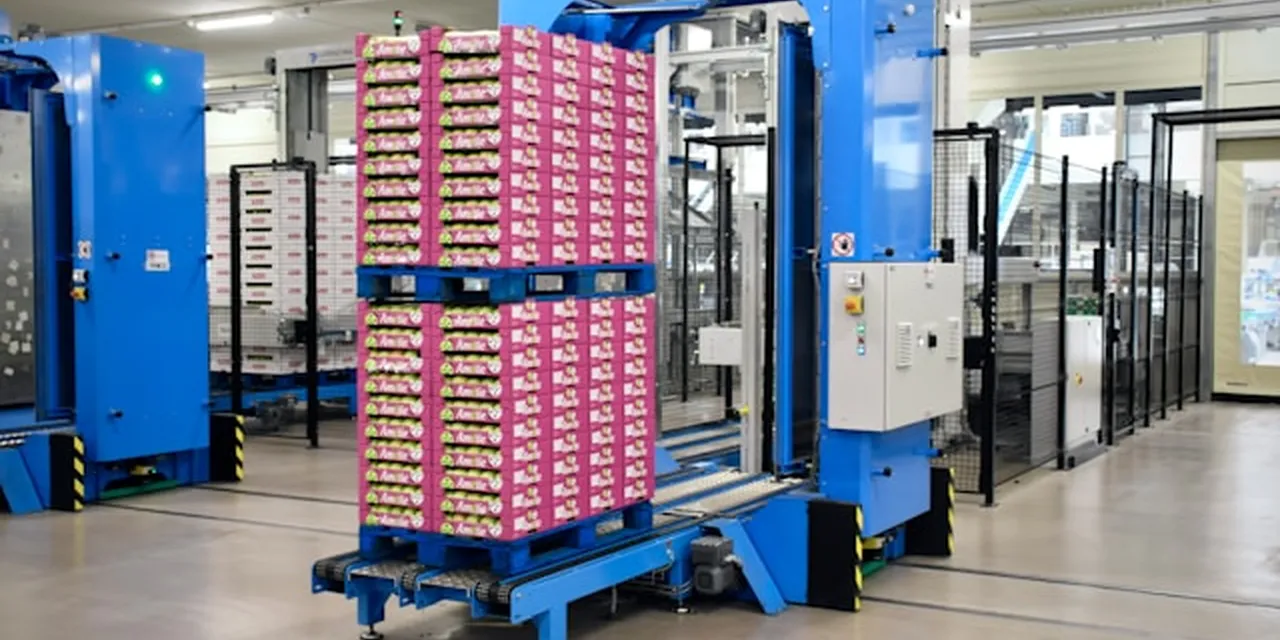
Qatar invested QAR 18 billion in Hamad Port's expansion and the surrounding free zones. The container terminals now handle 1.8 million TEU annually. Phase 2 added 2.4 million TEU of capacity in late 2023. By every infrastructure metric, Al Wakrah Municipality sits at the centre of one of the Gulf's most modern maritime logistics corridors. The port is built. The warehouses are rising. The automation programme is underway.
The constraint is not steel or concrete. It is people. Job postings for logistics operations roles in Al Wakrah rose 34% year-over-year in Q3 2024, while qualified applicant pools contracted by 12%. A senior cold chain operations director role at one of Qatar's largest private logistics employers sat vacant for eleven months. Terminal operators are recruiting port operations managers from Dubai at premiums approaching 30% above incumbent salaries. The talent pipeline has not kept pace with the capital pipeline, and the consequences are now visible in extended vacancies, inflated packages, and operational roles filled by internal promotions rather than market-quality hires.
What follows is an analysis of why Al Wakrah's logistics sector faces a hiring challenge that its infrastructure investment has not solved. It maps the specific roles in shortest supply, the compensation dynamics that govern candidate movement across the GCC, and the structural forces that make this market harder to recruit in than it appears from the outside. For any hiring leader responsible for filling senior logistics, maritime, or supply chain roles in Qatar, the picture that emerges is urgent and specific.
The Infrastructure Is World-Class. The Talent Market Is Not.
Hamad Port operates at 76% capacity utilisation across container terminals, livestock facilities, and general cargo berths. In the first nine months of 2024, it processed 1.4 million tonnes of general cargo. The port's expansion shifted Qatar's operational focus toward transshipment and regional hub status, placing Al Wakrah's logistics and maritime operations at the heart of the country's post-hydrocarbon economic strategy.
The employment footprint is considerable. The logistics and transport sector employed approximately 184,000 workers nationwide in Q2 2024, according to the Qatar Planning and Statistics Authority. Al Wakrah Municipality hosts an estimated 35 to 40% of these roles, concentrated around the Umm Al Houl industrial zone, the Al Wakrah Industrial Area, and the southern corridor connecting to Mesaieed.
Yet the infrastructure spending has produced a paradox. The port can receive more cargo. The free zones can attract more tenants. The warehousing capacity is expanding. But the professionals needed to run these operations at the level Qatar's ambitions demand are not available in sufficient numbers, and the structural reasons are not temporary.
This is the original analytical claim that anchors this article: Qatar's logistics capital investment has moved faster than its human capital development, and the gap is widest at exactly the seniority level where operational decisions are made. The autonomous cranes arriving under the "Smart Port 2026" initiative will reduce the need for manual container handling. They will not reduce the need for the terminal superintendents, cold chain engineers, and compliance specialists who design the systems those cranes operate within. Capital replaced one category of worker with another that does not yet exist in sufficient numbers in this market.
Three Shortage Categories Are Converging at Once
The talent shortages in Al Wakrah's logistics sector are not spread evenly across all roles. They concentrate in three specific categories, each driven by a different mechanism. The convergence of all three at the same time is what makes the current market so difficult.
Port Operations Management
Terminal superintendents and vessel planners represent the most acutely passive talent pool. According to Korn Ferry's GCC Maritime and Ports Survey, 85 to 90% of qualified candidates at this level are passively employed. Average tenure in current roles exceeds 4.5 years. These professionals do not respond to job postings. They do not browse job boards. They are reachable only through direct headhunting and proactive identification.
The problem compounds because the competitive set is small. QTerminals employs approximately 1,200 people in vessel operations and yard management. Mwani Qatar employs around 2,800 direct staff and over 6,000 contracted workers in terminal operations, pilotage, and marine services. Milaha maintains 3,200 employees across port services, offshore support, and freight forwarding. These are the primary employers. The talent circulates within a closed system, and every hire from a competitor creates a vacancy elsewhere in the same market.
Cold Chain Engineering
Qatar's food security agenda has driven substantial cold chain investment. Al Wakrah hosts 340,000 pallet positions of temperature-controlled warehousing, representing 42% of national capacity. GWC and Al Sraiya Logistics operate the largest facilities, serving hypermarket and pharmaceutical sectors.
The skills required are genuinely rare. GDP (Good Distribution Practice) certification, temperature mapping for biologics distribution in extreme heat environments, and HALAL cold chain compliance represent a combination that few professionals possess simultaneously. The passive candidate rate in this niche sits at 78%, with professionals moving primarily through network referrals or headhunting.
The GWC cold chain operations director vacancy illustrates the challenge. According to reporting in The Peninsula, this senior position, responsible for pharmaceutical logistics and HALAL cold chain compliance, remained unfilled for eleven months before being filled through internal promotion of a UAE-based candidate. The initial search targeted European candidates who lacked regional regulatory knowledge. The eventual solution was not a market hire but a relocation within the same organisation.
Regulatory Compliance and Customs Brokerage
Customs brokers with GCC-wide accreditation occupy what amounts to a regulatory moat. Deep knowledge of the GCC Common Customs Law, Qatar's Al Nadeeb single window system, and sanctions compliance creates a skill profile that takes years to develop and cannot be substituted by adjacent experience. These professionals receive three to five unsolicited approaches monthly from competitors and freight forwarders, according to Qatar Chamber of Commerce Logistics Committee records.
The compensation premium for Arabic fluency and GCC-wide licensing is embedded in every offer. Customs and trade compliance managers earn QAR 22,000 to 32,000 per month, with the upper range reserved for candidates combining language skills, regional accreditation, and operational seniority. Finding these candidates through conventional channels is effectively impossible. They know their value. They are not looking. The hidden majority of senior talent that never appears on any job board defines this category entirely.
The Compensation Arithmetic That Governs Candidate Movement
Al Wakrah does not compete for logistics talent in isolation. It competes within a GCC-wide market where Dubai, Saudi Arabia, and Bahrain each present distinct pull factors. Understanding the compensation dynamics requires understanding why a qualified professional would choose Qatar over these alternatives, or why they would not.
The Dubai Premium
Dubai offers 10 to 18% higher base salaries for equivalent port operations and logistics roles, according to the Deloitte GCC Talent Mobility Survey. Jebel Ali and Dubai South provide superior international schooling infrastructure and a more liberal social environment. These are not marginal considerations for a senior professional relocating with a family.
Qatar counters with tax-free personal income status. Dubai introduced a 9% corporate tax in 2023, though personal income remains untaxed in both jurisdictions. Qatar also offers state-subsidised housing allowances for senior executives, which can materially close the gap on paper. But the data suggests a specific pattern: Dubai draws mid-career professionals with five to twelve years of experience seeking regional headquarters exposure, while Qatar struggles to retain talent at the eight to fifteen year mark.
The QTerminals poaching incident reported by Maritime Executive Middle East illustrates the premium required to reverse this flow. In Q2 2024, QTerminals reportedly recruited a Terminal Operations Manager from DP World in Jebel Ali with a package 28% above the incumbent's Dubai salary, plus housing allowances. That premium reflects not just the salary differential but the lifestyle and career progression concessions a candidate accepts when moving from an established hub to a developing one.
The Saudi Arabia Escalation
Saudi Arabia's Vision 2030 logistics investments represent a newer and potentially more disruptive competitive threat. According to PwC's Middle East Logistics Talent Report, Saudi-based roles now offer 15 to 25% premiums over Qatar, coupled with fast-track permanent residency through the Premium Residency programme. Saudi Arabia is particularly aggressive in recruiting port automation engineers and supply chain directors.
The development of King Abdullah Port and the NEOM logistics corridors is creating demand that did not exist three years ago. For a candidate weighing options, Saudi Arabia offers a larger domestic market, higher compensation, and a residency pathway. Qatar's smaller market size and higher land costs make the value proposition harder to articulate at the offer stage. The risk for Al Wakrah is not just losing candidates to Dubai. It is losing them to a competitor that is scaling faster and spending more aggressively on talent acquisition.
What the Numbers Mean at Executive Level
At the VP and director level, compensation in Al Wakrah reflects the premium required to attract and retain in this competitive field. A VP of Supply Chain and Logistics at an industrial conglomerate earns QAR 55,000 to 85,000 per month, plus performance bonuses and housing allowances. A Terminal Operations Director at a container terminal commands QAR 65,000 to 95,000 monthly, typically on an expatriate package with education allowances.
These figures are competitive within Qatar. They are not competitive against equivalent roles in Dubai or Riyadh without additional structural incentives. The hiring leader who assumes a strong package alone will attract the right candidate is making a calculation that the data does not support. Salary benchmarking in this market requires GCC-wide comparison, not domestic comparison.
Qatarisation Creates a Structural Constraint That Policy Cannot Resolve Quickly
Law No. 3 of 2023 mandates progressive Qatarisation targets. Logistics and transport sector employers must achieve 50% Qatari national representation in specialised and supervisory roles by 2026. This is the current year. The target is now.
Qatari nationals represent less than 8% of the current logistics workforce in Al Wakrah. Educational institutions produce only 200 to 300 logistics-qualified Qataris annually. The mathematics are straightforward: the pipeline cannot produce the volume the regulation demands.
The market has responded with compensation premiums. Roles requiring Qatari nationals command 20 to 30% salary premiums above market rates for expatriates. But premium pay has not resolved the shortage because the constraint is not willingness to pay. It is the number of qualified candidates in existence.
The operational consequence is measurable. Senior logistics manager roles requiring Qatari nationals experience an average time-to-fill of 187 days, according to the Qatar Ministry of Labour's Qatarisation Programme Quarterly Review. Equivalent non-Qatarised positions fill in 94 days. Employers typically exhaust local candidate pools within 60 days before seeking expatriate talent, only to face visa quota restrictions that limit the fallback option.
This creates genuine policy uncertainty for HR planning. Either Qatarisation targets will force operational contraction in specialised logistics functions, or regulatory enforcement will accommodate reality through waivers and timeline extensions. Neither outcome is within the hiring leader's control. Both outcomes affect every executive search and senior appointment in this sector. The inability to predict which path the government will take adds a layer of planning risk that Dubai and Saudi Arabia do not impose on their logistics employers to the same degree.
The Land and Road Constraints Are Talent Problems in Disguise
The physical bottlenecks in Al Wakrah's logistics corridor are well documented. The Al Wakrah Expressway handles over 12,000 truck movements daily and operates at Level of Service D or below during peak hours, according to the Ministry of Transport and Communications. Industrial land plots in the Umm Al Houl zone command QAR 1,800 to 2,200 per square metre, up 47% since 2020. Industrial land vacancy rates in prime logistics zones sit below 8%.
These constraints are typically discussed as infrastructure problems. They are also talent problems.
When a 3PL operator cannot expand its warehousing footprint because land costs have risen 47% in four years, the operating margin compression flows directly into compensation budgets. Firms that cannot grow physically must grow through efficiency, which means hiring higher-calibre operations managers, technology-enabled supply chain leaders, and automation specialists. The land constraint does not eliminate hiring need. It transforms it from volume hiring into premium hiring.
The road congestion has a parallel effect. The Ministry of Transport estimates that without the planned bypass completion, logistics costs will increase 12 to 15% by 2026. The Al Wakrah Bypass Project Phase 1 is scheduled for Q2 2026 completion, promising to divert 40% of heavy freight traffic from the city centre. But until that infrastructure is operational, every logistics operator in the corridor absorbs congestion costs. Those costs reduce the surplus available for competitive compensation packages. The infrastructure deficit feeds the talent deficit.
Manateq's Al Wakrah Logistics Park Phase 2 will add 250,000 square metres of Grade A warehousing targeting pharmaceutical and e-commerce tenants. This is positive supply. It is also additional demand for the same scarce category of cold chain engineers, warehouse operations directors, and compliance specialists that the existing facilities already cannot find. More capacity without a proportional increase in the talent supply widens the gap. It does not close it.
Automation Will Change the Shape of the Problem, Not Eliminate It
Mwani Qatar's "Smart Port 2026" initiative will deploy autonomous yard cranes and blockchain-enabled cargo tracking. The stated objective is a 15% reduction in labour intensity in container handling. For entry-level and manual handling roles, this represents genuine demand destruction.
For senior and specialist roles, the effect is the opposite.
Autonomous yard cranes require engineers who understand both the mechanical systems and the software that controls them. Expertise in Navis N4 terminal operating systems, automated stacking cranes, and IoT-enabled warehouse management systems represents a skill profile that barely existed five years ago. The Smart Port programme does not reduce the need for people. It replaces one type of worker with another type that is harder to find.
This is the pattern that hiring leaders preparing for technology-driven transformation must understand. The investment case for automation assumes the people who operate the automated systems are available. In Al Wakrah, they are not available in the quantities the programme demands. The active candidate market for truck fleet supervisors and warehousing shift managers shows 40 to 50% active rates. The candidate market for digital logistics specialists and automation engineers shows passive rates consistent with the 85 to 90% observed in terminal operations. The automation investment has moved the hiring challenge up the seniority and specialisation curve, not removed it.
What This Means for Organisations Hiring in This Market
A hiring leader responsible for filling a senior logistics, maritime, or supply chain role in Al Wakrah in 2026 faces a specific set of conditions. The candidate pool is overwhelmingly passive. The competitive set spans three GCC countries, each offering distinct compensation and lifestyle advantages. Qatarisation requirements impose time-to-fill penalties and salary premiums that cannot be planned away. And the automation programme that was supposed to reduce workforce dependency is instead creating new categories of scarcity at higher skill levels.
The traditional executive search approach of posting a role, waiting for applications, and assembling a shortlist from inbound candidates reaches at most 10 to 15% of the viable talent in this market. The remaining 85 to 90% of port operations directors, cold chain specialists, and compliance professionals will never see the posting. They are employed, satisfied enough not to look, and reachable only through direct identification and proactive engagement.
The cost of a slow or failed search in this market is not abstract. It is an eleven-month vacancy in a critical cold chain role. It is a 28% premium paid to recruit from a competitor's terminal in another country. It is a Qatarisation-mandated position that sits empty for 187 days while visa quota restrictions prevent the fallback hire. The financial exposure from a wrong or delayed senior appointment in a market this constrained is measured in operational capacity lost, not just in recruitment fees.
KiTalent delivers interview-ready executive candidates within 7 to 10 days through AI-enhanced talent mapping that reaches the passive majority conventional methods miss. With a 96% one-year retention rate across 1,450 completed executive placements and a pay-per-interview model that eliminates upfront retainer risk, the approach is designed for precisely this kind of market: specialised, passive, competitive, and unforgiving of delay.
For organisations hiring port operations directors, cold chain leaders, customs compliance specialists, or supply chain executives in Al Wakrah and Qatar's wider logistics corridor, start a conversation with our executive search team about how we identify and engage the candidates this market requires.
Frequently Asked Questions
What are the hardest logistics roles to fill in Al Wakrah?
The three most difficult categories are port operations management (terminal superintendents and vessel planners), cold chain engineering (GDP-certified refrigeration and pharmaceutical logistics specialists), and GCC-accredited customs brokers. All three exhibit passive candidate rates above 78%, meaning conventional job advertising reaches a small fraction of the qualified talent pool. Time-to-fill for senior roles in these categories routinely exceeds five months, with Qatarisation-mandated positions averaging 187 days.
How does Al Wakrah logistics compensation compare with Dubai and Saudi Arabia?
Dubai offers 10 to 18% higher base salaries for equivalent logistics roles, while Saudi Arabia's Vision 2030 investments are producing premiums of 15 to 25% over Qatar-based packages. Al Wakrah counters with tax-free personal income, state-subsidised housing allowances, and competitive executive packages reaching QAR 95,000 per month for terminal operations directors. However, the lifestyle and career progression factors in Dubai continue to pull mid-career professionals, particularly those with families prioritising international schooling infrastructure.
How does Qatarisation affect logistics hiring in Al Wakrah?
Law No. 3 of 2023 requires 50% Qatari national representation in specialised and supervisory logistics roles by 2026. With Qatari nationals representing less than 8% of the current logistics workforce and educational pipelines producing only 200 to 300 logistics-qualified graduates annually, the mandate creates a deep supply-demand imbalance. Roles requiring Qatari nationals command 20 to 30% salary premiums and take roughly twice as long to fill as non-Qatarised equivalents. Executive search firms with GCC-specific methodology are often the only route to identifying qualified candidates within regulatory timelines.
What impact will Hamad Port's Smart Port 2026 automation have on hiring?
The Smart Port 2026 initiative deploys autonomous yard cranes and blockchain-enabled cargo tracking, reducing labour intensity in container handling by an estimated 15%. This reduces demand for manual handling roles but increases demand for digital logistics specialists, automation engineers, and professionals with expertise in Navis N4 terminal operating systems and IoT-enabled warehouse management. The automation programme shifts hiring need from volume to specialisation, making the remaining roles harder to fill rather than fewer overall.
Why do most logistics executive searches in Al Wakrah require headhunting rather than job advertising?
Between 85% and 90% of qualified port operations directors and terminal managers are passively employed with average tenures exceeding 4.5 years. Cold chain specialists show passive rates of 78%. Customs brokers with GCC accreditation receive multiple unsolicited approaches monthly and rarely engage with published job postings. In a market this passive, proactive candidate identification through direct search is not a premium service option. It is the only method that reaches the candidates who determine whether a search succeeds or fails.
What is KiTalent's approach to logistics and maritime executive search in the Gulf?
KiTalent uses AI-enhanced talent mapping to identify and engage passive senior candidates within 7 to 10 days. The pay-per-interview model means clients only pay when they meet qualified candidates, eliminating upfront retainer risk. With a 96% one-year retention rate and deep experience across industrial and manufacturing sector leadership placements, KiTalent's methodology is built for markets where the best candidates are not visible through conventional channels and competitive pressure from neighbouring GCC hubs makes speed essential.