Banská Bystrica Wood Manufacturing: The Automation Investment That Deepened the Talent Crisis It Was Meant to Solve

The wood and furniture manufacturing cluster anchored around Zvolen, Brezno, and the Horehronie valley in central Slovakia employs between 4,200 and 4,800 people. It exports 82% of its production to Germany, Austria, the Czech Republic, and Poland. It accounts for roughly one in ten of Slovakia's wood-processing workers. And as of 2026, it is running out of the people it needs most: not the sawmill labourers or the finishing line operators, but the CNC programmers, production managers, and compliance specialists without whom the sector's capital investments cannot deliver returns.
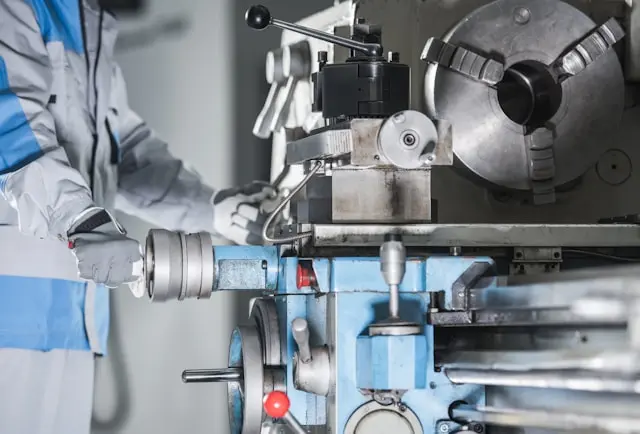
The paradox is specific. Across the Banskobystrický kraj, firms have accelerated Industry 4.0 adoption precisely because they cannot find enough workers. Investment in CNC machining centres, automated finishing lines, and ERP-integrated production planning rose by an estimated 15 to 20% in 2025 compared to 2024 levels. Yet the talent market data tells a story the investment case did not anticipate. The roles hardest to fill are not the manual positions automation was designed to replace. They are the specialist and managerial positions required to run, programme, and optimise the new systems. Automation has not resolved the region's talent constraints. It has shifted them upward into profiles that are even scarcer.
What follows is an analysis of the forces reshaping this cluster, the employers driving that change, and what senior leaders need to understand before making their next hiring or investment decision in central Slovakia's wood-processing sector.
The Cluster's Centre of Gravity Has Shifted from Timber to Technology
A common assumption about Banská Bystrica's industrial base places the wood sector's competitive advantage in proximity to the Low Tatras. The region's forests cover approximately 50% of its territory. Seasonal logging cycles still reduce Q2 raw material flows by 15 to 20% during spring thaw restrictions. But the economic reality in 2026 is that proximity to timber is no longer the defining advantage it once was.
Slovakia imported approximately 2.3 million cubic metres of roundwood in 2024, drawn primarily from the Czech Republic, Austria, and Poland. Domestic harvests are constrained by environmental protection mandates and bark beetle damage management protocols. Domestic roundwood prices have risen 18% since 2022, driven by reduced logging quotas and the ban on Russian and Belarusian timber imports, which redirected supply chains toward higher-cost Scandinavian and Western European sources.
From Sawmill to Engineered Wood Products
The regional production mix has shifted materially. Engineered wood products, including particleboard, MDF, and laminate flooring, now represent 60% of regional output value. Furniture manufacturing accounts for 25%. Primary sawmilling, the activity most directly linked to local timber supply, represents just 15%. The cluster's value is generated not by cutting trees but by processing imported and domestic raw material into precision-engineered components for automotive interiors, export furniture, and construction products.
This shift matters for talent. A sawmill economy requires foresters, machine operators, and logistics coordinators. An engineered wood products economy requires CNC programmers fluent in AlphaCAM and WoodWOP, production managers who understand ERP integration, and compliance specialists who can implement the EU Deforestation Regulation's geolocation and due diligence requirements. The workforce the cluster built over decades is not the workforce it needs now.
Kronospan and the Anchor Effect
The cluster's centre of gravity is Kronospan Slovakia's facility in Zvolen, which employs approximately 850 to 950 people directly and supports an estimated 400 to 500 indirect jobs in logistics and maintenance. Kronospan's modernisation programme has set the technological standard for the region. Smaller producers, including Drevoindustria in Brezno (180 to 220 employees) and SMW Smart Manufacturing Wood in Banská Bystrica (120 to 150 employees, supplying Volkswagen and Kia interior components), have followed with their own automation investments.
The result is an entire cluster moving toward capital-intensive, digitally integrated production at the same time. The demand for skilled operators and managers is not coming from one employer. It is coming from all of them simultaneously, and the regional talent pool is not deep enough to serve the demand.
The Automation Paradox: Why Capital Investment Is Making the Talent Gap Worse
This is the analytical claim at the heart of the cluster's challenge, and it is not stated in any single data source but becomes visible when two trends are placed side by side.
On one side: general machine operators, sawmill labourers, and finishing line workers face unemployment rates of 6 to 8% in the regional sector. These are the roles automation is designed to reduce or eliminate. The active candidate market for these positions is functional. Candidates apply to posted vacancies. Employers can fill them.
On the other side: CNC operator roles at mid-sized furniture component manufacturers routinely remain vacant for 90 to 120 days. Production manager positions go unfilled for five to seven months. The passive candidate ratio for plant directors and compliance specialists sits at 75 to 80%, meaning only one in four or five qualified candidates is even visible to a standard recruitment process.
The implication is that automation is not a solution to the workforce shortage. It is a transformation of the shortage from one the market can partially manage (too few manual workers, but some are available) to one it cannot manage at all (too few specialists, and the few who exist are employed, passive, and increasingly expensive). Every CNC machining centre installed without a qualified operator to run it is a capital asset generating no return. Every ERP system deployed without a production manager who understands it is complexity added without capability.
This is the dynamic that defines hiring in Slovakia's industrial manufacturing sector in 2026. The firms investing fastest are also the firms most exposed to the specialist talent gap.
The EUDR Compliance Cliff and the Roles It Has Created
The EU Deforestation Regulation represents the single largest regulatory disruption to the Slovak wood sector since EU accession. For large enterprises, full enforcement began in December 2025. For micro and small enterprises, the deadline arrives in December 2026. The regulation requires mandatory geolocation data for all timber inputs, due diligence documentation across the supply chain, and third-party verification that no deforestation-linked material enters EU markets.
Implementation costs are not trivial. Estimates from the European Commission's own impact assessment place the cost of compliance at €50,000 to €200,000 per firm, depending on scale. For the Banskobystrický kraj's 60 to 80 micro-enterprises operating in custom furniture, joinery, and specialised sawmilling, these figures represent existential burdens. As of mid-2025, an estimated 40% of regional SMEs lacked fully digitised traceability systems.
The Compliance Talent Gap
The regulation has created a new professional category that barely existed three years ago: the EUDR compliance specialist. This role requires understanding of geolocation data management, blockchain verification systems, and due diligence documentation standards. It sits at the intersection of supply chain management, regulatory affairs, and information technology.
Quality and compliance managers with FSC and EUDR expertise command €3,500 to €5,000 gross monthly in the Banská Bystrica region. A dedicated Sustainability and Compliance Director, an emerging C-suite or near-C-suite role, commands significantly more. The problem is not the price. It is the supply. The Technical University in Zvolen, the sole tertiary institution in Slovakia offering specialised degrees in wood processing, does not yet produce graduates with EUDR compliance training. The curriculum lag between what the university teaches and what employers require is a structural bottleneck that no single hiring decision can resolve.
For firms that cannot recruit their way to compliance, the risk is market exclusion. Non-compliant producers lose access to EU export markets. In a cluster where 82% of production value crosses borders, that is not a regulatory inconvenience. It is a survival threat.
Compensation, Competition, and the Westward Pull
The Banská Bystrica region sits at a 15 to 20% cost-of-living discount relative to Bratislava. That discount is reflected in compensation. A plant director or general manager at a wood-processing facility in the region earns €7,500 to €11,000 gross monthly, with performance bonuses of 20 to 40%. An operations manager earns €3,800 to €5,500 gross monthly. A CNC programming specialist or team leader earns €2,200 to €3,200 gross monthly. EUDR compliance expertise commands premiums of 10 to 15% above standard ranges.
These figures are competitive within the regional economy. They are not competitive against the three geographic markets that actively recruit from the same talent pool.
The Bratislava and Trnava automotive cluster, anchored by Volkswagen and Jaguar Land Rover suppliers, offers manufacturing managers and CNC specialists gross salaries 35 to 50% higher than Banská Bystrica regional averages. The Žilina region, home to the Kia Motors supplier ecosystem and Kuka Robotics, offers 15 to 20% higher salaries with stronger career trajectories into automotive Tier-1 suppliers. And across the border, Czech wood processing and automotive interior firms in the Zlín, Ostrava, and Plzeň regions offer Euro-denominated salaries typically 25 to 30% higher than Slovak equivalents.
The Mid-Career Drain
The data reveals a specific demographic pattern. The compensation differential drives mid-career talent migration among professionals aged 30 to 45. These are precisely the workers who have accumulated enough CNC programming experience or production management capability to be valuable, but who have not yet reached the senior tenures (average five to seven years for plant directors) that anchor them to a single employer. They are mobile, they are in demand, and they are leaving.
Meanwhile, 28% of the current wood-processing workforce in the Banskobystrický kraj is aged 55 or older, compared to 22% nationally. The retirement wave is accelerating. The Technical University in Zvolen produces 120 to 140 graduates annually, but only 60 to 70% remain in the sector or region. The arithmetic does not work. The cluster is losing experienced workers to retirement faster than it is gaining replacements from education, and losing mid-career workers to geography faster than it can promote junior staff to replace them.
Understanding how to negotiate compensation packages that compete with Bratislava and the Czech Republic without destroying regional cost structures is one of the critical strategic questions for every employer in this cluster.
The Search Challenge: Why Conventional Methods Fail in This Market
The talent market for the Banská Bystrica wood sector is segmented in a way that renders conventional recruitment approaches systematically inadequate for the most critical roles.
For general operators and finishing line workers, the active candidate market functions. Unemployment in this segment runs at 6 to 8%. Job postings attract applicants. The recruitment process, while not instant, is manageable.
For CNC programmers and automation technicians, the market is mixed. These specialists maintain higher visibility on LinkedIn and Profesia.sk and will respond to targeted opportunities offering salary increases above 20%. A well-structured headhunting approach can reach them, but the offer rejection rate remains high: approximately 40% of offers are declined due to counteroffers from competitors. Understanding the counteroffer dynamic is essential for any firm attempting to hire from this pool.
For production managers, plant directors, and EUDR compliance specialists, the market is predominantly passive. Seventy-five to eighty percent of qualified candidates are employed, not actively looking, and invisible to job boards. Their average tenure is five to seven years. They do not browse vacancy listings. A search process that relies on posting a role and waiting for applications will reach, at best, one in five of the people qualified to fill it.
This segmentation explains why executive searches in this market routinely fail through conventional channels. A production manager search that runs five to seven months and stalls after finalist rounds because the candidate accepted a competing offer from a Bratislava-based industrial firm is not an anomaly. It is the standard pattern. The search method, not the market, is the primary variable determining whether these roles get filled.
Energy, Carbon, and the Margin Compression Ahead
The wood sector's reliance on thermal energy for drying kilns and particleboard pressing creates a specific vulnerability that compounds the talent challenge. With EU carbon permits trading at €60 to €70 per tonne, energy-intensive processors face margin pressure that limits their ability to compete on compensation.
Natural gas and electricity prices for industrial consumers in Slovakia remain 25 to 30% above 2019 levels. For a particleboard producer running continuous pressing operations, energy represents a cost line that has expanded materially while product pricing has not kept pace. The firms best positioned to manage this pressure are those transitioning to biomass co-generation, which requires yet another specialist profile: industrial energy managers with expertise in optimising drying kiln operations and biomass systems.
The EU Emissions Trading System expansion to cover transport and building sectors adds a second layer of cost pressure through logistics. Transport costs from Banská Bystrica to German export markets are already 12 to 15% higher than from Žilina or Bratislava competitors, reflecting the region's lack of direct motorway connections to major export corridors. Carbon pricing on transport will widen this gap further.
The implication for talent is direct. Margin compression limits compensation budgets. Limited compensation budgets constrain the ability to compete with Bratislava and the Czech Republic for the specialists the cluster needs most. The firms that resolve their energy cost position fastest will also be the firms with the most headroom to attract and retain the production managers and technical specialists driving their competitiveness.
What the Cluster Needs Now: A Hiring Strategy Fit for This Market
The conventional approach to filling senior roles in manufacturing relies on three assumptions: that qualified candidates are actively searching, that a job posting will reach them, and that the offer process has weeks or months to unfold. In the Banská Bystrica wood sector, all three assumptions are wrong.
Qualified production managers and plant directors are passive. Job postings reach only the active 20 to 25% of the talent pool. And searches that take five to seven months lose candidates to faster-moving competitors in Bratislava, Žilina, and across the Czech border. The cost of a slow search here is not merely delay. It is capital equipment sitting idle, EUDR deadlines approaching without compliance leadership, and production schedules built around workers who have already decided to leave.
KiTalent's approach to this market is built around the realities the data describes. Through AI-enhanced talent mapping, the 75 to 80% of qualified candidates who never appear on job boards become visible and reachable. Interview-ready candidates are delivered within 7 to 10 days, compressing a process that typically runs months into one that runs weeks. The pay-per-interview model means organisations invest only when they are meeting qualified candidates, not before.
For leadership and specialist searches across manufacturing and industrial sectors where automation is transforming the skill requirements faster than the talent pipeline can adjust, this approach addresses the core failure mode: not a shortage of effort, but a shortage of reach. KiTalent has completed over 1,450 executive placements with a 96% one-year retention rate. In a market where offer rejection runs at 40% and finalist-stage dropouts are the norm, that retention figure reflects a methodology that identifies candidates who will accept and stay, not merely candidates who look qualified on paper.
For organisations competing for CNC specialists, production managers, or EUDR compliance leadership in Slovakia's wood-processing cluster, where the candidates you need are passive, regionally scarce, and actively courted by competitors offering 30 to 50% more, speak with our executive search team about how we approach this market.
Frequently Asked Questions
What are the hardest roles to fill in Banská Bystrica's wood manufacturing sector?
CNC programmers with wood-specific software skills (AlphaCAM, WoodWOP, Homag iX), production managers with digital manufacturing and EUDR compliance expertise, and supply chain managers capable of cross-border timber procurement are the three most acute shortage categories. CNC operator vacancies typically remain open for 90 to 120 days. Production manager roles go unfilled for five to seven months. The difficulty stems from a combination of low regional supply, competition from higher-paying markets in Bratislava and the Czech Republic, and a 75 to 80% passive candidate ratio at the management level.
What does a plant director earn in Slovakia's wood-processing sector?
In the Banskobystrický kraj, a plant director or general manager at a wood-processing facility earns €7,500 to €11,000 gross monthly, with performance bonuses of 20 to 40% on top. The upper range applies to large-scale operations such as Kronospan's Zvolen facility. EUDR compliance expertise commands an additional premium of 10 to 15%. These figures sit 15 to 20% below equivalent roles in Bratislava, reflecting the regional cost-of-living differential.
How does the EU Deforestation Regulation affect wood manufacturers in Slovakia?
The EUDR requires all wood processors to maintain geolocation data for timber inputs, conduct supply chain due diligence, and verify that no deforestation-linked material enters EU markets. Large enterprises faced full enforcement from December 2025. Micro and small enterprises face their deadline in December 2026. Compliance costs range from €50,000 to €200,000 per firm. Approximately 40% of SMEs in the Banská Bystrica region lacked fully digitised traceability systems as of mid-2025, creating both a compliance risk and a surge in demand for specialists with EUDR implementation experience.
Why is executive search more effective than job advertising for manufacturing roles in central Slovakia?
Seventy-five to eighty percent of qualified production managers and plant directors in the region are passive candidates: employed, not actively searching, and invisible to job boards. A posted vacancy reaches only the active 20 to 25% of the talent pool. KiTalent's direct headhunting methodology uses AI-powered talent mapping to identify and approach the full qualified market, delivering interview-ready candidates within 7 to 10 days rather than the five to seven months a conventional search typically requires in this sector.
What is driving the talent shortage in Slovakia's wood sector?
Three forces are converging. First, 28% of the regional workforce is aged 55 or older, creating an accelerating retirement wave. Second, the Technical University in Zvolen produces only 120 to 140 graduates annually, with just 60 to 70% remaining in the sector. Third, automation investment is replacing the need for manual workers with demand for CNC programmers and digital production managers, profiles that are scarcer than the roles they replace. The result is a talent gap that widens as the sector modernises.
How does Banská Bystrica compete with Bratislava for manufacturing talent?
The compensation gap is material. Bratislava and Trnava offer manufacturing managers and CNC specialists salaries 35 to 50% higher. The Banská Bystrica region competes on cost of living (15 to 20% lower), quality of life, and shorter commutes. However, for mid-career professionals aged 30 to 45, the salary differential often outweighs lifestyle factors. Employers seeking to retain or attract talent at this level need search partners who understand regional compensation benchmarking and can identify candidates motivated by factors beyond base salary alone.