Bratislava Logistics in 2026: The Automation Investment That Made Hiring Harder, Not Easier
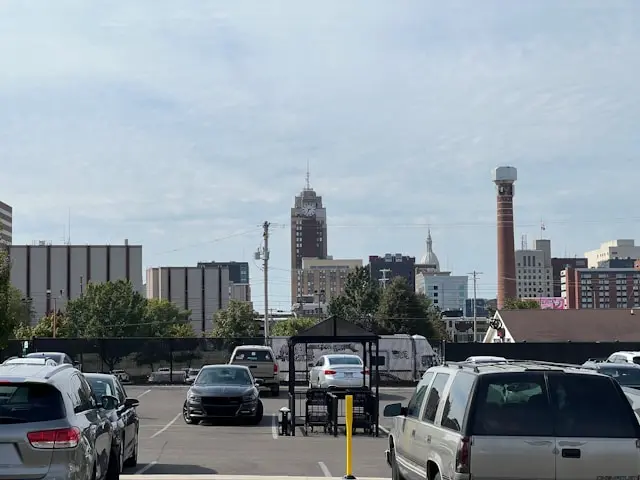
Bratislava's logistics sector added roughly 285,000 square metres of net warehouse absorption in 2024 against just 120,000 square metres of new supply. That deficit has persisted since 2021. The physical infrastructure cannot keep pace with demand. Yet the harder constraint is not space. It is the people qualified to run what gets built inside that space.
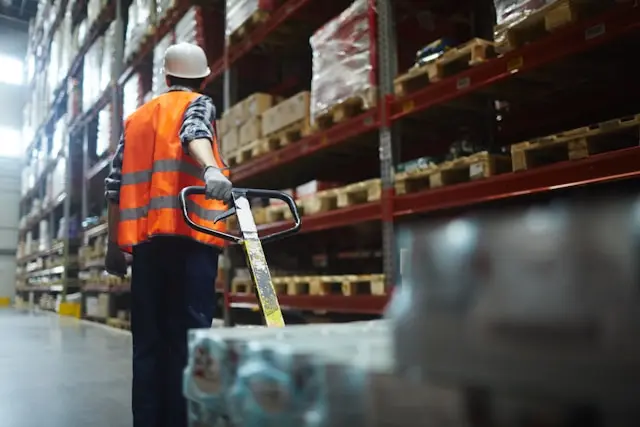
The conventional assumption is that automation eases the talent problem. More robots, fewer headcount gaps. In Bratislava's logistics market, the opposite is happening. Rapid deployment of AutoStore systems, autonomous mobile robots, and advanced warehouse management platforms has not reduced the need for skilled professionals. It has replaced one category of worker with another that barely exists in sufficient numbers locally. The market is simultaneously experiencing flattening aggregate employment and severe, worsening shortages in every specialised role that matters.
What follows is an analysis of the forces reshaping Bratislava's logistics sector, the employers driving that change, and what senior leaders need to understand before they make their next hiring or retention decision in this market.
Bratislava's Logistics Corridor: Scale, Constraints, and the 2026 Reality
The Bratislava logistics micro-market, including the immediate Trnava corridor, holds approximately 1.45 million square metres of modern industrial stock. Logistics and distribution account for roughly 68% of that total. The D1 motorway corridor carries around 85,000 vehicles daily on its Bratislava-Trnava section. Approximately 12,000 truck crossings occur daily at the Berg-Kittsee border point connecting the Vienna-Bratislava twin-city freight zone. This is not a peripheral logistics market. It is a central node in the Vienna-Bratislava-Budapest distribution triangle.
The vacancy rate tells the real story
The Bratislava Region recorded the lowest industrial vacancy rate in Central Europe through 2024: 1.2% as of Q3, according to CBRE's Slovakia Industrial Market Report. Class A rents reached €7.40 to €7.80 per square metre per month, a 12% year-on-year increase. CTP's combined portfolio across CTPark Bratislava and CTPark Senec stood at 340,000 square metres with 98% occupancy. Prologis operates 285,000 square metres at Prologis Park Bratislava with expansion scheduled for 2026.
The supply pipeline for 2026 includes approximately 180,000 square metres of speculative logistics space across the Bratislava-Trnava corridor. However, 65% of that was pre-leased as of late 2024. Only 40,000 square metres falls within 20 kilometres of Bratislava city centre. The remainder is shifting toward Senec and Trnava, pushed outward by a fundamental land constraint: fewer than 150 hectares of undeveloped industrial land remain in the Bratislava Region suitable for modern logistics development.
Where the bottlenecks bite
Available development land inside the M50 motorway ring is effectively exhausted. Brownfield redevelopment costs exceed €120 per square metre of land. Zoning approval timelines in Slovakia average 18 to 24 months, compared to 8 to 12 months in the Czech Republic or Poland. Green building mandates under Slovakia's Recovery and Resilience Plan now require all new logistics facilities exceeding 5,000 square metres to achieve BREEAM Very Good certification or higher, adding €45 to €60 per square metre to development costs.
Congestion on the D1/D2 intersection adds 15 to 25 minutes to peak-hour last-mile delivery times. The D4/R7 motorway ring, opened between 2021 and 2023, alleviated some pressure. But the D1 corridor remains a single point of failure for north-south freight. Rail freight capacity between Bratislava and Vienna is constrained by single-track sections, limiting intermodal growth despite government rhetoric about shifting freight from road to rail.
The physical market is tight. The talent market is tighter.
The Automation Paradox: Why Capital Substitution Deepened the Skills Gap
Here is the analytical claim that the aggregate data obscures but the hiring data makes plain. Bratislava's logistics employers invested heavily in warehouse automation to solve a labour shortage at the operational level. That investment succeeded in reducing dependence on general warehouse associates and forklift operators. It simultaneously created acute, unmet demand for the technical specialists and operations leaders required to design, implement, and manage automated facilities.
Aggregate employment growth in Bratislava's logistics sector flattened to 1.2% between 2023 and 2024, down from 4.5% between 2021 and 2022, according to the Slovak Statistical Office. From a boardroom perspective, this looks like the automation thesis working. Fewer bodies needed. Lower headcount pressure.
But the vacancy rate for professional logistics roles tells a different story. Supply chain managers, operations directors, and WMS specialists face a vacancy rate exceeding 6.8%, compared to 3.2% for general administrative positions. The roles that automation was supposed to eliminate are indeed declining. The roles that automation created are multiplying faster than the talent supply can respond.
This is the core tension CHROs and operations leaders must grasp. The decision to automate and the decision to hire are not independent. Every AutoStore installation requires implementation specialists. Every autonomous mobile robot deployment requires someone who can integrate it with existing WMS architecture. Every advanced warehouse management platform needs professionals capable of configuring SAP EWM or Manhattan Associates systems at a level that cannot be improvised. Capital moved faster than human capital could follow.
The 80% active candidate pool in warehouse associate roles has become largely irrelevant to the roles that now determine whether a facility runs efficiently. The roles that matter most are filled from a pool where 65% to 90% of qualified candidates are passive and not responding to job board postings.
Three Roles the Market Cannot Produce Fast Enough
The logistics and transport sector posted 8,400 vacancies in the Bratislava Region in Q3 2024. That was a 23% increase year on year. Sector unemployment fell to 2.1%. Behind those aggregate figures, three specific role categories are proving exceptionally difficult to fill.
Bilingual operations managers
Roles requiring German at C1 level alongside English at B2, combined with five or more years of 3PL experience, show a 78% failure rate in initial recruitment phases. That figure comes from ManpowerGroup Slovakia's 2024 Talent Shortage Survey. Employers report typical recruitment cycles of four to six months for these profiles, compared to six to eight weeks for monolingual equivalents.
The German language premium is material. At manager level and above, German proficiency commands an 18% to 25% salary premium, according to Adecco Slovakia's 2024 salary data. English fluency is baseline and commands no premium. The implication is clear: any 3PL or freight forwarder serving the Austrian corridor, which is most of them, faces a structural bottleneck in a bilingual talent pool that is small, well-compensated, and under constant competitive pressure from Vienna employers offering 35% to 45% higher base salaries.
WMS and TMS technical specialists
Implementation specialists for SAP EWM or Manhattan Associates platforms are not recruited through open advertisement. According to Michael Page Slovakia's 2024 logistics hiring analysis, 60% of placements involve candidates already employed within the CEE region who are approached directly. The passive candidate ratio for this category runs at approximately 70%. These professionals hold multiple offers simultaneously and do not apply through job boards.
This is the category most directly created by the automation investment cycle. Every new automated facility in the Bratislava-Trnava corridor generates demand for configuration, integration, and optimisation talent that the local market does not produce in sufficient volume. The University of Žilina's logistics faculty and the Centre of Excellence in Production Logistics are the primary institutional sources. Neither produces graduates at the scale the market now requires.
CE category professional drivers
The Slovak haulage industry reports a national deficit of 3,200 to 3,500 qualified truck drivers. The Bratislava Region absorbs 35% of that demand. Typical time-to-fill for international route drivers exceeds 90 days. Forty percent of postings remain active beyond 120 days.
The driver shortage is compounded by regulatory pressure. The EU's Mobility Package II regulations on posting of drivers are increasing operating costs for Slovak-based hauliers by an estimated 8% to 12% in 2026. This accelerates consolidation toward larger 3PLs that can absorb the cost, while smaller operators struggle to match wage expectations that have been rising at 8% to 10% annually. Bratislava's position at the intersection of the Austrian and Hungarian corridors makes it a natural routing hub. It also means its driver pool is under constant extraction pressure from employers offering cross-border routes at Austrian wage scales.
The common thread across all three categories is the same: the candidates who can fill these roles are employed, compensated well enough to be selective, and not visible to conventional recruitment methods.
The Compensation Gap That Vienna Keeps Widening
The geographic competitor analysis for Bratislava's logistics talent market begins and ends with Vienna. The two cities are separated by 50 minutes of driving time. That proximity creates a permanent, asymmetric talent drain.
Vienna offers €65,000 to €85,000 for senior logistics managers. Bratislava offers €45,000 to €55,000. That is a 35% to 45% differential at the exact seniority level where the most critical roles sit. Salary benchmarking across the region confirms that this gap is not closing. The Vienna Business Agency's 2024 logistics report and Statistik Austria's labour cost data both show Austrian logistics wages rising at pace with or faster than Slovak equivalents.
The career trajectory problem
The compensation gap alone does not explain the full talent drain. Vienna offers something Bratislava's smaller market structurally cannot: career trajectory within EU headquarters functions. A supply chain director in Bratislava runs a national or small regional operation. The equivalent role in Vienna often carries Central European or pan-EU scope. For a mid-career professional with five to ten years of experience, the progression argument is as powerful as the salary argument.
Warsaw and Krakow present a similar dynamic at different scale. Poland's logistics market is roughly three times Slovakia's size. It offers broader career progression in international 3PLs. Compensation runs 10% to 15% higher than Bratislava, with lower cost of living. Brno, 130 kilometres north, offers 15% to 20% higher salaries specifically in logistics IT and supply chain analytics.
Budapest competes on a narrower front, primarily for cross-border corridor management talent on the Budapest-Bratislava-Vienna triangle. Hungarian logistics wages have converged to within 5% of Slovak levels. But Budapest offers greater volume of mega-distribution centres, which translates to more senior operational roles.
The net effect is a market where Bratislava's logistics employers must compete for senior talent against four geographic competitors, all of which offer either materially higher compensation, broader career scope, or both. The professionals who remain in Bratislava are either deeply embedded in local operations, personally rooted in the city, or have not yet been approached with the right proposition.
That last category is precisely the one that executive search methodology is designed to reach.
What Logistics Executives Earn in Bratislava: The Full Compensation Picture
Understanding the compensation architecture of this market is essential for any organisation calibrating an offer or assessing whether a retained executive is being paid at market rate.
At the senior specialist and manager level, a senior warehouse manager responsible for a site of 150 or more FTEs, with WMS implementation experience, earns €38,000 to €48,000 in base salary. A transport or operations manager overseeing a fleet of 50-plus units on international routes earns €42,000 to €55,000, with bonus potential of 15% to 20%. Supply chain analysts working with SAP IBP earn €35,000 to €45,000.
At the executive level, the compensation structure changes materially. A logistics director with regional P&L responsibility exceeding €50 million earns a base of €75,000 to €95,000. Total compensation, including bonuses and long-term incentive plans, reaches €110,000 to €130,000. A managing director or country lead for a major 3PL earns €120,000 to €150,000 in base, with considerable variation depending on whether the role carries German or broader CEE regional scope.
Chief operating officers in large retail or e-commerce logistics operations earn €100,000 to €140,000. Equity participation is increasingly common in PE-backed logistics platforms.
These figures, drawn from Korn Ferry, Hays, Michael Page, and Pedersen & Partners compensation studies for 2024, place Bratislava's executive logistics compensation in a specific band. It is materially above the Central European average for roles at this level. It is materially below Vienna. The 18% to 25% German language premium is additive. A logistics director with native German and regional scope can command total compensation that narrows the Vienna gap to single digits.
For organisations running executive searches for operations and supply chain leadership, this compression at the top of the German-speaking talent pool is the most actionable data point. The candidates you need are being paid well. Moving them requires not only matching compensation but presenting a role proposition that cannot be found elsewhere in the corridor.
The Policy Disconnect: Why Government Strategy and Private Capital Are Moving in Opposite Directions
Slovakia's official transport strategy, codified in the Slovakia 2030 Transport Policy, prioritises shifting freight from road to intermodal rail and Danube river transport. The Port of Bratislava handled 1.78 million tonnes of cargo in 2023, predominantly bulk commodities rather than containerised distribution cargo. The state railway operator's strategic plan calls for increased container traffic through intermodal terminals at Bratislava-Východ.
Private capital has not followed this signal. Every major logistics park development in the pipeline clusters along the D1/D2 motorway corridors. Not one major 3PL operation in the Bratislava Region has anchored its distribution strategy around river or rail freight. The disconnect between infrastructure policy and private sector site selection is not subtle. It is total.
This matters for talent planning because the skills the government strategy would require, specifically intermodal operations expertise combining rail-road combined transport management, are not being developed at scale. If the policy direction eventually translates into investment, the talent will not be available. If it does not translate into investment, the road corridors will remain the sole arteries, with congestion and regulatory constraints intensifying.
Slovakia maintains Sunday and holiday driving bans for trucks exceeding 7.5 tonnes on D1/D2 motorways. Bratislava municipality plans to implement a Low Emission Zone for Euro V and older vehicles from 2026, affecting an estimated 30% of the current regional truck fleet. Post-Brexit customs clearance bottlenecks at Bratislava-Vienna corridor points create four to six hour delays during peak periods.
Each of these constraints narrows the scheduling and operational flexibility available to logistics operators. Each one increases the premium on leaders who can optimise within constraints rather than around them.
What This Means for Hiring Leaders in Bratislava's Logistics Market
The data assembled here points to a market that is both more constrained and more demanding than it appeared two years ago. The automation investments that were supposed to reduce hiring pressure have redirected it. The compensation gap with Vienna is widening at the seniority levels where the most critical roles sit. The candidate pool for specialised logistics roles is overwhelmingly passive, with 85% to 90% of qualified executive candidates not actively seeking new opportunities.
Traditional recruitment methods reach a shrinking fraction of the talent this market requires. The 80% of senior logistics professionals who are not visible on any job board will not be reached by advertising. They will not be reached by staffing agency databases built around active candidates. They will be reached by direct identification, approach, and engagement conducted by specialists who understand this specific market's dynamics, its compensation architecture, and its competitive geography.
KiTalent delivers interview-ready executive candidates within 7 to 10 days through AI-enhanced talent mapping that identifies precisely these passive, high-performing professionals. With a 96% one-year retention rate across 1,450-plus executive placements, the method is built for markets like Bratislava's logistics sector: small talent pools, high passive candidate ratios, and cross-border competitive pressure that punishes slow searches.
For organisations competing for operations directors, logistics leaders, and WMS specialists in Bratislava's compressed talent market, where the strongest candidates are employed, well-compensated, and not responding to job postings, speak with our executive search team about how we approach this market differently.
Frequently Asked Questions
What is the current vacancy rate for logistics professionals in Bratislava?
The Bratislava Region's logistics and transport sector posted 8,400 vacancies in Q3 2024, a 23% year-on-year increase. Sector unemployment fell to 2.1%. The vacancy rate for professional logistics roles such as supply chain managers and operations directors exceeds 6.8%, more than double the 3.2% rate for general administrative positions. The market tightened further through 2025, and the trajectory has continued into 2026 as automation investment creates demand for specialists the local talent pool cannot produce in sufficient volume.
What do logistics executives earn in Bratislava?
A logistics director with regional P&L responsibility earns €75,000 to €95,000 in base salary, with total compensation reaching €110,000 to €130,000 including bonuses and long-term incentives. Managing directors of major 3PLs earn €120,000 to €150,000 in base. German language proficiency at C1 level adds an 18% to 25% premium at manager level and above. These figures place Bratislava below Vienna but above the broader Central European average, and the gap compresses meaningfully for German-speaking executives with regional scope.
Why is it so difficult to hire WMS specialists in Bratislava?
WMS implementation specialists for platforms like SAP EWM or Manhattan Associates carry a 70% passive candidate ratio. They do not apply through job boards. According to Michael Page Slovakia, 60% of placements in this category involve candidates already employed within the CEE region who are recruited through direct headhunting approaches. The automation investment cycle across new Bratislava-corridor facilities has sharply increased demand for these skills, while local educational institutions do not produce graduates at the scale required.
How does Vienna compete with Bratislava for logistics talent?
Vienna offers 35% to 45% higher base salaries for equivalent senior logistics roles, within a 50-minute commuting radius of Bratislava. Beyond compensation, Vienna provides career trajectory within EU headquarters functions that Bratislava's smaller market cannot match. This creates persistent cross-border talent drain, particularly among mid-career professionals with five to ten years of experience. Employers in Bratislava must compete not only on salary but on role scope, progression, and proposition quality to retain their strongest professionals.
What regulatory changes affect Bratislava logistics hiring in 2026?
Three regulatory shifts are material. The EU's Mobility Package II increases operating costs for Slovak hauliers by 8% to 12%, accelerating consolidation. Bratislava's planned Low Emission Zone restricts Euro V and older vehicles, affecting 30% of the regional truck fleet. Slovakia's Recovery and Resilience Plan mandates BREEAM Very Good certification for all new logistics facilities above 5,000 square metres. Each change raises operating costs and increases demand for leaders with compliance and sustainability expertise, a talent category already in short supply across industrial and manufacturing sectors.
How can KiTalent help with logistics executive hiring in Bratislava?
KiTalent uses AI-enhanced direct headhunting to reach the 85% to 90% of qualified logistics executives who are not actively on the market. With a pay-per-interview model requiring no upfront retainer, clients meet interview-ready candidates within 7 to 10 days. The firm's talent pipeline methodology maps the full competitive field, including cross-border candidates in Vienna, Brno, and Budapest, giving hiring leaders access to professionals that conventional recruitment cannot surface.