Bratislava's Automotive Market Is Splitting in Two: What the EV Transition Means for Hiring Leaders in 2026
Bratislava's automotive sector is not experiencing a talent shortage. It is experiencing two talent markets that share a postcode but have almost nothing else in common. In one market, mechanical engineers with deep ICE expertise face a shrinking number of roles as engine production lines close. In the other, battery process engineers and automation specialists field multiple simultaneous offers while their employers watch vacancies sit open for seven months or longer. The aggregate employment statistics show stability. The reality on the ground is anything but stable.
This split has been accelerating since Volkswagen Slovakia committed €1.2 billion to electrification. That investment created demand for skills that barely existed in the region three years ago. At the same time, it signalled the eventual obsolescence of the powertrain workforce that built this cluster's reputation. The result is a labour market where the people available are not the people needed, and the people needed are not available at any salary the regional benchmarks would consider normal.
What follows is an analysis of the forces reshaping Bratislava's automotive sector, the employers driving that change, and what senior leaders need to understand before making their next hiring or retention decision in this market. The picture is more complex than any single headline about investment or growth can convey. For organisations operating in this cluster, the strategic implications touch compensation, search methodology, and workforce planning simultaneously.
The Cluster That Built Bratislava's Reputation
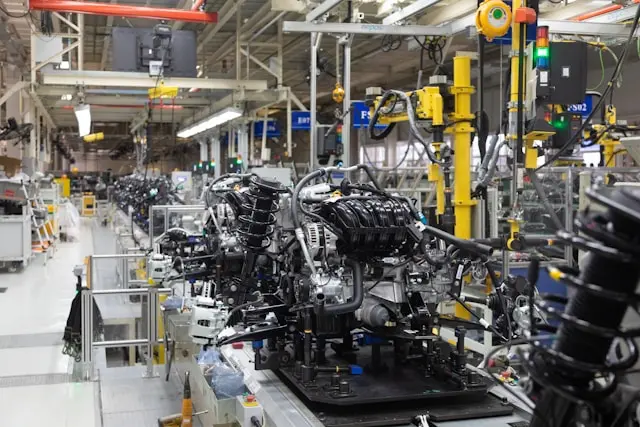
Volkswagen Slovakia's Devínska Nová Ves complex remains one of Europe's most vertically integrated automotive facilities. It is the sole global producer of Porsche Cayenne bodies and a critical hub for VW Group's premium SUV programme, assembling VW Touareg, Audi Q7/Q8, and Bentley Bentayga. The plant employed approximately 9,500 people as of Q3 2024 and ran an annual payroll exceeding €350 million.
The supplier density surrounding this anchor is substantial. Approximately 120 Tier-1 and Tier-2 facilities operate within a 40-kilometre radius of the VW plant, concentrated in industrial zones across Lozorno, Gajary, and Bernolákovo. Adient runs a 1,200-person seating systems operation in Lozorno. Yanfeng Automotive Interiors employs 800 people assembling dashboards and cockpit modules. Gestamp, Brose, Kostal, and Valeo each maintain dedicated manufacturing centres for body, door, electrical, and thermal systems respectively.
This cluster benefits from logistics infrastructure that few Central European locations can match. The Port of Bratislava handles 1.2 million tonnes of automotive components annually through Danube river access, with direct multimodal links to the VW plant. The D1/D2 motorway intersection provides 24-hour freight corridors to Vienna in 60 kilometres, Brno in 130, and Budapest in 200. For just-in-time delivery to a premium OEM, proximity matters. These suppliers have it.
But the cluster's strength is also the source of its hiring pressure. Every one of those 120 facilities draws from the same technical labour pool. And that pool, as the data now shows, is not nearly deep enough for what comes next.
A €1.2 Billion Bet on a Workforce That Does Not Yet Exist
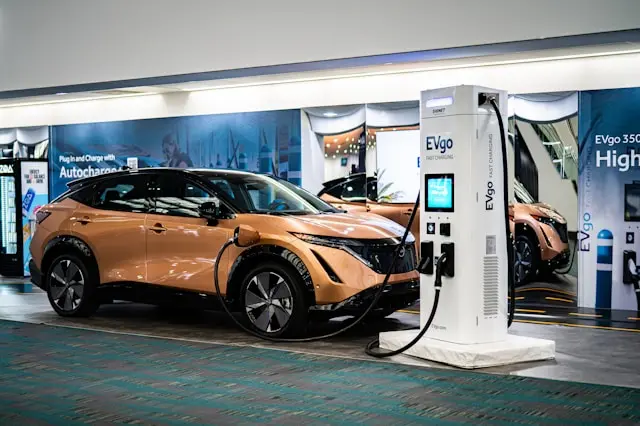
Volkswagen Slovakia's electrification commitment is the defining investment in the region's automotive future. The €1.2 billion programme, announced in March 2024, covers battery assembly operations and the retooling of existing production lines for EV architectures. The company expects this to create 800 to 1,000 new engineering and technical positions through 2026.
The New Roles
The positions being created are fundamentally different from the roles they notionally replace. Battery process engineers need expertise in cell assembly and thermal management. Automation engineers must programme Kuka and ABB robotics using IEC 61131-3 standards through platforms like Siemens TIA Portal and Beckhoff. High-voltage safety certification under EU Regulation 2018/858 is a baseline requirement, not a differentiator. These are not skills that a mechanical engineer acquires through a weekend course.
The Roles Being Displaced
At the same time, the investment implies the potential obsolescence of 1,200 to 1,500 ICE-specific production roles. VW Slovakia currently produces approximately 400,000 engines annually across a range from 1.0-litre TSI to 4.0-litre V8, employing 2,100 people in powertrain operations. The plant has already reduced engine production lines from four to two. VW has not confirmed conversion of all remaining engine lines to e-mobility components, creating what may become a sharp employment cliff between 2027 and 2030.
The net effect is not growth or contraction. It is churn. And the people caught in that churn, the experienced mechanical engineers whose skills are tied to internal combustion, cannot simply be reclassified into the new roles. The investment moved faster than the human capital could follow. Capital can be redirected in a board meeting. A workforce cannot be reskilled in one.
Two Compensation Markets Wearing One Label
The most revealing data in this market is not the average wage growth figure. It is the gap between what different categories of automotive professionals earn and how fast those categories are diverging.
General automotive wage growth in Bratislava moderated to 4 to 5 per cent in 2025, according to Hays and Mercer benchmarking data. That is down from 8 to 9 per cent in 2022. On the surface, it suggests a cooling market. But executive search firms tracking EV-transition leadership roles report compensation inflation of 15 to 20 per cent year on year for the same period. Plant Directors, Battery Engineering VPs, and senior automation specialists are not participating in the same salary market as their ICE-focused colleagues.
The numbers at senior level illustrate the scale of divergence. An Operations Director or Plant Manager in the Bratislava supplier cluster commands €110,000 to €160,000 in annual base salary, plus a car allowance of €800 to €1,200 monthly and variable bonuses of 20 to 40 per cent of base. Total compensation packages for VW Group supplier plant managers frequently exceed €200,000 when long-term incentives are included. A VP of Engineering or Technical Director earns €120,000 to €180,000 in base salary, but roles requiring EV battery integration expertise now command a 25 per cent premium over traditional ICE engineering leadership, according to Korn Ferry's automotive sector compensation analysis.
At the specialist level, the pattern repeats. Senior Manufacturing and Process Engineers earn €48,000 to €65,000 annually. Quality Managers at plant level earn €55,000 to €72,000, with a 15 to 20 per cent premium for German language fluency and VDA 6.3 certification. Automation Engineering Managers sit at €62,000 to €78,000, with EV battery line experience pushing compensation to the upper quartile.
According to Trend Business Weekly, Gestamp Slovakia and Yanfeng Automotive Interiors engaged in direct talent competition for Tooling Managers in Q2 2024, with reported salary premiums of 25 to 30 per cent above standard market rates. Senior toolmakers now command €3,500 to €4,200 in monthly base salaries, up from €2,800 in 2022. That is a 50 per cent increase in two years for a single role category. The compensation spiral in specialised tooling and EV-adjacent roles is not slowing down. It is compounding.
Bratislava's automotive executives earn approximately 40 to 50 per cent of equivalent roles in Munich, Stuttgart, or Wolfsburg. But they earn 20 to 30 per cent above Prague and Budapest benchmarks. This creates a middle-tier positioning that holds talent against regional competitors but cannot defend against Western European poaching when German OEMs offer 2.5 to 3 times the total compensation package. For executive hiring in the automotive sector, this positioning creates a specific challenge: the candidates worth recruiting are the same candidates most vulnerable to a German offer.
The Zero-Sum Hiring Dynamic Across Slovakia's Automotive Corridor
Bratislava does not compete for automotive talent in isolation. Stellantis operates a 3,800-person facility 55 kilometres away in Trnava. Kia Motors runs a 3,600-person plant in Žilina. Jaguar Land Rover employs 2,800 people in Nitra. All four OEM operations, plus their respective supplier clusters, draw from overlapping labour pools for production and engineering talent.
Domestic Rivals With a Cost Advantage
Trnava and Žilina offer 15 to 20 per cent lower cost of living than Bratislava while providing comparable automotive wages. This makes them increasingly attractive to mid-level engineers and production supervisors who find Bratislava's housing costs prohibitive. Average apartment prices in the Bratislava Region reached €3,800 per square metre in 2024, outpacing wage growth and limiting the city's ability to absorb in-migration from eastern Slovakia. Nitra's JLR facility competes on a different axis entirely. It offers a premium English-language working environment and British corporate culture, attracting quality and project management talent who might otherwise default to the German-speaking VW ecosystem.
The Brno Drain
Brno, just 130 kilometres to the northwest, represents the most consequential competitor for Bratislava's senior technical talent. Senior engineers in Brno earn €65,000 to €85,000, a 25 to 30 per cent premium over Bratislava's €48,000 to €65,000 range for equivalent roles. Housing costs are 35 per cent higher, but the net financial position for a senior engineer moving from Bratislava to Brno is still positive. More importantly, Brno offers career progression without requiring the language investment and cultural adjustment of a move to Germany. It is the path of least resistance for ambitious engineers who have outgrown what Bratislava can offer but are not ready for Munich.
Győr, across the Hungarian border, competes specifically for German-speaking technical talent. Hungary's 15 per cent flat personal income tax rate, compared to Slovakia's 25 per cent progressive structure, creates an immediate take-home pay advantage that salary negotiations in Bratislava must account for.
The result is a hiring environment where every placement in Bratislava is a candidate removed from Trnava, Žilina, Nitra, Brno, or Győr, and vice versa. There is no net new talent entering this system at a rate sufficient to absorb the demand all five clusters are generating simultaneously.
Where Traditional Search Methods Break Down
The Bratislava automotive labour market has a characteristic that makes conventional recruitment approaches unreliable: the professionals most urgently needed are almost entirely absent from job boards.
Battery Process Engineering Managers operate in a specialisation where unemployment sits below 1.2 per cent. Average tenure is 4.5 years. These professionals are not browsing Profesia.sk between meetings. Automation Engineers with VW Group supplier experience generate job board response rates below 5 per cent for qualified profiles. Plant Directors at Tier-1 suppliers represent a 100 per cent passive market. Every single placement occurs through retained search or direct approach.
The aggregate data confirms the pattern. Thirty-four per cent of automation engineering postings in the Bratislava Region remain active beyond 180 days, compared to 12 per cent in Prague. A senior battery assembly process engineer search in this market typically runs seven to nine months. The Bratislava Region reported 4,800 automotive vacancies in December 2024, with a vacancy rate of 8.4 per cent, nearly double the national industry average.
According to the Amrop Slovakia Executive Search Market Review 2024, a pattern typical of EV-transition roles involves a major Tier-1 supplier failing to secure a Plant Quality Director with EV battery experience after a five-month search, ultimately restructuring the role into a dual-hat position shared with their Czech facility. The firm also introduced a four-day office arrangement that had previously been unavailable. When a search fails at this level, it does not simply delay a hire. It forces an organisational redesign.
The 80 per cent of senior automotive professionals who are not actively on the market represent the only viable candidate pool for these roles. Reaching them requires direct identification, mapping of competitor organisations, and an approach calibrated to what actually motivates a passive candidate to consider a move. A job posting, regardless of how well written, reaches at most 5 per cent of the qualified population.
The Structural Constraints No Investment Can Override
Even with €1.2 billion in committed capital, Bratislava's automotive labour market faces constraints that money alone cannot resolve.
The Demographic Wall
Slovakia's working-age population is declining by 0.8 per cent annually. This is not a cyclical dip. It is a demographic trajectory that the National Bank of Slovakia has flagged as a systemic risk in its Financial Stability Report. The Bratislava Region faces a compounding version of this problem: housing stock limitations prevent in-migration from eastern Slovakia, where unemployment is higher and willing workers are available but unable to afford relocation.
Regulatory and Energy Exposure
The Act on Support of Automotive Industry, amended in 2024, provides tax relief for EV component investments but mandates 25 per cent local workforce retention for subsidy eligibility. This complicates restructuring for suppliers attempting to shed ICE roles while scaling EV capacity. They cannot freely reduce headcount without jeopardising the subsidies that make the EV investment viable.
VW Slovakia's collective agreement, covering 100 per cent of its workforce and negotiated through OZ KOVO, sets sector-wide benchmarks. The 7 per cent wage increase secured in 2024 ripples outward. Tier-1 suppliers must match or approach that figure to retain staff, regardless of their own margin position. For smaller suppliers already facing the cost of pivoting from ICE to EV components, this creates a double pressure: invest in new capability while absorbing mandated wage increases for a workforce partly engaged in work that is declining.
Energy costs add a further layer. Industrial electricity in Slovakia averaged €140 to €160 per MWh in 2024, placing Bratislava at a 15 to 20 per cent cost disadvantage against Polish competitors. The dependency on Russian-origin pipeline gas, still representing 65 per cent of Slovak industrial gas supply, introduces price volatility that no individual employer can hedge away. For the 30 per cent of mechanical engineering suppliers that the Slovak Automotive Industry Association identifies as facing existential risk if they fail to diversify from ICE components by 2026, these cost pressures may determine whether diversification is economically possible at all.
Flexible working arrangements lag behind competitors. Only 45 per cent of automotive employers in the Bratislava Region offer hybrid models, compared to 70 per cent in Brno. For a passive candidate weighing a move, the working arrangement is part of the total proposition. When the salary differential is marginal and the career progression is comparable, flexibility becomes the deciding factor. Bratislava's automotive employers are losing that comparison more often than they should.
What This Means for Senior Hiring Leaders Operating in This Market
The original analytical claim of this article is one that the aggregate statistics do not reveal: Bratislava is not experiencing an automotive talent shortage. It is experiencing a skills mismatch so severe that the same city simultaneously has too many of one type of engineer and far too few of another. The conventional framing of "shortage" implies a volume problem. This is a category problem. The investment in electrification did not reduce the workforce. It replaced one kind of worker with another that does not yet exist in sufficient numbers. And the compensation, search, and retention strategies that work for the category in surplus are exactly wrong for the category in deficit.
For hiring leaders responsible for filling EV-transition roles in this cluster, three implications are immediate.
First, the search methodology must match the candidate profile. In a market where battery process engineering managers are 80 per cent or more passive, and where job board response rates for qualified automation engineers sit below 5 per cent, the conventional post-and-wait approach is not slow. It is structurally incapable of reaching the candidates who matter. Direct identification through AI-powered talent mapping and confidential approach is the only method that accesses the real candidate pool.
Second, the compensation proposition must be calibrated to the specific role category, not to "automotive" as a sector average. A 4 to 5 per cent increase is appropriate for roles with stable demand. For EV-transition leadership, the market is moving at 15 to 20 per cent annually. Benchmarking against last year's Hays guide will produce offers that are rejected before the first interview. Accurate, real-time market benchmarking is a prerequisite, not a luxury.
Third, the timeline expectation must account for the reality of passive candidate engagement. A seven-to-nine-month vacancy for a senior battery process engineer is not an outlier in this market. It is the norm under traditional search conditions. Firms that have compressed this timeline have done so through retained, exclusive search mandates with specialists who already hold mapped candidate pools in automotive and industrial manufacturing. The cost of a slow search in this market is not just the vacancy itself. It is the compensation spiral created when competitors fill their roles first and the remaining candidates recognise their increased leverage.
For organisations competing for EV-transition leadership and specialist engineering talent in Bratislava's automotive cluster, where the candidates are invisible to job boards and the cost of delay compounds monthly, speak with our executive search team about how KiTalent approaches this market. We deliver interview-ready executive candidates within 7 to 10 days through direct headhunting methodology, accessing the passive talent that conventional methods cannot reach. Our pay-per-interview model means no upfront retainer. Clients pay only when they meet qualified candidates. Across 1,450 executive placements globally, we maintain a 96 per cent one-year retention rate.
Frequently Asked Questions
What are the hardest automotive roles to fill in Bratislava in 2026?
Battery Process Engineers, Automation and Robotics Engineers with PLC programming expertise, and bilingual Technical Project Managers with German or English alongside Slovak represent the most acute shortages. Plant Directors at Tier-1 suppliers operate in a 100 per cent passive candidate market where every placement requires direct approach. Quality Managers with IATF 16949 certification and VDA 6.3 auditing capability are similarly constrained, particularly when German language fluency is required. Vacancy durations for senior automation engineering roles in the Bratislava Region exceed 180 days in 34 per cent of cases.
How much do automotive executives earn in Bratislava compared to Western Europe?
Bratislava automotive executives earn approximately 40 to 50 per cent of equivalent roles in Munich, Stuttgart, or Wolfsburg. An Operations Director or Plant Manager commands €110,000 to €160,000 in annual base salary, with total compensation exceeding €200,000 when bonuses, car allowances, and long-term incentives are included. VPs of Engineering earn €120,000 to €180,000 base, with a 25 per cent premium for EV battery integration expertise. These figures sit 20 to 30 per cent above Prague and Budapest benchmarks but remain vulnerable to German salary counter-offers offering 2.5 to 3 times total compensation.
Why is automotive recruitment in Bratislava so difficult despite high unemployment in other Slovak regions?
The difficulty is structural, not geographic. Slovakia's working-age population declines by 0.8 per cent annually. Bratislava housing costs of €3,800 per square metre make relocation from eastern Slovakia unaffordable for industrial workers. The four OEM clusters in Bratislava, Trnava, Žilina, and Nitra create overlapping demand for identical skill sets. And the EV transition requires capabilities in battery engineering, high-voltage systems, and advanced automation that the existing ICE-trained workforce does not possess without substantial reskilling.
What is the impact of the EU 2035 ICE phase-out on Bratislava's automotive workforce?
Volkswagen Slovakia's 2,100 powertrain employees face direct exposure. The company has reduced engine production lines from four to two and has not confirmed conversion of all remaining lines to e-mobility components. The Slovak Automotive Industry Association estimates that 30 per cent of current mechanical engineering suppliers face existential risk if they cannot diversify from ICE components by 2026. Meanwhile, VW's €1.2 billion electrification investment is creating 800 to 1,000 new positions requiring entirely different technical competencies. The transition creates simultaneous surplus and shortage in the same facility.
How can companies find passive automotive candidates in the Bratislava Region?
Job board response rates for qualified automation engineers in Bratislava sit below 5 per cent. Over 80 per cent of battery engineering managers and all Plant Director candidates are passive. Reaching them requires direct headhunting through talent mapping of competitor organisations, confidential candidate identification, and a proposition calibrated to what motivates employed professionals. KiTalent's AI-enhanced methodology accesses this passive pool and delivers interview-ready candidates within 7 to 10 days, compressing timelines that traditionally run seven to nine months under conventional search approaches.
How does Bratislava compare to other Central European automotive markets for hiring?
Bratislava occupies a middle tier. It offers higher salaries than Budapest and Prague at senior levels but cannot match Brno's 25 to 30 per cent premium for senior engineers. Its flexible working adoption lags Brno at 45 per cent versus 70 per cent hybrid availability. Győr competes through Hungary's flat 15 per cent income tax rate. The cluster's strength lies in VW Group proximity, logistics infrastructure, and supplier density. Its weakness is the zero-sum hiring dynamic across Slovakia's four OEM corridors and a housing market that limits the talent pool's ability to grow through in-migration.