Trafford Park's Automation Investment Is Creating the Talent Shortage It Was Built to Solve
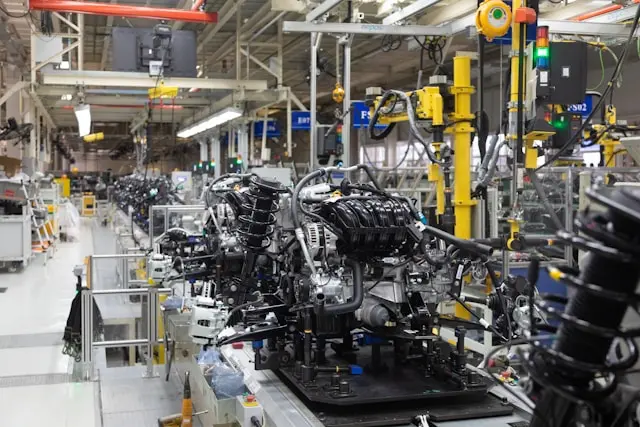
Trafford Park entered 2026 in the grip of a paradox that no amount of capital expenditure can resolve on its own. The United Kingdom's largest industrial park, home to roughly 1,300 businesses and 35,000 employees across 4.7 square miles, has spent the past two years accelerating investment in warehouse automation, robotic integration, and process digitisation. The explicit goal was to reduce dependency on a manual workforce that had become increasingly difficult to recruit and increasingly expensive to retain. The result, now measurable across the park's food manufacturing, fulfilment, and contract logistics operations, is a deeper and more acute dependency on a different category of worker: one that exists in even smaller numbers.
This is not a story about a labour shortage in the conventional sense. Trafford Park's challenge is not that it cannot find enough people. It is that the people it now needs, the mechatronics technicians, controls engineers, and automation maintenance specialists capable of keeping a modern fulfilment centre or high-speed production line running, are among the scarcest technical professionals in the North West of England. According to the Made Smarter Greater Manchester Skills Diagnostic, 34% of local manufacturers accelerated automation investments through 2025 in direct response to labour shortages and National Living Wage increases. The machines arrived. The technicians to run them did not.
What follows is an analysis of the forces converging on Trafford Park's talent market in 2026: the automation paradox at its core, the infrastructure and regulatory pressures compounding it, the compensation dynamics shaping candidate behaviour, and what senior hiring leaders in logistics and manufacturing must understand before launching their next critical search in this market.
Inside Trafford Park's Industrial Economy: Not What the Label Suggests
Any senior leader hiring into Trafford Park's industrial and manufacturing sector needs to understand what the park actually is before they can understand why it is so difficult to hire here.
The label "advanced manufacturing hub" requires qualification. While Trafford Park hosts manufacturers such as Kellogg's and Vynova, its economic engine is logistics, third-party distribution, and high-velocity e-commerce fulfilment. Amazon's MAN2 facility on Barton Dock Road employs 1,200 to 1,500 permanent staff. GXO Logistics operates multiple contract logistics facilities serving fashion and FMCG clients, employing an estimated 800 to 1,000 across the park. L'Oréal UK runs a distribution centre serving northern England and Scotland with approximately 400 staff.
Greater Manchester's genuinely advanced manufacturing, aerospace at Broughton, motorsport in Wigan, materials science at the Graphene Engineering Innovation Centre, sits elsewhere. Trafford Park's "advanced" character manifests in process automation within its food manufacturing cluster and in the sophistication of its fulfilment operations. This distinction matters enormously for hiring. A candidate with a background in aerospace R&D is not the same as a candidate with experience maintaining high-speed FMCG packaging lines. The skill sets overlap on paper. In practice, they diverge.
The park also operates under physical constraints that have no equivalent in competing markets. Only 47 acres of undeveloped land remain within its boundaries. According to CBRE's UK Logistics MarketView, the North West industrial market recorded a 2.3% vacancy rate for prime Grade A space in Q3 2024, with Trafford Park effectively at full capacity for units above 100,000 square feet suitable for automated fulfilment. The 60-acre Trafford Wharfside site, a former landfill, represents the last meaningful land parcel within the ecosystem and is expected to deliver 1.2 million square feet of new logistics and light industrial space by late 2026. After that, expansion moves to peripheral zones: Port Salford, Warrington, Bolton. The logistics cluster that defines the park's talent market is approaching a physical ceiling.
For hiring leaders, this means the talent pool is not going to grow through new employer arrivals. The employers already here are competing for the same constrained pool, and the pool's composition is shifting beneath them.
The Automation Paradox: Capital Moved Faster Than Human Capital Could Follow
This is the central tension of Trafford Park's 2026 talent market, and it is the tension that most hiring leaders have not yet fully absorbed.
Why the Machines Arrived
The logic was sound. Persistent shortages of warehouse operatives and production line workers, combined with successive National Living Wage increases, made automation the rational response. Made Smarter Greater Manchester's 2024 diagnostic confirmed the trend: a third of local manufacturers planned to accelerate automation investment through 2025 and into 2026. The investments landed. Automated storage and retrieval systems went into fulfilment centres. Robotic palletisers replaced manual handling in food production. PLC-controlled packaging lines replaced semi-manual operations.
Why the Problem Deepened
The investment in automation has not reduced the workforce. It has replaced one kind of worker with another that does not yet exist in sufficient numbers. Capital moved faster than human capital could follow.
A pattern visible across Trafford Park's food manufacturing cluster illustrates the scale of the problem. Automation Maintenance Technician roles requiring PLC programming, typically Siemens or Rockwell platforms, have been running 60 to 90 days beyond standard 30-day recruitment cycles. The Greater Manchester Chamber of Commerce Quarterly Economic Survey reported that 68% of respondents cited "extended time-to-fill for automation roles" as a primary operational constraint.
The ratio of active to passive candidates among automation and controls engineers sits at approximately 1:4, according to Engineering UK's Workforce Report. The majority of qualified professionals are employed in automotive or pharmaceutical sectors, which offer both higher salaries and stronger technical career trajectories. Moving one of these candidates to an FMCG or logistics environment in Trafford Park requires a minimum 15 to 20% salary uplift, and even that may not be sufficient. The hidden 80% of candidates who are not actively looking represents the reality of this market. Job postings reach a fraction of the viable pool.
This creates what might be called mid-term operational fragility. Every automation investment increases dependency on a talent category that the Greater Manchester labour market cannot supply in adequate volume. The machines work. Finding the people to maintain them is the problem the machines were supposed to eliminate.
Infrastructure and Regulation: The Compounding Pressures
Trafford Park's talent challenge does not exist in isolation. It compounds against infrastructure decay and regulatory transition that together raise the cost and complexity of every operation on the estate.
Road Congestion as a Talent Deterrent
The M60 Junctions 9 and 10, the primary freight arteries into Trafford Park, operate at 130% of designed capacity during morning peak hours. According to Transport for Greater Manchester's Strategic Investment Plan, this imposes estimated delay costs of £15,000 to £25,000 per HGV per annum. The cancelled A56 relief road scheme means there is no structural solution in sight. HGV journey times within the park have increased 18% since 2019.
For talent attraction, the congestion problem is not abstract. A senior logistics director considering a move to Trafford Park from the East Midlands, where comparable roles exist at comparable compensation, factors in a commute through one of the worst freight corridors in northern England. The Trafford Park Metrolink line, opened in 2020, improved access for office-based and production staff but does nothing for the operational leaders who need to be physically present across multiple sites during peak hours.
The Customs Compliance Burden
Full implementation of the UK Border Target Operating Model through 2025 has increased customs documentation requirements for Trafford Park's import-dependent sectors. FMCG and chemicals operations, the park's core industries, run on just-in-time supply chains that cannot absorb port delays. HMRC estimates an additional administrative burden of 15 to 20 hours per week for mid-sized importers. The British Chambers of Commerce Trade Survey found 45% of North West importers were under-prepared for the new documentary requirements.
This regulatory shift has created a new hiring category: customs compliance specialists. These professionals barely existed as a distinct role before 2021. Now they command a premium, and competition for them extends across every port-adjacent logistics cluster in England.
The Decarbonisation Clock
Approximately 60% of Trafford Park's warehouse stock predates 2000. This older stock falls below the EPC B standards that will be required for new lettings by 2030 under proposed Minimum Energy Efficiency Standards regulations. Retrofit costs run £40 to £60 per square foot, compared to £25 per square foot for new speculative development. The Trafford Park Low Carbon Energy Network, a heat network backed by £35 million in government funding, faces construction delays into 2026 and 2027. Until it becomes operational, manufacturers face unabated carbon costs under the UK Emissions Trading Scheme at £65 to £75 per tonne.
This creates demand for a third scarce role category: sustainability and ESG leadership with industrial decarbonisation experience. Candidates with this profile receive an average of 3.2 recruiter contacts per month, according to the Acre Sustainability Talent Report. Job postings are functionally ineffective for the top quartile of this market. The only reliable method is direct search that maps and approaches candidates individually.
Every one of these pressures, congestion, customs compliance, decarbonisation, generates its own talent requirement. Combined, they create a hiring environment where the number of distinct specialist roles a single employer needs to fill has expanded considerably, while the available candidate pool for each has contracted.
What Roles Pay and Why the Gaps Matter
Compensation in Trafford Park's key roles tells a precise story about where the market is tightest and where competing regions are pulling candidates away.
Supply Chain and Logistics Leadership
At the senior specialist and manager level, a Head of Logistics or Senior Supply Chain Manager commands £75,000 to £95,000 base salary plus a 15 to 20% bonus and car allowance. At the executive level, a Director of Logistics or VP of Supply Chain earns £110,000 to £150,000 base plus a 30 to 50% bonus and long-term incentive plan participation.
The East Midlands competes directly for these roles at comparable compensation, £100,000 to £140,000, but with housing costs averaging 22% below Trafford Park commuter zones according to Zoopla's UK House Price Index. This is a quality-of-life arbitrage that East Midlands employers actively promote when targeting Manchester-based candidates. A logistics director weighing two equivalent offers will arrive at a materially different net position depending on geography.
Automation and Controls Engineering
A Senior Automation Engineer or Controls Engineer earns £60,000 to £75,000 base. At the executive level, a Head of Automation or Engineering Director earns £85,000 to £110,000 plus bonus. These figures sit 10 to 15% below equivalent roles in the West Midlands, where the automotive sector concentration around JLR, JCB, and Aston Martin sustains a higher compensation floor and offers stronger technical career trajectories.
This pay gap is not closing. It is widening at exactly the seniority level where the most critical roles sit. A controls engineer considering Trafford Park against Birmingham faces both a lower salary and a narrower career path. FMCG packaging automation does not carry the same professional prestige as automotive R&D. The candidate calculation is not purely financial, but the financial dimension reinforces every other hesitation.
Sustainability and ESG
A Sustainability Manager or ESG Lead earns £55,000 to £70,000. A Director of ESG or Head of Sustainability commands £90,000 to £130,000. These are competitive figures nationally, but the scarcity of candidates with industrial decarbonisation experience, as distinct from corporate ESG reporting experience, means the effective market for senior sustainability hires is extremely thin.
For organisations benchmarking compensation against these figures, market benchmarking for executive roles is not optional. It is the difference between an offer that lands and one that loses three weeks before the interview stage.
The Competitor Geography: Where Trafford Park Loses Candidates
Trafford Park does not compete only against itself. Three regions exert consistent gravitational pull on the talent it needs most.
The West Midlands draws automation and controls engineers with salaries 10 to 15% above Trafford Park and career paths rooted in the automotive sector's R&D ecosystem. For a passive candidate currently working on autonomous vehicle systems at a Midlands OEM, a lateral move to maintain packaging line PLCs in a cereal factory requires a narrative that compensation alone cannot carry.
The East Midlands competes for logistics directors and supply chain VPs through a different mechanism. Comparable salaries, materially lower cost of living. The growth of port-centric logistics at East Midlands Gateway and surrounding developments has created a critical mass of senior logistics roles that did not exist five years ago. This region is not poaching Trafford Park talent through premium offers. It is attracting them through lifestyle economics.
Yorkshire, and Leeds specifically, is emerging as a competitor for mid-level supply chain managers. Leeds' logistics sector growth rate of 12% year-on-year outpaces Manchester's 7%. More critically, Yorkshire employers offer hybrid working arrangements of two to three days remote, a structural advantage over Trafford Park's onsite operational requirements. For a supply chain manager willing to trade proximity to a major logistics estate for the flexibility to work from home three days a week, Leeds is increasingly attractive.
Each of these competitor regions exploits a different vulnerability. The West Midlands offers prestige and pay. The East Midlands offers equivalent pay with lower costs. Yorkshire offers flexibility. A hiring strategy for Trafford Park that does not account for all three is a hiring strategy that will fail for predictable reasons.
What This Means for Senior Hiring Leaders
The convergence of these dynamics produces a hiring environment that conventional methods cannot address. Three realities define Trafford Park in 2026.
First, the passive candidate ratios are severe. Senior supply chain and logistics directors at VP level represent a 75 to 80% passive candidate market. Average tenure at this level runs 4.6 years. Unemployment among experienced practitioners sits below 2%. Job board applications account for only 15 to 20% of successful hires at this seniority. Any search that begins with a job advertisement and waits for inbound applications is reaching, at best, one in five viable candidates.
Second, the roles that matter most require candidates who are currently employed in sectors that Trafford Park's employers do not typically recruit from. Automation engineers come from automotive and pharmaceutical operations. Sustainability directors with industrial decarbonisation experience come from energy-intensive manufacturing and utilities. Customs compliance specialists come from freight forwarding and trade compliance consultancies. The cross-sector sourcing requirement means a hiring manager's existing network is unlikely to contain the right candidates.
Third, speed matters more in this market than in most. When an automation technician role runs 60 to 90 days beyond its target fill date, the machinery that role was supposed to maintain either operates at reduced capacity or relies on contractor cover at two to three times the permanent salary cost. The cost of a failed or delayed executive hire compounds in an environment where every unfilled technical role creates downstream operational exposure.
The traditional executive search process, post, screen, shortlist, offer, was designed for markets where qualified candidates are visible and available. In Trafford Park's 2026 talent market, the candidates you need are neither.
Reaching the Candidates This Market Cannot See
Trafford Park's hiring challenge in 2026 is fundamentally a sourcing problem. The candidates exist. They are employed, they are performing well, and they are not looking. They are distributed across automotive plants in the West Midlands, pharmaceutical operations in the East Midlands, and energy companies that most logistics employers would never think to approach.
Reaching them requires a method built for passive markets. AI-enhanced talent mapping identifies where these candidates sit, what they earn, what would move them, and which of the three competitor geographies currently holds them. Direct headhunting then approaches them individually with a proposition that addresses not just salary but career trajectory, technical challenge, and the specific role they cannot access in their current sector.
KiTalent's approach to executive search across industrial and manufacturing markets is designed for exactly this kind of search: one where 80% of viable candidates are invisible to job advertising, where cross-sector sourcing is essential, and where speed determines whether a shortlist contains the strongest candidates or contains only the candidates who were left.
The pay-per-interview model means organisations are not committing retainer fees before seeing a single candidate. They pay when they meet qualified professionals. With a 96% one-year retention rate across 1,450 completed executive placements and an average client relationship lasting over eight years, the model is built for markets where the margin for error in a senior hire is close to zero.
For organisations hiring automation engineers, logistics directors, sustainability leaders, or customs compliance specialists in Trafford Park's constrained and competitive market, where the candidates you need are employed elsewhere and not responding to advertisements, start a conversation with our executive search team about how we approach searches in this market.
Frequently Asked Questions
Why is it so difficult to hire automation engineers in Trafford Park?
The difficulty stems from a structural mismatch between demand and supply. Trafford Park's manufacturers have accelerated automation investment to offset manual labour shortages, but the mechatronics and PLC programming talent required to maintain these systems is concentrated in automotive and pharmaceutical sectors outside Greater Manchester. Active candidates represent only about one in four qualified professionals in this specialism. The remainder must be identified and approached through direct headhunting methods that reach passive candidates in competing sectors and geographies. A 15 to 20% salary uplift is typically the minimum threshold to initiate a serious conversation.
What do senior logistics roles pay in Trafford Park in 2026?
A Head of Logistics or Senior Supply Chain Manager earns £75,000 to £95,000 base plus a 15 to 20% bonus and car allowance. At the director and VP level, compensation reaches £110,000 to £150,000 base plus a 30 to 50% bonus and long-term incentive plan participation. These figures are broadly comparable to the East Midlands, though the East Midlands offers housing costs approximately 22% lower than Trafford Park commuter zones, creating a net compensation advantage that hiring leaders must account for in their offer strategy.
How does Trafford Park compete with the West Midlands for engineering talent?
It struggles. The West Midlands automotive sector pays 10 to 15% above Trafford Park equivalents for automation and controls engineers and offers career trajectories in automotive R&D that FMCG and logistics environments cannot match. Trafford Park employers must compete on factors beyond base salary: the breadth of automation projects underway, the pace of technology adoption, and the opportunity to shape greenfield automation programmes rather than maintain legacy systems.
What impact has the UK Border Target Operating Model had on Trafford Park hiring?
The full implementation of customs controls on EU goods has created demand for customs compliance specialists, a role category that barely existed before 2021. HMRC estimates an additional 15 to 20 hours per week of administrative burden for mid-sized importers. For Trafford Park's FMCG and chemicals operations running just-in-time supply chains, this translates directly into new headcount requirements for professionals with documentary compliance, tariff classification, and border procedure expertise.
How does KiTalent approach executive search in logistics and manufacturing markets like Trafford Park?
KiTalent uses AI-enhanced talent mapping to identify passive candidates across sectors and geographies that traditional recruitment methods do not reach. In a market like Trafford Park, where the strongest automation engineers sit in automotive and pharmaceutical operations and the best logistics directors may be employed in the East Midlands, cross-sector and cross-geography sourcing is essential. KiTalent delivers interview-ready candidates within 7 to 10 days, with clients paying only when they meet qualified professionals, removing the retainer risk from searches in tight markets.
What are the biggest risks of a slow hire in Trafford Park's current market?
A delayed fill in an automation technician role directly affects production uptime and fulfilment capacity. Contractor cover costs two to three times a permanent salary. At the senior level, a VP Supply Chain vacancy during a period of customs regulatory transition and decarbonisation investment leaves strategic decisions unowned. The financial and operational cost of a prolonged vacancy is higher in operationally intensive environments like Trafford Park than in knowledge-economy markets where interim cover is easier to source.