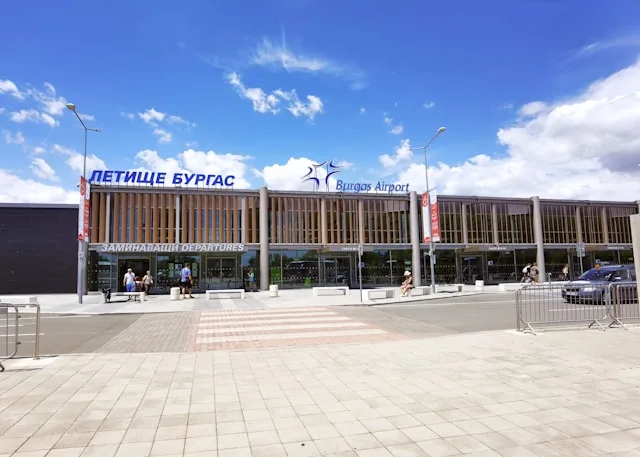
Burgas Petrochemical Refinery Talent in 2026: The Single-Employer Market That Broke Every Recruitment Rule

Southeast Europe's largest refinery sits in a Bulgarian coastal city of 200,000 people. Lukoil Neftochim Burgas processes 196,000 barrels per day, accounts for roughly 60% of Bulgaria's refined petroleum output, and employs 3,200 people directly. Another 8,000 depend on it through logistics, maintenance, and port operations. In a country losing 30,000 to 40,000 working-age citizens to emigration every year, this single facility has maintained voluntary turnover below 5%. That is not a typo.
The conventional reading of Bulgaria's labour market tells a story of irreversible decline. STEM shortages are acute. The working-age population contracts by 1.2% annually. Burgas County unemployment sits at 4.1%, below what most economists consider structural full employment. Against that backdrop, the refinery should be haemorrhaging talent. It is not. The paradox is real, and the mechanisms behind it are more instructive than the headline suggests. But the paradox has limits. In exactly the specialist roles that matter most for regulatory compliance and operational safety, the facility faces vacancy durations more than double the national average. The retention success and the recruitment failure are happening simultaneously, in the same building.
What follows is a structured analysis of how Burgas became one of Europe's most unusual industrial talent markets, where the forces holding talent in place and the forces making it impossible to find new specialists coexist. For any senior leader responsible for hiring into a single-employer industrial market facing regulatory transformation, feedstock disruption, and ownership uncertainty at once, this is the case study that illustrates what happens when a facility outgrows the labour market that surrounds it.
The Anchor That Dominates Its Own Labour Market
Describing Burgas's industrial economy without starting at Lukoil Neftochim would be like describing Detroit without mentioning automobiles. The refinery operates Bulgaria's only fluid catalytic cracker, runs delayed coking and hydrocracking units, and produces polypropylene. It is not merely the largest employer in the city. It is the organising principle of the local economy.
But the characterisation of Burgas as a "petrochemical cluster" overstates what actually exists on the ground. Unlike the integrated chemical parks of Antwerp or Ludwigshafen, where dozens of downstream manufacturers share infrastructure and create inter-company talent mobility, Burgas hosts limited downstream conversion capacity. The industrial footprint consists primarily of the refinery itself, the Rosenets oil terminal, storage facilities, and a constellation of approximately 45 SMEs providing specialised maintenance services. Vessel inspection, catalyst handling, turnaround engineering. These are the satellite businesses, not independent chemical manufacturers.
What Single-Employer Markets Do to Talent Dynamics
This distinction matters enormously for talent. In Rotterdam or Antwerp, a process engineer who leaves one employer can walk to the next facility without changing postcodes. In Burgas, leaving the refinery means leaving the city, the country, or the profession. According to FuelsEurope's Human Capital in Refining Report, this absence of inter-company mobility without geographic relocation is the defining constraint of single-faculty markets.
The consequence is bifurcation. For the roles that the refinery can fill through its own training pipelines and local retention mechanisms, turnover is remarkably low. For the specialist roles that require experience the local market cannot produce, the recruitment challenge is among the most acute in European refining.
The Feedstock Transition Nobody Predicted Would Work
In October 2024, Bulgaria's EU-sanctions derogation for Russian crude oil imports expired. The market consensus, reflected in the IEA's Oil Market Report from late 2024, anticipated serious margin compression or operational disruption. Lukoil Neftochim had processed Russian Urals crude for decades. The refinery's desalting and vacuum distillation units were optimised for that specific feedstock profile.
What happened instead was a capital-intensive pivot. The facility transitioned to Caspian Blend from Azerbaijan, Kazakh CPC Blend, and Iraqi Basrah crude. According to Reuters, reporting in November 2024, capital modifications to desalting and vacuum distillation units were required to handle higher-sulphur alternatives. Through Q1 2025, utilisation rates held at 82 to 85% of nameplate capacity, down from 91% in 2022 but far above the operational shutdown scenarios some analysts had modelled.
The Hidden Talent Consequence of New Feedstock
The feedstock switch created an immediate and specific talent pressure that does not appear in any headline about the refinery. Processing higher-sulphur crudes demands corrosion and materials specialists who understand sour crude metallurgy. These professionals must manage accelerated equipment degradation, redesign inspection schedules, and assess remaining useful life on vessels and piping that were specified for a different feedstock environment.
This is not a role you train for in a two-year programme. It requires a decade of operating experience with high-sulphur processing environments. The pool of such specialists in the Balkans is small. The pool willing to relocate to Burgas is smaller still.
The €1.2 billion modernisation programme confirmed by Lukoil for 2023 to 2028 targets residue upgrading and hydrogen production units. Each of these capital projects requires project engineers, commissioning managers, and technical directors who have delivered similar scope in operating refineries. The investment is moving faster than the talent pipeline can supply the people to execute it.
The Regulatory Pressure That Converts Compliance From a Function Into a Crisis
European refineries face a regulatory environment that has shifted from periodic adjustment to continuous escalation. For Lukoil Neftochim Burgas, two regulatory frameworks converge to create a compliance burden that directly translates into hiring urgency.
EU ETS Phase IV and the Carbon Cost Escalation
The facility emits approximately 1.8 million tonnes of CO₂ equivalent annually. Under EU ETS Phase IV, these emissions require purchased carbon allowances. At carbon prices projected between €60 and €80 per tonne, the annual compliance cost by 2026 reaches €108 to €144 million. The European Environment Agency's ETS Data Viewer confirms verified emissions at this scale.
For context, that compliance cost range represents a material share of operating margin for a facility already facing compressed refining margins of $6 to $8 per barrel Brent complex, compared to a historical average of $12 to $15. The facility has deferred carbon capture investments pending regulatory clarity on EU Innovation Fund support. The result: the compliance burden is real and growing, but the abatement investments that would reduce it are stalled.
Industrial Emissions Directive: The BAT Compliance Deadline
New Best Available Techniques conclusions for refining, revised in 2023, require an estimated €300 to €400 million in abatement technology by 2028. Wastewater treatment upgrades, flare gas recovery systems, and emissions monitoring infrastructure all fall within scope. Each of these projects requires environmental engineers, HSE directors, and project managers with specific IED permitting experience.
The professionals who understand both the technical requirements and the EU regulatory process are not abundant in Bulgaria. They are not abundant anywhere. The VP HSE role, commanding €75,000 to €95,000 in Burgas, competes against Eurozone compensation benchmarks of €140,000 to €200,000 for equivalent seniority at Greek or Western European refineries. This is not a gap that a retention bonus closes.
The hiring challenge here is not a volume problem. It is a knowledge problem. You cannot recruit regulatory compliance experience that does not yet exist in sufficient quantity, because the regulations themselves are newer than the career span required to master them.
The Compensation Paradox: Premium Enough to Retain, Not Enough to Recruit
Bulgarian refining sector salaries command a 35 to 45% premium over general manufacturing wages. For a country where average manufacturing pay is modest by EU standards, the refinery offers a genuinely superior local proposition. A senior process engineer with ten or more years of experience earns €42,000 to €58,000 annually. An operations manager earns €48,000 to €65,000. At executive level, a Plant Director commands €95,000 to €140,000 and a Technical Director €85,000 to €120,000.
These figures explain the low voluntary turnover. Within Burgas, and within Bulgaria more broadly, these are excellent compensation packages. They anchor careers. They keep families rooted.
But the moment a search extends beyond Bulgarian borders, the numbers tell a different story. Equivalent roles in Thessaloniki pay €140,000 to €200,000 at director level. According to Korn Ferry's Mediterranean Energy Compensation Survey, the gap is not subtle. Middle Eastern employers like ADNOC and SABIC offer 2.5 to 3 times the Burgas package for VP-level executives, albeit with rotational assignment structures. Even the OMV Petrom-operated Petromidia refinery in Romania, the closest geographic competitor, offers 15 to 25% above Burgas salary levels for DCS engineers and process operators.
The compensation structure creates a one-way valve. Talent that is already inside the refinery stays. Talent that is outside the refinery, particularly senior specialists and executives with international options, sees no financial reason to enter. The result is a market where retention metrics look excellent and recruitment metrics look catastrophic, and both are accurate descriptions of the same employer.
This is the analytical core of the Burgas talent story. The refinery has not solved its talent problem. It has split it in two. The half it controls, retention of existing staff through above-market local compensation and captive training programmes, works. The half it cannot control, attracting experienced specialists from external markets where compensation benchmarks are 40 to 50% higher, does not.
The Recruitment Funnel That Narrows to Almost Nothing
Vacancy data from the Bulgarian Employment Agency illustrates the severity. Chemical engineers and petroleum refining operators in Burgas experience vacancy rates 3.4 times higher than the Bulgarian national average. Average time-to-fill runs 94 days, compared to 42 days nationally. For senior process safety engineers, the picture is worse. Roles requiring Seveso III and COMAH compliance experience remain open for four to six months on average, with recruitment extending across Balkan candidate pools.
Where the Passive Candidate Wall Stands
The passive candidate ratios in this market are extreme. Between 85 and 90% of qualified candidates with ten or more years of Seveso III experience are employed and not actively seeking roles. Control systems specialists, the DCS engineers working with Honeywell and Yokogawa platforms, show a 94% employment rate and average tenure of 7.2 years. Active applicants in this category typically have fewer than three years of experience. For refinery operations managers with FCCU or hydrocracker unit experience, Pedersen & Partners estimates a passive-to-active ratio of four to one.
This means the conventional job advertising model reaches almost nobody who is qualified for the most critical roles. Active applicants exist primarily among junior chemical engineers and maintenance technicians, where active job seeker rates of 30 to 35% provide a functioning labour market. At the specialist and executive tier, the market is effectively invisible to any recruitment method that depends on candidates finding you.
LNB and its service providers have reportedly implemented retention bonuses of 15 to 20% of annual salary for DCS specialists, a pattern consistent with competitive pressure from Romanian and Turkish petrochemical employers. The Burgas Free University pipeline, which guarantees employment to 40 chemical engineering graduates annually in exchange for three-year post-graduation service commitments, addresses junior supply but cannot produce the mid-career specialists the market lacks.
The structural constraint is clear. A traditional recruitment approach built around advertising, inbound applications, and database searches will reach the junior segment of this market. It will not reach the senior segment. The senior segment must be found through direct headhunting that identifies, approaches, and persuades professionals who are not looking and have no reason to look.
Ownership Uncertainty and the Capital Freeze It Creates
Every talent decision in this market sits inside a larger strategic question that remains unresolved. Lukoil's Russian ownership creates ongoing sanctions exposure. According to Bloomberg, reporting in February 2025, the Bulgarian government has established a working group to evaluate state acquisition or "security of supply" trusteeship models for the refinery. The possibility of forced divestment or nationalisation is a live scenario entering 2026.
For hiring, this creates a specific kind of paralysis. A candidate considering a senior role at a facility under potential government takeover faces a calculation no compensation package can fully address. Will the investment programme continue under new ownership? Will the modernisation roadmap survive a change of control? Will the organisational culture, management structure, and career progression pathway remain intact?
These are not hypothetical concerns. They are the questions that a passive candidate's spouse asks when the headhunter calls. The ownership uncertainty does not prevent hiring. But it adds friction to every senior search at a moment when friction is already the defining characteristic of this market.
The geopolitical dimension compounds the problem. European Council sanctions guidance continues to evolve. The refinery's operational exemption for crude processing has been managed, but ownership-related sanctions remain a tail risk. For an executive evaluating a five-year career commitment, tail risk is not a footnote. It is the first thing they assess.
What This Market Requires From Search Partners
The Burgas petrochemical talent market does not respond to the methods that work in larger, more liquid labour markets. The candidate pool is small, overwhelmingly passive, geographically dispersed across the Balkans and beyond, and subject to a compensation disadvantage against every competing geography. The ownership uncertainty adds a narrative challenge that must be addressed in candidate conversations, not avoided.
An effective executive search in this market must do several things simultaneously. It must identify the small number of qualified specialists across Southeast Europe, Turkey, and potentially the Caspian region who possess the specific technical experience the role requires. It must approach them with a proposition that acknowledges the compensation gap honestly and builds the case on other dimensions: the scale of the capital programme, the operational complexity, the career rarity of running Southeast Europe's largest refinery. And it must move fast enough that candidates do not receive a competing approach from Petromidia, Hellenic Petroleum, or a Middle Eastern employer while the process unfolds.
The refinery's captive training pipeline solves the junior talent problem. No pipeline solves the mid-career and senior specialist problem. That requires talent mapping that identifies who, specifically, has the Seveso III compliance background, the high-sulphur processing experience, or the DCS platform expertise that the facility needs. It requires executive search methodology built for markets where 85 to 90% of the qualified pool is passive.
KiTalent delivers interview-ready executive candidates within 7 to 10 days through AI-enhanced talent identification that maps precisely this kind of specialist, dispersed market. With a 96% one-year retention rate across 1,450 executive placements, the methodology is built for markets where the cost of a wrong hire, or a slow hire, compounds daily. The pay-per-interview model means organisations engage with qualified, assessed candidates before committing fees, removing the retainer risk that makes experimental searches in difficult markets harder to justify.
For organisations operating in Burgas's petrochemical market, or in any single-employer industrial environment where specialist talent is passive, dispersed, and competing against higher-compensation geographies, start a conversation with our industrial sector search team about what a search structured for this specific market looks like.
Frequently Asked Questions
What is the average salary for a refinery Plant Director in Burgas, Bulgaria?
Plant Director compensation in Burgas ranges from €95,000 to €140,000 annually, based on Korn Ferry's Eastern European energy sector data. This represents a meaningful premium over Bulgarian manufacturing averages but remains 40 to 50% below equivalent roles in Western European refining hubs such as Rotterdam or Antwerp. The gap widens further against Eurozone benchmarks in Greece, where Hellenic Petroleum roles at equivalent seniority command €140,000 to €200,000. This differential is the primary barrier to external recruitment at executive level.
Why is it so hard to hire process safety engineers in Burgas?
Three factors converge. First, Seveso III compliance experience requires a decade of operating history. The qualified pool across the entire Balkans is small. Second, 85 to 90% of those qualified professionals are employed and not actively seeking new roles. Third, Burgas is a single-employer market. Unlike Antwerp or Rotterdam, there is no inter-company mobility without geographic relocation. Job board advertising reaches almost none of the relevant candidates. Specialist executive search built for passive candidate identification is the only method that consistently reaches this pool.
How has the Russian crude oil sanctions transition affected Burgas refinery operations?
Lukoil Neftochim completed its transition to non-Russian feedstock following the expiry of Bulgaria's EU sanctions derogation in October 2024. The facility now processes Caspian Blend, Kazakh CPC Blend, and Iraqi Basrah crude. Capital modifications to desalting and vacuum distillation units were required to handle higher-sulphur alternatives. Utilisation rates dropped from 91% in 2022 to 82 to 85% by early 2025, reflecting feedstock switching inefficiencies. The transition created immediate demand for corrosion and materials specialists with sour crude processing experience.
What are the main competitors for petrochemical talent in Southeast Europe?
Burgas competes for specialist refinery talent against four primary geographies. Sofia draws chemical engineers into corporate headquarters and energy trading roles at 20 to 30% salary premiums. Romania's Petromidia refinery actively recruits Bulgarian DCS engineers at 15 to 25% above Burgas levels. Greek refineries operated by Hellenic Petroleum offer Eurozone compensation. Middle Eastern employers including ADNOC and SABIC offer 2.5 to 3 times Burgas compensation for VP-level executives. KiTalent's international executive search capability addresses this cross-border competitive dynamic directly.
What regulatory costs does Burgas refinery face under EU ETS and the Industrial Emissions Directive?
EU ETS Phase IV requires purchased carbon allowances covering approximately 1.8 million tonnes of CO₂ equivalent annually. At projected carbon prices of €60 to €80 per tonne, annual compliance costs reach €108 to €144 million by 2026. Separately, revised Best Available Techniques conclusions under the Industrial Emissions Directive require an estimated €300 to €400 million in abatement technology investment by 2028, covering wastewater treatment, flare gas recovery, and emissions monitoring infrastructure. Both frameworks create direct demand for environmental compliance and HSE leadership talent.
How does KiTalent approach executive search in single-employer industrial markets?
KiTalent uses AI-enhanced talent mapping to identify the specific professionals across dispersed geographies who hold the technical qualifications a role demands. In markets like Burgas, where 85 to 90% of qualified candidates are passive and no job board reaches them, direct headhunting is the only viable method. KiTalent delivers interview-ready candidates within 7 to 10 days using a pay-per-interview model, meaning clients assess qualified candidates before committing fees. With a 96% one-year retention rate, the approach is designed for markets where the cost of a failed or delayed search is operationally material.