Burgas Is Building Runways It Cannot Staff: The Tourism Hiring Crisis on Bulgaria's Black Sea Coast
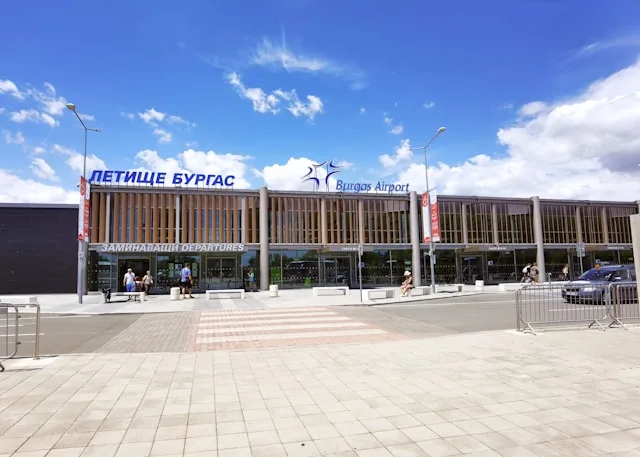
Burgas Airport processed roughly 2.5 million passengers in 2024. Fraport Twin Star is spending €18 million to expand apron capacity and upgrade baggage systems, targeting a 15% increase in peak-hour throughput by the end of 2026. New routes from Wizz Air, Ryanair, and charter operators have replaced much of the lost Russian market volume with Polish, Czech, and UK travellers. On paper, the southern Black Sea coast is entering its strongest tourism cycle since before the pandemic.
The problem is not runways, gates, or hotel rooms. It is people. Peak-season employment in Burgas tourism reached 18,400 registered positions in Q3 2024, then collapsed to an estimated 6,200 by Q1 2025. Within that peak window, 68% of hospitality establishments reported chef de cuisine vacancies lasting longer than 90 days. The Bulgarian Civil Aviation Administration issued only 47 new EASA B1/B2 licences to Burgas-region candidates in 2023, against estimated demand for 80 to 90 technicians. The airport is expanding. The hotels are full. The people to run them are not there.
What follows is an analysis of the forces pulling Burgas's tourism and aviation workforce apart: where the shortages are deepest, why they are worsening despite rising wages, and what hiring leaders in this market must do differently to compete for the executive and specialist talent that holds the entire season together.
The 12-Week Economy and What It Does to a Labour Market
The defining feature of Burgas's tourism sector is not its size. It is its compression. According to the National Statistical Institute of Bulgaria, 61% of annual tourism revenue in the Burgas region is generated during a 12-week window from June through August. This creates a market where infrastructure and labour capacity are saturated for one quarter of the year and deeply underutilised for the remaining three quarters.
Hotel occupancy at four- and five-star properties averaged 89% in July and August 2024, effectively hitting physical capacity limits. Yet 78% of the municipality's 24,500 classified hotel beds sit within a 5km corridor of the Sea Garden and Central Beach. The spatial concentration amplifies the seasonal pressure. Every hotel, restaurant, and ground handler in the same corridor needs the same workers at the same time.
What Compression Does to Senior Talent
For operational staff, seasonality means fixed-term contracts and predictable turnover. Annualised turnover in seasonal properties runs between 45% and 60%. For senior leadership, the dynamic is different and more damaging. A hotel general manager or cluster F&B director cannot be hired on a seasonal basis. These roles require year-round presence, strategic continuity, and institutional knowledge that does not survive annual replacement cycles.
The result is a bifurcated labour market. Seasonal operational roles attract abundant applicants during the March-to-May pre-season window. Senior management and specialist technical roles function as passive candidate markets where the ratio of active to passive candidates for five-star hotel GM positions sits at roughly 1:9. Average tenure at the GM level is 4.2 years, and according to Hays Bulgaria's 2024 hospitality sector analysis, 70% of these roles are filled through executive search or direct headhunting rather than public advertisement.
The compression effect does not just make the season intense. It makes year-round senior retention structurally difficult because the professionals who could run these properties have better options in Sofia, where salaries are 30 to 40% higher and employment is not subject to a three-month revenue cliff.
Three Shortages That Compound Each Other
Burgas faces acute deficits in three distinct talent categories. Each alone would strain the market. Together, they create a compounding dynamic where the inability to fill one category increases the pressure on the other two.
Certified Aviation Maintenance Engineers
The most quantifiable shortage sits in aviation. EASA Part-66 B1 and B2 certifications, required for airframe and avionics maintenance on the Airbus A320 and Boeing 737 families that dominate Burgas Airport traffic, represent a credential that takes years to earn and is recognised globally. Burgas produces fewer than 50 newly certified engineers per year against demand for 80 to 90. The gap is not closing. It is widening, because MRO facilities in Budapest, Prague, and Dubai recruit directly from the Bulgarian talent pool at salaries of €60,000 to €80,000, nearly double the Burgas top range of €37,000 to €49,000 for the same qualification.
Fraport Twin Star, Swissport Bulgaria, and Burgas Handling all draw from the same shallow pool. When Fraport's apron expansion increases throughput capacity, the additional aircraft movements will require additional maintenance personnel who do not currently exist in the region. Physical infrastructure is being built ahead of the human capital required to operate it.
Executive Chefs and F&B Management
According to the Bulgarian Hotel and Restaurant Association (BHRA), 41% of Burgas hotels failed to fill sous-chef positions at any point during the 2024 peak season. Chef de cuisine vacancies lasted more than 90 days at 68% of establishments. The shortage is not about line cooks. It is about the senior culinary professionals, pastry chefs with international competition experience, sommelier certifications at WSET Level 3 or above, who differentiate a four-star property from a three-star one and justify the rate premiums that make compressed-season economics viable.
Job postings for Hotel Manager and F&B Director roles in Burgas increased 34% year-on-year in Q2 2024 compared to Q2 2023. Applications per vacancy dropped from 12:1 to 4:1 over the same period.
Trilingual Front-Office Management
The shift in Burgas's source markets has created a language mismatch. The loss of Russian-speaking tourists, previously 40% of visitors according to Bulgaria's Ministry of Tourism, has been partially offset by growth in Polish, Czech, and UK arrivals. The front-office managers and guest relations directors who once needed English and Russian now need English and German or English and Polish. The professionals who hold those language combinations and also have senior hospitality management experience are scarce in a city of Burgas's size.
The compounding effect works like this: a property that cannot secure an executive chef operates at lower gastronomic standards, which depresses its rate potential, which reduces its ability to offer the compensation required to attract a trilingual front-office director. One vacancy weakens the position for filling the next. The challenge is systemic, not isolated to any single role.
Where the Talent Goes and Why It Does Not Come Back
The competitive dynamics shaping talent movement out of Burgas operate on three geographic levels, each pulling a different segment of the workforce.
Sofia represents the domestic pull. Hotel general managers in Sofia earn BGN 180,000 or more annually, 30 to 40% above Burgas equivalents. More importantly, Sofia offers year-round employment stability. A mid-career hospitality professional who moves to Sofia does not face the structural anxiety of a revenue model that generates 61% of its income in 12 weeks. The career logic is straightforward: trade seasonal intensity for year-round security at materially higher pay. Few professionals who make this move return.
The regional pull is more aggressive. Seasonal workers from Burgas increasingly migrate to the Greek islands and the Turkish Riviera for summer work. According to the International Labour Organization's 2023 wage analysis for South-East Europe, net wages including tips for F&B and front-desk roles in Rhodes, Crete, and Antalya exceed Bulgarian offers by 50 to 80%. Turkish resorts compound this advantage with accommodation-included packages that reduce employee living costs to near zero. Burgas hotels rarely match this benefit.
For aviation technicians, the pull is global. MRO facilities in Central Europe and the Middle East offer EASA B1 engineers €60,000 to €80,000 annually. A certified technician earning €37,000 to €49,000 in Burgas faces an uncomplicated decision when a Budapest or Dubai recruiter calls. The certification is portable. The language of aviation maintenance is English. There is no relocation barrier that a 40% salary increase cannot resolve.
This three-level talent drain creates a market where the best performers in every category have exit options that Burgas employers struggle to match on compensation alone. The result is not just a shortage. It is a retention environment where counteroffers and lateral moves define every senior hiring conversation.
Compensation Is Rising Faster Than Anywhere Else in Bulgaria. It Is Not Enough.
Average monthly remuneration in accommodation and food service activities in Burgas rose to BGN 1,850 (€946) in 2024, a 14% year-on-year increase that outpaced the national average growth of 11%. At the senior level, compensation has moved materially:
Hotel general managers at five-star properties now earn BGN 96,000 to BGN 120,000 annually (€49,000 to €61,000) at the manager level, with regional operations directors overseeing three or more properties reaching BGN 150,000 to BGN 192,000 (€77,000 to €98,000). Executive chefs command BGN 60,000 to BGN 84,000, rising to BGN 108,000 to BGN 144,000 for cluster F&B directors. EASA-certified maintenance engineers earn BGN 72,000 to BGN 96,000, with maintenance base managers reaching BGN 120,000 to BGN 156,000.
These figures represent meaningful growth. They also remain 25 to 35% below Sofia benchmarks for equivalent roles and dramatically below the international alternatives available to the same professionals. The wage data tells a specific story: Burgas employers are spending more per head than ever before and falling further behind their competitors for talent every year. The gap is not narrowing. At the executive level where the most critical roles sit, compensation benchmarking reveals that the differential is widest at exactly the seniority tier where shortages are most acute.
This is the original analytical claim this article rests on. Burgas's infrastructure investment thesis assumes that more runway capacity and more hotel beds will generate proportionally more economic value. But the constraint on that value is not physical. It is human. Capital has moved faster than human capital can follow. The €18 million airport expansion and the municipality's tourism development strategy both model growth in passenger numbers and bed-nights without modelling the workforce required to deliver those numbers at the service standard that justifies the investment. Infrastructure plans without labour supply modelling are capacity projections without delivery mechanisms.
The Paradox That Explains Everything
Burgas maintains one of Bulgaria's highest registered unemployment rates in winter: 12 to 14%, against a national average of roughly 6%. Yet during summer, hospitality employers report inability to fill positions even at 50% above minimum wage. This is not a contradiction. It is the clearest evidence that Burgas's problem is not a shortage of people. It is a shortage of the right people.
The unemployed winter workforce draws heavily from the Burgas refinery zone and industrial sectors. These workers do not transition into hospitality service roles despite wage premiums, because the skills, temperaments, and certifications involved are fundamentally different. An unemployed refinery technician and an unfilled sous-chef position exist in the same city but in entirely separate labour markets. Aggregate unemployment statistics create a false impression that a reserve pool is available for seasonal industries. It is not.
This skills mismatch is compounded by demographic decline. The Burgas region's working-age population is falling at 1.2% annually. The pipeline of potential hospitality and aviation professionals is shrinking in absolute terms. Immigration from outside the EU remains limited, and the proposition required to attract international talent to a seasonal market with a 25 to 35% compensation discount against Sofia, let alone Western Europe, is difficult to construct.
The winter unemployment figures do not represent a talent reserve. They represent a different economy living in the same geography.
Regulatory and Infrastructure Risks That Make Hiring Harder
Beyond the labour market itself, Burgas employers face structural constraints that increase both the cost and the complexity of building senior teams.
Labour Law Compliance Under Intensified Scrutiny
The Bulgarian General Labour Inspectorate intensified scrutiny of seasonal contracts in 2024. According to the Inspectorate's activity report, 23% of inspected Burgas hotels were penalised for irregularities in working time recording and social security contributions for temporary staff. For employers, this means rising compliance costs, litigation risk, and the need for HR leadership sophisticated enough to manage seasonal workforce scaling within an increasingly strict regulatory framework. The demand for experienced HR directors who understand both Bulgarian labour law and the operational realities of a 12-week peak season is itself a hiring challenge that the research data does not quantify but that every large property in the corridor faces.
Aviation Economics and the SAF Mandate
The EU's ReFuelEU Aviation regulation imposes sustainable aviation fuel blend requirements of 2% from 2025, rising to 6% by 2030. Low-cost carriers constitute 65% of Burgas Airport traffic. Any material increase in operating costs for Wizz Air or Ryanair could reduce route frequency or eliminate marginal routes entirely. The talent implication is indirect but real: if aviation economics tighten, the seasonal employment window shortens further, making senior year-round positions even harder to justify commercially.
Housing and the Airbnb Effect
The conversion of residential stock to short-term rentals has reduced long-term rental supply for hospitality workers by an estimated 22% in the Burgas city centre, according to the Burgas Regional Administration's 2024 housing market impact study. A seasonal worker willing to accept a Burgas hospitality role must now compete with tourists for accommodation. Turkish resorts solve this problem by providing staff housing. Most Burgas employers do not. This housing constraint functions as an invisible barrier to labour mobility that does not appear in salary benchmarks or job specifications but shapes candidate decisions at every level.
What This Means for Hiring Leaders in Burgas Tourism and Aviation
The market conditions described above produce a hiring environment with specific characteristics that conventional recruitment approaches are poorly equipped to address.
The senior roles that determine property performance, guest experience, and operational safety are filled from passive candidate pools where 70% or more of hires occur through direct headhunting rather than public advertising. The candidates who can fill these roles are employed, performing well, and being retained by competitors who face the same shortages. A job posting on Jobs.bg will surface the active 10 to 15% of the market. The remaining 85 to 90% must be identified, approached, and persuaded through a proposition that addresses their specific career calculus, including compensation, seasonality risk, housing, and long-term career trajectory.
Speed matters disproportionately in a compressed seasonal market. A hotel GM vacancy that opens in January and remains unfilled by April means an entire season running without the leadership that sets standards, manages costs, and retains the operational team. A search process that delivers interview-ready candidates within days rather than months is not a luxury in this market. It is the difference between a property that operates at its potential and one that does not.
For organisations hiring across tourism, hospitality, and luxury sectors in Burgas and the wider Black Sea region, where the candidates you need are passive, multilingual, and being recruited by competitors from Sofia to Dubai, start a conversation with our executive search team about how we identify and deliver the leadership talent this market requires. KiTalent's AI-enhanced direct search methodology reaches the 80% of senior professionals who are not visible on any job board, delivering interview-ready shortlists within 7 to 10 days on a pay-per-interview model with no upfront retainer. With a 96% one-year retention rate across 1,450+ executive placements, the approach is built for markets where the cost of a wrong hire or a slow search is measured in lost seasons, not just lost weeks.
Frequently Asked Questions
What are the biggest hiring challenges in Burgas tourism and hospitality?
The three most acute shortages are EASA-certified aviation maintenance engineers, executive chefs and F&B directors, and trilingual front-office managers with English and German or Polish fluency. These shortages are compounded by seasonality: 61% of revenue is generated in 12 weeks, creating extreme demand compression. Senior roles function as passive candidate markets where 70% of hires occur through direct headhunting. The 14% annual wage growth in the sector has not closed the gap with Sofia or international competitors, making retention as difficult as recruitment.
What does a hotel general manager earn in Burgas?
Hotel general managers at five-star Burgas properties earn BGN 96,000 to BGN 120,000 (€49,000 to €61,000) annually at the property level. Regional operations directors overseeing three or more properties earn BGN 150,000 to BGN 192,000 (€77,000 to €98,000). These figures are 25 to 35% below Sofia equivalents for comparable roles, though they are rising faster than the national average. Compensation benchmarking for hospitality leadership roles is essential for employers competing against both domestic and international alternatives.
Why is it so hard to hire aviation maintenance engineers in Burgas?
The Bulgarian Civil Aviation Administration issued only 47 new EASA B1/B2 licences to Burgas-region candidates in 2023, against demand for 80 to 90 technicians. The credential takes years to earn and is globally portable. MRO facilities in Budapest, Prague, and Dubai recruit directly from the Bulgarian talent pool at salaries of €60,000 to €80,000, nearly double Burgas rates. Production of new engineers is structurally below replacement level, and the airport's planned capacity expansion will increase demand further.
How does seasonality affect executive recruitment in Burgas?
Seasonality creates a paradox: the region registers 12 to 14% unemployment in winter yet cannot fill hospitality positions at 50% above minimum wage in summer. The mismatch is structural, not cyclical. Winter unemployment is concentrated in industrial sectors whose workers do not transfer into hospitality. Senior leaders such as GMs and F&B directors require year-round contracts, but the economic model generates most revenue in a 12-week window, making it difficult to justify competitive year-round compensation against Sofia or international alternatives.
How can employers find passive hospitality leadership candidates in Burgas?
With an estimated 1:9 ratio of active to passive candidates for five-star hotel GM roles in Burgas, conventional job advertising reaches a fraction of the available market. Executive search firms specialising in direct headhunting identify employed, high-performing candidates through AI-powered talent mapping and confidential approach. KiTalent delivers interview-ready shortlists within 7 to 10 days, reaching the senior professionals who are not on job boards but who represent the majority of viable candidates for leadership roles in compressed seasonal markets.
What is the outlook for Burgas tourism employment in 2026?
Growth is projected as incremental. Airport infrastructure investment will increase peak-hour capacity by 15%, and the municipality targets extending average stays from 4.2 to 4.7 nights through conference tourism. However, demographic decline of 1.2% annually in the working-age population, ongoing emigration of skilled workers, and housing constraints from short-term rental conversion all limit the labour supply available to service that growth. Employers who do not adapt their search and retention strategies will find that expanded physical capacity does not translate into expanded service delivery.