Burgas Is Building a Bigger Port. It Cannot Find the People to Run the One It Has.
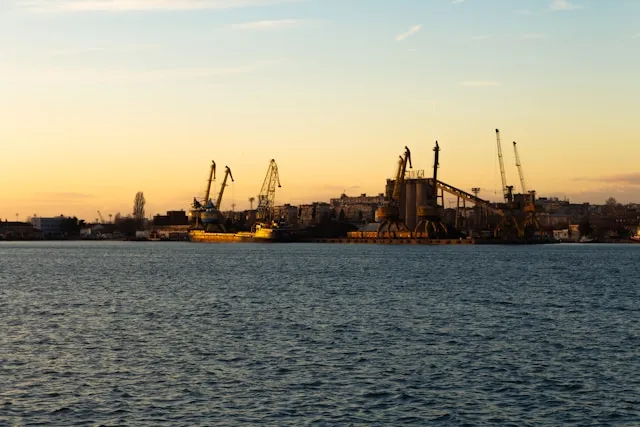
Terminal Burgas EAD is midway through an €18 million expansion that will raise nominal container capacity to 600,000 TEU by late 2026. Two new post-Panamax gantry cranes are being installed. The yard is growing by 40,000 square metres. On paper, Bulgaria's primary oil and liquid bulk gateway is preparing for a future as a serious Black Sea container competitor.
The problem is not steel or concrete. It is people. A certified welding supervisor vacancy at Bulyard Shipbuilding Industry sat open for 11 months. An IT systems manager search at the container terminal failed entirely after eight months and was resolved only by poaching a specialist from a rival port at a 60% salary premium. Chief engineer positions on coastal tankers now take six to nine months to fill, triple the duration of five years ago. The expansion is real. The workforce to operate it at scale does not yet exist in this market.
What follows is a ground-level analysis of why Burgas's maritime sector faces a skills-composition crisis that aggregate employment data obscures, where the gaps are most acute, who is competing for the same professionals, and what organisations hiring in this market need to do differently to reach candidates that conventional methods consistently miss.
The Port That Runs on Oil and Ambition
Burgas sits on Bulgaria's southern Black Sea coast, and its port economy is defined by a single structural dependency. The Rosenets oil terminal, operated by Lukoil Neftochim Burgas AD, processed 8.4 million tonnes of crude oil and petroleum products in 2024. That volume represents approximately 70% of Bulgaria's maritime oil imports. Liquid bulk dominates the port's tonnage profile in a way that no other cargo category approaches.
Container traffic tells a different story. Terminal Burgas EAD, operated under concession by Singapore's PSA International through 2038, handled roughly 235,000 TEU in 2024. That figure represented a 4.2% year-on-year increase but left the terminal running at only 65% of its 400,000 TEU nominal capacity. For context, the Port of Varna to the north moves 300,000 TEU or more annually and has been designated by Bulgaria's National Transport Strategy 2024-2030 as the country's primary container gateway.
General cargo and dry bulk added 3.2 million tonnes combined. The ferry complex serves passenger and ro-ro services to Georgia and Turkey. The Burgas Free Zone hosts 45 companies with combined employment of 1,200 across 155 hectares of customs-free logistics space.
The scale is meaningful but regional. What makes the hiring picture so difficult is not the port's size. It is the gap between what the port is becoming and what the labour market can supply.
The €18 Million Bet That Rail Cannot Yet Support
The capacity expansion underway at Terminal Burgas EAD would raise nominal throughput to 600,000 TEU by Q4 2026. PSA International's capital expenditure schedule includes two additional ship-to-shore gantry cranes and the container yard extension. Projected utilisation at that expanded capacity is 75%, or approximately 450,000 TEU.
Why the Numbers Do Not Add Up Yet
There is an analytical tension in these figures that hiring leaders should understand. Current utilisation sits at 65% of 400,000 TEU. The expansion would increase capacity by 50%. Yet the single greatest physical constraint on the port's throughput has no resolution date before 2028.
The Burgas-Sofia railway line, Line 8, operates with maximum axle loads of 22.5 tonnes and limited electrification. Single-track, non-electrified sections prevent efficient block-train container movements to Sofia, Plovdiv, or the Danube river ports at Ruse. The Pan-European Transport Corridor VIII rail upgrade, which would connect Burgas meaningfully to Central European freight networks, has been delayed to 2028-2029 according to the European Court of Auditors.
Road access compounds the problem. The A1 motorway terminates 12 kilometres from the container terminal. Heavy goods vehicles must traverse urban Burgas, creating average delays of 45 to 60 minutes during peak periods.
What This Means for Talent Strategy
This creates one of two scenarios. Either PSA International is positioning defensively, building capacity to capture market share from Varna should Corridor VIII completion accelerate, or the company anticipates an intermodal breakthrough that is not yet publicly committed. In either case, the talent required to operate the expanded facility, from crane operators and terminal planners to IT systems architects and operations directors, must be hired and trained before the infrastructure question resolves.
The port is hiring for a future that its hinterland has not yet been built to support. That is not a reason to delay recruitment. It is a reason to start earlier, because every competitor port on the Black Sea faces the same talent pipeline constraint and the organisations that build their teams first will be the ones that capture volume when connectivity improves.
A Skills-Composition Crisis Hiding Inside Normal Unemployment Data
This is the original analytical insight that sits beneath the surface of every data point in this market. The Bulgarian Employment Agency reported sectoral unemployment in transport and storage at 6.8% for Q3 2024. That figure sits below the national average. It does not indicate extreme scarcity.
But vacancy data tells an entirely different story. Specialised maritime roles sit open for the better part of a year. Premiums of 35 to 60% are paid to poach from competitors. Chief engineer searches have tripled in duration since 2019.
These two data sets are not contradictory. They describe different populations within the same sector. The market is well-supplied with general labourers, stevedores, and warehouse operatives. Entry-level workers in these categories show active job-seeking behaviour, with 60 to 70% in active search mode. The market is entirely lacking in the specific STCW-certified, digitally literate, and EU-regulation-compliant professionals that modern port operations require.
This is not a hiring problem. It is a compositional mismatch. Capital investment has moved faster than the human capital supply chain can follow. The port is being rebuilt for an era of digital terminal operating systems, LNG-ready vessel conversions, and EU ETS compliance. The workforce available in Burgas was largely trained for an era of manual cargo handling and conventional diesel propulsion.
The shortage is not in bodies. It is in the specific certifications, the digital fluency, and the regulatory knowledge that the modern port demands. That distinction matters enormously for how organisations should approach their executive search strategy in this market.
Three Vacancies That Reveal the Market's Real Dynamics
The aggregate data matters. But three specific hiring episodes illustrate what the numbers mean in practice for organisations trying to fill critical roles.
The 11-Month Welding Supervisor Search
According to Capital Weekly (Bulgaria), Bulyard Shipbuilding Industry AD searched for a TIG/MAG-certified welding supervisor from March 2024 to February 2025. The role required certification under Lloyd's Register or Bureau Veritas for stainless steel marine piping. This is not a generic fabrication role. It sits at the intersection of hands-on welding expertise and classification society compliance, a combination that fewer than a handful of professionals in Bulgaria possess.
Bulyard recruited through local agencies and sourced internationally from Ukraine. The search succeeded only when the company secured a Romanian supervisor from Constanta Shipyard at a 35% premium above standard Bulgarian shipyard rates.
The Failed IT Systems Manager Search
As reported by Maritime.bg, Terminal Burgas EAD conducted an eight-month search from November 2023 to July 2024 for a manager to oversee the transition to the Navis N4 terminal operating system. The intersection of maritime operations knowledge and enterprise software implementation experience proved too narrow. The search failed entirely through conventional methods.
Terminal Burgas resolved the vacancy by poaching the relevant specialist from Port of Varna EAD, offering a monthly compensation package exceeding BGN 15,000 (€7,670). That figure represents a 60% premium over Varna market rates for equivalent positions.
The Chronic Chief Engineer Shortage
Bulgarian shipping agencies report that chief engineer positions on coastal tankers operating from Burgas now require six to nine months to fill, compared to two to three months in 2019. Unemployment among STCW III/2 certified engineers is effectively zero. All qualified professionals are under contract, with recruitment possible only at contract end during four-to-six-month rotations. The Bulgarian Maritime Administration's seafarer employment statistics confirm this pattern across the coastal trade.
Each of these examples points to the same conclusion. The hidden 80% of passive talent in this market is not merely difficult to reach. In several critical categories, the total population of qualified professionals is so small that every single one is known, employed, and unavailable through any channel that relies on candidates applying.
Where the Talent Goes: Burgas's Three-Way Drain
Burgas does not lose talent in one direction. It loses different categories of professional to three different competitors, each offering something Burgas cannot match.
Varna, 130 kilometres north on the Black Sea coast, offers comparable living costs but superior rail connectivity to Central Europe and salaries 8 to 12% higher for equivalent operations roles. The Naval Academy in Varna creates a deeper graduate talent pool, making the city the preferred location for maritime headquarters functions. Mid-level managers move northward for career progression.
Constanta, Romania, 350 kilometres north, represents a different order of competition entirely. Romania's largest port offers salaries 2.5 to 3 times higher than Burgas for senior maritime engineers and port executives. Terminal directors at Constanta earn €25,000 to €35,000 monthly. Romanian EU labour mobility allows easy transition to Western European ports. According to the Romanian Naval Authority, Constanta has drawn several Bulgarian ship repair supervisors and logistics planners since 2022, sometimes offering remote or hybrid arrangements that are impossible in hands-on Burgas yard operations.
Piraeus and Thessaloniki in Greece offer four-to-five-times salary multiples, with higher living costs but international career trajectories. The Technical University of Sofia's Burgas Branch produces 60 to 80 marine engineering and port logistics graduates annually. An estimated 15 to 20% of those graduates relocate to Greek ports within two years of graduation, according to the university's graduate tracking survey.
The compensation architecture of this market creates a one-way valve. Burgas imports Ukrainian maritime specialists and Romanian middle managers for specific projects while exporting its most experienced professionals to higher-paying markets. For any organisation running a senior search in Burgas, the candidate pool is not just small. It is actively shrinking through outward migration that conventional recruitment methods cannot counteract.
What the Money Looks Like: Compensation in a Market Under Pressure
Understanding Burgas's compensation structure is essential for any hiring leader preparing to make offers in this market. The data reveals two distinct tiers, with a pronounced premium for digital and regulatory hybrid skills.
Port Operations and Logistics
Senior-level roles, terminal operations managers and logistics directors, command BGN 8,500 to 12,000 monthly (€4,350 to €6,140) in base salary, with performance bonuses averaging 20 to 30%. Executive-level positions, managing directors of port terminals and regional logistics heads, pay BGN 18,000 to 28,000 monthly (€9,200 to €14,300). Multinational operators such as PSA sit at the upper end. Local Bulgarian concessionaires pay toward the lower band.
Ship Repair and Marine Engineering
Ship repair managers and project managers earn BGN 7,000 to 10,000 monthly (€3,580 to €5,120). Technical directors and yard managers command BGN 15,000 to 22,000 monthly (€7,670 to €11,250), often supplemented by accommodation allowances and performance bonuses tied to vessel delivery schedules.
Maritime Safety and Compliance
HSSEQ managers and dangerous goods safety advisors earn BGN 6,500 to 9,000 monthly (€3,320 to €4,600). COOs and compliance directors at multinational logistics operations reach BGN 16,000 to 24,000 monthly (€8,180 to €12,270).
The Digital Premium
The most telling compensation signal in this market is the premium attached to digital and IT roles within maritime logistics. Professionals with port-technology hybrid expertise, the ability to implement terminal operating systems, manage port community system integrations, or handle cybersecurity for industrial control systems, command 40 to 60% premiums over equivalent positions in land-based Bulgarian logistics.
This premium reflects the near-total absence of professionals who combine maritime operations knowledge with technology implementation capability. The market is not paying a premium for digital skills in isolation. Those are available elsewhere in Bulgaria at standard tech-sector rates. The premium exists because the combination of maritime domain knowledge and digital expertise does not exist in sufficient numbers anywhere on the Black Sea coast. Organisations negotiating offers for these hybrid roles must benchmark against the premium tier, not against standard Bulgarian IT compensation.
Regulatory Pressure Is Creating Roles That Did Not Exist Three Years Ago
The EU's regulatory agenda for maritime transport is generating entirely new categories of hiring need in Burgas, at a pace that the local labour market cannot absorb.
The EU Emissions Trading System now covers maritime transport. Burgas terminals must invest in shore power facilities, cold ironing, by 2027 to serve cruise and ferry vessels. Estimated compliance capital expenditure runs €8 to €12 million. FuelEU Maritime, effective from 2025, requires vessels calling at Burgas to demonstrate decreasing greenhouse gas intensity. The port currently lacks LNG bunkering infrastructure, placing it at a disadvantage to both Constanta and Piraeus.
For Bulyard Shipbuilding Industry, EU ETS compliance costs for the yard's own operations are projected at €1.2 to €1.8 million annually beginning 2026. The yard has secured contracts for two LNG-ready tanker conversions, work that requires cryogenic insulation installation expertise and EN 1090-2 EXC3/4 welding certification for steel structures. These are not skills the existing workforce possesses in sufficient depth.
The digitisation agenda adds another layer. The Bulgarian Ministry of Transport allocated BGN 42 million (€21.5 million) under the National Recovery and Resilience Plan for port digitisation, with Burgas designated as the pilot site for the Single Window maritime administrative system. Implementation is scheduled for Q2 2026.
Each regulatory requirement creates a corresponding hiring need. ADN/ADR/RID multimodal dangerous goods safety advisors. Shore power installation engineers. GHG compliance officers. LNG systems specialists. These roles barely existed in the Burgas market before 2023. The professionals qualified to fill them are being trained in Western European programmes or are already employed at ports that began their compliance journey earlier. The cost of a failed hire in a compliance-critical role is not merely the salary wasted. It is the regulatory exposure that accumulates for every month the position sits vacant.
Bulgaria's working-age population is projected to decline 1.2% annually through 2030 according to the National Statistical Institute of Bulgaria. The cohort of welders, electricians, and pipefitters trained during the 1970s and 1980s is retiring without sufficient replacement. The Bulgarian Employment Agency forecasts 12 to 15% growth in transport, storage, and logistics hiring in the Southeast region for 2026, driven partly by e-commerce logistics expansion at the Burgas Free Zone. Demand is rising. Supply is contracting. The gap widens on both sides simultaneously.
What Hiring Leaders in This Market Must Do Differently
The conventional approach to recruitment in Burgas's maritime sector is failing. The evidence is unambiguous. Eleven-month vacancies. Eight-month failed searches resolved only through poaching. Six-to-nine-month fill times for roles that took eight weeks in 2019. The method is broken, not the market.
At the senior port operations director level, 85 to 90% of qualified candidates are employed and not actively seeking new roles. Average tenure exceeds seven years due to concession agreements and relationship-based management structures. Among certified marine surveyors in the Burgas region, only 12 licensed professionals exist. All are permanently employed. Among STCW III/2 chief engineers in coastal trade, unemployment is effectively zero.
These are not markets where job advertising works. They are not markets where recruitment agencies scanning active candidate databases will deliver results. They are markets where every viable candidate must be identified individually, approached directly, and presented with a proposition specific enough to prompt a conversation they would not otherwise have.
The direct headhunting methodology that reaches passive candidates is not optional in this market. It is the only approach that connects with the professionals who actually possess the certifications, the domain expertise, and the regulatory knowledge these roles require. KiTalent's AI-enhanced talent mapping capability is designed precisely for markets like Burgas's maritime sector, where the total qualified population is small, entirely employed, and invisible to conventional sourcing channels.
KiTalent delivers interview-ready executive candidates within 7 to 10 days, operating on a pay-per-interview model with no upfront retainer. In a market where the average specialised search runs six to eleven months through conventional channels, the difference between reaching the right candidate in days and reaching them in quarters is the difference between filling a role and watching it stay vacant while competitors poach from your existing team.
For organisations hiring senior leadership in industrial and maritime operations along the Black Sea coast, where the candidate pool is measured in dozens rather than hundreds and every qualified professional is already known and employed, start a conversation with our executive search team about how we approach these searches differently.
Frequently Asked Questions
What are the main talent shortages in Burgas's maritime sector in 2026?
Burgas faces acute shortages in three domains: certified maritime engineers (STCW III/2 chief engineers and second engineers), port operations managers with digital logistics competencies such as terminal operating system implementation, and hazardous cargo safety officers with ADN/ADR/RID multimodal certification. These shortages are compositional rather than quantitative. General maritime labour is available, but professionals who combine technical certification, digital literacy, and EU regulatory compliance knowledge are absent from the active candidate market. Vacancy durations for these roles now run six to eleven months.
How much do senior port operations executives earn in Burgas?
Terminal operations managers and logistics directors earn BGN 8,500 to 12,000 monthly (€4,350 to €6,140) in base salary, with 20 to 30% performance bonuses. Executive-level roles such as managing directors of port terminals reach BGN 18,000 to 28,000 monthly (€9,200 to €14,300), with multinational operators like PSA International at the upper end. Digital and IT hybrid roles within maritime logistics command a 40 to 60% premium over comparable land-based logistics positions in Bulgaria, reflecting extreme scarcity in port-technology expertise across the Black Sea region.
Why is it so difficult to hire specialised maritime professionals in Burgas?
Three factors converge. First, the total population of qualified professionals is extremely small, with only 12 licensed marine surveyors in the region and effectively zero unemployment among certified chief engineers. Second, Burgas loses talent to higher-paying markets: Constanta pays 2.5 to 3 times more, Greek ports offer 4 to 5 times the salary. Third, new EU regulations including the Emissions Trading System and FuelEU Maritime are creating roles that did not exist before 2023, and the professionals qualified to fill them have not been trained in sufficient numbers.
How does Burgas compare to other Black Sea ports for maritime careers?
Varna offers 8 to 12% higher salaries for equivalent operations roles, better rail connectivity, and a deeper graduate pool from the Naval Academy. Constanta in Romania pays 2.5 to 3 times Burgas rates for senior roles and offers EU labour mobility to Western European ports. Piraeus and Thessaloniki offer 4 to 5 times salary multiples. Burgas competes primarily on cost of living and the concentration of ship repair activity around Bulyard Shipbuilding Industry, which remains the dominant maritime industrial employer in the region.
What is the best approach to executive search in Burgas's maritime sector?
With 85 to 90% of senior port operations directors passively employed and average tenures exceeding seven years, conventional job advertising and database-driven recruitment consistently fail. The most effective approach is direct headhunting of passive candidates combined with AI-powered talent mapping to identify the small number of qualified professionals across the Black Sea region. KiTalent specialises in this methodology, delivering interview-ready candidates within 7 to 10 days on a pay-per-interview basis, reaching the professionals who never appear on job boards.
What regulatory changes are affecting port hiring in Burgas?
The EU Emissions Trading System now covers maritime transport, requiring shore power investment by 2027. FuelEU Maritime mandates decreasing GHG intensity for vessels calling at Bulgarian ports. The National Recovery and Resilience Plan has designated Burgas as the pilot site for the Single Window maritime administrative system launching in 2026. Each regulation generates new hiring requirements: GHG compliance officers, shore power engineers, LNG systems specialists, and cybersecurity professionals for industrial control systems. These roles require combinations of skills that the local market has not historically produced.