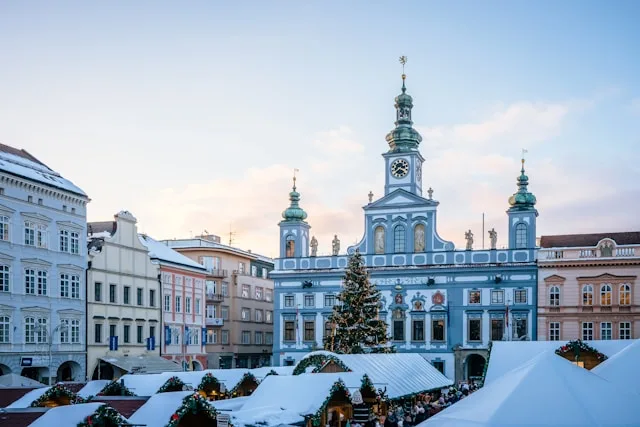
České Budějovice Hospitality: Capital Is Flowing In, but the Workforce to Run It Is Flowing Out
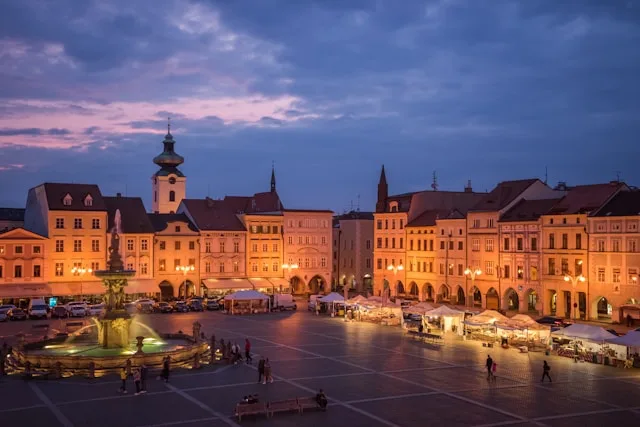
The Clarion Congress Hotel in České Budějovice completed a €2.3 million renovation in 2024 and now books corporate events at 115% of its 2019 baseline. The D3 motorway cut the Prague drive to 90 minutes when its final sections opened in late 2024. Occupancy across South Bohemian hotels climbed to 62.4% last year. By every fixed-asset and infrastructure measure, České Budějovice is a hospitality market on the rise.
The workforce data tells a different story entirely. A third of hospitality businesses in the region operate below full capacity because they cannot hire enough people. Executive chef searches at the city's leading properties routinely exceed 90 days. Revenue management directors are so scarce that at least one hotel has eliminated the role entirely and outsourced to Prague. Hospitality apprenticeships across South Bohemia fell 12% between 2019 and 2023. The pipeline that should be refilling these roles is shrinking at exactly the moment demand is expanding.
What follows is a ground-level analysis of the forces pulling České Budějovice's hospitality sector in two opposing directions. The city is attracting more capital, more conferences, and more visitors. It is simultaneously losing the people who make those investments pay off. This tension between fixed-asset confidence and human-capital contraction is the defining challenge facing every hotel operator, conference organiser, and F&B director in this market heading into 2026.
The Bedroom and Boardroom Problem: Why České Budějovice Captures Investment but Not Talent
České Budějovice sits 22 kilometres north of Český Krumlov, the UNESCO site that draws approximately 2.1 million visitors a year. The city records 380,000 to 420,000 overnight stays annually in commercial accommodation, according to the Czech Statistical Office. Those numbers tell a clear structural story. České Budějovice is not competing with Český Krumlov as a destination. It is serving as Krumlov's overflow.
A 2023 visitor behaviour study by the South Bohemian Tourism Board found that 68% of international visitors staying in České Budějovice hotels visited only Český Krumlov during their trip. The city's hotels function as sleeping quarters, not as experiential anchors. The single exception is Budweiser Budvar's visitor centre and brewery tours, which attract 220,000 visitors annually and represent the one tourism asset that is unique to the city and not replicable in Krumlov.
This "bedroom and boardroom" identity creates a specific workforce problem. Hotels serving as overflow accommodation compete on price and convenience rather than experience. That compresses margins. Compressed margins limit what operators can pay. Limited pay drives the most ambitious hospitality professionals toward Prague, Český Krumlov's luxury properties, or across the Austrian border to Linz and Salzburg, where net wages run 2.5 to 3 times higher for equivalent roles. The infrastructure investment is real. The D3 motorway genuinely makes České Budějovice more accessible. But accessibility without competitive compensation is a conduit for talent to leave, not a magnet for talent to arrive.
Conference Tourism as the Counterweight
The one segment where České Budějovice has carved out genuine independent demand is MICE (meetings, incentives, conferences, exhibitions). The Clarion Congress Hotel, operated by CPI Hotels, is the region's largest conference facility with 383 rooms. It hosts 65% of regional conferences exceeding 200 delegates, according to the Czech Convention Bureau. Corporate booking volumes for 2025 reached 115% of the 2019 baseline, driven by pharmaceutical and automotive sector events.
This conference segment requires a fundamentally different workforce than overflow leisure accommodation. Conference operations demand event managers, AV coordinators, corporate catering specialists, and front-of-house staff with German language skills at C1 level or above. The standard seasonal hire who works June through August cannot fill these roles. Conference demand peaks in spring and autumn, running counter to leisure seasonality. The workforce the MICE segment needs is permanent, specialised, and multilingual. It is precisely the workforce České Budějovice struggles most to retain.
Four Roles That Define the Talent Crisis
Executive Chefs: 90 Days and Counting
The executive chef shortage in České Budějovice is the most visible symptom of the broader talent problem. Properties including Hotel Budweis and the Clarion Congress have reportedly maintained executive chef vacancies for 90 to 120 days throughout 2024, according to Hospodářské noviny. The difficulty is not simply finding a chef. It is finding one with both high-volume catering experience and modern gastronomy skills, a combination the conference-heavy České Budějovice market requires.
The AHR ČR (Czech Association of Hotels and Restaurants) confirms that 60% of regional hotels classify chef shortages as critical. CPI Hotels reportedly secured a head chef from Hotel Růže in Český Krumlov in Q2 2024, according to Deník.cz's South Bohemian edition, offering a 25% salary premium and a relocation package. The explicit financial terms have not been verified in public filings, but the pattern is consistent with a market where poaching is the primary mechanism for filling senior kitchen roles and where internal development pipelines have effectively collapsed.
At the executive level, a head chef in České Budějovice earns 85,000 to 105,000 CZK gross monthly (approximately €3,400 to €4,200 on a 13-month salary standard). The same role in Prague commands a 25% premium. In Germany, the gap widens to 50% to 70%. For a skilled chef weighing České Budějovice against Bavaria, the arithmetic is straightforward and unfavourable for České Budějovice.
Revenue Management Directors: Too Scarce to Hire Locally
The revenue management director role may be the starkest illustration of how talent scarcity reshapes business models. MH Hotels, which operates Hotel Budweis and Maly Pivovar, restructured its revenue function in early 2024. Rather than continuing to search for a local revenue manager at viable compensation, the company eliminated the on-site role and contracted Revenue Management Solutions s.r.o., a Prague-based firm, for remote yield management.
This is not an upgrade. It is a concession. A hotel whose revenue optimisation is managed remotely by a third party has less agility, less granular local market intelligence, and less integration between revenue strategy and front-desk execution. The fact that a property chose this path rather than continuing to recruit tells you everything about the local talent pool for this function. LinkedIn InMail response rates for revenue management directors in this market sit below 15%, according to a Jobs.cz recruiter survey. More than 90% of qualified candidates are employed and not seeking. This is a role where passive candidate identification through direct headhunting is not a preference but a necessity. The advertised market produces almost nothing.
German-Speaking Front Office Managers: The 100-Day Search
For a city whose international visitor base is heavily German and Austrian, the shortage of German-speaking front office managers is existential. Seventy-eight percent of České Budějovice hotels serving international markets report this as their primary skills gap. The average time to fill a front office manager role requiring German at C1 level or above exceeds 100 days. The equivalent English-only search averages 45 days. The language requirement alone more than doubles the hiring timeline.
The paradox is that České Budějovice sits two hours from the Austrian border. Many candidates have conversational German. But conversational ability and C1 certification are different things. Austrian employers require formal certification and offer structured apprenticeship pathways that Czech training institutions do not match. The result is a candidate pool that is linguistically close but professionally uncredentialed, unable to cross the threshold that higher-paying Austrian hotels demand and simultaneously overqualified for the compensation České Budějovice offers relative to the skill requirement.
The Compensation Gap Is a Gravity Well
The salary data for České Budějovice hospitality tells a story of compounding disadvantage. A hotel general manager at a 4-star property earns 110,000 to 140,000 CZK gross monthly (€4,400 to €5,600). The same role in Prague pays 35% to 45% more. In Linz, the premium is 60% to 80%. For an F&B director, České Budějovice offers 75,000 to 90,000 CZK (€3,000 to €3,600); Vienna and Linz pay 40% more after tax adjustment.
These are not marginal differences. They are life-altering for a hospitality professional in their 30s or 40s weighing career options. VŠTE alumni tracking data from 2023 shows that České Budějovice-trained hospitality managers regularly migrate to Prague after three to five years for 40% or greater salary increases. Fifteen percent of hospitality graduates are employed in Austrian border regions within two years of finishing their studies.
The compensation gap is not closing. It is widening fastest at precisely the seniority level where České Budějovice most needs to hire. Revenue managers can now take Prague-based roles that offer full remote work at a 20% premium. They can live in České Budějovice and earn Prague wages without commuting. This further drains the local on-site talent pool. The city is losing candidates not only to physical relocation but to remote employment that removes them from the local labour market while they remain local residents.
For organisations benchmarking offers in this market, compensation data and market intelligence specific to the Czech hospitality sector is not optional. It is the foundation of any credible recruitment strategy. An offer calibrated to national averages will be uncompetitive against the specific alternatives České Budějovice candidates face.
The Pipeline Is Contracting at the Worst Possible Moment
This is where the data reveals the deeper problem. České Budějovice's talent shortage is not a cyclical hiring challenge that will resolve as the economy shifts. It is a systemic contraction of the human capital pipeline running parallel to expansion of the fixed-asset base.
VŠTE, the city's Institute of Technology and Business, graduates approximately 80 students annually in tourism management. That output meets only 30% of sector demand, according to the institute's own graduate employment survey. The shortfall was already severe before the apprenticeship decline. Between 2019 and 2023, hospitality apprenticeships across the South Bohemian Region fell 12%, according to the National Institute for Education (NÚV). Fewer young people are entering the profession at every level.
The seasonal timing mismatch compounds the problem. Czech universities graduate students in June. Peak hospitality hiring demand in České Budějovice begins in April. That two-month gap forces properties to rely on temporary workers from Ukraine and Poland during the most commercially important weeks of the year, while the graduates who could fill permanent roles are still finishing exams. By the time graduates are available, seasonal positions are filled by temporary staff and the permanent roles that matter most remain open because they require experience the graduates do not yet have.
The structural implication is clear. Capital investment in České Budějovice's hospitality sector is flowing into buildings, renovations, and infrastructure. Human capital investment is contracting. Apprenticeship numbers are falling. Graduate output is static. The gap between what the fixed assets require and what the labour market can provide is widening year on year. This is the hidden cost of executive hiring failures expressed at a market level: not just one unfilled role, but an entire sector approaching a capacity ceiling determined by people, not by property.
The D3 Motorway: Access That Cuts Both Ways
The completion of the D3 motorway's final sections in late 2024 was celebrated as a transformational moment for České Budějovice's accessibility. Prague to České Budějovice in 90 minutes. Faster connections to Linz and the Austrian border. Easier access for conference delegates, tour groups, and weekend visitors.
The assumption was that better access would increase overnight stays. The evidence so far suggests the opposite dynamic is equally powerful. The D3 enables day-tripping behaviour. A visitor from Prague can now drive to Český Krumlov, spend the day, and return home without stopping in České Budějovice at all. The motorway that was supposed to bring visitors to the city's hotels may instead be enabling them to bypass those hotels entirely.
For the labour market, the D3 creates a parallel risk. Hospitality professionals in České Budějovice can now commute to Prague-based employers more easily. Prague hotels and restaurant groups can recruit from the South Bohemian talent pool without requiring relocation. The motorway did not just reduce travel time for tourists. It reduced travel time for workers, extending the gravitational reach of Prague's higher-paying hospitality market directly into České Budějovice's backyard.
The airport expansion plans add another variable. Negotiations with Ryanair and Wizz Air for low-cost carrier routes could increase international visitor throughput by 15% to 20% by late 2026. Yet as of late 2024, zero 4-star or higher hotel properties were under construction in the city. The region's development strategy identifies this gap explicitly. If new air routes materialise before new rooms and staff do, the capacity ceiling tightens further. More demand will chase the same constrained supply of both beds and workers.
What This Market Requires from Hiring Leaders
The conventional approach to hospitality recruitment in a regional Czech market involves posting on Jobs.cz and Práce.cz, waiting for applications, and screening from whatever arrives. In České Budějovice, this approach reaches a shrinking fraction of the candidates who matter. Eighty-five percent of general manager placements in Czech 4-star-plus hotels occur through executive search or direct approach, according to Michael Page's Czech hospitality practice. The advertised market attracts unqualified active applicants. The candidates capable of running a conference hotel, optimising revenue across seasonal cycles, or managing a multilingual front office team are already employed and not responding to job postings.
The passive candidate challenge is especially acute in this market because the pool is small to begin with. České Budějovice is not Prague. There are four or five properties operating at a level where senior hospitality talent develops. When one of those properties loses a general manager or executive chef, the replacement often must come from outside the city, and frequently from outside the region. That means the search must identify, approach, and persuade someone who is currently successful in Prague, Brno, Český Krumlov, or potentially Vienna or Linz. The proposition must overcome a compensation gap that favours every alternative market.
For organisations facing these searches, the method matters more than the job description. A search that relies on active candidates visible on job boards will miss the majority of viable options. A search that takes 120 days in a market where the conference season starts in March and culinary preparations begin in February is a search that has already failed before it concludes.
KiTalent's approach to executive search in hospitality and experiential services is built for exactly these conditions. AI-powered talent mapping identifies passive candidates across the Czech Republic, Austria, and Germany who meet the specific language, technical, and cultural requirements this market demands. The pay-per-interview model means hiring organisations are not committing retainer fees to a search that may need to pivot geographically or functionally as the candidate market reveals itself. Interview-ready candidates are delivered within 7 to 10 days, compressing a timeline that in this market routinely extends past 100 days for critical roles.
For hotel operators and hospitality groups hiring executive chefs, revenue directors, or German-speaking front office leadership in South Bohemia, where the candidate pool is small, predominantly passive, and under constant pull from higher-paying markets in Prague and Austria, start a conversation with our executive search team about how we identify and reach the candidates this market cannot surface through conventional methods.
The Unstable Equilibrium
The most striking detail in the current data is this: České Budějovice hotel average daily rates grew 8.4% in 2024, outperforming Český Krumlov's 3.1% growth. On the surface, that looks like a market gaining pricing power. In reality, it is scarcity doing the pricing. Limited room inventory and constrained staffing capacity are restricting supply while demand grows. Prices rise not because the product is improving but because less of it is available.
This is a potentially unstable equilibrium. Pricing power derived from scarcity holds only as long as service quality does not deteriorate visibly enough to push demand elsewhere. A hotel operating below full capacity because it cannot staff its kitchen or front desk is collecting higher room rates from fewer guests while delivering a diminished experience. The moment that experience gap becomes visible in online reviews, the pricing power evaporates.
The resolution requires investment in human capital at the same pace as investment in physical assets. Hotels that have renovated their properties and expanded their conference facilities must now apply equivalent strategic attention to their talent pipelines and succession plans. The city's hospitality sector cannot automate its way to growth with self-check-in kiosks and remote revenue management. Hospitality is, by definition, a human business. The capacity ceiling in České Budějovice is not made of concrete. It is made of people, and there are not enough of them.
Frequently Asked Questions
What are the hardest hospitality roles to fill in České Budějovice?
Executive chefs with combined high-volume catering and modern gastronomy experience, revenue management directors, and German-speaking front office managers (C1 level or above) represent the three most acute shortages. Executive chef vacancies at leading properties have averaged 90 to 120 days to fill throughout 2024. Revenue management directors are so scarce that some hotels have eliminated the role and outsourced to Prague. Front office manager searches requiring German take more than 100 days on average, compared to 45 days for English-only equivalents.
How does České Budějovice hospitality compensation compare to Prague and Austria?
A 4-star hotel general manager in České Budějovice earns 110,000 to 140,000 CZK gross monthly. Prague pays 35% to 45% more for the same role. Austrian cities like Linz and Salzburg offer 60% to 80% more. For executive chefs, the Prague premium is 25% and the German premium reaches 50% to 70%. These gaps are the primary driver of talent migration from South Bohemia to larger markets. Accurate salary benchmarking is essential for any organisation making offers in this market.
Why is the hospitality talent pipeline shrinking in South Bohemia?
Hospitality apprenticeships in the South Bohemian Region fell 12% between 2019 and 2023. The region's primary hospitality programme at VŠTE graduates approximately 80 students annually, covering only 30% of sector demand. Fifteen percent of those graduates take employment in Austrian border regions within two years. The combination of declining training enrolment, limited graduate output, and cross-border migration means the pipeline is contracting at the same time demand is expanding.
How does the D3 motorway affect České Budějovice's tourism workforce?
The D3 motorway's completion reduced Prague to České Budějovice drive time to 90 minutes. For the workforce, this is a double-edged development. It makes the city more accessible to conference delegates and tourists but also extends Prague's recruitment reach into the South Bohemian talent pool. Hospitality professionals can now commute to Prague or accept Prague-based remote roles without relocating. Prague employers offering remote revenue management positions at 20% premiums can now draw directly from České Budějovice's local talent base.
What percentage of senior hospitality candidates in Czech Republic are passive?
In the Czech 4-star-plus hotel market, 85% of general manager placements occur through executive search or direct approach rather than advertised vacancies. For revenue management directors, more than 90% of qualified candidates are employed and not actively seeking. KiTalent's AI-powered talent mapping methodology is specifically designed to identify and approach these passive candidates, delivering interview-ready shortlists within 7 to 10 days rather than the 90 to 120 days that conventional searches require in this market.
Will new air routes increase hiring pressure on České Budějovice hotels?
Exploratory negotiations with Ryanair and Wizz Air for low-cost carrier routes from České Budějovice airport could increase international visitor throughput by 15% to 20% by late 2026. However, no 4-star or higher hotel properties are currently under construction. If air routes materialise before room inventory and staffing capacity expand, existing properties will face greater demand with the same constrained workforce, intensifying the already acute competition for experienced hospitality professionals.