Dukhan's Oilfield Services Market Is Splitting in Two: Why the Talent You Need Most Is the Talent You Cannot Find
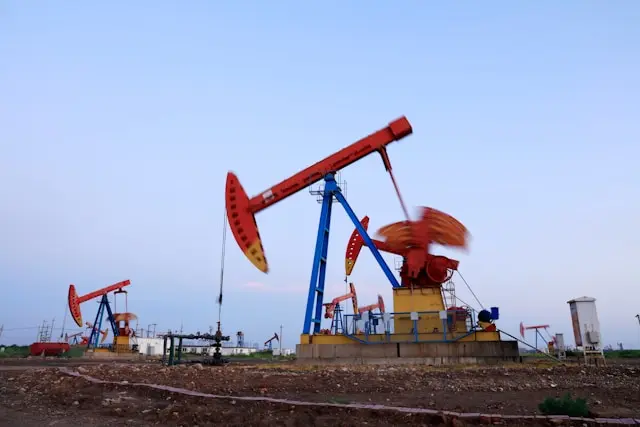
Qatar's Dukhan field has been producing oil since 1940. Eighty-six years later, approximately 300 wells across the Arab D reservoir and deeper Khuff formation still deliver around 200,000 barrels per day. The field is not expanding. It is ageing. And the 2026 maintenance cycle now underway is the most demanding this infrastructure has faced in a decade, with major turnaround campaigns scheduled across gas lift compressor stations and crude oil stabilisation facilities requiring an estimated 2,500 additional specialist contractors.
The assumption in many boardrooms is that a mature field in a cooling oil services market should be straightforward to staff. Aggregate compensation data for Qatar's oil and gas sector shows salary growth moderating to 3-4% annually, down from 8-10% in 2022. General maintenance technicians and junior drilling engineers are available. The roles that keep Dukhan running, however, are not general. They are turbomachinery overhauls on Solar Centaur units. They are API 510 pressure vessel inspections on infrastructure built in the 1970s. They are HPHT well integrity assessments on Khuff formation gas wells at depths and pressures that only a handful of global specialists understand. These roles sit in a different market entirely, one where vacancies stretch past 140 days and poaching premiums run 25-35% above base salary.
What follows is a structured analysis of the forces reshaping Dukhan's oilfield services sector, the employers driving that change, and what senior leaders need to understand before they make their next hiring or retention decision in this market. The core dynamic is not a shortage. It is a bifurcation. And unless hiring strategies are calibrated to the specific tier of talent required, organisations will continue filling the roles that do not matter while failing to fill the ones that do.
A Dual-Hub Ecosystem Built Around a Single Road
Dukhan does not operate as a self-contained industrial cluster. The field sits 84 kilometres west of Doha, accessible by a single dual-carriageway highway with no rail link. Its industrial area spans 120 hectares, enough for rotating equipment workshops and wellhead maintenance facilities but far too constrained for heavy fabrication. Pressure vessels, modular process skids, and drilling rig refurbishment work are executed 50 kilometres southeast of Doha at Mesaieed Industrial City, where McDermott Qatar operates a 70,000 square metre fabrication yard and Qatar Steel runs a specialised OCTG threading plant.
This geographic separation creates a dependency chain that compounds every staffing decision. A compressor overhaul at Dukhan requires components fabricated at Mesaieed, transported by road, and installed by specialists who may be housed at a camp with a fixed capacity of approximately 8,000 beds. During a turnaround campaign, when contractor headcounts swell by 40-60%, that bed capacity becomes a hard constraint. According to QatarEnergy's Facilities Master Plan, the camp cannot expand due to land limitations. Contractors face a choice between housing additional workers at Dukhan or commuting them 180 kilometres round-trip from Doha each day.
The logistics constraint is not merely inconvenient. It is structural. Power infrastructure at the industrial area runs at 90% utilisation on a 40 megawatt firm supply, according to Qatar's General Electricity and Water Corporation. Any disruption to the highway or the power grid halts maintenance activities entirely. For hiring leaders, this means every specialist brought to Dukhan must be worth the logistical cost of getting them there. And the specialists worth that cost are the ones least likely to accept the posting.
The Mesaieed Fabrication Anchor
Gulf Drilling International, Qatar's largest indigenous drilling contractor and majority-owned by QatarEnergy and Japan Drilling Company, maintains a 450,000 square metre base at Mesaieed. This facility handles heavy maintenance for the eight onshore drilling rigs active across Dukhan and other QatarEnergy fields. The physical distance between where rigs are maintained and where they operate adds transit time to every repair cycle and creates a category of coordination roles that exist in few other onshore oilfield environments globally.
Camp Capacity and the 2026 Turnaround Crunch
The 2,500 additional contractors required for the Q2-Q3 2026 turnaround season, as projected by MEED's Qatar maintenance outlook, will test the camp's capacity in ways that previous maintenance cycles have not. The arithmetic is unforgiving. Eight thousand beds minus existing permanent and long-term contractor residents leaves a margin that disappears when rotating equipment technicians, API inspectors, and piping specialists arrive simultaneously. Organisations that cannot guarantee accommodation will struggle to attract contractors already weighing offers from Abu Dhabi or Saudi Arabia's Eastern Province, where logistics are simpler and lifestyle amenities are stronger.
The Two-Tier Compensation Reality
The most important dynamic in Dukhan's talent market is not visible in the headline salary data. Qatar's oil and gas sector shows flat to moderate compensation growth. That is true for the market as a whole. It is not true for the roles that matter at Dukhan.
Senior Rotating Equipment Engineer positions at major contractors supporting Dukhan command QAR 40,000-55,000 monthly, with equipment uptime bonuses adding 20-30%. Drilling Operations Managers earn QAR 45,000-65,000, with Dukhan-specific roles commanding a 15% premium over equivalent Doha-based positions purely due to location hardship. At the executive level, a VP of Operations leading Dukhan-focused drilling operations receives total annual compensation of QAR 1.2-1.8 million ($330,000-$495,000), while a Director of Technical Services at QatarEnergy or a major local contractor earns QAR 85,000-120,000 monthly with substantial long-term incentive plans tied to contract renewals.
These are not the numbers that appear in general Qatar salary surveys. The Cooper Fitch Qatar Salary Guide and Hays GCC benchmarks both document a specific Dukhan premium that sits on top of Qatar's already competitive base. A Senior Well Integrity Engineer specialising in HPHT applications earns 18-22% above general petroleum engineering roles. A drilling superintendent with Khuff formation experience can command a 25-35% poaching premium when moving between QatarEnergy's drilling department and international contractors.
Meanwhile, general maintenance technicians and junior drilling engineers see minimal premium. The market for NEBOSH-certified health and safety officers shows active candidate ratios above 60%, meaning these roles fill through standard advertising. The gap between what a general mechanical engineer earns and what a turbomachinery specialist earns at Dukhan has widened over the past three years, not narrowed. The sector is not experiencing a uniform tightening. It is splitting along a fault line defined by specificity of experience and willingness to accept remote posting.
Why 85% of the Inspectors You Need Will Never See Your Job Posting
The passive candidate ratios in Dukhan's critical roles are among the most extreme in the global oilfield services sector. According to LinkedIn's Middle East Talent Insights Report, approximately 78% of qualified senior rotating equipment engineers in Qatar are passive, with average tenure at current employers exceeding six years. The ratio of active to passive candidates is roughly one to four.
For API-certified inspection engineers, the number is starker. The American Society for Nondestructive Testing estimates approximately 1,200 professionals hold current API 510, 570, and 653 certifications across Qatar, the UAE, and Saudi Arabia combined. Eighty-five percent of that population is passive. They do not apply to job boards. They do not update their LinkedIn profiles with "open to work." They move through direct headhunting and contractor referrals, and the organisations that reach them first take them off the market entirely.
Drilling superintendents with Khuff formation experience represent an even more closed pool. Ninety percent of viable candidates are employed by QatarEnergy, Saudi Aramco, or ADNOC. Movement happens exclusively through executive search channels. A job posting for this role is not merely inefficient. It is functionally invisible to the population it needs to reach.
The implication for hiring leaders is that standard recruitment advertising, the method that fills junior engineers and general technicians effectively, does not operate in the same market as the executive search methodology required for Dukhan's critical specialist roles. The two approaches address different populations with almost no overlap. Organisations applying one method to both tiers are overspending on the easy roles and underperforming on the hard ones.
The Qatarisation Paradox: A Policy That Cannot Solve Its Own Timeline
Qatar's Ministerial Decision No. (4) of 2024 requires oilfield service companies to achieve 50% Qatari workforce participation by 2030, with an intermediate target of 40% by 2026. For Dukhan's technical maintenance roles, where Qatari participation currently stands at 22%, the gap between target and reality is not a recruitment problem. It is a training timeline problem.
The specific certifications required for Dukhan's rotating equipment and well integrity roles, including API certifications, OEM-specific turbomachinery training, and HPHT well experience, require experience bases that currently exist almost exclusively in expatriate workforces. Only 8% of Qatari engineering graduates specialise in petroleum mechanical disciplines annually. The pathway from a mechanical engineering degree to a qualified rotating equipment engineer capable of independently overseeing a Solar Taurus gas turbine overhaul spans eight to ten years of supervised practice.
This creates a structural impossibility in the 2026 timeframe. The 40% intermediate target cannot be met in specialised maintenance roles without either severely compromising safety standards or redefining which roles count toward the quota. The most likely outcome is a forthcoming distinction between critical technical roles, where expatriate expertise will remain essential, and supervisory and coordination roles, where Qatarisation can proceed more rapidly. Contractors that have not invested in five-to-ten-year Qatari training pipelines face regulatory risk of contract penalties or non-renewal, but those pipelines will not produce qualified specialists in time for the 2026 turnaround.
For organisations making senior hiring decisions in this market, the Qatarisation mandate adds a dimension that does not exist in Abu Dhabi or Saudi Arabia's Eastern Province at comparable intensity. Every expatriate specialist hire at Dukhan now carries a compliance consideration. Every leadership appointment must demonstrate a credible plan for knowledge transfer. The candidates who can navigate this requirement, experienced technical leaders who are also effective mentors and training programme architects, command a premium that pure technical expertise alone does not.
Regional Competition: Three Markets Pulling Candidates Away
Dukhan does not compete for talent in isolation. Three regional markets draw from the same pool of specialised oilfield services professionals, each with a distinct value proposition that challenges Dukhan's ability to attract and retain.
Saudi Arabia's Eastern Province
Saudi Aramco's Jafurah unconventional gas development and Marjan/Zuluf oil field expansions represent the most direct competitive threat. According to GulfTalent's Regional Mobility Survey, Aramco offers 20-30% higher base compensation for rotating equipment engineers and drilling superintendents compared to equivalent Dukhan rates. The Eastern Province also provides superior lifestyle infrastructure in the Dhahran-Dammam metropolitan corridor. For a senior engineer with a family, the combination of higher pay and better schools is a straightforward calculation. The scale of Aramco's projects also offers career trajectory advantages that a mature, maintenance-focused operation like Dukhan cannot match.
Abu Dhabi and ADNOC
ADNOC's $150 billion capital expansion programme competes for the same well integrity and completion engineers. Abu Dhabi offers marginally lower compensation than Dukhan for senior roles, a 5-10% differential, but provides stronger tax-free living allowances, better international schooling, and more flexible working arrangements. For headquarters-based technical staff, ADNOC offers 60/40 office-to-field ratios. A mid-career professional with a family, currently working 100% on-site at Dukhan camp, faces a materially better quality-of-life proposition in Abu Dhabi even at slightly lower pay.
Southern Iraq
International contractors operating in Iraq's Majnoon, West Qurna, and Rumaila fields offer 40-50% compensation premiums over Dukhan for drilling superintendents and maintenance managers. The trade-off is security risk and demanding 28/28 rotation schedules. This market primarily draws candidates from Dukhan who prioritise short-term earnings maximisation over long-term career stability. It is a different demographic, typically single or with families based outside the GCC, but it removes candidates from the Qatar talent pool at precisely the seniority level where replacements are hardest to find.
The combined effect of these three competitors is that Dukhan must offer a compensation and lifestyle proposition that exceeds what a remote, camp-based onshore operation would normally command. Organisations that benchmark Dukhan roles against general Qatar market data, rather than against the specific regional alternatives their candidates are evaluating, will consistently lose their preferred hires. Understanding what it takes to negotiate and secure senior technical talent in this three-way competition is now a prerequisite for any hiring leader operating in the Dukhan ecosystem.
Digital Dukhan: A Transformation That Creates the Roles It Cannot Fill
QatarEnergy's "Digital Dukhan" initiative is implementing predictive maintenance AI and digital twin technology for the field's critical rotating equipment. By 2026, 30% of maintenance planning roles require hybrid mechanical engineering and data analytics competencies, up from 8% in 2023. The initiative is designed to shift the maintenance model from reactive to predictive, extending equipment life and reducing unplanned downtime.
The problem is that the professionals who can operate in this hybrid model barely exist yet. A vibration analysis specialist who can also configure SCADA systems for wellhead automation and interpret predictive algorithms is not a role that the traditional oilfield training pathway produces. The investment in automation has not reduced the workforce. It has replaced one category of worker with another that the global labour market has not yet produced in sufficient numbers. Capital has moved faster than human capital can follow.
This creates a specific challenge for senior hiring. The Director of Technical Services or Maintenance Superintendent who led teams of reactive technicians must now lead teams of data-enabled reliability engineers. The leadership competency required is different. The candidate who spent 20 years managing turbine overhaul schedules may not be the candidate who can lead a predictive maintenance transformation. But the candidate who understands data analytics may lack the deep domain knowledge of ageing carbonate reservoir infrastructure that makes Dukhan's maintenance requirements unique.
The synthesis required, and this is the observation that the data supports but does not state directly, is that Dukhan's two-tier talent market is not static. It is evolving into a three-tier market. Tier one: commodity roles that fill easily. Tier two: deep technical specialists who are scarce but identifiable through traditional channels. Tier three: hybrid professionals who combine deep technical knowledge with digital capability and who, as of 2026, exist in such small numbers globally that talent mapping must precede any search. The organisations that recognise this third tier and build their search strategies around it will have a hiring advantage for the next decade. Those that do not will find themselves filling yesterday's roles while tomorrow's requirements go unmet.
What This Means for Hiring Leaders Operating in Dukhan's Market
The market dynamics at Dukhan present a specific set of challenges that generic oilfield recruitment cannot address. The combination of a remote location with fixed accommodation capacity, a two-tier (and increasingly three-tier) talent market, aggressive Qatarisation targets that conflict with the available specialist workforce, and three regional competitors each offering a distinct value proposition creates conditions where the cost of a failed or delayed search is not merely financial. It is operational. A missing rotating equipment engineer during a turnaround window does not mean a slower project. It means deferred maintenance on critical infrastructure, with safety and production implications that cascade through the entire Dukhan operation.
The conventional search process, post, wait, screen, interview, struggles in a market where 85% of inspectors and 90% of drilling superintendents with relevant formation experience never see a job posting. Visa processing for specialised technicians in Qatar averages 45-60 days, compared to 20-30 days in the UAE. Add a 140-180 day search duration for senior rotating equipment engineers and the timeline from decision-to-hire to engineer-on-site can exceed nine months. In a turnaround cycle measured in quarters, that timeline is disqualifying.
Organisations competing for leadership and specialist talent in oil, energy, and industrial sectors need a method that identifies and reaches passive candidates before positions are formally open. KiTalent's AI-enhanced direct search methodology delivers interview-ready candidates within 7-10 days by mapping the passive market before the search begins, reaching the 78-90% of qualified professionals who are employed, performing, and invisible to job boards. With a 96% one-year retention rate across 1,450 executive placements, the approach is built for markets where getting the right person matters more than getting a person quickly, and where both matter simultaneously.
For organisations staffing Dukhan's 2026 turnaround cycle or building the hybrid technical-digital leadership teams that Digital Dukhan demands, start a conversation with our executive search team about how we approach this market and what our current talent mapping reveals about the candidates you need.
Frequently Asked Questions
What are the hardest oilfield services roles to fill at Dukhan in 2026?
The three most acutely scarce roles are senior rotating equipment engineers with gas turbine experience (Solar or GE Frame units), API-certified inspection engineers holding current 510, 570, and 653 certifications, and drilling superintendents with Khuff formation horizontal drilling experience. Rotating equipment searches typically run 140-180 days compared to 45-60 days for general mechanical engineers. API inspector recruitment is complicated by the fact that only an estimated 1,200 professionals hold relevant certifications across the entire GCC, and 85% are passive. These roles require direct headhunting approaches rather than standard job advertising.
How does Dukhan's remote location affect recruitment and retention?
Dukhan sits 84 kilometres west of Doha, accessible by a single highway, with camp accommodation fixed at approximately 8,000 beds. Senior roles command 15% location premiums over equivalent Doha-based positions, and drilling contractors offer additional remote location allowances of QAR 8,000-12,000 monthly. During turnaround campaigns, accommodation bottlenecks can force daily commuting from Doha (180 km round trip) or project delays. The location penalty is the primary reason mid-career professionals with families increasingly prefer Abu Dhabi or Doha-based roles over Dukhan postings, even at lower base salaries.
What does Qatarisation mean for oilfield services hiring at Dukhan?
Ministerial Decision No. (4) of 2024 requires 50% Qatari workforce participation in oilfield service companies by 2030, with a 40% intermediate target by 2026. Qatari participation in Dukhan's technical maintenance roles currently stands at 22%. The gap reflects the 8-10 year training pathway required for specialised certifications. Contractors face regulatory risk of contract penalties for non-compliance, but the timeline for producing qualified Qatari rotating equipment engineers or API inspectors extends well beyond 2026. Hiring strategies must account for both immediate expatriate specialist needs and credible long-term knowledge transfer plans.
How does Dukhan compensation compare to other GCC oilfield markets?
Dukhan roles sit in the middle of the GCC range. Saudi Aramco's Eastern Province operations offer 20-30% higher base compensation for comparable roles. Abu Dhabi (ADNOC) offers marginally lower base pay (5-10% below Dukhan) but better lifestyle and flexible working arrangements. Iraq's southern oilfields offer 40-50% premiums offset by security risk and demanding rotation patterns. A Dukhan Maintenance Superintendent earns QAR 40,000-55,000 monthly before bonuses, while VP-level operations roles reach total annual packages of QAR 1.2-1.8 million.
Why do standard recruitment methods fail for Dukhan's specialist roles?
Standard recruitment relies on active candidates applying to posted positions. For Dukhan's critical roles, 78-90% of qualified professionals are passive, meaning they are employed, performing well, and not monitoring job boards. Combined with Qatar's 45-60 day visa processing timeline and search durations of 140-180 days for senior specialists, the total time from decision to engineer-on-site can exceed nine months. KiTalent's approach uses AI-powered talent mapping to identify passive candidates before searches formally open, delivering interview-ready shortlists within 7-10 days through direct candidate identification methods that reach professionals invisible to conventional channels.
What is the Digital Dukhan initiative and how does it affect hiring?
QatarEnergy's Digital Dukhan programme implements predictive maintenance AI and digital twin technology across the field's rotating equipment. By 2026, 30% of maintenance planning roles require combined mechanical engineering and data analytics skills, up from 8% in 2023. This creates demand for a new category of hybrid professional: reliability engineers who understand both turbomachinery and predictive algorithms. The global supply of such professionals is minimal, making proactive talent pipeline development essential for organisations planning leadership appointments in Dukhan's evolving maintenance operation.