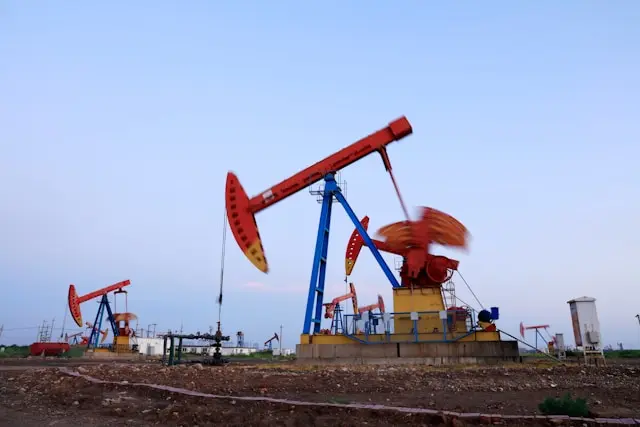
Dukhan's Pipeline Talent Paradox: Billions in Brownfield Investment, a Workforce That Cannot Be Found on Any Job Board

Qatar's broader construction sector contracted 12% year on year through 2024 as the post-World Cup building cycle wound down. Commercial trades shed workers. Cranes came down across Doha. Yet 120 kilometres west, in the Dukhan concession area, a parallel reality took hold. Pipeline coating and replacement projects accumulated a 14-month backlog. Certified integrity engineers commanded 35% poaching premiums. A senior camp director role had to be reinvented entirely after two consecutive searches returned no viable candidates.
The paradox is not that Dukhan faces a talent shortage. It is that aggregate construction statistics actively disguise it. When Qatar's construction sector reports oversupply, the surplus sits almost entirely in commercial building trades. Brownfield oil infrastructure maintenance, the category that keeps Dukhan's ageing flowlines operational, faces the opposite condition: deep structural undersupply of the certified specialists and remote-site leaders this work requires.
What follows is a ground-level analysis of Dukhan's industrial talent market in 2026, covering the investment pipeline that is driving demand, the specific roles where searches routinely exceed six months, the compensation benchmarks that shape every offer, and the constraints that make conventional hiring methods insufficient. For any senior leader responsible for filling engineering, HSE, project management, or camp operations roles in Qatar's western desert, this is the market intelligence that determines whether a search succeeds or stalls.
A Brownfield Economy Running on 1980s Infrastructure
Dukhan is not a frontier. It is Qatar's oldest producing oil field, operational since 1949, generating approximately 335,000 barrels per day of crude output and associated gas liquids. The capital flowing into this concession area is not building new capacity. It is maintaining, retrofitting, and replacing assets that have been in continuous service for decades.
The dominant programme through 2025 was the Dukhan Field Pressure Maintenance Project expansion, supported by pipeline integrity management contracts valued at approximately $1.2 billion awarded in 2024. Looking ahead, QatarEnergy has tendered the Dukhan Oil Field Development Phase 2 brownfield upgrade, with civil construction awards expected in Q2 2026. That single programme will require 1,200 additional construction personnel and 800 camp beds.
320 Kilometres of Ageing Flowlines
The most consequential investment driver for the next three years is not a single mega-project. It is the Pipeline Integrity Management System (PIMS) 2030 strategy, which schedules 320 kilometres of flowlines installed between 1980 and 1995 for replacement by 2028. These are not optional upgrades. Ageing carbon steel pipelines carrying produced water, crude, and associated gas represent escalating safety and environmental risk with every year of deferred replacement.
This replacement programme demands a workforce that barely exists in sufficient numbers anywhere in the GCC. Pipeline integrity engineers with API 570 and API 653 certifications. Specialist welders qualified for sour service applications. HSE managers with direct MoECC permitting experience and flare management credentials. The 14-month project backlog reported through Q4 2024 is not a scheduling inefficiency. It is a direct reflection of how few qualified contractors and individuals can execute this work.
For organisations holding or pursuing QatarEnergy maintenance and modification contracts, the constraint on growth is no longer capital. It is certified human capital.
The Talent Market That Aggregate Statistics Hide
Qatar's post-World Cup construction downturn created a genuine surplus of civil engineers, construction supervisors, and quantity surveyors. Active candidate pools in these categories exceed 40% of the total talent population. Job boards work. Inbound applications are plentiful. Hiring timelines are manageable.
This reality does not extend to Dukhan's core requirements.
Pipeline integrity engineers holding API certifications operate in a market that is 85 to 90% passive. Average tenure in current roles exceeds 4.5 years. Fewer than 15% of placements in this category originate from active applications. Senior brownfield project managers sit at roughly 80% passive. Camp services directors, burdened by what industry data describes as the "remote location penalty" of western Qatar, run at 60% passive, nearly double the passive rate for general facilities management roles.
The original synthesis that emerges from this data is counter-intuitive but important: Qatar's post-World Cup construction downturn made Dukhan's hiring problem worse, not better. The downturn redirected civil engineering capacity toward industrial maintenance work, intensifying competition among contractors for the narrow band of specialists who hold QatarEnergy pre-qualification status. More firms now chase the same certified engineers. The surplus of general construction workers created an illusion of availability that has misled hiring leaders into underestimating how difficult the certified pipeline and remote-site leadership searches actually are.
This is why understanding the difference between active and passive candidate markets is not a theoretical exercise in Dukhan. It is the single factor that determines whether a search takes 90 days or 180.
Why Dukhan Searches Take Twice as Long as the Regional Average
Industry recruitment data from Hays' GCC Salary Guide 2024 puts the average time to fill for a general mechanical engineer in the Gulf at 90 days. For a certified pipeline integrity engineer in Dukhan, the figure exceeds 180 days. That gap is not explained by compensation alone. Three structural forces compound to extend every senior search in this market.
The Remote Location Penalty
Dukhan sits in Qatar's western desert, roughly 80 kilometres from Doha. It is not a hardship posting by global standards, but it is remote enough to eliminate candidates who would accept an identical role in a more accessible location. Abu Dhabi's Ruwais complex offers comparable technical work with proximity to Dubai and shorter rotational schedules. Typical Ruwais rotations run 14 days on, 7 days off. Dukhan commonly requires 28 days on, 14 off.
A passive candidate currently employed in Abu Dhabi or the Eastern Province of Saudi Arabia must weigh not only the compensation package but the lifestyle cost of relocating deeper into the desert. Industry sources report that Abu Dhabi draws approximately 40% of senior pipeline integrity candidates who initially consider Dukhan positions. The lifestyle differential, not the salary differential, is typically what tips the decision.
The Certification Bottleneck
API 570 and API 653 certifications require years of documented field experience before examination eligibility. These are not credentials that can be fast-tracked through training programmes. The certified population grows slowly, retires steadily, and cannot be expanded by any individual employer's investment in workforce development. When a firm needs a certified integrity engineer in Dukhan, it is competing for a fixed pool of individuals, most of whom are already employed and not looking.
The QatarEnergy Pre-Qualification Gate
Not every qualified engineer can work in Dukhan. QatarEnergy's contractor pre-qualification requirements create an additional filter. Candidates must have demonstrable safety case experience with QatarEnergy or, at minimum, with ADNOC, which operates under comparable safety management frameworks. This requirement eliminates candidates with strong pipeline credentials gained exclusively in West Africa, the North Sea, or Southeast Asia, where safety case regimes differ materially.
The compounding effect of these three filters is severe. A search that begins with a global pool of perhaps 2,000 API 570 certified engineers narrows to a few dozen who are certified, willing to accept Dukhan's location, and pre-qualifiable for QatarEnergy operations. When traditional executive search methods fail in this market, the failure is usually traceable to one of these three filters being underestimated at the outset.
What Senior Roles Pay in Dukhan: The Full Compensation Picture
Compensation in Dukhan follows the GCC's tax-free expatriate model, with base salary supplemented by accommodation allowances, transportation, education allowances for dependants, and performance bonuses. The total package, not the base figure, is what moves candidates.
For pipeline integrity and construction roles at the senior specialist and manager level, professionals with 10 or more years of experience and API certifications command base compensation of QAR 35,000 to 45,000 per month (USD 9,600 to 12,350), plus accommodation or housing allowances of QAR 6,000 to 8,000 and transportation provisions. At the executive and VP level, construction directors and VP-level project leaders at EPC contractors earn QAR 65,000 to 85,000 monthly (USD 17,850 to 23,350), with family villa housing, education allowances of QAR 40,000 to 60,000 annually per child, and performance bonuses of 20 to 30%.
Worker accommodation services roles pay meaningfully less. Camp managers overseeing 2,000 or more beds earn QAR 25,000 to 32,000 monthly. Regional directors of accommodation services reach QAR 45,000 to 60,000 with company-provided villa housing and vehicle.
HSE leadership sits between the two. Senior HSE managers with MoECC liaison authority earn QAR 30,000 to 40,000 monthly. Directors of HSE at major EPC firms command QAR 55,000 to 70,000.
The Competitive Gap With Abu Dhabi and the Eastern Province
These figures do not exist in isolation. Abu Dhabi typically offers base salary premiums of 10 to 15% for equivalent pipeline integrity roles, with the additional draw of lifestyle and rotational advantages. Saudi Arabia's Eastern Province offers an even larger premium of 20 to 25% above Dukhan base salaries, though subject to effective taxation of 5 to 10% on expatriate packages depending on structure.
For Dukhan employers, this means that a competitive offer must compensate for both the salary gap and the lifestyle differential. The poaching incident documented in 2024 industry reporting illustrates the premium required: a tier-one EPC contractor filled a senior pipeline integrity engineer vacancy only after offering a 35% premium above market rate plus a guaranteed single-status accommodation allowance of QAR 8,000 monthly. That search had run eight months through conventional channels before the premium was deployed.
Understanding where compensation benchmarks sit relative to competitor markets is not optional intelligence in this environment. It is the difference between a realistic search strategy and one that wastes six months before adjusting.
The Accommodation Paradox: Better Camps, Harder Hiring
One of the least understood dynamics in Dukhan's talent market is the relationship between worker accommodation quality and talent attraction. The logical assumption is straightforward: improve accommodation standards, and candidates become more willing to accept remote postings. The data tells a different story.
Qatar's implementation of Law No. 18 of 2022 raised minimum space requirements to 3.6 square metres per person, capped occupancy at four persons per room, and established enhanced welfare standards monitored by the International Labour Organization's Qatar office. These reforms were overdue and materially improved living conditions for the roughly 45,000 workers housed across Dukhan's 12 major camp facilities.
However, compliance costs for upgraded camps rose 35 to 40% between 2022 and 2024. EPC contract margins compressed 15% over the same period due to competitive bidding. Camp operators now face a squeeze: accommodation quality has improved to meet minimum standards, but the budget to invest in the amenities that would genuinely differentiate Dukhan from competing hubs, such as recreation facilities, high-speed connectivity, and single-room density, has been absorbed by compliance costs.
The result is that Dukhan's camps are better than they were, but not better enough to change the calculus for a senior professional weighing Dukhan against Ruwais or Jubail. The accommodation improvement has reduced reputational risk for employers. It has not created a talent attraction advantage. The candidates who declined Dukhan in 2022 because of camp quality still decline in 2026, now citing amenity gaps rather than welfare concerns.
Worker accommodation occupancy reached 78% in Q1 2025, up from 65% in 2023, driven by increased maintenance contractor headcounts. DOFD-2 will require 800 additional beds. Yet MoECC environmental permitting for new camp construction or expansion now mandates 180-day statutory review periods, doubled from the 90-day requirement that applied before 2022. A camp that is needed in Q3 2026 had to begin its permitting process in Q1. For any contractor that missed that window, the accommodation constraint becomes the binding constraint on the entire project.
This is a market where the hidden cost of a slow or failed hire extends well beyond the vacancy itself. An unfilled camp director role delays accommodation expansion, which delays contractor mobilisation, which delays pipeline replacement, which delays the entire PIMS 2030 programme.
Structural Constraints Every Hiring Leader Must Account For
Qatarization Quotas and the Engineering Talent Pipeline
QatarEnergy's Qatarization requirements mandate 30% Qatari national representation in supervisory and engineering grades across all contractors by 2026, rising to 50% by 2030. This is a binding regulatory obligation, not an aspirational target. Non-compliant contractors risk exclusion from QatarEnergy's pre-qualification frameworks.
The tension is immediate. Qatari nationals with specialised pipeline integrity experience are exceptionally rare. The pathway to API certification requires years of field service that most Qatari engineering graduates have not yet accumulated. Contractors must invest in graduate development programmes while simultaneously filling today's certified vacancies with expatriates, all within a quota framework that constrains expatriate headcount growth.
For executive hiring decisions in industrial and energy operations, this means every senior appointment carries a dual mandate: deliver project outcomes now and build the local talent pipeline that the 2030 quota demands. Candidates who can do both command a premium that transcends standard compensation benchmarking.
Oil Price Sensitivity and Contract Freezing Protocols
Dukhan's economic cycle is not seasonal in the conventional sense. It is commodity-linked. QatarEnergy's operational expenditure reduction protocols activate when oil prices sustain below $70 per barrel, historically freezing non-critical maintenance contracts within 30 days. For contractors and their workforces, this creates a specific form of employment risk: the role is stable until it is not, and the trigger is a macro variable entirely outside the employer's control.
This risk factor suppresses candidate willingness to accept Dukhan roles during periods of oil price uncertainty. A passive candidate in a stable Abu Dhabi position weighs not only current compensation but the probability that the Dukhan contract will survive a price downturn. Negotiating offers that address this risk, through contract duration guarantees, severance provisions, or retention bonuses tied to project completion rather than commodity price, becomes a critical component of any competitive offer in this market.
Supply Chain Pressures on Project Velocity
Even when contractors have the workforce, execution velocity is constrained by materials. Steel pipe and anti-corrosion coating costs remain 18% above 2019 levels. Specialised pipeline welding consumables face 12-week lead times. These supply chain constraints do not directly affect hiring, but they shape the project environment that candidates are evaluating. A candidate considering a Dukhan pipeline replacement role understands that the project will face material delays. The question is whether the employer has structured the contract to absorb that risk or pass it to the workforce through schedule compression and extended rotations.
What a Successful Search Looks Like in This Market
The defining characteristic of Dukhan's senior talent market is that the candidates who can fill the most critical roles are not looking for work. They are embedded in multi-year assignments in Abu Dhabi, Saudi Arabia's Eastern Province, or occasionally in Southeast Asian LNG operations. They will not see a job posting. They will not respond to a recruiter's mass outreach on LinkedIn. They will respond to a specific, informed approach that demonstrates understanding of their current role, their likely motivations, and the precise value proposition Dukhan can offer them.
This is not a market where conventional recruitment methods produce results. The data is unambiguous: fewer than 15% of certified pipeline integrity placements originate from active applications. The other 85% require direct identification, mapping, and headhunting of passive candidates.
A search firm working this market must do several things that most firms do not. It must understand QatarEnergy's pre-qualification requirements well enough to filter candidates before presentation, not after. It must have current intelligence on compensation benchmarking in Abu Dhabi and the Eastern Province, because the offer must be calibrated against those alternatives, not against a generic GCC average. It must be able to map the talent pipeline across competing operators and identify which candidates are approaching natural rotation or contract end points that create a window for movement.
KiTalent's approach to executive search in oil, energy, and industrial sectors is built for exactly this type of search. AI-enhanced talent mapping identifies the passive specialists holding the certifications and safety case experience that Dukhan requires. Interview-ready candidates are delivered within 7 to 10 days, compared to the 180-day average that conventional channels produce for certified pipeline roles in this market. Clients pay per interview, not through upfront retainers, which aligns the economics of the search with results rather than activity. The 96% one-year retention rate for placed candidates reflects the rigour of the matching process, not just the initial placement.
For organisations competing for pipeline integrity engineers, brownfield project managers, HSE directors, or camp services leaders in Dukhan's intensely constrained talent market, start a conversation with our executive search team about how we approach these searches differently.
Frequently Asked Questions
Why is it so hard to hire pipeline integrity engineers in Dukhan?
Dukhan's pipeline integrity talent market is approximately 85 to 90% passive. Candidates holding API 570 and API 653 certifications are in high demand across the entire GCC, with average tenure exceeding 4.5 years. Competing locations including Abu Dhabi and Saudi Arabia's Eastern Province offer salary premiums of 10 to 25% and better lifestyle conditions. Fewer than 15% of placements originate from job board applications. The result is a market where the average time to fill exceeds 180 days, double the 90-day regional norm for general mechanical engineering roles.
What are typical salaries for senior pipeline engineers in Dukhan?
Senior pipeline integrity specialists with 10 or more years of experience and API certifications earn base compensation of QAR 35,000 to 45,000 per month (USD 9,600 to 12,350) plus accommodation allowances of QAR 6,000 to 8,000. At executive level, construction directors and VP-level project leaders earn QAR 65,000 to 85,000 monthly with family housing, education allowances, and performance bonuses of 20 to 30%. These figures must be competitive with Abu Dhabi and Eastern Province equivalents to attract passive candidates. Accurate salary benchmarking is essential before initiating any search.
How does Qatarization affect hiring for industrial construction roles in Qatar?
Qatarization quotas require 30% Qatari national representation in supervisory and engineering grades across QatarEnergy contractors by 2026, rising to 50% by 2030. Because Qatari nationals with specialised pipeline integrity certifications are scarce, contractors must balance immediate expatriate hiring with long-term local talent development. Non-compliant contractors risk exclusion from QatarEnergy pre-qualification frameworks, making quota management a strategic priority alongside technical recruitment.
What is driving demand for worker accommodation services in Dukhan?
The Dukhan Oil Field Development Phase 2 programme requires approximately 800 additional camp beds, while overall accommodation demand is growing at 12% year on year. Current stock of approximately 45,000 beds operates at 78% occupancy. MoECC environmental permitting for new camps now requires 180-day statutory review periods, creating a bottleneck between demand and supply. Enhanced welfare standards under Law No. 18 of 2022 have increased operating costs by 35 to 40%, compressing margins for accommodation service providers managing remote industrial facilities.
How does executive search work for remote industrial locations like Dukhan?
Traditional recruitment channels reach fewer than 15% of qualified candidates in remote oil and gas markets. KiTalent uses AI-enhanced talent mapping to identify passive specialists across competing operators in Abu Dhabi, Saudi Arabia, and Southeast Asia, delivering interview-ready candidates within 7 to 10 days. The pay-per-interview model means clients invest only when they meet qualified professionals. This direct headhunting approach is particularly effective for certified pipeline engineers, brownfield project managers, and camp directors, where the candidate pool is small, passive, and dispersed across multiple geographies.
What are the biggest risks of a slow hire in Dukhan's pipeline sector?
A vacant pipeline integrity engineer role does not just delay one project. It cascades. QatarEnergy's PIMS 2030 strategy schedules 320 kilometres of flowline replacement by 2028. Every month a certified role sits unfilled extends the project backlog, currently estimated at 14 months. For camp operations, an unfilled director role delays accommodation expansion, which delays contractor mobilisation for the next project phase. Understanding the full cost of extended vacancies is critical for organisations managing multiple concurrent brownfield programmes in constrained labour markets.