Dukhan Oil Field: $6 Billion in Capital and Not Enough Engineers to Spend It

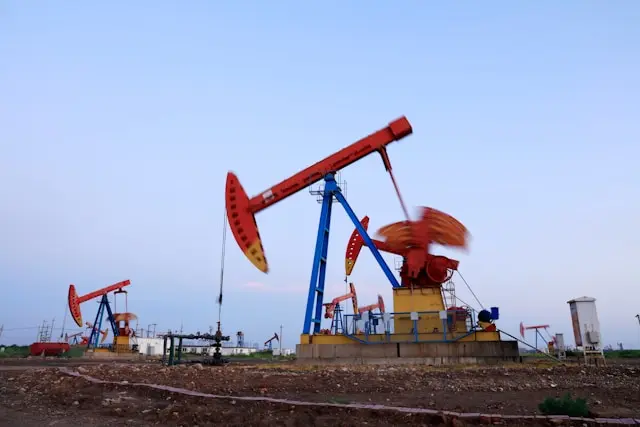
Qatar's Dukhan Field produced approximately 335,000 barrels per day through 2024 and into 2025, sustaining that rate across five production stations, three gas processing facilities, and a 58,000 bpd refinery. QatarEnergy allocated $5 to $6 billion for onshore asset management and Enhanced Oil Recovery through 2026. The money arrived. The people to deploy it have not.
This is not a generic hiring problem. The Dukhan Field is a 75-year-old carbonate reservoir requiring chemical flooding and CO2 injection expertise that fewer than a handful of global programmes produce. The engineers who possess this knowledge are already employed. They are not looking. And the three regional competitors most aggressively pursuing the same talent pool, Saudi Aramco, ADNOC, and the tech sector hubs of Dubai, are offering packages, project scale, and lifestyle conditions that Dukhan's remote industrial setting cannot easily match.
What follows is a ground-level analysis of the forces converging on this market: why the capital investment trajectory has outpaced the talent supply, where the sharpest gaps sit, what compensation is required to close them, and what organisations operating in or hiring for Qatar's onshore energy sector need to understand before their next senior search.
The Mature Field Paradox: Why Ageing Assets Need Younger Disciplines
A new oilfield attracts talent by default. The engineering challenges are novel, the capital budgets are expansive, and the career narratives write themselves. A mature field with a 75-year production history does not enjoy these advantages. Yet the technical demands of sustaining output from an ageing carbonate reservoir are, in many respects, more complex than greenfield development.
The Dukhan Field's current recovery factor sits between 35% and 40%, according to a 2024 Society of Petroleum Engineers case study on chemical EOR implementation in carbonate reservoirs. Raising that recovery factor by even a few percentage points across a formation this large represents billions of dollars in additional recoverable value. It also requires a category of engineer who barely existed a generation ago: chemical flooding specialists with direct carbonate reservoir experience.
Natural decline rates of 5% to 8% annually threaten long-term production viability without successful EOR implementation. This is the paradox at the centre of Dukhan's talent pipeline challenge. The field is old. The skills required to keep it productive are new. And the global pool of professionals who combine chemical engineering depth with Middle East carbonate geology experience is small enough that every senior hire becomes a competitive event.
EOR: The Specialism That Defines the Hiring Challenge
Senior chemical engineering roles focused on carbonate reservoir EOR typically remain unfilled for 90 to 120 days in Qatar's onshore sector, according to the Hays GCC Salary Guide 2024. General petroleum engineering roles fill in 45 to 60 days. That gap, 30 to 60 additional days per search, is not a recruitment inefficiency. It reflects the genuine scarcity of a specialism that sits at the intersection of chemistry, geology, and field operations experience that cannot be trained in a classroom.
EOR specialists at VP level command a 15% to 20% compensation premium over standard reservoir engineers at the same seniority. The premium exists because the alternative is not a slightly less qualified candidate. The alternative is no candidate at all. This dynamic will intensify through 2026 as QatarEnergy's injection well programmes scale up.
Digital Dukhan: A Second Talent Market Inside the First
QatarEnergy's "Digital Dukhan" initiative, budgeted at $400 million through 2026, targets field-wide deployment of advanced process control, digital twin technology for surface facilities, and AI-driven predictive maintenance. This programme is creating demand for a category of professional that traditional oil, energy, and renewables sector recruitment has not historically needed to source: OT cybersecurity experts, data scientists with industrial process fluency, and digital twin architects who understand hazardous environment constraints.
The SANS Institute's ICS/OT Cybersecurity Workforce Survey 2024 identifies OT cybersecurity specialists as an exclusively passive talent pool globally. These candidates are not on job boards. They are not responding to advertisements. Reaching them requires direct headhunting approaches that map the relevant talent across industrial sectors, not just oil and gas. The pipeline of qualified candidates extends into defence, heavy manufacturing, and critical infrastructure, and firms that search only within the energy sector will consistently miss the majority of viable options.
Three Competitors Pulling Talent Away from Dukhan
Dukhan does not lose candidates to a single rival. It loses them to three distinct propositions, each targeting a different segment of the talent the field needs most.
Saudi Arabia: Scale That Dukhan Cannot Match
Saudi Aramco and SABIC offer 20% to 30% higher absolute compensation for equivalent roles, according to regional salary benchmarking data from Mercer and Hays. But the compensation gap is only part of the story. The Jafurah unconventional gas development, the Marjan and Zuluf offshore expansions, and the broader capital deployment programme across Saudi Arabia's Eastern Province create a project portfolio that a mature field manager in Dukhan cannot compete with on career trajectory alone.
For a senior petroleum engineer weighing two offers, the question is not just "where do I earn more?" but "where does my next decade of experience carry the most weight?" Mega-project leadership at Saudi Aramco answers that question in a way that mature field optimisation at Dukhan often cannot. This is the primary destination for senior petroleum engineers seeking major project experience beyond what a sustaining operation provides.
Abu Dhabi: Comparable Pay, Superior Lifestyle
ADNOC's $150 billion capital expansion programme makes Abu Dhabi a direct competitor for HSE and digital transformation talent. The tax-free salary structures are comparable to Qatar's. The differentiator is everything surrounding the salary: more established international school infrastructure, the UAE Golden Visa programme for specialised talent, and family residency rules that have historically been more flexible than Qatar's Kafala system. Qatar has liberalised considerably since 2020, but perception lags policy. Candidates with families still perceive Abu Dhabi as the easier relocation.
Dubai: The Escape Valve for Digital Talent
Dubai does not compete for petroleum engineers. It competes for the data scientists, AI and technology specialists, and digital transformation leaders that the Digital Dukhan initiative desperately needs. A machine learning engineer with industrial applications experience can earn comparable or higher compensation in Dubai's tech sector while living in a cosmopolitan urban environment with no requirement for field-based rotations.
Major oilfield service contractors operating in Dukhan have already responded to this pressure. According to Energy Voice's September 2024 reporting on digital talent competition in the Middle East upstream sector, some have implemented compressed 14/14 rotation schedules for data scientists and digital twin specialists. These roles previously required 28/28 field presence. The structural concession tells the story: employers are bending operational norms to retain talent that would otherwise leave for cities where remote work is the default.
The Qatarisation Tension No Policy Framework Has Resolved
Here is the original analytical claim that sits beneath all of the hiring data: Dukhan's most acute talent shortage is not a market failure that better recruitment can solve. It is a demographic impossibility that regulatory policy and operational necessity are pulling in opposite directions, with no resolution in sight.
Qatar National Vision 2030 requires progressive workforce localisation. QatarEnergy targets 60% Qatari national representation in senior technical roles by 2030, up from approximately 45% as reported in its 2023 Sustainability Report. This is a legitimate national development priority. But the global pool of chemical engineers with 15 or more years of carbonate reservoir EOR experience contains fewer than 5% Qatari nationals, based on Qatar University engineering graduate statistics and SPE membership demographics from 2024.
The mandate and the talent pool are structurally incompatible at the specialist level. Qatarisation works for operational management, administration, and supervisory roles where Qatar's education system produces qualified graduates at scale. It does not yet work for a discipline where global supply is measured in hundreds of individuals and domestic production of that specialism is measured in single digits per year.
This creates a dual hiring requirement that compounds every search. QatarEnergy needs to source expatriate EOR specialists from an already depleted global market while simultaneously developing Qatari nationals into these roles over a timeline measured in decades. The recruiter filling a VP of Field Development position is not solving one problem. They are solving two: the immediate operational need and the longer-term regulatory compliance trajectory. Firms that approach Dukhan hiring without understanding this duality will consistently misjudge the timeline and complexity of every senior search.
Dukhan College of Technology produces technician-level talent for field operations, and this pipeline feeds the maintenance and operations workforce effectively. But the gap between a field technician and a carbonate reservoir EOR specialist cannot be bridged by vocational training alone. It requires postgraduate study, international project exposure, and a decade of progressive technical responsibility that no domestic programme currently compresses.
What the Compensation Data Actually Tells Hiring Leaders
The tax-free salary structures in Qatar create a headline effect that obscures important variations. The market benchmarking data from Hays, Michael Page, Mercer, and Korn Ferry for 2024 reveals a compensation market with three distinct tiers, each with different competitive dynamics.
Tier One: Senior Specialists and Managers
At the 10 to 15 year experience level, base salaries for reservoir and production engineers range from $150,000 to $220,000. Total remuneration, including housing allowances of QR 8,000 to 12,000 per month, transportation, and education allowances, reaches $200,000 to $300,000. These packages are competitive regionally but not dominant. Saudi Arabia's 20% to 30% premium at this level means that a candidate choosing Dukhan over the Eastern Province is making a lifestyle or project-preference decision, not a financial one.
Tier Two: Executive and VP Level
Leadership of technical functions commands base salaries of $350,000 to $550,000, with total packages reaching $500,000 to $800,000 when performance bonuses, long-term incentive plans, and full expatriate benefits are included. EOR specialists at this level command the 15% to 20% premium noted in the Korn Ferry Oil & Gas Executive Compensation Report 2024. The upper end of this range is competitive with ADNOC and approaches Saudi Aramco packages for comparable roles.
The critical detail for hiring leaders: the VP-level operations market is 100% passive. Every placement at this seniority occurs through retained executive search rather than advertised vacancies. According to a Middle East energy sector hiring analysis by Kingsley Gate Partners, 40% of VP-level operations searches for Qatar-based onshore roles in 2024 did not close with the first-choice candidate. Candidates chose Saudi Aramco or ADNOC positions instead.
Tier Three: Digital Transformation Leadership
Chief Digital Officers and VP-level digital oilfield leaders command $400,000 to $650,000 in total remuneration, carrying a 25% to 30% premium over traditional IT leadership. The Heidrick & Struggles Digital Energy Leadership Survey 2024 attributes this premium to the scarcity of professionals who combine OT/IT convergence expertise with hazardous environment operational understanding.
This is the tier where Dukhan's competition extends beyond the energy sector entirely. A candidate qualified for this role could work in defence, advanced manufacturing, or critical infrastructure cybersecurity. The salary negotiation is not just about matching another energy company's offer. It is about matching the total proposition of an entirely different industry.
The 2026 Operational Pressure: Turnarounds, Housing, and Timing
Scheduled turnaround activities at Dukhan Production Stations 4 and 5 in Q2 to Q3 2026 will require an estimated 1,200 additional contractor personnel for 8 to 12 week periods. This creates a spike in demand against a fixed constraint: Industrial City Dukhan has finite accommodation capacity of approximately 12,000 beds. The ICD Master Plan 2024 projects that contractor costs will inflate by 15% to 20% during peak turnaround periods as temporary housing demand exceeds supply.
For organisations planning hires to support these turnaround cycles, timing is everything. A search initiated in Q1 2026 for a role needed in Q2 2026 is already late if the typical vacancy duration for specialised roles is 90 to 120 days. The arithmetic is unforgiving. The only viable approach is to begin sourcing before the operational window opens.
This is compounded by a supply chain vulnerability that affects staffing indirectly. Seventy percent of critical spare parts for Dukhan's ageing infrastructure are single-sourced from European or US manufacturers, according to the ICD Supply Chain Resilience Report 2024. Logistics disruptions do not just delay equipment. They extend turnaround durations, which extends the period during which specialist contractor personnel must remain on site, which increases competition for the same limited housing and labour pool.
The organisations that will execute their 2026 turnaround programmes on schedule are those that have already secured their core technical teams. Those still searching for critical hires in early 2026 will face a market where every qualified candidate knows the supply-demand ratio and prices accordingly.
What This Market Requires from a Search Strategy
The conventional executive search playbook, post a role, collect applications, build a shortlist from respondents, reaches a diminishing fraction of viable candidates as seniority and specialisation increase. In Dukhan's market, the numbers are explicit. Senior reservoir engineers with EOR specialisms are 80% passive. OT cybersecurity specialists are exclusively passive. VP-level operations leaders are 100% passive. No job board reaches them. No advertisement moves them.
The research from LinkedIn Talent Solutions' Middle East Energy Hiring Trends 2024 confirms what every hiring leader in this market already suspects: the hidden 80% of qualified talent requires a fundamentally different sourcing methodology. It requires mapping the global talent pool across employers, identifying individuals whose career trajectory and technical profile match the specific requirement, and approaching them with a proposition that addresses their individual decision calculus.
For a passive senior EOR specialist currently secure at a major NOC, the proposition is not just money. It is the technical challenge, the career progression, the family relocation logistics, the schooling options for children, and the answer to the question: "Why would I move to a remote industrial city in western Qatar?" The firm that cannot answer that question specifically and credibly will lose the candidate to a competitor that can.
KiTalent's approach to these markets combines AI-powered talent mapping with direct engagement methodology. In a market where 40% of first-choice VP candidates decline before offer stage, the search firm that presents interview-ready candidates within 7 to 10 days, vetted for both technical qualification and genuine relocation willingness, eliminates the most expensive variable in the process: time. With a 96% one-year retention rate across 1,450 executive placements completed globally, the methodology is designed for precisely this kind of constrained, passive-dominant talent market.
The cost of a wrong executive hire in a market this tight is not just the replacement cost. It is the 90 to 120 days of lost production optimisation, the turnaround schedule that slips, and the EOR injection programme that misses its window. In a field where natural decline runs at 5% to 8% annually without intervention, every quarter without the right technical leadership translates directly into recoverable barrels left in the ground.
For organisations hiring into Dukhan's onshore operations in 2026, where EOR specialists take three months to find, digital leaders command premiums that cross industry boundaries, and the VP-level market is entirely closed to conventional recruitment, speak with our executive search team about how we source and deliver the candidates this market demands.
Frequently Asked Questions
What are the highest-demand roles in Qatar's Dukhan oil field in 2026?
The four most critical categories are Enhanced Oil Recovery specialists with carbonate reservoir experience, process safety and risk engineers qualified in sour gas operations, industrial digitalisation leads covering OT cybersecurity and predictive maintenance AI, and rotating equipment maintenance technicians with API certification. At executive level, the sharpest demand sits with VP Onshore Operations, Field Development Managers with EOR focus, and Chief Digital Officers capable of leading the Digital Dukhan initiative. The narrow intersection of chemical engineering and Middle East geology experience makes EOR the single hardest specialism to recruit.
How much do senior petroleum engineers earn in Dukhan, Qatar?
Senior specialists and managers with 10 to 15 years of experience earn base salaries of $150,000 to $220,000 tax-free, with total packages reaching $200,000 to $300,000 including housing, transport, and education allowances. VP-level leaders command $350,000 to $550,000 base with total remuneration of $500,000 to $800,000. EOR specialists at executive level receive a 15% to 20% premium. Digital transformation leaders, particularly Chief Digital Officers, earn $400,000 to $650,000 total. These packages reflect the 2024 benchmarks from Hays, Mercer, and Korn Ferry surveys of the Qatar onshore energy market.
Why is it so hard to hire EOR specialists for Qatar's onshore operations?
Three factors converge. First, chemical flooding and CO2 injection expertise applied to carbonate reservoirs is a narrow specialism produced by very few global programmes. Second, approximately 80% of qualified candidates are passive, meaning they are employed and not searching. Third, Saudi Aramco and ADNOC compete for the same talent with 20% to 30% higher compensation and larger project portfolios. The result is a market where senior EOR roles take 90 to 120 days to fill, double the duration of general petroleum engineering searches. KiTalent's direct headhunting methodology is specifically designed to reach and engage passive specialists in markets this constrained.
How does Qatarisation affect executive hiring in the Dukhan oil field?
QatarEnergy targets 60% Qatari national representation in senior technical roles by 2030, up from approximately 45%. This policy is achievable in operational management and administration, where domestic graduates enter at scale. However, for specialisms like carbonate reservoir EOR, fewer than 5% of the global qualified pool are Qatari nationals. This creates a dual hiring requirement: sourcing expatriate specialists for immediate operational needs while developing Qatari talent for long-term succession. Every senior search must account for both dimensions, and firms unfamiliar with this regulatory context risk proposing candidates or timelines that do not reflect the actual constraints.
What makes Dukhan different from other Middle East oil and gas hiring markets?
Dukhan is a mature field management environment, not a greenfield mega-project. The technical challenges centre on sustaining production from a 75-year-old reservoir through advanced EOR techniques, not on building new infrastructure from scratch. This shifts the talent profile toward specialists who combine deep subsurface knowledge with operational pragmatism. The remote industrial setting, limited accommodation capacity, and competition from more cosmopolitan centres like Abu Dhabi and Dubai further narrow the pool. Effective executive search in the oil and energy sector requires understanding these distinctions, because the candidates who thrive in mega-project environments are not always the candidates who succeed in mature field optimisation.
How can organisations improve their chances of hiring senior leadership for Dukhan operations?
Start earlier than you think necessary. With 90 to 120 day vacancy durations for specialist roles and a 100% passive market at VP level, a search initiated three months before the need is already marginal. Use talent mapping to identify the full addressable market before launching a formal search. Build a proposition that addresses family logistics, schooling, and career trajectory, not just compensation. And work with a search partner that can deliver interview-ready candidates quickly. KiTalent delivers qualified executive candidates within 7 to 10 days using AI-powered candidate identification, with a pay-per-interview model that eliminates upfront retainer risk.