Durrës Hospitality in 2026: Record Investment, Record Vacancies, and a Talent Market That Job Boards Cannot Reach
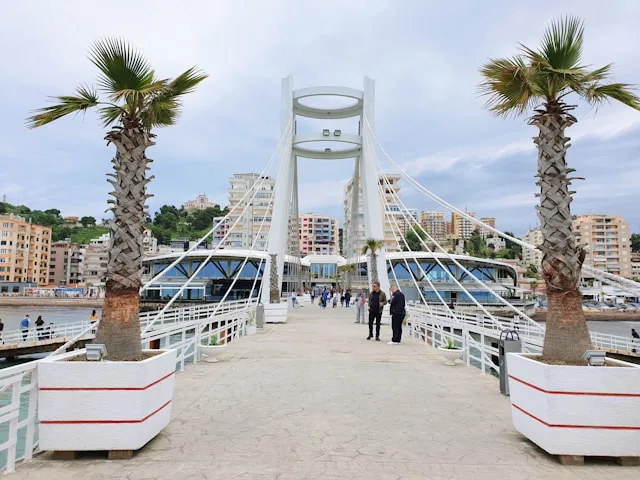
Albania's largest coastal tourism market generated €287 million in direct revenue in 2024. Durrës accounted for 34% of national coastal overnight stays that year, and the accommodation pipeline for 2026 includes 1,800 new branded hotel keys. The Port of Durrës redevelopment, contracted to Dubai Ports World, envisions a €2 billion mixed-use transformation integrating a cruise terminal that would reshape the city's position in the eastern Mediterranean. By every capital metric, Durrës is a hospitality market in rapid ascent.
The talent picture tells the opposite story. General Manager searches in the region averaged 127 days to fill through 2024. Revenue Manager roles sat open for 94 days. One beachfront property went 11 months without a Revenue Manager before resolving the search by relocating a Romanian national at a 60% premium above local market rates. The investment is arriving. The leaders required to operate that investment are not.
What follows is a structured analysis of the forces reshaping Durrës' hospitality sector, the employers competing for a small and largely passive talent pool, and what senior hiring leaders need to understand before committing to a search in this market. The gap between capital deployment and human capital readiness is the defining tension of this market in 2026. Understanding it is the prerequisite for hiring successfully within it.
A Market Where Capital Outpaces the Workforce It Requires
Durrës attracted €340 million in hospitality-related foreign direct investment between 2022 and 2024. That figure reflects a market where international operators see opportunity: Marriott opened its Courtyard property in 2023, Hilton has a Garden Inn in the 2026 pipeline, and the port redevelopment promises cruise passenger volumes that would create entirely new demand for pre- and post-cruise hotel nights. The Port of Durrës Authority handled 180,000 transit passengers in 2024. That number is expected to grow materially once the new cruise terminal becomes operational.
Yet hospitality-specific FDI decreased 8% year-on-year through 2024, according to the Bank of Albania's Balance of Payments data. The reason is telling. Investors are not losing confidence in demand. They are waiting for zoning clarifications under the new Tourism Law (Law 88/2024), which requires mandatory classification and safety certifications for all accommodation providers by March 2026. An estimated 30% of the current short-term rental stock may face operational restrictions or closure if enforcement proceeds on schedule. The regulatory environment is in transition, and capital is pausing at precisely the moment when talent demand is accelerating.
This creates a peculiar dynamic. The properties that are opening, or will open in 2026, need experienced operators now. The properties that may close or downgrade need to retain their best people to survive. Both pressures converge on the same small pool of qualified hospitality executives. The result is a market where 31% of all regional job postings are hospitality roles, despite the sector comprising only 18% of the economic base.
The investment wave has not solved the hiring problem. It has intensified it. Every new branded property that opens raises the compensation floor, draws experienced managers away from existing operations, and deepens the vacancy crisis for the properties that cannot match international chain pay scales. Capital moved faster than human capital could follow, and the consequences are now visible in every search timeline in the region.
The Seasonal Paradox: 10,400 Workers Released, 107 Executive Roles Unfilled
The most counter-intuitive feature of Durrës' hospitality talent market is the coexistence of acute executive shortages and mass seasonal unemployment. The sector employed 14,600 workers during peak season in 2024. By October, 10,400 of them, representing 71% of the workforce, were released from formal contracts. Between October and April, Durrës' hospitality sector operates with barely a quarter of its summer headcount.
This is not a general labour shortage. It is a structural inability to convert seasonal volume into year-round capability.
The 10,400 seasonal workers are predominantly operational staff: housekeeping, food service, front desk. The 107 executive and specialist vacancies documented across General Manager, Revenue Manager, and F&B Director categories represent an entirely different talent segment. These roles require multi-year experience in branded operations, proficiency with revenue management systems, and often multilingual capability. The seasonal workforce does not feed the executive pipeline. The two labour markets occupy the same geography but share almost no personnel.
Why Upskilling Has Not Closed the Gap
The logical response would be to invest in upskilling seasonal workers into management positions over time. In practice, this has not happened at scale. The reasons are systemic. Seasonal contracts offer no training incentive for employers, who invest in a worker for four months and then release them. Workers themselves, facing six months without income, cannot afford unpaid training periods. And the competencies most in demand, including dynamic pricing, OTA channel management, and sustainability certification, require technical training infrastructure that does not yet exist in Durrës.
According to the DRDA Digital Transformation Survey conducted in 2024, 67% of Durrës hotels lack dedicated revenue management personnel entirely. This is not a staffing choice. It reflects the absence of a local training pathway for a role that international brands consider essential. The Durrës Expo Centre, scheduled to open in the second quarter of 2026, may eventually support conference tourism that extends the operating season. But extending the season does not automatically create the managers needed to run it.
The Subcontracting Squeeze
New restrictions on third-party subcontracting, effective since 2024, have increased fixed labour costs for seasonal operations. The Albanian Employers' Association (Konfindustria) estimates this could reduce peak-season hiring by 12 to 15%. For properties that relied on agency staff to flex their workforce, this regulation forces a choice: absorb higher fixed costs or operate with fewer staff during the months that generate 68% of annual revenue.
The executive hiring challenge is therefore compounding. Properties need more experienced managers to handle the complexity of a compressed season. They simultaneously face higher costs for the operational staff those managers would supervise. The economics of seasonal hospitality in Durrës are tightening from both ends.
Who Employs the Talent That Exists, and Why They Hold It Tightly
The employer base in Durrës hospitality divides into three tiers, each with different talent dynamics.
Domestic Legacy Operators
Adriatik Hotel & Resort, established in 1957, operates 180 rooms and a secondary property at Lalz Bay. With 250 employees at peak season, it functions as the de facto training ground for mid-level hospitality management in the region. Bleart Group, which operates Royal G Hotel & Spa and Tropikal Resort, represents the largest Albanian-owned hospitality employer in Durrës with 380 combined peak-season employees.
These operators hold institutional knowledge and local relationships. Their challenge is retention. When Marriott opened in 2023, it recruited two senior operations managers from competing Durrës properties at salary premiums of 35 to 40%, according to patterns documented in the ASHOT Sector Report 2024. According to the same report, Bleart Group retained its General Manager at Royal G only by introducing a €15,000 retention bonus and an equity-equivalent profit-sharing arrangement. The domestic operators are losing talent upward to international brands and cannot match international compensation on a sustained basis.
International Brand Properties
Marriott's Courtyard property and the incoming Hilton Garden Inn serve as both talent magnets and wage benchmarks. They offer structured career progression, brand training programmes, and the possibility of lateral moves to other properties in the region or globally. For an ambitious Operations Manager in Durrës, a role at a Marriott or Hilton property is not just a better salary. It is a pathway to a Cluster General Manager role in Split, Dubrovnik, or Athens.
This creates a one-directional talent flow. International brands recruit from domestic operators. Domestic operators cannot recruit back. The wage gap is part of it, but career trajectory is the more powerful pull. An executive who spends five years at a branded property accumulates certifications and network access that an equivalent tenure at a domestic property does not provide.
The Port Redevelopment as Future Employer
The €2 billion Port of Durrës mixed-use development will eventually require hospitality leadership at a scale Durrës has not previously seen. Cruise terminal operations, integrated resort management, and the commercial programming of mixed-use space require senior executives with experience in destination management, not just hotel operations. This demand does not yet appear in vacancy data, but proactive talent pipeline development for these roles should already be underway. By the time the development reaches operational phase, the lead time for sourcing executives of this calibre will have passed.
Compensation in a Market Competing Against Three Borders
Durrës hospitality compensation is legible only in the context of its competitor geography. The city competes for talent across three layers, each offering a materially different proposition.
Tirana, the primary competitor, pays 20 to 30% more for equivalent hospitality management roles and offers year-round stability. A General Manager in Tirana earns on a twelve-month contract with access to international hotel corporate offices, which are headquartered in the capital. The cost of living differential (18% higher in Tirana, per Numbeo's 2024 index) offsets some of the wage premium, but not enough to neutralise it. Career trajectory is the decisive factor. A hospitality executive in Tirana is closer to regional Balkans roles than one in Durrës.
The Croatian coast represents a different order of competition. Split and Dubrovnik offer General Manager packages of €80,000 to €120,000 annually, representing 2.5 to 3 times the Durrës equivalent of €45,000 to €65,000. Croatia's EU membership provides labour mobility benefits and certification standards recognised across the European Union. The EURES Cross-Border Labour Mobility Report for 2024 documents that Durrës loses senior talent to Croatian markets specifically in F&B management and luxury guest services.
Italy draws executive chefs and F&B directors with net salaries 40% above Durrës levels. Greece, particularly Corfu and Thessaloniki, historically drew seasonal Albanian workers for summer island operations. Post-COVID, this outflow has decreased but remains meaningful for entry-level roles.
The compensation picture in Durrës, then, is not simply low. It is low relative to every accessible alternative, at every seniority level, with the gap widening fastest at exactly the seniority level where the most critical vacancies sit. A Cluster General Manager role in Durrës at €65,000 competes against the same role in Dubrovnik at €120,000. The proposition required to close that gap cannot be purely financial. It must include something Dubrovnik cannot offer: equity participation, multi-year security, or a development-stage opportunity with upside that a mature market does not provide.
This competitive reality means that negotiating executive compensation in Durrës requires a fundamentally different approach than in markets where the employer holds the leverage.
The Infrastructure Ceiling: Why Growth Has Physical Limits
Investment decisions in Durrës hospitality increasingly depend not on demand projections but on whether the city's physical systems can support the growth that demand implies. Two constraints are binding.
Wastewater and Beach Quality
The Durrës wastewater treatment plant operated at 94% capacity during July and August 2024. Untreated discharge events during peak periods affected beach quality ratings, according to monitoring by the National Agency for Protected Areas. For a destination where 78% of international visitors cite beach access as their primary motivator, degraded water quality is not an amenity issue. It is an existential risk.
The World Bank's Albania Coastal Zone Management Project technical report assessed that Durrës municipality lacks the infrastructure capacity to service tourism growth beyond 2027 at current investment levels. This ceiling is not hypothetical. It is a dated constraint with identifiable consequences: if wastewater capacity is not expanded before the port redevelopment drives increased visitor volumes, the beach product that attracts those visitors will deteriorate.
Coastal Erosion and Climate Exposure
Coastal erosion has advanced 12 metres in the Golem area over five years. Remediation requires an estimated €45 million that remains unfunded. Projected sea-level rise of 0.5 metres by 2050 threatens 15% of current beachfront accommodation stock, according to the Institute of Geosciences' Climate Risk Albania assessment.
EU accession candidacy status, granted in 2024, introduces compliance deadlines for environmental standards by 2027. Meeting these standards will require infrastructure upgrades that may disrupt operations during construction. The irony is precise: the EU accession process that would eventually strengthen Durrës' competitiveness as a destination will, in the medium term, create construction disruption and compliance costs that strain operators already struggling with thin margins and talent retention challenges.
For hiring leaders, the infrastructure constraint has a direct talent implication. The executives most capable of managing a property through a period of environmental compliance, construction disruption, and regulatory transition are exactly the executives most in demand elsewhere. The skills required to operate profitably under constraint are rarer than the skills required to operate during expansion.
Why 85% of the Candidates You Need Will Never See Your Job Posting
The passive candidate ratios in Durrës hospitality are among the most extreme in any market KiTalent analyses. For General Manager and Operations Director roles, approximately 85% of qualified candidates are passive, meaning they are currently employed, not searching, and will not respond to job advertisements. For Revenue Management and Commercial Director roles, the figure rises to an estimated 90%.
The active candidate pool for executive chef positions in international cuisine is limited to approximately 12 to 15 qualified professionals regionally. The majority hold secure positions in Tirana or internationally.
These ratios mean that a conventional recruitment approach, posting a vacancy on job boards and waiting for applications, reaches at most 10 to 15% of the viable candidate market. For Revenue Management roles, it reaches even less. The 11-month vacancy documented for a Revenue Manager at a 120-room beachfront property illustrates the consequence. The role was eventually filled by relocating a Romanian national from Bucharest at a cost of €4,200 monthly plus housing, representing a 60% premium above the local median. The employer did not overpay because the market is irrational. It overpaid because it exhausted the visible candidate pool and was forced into a search that required international reach.
The search methodology implications are direct. Organisations hiring for senior hospitality roles in Durrës cannot rely on local job postings, recruitment agencies working from CV databases, or LinkedIn InMail campaigns. They require direct headhunting approaches that identify passive candidates across Tirana, the Balkans, and the broader Mediterranean, then build a proposition specific enough to move someone from a stable position in a higher-paying market to a development-stage opportunity in Durrës.
This is the analytical core of the Durrës talent challenge. The investment thesis for the city is strong. The demand trajectory is clear. But the traditional executive search methods that work in mature hospitality markets with deep local talent pools fail systematically in a market where the qualified candidates are employed elsewhere, often in a different country, and require a highly specific proposition to move.
What Hiring Leaders in Durrës Hospitality Must Do Differently
The convergence of investment growth, infrastructure constraint, regulatory transition, and extreme passive candidate ratios creates a hiring environment where speed and method both determine outcomes. A search that runs 127 days in a market with 1,800 new keys entering the pipeline is not merely slow. It is a competitive disadvantage that compounds with every week.
Three principles distinguish successful executive searches in this market from the ones that stall.
First, the candidate pool is regional, not local. Any search confined to Durrës or even Albania will fail for Revenue Management, F&B Director, and Cluster General Manager roles. The qualified candidates are in Tirana, Split, Dubrovnik, Bucharest, and Athens. An international executive search capability is not optional for these roles. It is the baseline requirement.
Second, the proposition must be specific and forward-looking. A salary alone will not move a General Manager earning €90,000 in Croatia to a €65,000 role in Durrës. What can move them is equity participation in a development-stage asset, a multi-year contract with performance incentives tied to the port redevelopment timeline, or a Cluster General Manager title overseeing multiple properties with a clear path to regional leadership. The proposition must answer a question the candidate's current employer cannot: what does this role become in three years?
Third, the timeline must be compressed. In a market where 85% of candidates are passive and the average search runs over four months, the organisations that reach qualified candidates first hold a decisive advantage. AI-enhanced talent mapping that identifies passive candidates across multiple geographies before a search formally opens is the difference between a three-month search and a three-month vacancy followed by a six-month search.
KiTalent delivers interview-ready executive candidates within 7 to 10 days through a methodology designed for exactly these conditions: markets where the talent is passive, distributed across borders, and unreachable through conventional channels. With a 96% one-year retention rate across 1,450+ executive placements, the approach is built for markets where getting the hire right the first time is not a preference but a necessity. The pay-per-interview model means clients invest only when they meet qualified candidates, removing the upfront retainer risk that makes speculative searches in emerging markets prohibitively expensive.
For hospitality groups expanding in Durrës, whether opening branded properties, preparing for the port redevelopment's operational phase, or building management teams that can handle the regulatory and infrastructure transitions ahead, start a conversation with our executive search team about how we source senior hospitality leadership in markets where the conventional playbook does not work.
Frequently Asked Questions
What is the average time to fill a General Manager role in Durrës hospitality?
As of 2024, General Manager and Operations Director roles in the Durrës hospitality sector averaged 127 days to fill, according to EURES Albania vacancy data. This is roughly three times the fill time for comparable seniority roles in non-hospitality sectors in the region. The extended timeline reflects an 85% passive candidate ratio at this level, meaning the vast majority of qualified professionals are not actively searching. Searches relying on job postings alone consistently exceed this average, while those using direct executive search methods typically resolve faster by accessing candidates invisible to conventional recruitment.
What do hospitality executives earn in Durrës compared to competing markets?
Cluster General Managers in Durrës earn €45,000 to €65,000 annually, while equivalent roles on the Croatian coast command €80,000 to €120,000. Revenue Directors earn €32,000 to €48,000 in Durrës versus substantially higher in Dubrovnik or Split. Tirana pays 20 to 30% more than Durrës for equivalent roles with the added benefit of year-round contracts. Italy draws F&B directors at 40% salary premiums. These differentials mean that Durrës employers must supplement compensation with equity participation, multi-year contracts, or development-stage career opportunities to attract senior talent from competitor geographies.
Why is there a hospitality talent shortage in Durrës despite high seasonal unemployment?
Durrës releases 10,400 hospitality workers from contracts between October and April, yet simultaneously has over 100 executive and specialist vacancies unfilled. The shortage is not general. It is concentrated in management and technical roles: General Managers, Revenue Managers, F&B Directors, and professionals with yield management and digital distribution skills. The seasonal workforce is predominantly operational staff. There is no established pathway to convert seasonal volume into year-round management capability, and 67% of Durrës hotels lack dedicated revenue management personnel entirely.
How does Albania's EU accession candidacy affect hospitality hiring in Durrës?
EU accession candidacy, granted in 2024, introduces environmental and safety compliance deadlines by 2027. Hotels will need executives with sustainability certification expertise, including EU Ecolabel and Green Key processes. Infrastructure upgrades required for compliance may disrupt operations during construction phases. The regulatory transition also means the Tourism Law (Law 88/2024) mandates classification and safety certifications for all accommodation by March 2026, potentially removing 30% of unregulated short-term rental capacity. These changes increase demand for senior leaders who can manage complex regulatory transitions while maintaining operational performance.
What executive search approach works for hospitality roles in Durrës?
Conventional recruitment fails in Durrës because 85 to 90% of qualified hospitality executives are passive candidates employed in Tirana, Croatia, Greece, or Italy. Effective searches require international reach, AI-powered talent mapping to identify candidates across multiple geographies, and a compelling proposition that addresses career trajectory rather than salary alone. KiTalent's methodology is designed for these conditions, delivering interview-ready candidates within 7 to 10 days through direct headhunting of senior hospitality and tourism leaders who are not visible on any job board or recruitment platform.
What infrastructure risks should hospitality investors in Durrës consider before hiring leadership teams?
Wastewater treatment capacity reached 94% during peak 2024 months, with untreated discharge events affecting beach ratings. Coastal erosion has advanced 12 metres in the Golem area over five years, with €45 million in unfunded remediation required. Road congestion adds up to 90 minutes to peak-weekend transit times. These constraints mean that the executives hired to lead Durrës properties must have experience managing operations under infrastructure pressure, not just during expansion. The World Bank has assessed that current infrastructure cannot support tourism growth beyond 2027 without material new investment.