Eindhoven Design Talent: The Scaling Gap That Splits the Market in Two
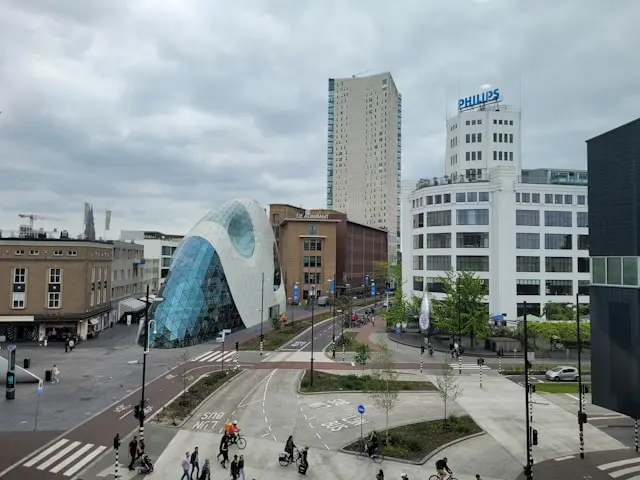
Eindhoven's design sector generated €1.4 billion in regional GDP in 2024. It supports roughly 8,800 professionals across industrial design, UX research, and product engineering. It is anchored by some of the most technically sophisticated employers in Europe, from ASML's lithography interfaces to Philips' connected care platforms. On paper, this is one of the strongest design ecosystems on the continent.
The reality beneath the numbers is more complicated. The Brainport region's design economy is not one market. It is two. On one side sit corporate embedded design functions with record hiring budgets, successful product commercialisation, and the infrastructure to take a concept from prototype to serial production. On the other sit 1,200 registered design and creative technology firms, 78% of which report annual revenue under €2 million. Only 3% of independent design studios in the region have ever scaled manufacturing revenue past €10 million. The gap between those two economies defines nearly every hiring challenge in this market.
What follows is an analysis of the forces reshaping Eindhoven's design and product innovation sector, the specific roles where the talent deficit is most acute, and what organisations on both sides of the scaling divide need to understand before they make their next critical hire.
The Two Economies of Eindhoven Design
The Brainport region's design sector is frequently discussed as a single entity. Brainport Development's Human Capital Agenda, regional policy documents, and innovation cluster reporting all treat "the design sector" as one labour market with one set of challenges. That framing misses the most important dynamic in the market.
Corporate design functions at ASML, Philips, NXP, and VDL Group are scaling. ASML's design headcount grew 18% year-on-year through 2024, according to the company's annual report. Philips maintains more than 450 design professionals across HealthTech and Domestic Appliances. These employers commercialise products successfully because they own the manufacturing infrastructure, the regulatory expertise, and the capital to move from concept to production without external dependency.
Independent design studios occupy an entirely different position. The average Eindhoven design firm employs 4.7 FTEs. According to BOM's Design to Value Report, the transition from prototype to serial production remains what the regional development agency calls a "valley of death." Studios generate conceptual designs and prototypes but lack the capitalisation, manufacturing partnerships, and regulatory knowledge to bring products to market independently.
Where the talent gets trapped
This bifurcation creates a specific talent problem that neither side of the market can solve alone. The professionals most valuable to the region's future are those who can bridge both worlds: designers with manufacturing commercialisation experience, DFM specialists who understand both creative process and production constraints, design strategists who have taken a product from sketch to shelf. These professionals are extraordinarily rare. They exhibit passive candidate rates of 85%, with average tenure of 4.2 years at their current employers. That tenure figure sits well above the 2.8-year regional average, which means these candidates are not only hard to find. They are hard to move.
Corporate gravity pulls talent in one direction
The compensation gap between corporate and studio employment accelerates this dynamic. Design studios typically pay 25-35% below corporate rates, according to the Dutch Designers' Association's 2024 income survey. A principal designer at a boutique consultancy might earn €80,000-€100,000 even with an equity stake. The same profile at ASML or Philips commands €120,000-€180,000 with variable compensation on top. Over time, this differential drains the independent studio ecosystem of exactly the experienced professionals it needs to overcome the scaling constraint. The policy conversation treats this as a funding problem. It is equally a talent problem.
The Specialist Shortage Behind the Aggregate Numbers
Eindhoven's aggregate design salary growth ran at 3.2% annually through late 2024. That figure sits below national inflation of 3.8%, according to CBS wage development data. Read in isolation, it suggests a market in rough equilibrium. Comfortable. Unremarkable.
The aggregate number is misleading. It averages together two radically different realities.
Generalist design roles in the Brainport region face genuine wage pressure. Studios competing on price, freelancers absorbing rate compression, junior industrial designers entering a market with more graduates than entry-level positions. These roles pull the average down.
At the specialist end, the market looks nothing like equilibrium. Vacancy rates for senior industrial design roles stood at 14.2% as of Q4 2024. For UX research positions, the figure was 18.7%. According to regional labour market analysis by Intelligence Group and UWV, the gap between demand and supply for Design for Manufacturing specialists is projected to widen further: Brainport Development forecasts a 12% increase in demand for DFM professionals against only 3% growth in supply from regional educational institutions.
The compensation data at the specialist level tells the same story. According to reporting by Eindhovens Dagblad, VDL Group offered 25-30% salary premiums above standard market rates to secure senior automotive industrial designers with lightweight materials expertise in 2024. This triggered retention bonuses at DAF Trucks, a pattern consistent with a market where a small number of highly qualified specialists are being competed for aggressively by a small number of employers who cannot afford to lose them.
This is not a uniform talent shortage. It is a bifurcated market where the average conceals the extremes.
ASML's Interface Problem and the 150-Day Search
ASML's hiring challenge illustrates the specialist shortage in its most concentrated form. The company has maintained continuous recruitment for Senior UX Designers specialising in EUV control systems for more than 18 consecutive months, based on analysis of the company's careers archive. The role requires an unusual intersection of complex industrial interface design and semiconductor manufacturing domain knowledge. Typical time-to-fill for this profile runs 120-150 days, against a market average of 45 days for general UX roles.
The difficulty is not that ASML lacks brand recognition or budget. It is that the candidate pool for this specific intersection of skills barely exists. Designing human-machine interfaces for lithography systems that cost over €350 million each is not a transferable skill from consumer UX. The domain knowledge takes years to develop. The number of people in Europe who possess it and are not already working at ASML or one of its direct competitors is vanishingly small.
This pattern repeats across the region's most technically demanding employers. Philips requires clinical UX specialists who understand connected care workflows and regulatory constraints. NXP needs industrial designers fluent in automotive safety standards (ISO 26262) and secure connectivity protocols. Each of these roles sits at an intersection that narrows the candidate pool to a fraction of the broader design market.
For organisations filling roles at this level of specificity, conventional job advertising reaches a small minority of viable candidates. Approximately 75% of qualified UX researchers and design engineers with medtech regulatory experience in the Brainport region are currently employed and not actively seeking new positions, according to Intelligence Group's Candidate Behaviour Monitor. Reaching them requires direct headhunting approaches built on market intelligence rather than inbound applications.
The Regulatory Squeeze on Design Talent
Two regulatory forces are reshaping what it means to be a qualified designer in Eindhoven. Both are tightening in 2026, and both are creating talent requirements that the region's educational pipeline was not designed to meet.
EU Medical Device Regulation and the compliance premium
The EU Medical Device Regulation reached full enforcement in 2026, and the implications for design hiring are material. MDR compliance costs run €500,000 to €2 million per product line, according to MedTech Europe's economic impact assessment. For independent design studios attempting to commercialise medtech innovations, these costs are prohibitive without corporate partnerships. For corporate employers like Philips HealthTech and the medtech startups clustered around the Health Innovation Campus, the regulation has created a new category of mandatory hire: UX designers with regulatory affairs expertise.
This is not a role that existed five years ago in its current form. It requires fluency in clinical workflow design, ISO 13485 quality management systems, and the documentation standards that MDR demands. The supply of designers with this combined profile is thin. The demand is accelerating. Organisations that treat this as a "nice to have" credential rather than a core hiring requirement are finding themselves unable to bring compliant products to market on schedule.
Export controls and semiconductor supply chain uncertainty
ASML-related export restrictions to China have introduced a different kind of regulatory pressure. According to Rabobank's semiconductor supply chain analysis, approximately 15% of regional design service revenue is potentially exposed to these restrictions. For the boutique studios and contract design firms that serve ASML's supply chain, this creates revenue uncertainty that makes hiring decisions harder to justify. For ASML itself, the restrictions reshape which markets its products serve and, by extension, which interface design specifications its UX teams must prioritise.
The combined effect is a market where regulatory literacy has become a core design competency rather than a peripheral one. Designers who understand both the creative and compliance dimensions of their work command premiums that the market benchmarking data confirms: 15-20% above standard rates for candidates with proven regulatory track records in medtech, and similar premiums in automotive for ISO 26262 fluency.
The AI Shift That Is Rewriting the Skills Map
TU/e and High Tech Campus are launching a joint Generative Design Lab in Q2 2026. This is not a research curiosity. It is a signal that the region's institutional anchors have concluded that AI-augmented design workflows will become standard practice, and that the talent pipeline needs to be rebuilt around computational design skills and data literacy.
The implications for hiring are direct. Organisations recruiting industrial designers in Eindhoven over the next 12-18 months face a transitional market. The skill sets that defined a strong candidate in 2023, such as proficiency in traditional CAD tools, physical prototyping expertise, and aesthetic sensibility, remain necessary but are no longer sufficient. The emerging requirements include prompt engineering for generative design tools, computational design using platforms like Grasshopper and Rhino, and the ability to integrate AI-driven workflows into established product development processes.
This shift creates winners and losers within the existing talent pool. Designers who have invested in computational skills are suddenly more valuable than their experience level alone would suggest. Senior designers without these capabilities face a narrowing set of opportunities, particularly at employers like ASML and Philips where digital toolchain integration is accelerating.
The Generative Design Lab will eventually produce graduates with the right hybrid skill set. Eventually. In the interim, the gap between what employers need and what the candidate market contains is widening. This is a pattern familiar across technology-intensive sectors: capital investment in new capabilities consistently outpaces the human capital required to operate them. The tools arrive before the people trained to use them.
What the Pipeline Actually Produces
Eindhoven's two primary design education institutions produce impressive graduate numbers. TU/e's Industrial Design department graduates more than 300 students annually. Design Academy Eindhoven enrols over 700 students. Together, they represent one of the densest design education clusters in Northern Europe.
The pipeline's weakness is not volume. It is alignment.
Design Academy Eindhoven's curriculum emphasises conceptual and critical design. This produces graduates with strong theoretical frameworks and international recognition. It does not produce graduates ready to function in corporate industrial design environments without additional training. According to a Philips Design graduate readiness assessment, DAE alumni typically require 12-18 months of additional development before becoming productive in applied commercial design roles. TU/e graduates are better aligned with corporate needs, particularly in systems design and smart mobility, but the department's output of 300 graduates per year serves a market where senior specialist vacancies alone number in the hundreds.
The misalignment matters most at the mid-career level. The roles hardest to fill in Eindhoven's design market, such as DFM specialists, regulatory design experts, and design strategists with commercialisation experience, cannot be filled by recent graduates regardless of their institution. These roles require 8-15 years of accumulated expertise. The pipeline feeds the bottom of the market. The shortage is at the top.
This creates a structural dependency on lateral hiring, international recruitment, and executive search for senior design leadership. The professionals who can bridge the gap between conceptual design and manufacturing reality are not emerging from the educational system in sufficient numbers. They must be identified, evaluated, and recruited from existing roles, often at employers who have every incentive to retain them.
The Concentration Risk No One Talks About Enough
ASML accounts for approximately 50% of the Brainport region's stock market value, according to ABN AMRO's regional economic risk analysis. Philips, despite its restructuring challenges, remains the region's largest employer of design professionals by a considerable margin. Together, these two companies define the floor and ceiling of the Eindhoven design labour market.
This concentration creates a specific vulnerability. A material reduction in design headcount at either employer would not simply release talent into the broader market. It would simultaneously collapse demand for design services from the studios, agencies, and contract firms that depend on these companies for project work. ABN AMRO estimates that such a scenario could flood the market with 500 or more designers while simultaneously eliminating the service revenue that sustains independent studios.
The housing situation compounds the concentration risk. Eindhoven faces a 12,000-unit housing deficit, with average wait times for rental properties exceeding 180 days. For international design talent considering relocation, this creates a practical barrier that compensation alone cannot resolve. Munich, Amsterdam, and Copenhagen all compete for the same senior design profiles. Munich offers 20-25% gross salary premiums with stronger manufacturing integration, according to StepStone Germany's engineering salary data. Amsterdam offers 12-18% premiums and greater agency density, though cost-of-living differentials largely neutralise this advantage for family-forming professionals.
The region's competitive position depends on something harder to quantify than salary: the density and depth of its technical ecosystem. Working on EUV lithography interfaces, next-generation medical devices, or autonomous vehicle systems is not possible in most European cities. That specificity is Eindhoven's strongest retention tool. It is also its greatest limitation, because it only appeals to candidates who want to work on those exact problems.
What This Means for Organisations Hiring Design Leadership in Eindhoven
Here is the original synthesis this data supports, and the claim that matters most for hiring leaders reading this analysis: Eindhoven's design talent market is not experiencing a shortage. It is experiencing a mismatch between where the talent sits and where it is needed. The corporate employers have the talent, the infrastructure, and the capital. The independent studios have the innovation potential but cannot attract or retain the experienced professionals needed to commercialise it. The talent that could solve the scaling problem exists in the region. It is locked inside corporate functions that pay more, offer more stability, and provide the manufacturing infrastructure that studios cannot match. Every policy intervention aimed at the "talent shortage" misses this point. The shortage is not in headcount. It is in the flow of experienced professionals between the two halves of the market.
For corporate employers, this means that the hiring challenge is not about volume. It is about finding specialists at intersections that produce vanishingly small candidate pools: UX researchers who understand semiconductor manufacturing, industrial designers fluent in MDR compliance, design strategists who have commercialised hardware products. These searches require talent mapping that goes well beyond job board reach. They require understanding which firms hold the specific expertise, which candidates have the right combination of skills, and what proposition will make a passive professional consider moving.
For design studios and scale-ups, the challenge is existential. Without access to senior professionals who have commercialisation experience, the path from prototype to production remains blocked. These organisations need a talent pipeline strategy that identifies and engages candidates who might accept a career move that trades corporate compensation for equity participation and creative autonomy.
KiTalent works with organisations across the Brainport region and internationally to identify, engage, and deliver the senior design and product leadership candidates that conventional search methods cannot reach. With a 96% one-year retention rate across 1,450 executive placements and a pay-per-interview model that eliminates upfront retainer risk, the approach is built for markets like this one: specialist, passive, and unforgiving of slow or imprecise search processes.
For organisations competing for design leadership in a market where 85% of the candidates you need are not looking, and where the cost of a failed senior hire compounds the scaling challenge you are already trying to solve, start a conversation with our executive search team about how we approach Eindhoven's design and product innovation market.
Frequently Asked Questions
What is the average salary for a senior industrial designer in Eindhoven?
A Principal Industrial Designer in consumer electronics or medtech commands €75,000-€95,000 in base salary. At VP or Head of Design level within corporate employers like ASML or Philips, total compensation reaches €140,000-€180,000 with 20-30% variable on top. Design studios pay 25-35% below these corporate benchmarks, which drives experienced talent toward embedded corporate roles. Candidates with medtech regulatory experience or DFM specialisation command a further 15-20% premium above standard rates, reflecting the acute shortage in these specific profiles.
Why is it so hard to hire UX researchers in the Brainport region?
The vacancy rate for UX research positions in Brainport stood at 18.7% as of Q4 2024. Approximately 75% of qualified candidates are employed and not actively job-seeking. The hardest roles to fill require domain expertise in complex B2B systems such as semiconductor equipment or clinical healthcare technology. General UX researchers are available. UX researchers who understand lithography workflows or MDR compliance are not. Searches for these profiles typically run 120-150 days against a 45-day average for generalist UX roles, requiring direct headhunting rather than conventional recruitment.
How does Eindhoven's design sector compare to Amsterdam for hiring?
Amsterdam offers 12-18% salary premiums and a higher density of consumer-facing digital agencies. However, housing costs are 35-40% higher, creating rough compensation parity for family-forming professionals. Eindhoven's advantage lies in the depth of its technical ecosystem: ASML, Philips, NXP, and the High Tech Campus offer roles in semiconductor, medtech, and automotive design that simply do not exist in Amsterdam. For generalist digital product designers, Amsterdam is more competitive. For specialists in industrial and complex-systems design, Eindhoven has no domestic equivalent.
What skills do Eindhoven design employers prioritise in 2026?
The five critical skill clusters are Design for Manufacturing (DFM), regulatory design fluency (MDR for medtech, ISO 26262 for automotive), systems design and complexity management, AI-augmented computational design, and circular design methodologies. The launch of TU/e's Generative Design Lab in 2026 signals that computational design literacy is becoming a baseline expectation. Employers increasingly seek designers who combine creative capability with technical depth in manufacturing processes or regulatory compliance rather than pure-play aesthetic or conceptual designers.
What is the biggest risk for Eindhoven's design talent market?
Concentration risk. ASML represents roughly 50% of the region's stock market value, and Philips is the largest employer of design professionals. A material reduction in headcount at either company would simultaneously release hundreds of designers into the market and collapse service demand for the independent studios that depend on these employers for revenue. The region's design economy is deeply intertwined with two corporate anchors. KiTalent's approach to talent mapping and market intelligence helps organisations understand these structural dynamics before they shape a hiring strategy.
How can design scale-ups in Eindhoven compete with corporate employers for senior talent?
Scale-ups cannot match corporate salaries. They can compete on three other dimensions: equity participation tied to commercialisation outcomes, creative autonomy that corporate roles cannot offer, and the opportunity to take a product from concept to market rather than contributing to one stage of a large corporate pipeline. Design Director roles at scale-ups typically offer €120,000-€150,000 base with equity, versus €140,000-€180,000 base with variable at corporate employers. The 85% passive candidate rate for design strategists with commercialisation experience means these professionals must be identified through executive search methods rather than job advertising.