Fier's Oil Sector Is Shrinking. The Talent It Needs Is Disappearing Faster.
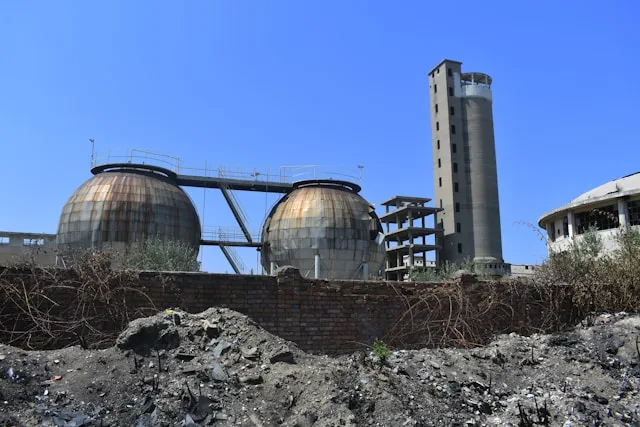
The Patos-Marinëz oilfield near Fier produced approximately 6,200 to 6,800 barrels per day through the third quarter of 2024. That figure was 8,100 barrels per day in 2019. By late 2026, production is projected to fall below 5,500 barrels per day unless enhanced recovery investment arrives at a scale no current fiscal framework incentivises. The field, discovered in 1928, is not dying suddenly. It is ageing on a predictable curve, and every actor in its ecosystem knows the trajectory.
What makes this market genuinely unusual is not the decline itself. It is the fact that the talent required to slow the decline is harder to find than the talent the field needed at peak production. Enhanced oil recovery engineers, IWCF-certified drilling supervisors, and bilingual HSE managers are not surplus labour in a contracting market. They are the scarcest professionals in Albania's energy sector, recruited through informal networks because job boards reach almost none of them. Conventional labour economics predicts a talent surplus when an industry contracts. Patos-Marinëz defies that prediction entirely.
What follows is a ground-level analysis of Fier's oil and gas talent market as it stands in 2026: where the gaps are most severe, why a declining field is producing an intensifying shortage, what remediation investment is doing to the employment mix, and what organisations hiring in this corridor need to understand before they run a search that conventional methods cannot complete.
The Paradox at the Centre of Fier's Oil and Gas Talent Market
A declining oilfield should, in theory, release skilled workers into the market. Production falls, headcount adjusts, and experienced engineers become available. This is the standard pattern in mature basins from the North Sea to West Texas. Fier breaks the pattern for three compounding reasons.
First, the skills needed to manage a field in terminal decline are not the skills that operated it at peak output. Arresting the 8 to 12 percent annual natural decline at Patos-Marinëz requires thermal enhanced oil recovery and chemical flooding expertise. These are not disciplines that Albpetrol's existing workforce was trained in during the field's conventional production decades. The engineers who could extend the field's productive life represent a different specialism from those who have run it for the past thirty years.
Second, Albania's university pipeline produces fewer than 15 petroleum engineering graduates per year from the Polytechnic University of Tirane's Faculty of Geology and Mining. That number does not come close to replacing natural attrition, let alone building a cadre of EOR specialists. The pipeline was never designed for the volume the sector now requires.
Third, EU labour mobility drains mid-career professionals before they reach the seniority where they could lead recovery programmes. Romanian and Bulgarian oil service hubs offer 2.5 to 3 times the compensation available in Fier. Italy offers 4 to 5 times. Albanian engineers with transferable qualifications and EU mobility rights make a rational calculation, and the calculation points away from Patos-Marinëz.
This is the paradox that defines Fier's oil and gas talent market in 2026. The field needs more specialised talent precisely because it is declining, and the forces driving the decline are the same forces pushing that talent out of reach. Organisations hiring in this corridor are not competing against a tight market. They are competing against structural economics that have been compounding for a decade.
The Operational Reality: Who Employs, Who Has Left, and What Remains
Albpetrol's Anchor Role and Its Limits
Albpetrol Sh.A., the 100% state-owned operator holding the Petroleum Agreement for Patos-Marinëz, directly employs approximately 2,100 to 2,400 workers nationally. An estimated 60 to 65 percent of that workforce is based in the Fier-Patos administrative zone. These numbers make Albpetrol the single largest employer in Fier's extractive economy by a wide margin.
But the anchor is eroding. Albpetrol's capital budget in 2024 was approximately €28 million, a figure insufficient for meaningful infill drilling. A hiring freeze on permanent positions has been in place since 2018, relaxed only for remediation-related roles. The workforce averages 48 years of age. Natural attrition runs at 4 to 5 percent annually, and the freeze means departing workers are not replaced with younger professionals. The result is what the Bank of Albania's financial stability analysis describes as labour hoarding: an ageing cohort retained on the books but not augmented with the mid-career technical leaders who would normally form the next generation of operational management.
The missing middle is not a metaphor. There is a measurable gap in the 30 to 40 year age bracket among Albpetrol's technical staff. This gap did not appear overnight. It is the accumulated consequence of six years of frozen recruitment at the precise moment when the field's technical demands shifted toward disciplines the existing workforce does not hold.
The Contractor Ecosystem Is Consolidating
The service contractor base around Fier has contracted materially. The number of registered oil-service firms in Fier Prefecture fell from 47 active entities in 2019 to 31 in 2024, according to National Business Center registry data cited in the Bank of Albania's regional economic outlook. That is a one-third reduction in the contractor ecosystem within five years.
The firms that remain include AlbDrilling, a local subsidiary with Chinese partnership providing rig services; Geo-Janni, an Albanian-Italian joint venture handling well maintenance; and Schlumberger, whose technical services presence is substantially reduced from its peak in the 2010s. Direct employment in oilfield services in Fier stood at an estimated 1,100 to 1,300 jobs through 2024, down from 1,800 in 2016.
Many firms have relocated administrative and engineering design functions to Tirana to access financial services and international connectivity. This bifurcation means Fier retains field operations labour while losing the higher-value planning and design roles that would otherwise anchor a local professional class. The administrative migration to Tirana is not dramatic enough to make headlines. It is steady enough to hollow out the market.
No international majors currently operate in Patos-Marinëz itself. Stream Oil & Gas, which previously held the adjacent Ballsh-Hekal block, suspended operations in 2022 following creditor disputes, according to AIM market announcements. The absence of international operators removes a competitive employer tier that would otherwise create upward pressure on compensation and attract internationally experienced professionals back to the region.
Where the Shortages Are Most Acute
EOR Petroleum Engineers: 6 to 9 Months to Fill
Enhanced oil recovery petroleum engineers represent Fier's most critical and most difficult talent gap. The Foreign Investors Association of Albania's 2024 skills gap analysis, together with LinkedIn Talent Insights data for Albania's petroleum engineer cohort, indicates a typical time-to-fill of 6 to 9 months for reservoir engineers with heavy oil and sand experience.
The severity of this shortage is a function of supply, not demand. Albanian universities produce fewer than 15 petroleum engineering graduates per year. Of those, a meaningful proportion leave Albania within five years of graduation. The pool of experienced EOR specialists who remain in the country and are available for new roles is, for practical purposes, close to zero.
Among the senior cohort of reservoir engineers with ten or more years of experience, an estimated 80 to 85 percent are employed and not actively seeking new roles. Average tenure at Albpetrol exceeds 12 years, driven by state-job security. These are not candidates who will respond to a job posting. They are passive professionals embedded in stable positions, reachable only through direct identification and targeted outreach.
Drilling Supervisors: Certification as a Barrier
International drilling contractors active in Albania report that 70 percent of qualified drilling supervisor candidates are already employed and must be actively sourced. The remaining pool of active applicants frequently lacks current IWCF certification or carries employment history gaps that raise competency questions.
The IWCF certification requirement creates a hard barrier. Unlike many professional qualifications that can be acquired relatively quickly, well control certification demands both examination and verified operational experience. A candidate without current certification cannot simply be trained into readiness within a normal hiring timeline. This means the qualified pool is fixed in size at any given moment, and nearly all of it is already deployed.
Recruitment in this category operates through informal contractor networks rather than formal job boards. The conventional application process rarely reaches the candidates who hold the right credentials, because those candidates are not looking.
Environmental Remediation Project Managers: Dual Competency, High Turnover
The World Bank co-financed remediation project at Patos-Marinëz employed approximately 180 workers in 2024, with projections to reach 240 in 2025. These roles demand dual competency in petroleum geology and environmental compliance: a combination that is rare in the local market and rarer still when the requirement includes EU regulatory framework knowledge.
Contractors on the remediation project report annual turnover rates of 25 to 30 percent for certified hazardous waste managers, against a national average of 12 percent. The turnover is not random. It reflects the project-based, temporary nature of remediation employment and the premium that permanent extraction roles command. A qualified environmental remediation manager can earn 30 to 40 percent more by moving into a drilling role at an oilfield services firm, and many do.
For hiring leaders trying to staff these positions, the challenge is not finding candidates. It is retaining them against the pull of higher-paying, more stable roles in the same geography. The cost of replacing a senior technical hire in this environment includes not just recruitment expense but project continuity risk on a World Bank-monitored programme.
Compensation: What Roles Pay and Why the Gaps Drive Attrition
Compensation data for Fier's oil sector is directional rather than precise, drawn from the FIAA salary survey and regional benchmarking. But the patterns are clear enough to explain why talent flows out of the region rather than into it.
A senior petroleum engineer specialising in enhanced recovery commands a base salary range of €42,000 to €58,000 annually in Fier. That figure represents 3.5 to 4.8 times the national average wage, and it carries a 15 to 20 percent premium over equivalent Tirana-based roles, reflecting field location hardship and scarcity. On paper, it is a competitive local salary. In regional context, it is not. Bucharest and Sofia offer 2.5 to 3 times that range for drilling and reservoir engineers. Italian operations, particularly Eni's, offer 4 to 5 times, with the additional draw of proximity: ferry connections from Durrës to Bari facilitate weekly commuting patterns that allow Albanian engineers to maintain family ties while earning an Italian salary.
VP Operations and Country Manager roles in Albanian oil services command €85,000 to €120,000 annually, with expatriate packages adding 30 to 40 percent for international hires. The expatriate premium reflects the thin local market for bilingual leadership combining Albanian language capability, English fluency, and international oil company experience. Finding a candidate who meets all three criteria and is willing to base in Fier rather than Tirana represents a search that conventional talent acquisition methods consistently fail to complete.
Environmental remediation directors earn €48,000 to €68,000, with compensation accelerating at 8 to 10 percent annually as EU environmental directive compliance deadlines tighten. This is the fastest-growing salary band in Fier's energy sector, but it starts from a lower base than extraction roles and has not yet reached the threshold where it pulls experienced engineers away from drilling rather than losing them to it.
The compensation dynamics create a predictable circulation pattern. Junior professionals enter Fier's oil sector, gain five to eight years of field experience, acquire internationally transferable qualifications, and leave. The salary negotiation that might retain them in a more balanced market cannot overcome a 3-to-1 compensation differential with Bucharest or a 5-to-1 differential with Milan. Fier's oil sector trains talent for export.
The Remediation Pivot: Job Creation That Masks a Qualitative Downgrade
The environmental remediation programme at Patos-Marinëz is frequently cited as evidence that the field complex is generating new employment even as extraction contracts. This is true in aggregate headcount terms. It is misleading in every other dimension.
Remediation costs for soil and groundwater contamination at Patos-Marinëz exceed €220 million in total estimated liability, according to the World Bank's Albania Environmental Performance Report. Phase I of the co-financed remediation project carries a €53.6 million budget. Environmental contracting employment is expected to grow 15 to 20 percent through 2026 as EU-aligned environmental directives in Albania's accession framework drive well-plugging and site rehabilitation requirements.
But the jobs being created are different in character from the jobs being lost. Extraction roles are permanent, skilled, and relatively well-compensated. Remediation roles are predominantly temporary, with two- to three-year contracts tied to specific project phases. They pay 30 to 40 percent less than equivalent-experience drilling positions. And they demand a different skill set: environmental engineering and hazardous materials management rather than petroleum geology.
Official statistics aggregate these categories under extractive sector employment, masking what amounts to a qualitative downgrade. The anchor that Patos-Marinëz provides to Fier's economy is morphing from stable, skilled industrial employment to contingent environmental service work. For hiring leaders, this distinction matters: the professionals available from the remediation pipeline are not substitutes for the EOR specialists the extraction side needs.
The transformation also creates a specific talent mapping challenge. The professionals best qualified for remediation project management sit at the intersection of petroleum geology and environmental compliance. They are a subset of a subset: petroleum-trained, environmentally certified, willing to work on fixed-term contracts in a location that offers limited career progression. Identifying them requires searching across two traditionally separate professional communities.
Fiscal and Regulatory Constraints: Why Capital Cannot Follow Demand
Albania's fiscal regime for mature onshore fields imposes a 50 percent royalty rate on gross production plus profit petroleum sharing, according to EITI Albania's transparency reports. For a field like Patos-Marinëz, where enhanced recovery is the only viable path to production stabilisation, this royalty burden makes the economics of EOR investment marginal at best.
The numbers are straightforward. Industry estimates suggest that $150 to 200 million in EOR investment would be required to arrest the production decline curve and stabilise output. Under the current fiscal terms, the return profile for that investment does not attract private capital. Albpetrol's own capital budget of approximately €28 million in 2024 is insufficient for meaningful infill drilling, let alone a comprehensive enhanced recovery programme.
The Albanian government's anticipated Petroleum Fiscal Framework revision, delayed from 2023, is now expected in mid-2025. If enacted, reduced royalties for tertiary recovery projects could trigger modest service-sector hiring in late 2026 for pilot EOR projects. But "could trigger modest hiring" and "will solve the talent crisis" are very different propositions. Even optimistic scenarios add jobs in the low hundreds, not the thousands that would reverse the contractor consolidation trend.
The 2023 ban on new hydrocarbon exploration in protected areas, which overlaps partially with the Marinëz periphery, adds a layer of permitting risk that further discourages investment. For international executive candidates evaluating a role in this market, the regulatory uncertainty is not abstract. It directly affects the probability that the project they are being hired to lead will proceed on the timeline presented during the interview process.
This regulatory paralysis has a specific talent consequence. Service contractors cannot plan workforce requirements against uncertain fiscal and permitting timelines. The result is a preference for short-term hires and contract staff over permanent recruitment, which in turn makes the market less attractive to the experienced professionals who would accept a permanent role but will not relocate for a six-month contract.
What This Means for Hiring Leaders in 2026
The analytical claim that emerges from combining Fier's data points is this: the Patos-Marinëz talent crisis is not a hiring problem that better recruitment can solve. It is an economic structure problem that expresses itself through hiring. The fiscal regime prevents the investment that would create the roles. The compensation ceiling prevents retention against regional competitors. The university pipeline does not produce the volume. And the professionals who do exist are overwhelmingly passive, embedded in stable positions, and reachable only through methods that most organisations operating in this market have never used.
A hiring leader running an EOR petroleum engineer search in Fier faces a market where 80 to 85 percent of qualified candidates are not looking. Where the total domestic pipeline of new graduates is fewer than 15 per year. Where the nearest regional talent pools in Bucharest, Sofia, and Milan offer multiples of the local salary. And where the regulatory environment makes it difficult to promise candidates that the project they are joining will have a five-year horizon.
Conventional job postings will not reach these candidates. Active applicant pools will surface professionals who lack current certification or who carry the employment gaps that characterise a contracting market's displaced workers rather than its high performers. The search methodology that works in this market requires direct identification of passive candidates, cross-border sourcing into regional talent pools, and the ability to construct a proposition that addresses career trajectory concerns alongside compensation.
KiTalent's AI-enhanced talent mapping identifies candidates across fragmented markets like Fier's oil sector, where the qualified pool is small, dispersed across borders, and invisible to conventional search. With a pay-per-interview model that eliminates upfront retainer risk and a 96 percent one-year retention rate across 1,450-plus executive placements, the approach is designed for exactly this category of search: specialised, geographically constrained, and dependent on reaching professionals who are not actively on the market.
For organisations hiring petroleum engineers, drilling supervisors, or environmental remediation leadership in Albania's oil and gas corridor, where the candidates who can arrest a production decline or manage a €220 million remediation liability are not visible on any job board and will not respond to a posting, start a conversation with our executive search team about how we approach markets where the conventional playbook has already failed.
Frequently Asked Questions
What is the current state of oil production at Patos-Marinëz near Fier?
Production at the Patos-Marinëz field averaged 6,200 to 6,800 barrels per day through Q3 2024, down from 8,100 bpd in 2019. The field exhibits a natural decline rate of 8 to 12 percent annually without enhanced recovery investment. By late 2026, output is projected to fall to 5,000 to 5,500 bpd. The field remains Albania's primary onshore crude source, operated by state-owned Albpetrol, but the decline trajectory directly constrains both employment levels and the commercial viability of new hiring at scale.
Why is it so difficult to hire petroleum engineers in Fier, Albania?
Three factors converge. Albanian universities produce fewer than 15 petroleum engineering graduates annually. EU labour mobility draws mid-career engineers to Romania, Bulgaria, and Italy, where compensation runs 2.5 to 5 times higher. And 80 to 85 percent of qualified senior engineers in Albania are passively employed with average tenures exceeding 12 years. Active job postings reach a fraction of the viable candidate pool. Specialist executive headhunting methods that directly identify and approach passive professionals are the primary route to filling these roles.
What do senior oil and gas professionals earn in Fier?
Senior EOR petroleum engineers in Fier earn €42,000 to €58,000 annually, a 15 to 20 percent premium over Tirana-based equivalents. VP Operations and Country Manager roles command €85,000 to €120,000, with expatriate premiums of 30 to 40 percent. Environmental remediation directors earn €48,000 to €68,000, with compensation rising 8 to 10 percent annually. These figures position Fier competitively within Albania but fall well below regional competitors in Bucharest, Sofia, and Milan.
How is environmental remediation changing the job market near Patos-Marinëz?
The World Bank co-financed remediation project employed approximately 180 workers in 2024, projected to reach 240 in 2025, with environmental contracting employment expected to grow 15 to 20 percent through 2026. However, these roles are predominantly temporary, pay 30 to 40 percent less than extraction positions, and require different qualifications centred on environmental engineering rather than petroleum geology. The shift represents a qualitative change in the type of employment the field complex supports, not simply a headcount increase.
What regulatory changes could affect oil sector hiring in Albania in 2026?
Albania's delayed Petroleum Fiscal Framework revision, now expected in mid-2025, may reduce royalty rates for tertiary recovery projects. If enacted, this could stimulate modest pilot EOR investment and associated service-sector hiring in late 2026. The current 50 percent royalty rate on gross production plus profit petroleum sharing has deterred private EOR investment, directly capping employment growth. The 2023 ban on exploration in protected areas adds further permitting uncertainty for operations near the Marinëz periphery.
How does KiTalent approach executive search in niche oil and gas markets like Fier?
KiTalent uses AI-powered talent mapping to identify qualified professionals across fragmented, cross-border talent pools where conventional job advertising reaches fewer than 20 percent of viable candidates. In markets like Fier's oil sector, where the qualified pool is small and overwhelmingly passive, direct identification and targeted outreach replace traditional recruitment advertising. The pay-per-interview model means clients invest only when they meet qualified candidates, reducing upfront risk in markets where search timelines are inherently longer.