Fier's Industrial Cluster Is Gaining Investment and Losing the Workers It Needs: The Workforce Paradox at the Centre of Albania's Manufacturing Push
Albania's government has designated Fier as a priority economic zone. Tax exemptions are in place. New manufacturing entrants are in permitting. The substation upgrade is on schedule. And the skilled workers this cluster needs to function are leaving faster than they can be replaced.
This is the core contradiction at the centre of Fier's construction materials and light manufacturing sector in 2026. Public investment is flowing into the zone at the same time that 65 to 70 percent of its technical graduates are flowing out, drawn to Tirana or to Italian and German manufacturing floors where a certified welder earns three to four times the local rate. The cluster employs roughly 3,800 to 4,200 workers across 45 to 50 firms. It cannot find the certified welders, CNC machinists, or production managers it needs to grow. In many cases, it cannot find them at all.
What follows is a ground-level analysis of the forces reshaping Fier's industrial talent market: where the gaps are most severe, why conventional recruitment cannot close them, what the energy and infrastructure constraints mean for employers trying to attract skilled workers to the zone, and what organisations operating in this corridor need to understand before they commit to expansion or hire for leadership roles they may not be able to fill through traditional channels.
The Cluster as It Stands: Fragmented Capacity, Concentrated Risk
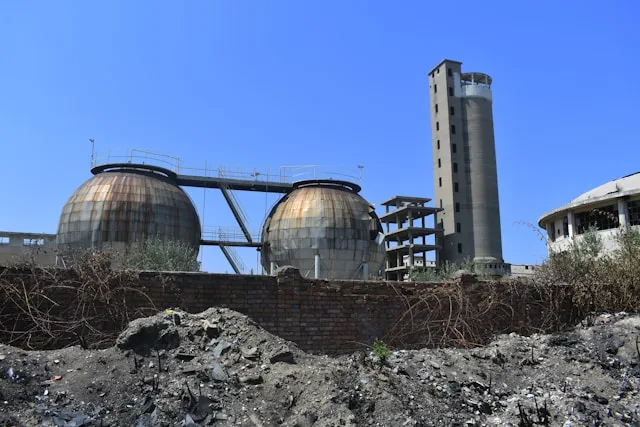
Fier's construction materials sub-sector is not a single integrated industrial cluster in the way that term is understood in Western European manufacturing. It is a collection of small and medium-sized enterprises, a handful of anchor logistics operations, and a patchwork of workshops producing concrete blocks, paving stones, steel reinforcement mesh, and aluminium window and door frames for the regional construction market. According to AIDA's 2023 sector mapping, the metal fabrication capacity that exists is fragmented rather than centralised. Only three tenants in the Fier Industrial Park exceed 50 employees.
The largest single industrial employer in the zone is Titan Cement Albania, which maintains a logistics hub and bagging facility employing 180 to 200 workers. Aluminium Shpk and the Euroal Group collectively employ 220 to 250 production workers across secondary aluminium extrusion and window systems fabrication. The remaining 14 active manufacturing leases in the industrial park average 25 employees each.
This fragmentation matters for talent strategy. A production manager in a 25-person workshop faces different challenges than one running a 200-person plant, but both roles draw from the same shallow candidate pool. The cluster's total employment of roughly 4,200 workers represents approximately 18 percent of Fier County's non-agricultural formal employment. That concentration makes every unfilled technical role a constraint not just on the individual firm but on the zone's capacity to absorb the investment now arriving.
The Anchor Employers
Titan Cement Albania's Fier presence is logistical rather than productive. Primary cement production occurs at the Fushë-Krujë integrated plant. The Fier hub handles distribution and secondary processing. This means the zone's largest employer is not manufacturing cement locally but managing its movement. The implication for executive hiring across industrial and manufacturing sectors is that the leadership roles in Fier tend to be operations and logistics roles rather than heavy-process engineering roles, which narrows the candidate profile further.
The SME Backbone
The steel reinforcement cutting and bending shops and aluminium frame assemblers that make up the bulk of the park's tenancy are serving regional construction demand. Their output is relatively low-value. Their margins are thin. And they are competing for the same certified welders and CNC operators as the larger operations, often without the compensation packages to win those contests.
This creates a two-tier hiring market within a single small zone. The consequences intensify as new entrants arrive.
The Investment Arriving and the Workers Who Are Not
AIDA's designation of Fier as a priority economic zone for 2025 to 2027 carries real incentives: three-year profit tax exemptions for new manufacturing entrants. The Ministry of Economy's sectoral strategy projects two to three mid-sized construction material producers, likely in tile, insulation, or precast concrete, currently in permitting and expected to add 600 to 800 direct jobs by the end of 2026.
This is where the paradox becomes acute. The zone is being prepared for expansion at the same moment its human capital base is contracting.
Aleksandër Moisiu University's Fier branch produces only 35 to 40 mechanical and construction engineering graduates annually. The "Pavarësia" vocational school certifies approximately 120 welders and CNC operators per year, though certification quality varies. Against replacement demand, attrition to Tirana, and emigration to EU labour markets, these numbers are not close to sufficient.
The university's own graduate tracking survey tells the story plainly. Within five years of qualification, 65 to 70 percent of Fier County's technical and engineering graduates have left for Tirana or for EU destinations. The ones who remain are typically those with family ties strong enough to outweigh a three-to-four-times salary differential.
For organisations planning to invest in the Fier zone, the talent pipeline question is not theoretical. It is the binding constraint on whether the investment thesis works at all.
The Salary Differential That Drives Emigration
The compensation data for Fier's manufacturing sector explains the talent outflow with uncomfortable clarity.
A certified welder in Fier earns €800 to €1,100 net monthly. The same welder, with the same certification, earns €2,500 to €3,500 net monthly in Italy's Emilia-Romagna or Marche regions. That is a three-to-four-times gross salary multiple, facilitated by bilateral agreements that recognise Albanian VET qualifications. According to Eurofound's wage indicators, the gap has not narrowed over the past three years. It has remained stable, which means it is a permanent structural feature of this labour market rather than a cyclical fluctuation.
Domestic Competition From Tirana
The international differential is the dramatic figure. But the domestic differential with Tirana is the one that causes the most immediate operational pain. Production manager roles in Fier-based firms attract zero to two applications per posting, according to the AIDA Employer Feedback Mechanism. The same role posted in Tirana draws 8 to 12 qualified applicants nationally. Fier employers report needing to offer 25 to 35 percent salary premiums to recruit production managers from Tirana, and even then, the relocation proposition is a hard sell.
A production manager in Fier earns €1,200 to €1,800 net monthly. A quality assurance manager earns €1,000 to €1,500. A senior CNC programmer or technician earns €900 to €1,400. These are not poverty wages by Albanian standards. But they sit in a competitive context where Tirana offers more, Italy offers dramatically more, and the non-compensation factors, career progression, infrastructure quality, urban amenities, all favour the alternatives.
Executive Compensation in a Thin Market
At the plant director and general manager level, compensation reaches €2,500 to €4,000 net monthly with performance bonuses equivalent to one to two months' salary. Operations directors overseeing multi-site manufacturing earn €3,000 to €5,000 net monthly, typically requiring Italian or German language proficiency for parent-company reporting lines. These figures, drawn from Boyden Albania's 2024 market report and Pedersen & Partners' regional compensation study, are directional rather than precise, benchmarked against cross-border comparables with Montenegro and North Macedonia.
The critical observation is not the absolute level of these salaries. It is that the candidate pool at this level is almost entirely passive. Boyden's data indicates an active-to-passive candidate ratio of 1:9 for plant director searches in Albania's construction materials sector. These professionals hold stable positions with five-to-ten-year tenures in Tirana-based firms or state-owned energy enterprises. They do not respond to job postings. They must be found, approached, and persuaded individually. Understanding why the hidden majority of qualified candidates never appear on any job board is the first step toward building a search strategy that actually reaches them.
The Energy Constraint That Compounds Every Hiring Challenge
A skilled worker considering relocation to Fier does not only weigh salary. They weigh the working conditions. And the energy infrastructure in the Fier zone imposes conditions that directly affect both productivity and employer attractiveness.
Fier County experienced 147 hours of announced and unannounced medium-voltage interruptions in 2023, compared to 89 hours in Tirana County, according to the Energy Regulatory Entity's annual report. For continuous-process manufacturing, every interruption is a production loss. For a production manager evaluating a relocation offer, it is a signal about the seriousness of the operational environment.
The planned 2026 completion of the 400 kV Fier substation upgrade, part of the Trans-Balkan Electricity Corridor, is projected to reduce interruption frequency by 40 percent. On paper, this is material. In practice, the data introduces a tension the research explicitly identifies: unplanned outage hours actually increased 12 percent year-on-year in 2023 due to distribution network ageing. The substation upgrade addresses transmission-level reliability. It does not address the last-mile distribution network within the industrial zone itself.
Albania's 95 percent reliance on hydropower adds seasonal price volatility. Industrial electricity tariffs vary 15 to 20 percent between wet and dry seasons. The absence of natural gas distribution infrastructure in Fier, unlike the planned Vlorë LNG terminal, forces metal fabrication operations to rely on imported LPG at 30 percent higher cost than EU pipeline gas benchmarks.
For hiring leaders, the implication is direct. The energy constraint is not separate from the talent constraint. It is part of the same proposition. A production engineer deciding between a Fier offer and a Tirana offer is weighing not just salary but whether the plant will have consistent power. Until the distribution-level reliability matches the transmission-level investment, the proposition remains weakened.
The Informal Economy as a Talent Market Distortion
One of the least discussed but most consequential dynamics in Fier's manufacturing labour market is the scale of the informal sector. According to the OECD's Albania SME Policy Index 2024 and INSTAT shadow economy estimates, an estimated 35 to 40 percent of metal fabrication and concrete pre-casting activity in Fier County operates informally.
This matters for talent in three ways.
First, informal operators avoid VAT and social security contributions, undercutting formal sector pricing by 20 to 25 percent. This compresses the margins of formal employers, limiting their ability to offer competitive wages and invest in worker training or certification.
Second, the informal sector absorbs a portion of the available labour supply without contributing to skills development. Uncertified "practical" welders dominate the local market. They can serve domestic construction projects. They cannot service EU-export contracts, which require EN ISO 9606-1 certification. The absence of mutual recognition agreements for Albanian welding certifications with Germany and Italy, documented in the German-Albanian Chamber of Commerce's 2024 Trade Barriers Report, creates an additional barrier for firms attempting to win sub-contracting work on EU construction projects.
Third, the informal economy creates a misleading picture of unemployment. Aggregate unemployment in Fier remains above the national average. But certified welders exhibit less than 3 percent unemployment and average tenures of four-plus years. The surplus is in uncertified general labour. The deficit is in precisely the certified, experienced professionals that formal-sector manufacturers need. Traditional recruitment methods consistently fail to reach these candidates because they are already employed, not actively looking, and transition through direct recruitment and network referrals rather than application portals.
What the Permitting and Regulatory Environment Means for Expansion Timelines
The regulatory environment adds friction to every expansion decision. Construction permits for industrial facilities within the Fier zone average 8 to 14 months, compared to the EU average of 4 to 6 months, according to the World Bank's Doing Business 2024 Albania profile. Recent "One-Stop-Shop" reforms aim to reduce this to 6 months by 2026, but the gap between aspiration and current performance is wide.
For a manufacturer entering the zone under the AIDA incentive programme, the practical sequence is this: 8 to 14 months for permitting, 6 to 12 months for construction and fit-out, and then the search for skilled workers begins in a market where certified welding positions already take 4.5 to 6 months to fill. The total time from investment decision to operational staffing can easily exceed two years.
This timeline has implications for how organisations approach talent mapping and proactive search in markets with severe supply constraints. Waiting until the facility is built to begin hiring is a strategy that guarantees an additional six months of vacancy at minimum. Firms that begin identifying and engaging passive candidates during the permitting phase will staff faster than those that follow the conventional sequence.
The Vlorë Industrial and Logistic Zone adds competitive pressure. Adjacent to the port and closer to the planned LNG terminal, Vlorë offers newer infrastructure and is competing for the same light manufacturing investments. The emergence of a southern Albanian "talent corridor," where skilled workers commute between Fier and Vlorë for wage arbitrage, further fragments the available pool and makes understanding the cost of a failed or delayed search a practical rather than theoretical concern.
The Synthesis: Capital Is Moving Faster Than Human Capital Can Follow
The investment case for Fier is real. The tax incentives are generous. The infrastructure upgrades are planned. The demand for construction materials in Albania and the Western Balkans is supported by EU accession-related infrastructure spending. On paper, the zone should be expanding.
But the investment thesis assumes the existence of a workforce that is, in measurable terms, leaving. The government is building the container while the contents are draining out. Every data point in this market tells the same story from a different angle. Graduate output: 35 to 40 per year against a cluster needing hundreds. Vacancy duration: 4.5 to 6 months for certified welders versus 2 to 3 months in Tirana. Application rates for production management: zero to two per posting. Active-to-passive ratio at the plant director level: 1:9. Emigration rate among technical graduates within five years: 65 to 70 percent.
The original synthesis that emerges from combining these data points is this: Fier's manufacturing expansion is not constrained by a conventional hiring shortage that better sourcing can solve. It is constrained by a demographic and economic gravity problem. The wage differential with Italy is not a gap that local employers can close. It is a permanent feature of operating in a pre-accession economy adjacent to the EU's fourth-largest manufacturing sector. Every new factory added to the zone increases demand against a supply curve that is not only flat but declining. The investment incentives attract capital. Nothing in the current framework attracts or retains the human capital that capital requires.
This is the distinction that matters for any organisation considering a leadership hire, a plant expansion, or a new facility in the Fier corridor. The question is not whether the talent exists. Certified welders, CNC programmers, and experienced production managers do exist in Albania. The question is whether they can be found, persuaded, and retained in a location where the structural forces push them elsewhere. The negotiation required to move a passive candidate in this market involves not just compensation but a comprehensive proposition: housing, career trajectory, energy reliability, and a credible argument that Fier's future justifies the present trade-offs.
What This Means for Organisations Hiring in the Fier Corridor
For firms already operating in the zone or preparing to enter it, the talent strategy cannot be separated from the business strategy. Three principles apply.
First, senior hires must be sourced through direct headhunting methodology rather than public postings. The data is unambiguous. Zero to two applications per posting for production management roles. A 1:9 active-to-passive ratio at the plant director level. The candidates capable of running these operations are employed, stable, and not looking. Reaching them requires a different method entirely, one that identifies them by capability, approaches them individually, and builds a proposition specific to their circumstances.
Second, the timeline must be front-loaded. In a market where certified welding positions take 4.5 to 6 months to fill and executive search for senior roles requires access to candidates who will never appear on any job board, beginning the hiring process after the facility is operational means accepting months of underutilisation. KiTalent's approach to executive and specialist search in industrial markets delivers interview-ready candidates within 7 to 10 days, but even with that speed, the engagement must start early.
Third, compensation alone will not win these searches. The Italian salary multiple is 3 to 4 times. No Fier-based employer will match it. The proposition must include elements that Italy cannot offer as easily: proximity to family, a leadership role rather than a line role, equity or profit-sharing where possible, and a credible growth narrative tied to the zone's incentive programme. KiTalent's 96 percent one-year retention rate for placed candidates reflects an approach where candidate motivation and cultural fit are assessed as rigorously as technical capability.
For organisations competing for production leadership and senior technical talent in Albania's construction materials sector, where the candidates you need are stable, passive, and weighing a permanent emigration alternative, speak with our executive search team about how we approach searches in constrained industrial markets.
Frequently Asked Questions
How many workers does Fier's construction materials cluster employ?
The Fier construction materials and light manufacturing sub-sector employs approximately 3,800 to 4,200 workers across 45 to 50 active firms. This represents roughly 18 percent of Fier County's non-agricultural formal employment. The largest single employer in the zone is Titan Cement Albania's logistics hub and bagging facility, employing 180 to 200 workers. The majority of firms are small workshops averaging 25 employees, producing concrete blocks, paving stones, steel reinforcement mesh, and aluminium frames for regional construction markets.
What are the hardest roles to fill in Fier's manufacturing sector?
Three categories face the most acute shortages: certified welders holding EN ISO 9606 credentials, CNC machine operators with G-code programming capability on Fanuc and Siemens controllers, and production managers with Lean Manufacturing or Six Sigma credentials. Certified welding vacancies in the Fier zone average 4.5 to 6 months to fill, nearly double the Tirana average. Production management postings attract zero to two applications, compared to 8 to 12 nationally. These patterns require specialised executive search methodology rather than conventional job advertising.
What do production managers and plant directors earn in Fier?
Production managers in Fier's construction materials sector earn €1,200 to €1,800 net monthly. Quality assurance managers earn €1,000 to €1,500. At the plant director level, compensation reaches €2,500 to €4,000 net monthly with performance bonuses of one to two months' salary. Operations directors overseeing multi-site operations earn €3,000 to €5,000 net monthly and typically require Italian or German language proficiency. These figures reflect a 25 to 35 percent premium over equivalent Fier-local rates, as most senior candidates must be recruited from Tirana.
Why is it so difficult to recruit skilled workers to Fier?
The difficulty is driven by three converging forces. First, Tirana offers 20 to 30 percent salary premiums for equivalent roles plus stronger career progression. Second, Italian and German manufacturing markets offer three to four times the gross salary for certified welders and machinists, with bilateral agreements easing qualification recognition. Third, Fier's infrastructure constraints, including 147 hours of power interruptions in 2023 and limited gas distribution, reduce the attractiveness of the operational environment. The result is that 65 to 70 percent of technical graduates leave Fier County within five years.
What incentives does Albania offer for manufacturing investment in Fier?
The Albanian Investment Development Agency has designated Fier as a priority economic zone for 2025 to 2027, offering three-year profit tax exemptions for new manufacturing entrants. The Ministry of Economy projects two to three mid-sized construction material producers currently in permitting, potentially adding 600 to 800 direct jobs by the end of 2026. A planned substation upgrade is projected to reduce power interruptions by 40 percent. However, construction permits in the zone still average 8 to 14 months, and the labour supply constraints described above remain the binding limitation on whether these incentives translate into operational capacity.
How can organisations find senior manufacturing leaders in Albania's tight labour market?
The active-to-passive candidate ratio for plant director searches in Albania's construction materials sector is approximately 1:9. Senior engineers and production leaders hold stable positions with five-to-ten-year tenures and do not respond to public postings. Reaching them requires direct headhunting and talent mapping rather than job board advertising. KiTalent's AI-enhanced search methodology identifies and engages these passive candidates directly, delivering interview-ready shortlists within 7 to 10 days and achieving a 96 percent one-year retention rate for placed candidates across more than 1,450 completed executive placements.