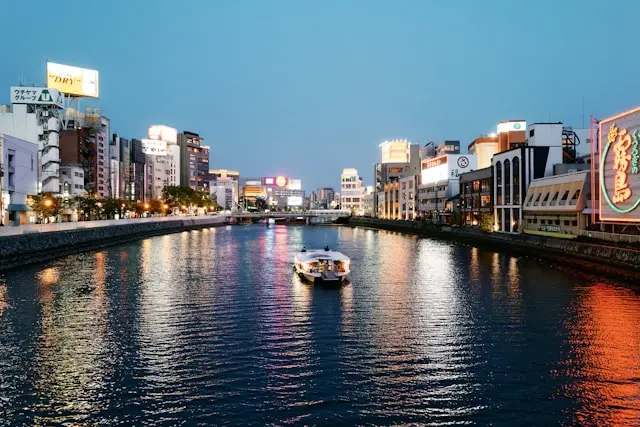
Fukuoka's ¥187 Billion Hotel Boom Has a Problem: There Is Nobody to Run the Buildings
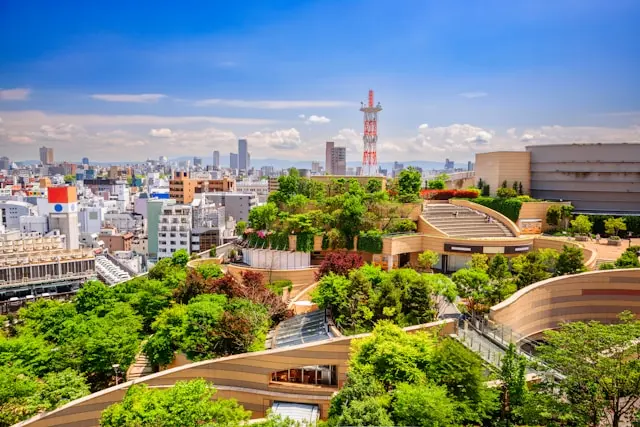
Fukuoka City recorded 9.8 million overnight visitors in 2024, surpassing its pre-pandemic peak for the first time. Hotel construction across the city totalled ¥187 billion between 2022 and 2024. The Tenjin Big Bang deregulation programme is entering its final phase in 2026, with four high-rise towers adding 380,000 square metres of mixed-use space to the city's core. By any capital investment measure, Fukuoka is one of the most active hospitality and urban development markets in Japan.
The problem is not the buildings. It is the people required to operate them. Fukuoka's hospitality sector entered 2026 with three job openings for every applicant, a projected shortfall of 3,200 skilled workers by year's end, and a luxury hotel segment where 85 to 90 per cent of qualified general manager candidates are passive. They are employed, not looking, and invisible to every conventional recruitment channel. The city's two universities with hospitality programmes graduate roughly 280 students annually. Fewer than 15 per cent of those graduates enter hotel operations. Real estate developers have built on a three-to-five-year capital cycle. The talent those buildings require develops on a ten-year-plus cycle. The two timelines have now visibly diverged.
What follows is a ground-level analysis of the forces driving that divergence, the specific roles and skills Fukuoka's hospitality and urban development sectors cannot fill, and what hiring leaders operating in this market need to understand before their next executive search.
The Dual-Core Market: Why Fukuoka's Talent Pressures Are Not One Problem but Two
Characterising Fukuoka as a single hospitality labour market is misleading. The city's development has split into two distinct poles, each with its own employers, talent requirements, and competitive dynamics.
Hakata: The Railway Anchor
The Hakata district is shaped by JR Kyushu, which remains the city's largest private landholder around Hakata Station. JR Kyushu's integrated model links railway operations, hotel management (Hotel Nikko Fukuoka, JR Kyushu Hotel Blossom Hakata Central), retail platforms (JR Hakata City), and real estate development through its subsidiary JR Kyushu Real Estate Holdings, which manages ¥87 billion in development assets within Fukuoka City alone. The 2024 completion of the Hakata Station East Exit plaza added approximately 45,000 square metres of commercial space. Phase II of the South Exit redevelopment broke ground in early 2025, with another 200,000 square metres of transit-oriented development space planned for completion by 2028.
This creates a concentrated demand cluster. Hotels, convention facilities, cruise logistics, and retail operations all draw from the same pool of hospitality professionals in the Hakata area. When JR Kyushu expands one subsidiary, it competes with its own other subsidiaries for staff.
Tenjin: The Municipal Engine
The Tenjin district operates on a different logic. Served primarily by the Fukuoka City Subway and Nishitetsu Railway rather than JR, Tenjin's development is driven by the municipal Tenjin Big Bang framework. This deregulation programme, running from 2016 to 2026, relaxed height limits and floor-area ratios to encourage the replacement of ageing buildings with modern high-rises. The result is four 150-metre-plus towers now under construction or recently completed, anchoring a concentration of finance, high-end retail, and corporate headquarters.
The talent implications of this bifurcation are concrete. A hotel revenue manager in Hakata is operating in a JR-dominated ecosystem where coordination with railway retail schedules, convention centre calendars, and cruise turnaround days defines the role. A counterpart in Tenjin faces a different competitive set: luxury retail tenants, corporate event demand, and a clientele shaped by Nishitetsu's commuter demographics. The skills overlap, but the operating context diverges enough that candidates from one district do not always transfer seamlessly to the other.
This dual-core structure means Fukuoka's talent shortages are not simply a matter of overall supply. They are compounded by internal segmentation that makes the effective candidate pool for any single role smaller than citywide figures suggest.
The Compact City Paradox: Why Fukuoka's Greatest Strength Is Accelerating Its Talent Crisis
Fukuoka's municipal marketing has long emphasised a genuine logistical advantage. The airport sits ten minutes by subway from Hakata Station. The convention centre at Marine Messe is fifteen minutes from both. For MICE organisers comparing Fukuoka to Tokyo, where a delegate might spend ninety minutes travelling between the airport and a convention venue, the appeal is self-evident. The Japan Tourism Agency's MICE Host City Cost Comparison has repeatedly cited this density as a competitive differentiator.
The paradox is that the same compactness that attracts conferences compresses the labour market. Chuo Ward, which contains both Hakata and Tenjin, has a commercial land vacancy rate of 2.8 per cent. That is the tightest in Japan outside Tokyo's central wards. Workers in hospitality and retail cannot easily relocate to cheaper peripheral areas because the roles they fill require proximity to stations, ports, and convention venues. The residential market has tightened accordingly. Average condominium prices per tsubo in Chuo Ward rose 18 per cent between 2022 and 2024.
Hospitality wages in Fukuoka rose 6.8 per cent year-on-year through 2024. The national average was 3.2 per cent. This wage inflation is not a sign of a generous market. It is the cost of keeping workers in a district where housing is increasingly unaffordable on hospitality salaries. For conference organisers and hotel operators, it erodes the very cost advantage that attracted them to Fukuoka in the first place. Sapporo and Hiroshima offer lower labour costs, even if their transit integration is inferior.
The original analytical claim running through this market is this: Fukuoka's infrastructure investment has not just failed to solve the talent shortage. It has deepened it, because every new hotel, every new convention hall, and every new retail development competes for workers in a geography that physically cannot expand. Capital is easy to deploy in a compact city. Human capital is not. The density that makes Fukuoka efficient for visitors makes it progressively more expensive and harder to staff for operators.
Where the Gaps Are Most Acute: Five Roles Fukuoka Cannot Fill
Luxury Hotel General Managers
A general manager for a luxury or upper-upscale property in Fukuoka commands ¥22 to 32 million annually at the executive level, with housing allowances averaging ¥3.6 million to compensate for central Fukuoka's tight residential market. This still represents a 15 to 20 per cent discount to Tokyo equivalents. The gap matters because the candidates Fukuoka needs are almost entirely passive. An estimated 85 to 90 per cent of qualified GM candidates are currently employed and not actively searching.
According to the Japan Hotel Association's Regional Hotel Human Resources Survey (2024), general manager and director-level positions for new luxury properties in Fukuoka typically remain unfilled for eight to fourteen months during pre-opening phases. The local candidate pool lacks sufficient international luxury brand experience. When The Ritz-Carlton Fukuoka opened in June 2023, its Director of Food and Beverage search ran sixteen months. The hire ultimately came from The Ritz-Carlton Osaka, requiring a relocation package exceeding ¥5 million and a 22 per cent salary premium above the Osaka market rate.
This is not an isolated case. It is the standard pattern. Average tenure in Fukuoka luxury hotels is 4.2 years, meaning natural turnover is low and the few available candidates tend to surface only during property closures or career-limiting situations. For any organisation planning a luxury hotel opening in this market, the hidden 80 per cent of passive talent is not a metaphor. It is a literal description of the candidate pool.
MICE Sales Directors with International Association Portfolios
The Fukuoka International Congress Center hosted 127 international association conferences in 2024, up from 98 the previous year but still below the 2019 peak of 156. Growing this number requires sales directors who carry established relationships with international medical, scientific, and professional associations.
This is an extraordinarily small talent pool. An estimated 120 or fewer Japanese nationals combine high-level English proficiency with international association management experience. These professionals are approximately 75 per cent passive. The active 25 per cent typically lack established client portfolios and require twelve to eighteen months to reach full productivity.
The vulnerability is concrete. According to analysis from the Meeting Professionals International Japan Chapter, a senior MICE sales manager with pharmaceutical conference expertise left the Fukuoka Convention Center's team in 2024 for a comparable role at Intex Osaka, securing an 18 per cent salary increase and guaranteed international travel allowances worth ¥1.2 million annually. Vacancy chains like this take six to nine months to backfill. Each departure costs Fukuoka not just a person but a book of client relationships that may not return.
Revenue Management Analysts
Hotels in Fukuoka must price dynamically across inbound source markets that include South Korea (42 per cent of foreign arrivals), Taiwan (18 per cent), Thailand (9 per cent), and growing European segments. Revenue managers capable of operating across these markets simultaneously experience 40 per cent higher turnover than housekeeping or food and beverage staff. The skill is technical, the demand is constant, and the cost of a bad hire in revenue management shows up directly in rate leakage during peak periods where occupancy reaches 95 per cent and rate premiums of 200 per cent are available.
Transit-Oriented Development Project Directors
JR Kyushu Real Estate Holdings' need for TOD specialists illustrates a skills gap that exists almost nowhere else in Japan outside Tokyo. According to Nikkei Real Estate Market Report (May 2023), the company restructured its development division in 2023 to create a hybrid role combining traditional Japanese machi-zukuri (town planning) expertise with international TOD financing models. Standard recruitment failed to fill it. The firm ultimately established a secondment arrangement with Mitsubishi Estate's Tokyo TOD division, rotating a senior project manager to Fukuoka on a three-year contract with housing and family relocation support valued at ¥8 million annually.
The passive candidate ratio for this role category exceeds 90 per cent. Most qualified professionals are tied into long-term incentive schemes at JR East, JR West, or major zaibatsu-affiliated developers. Moving them requires more than a salary increase. It requires a proposition that addresses career trajectory, family logistics, and long-term compensation structure simultaneously.
Cruise Terminal Operations Managers
Cruise ship calls at Hakata Port recovered to 312 in 2024, carrying 890,000 passenger movements. The constrained capacity of Hakata Port's single international terminal creates peak-day berthing conflicts. Two new mega-ships with 5,000-plus passenger capacity are expected to homeport at Hakata as part of the expanding Fukuoka-Seoul-Taipei cruise circuit, requiring an additional 400 hospitality staff for turnaround-day logistics alone. Terminal operations managers with trilingual capability in Japanese, English, and Mandarin or Cantonese command upper-quartile premiums. The passive candidate ratio sits at roughly 65 per cent, with active candidates typically coming from declining regional ports rather than competing hubs.
The Pipeline That Does Not Exist: Fukuoka's Structural Education Mismatch
The most revealing statistic in this market is not a vacancy rate or a salary figure. It is this: Fukuoka University's hospitality management programme and Kyushu Sangyo University's tourism faculty graduate approximately 280 bachelor's-level students annually. Fewer than 15 per cent of those graduates enter hotel operations. The majority prefer airlines or travel agencies.
This means Fukuoka's local pipeline produces roughly 42 hotel operations entrants per year. The city's hotel supply grew by approximately 2,400 rooms between 2022 and 2024, with another 2,400 in the pipeline. Each 200-room upscale hotel requires a management team of fifteen to twenty people at the supervisory level and above, drawn from a pool that local education barely replenishes.
The mismatch is temporal as well as numerical. A hotel room can be designed and built in three to five years. A general manager capable of running a luxury property develops over ten to fifteen years. The investment cycle moved first. The human capital cycle did not follow. By 2026, this gap is no longer a forecast. It is the operating reality for every hotel operator, MICE venue, and real estate developer in Fukuoka.
This dynamic is not unique to hospitality. Across sectors where executive recruiting failures stem from a structural absence of qualified candidates rather than merely slow processes, the response must go beyond faster job advertising. When the candidates do not exist in sufficient numbers locally, the search must go elsewhere. And "elsewhere" in Fukuoka's case means Tokyo, Osaka, Singapore, and Seoul, each of which pays more, offers larger career platforms, and has its own reasons to retain the talent Fukuoka needs.
The Competition for Talent: Three Markets Pulling Professionals Away from Fukuoka
Tokyo: The Permanent Drain
The compensation differential between Fukuoka and Tokyo for equivalent general manager and director-level hospitality roles runs between 30 and 45 per cent. For an executive with children, Tokyo's international school infrastructure and its proximity to global headquarters for career progression make the move straightforward. Fukuoka's counter-argument centres on quality of life: shorter commutes, lower cost of living, a compact and walkable city. But this narrative is weakening as central Fukuoka property prices climb. A city that once offered forty per cent lower residential costs than Tokyo's Minato Ward is narrowing that gap year by year.
Osaka: The Regional Rival
Osaka's MICE inventory is larger. Its connectivity to Kyoto and Nara gives it a cultural tourism advantage. The Umeda district redevelopment offers TOD career opportunities that mirror Hakata's. Compensation runs 8 to 15 per cent above Fukuoka for comparable roles, with rough parity in MICE positions. Fukuoka's geographic positioning closer to Seoul and Taipei than Osaka provides a partial differentiator, but it is a thin one for a professional weighing two Japanese cities.
Singapore and Seoul: The Regional Pull
For mid-career hospitality professionals with bilingual or trilingual capability, Singapore's Marina Bay Sands and Seoul's Lotte Hotel Group represent a different category of opportunity. Compensation premiums of 50 to 70 per cent when denominated in yen, an English-speaking business environment, and larger regional operations create a pull that Fukuoka struggles to match. According to LinkedIn Talent Insights migration data from 2023 to 2024, Fukuoka loses approximately 15 to 20 mid-career hospitality professionals annually to these markets. In absolute terms, this sounds modest. Relative to Fukuoka's small talent pool, each departure is material.
The implication for hiring leaders is that any executive search in Fukuoka's hospitality or urban development sector is not competing only with local employers. It is competing with Tokyo's depth, Osaka's proximity, and Asia-Pacific's compensation. Understanding this requires market benchmarking that extends well beyond Fukuoka Prefecture.
Regulatory Friction and Structural Constraints Compounding the Shortage
Two regulatory barriers deserve specific attention from any organisation planning to hire in this market.
Visa Processing Delays for Foreign Hospitality Workers
Japan's Specified Skilled Worker visa expansion in 2024 extended coverage to hotel housekeeping and food service, theoretically opening Fukuoka's hospitality sector to Vietnamese, Indonesian, and Nepali workers. In practice, Fukuoka employers report Certificate of Eligibility processing times of four to six months, longer than Tokyo or Osaka, because the local immigration bureau is smaller and less staffed. A hotel opening in Q2 cannot wait until Q4 for its housekeeping team. The national policy intent and the local administrative reality are misaligned, and the friction falls entirely on the employer.
Seasonal Staffing and the Frozen Headcount Problem
Fukuoka's hospitality sector experiences a sharp seasonal trough. Q1 occupancy drops to approximately 35 per cent. Golden Week in Q2 reaches 95 per cent with rate premiums of 200 per cent. Hotels respond with "frozen headcount" policies during the trough, delaying recruitment decisions until demand returns. By the time they begin hiring for Q2, the candidates they need are already committed elsewhere. This pattern creates a self-reinforcing perception of shortage that is partly real (structural undersupply) and partly behavioural (delayed decision-making). Organisations that build a proactive talent pipeline rather than reacting to seasonal demand are consistently better positioned.
The concentration risk around JR Kyushu adds a further dimension. If the company prioritises capital expenditure on its Saga and Nagasaki tourist railway extensions (the Nishi Kyushu Shinkansen) over Fukuoka TOD projects, private hotel and retail developments around Hakata face potential connectivity limitations. Recent financial results showed a 4.2 per cent year-on-year decline in JR Kyushu's railway operating income through 2023, a signal that development capital may tighten.
What Hiring Leaders in This Market Need to Do Differently
Fukuoka's hospitality and urban development talent market does not respond to conventional recruitment methods. The numbers explain why. With 85 to 90 per cent of qualified luxury hotel GMs passive, 90 per cent or more of TOD specialists locked into long-term incentive structures elsewhere, and a local educational pipeline producing barely 42 hotel operations graduates per year, the candidates Fukuoka needs are not on any job board. They are employed in Tokyo, Osaka, Singapore, and Seoul, solving problems for employers who are equally reluctant to lose them.
The search methodology required is direct headhunting that identifies, maps, and approaches these candidates individually. It requires market intelligence about compensation structures in competing cities, understanding of the relocation considerations that govern whether a Tokyo-based director will even take a call, and the ability to present a proposition that addresses career, family, and financial concerns simultaneously. A posted vacancy on a Japanese job board will reach the 10 to 15 per cent of the market that is actively looking. The other 85 per cent must be found differently.
KiTalent's approach to executive search across hospitality, luxury, and real estate sectors is built for markets with exactly this profile. AI-powered talent mapping identifies passive candidates across competing geographies. Interview-ready shortlists are delivered within seven to ten days. The pay-per-interview model means organisations only invest when they meet qualified candidates, eliminating the risk of paying a retainer for a search that stalls. In a market where the average luxury hotel executive search runs eight to fourteen months, compressing that timeline to days rather than months is not a convenience. It is the difference between opening a property with leadership in place and opening it without.
With a 96 per cent one-year retention rate across 1,450-plus executive placements globally and an average client relationship exceeding eight years, KiTalent understands that placing a candidate in Fukuoka is only the first challenge. Retaining them in a market that competes against Tokyo, Osaka, and Singapore requires getting the offer and negotiation right the first time.
For organisations hiring senior hospitality, MICE, or urban development leadership in Fukuoka, where the candidates you need are passive, geographically dispersed, and invisible to conventional channels, speak with our executive search team about how we approach this market.
Frequently Asked Questions
Why is it so difficult to hire hotel general managers in Fukuoka?
Fukuoka's luxury hotel segment has expanded faster than its management talent pool. An estimated 85 to 90 per cent of qualified general manager candidates are currently employed and not actively searching. The local educational pipeline produces fewer than 42 hotel operations graduates annually, while the city's hotel inventory continues to grow. Compensation runs 15 to 20 per cent below Tokyo for equivalent roles, making it harder to attract experienced leaders from the capital. Pre-opening GM searches in Fukuoka typically run eight to fourteen months, according to the Japan Hotel Association.
What is the Tenjin Big Bang and how does it affect Fukuoka's talent market?
The Tenjin Big Bang is a municipal deregulation programme running from 2016 to 2026 that relaxed height limits and floor-area ratios in Fukuoka's Tenjin district. It has produced four 150-metre-plus mixed-use towers, adding 380,000 square metres of commercial space. The development has created a second employment centre separate from JR Kyushu's Hakata Station cluster, effectively splitting the city's hospitality and retail talent market into two competing poles. This bifurcation makes the effective candidate pool for any single role smaller than citywide statistics suggest.
How does Fukuoka's hospitality compensation compare to Tokyo and Osaka?
Hotel general managers in Fukuoka earn ¥22 to 32 million annually, compared to ¥28 to 40 million in Tokyo. Osaka roles command an 8 to 15 per cent premium over Fukuoka, with rough parity in MICE positions. Fukuoka employers typically supplement base salaries with housing allowances averaging ¥3.6 million due to the tight central residential market. For roles requiring Mandarin or Cantonese language skills, upper-quartile premiums apply. KiTalent's executive salary benchmarking services help hiring leaders structure competitive packages across these regional differentials.
What MICE roles are hardest to fill in Fukuoka?
Senior MICE sales directors with Certified Meeting Professional credentials and existing international association client portfolios are the most difficult to recruit. The total pool of Japanese nationals combining high-level English proficiency with international association management experience is estimated at fewer than 120 people nationwide. International MICE bid writers with fluency in academic or scientific terminology are equally scarce, with an estimated 35 qualified professionals in the Fukuoka market. These roles carry a 75 per cent passive candidate ratio.
How can executive search firms help with Fukuoka's hospitality talent shortage?
Conventional job advertising reaches only the 10 to 15 per cent of Fukuoka's senior hospitality talent that is actively looking. The remaining candidates are employed in Tokyo, Osaka, Singapore, or Seoul and must be identified and approached directly. Specialist executive search methodology uses talent mapping across competing geographies, structured compensation benchmarking, and direct candidate engagement to reach passive professionals. KiTalent delivers interview-ready candidates within seven to ten days through AI-powered identification, addressing the eight-to-fourteen-month search timelines that have become standard in this market.
What is transit-oriented development and why does it matter for Fukuoka hiring?
Transit-oriented development integrates railway stations with mixed-use commercial, residential, and hospitality properties. In Fukuoka, JR Kyushu Real Estate Holdings leads TOD projects around Hakata Station, with ¥87 billion in development assets under management. The role requires a rare hybrid of traditional Japanese machi-zukuri planning expertise and international institutional investor finance skills. Over 90 per cent of qualified candidates are passive and tied into long-term incentive schemes at competing railway groups or major developers. JR Kyushu has resorted to secondment arrangements with Tokyo-based firms to fill these positions.