Gjilan's Construction Boom and Its Deepening Talent Crisis: Why the Money Flowing In Cannot Hire the People It Needs
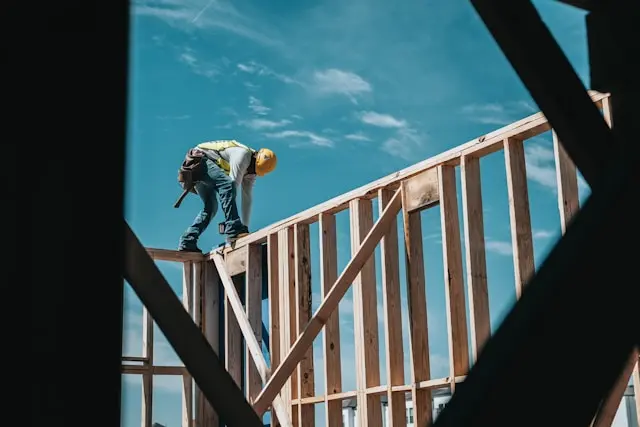
Gjilan issued 847 building permits in 2023, a 12% increase over the previous year. Remittance flows into the Anamorava region continued to exceed national averages, with roughly 34% of inflows directed into housing investment. By every visible measure, Gjilan's construction sector should be thriving.
It is thriving in demand. It is failing in capacity. The senior project managers, BIM-certified engineers, bilingual site supervisors, and CNC machine operators required to convert that demand into completed structures are not available in sufficient numbers. Specialised roles sit vacant for 120 days or longer, while 65% of Gjilan's skilled construction workers leave for Pristina within 24 months of certification. The sector is caught between a remittance engine that keeps pouring fuel in and a talent pipeline that keeps draining out.
What follows is a ground-level analysis of where Gjilan's construction and manufacturing hiring gaps are most acute, what forces are driving them, and why conventional approaches to filling these roles consistently fail in a market of this structure. The implications extend beyond Gjilan itself. Any organisation operating in Kosovo's construction corridor, or hiring for it, needs to understand what is happening here before committing to the next project cycle.
A Sector Built on Remittances, Starved of the Skills to Use Them
Kosovo received €1.03 billion in personal remittances in 2023, equivalent to 17.8% of GDP, according to the Central Bank of Kosovo's Annual Report. The Anamorava region, anchored by Gjilan, absorbs more of that money into housing than any other investment category. The 34% allocation rate to housing compares to 28% nationally, making residential construction in Gjilan a direct function of diaspora spending rather than domestic credit expansion or commercial development.
This creates a specific economic pattern. Demand is externally generated and relatively stable. It does not respond to local business cycles in the way commercial construction does. When a family in Stuttgart sends money home to build a house in Gjilan, the construction starts regardless of whether Gjilan has the workforce to execute it. The result is a market where activity levels are high, prices are rising, and the labour force is simultaneously too large and too small.
Too large because unskilled construction unemployment stands at 18%. Too small because the technical-managerial profiles every serious contractor needs are almost impossible to source locally. This paradox defines Gjilan's hiring challenge in 2026, and it is getting worse rather than better as EU regulatory alignment raises the technical bar for every role in the sector.
The Vacancy That Reveals the Market: 147 Days to Fill a Project Manager Role
The most telling indicator of Gjilan's talent crisis is not the aggregate vacancy count. It is the duration of individual searches for senior roles. According to KIESA's 2024 Employer Survey, a typical recruitment cycle for a Senior Project Manager at a mid-sized Gjilan contractor required 147 days to complete. Three offers were rejected during that process because candidates chose Pristina-based opportunities instead.
This is not a temporary friction point. It is a systemic condition. The profile required for these roles, combining PMP certification, Albanian and Serbian bilingualism, and Eurocode structural knowledge, describes a candidate pool so narrow that 85% of qualified individuals are already employed and do not respond to job postings. KIESA's Recruitment Difficulty Index confirms that direct identification of passive candidates is the only viable sourcing method for these roles.
Why Three Offers Were Rejected
The rejection pattern is instructive. Gjilan's Senior Project Manager compensation band sits at €18,000 to €24,000 base, with project completion bonuses adding 10 to 20%. Pristina offers €28,000 for an equivalent Site Manager role, plus access to €100 million infrastructure programmes that simply do not exist in Gjilan. The gap is not only financial. It is professional. A career in Gjilan's construction sector typically reaches a ceiling at approximately €40,000. In Pristina, regional director roles offer pathways to €80,000 or more.
For hiring leaders at Gjilan-based contractors, the implication is direct. Competing for senior talent on salary alone is a losing strategy. The proposition must include something Pristina cannot offer. That something is not obvious, and most firms have not found it. This compensation ceiling creates a structural drain that no single employer can reverse without fundamentally rethinking what a senior career in Gjilan's construction sector looks like.
The Bilingual Supervisor Shortage
The problem intensifies for roles requiring Serbian language capability. Infrastructure contractors working on EU-funded cross-municipality projects, where Serbian language compliance is mandatory for northern Kosovo coordination, report that 60% of Site Supervisor searches fail outright. According to the Riinvest Institute's study on language barriers in construction employment, one Gjilan-based civil engineering firm abandoned a €2.3 million municipal contract search after eight months. The firm ultimately promoted an internal junior engineer and accepted the compliance risk rather than continue searching.
When a firm walks away from a €2.3 million contract because it cannot find a single qualified supervisor, the market is not experiencing a hiring difficulty. It is experiencing a talent availability crisis that requires fundamentally different search methods.
The Decoupling Paradox: Construction Booms While Manufacturing Collapses
This is the analytical tension that anyone hiring in Gjilan's broader construction ecosystem must understand. It is the insight that the raw data does not state but clearly implies.
Gjilan's residential construction sector and its wood and furniture manufacturing sector should be natural partners. Houses need doors, window frames, built-in cabinetry, and kitchen fittings. Gjilan had 156 wood and furniture enterprises in 2018. By 2024, that number had fallen to 89, a 43% contraction. The construction boom did not save local manufacturing. It may have accelerated its decline.
The mechanism is straightforward but counter-intuitive. As remittance-funded housing grew, the volume of imported Turkish and Chinese finished goods grew with it. Turkish furniture now occupies 65% of Gjilan's mid-market segment. Chinese ceramic tiles undercut local distributors by 30 to 40% on price. The families funding construction from Germany and Switzerland often specify imported finishes because they are familiar with European brand equivalents available through Turkish suppliers. Local workshops, operating with 20% higher raw material costs due to Balkan timber scarcity and lacking the economies of scale to compete on price, have been squeezed into a shrinking niche of custom high-end carpentry.
The practical consequence is that Gjilan's construction sector is importing most of its value chain rather than generating it locally. This reduces the multiplier effect of remittance spending, limits the diversity of local employment, and concentrates hiring pressure onto a narrow band of roles in civil works and site management. The talent market is not broad enough to absorb shocks because the manufacturing base that would have diversified it has eroded.
For any firm considering executive hiring in Kosovo's industrial and manufacturing sectors, this decoupling means the local talent base for production management, lean manufacturing, and quality assurance is thinner than the construction activity levels would suggest.
The Diaspora Revolving Door: Why Germany Is Both the Problem and the Partial Solution
Active recruitment of Kosovo construction workers under Western Balkans labour agreements has created what the IOM's 2024 Labour Migration Profile describes as a revolving door. Experienced foremen and engineers leave Gjilan for monthly wages of €3,000 to €4,000 in Germany, Switzerland, and Austria. The equivalent role in Gjilan pays €1,200 to €1,800 per month. The mathematics are simple. The consequences are not.
The outflow is partially offset by remittance investment, which is what fuels the construction demand in the first place. But remittances buy buildings. They do not buy back the experienced managers who left to earn them. The result is a chronic experience gap in Gjilan's managerial layer. Mid-career professionals leave. Junior workers remain. The supervisory tier thins with each migration cycle.
The Returnee Premium
Diaspora returnees who do come back command extraordinary premiums. According to GIZ's 2024 Migration and Development Study, candidates with active German work experience and Facharbeiter status negotiate 40 to 50% above local market rates. A returnee from Switzerland or Germany entering a construction management role in Gjilan will typically accept compensation 15% below their diaspora earnings but 60% above local Kosovo averages.
This creates a two-tier labour market within the same municipality. Returnees occupy the senior roles that local candidates cannot fill, but their compensation expectations create cost structures that Gjilan's family-run contractors struggle to sustain. The negotiation dynamics between employer and candidate in this market are fundamentally different from those in a conventional hiring environment. The employer is not choosing between candidates. The employer is persuading a single viable individual that returning to Gjilan is worth the sacrifice.
For firms relying on job postings or local recruitment channels, these candidates are invisible. They are living in Stuttgart, Zurich, and Vienna. Reaching them requires mapping talent across international markets and approaching them with a proposition calibrated to their specific circumstances.
Regulatory Pressure Is Raising the Technical Bar Faster Than Training Can Follow
Two regulatory forces are converging on Gjilan's construction and wood sectors in 2026, and both will tighten the talent market further.
EU Construction Products Regulation Alignment
Kosovo's ongoing EU candidacy process is accelerating implementation of Construction Products Regulation alignment, requiring CE marking for structural materials. For Gjilan's small-scale material producers, compliance costs run between €50,000 and €100,000 per product line. SharrCem, the sole cement producer in eastern Kosovo with 127 direct employees, has the scale to absorb these costs. Most of Gjilan's 312 construction enterprises do not.
The talent implication is that compliance management itself becomes a hiring need. Firms that previously operated with owner-managers handling regulatory requirements now need professionals who understand EU standards, CE marking processes, and Eurocode structural calculations. Gjilan Technical High School graduates 120 construction technicians annually, but their training is built on Yugoslav-era codes. Fewer than 12 individuals in the entire municipality hold Revit or Autodesk BIM certification.
The EUDR and Wood Sector Exclusion
The EU's Deforestation Regulation, entering full enforcement in late 2025, blocks market access for non-compliant wood products. Gjilan's furniture workshops lacking FSC supply chain certification are now effectively excluded from EU export opportunities. For a sector already contracting at 43% over five years, this regulation closes the growth pathway that might have reversed the decline.
The skills required for EUDR compliance, including sustainable forestry chain-of-custody management and ISO 9001 implementation, are not available locally. The 89 remaining wood and furniture enterprises in Gjilan face a choice between investing in professional management capable of achieving certification or accepting permanent confinement to the domestic Kosovo market. Given that Turkish imports already dominate that domestic market, confinement may be equivalent to closure.
The regulatory squeeze compounds the hiring challenge across both sectors. Every new compliance requirement creates a role that did not exist two years ago, in a market where the roles that existed five years ago still cannot be filled reliably.
What Gjilan's Construction Sector Needs to Hire in 2026
The critical roles fall into three categories, each with distinct sourcing challenges.
Construction leadership: Construction Director and VP Operations roles carrying responsibility for multi-project oversight, EU fund absorption, and management of 50 to 200 workers. These roles require bilingual contract negotiation skills, public procurement expertise, and risk management capability for fixed-price contracts. Compensation ranges from €36,000 to €60,000, with a 25 to 30% premium for candidates with EU-funded project experience or German language proficiency. The candidate pool is almost exclusively composed of diaspora returnees and Pristina-based executives who would need a compelling reason to relocate.
Technical specialists: Chief Estimator and Commercial Manager roles focused on tender preparation, supply chain cost modelling, and import logistics. These roles demand quantity surveying expertise, Serbian and Turkish supplier relationship management, and currency hedging knowledge for euro and dinar transactions. Compensation sits at €24,000 to €32,000 plus commission. These candidates exist in small numbers across Kosovo and are typically already employed in roles they will not leave without direct approach.
Manufacturing management: Production Manager roles in the wood and furniture subsector, requiring lean manufacturing implementation, EUDR compliance certification, and CNC workflow optimisation. Compensation ranges from €14,400 to €19,200 for senior production managers, rising to €30,000 to €42,000 for General Manager roles at scaled furniture enterprises. The variance is large because family-owned firms and professionally managed operations offer fundamentally different packages.
Across all three categories, the hidden cost of making the wrong appointment is amplified by the time required to restart a search in this market. A failed hire that would cost three months in a liquid talent market costs six to eight months in Gjilan.
Why Conventional Hiring Methods Fail in This Market
Gjilan's construction talent market has three features that systematically defeat conventional recruitment.
First, the formal economy is too small to contain the candidates who matter. An estimated 40 to 45% of construction workers in Gjilan operate informally, without contracts or social contributions. That figure rises to 70% in residential finishing trades, according to the ILO's 2024 study on Kosovo's informal economy. Candidates working informally do not appear on any job board, LinkedIn profile, or employment agency register. They are invisible to every standard sourcing channel.
Second, the competitive geography is asymmetric. Gjilan does not compete with other municipalities of similar size. It competes with Pristina, which offers 20 to 30% higher salaries. It competes with the Ferizaj industrial zone, where employers like KNAUF offer formal contracts and health insurance. And it competes with Germany, Switzerland, and Austria, where the same worker earns three times more. No local recruitment campaign can overcome these pulls.
Third, the pipeline is not replenishing. Gjilan Technical High School produces 120 construction technicians and 40 wood-processing apprentices each year. But the market demands digital literacy in BIM and project management software, while vocational training still delivers theoretical masonry and plumbing skills. The systemic mismatch between training output and market requirements means that even junior talent requires significant upskilling before deployment.
In a market structured this way, the organisations that fill their critical roles are not the ones that advertise most aggressively. They are the ones that identify specific individuals through direct research, approach them with tailored propositions, and move fast enough to close before Pristina or Germany makes a counter-offer. The difference between posting a role and finding a person determines whether a search takes 30 days or 180.
What This Means for Hiring Leaders Operating in Gjilan's Construction Sector
The remittance engine will continue to generate construction demand through 2026. The Ministry of Infrastructure's €23 million allocation for regional road rehabilitation in Anamorava sustains the pipeline for civil engineering contractors through at least mid-2026. Housing market growth is moderating to 4 to 5% annually, but this represents normalisation from unsustainable double-digit levels rather than contraction.
The problem is not demand. The problem is that capital has moved faster than human capital can follow. Money flows into Gjilan from the diaspora within days. The managers, engineers, and specialists required to deploy that capital take months to find, if they can be found at all. Every month a critical role sits vacant, project timelines extend, compliance risk accumulates, and the commercial case for the next investment weakens.
KiTalent works with organisations facing exactly this pattern: markets where the candidates required for senior roles are not visible through any conventional channel and the cost of a slow search is measured in lost contracts and regulatory exposure. With a pay-per-interview model that eliminates upfront retainer risk, interview-ready candidates delivered within 7 to 10 days, and a 96% one-year retention rate across 1,450 executive placements, the approach is designed for markets where speed and precision both matter.
For organisations competing for construction leadership, technical specialists, and production managers in Gjilan and across Kosovo's construction corridor, speak with our executive search team about how we identify and approach the candidates this market cannot surface through job advertising.
Frequently Asked Questions
What are the hardest construction roles to fill in Gjilan, Kosovo?
Senior Project Manager roles requiring PMP certification, Albanian and Serbian bilingualism, and Eurocode structural knowledge are the most difficult to fill. Typical vacancy duration exceeds 120 days. Bilingual Site Supervisors for EU-funded cross-municipality projects also present acute sourcing challenges, with 60% of searches failing outright. CNC machine operators in the wood processing sector face systematic poaching by Pristina-based manufacturers offering 35 to 40% salary premiums. KiTalent's direct headhunting methodology is built to reach the 85% of qualified candidates who are already employed and do not respond to job postings.
What do construction executives earn in Gjilan, Kosovo?
Senior Project Managers with PMP certification earn €18,000 to €24,000 base plus 10 to 20% project bonuses. Construction Directors and VP Operations roles range from €36,000 to €60,000, with 25 to 30% premiums for EU-funded project experience or German language proficiency. Diaspora returnees with German Facharbeiter status command 40 to 50% above local rates. Regional Sales Directors in building materials distribution earn €24,000 to €32,000 plus commission.
Why do skilled construction workers leave Gjilan for Pristina or Germany?
Pristina offers 20 to 30% higher base salaries and access to larger-scale infrastructure projects exceeding €100 million. Germany, Switzerland, and Austria offer monthly wages of €3,000 to €4,000, compared to €1,200 to €1,800 in Gjilan. Career trajectory is also a factor: senior roles in Gjilan typically cap at €40,000, while Pristina offers pathways to €80,000 or more. Lower cost of living and family proximity partially offset these disadvantages but do not fully counter them.
How is EU regulatory alignment affecting Gjilan's construction sector?
Construction Products Regulation alignment requires CE marking for structural materials by 2026, costing €50,000 to €100,000 per product line. The EU Deforestation Regulation blocks non-FSC-certified wood products from EU markets. Both regulations create new hiring needs for compliance specialists, Eurocode engineers, and quality management professionals that the local workforce cannot currently supply.
How does KiTalent approach executive search in small or emerging markets like Gjilan?
KiTalent uses AI-enhanced talent mapping to identify qualified candidates across diaspora networks, competing employers, and adjacent markets, reaching professionals who never appear on job boards. The pay-per-interview pricing model eliminates upfront retainer risk, which is particularly valuable in markets where search outcomes are uncertain. Interview-ready candidates are typically delivered within 7 to 10 days, with full pipeline transparency and weekly reporting throughout the process.
What is the outlook for Gjilan's construction sector in 2026?
The Ministry of Infrastructure has allocated €23 million for Anamorava regional road rehabilitation through 2026, sustaining demand for civil engineering contractors. Residential construction growth is moderating to 4 to 5% annually following three years of double-digit expansion. The premium residential segment at €800 to €1,200 per square metre faces oversupply risk. The wood and furniture subsector continues to contract due to import competition and rising regulatory compliance requirements that small workshops struggle to meet.