Houston's Petrochemical Boom Is Creating Jobs That Its Own Workforce Cannot Fill
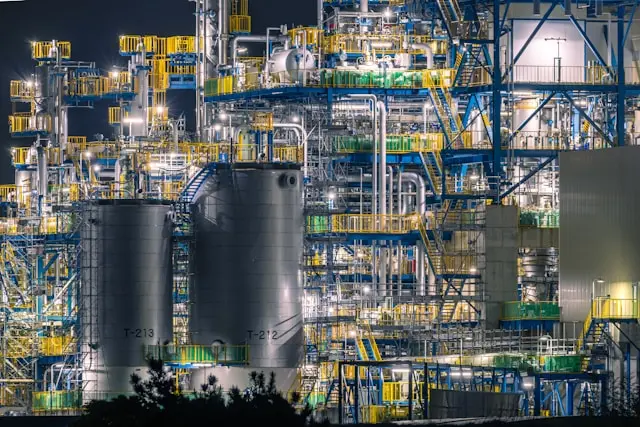
Houston's petrochemical corridor entered 2026 with more capital committed to expansion than at any point in the last decade. ExxonMobil's $2 billion Baytown olefins expansion has reached mechanical completion. Chevron Phillips Chemical's $8.5 billion Cedar Bayou project continues to absorb thousands of construction workers and will soon require 500 permanent operations specialists. Across the Ship Channel and its surrounding infrastructure, an estimated $50 billion in active capital projects is integrating refining, olefins production, and specialty chemicals into a system that remains the largest integrated petrochemical manufacturing cluster in the Western Hemisphere.
At the same time, the sector is losing workers it cannot directly replace. LyondellBasell's permanent closure of its 268,000-barrel-per-day Houston Refinery released approximately 800 experienced operators and maintenance technicians into the local market by mid-2025. In a simpler labour market, those workers would have walked across the Ship Channel corridor into the new roles being created by the expansion projects. They did not. The reason is a skills mismatch so specific that it has redefined what hiring in Houston's industrial and manufacturing sector actually requires.
What follows is a ground-level analysis of the forces reshaping Houston's petrochemical talent market in 2026: the investment driving demand, the demographic cliff accelerating retirements, the compensation dynamics separating general operations labour from the specialists every operator needs, and what senior hiring leaders must understand before launching a search in a market where the aggregate numbers disguise a far more complex reality.
The Capital Wave Hitting the Ship Channel
The Houston Ship Channel corridor, stretching from Baytown through Deer Park, Pasadena, and down to Texas City, hosts a concentration of refining and chemical capacity unmatched anywhere in the Western Hemisphere. Marathon Petroleum's Galveston Bay Refinery processes 585,000 barrels per day. ExxonMobil's Baytown complex handles 560,000. Together with facilities operated by Shell, Valero, Dow, INEOS, and Chevron Phillips Chemical, the region accounts for 28% of all U.S. petrochemical employment. As of mid-2024, the Houston metropolitan area employed approximately 89,200 workers in chemical manufacturing and petroleum products manufacturing alone.
The 2026 Investment Surge
The Greater Houston Partnership projected 4.2% growth in chemical manufacturing employment through 2026, driven by specialty chemicals production and carbon capture integration projects. The American Chemistry Council forecasted $14.8 billion in new Gulf Coast chemical capacity coming online in 2026, with 60% concentrated in the Houston-Brazoria County corridor.
Three projects dominate the demand picture. ExxonMobil's Baytown expansion adds 750,000 tonnes per year of ethylene capacity alongside a new hydrogen production facility. Chevron Phillips Chemical's Golden Triangle Polymers joint venture with QatarEnergy, located at Cedar Bayou in Baytown, required 6,000 construction workers at peak and will need 500 permanent operations roles once commissioned. And Dow's "Path2Zero" carbon-neutral ethylene cracker feasibility study, though centred at Fort Saskatchewan in Alberta, depends on Houston-based engineering talent for front-end engineering design. Each project pulls from the same finite pool of process design specialists, control systems engineers, and experienced plant operators.
What the Investment Demands
Capital projects of this scale do not simply require more workers. They require workers with qualifications so specific that adjacent experience often does not count. An ethylene cracker expansion needs professionals trained in pyrolysis gas compression, cryogenic separation, and multivariable predictive control implementation. A hydrogen production facility needs process safety specialists who understand both traditional hydrocarbon risk management and the distinct hazard profiles of hydrogen storage and transport. These are not interchangeable skill sets, and the labour market treats them accordingly.
The investment wave has not reduced the cost of finding the right people. It has increased it, because the projects are competing with each other for the same talent at the same time.
The Closure That Looks Like Relief but Is Not
When LyondellBasell announced in April 2024 the permanent closure of its Houston Refinery, converting the site to a storage terminal by the second quarter of 2025, the initial labour market interpretation was straightforward: 800 experienced refinery operators and maintenance technicians would become available, easing the tight conditions along the Ship Channel. According to Reuters, the decision reflected the company's strategic pivot away from refining toward its core chemical operations at the Channelview Complex.
That interpretation missed the specificity of the shortage.
The 800 displaced workers possess strong mechanical skills. They understand refinery operations, rotating equipment maintenance, and the discipline required to work safely in hazardous environments. What they largely lack are the certifications and process-specific experience that the expansion projects require. Ethylene cracking technology is not refining technology. The two share a common industrial vocabulary and overlapping safety frameworks, but the operating parameters, control systems, and regulatory compliance requirements diverge materially. A senior process engineer with 15 years of ethylene cracking experience cannot be replaced by a refinery operator with 15 years of crude distillation experience, regardless of how skilled that operator is.
This is the core analytical tension in Houston's petrochemical labour market as of 2026: a headline surplus of general operators coexists with an acute shortage of olefins technology specialists, process safety engineers, and advanced process control professionals. The aggregate numbers show workers available. The specific searches show candidates missing.
Where the Shortages Are Most Acute
The Energy Workforce & Technology Council reported that Houston-area petrochemical employers posted 14,300 unique job openings in the 12 months ending September 2024, representing a 23% increase over the prior year. More revealing than the volume was the experience threshold: 68% of those openings required more than five years of specific petrochemical experience.
Process Safety Engineers
Process Safety Management compliance under OSHA's 14 CFR 1910.119 standard demands professionals who can facilitate Hazard and Operability studies, conduct Layer of Protection Analysis, and manage the documentation architecture that regulators now scrutinise with increasing intensity. The EPA's finalized 2024 National Emission Standards for Hazardous Air Pollutants for ethylene production facilities imposed stricter monitoring requirements for ethylene oxide emissions, as published in the Federal Register. Each affected facility faces capital expenditures of $10 to $50 million for upgraded leak detection and repair systems, with compliance deadlines arriving in 2026 and 2027.
According to a Houston Business Journal analysis of Ship Channel hiring delays, Marathon Petroleum's Galveston Bay facility maintained an open requisition for a Senior Process Safety Engineer for 11 months between October 2023 and September 2024. The role was eventually filled with a candidate relocated from Baton Rouge at a relocation package exceeding $75,000. That timeline and cost are becoming typical rather than exceptional.
Control Systems Engineers
The Distributed Control Systems specialists who keep olefins units running safely represent one of the tightest talent segments in the entire corridor. Professionals with expertise in Honeywell TDC3000 and Yokogawa systems, particularly those with a decade or more of olefins unit control experience, command extraordinary premiums. According to the Energy Workforce & Technology Council's 2024 Compensation Survey, employers including Dow and Chevron Phillips Chemical routinely offer 25 to 35% base salary premiums and signing bonuses of $25,000 to $50,000 to attract DCS engineers laterally from competitors. The hiring is almost entirely poaching from within the industry rather than recruiting from outside it.
The Passive Candidate Reality
For Senior Process Engineers with 15 or more years of experience in ethylene cracking or polyethylene reactor technology, and for Rotating Equipment Reliability Managers, the market is defined entirely by passive candidate dynamics. The unemployment rate for chemical engineers with a decade or more of experience in Houston was 0.8% in the second quarter of 2024. For context, the rate for all engineers in the metro was 2.1%.
These professionals average 8.3 years of tenure per employer. They do not respond to job postings. They do not browse vacancy boards. Recruitment in this segment occurs through executive search relationships and direct industry network referrals, or it does not occur at all. An organisation that relies on inbound applications for these roles will wait indefinitely.
The Compensation Picture Most Hiring Leaders Get Wrong
Aggregate wage data for Houston's petroleum and coal products manufacturing sector showed 3.2% year-over-year wage growth in 2024, according to the Bureau of Labor Statistics Employment Cost Index. That figure sits below the national inflation rate and suggests, on its surface, a market where compensation is moderating.
The aggregate figure is misleading. It averages two labour markets that are moving in opposite directions.
For general operations labour, including the roles most closely matched to the workers displaced by refinery closures, compensation growth has indeed plateaued. These are essential roles, but they draw from a larger and more accessible talent pool that includes workers transitioning from adjacent sectors and graduates entering the market.
For specialised engineering and safety roles, the story is entirely different. Executive search data and signing bonus reports indicate that compensation for senior process control engineers and licensed Professional Engineers with PSM expertise is accelerating at 12 to 15% annually. Candidates in these categories receive multiple offers above listed salary ranges.
What the Benchmarks Show
The compensation architecture for Houston petrochemical leadership roles reflects this bifurcation clearly.
A Senior Specialist or Principal Process Engineer at the individual contributor level, with 12 or more years of experience, commands $145,000 to $175,000 in base salary, with 15 to 20% annual bonuses and long-term incentive equity at publicly traded firms. A Vice President of Manufacturing or Plant Manager leading a facility with 200 or more personnel earns $280,000 to $380,000 in base salary, with total compensation reaching $450,000 to $600,000 when bonuses, equity, and retention incentives are included.
Operations Managers overseeing multiple process units earn $135,000 to $165,000 in base salary. At the VP of Operations level, with site-wide responsibility, base compensation reaches $250,000 to $340,000, with material performance bonuses tied to OSHA recordable rates and EBITDA targets.
In Health, Safety, Security and Environment leadership, Senior HSSE Managers focusing on PSM and EPA compliance earn $150,000 to $190,000. Chief HSSE Officers and Chief Sustainability Officers, now sitting on executive teams with direct board reporting lines, command $275,000 to $400,000 in base salary. That premium reflects the regulatory environment these leaders must master, including emissions reporting requirements that did not exist five years ago.
The implication for anyone benchmarking compensation in this market is straightforward: the average tells you nothing useful. Only role-specific data, at the right seniority level, in the right technical specialisation, gives a hiring leader actionable intelligence.
The Demographic Cliff and the Image Problem
Approximately 22% of Houston's petrochemical technical workforce, comprising engineers and senior operators, will be eligible for retirement within five years. This is not a projection. It is an actuarial fact embedded in the tenure and age data of the current workforce. The sector will lose roughly one in five of its most experienced professionals by 2030.
The pipeline replacing them is thinner than it was. Chemical engineering enrolment at local universities, including the University of Houston's Cullen College of Engineering, declined 8% between 2019 and 2024, according to the American Institute of Chemical Engineers. The sector's image as a "legacy" industry, competing for graduates against technology companies, renewable energy startups, and consulting firms, has eroded its attractiveness to the candidates it needs most.
This creates a compounding problem. The retirement wave removes precisely the professionals who carry decades of tacit knowledge about specific plants, specific processes, and specific risk profiles. Tacit knowledge cannot be transferred through training manuals. It transfers through years of mentorship and shared operational experience. When the experienced professionals leave faster than their replacements arrive, the knowledge leaves with them.
For hiring executives, this means that the cost of a delayed or failed senior hire in this sector is not merely the cost of an unfilled role. It is the cost of knowledge that will not exist in the organisation once the current generation retires.
The Geographic Competition That Compounds Every Search
Houston does not compete for petrochemical talent in isolation. Three corridors pull from overlapping candidate pools, and the dynamics of that competition have shifted.
Baton Rouge offers ExxonMobil's integrated complex, Dow's Plaquemine operations, and Shell's Geismar facility. Base compensation runs within 5 to 8% of Houston levels, but housing costs sit 12 to 15% lower according to the Council for Community and Economic Research Cost of Living Index. For mid-career engineers with families making cost-of-living calculations, the gap matters.
Lake Charles has emerged as a secondary competitor through Sasol's and Westlake's operations, drawing talent that might otherwise remain in the Houston orbit. But the most interesting competitive shift involves Corpus Christi, where Voestalpine, Cheniere, and the ExxonMobil-SABIC Gulf Coast Growth Ventures facility have driven wage premiums of 15 to 20% above Houston levels for journeyman electricians with hazardous area classifications. Corpus Christi's local labour market is far tighter than Houston's, and the premiums it offers for electrical and instrument technicians reflect that scarcity directly.
Beyond the Gulf Coast petrochemical corridor, the Permian Basin's midstream expansion and emerging hydrogen hubs draw mechanical engineers and project managers away from Ship Channel plant operations. The Permian offers project-based bonuses and fly-in-fly-out schedules that provide housing cost relief unavailable to professionals tied to Houston onsite roles. According to the Dallas Federal Reserve's Energy Survey from the third quarter of 2024, this pull has become a persistent retention risk rather than an occasional loss.
The implication for a hiring leader running a search in Houston is that the effective candidate pool is smaller than it appears. The professionals you need are not only passive. They are also being courted by employers in at least three other geographies, each offering a distinct value proposition that Houston cannot simply outbid on salary alone. A search strategy that does not account for this geographic competition will consistently underperform.
What This Market Requires From a Search
The original analytical observation that emerges from this data is one that the aggregate employment figures actively obscure: the LyondellBasell refinery closure and the simultaneous expansion projects have not created a market that is easier to hire in. They have split the market into two distinct segments that barely communicate with each other. Eight hundred operators with transferable mechanical skills and 1,200 openings requiring chemical-process-specific certifications coexist in the same postcode, and neither population solves the other's problem. Capital moved faster than human capital could follow.
This bifurcation has consequences for how searches must be conducted. A job posting for a Senior Process Safety Engineer on the Ship Channel will attract applications from experienced refinery operators seeking new employment. Those applications represent genuine skill, genuine experience, and genuine commitment. They do not represent the specific regulatory knowledge, ethylene-specific HAZOP facilitation capability, or advanced process control expertise the role demands. The screening burden falls on the hiring organisation, consuming time that most HR teams in this sector cannot spare during a simultaneous compliance deadline and capital project commissioning cycle.
What works in this market is direct identification and approach of the passive professionals who already hold the qualifications the role requires. That means talent mapping across competitor organisations on the Ship Channel, in Baton Rouge, in Lake Charles, and increasingly in Corpus Christi. It means understanding which professionals are approaching tenure milestones that make them open to a conversation, and which are locked into retention incentive cycles that make a move irrational for another 18 months. It means offering a proposition that addresses not only compensation but also career trajectory, facility quality, and the specific technical challenges the candidate finds intellectually compelling.
KiTalent delivers interview-ready executive candidates within 7 to 10 days through AI-enhanced talent mapping and direct headhunting, reaching the passive professionals who represent 80% of the viable candidate pool in Houston's petrochemical sector. With a pay-per-interview model that eliminates upfront retainer risk and a 96% one-year retention rate across 1,450 completed executive placements, the approach is built for markets where the right candidate exists but will never see your job posting.
For organisations competing for process safety leadership, olefins technology specialists, or senior plant management talent in a market where 0.8% unemployment among experienced chemical engineers means every viable candidate must be found rather than attracted, start a conversation with our executive search team about how we approach this corridor.
Frequently Asked Questions
What is the average salary for a petrochemical plant manager in Houston in 2026?
A Vice President of Manufacturing or Plant Manager leading a facility with 200 or more personnel in Houston's petrochemical corridor earns $280,000 to $380,000 in base salary. Total compensation, including annual bonuses, equity incentives, and retention packages at major integrated operators such as ExxonMobil and Dow, typically reaches $450,000 to $600,000. Compensation at this level varies based on facility size, product complexity, and whether the employer is publicly traded. Accurate salary benchmarking for senior industrial roles is essential before structuring an offer in this market.
Why is it so hard to hire process safety engineers in Houston?
Houston's petrochemical corridor faces simultaneous demand for Process Safety Management specialists from expansion projects, regulatory compliance deadlines, and replacement hiring as experienced professionals retire. The EPA's updated NESHAP standards and anticipated OSHA emphasis on PSM enforcement in 2026 have intensified demand. Meanwhile, the unemployment rate for experienced chemical engineers in Houston was just 0.8% as of mid-2024, meaning nearly every qualified professional is already employed. Searches for these roles routinely exceed six months when conducted through traditional job advertising.
How does the LyondellBasell Houston Refinery closure affect the petrochemical job market?
The refinery closure displaced approximately 800 experienced operators and maintenance technicians by mid-2025. While these workers have transferable mechanical skills, the expansion projects absorbing Houston's petrochemical investment require chemical-process-specific certifications in ethylene cracking, advanced process control, and polyethylene reactor technology. The closure created a localised surplus of general refinery operators, not a surplus of the specialists the growing parts of the sector need. The two populations overlap less than aggregate workforce data suggests.
What petrochemical roles are hardest to fill in Houston right now?
The most acute shortages exist in three categories: Senior Process Safety Engineers with HAZOP facilitation and LOPA expertise, Distributed Control Systems engineers specialising in Honeywell TDC3000 or Yokogawa platforms for olefins units, and Rotating Equipment Reliability Managers with turbomachinery experience. These roles share a common characteristic: the qualified professionals are passive, averaging 8.3 years of tenure per employer, and do not respond to job postings. Filling them requires direct identification through executive search methodology rather than job advertising.
How does Houston petrochemical compensation compare to Baton Rouge and Lake Charles?
Base salaries for equivalent roles in Baton Rouge and Lake Charles run 5 to 8% below Houston levels, but housing costs in those markets are 12 to 15% lower. The net effect is that mid-career engineers with families often find comparable or better real purchasing power outside Houston. Corpus Christi has emerged as a more aggressive competitor, offering 15 to 20% wage premiums above Houston for electrical and instrument technicians with hazardous area classifications due to its tighter local labour supply.
What is KiTalent's approach to executive hiring in petrochemicals?
KiTalent uses AI-enhanced direct headhunting to identify and approach passive senior professionals who do not appear on job boards or respond to vacancy advertisements. In Houston's petrochemical market, where 0.8% unemployment among experienced chemical engineers means virtually every viable candidate must be sourced directly, the firm delivers interview-ready candidates within 7 to 10 days. The pay-per-interview model means clients invest only when meeting qualified candidates, eliminating upfront retainer risk in a market where traditional search approaches frequently stall.