Hradec Králové ICT Hiring in 2026: A Growing Sector That Cannot Hold Its Senior Talent
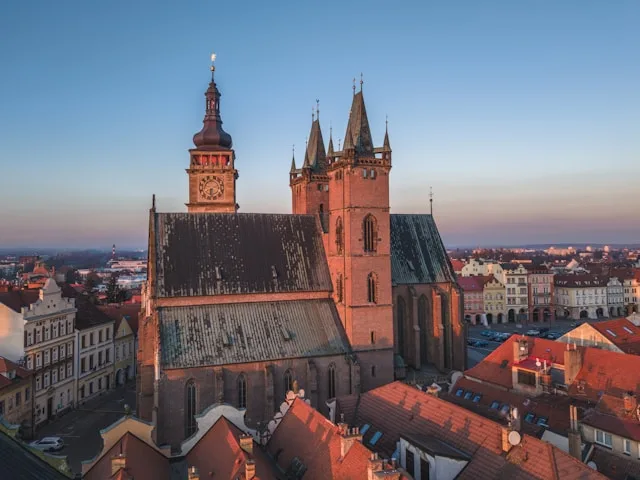
Hradec Králové's ICT sector produced more informatics graduates in 2025 than at any point in the city's history. It also lost more senior developers, architects, and DevOps specialists to Prague than in any previous year. The university expanded. The pipeline grew. And the talent pool at the top got thinner.
This is the paradox now defining the city's technology market. The region recorded approximately 3,800 employees in information and communication roles as of late 2024, a 2.1% year-on-year increase that lagged the national growth rate of 4.3%. The sector is not shrinking. It is growing steadily, fuelled by healthcare digitisation mandates and rising demand for cybersecurity services. But its growth rate is capped by a constraint that cannot be solved by adding more graduates: the senior professionals who should be leading development teams, architecting systems, and building client relationships are being pulled out of the market by employers 100 kilometres away who can offer 30 to 35% more in base salary alone.
What follows is a structured analysis of the forces reshaping Hradec Králové's technology sector, the employers driving that change, and what senior leaders need to understand before they make their next hiring or retention decision in this market.
A Sector Built on Two Pillars, Neither of Them Self-Sustaining
The Hradec Králové ICT sector is not a single market. It is two overlapping but distinct ecosystems that share a talent pool without sharing a growth trajectory.
The first pillar is healthcare informatics and enterprise software development, anchored by multinational subsidiaries. CompuGroup Medical Czech Republic operates the city's largest dedicated development centre, employing approximately 280 to 320 ICT professionals focused on ambulatory information systems and laboratory software for the DACH market. This operation serves as a primary R&D hub for CompuGroup Medical's Central European business. DFC Design, a local software house specialising in CAD/CAM systems and manufacturing execution systems, employs roughly 85 to 95 technical staff. Asseco Solutions maintains a regional implementation and support centre for ERP systems with approximately 60 ICT staff.
The second pillar is localised IT service provision. Approximately 180 registered ICT firms operate in the region, but only 12 employ more than 50 technical staff. The remainder are small operations serving SME manufacturing clients within the Královéhradecký kraj. Seventy-five percent of their revenue derives from domestic Czech clients, with limited scalability to EU markets due to language constraints and sales capacity gaps, according to the CzechICT Association's 2024 regional survey.
The distinction matters because these two pillars compete for the same senior talent while offering fundamentally different career propositions. A senior Java architect at CompuGroup Medical works on products exported across German-speaking Europe. A senior developer at a 15-person regional IT services firm customises ERP installations for local manufacturers. Both roles require similar technical depth. Only one offers international exposure and career progression that competes with what Prague provides.
This bifurcation is the market's defining feature. It means that when a hiring leader in Hradec Králové loses a senior architect, the replacement search is not simply a matter of finding another qualified professional. It is a matter of convincing that professional that the career trajectory available in a mid-sized Czech city can match what Prague, Brno, or a remote contract with a German employer can deliver.
The University Pipeline Paradox
The University of Hradec Králové produces approximately 120 to 140 graduates annually from informatics, applied informatics, and information management programmes. Enrolment expanded by 25% between 2020 and 2024. On paper, this looks like a strengthening talent supply.
The retention data tells a different story. Graduate tracking surveys from UHK's Career Centre show that 60 to 65% of the 2023 cohort relocated to Prague or Brno within 24 months of graduation. The retention rate for graduates staying in Hradec Králové ICT roles dropped from 42% for the 2019 cohort to 35% for the 2023 cohort. The university expanded its programme. More students enrolled, more students graduated, and a smaller share of them stayed.
Why Graduates Leave
The entry-level salary differential explains most of it. Prague and Brno offer starting salaries CZK 8,000 to 12,000 per month higher than equivalent roles in Hradec Králové. For a graduate evaluating two offers, this gap represents a 15 to 20% premium before accounting for career trajectory, employer brand, or the pull of a larger city's social infrastructure.
Secondary technical schools, including SOŠ a SOU Hradec Králové and OA a SOŠHE Hradec Králové, contribute approximately 80 junior technicians and developers annually with higher local retention rates of about 55%. These graduates are more likely to stay, but they enter the market at a lower skill level and progress more slowly into senior technical roles. They fill the base of the pyramid without addressing the shortage at the top.
The Misalignment No One Is Naming
Here is the analytical tension that matters most: the university is producing more graduates while the city retains fewer of them. This is not simply a salary problem. It suggests that local demand absorption capacity is not keeping pace with graduate supply. The companies hiring in Hradec Králové are not creating enough roles at the right level, with the right progression, to compete with what graduates can find elsewhere. Expanding the pipeline without expanding the quality and ambition of local employer propositions is producing graduates for Prague, not for Hradec Králové.
This is the dynamic that hiring leaders in the region must confront directly. Investing in university partnerships and internship programmes is necessary but insufficient. The talent pipeline will not hold unless the roles themselves become competitive on dimensions beyond salary.
The Prague Vacuum Effect and Its Widening Reach
Prague has always competed with regional Czech cities for technology talent. What has changed in 2025 and 2026 is the mechanism. The competition no longer requires physical relocation.
Remote work normalisation has allowed Prague-based employers to recruit Hradec Králové senior talent without asking anyone to move. A DevOps specialist living in Hradec Králové can accept a Prague-salaried role, work remotely four days a week, and retain the lower cost of living that makes regional life attractive. The CzechICT Association's 2024 policy brief described this as the "vacuum effect": Prague employers cherry-pick senior talent from regional cities without contributing to the local tax base or ecosystem.
The compensation gap is not subtle. Average gross ICT wages in the Central Bohemian region, including Prague, run 34% higher than in the Hradec Králové region, according to the Czech Statistical Office's Q3 2024 earnings database. For senior DevOps specialists, the situation is more acute. Employers in Hradec Králové report that their DevOps leads routinely receive unsolicited approaches from Prague-based fintech and e-commerce firms offering 35 to 45% base salary premiums plus equity participation. Average tenure for DevOps roles in the Hradec Králové region has dropped to 18 months, compared to 34 months nationally.
The Counter-Offer Spiral
Hradec Králové employers are responding with counter-offers. According to the Hays Czech Republic Salary Guide 2025, local firms report offering 15 to 20% counter-offer premiums to retain senior architects and DevOps leads threatened by Prague poaching. This is happening in a market where national ICT wage growth moderated to 5.2% in 2024, down from 9.8% in 2022.
The aggregate data masks severe bifurcation. Junior and mid-level roles are seeing normal wage progression. Senior individual contributor roles are experiencing accelerated inflation driven not by market-wide demand but by targeted extraction from a specific subset of employers. A hiring leader reading the national salary data would conclude that the Czech ICT market is cooling. A hiring leader in Hradec Králové competing for a senior Java architect with healthcare domain knowledge knows the opposite is true.
Counter-offers, as a retention strategy, carry their own risks. A professional who stays after a counter-offer has already demonstrated willingness to leave. Retention rates after counter-offers are consistently poor across markets, and the dynamics of the counter-offer trap apply here as forcefully as anywhere. The 15 to 20% premium buys time. It rarely buys loyalty.
The Third Competitor Most Local Firms Have Not Priced In
Prague is the visible competitor. The less visible one sits further west. German and Austrian employers are increasingly recruiting Czech ICT professionals for fully remote positions, offering euro-denominated salaries that translate to 2.5 to 3 times local Hradec Králové compensation when adjusted for purchasing power. Eurostat's Labour Cost Survey data from 2024 confirms the scale of this differential. A senior developer earning CZK 1,500,000 annually in Hradec Králové can access roles paying €70,000 to €90,000 from the same desk in the same apartment.
Brno adds a further layer of competition, specifically for embedded systems and cybersecurity talent. Brno offers comparable salaries to Prague at 95% parity, with lower living costs, and its startup ecosystem and "Silicon Valley" branding draw UHK graduates specialising in low-level programming.
The net effect is that Hradec Králové's senior talent pool faces outward pressure from three directions simultaneously. Local employers are not competing against one alternative. They are competing against Prague's scale, Brno's ecosystem, and Western Europe's purchasing power.
Healthcare Digitisation: The Demand Wave That Arrives Before the Workforce
The Czech Ministry of Health allocated CZK 2.1 billion for hospital digitisation across the 2025 to 2027 period. This investment is disproportionately relevant to Hradec Králové because the city's anchor employer, CompuGroup Medical, and its network of healthcare IT contractors hold domain expertise that most Czech ICT firms outside Prague lack.
CzechInvest's Regional Investment Strategy for 2025 to 2027 projects that healthcare IT integration and cybersecurity services will drive 60% of new position creation in the Hradec Králové ICT sector. Growth is projected at 3.0 to 3.5% annually through 2026, constrained not by client demand but by the availability of professionals who can deliver.
The Skills That Do Not Yet Exist in Sufficient Numbers
The technical requirements for healthcare digitisation are specific. Healthcare interoperability standards including HL7 FHIR and DICOM are mandatory for firms serving hospital and ambulatory systems. Legacy system modernisation, particularly COBOL to Java/.NET migration, is in high demand from regional banks and insurance mutuals maintaining headquarters in the city. These are not generic software engineering skills. They require domain knowledge that takes years to develop and cannot be acquired through a certification programme.
The shortage is not a hiring problem in the conventional sense. It is a knowledge problem. The professionals who understand both the clinical workflows and the technical architecture required to modernise Czech healthcare systems represent a population measured in hundreds, not thousands, across the entire country. And a material share of that population already works for CompuGroup Medical or its direct competitors.
For firms seeking to fill leadership roles in healthcare and life sciences technology, this creates a search challenge that standard methods cannot address. The candidates are not on job boards. They are not responding to LinkedIn messages. They are embedded in long-term projects where their departure would create immediate operational risk for their current employers.
NIS2, Cybersecurity, and the Compliance Talent Crunch
The NIS2 Directive, implemented in Czech law as Act No. 361/2023, took effect in October 2024. It mandates stricter cybersecurity governance for "important entities" including regional hospitals and critical manufacturing operations. For Hradec Králové's IT service providers, compliance is not optional. It is a condition of continued business with their largest clients.
The compliance costs are material. The National Cyber and Information Security Authority (NÚKIB) published implementation guidelines in 2024 estimating that HK-based IT providers serving regulated sectors face certification costs of CZK 500,000 to 2,000,000. For the majority of local firms employing fewer than 50 staff, this is a considerable burden.
The CISO Gap
NIS2 has created demand for CISO-level expertise in mid-sized firms that previously had no such role. The Hays Czech Republic Cybersecurity Talent Report from 2024 shows cybersecurity specialists in the Hradec Králové region are extremely passive, with over 90% not actively seeking new employment and average tenure of 4.2 years. Response rates to job board postings for these roles are minimal.
Executive cybersecurity positions in Hradec Králové are frequently filled by Prague-based consultants working remotely three to four days per week and commanding Prague-level compensation. A cybersecurity manager role in Hradec Králové carries total annual compensation of CZK 1,300,000 to 1,600,000 at the senior specialist level. At the executive and VP level, this rises to CZK 2,000,000 to 2,800,000. The upper end of that range reflects the Prague premium that remote CISO-level hires command.
The regulatory requirement is clear. The talent to meet it is not available locally in sufficient numbers. And the cost of importing it from Prague or further afield pushes total compensation into ranges that many regional SMEs find difficult to sustain.
Compensation Benchmarks: What the 75% Ratio Actually Means
Hradec Králové ICT salaries track at approximately 75 to 80% of Prague levels for equivalent roles. This ratio is stable and, based on current dynamics, unlikely to close materially through 2026.
For senior specialists and managers, total annual cash compensation in the Hradec Králové region breaks down as follows. Lead software architects earn CZK 1,200,000 to 1,500,000. Senior SRE and DevOps managers earn CZK 1,100,000 to 1,400,000. Security managers earn CZK 1,300,000 to 1,600,000. Senior product managers earn CZK 1,000,000 to 1,300,000.
At the executive and VP level, the ranges widen. VP of Engineering and CTO roles command CZK 1,800,000 to 2,400,000. Senior infrastructure leadership roles reach CZK 1,600,000 to 2,100,000. Executive cybersecurity roles, as noted, can reach CZK 2,800,000 when filled by remote Prague-based professionals.
Where the Ratio Breaks Down
The 75 to 80% ratio is a market average. It does not apply uniformly across seniority levels. For junior developers with zero to two years of experience, the gap is narrower, closer to 85% of Prague rates, because entry-level salaries have a natural floor driven by cost of living. At the senior architect level, the gap widens to 65 to 70% because Prague employers layer equity participation, signing bonuses, and international project exposure onto their base salary offers.
This widening at the top is the mechanism through which the senior talent drain operates. The compensation gap is not constant across the experience curve. It accelerates precisely at the seniority level where Hradec Králové firms most need to retain and recruit. Firms that benchmark their offers against a 75% average are underpaying their most critical hires and overpaying their least differentiated ones.
Understanding the true market benchmarks for executive compensation at each seniority level is the prerequisite for any competitive offer strategy in this region. Without that granularity, local employers are bringing a market average to a bidding war.
What Hiring Leaders in This Market Must Do Differently
The Hradec Králové ICT talent market in 2026 presents a specific set of constraints that cannot be solved by raising salaries alone. Prague will always pay more. German remote employers will always pay more than Prague. Competing purely on compensation is a race that regional firms will lose.
The firms that are retaining and recruiting senior talent successfully in this market share three characteristics. First, they offer genuine technical challenge. CompuGroup Medical retains developers in Hradec Králové not because it pays Prague rates but because its engineers work on products used across the DACH healthcare system. The work itself is the differentiator. Second, they offer flexibility that is real, not performative. The market has stabilised at a 60/40 office-to-remote split for local firms, but this offers insufficient differentiation against Prague employers offering 100% remote options. The firms winning retention battles are moving beyond standard hybrid policies toward project-based flexibility where the work pattern fits the work. Third, they invest in career architecture. The hidden 80% of senior talent who are passive candidates in this market are not motivated primarily by money. They are motivated by whether their next role advances their career in a direction they cannot achieve by staying put.
For organisations that need to hire now, the conventional methods fail at precisely the seniority level where the need is greatest. Senior software architects in Hradec Králové's ICT sector have a passive-to-active ratio of approximately 9 to 1. Only 10% are actively seeking employment at any given time. DevOps and SRE specialists are 85% passive. Cybersecurity professionals exceed 90% passive.
A search conducted through job postings and inbound applications will reach, at best, 10 to 15% of the qualified market. The remaining candidates must be identified through direct headhunting methods that map the entire relevant population and approach individuals who are not looking.
Why Speed Compounds the Advantage
Vacancy duration tells the story. A DevOps search in Hradec Králové averages 95 days to fill, more than double the 45-day average in Prague. A senior Java architect search requiring German language skills and healthcare domain experience runs 90 to 120 days in the region, compared to 50 to 65 days in Prague.
Every additional week a role remains open increases the probability that the best candidates in the initial pipeline accept other offers. In a market where executive recruiting failures compound over time, the cost of a slow search is not merely the recruitment spend. It is the project delay, the client risk, and the retention damage when remaining team members absorb the workload.
KiTalent's model delivers interview-ready executive candidates within 7 to 10 days through AI-enhanced talent mapping that identifies passive professionals who are not visible on any public platform. In a market where 85 to 90% of senior candidates are passive, and where the cost of a 95-day vacancy includes not just the unfilled role but the risk of losing another team member to the same competitive pressures, the speed differential is material.
For organisations building or defending technology teams in the Hradec Králové region, where the candidates you need are not responding to advertisements and every month of vacancy strengthens Prague's gravitational pull on your remaining senior staff, speak with our executive search team about how we approach this specific market. KiTalent's pay-per-interview model means no upfront retainer, and its 96% one-year retention rate reflects a search methodology built for exactly these conditions: scarce, passive, senior talent in a market where conventional methods consistently fall short.
Frequently Asked Questions
What is the current size of the Hradec Králové ICT sector?
The Hradec Králové region employs an estimated 3,500 to 4,200 ICT professionals across approximately 180 registered firms, though only 12 firms employ more than 50 technical staff. The sector grew at 2.1% year-on-year as of late 2024, below the national ICT growth rate of 4.3%. Growth through 2026 is projected at 3.0 to 3.5% annually, constrained primarily by talent availability. The sector is structurally bifurcated between healthcare informatics anchored by multinational subsidiaries and localised IT service providers serving regional manufacturing clients.
What are the hardest ICT roles to fill in Hradec Králové?
Senior software architects with Java or .NET expertise and healthcare domain knowledge are the most acute shortage, with demand exceeding supply at a 4:1 ratio. DevOps and SRE specialists with Kubernetes and cloud-native expertise represent the fastest-growing shortage, with vacancy duration averaging 95 days compared to 45 days in Prague. Cybersecurity specialists required for NIS2 compliance across regulated sectors are over 90% passive, making them nearly unreachable through conventional job advertising.
How do Hradec Králové ICT salaries compare to Prague?
Hradec Králové ICT salaries track at approximately 75 to 80% of Prague levels for equivalent roles. A senior software architect earns CZK 1,200,000 to 1,500,000 annually in the region, rising to CZK 1,800,000 to 2,400,000 at VP or CTO level. The gap widens at senior levels, where Prague employers add equity participation and international project exposure. German and Austrian remote employers represent a further competitive layer, offering euro-denominated salaries of €70,000 to €90,000 that translate to 2.5 to 3 times local compensation.
Why are Hradec Králové firms losing senior ICT talent to Prague?
Prague offers 30 to 35% higher base salaries, access to major technology employers such as Google, Microsoft, and Oracle, and career trajectories that include equity participation in high-growth companies. Remote work normalisation has eliminated the need for physical relocation, allowing Prague employers to recruit Hradec Králové talent without requiring a move. DevOps specialists in the region receive unsolicited approaches offering 35 to 45% salary premiums, reducing average tenure to 18 months. KiTalent's executive search methodology addresses this by identifying and engaging passive candidates before competitive approaches arrive.
What is driving new ICT hiring demand in Hradec Králové through 2026?
Healthcare IT integration and cybersecurity services will drive an estimated 60% of new position creation. The Czech Ministry of Health allocated CZK 2.1 billion for hospital digitisation across 2025 to 2027, benefiting firms with healthcare domain expertise concentrated in the Hradec Králové region. NIS2 Directive compliance is creating additional demand for CISO-level expertise in mid-sized firms. The talent mapping required to fill these roles must account for an extremely passive candidate market where over 85% of qualified professionals are not actively seeking new positions.
How can companies improve executive hiring outcomes in Hradec Králové's ICT sector?
Firms that rely on job board postings and inbound applications reach at most 10 to 15% of qualified senior candidates in this market. Improving outcomes requires direct identification of passive professionals through structured talent mapping, competitive compensation benchmarking at the specific seniority level being recruited, and a value proposition that addresses career progression rather than salary alone. Search speed is critical: every additional week of vacancy increases the probability of losing shortlisted candidates to competing offers from Prague or remote EU employers.